
Printing Press History and Modern Printing


The machine that rewired the world
Few inventions get credited with changing history, but the printing press earns it. Before Johannes Gutenberg set movable metal type into a wooden frame around 1440, every book in Europe was copied by hand. A single Bible could take a scribe more than a year. Knowledge was scarce, expensive, and locked inside monasteries and palaces.
The press broke that lock. Suddenly one setting of type could produce hundreds of clean, identical pages, then thousands. Ideas that once crawled began to run. And the mechanical logic Gutenberg worked out, ink transferred to paper under pressure, still hums inside the presses that print your business cards, flyers, and posters today.
This page traces the printing press from its origins to the machines humming in modern shops, and shows how the same idea now puts professional print in reach of any business. If you want the fast version of who prints what and how, the overview of the different types of printing is a good companion.
A short history of the printing press
The story is older and wider than one man in Mainz. Printing evolved in stages, each one pushing the price of a page a little lower and putting the written word in a few more hands.
- Woodblock printing in East Asia. Long before Europe, printers in China and Korea carved whole pages into wood and later cast movable type in clay and metal, proving the idea worked centuries earlier.
- Gutenberg and movable type, around 1440. A goldsmith by trade, Gutenberg combined a wine-press frame, oil-based ink, and reusable metal letters into one system. A page could now be set once and printed hundreds of times.
- The press spreads across Europe. Within fifty years, presses appeared in hundreds of cities. Prices for books fell, literacy climbed, and ideas traveled faster than any ruler could contain them.
- Steam and the rotary press. The 1800s traded muscle for machinery. Steam-driven cylinders and continuous paper rolls let newspapers print tens of thousands of copies an hour.
What ties every era together is a single ambition: make one thing many times, exactly the same. That is still the heart of commercial printing, and it is why a good press can hand your brand the same color on the first sheet and the ten-thousandth. For the language of the trade along the way, the printing terms reference is worth a bookmark.
Why the press mattered so much
Cheaper books meant more readers. More readers meant more writers, more schools, and more argument. Historians tie the press to the spread of the Reformation, the scientific revolution, and the rise of newspapers. It did not just copy words faster. It changed who got to hold them, and that is a shift we are still living inside.
The same democratizing pull runs through modern print. A corner bakery can now order the same quality of brochure a national brand uses, because the press does not care how big you are. It only cares about the file you send it.
Print like the presses
Three classics still rolling off the press
The formats that built the printing trade are still the ones businesses order most. Live prices, real configurators, printed on modern offset and digital presses at 4OVER4.COM.
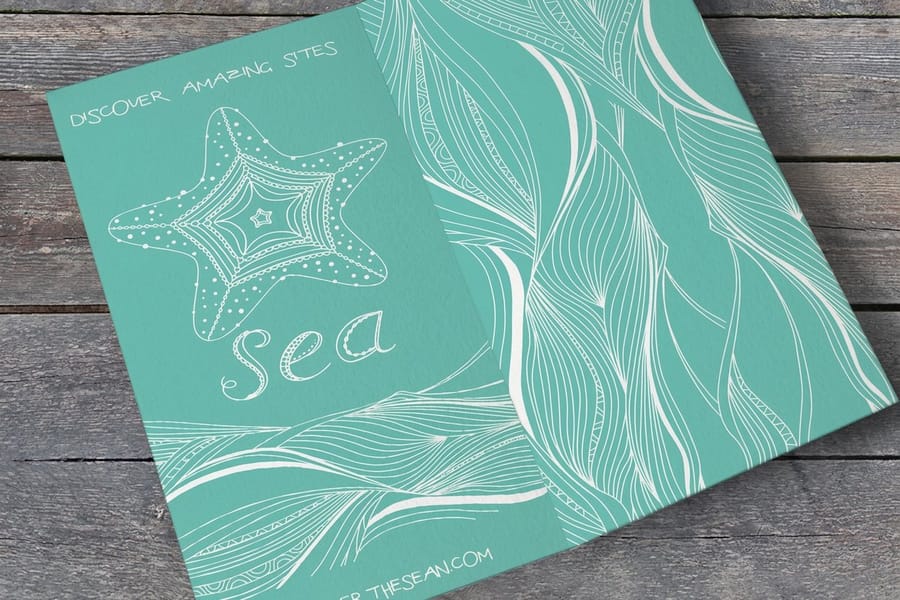 Standard Brochures Folded marketing pieces printed sharp on gloss or matte, the product presses have run for generations. From $57.11 Configure and order →
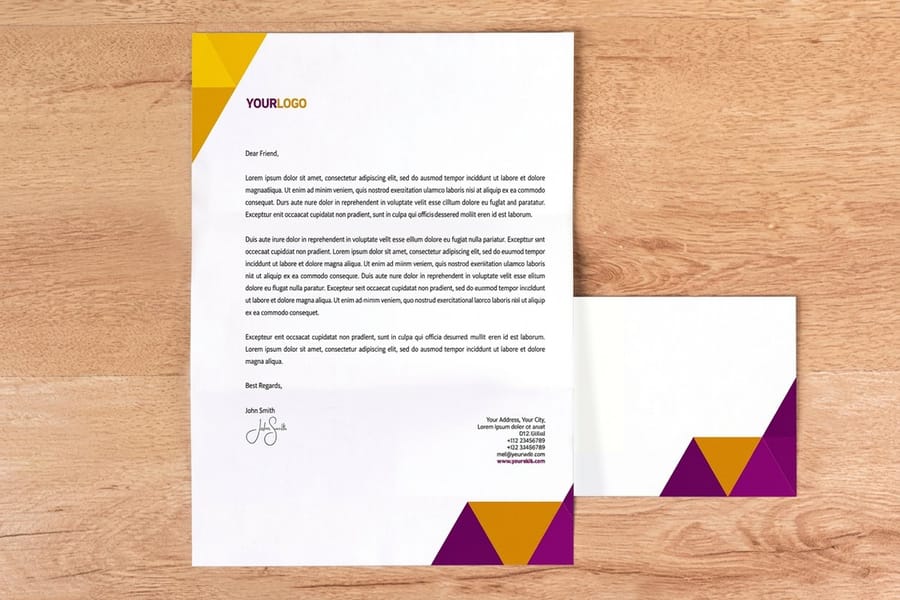
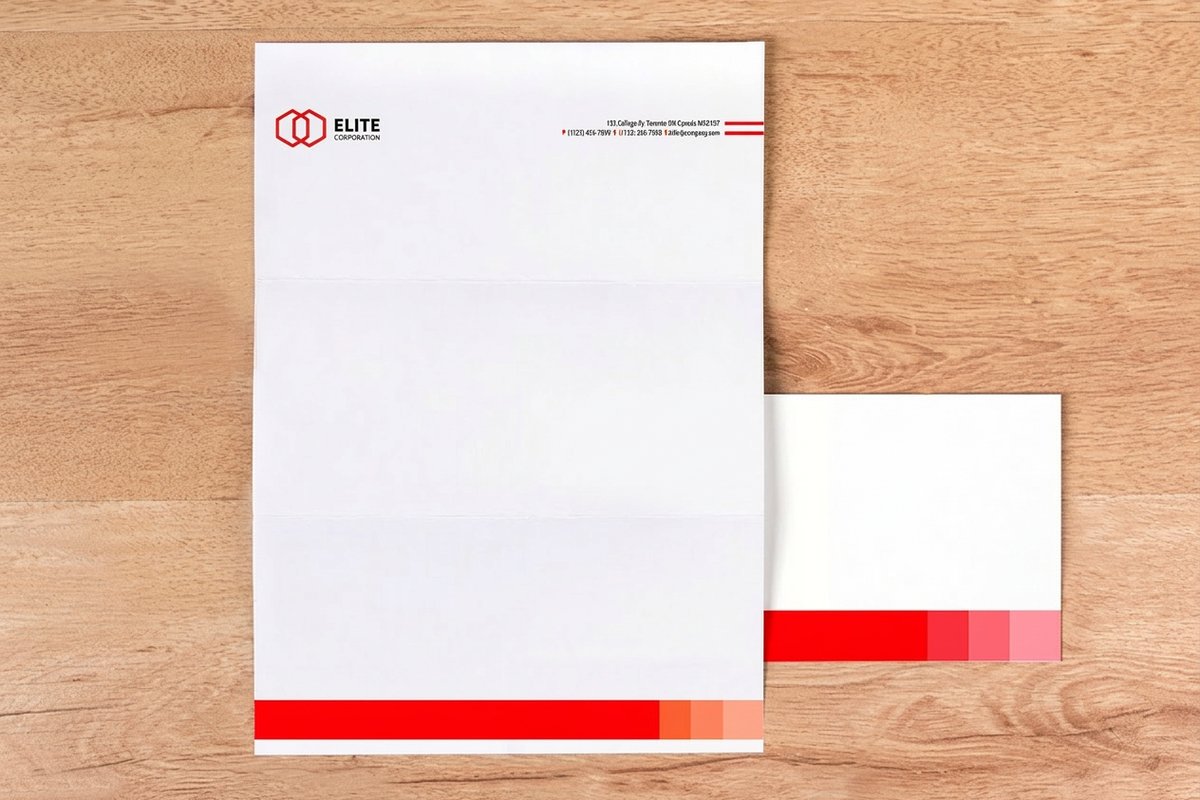
 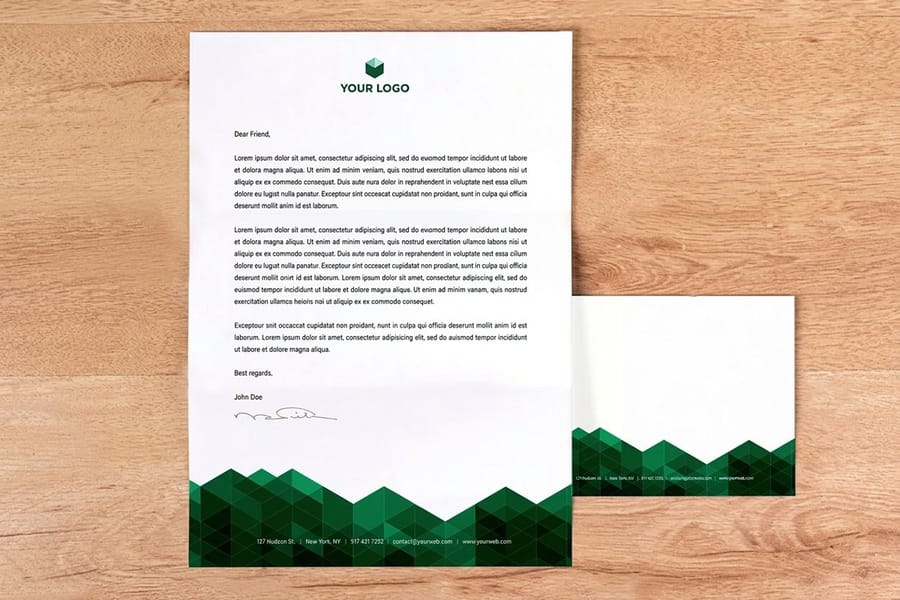 Standard Letterheads Branded stationery that still carries weight, printed on premium stock with clean, even ink coverage. From $99.95 Configure and order →
 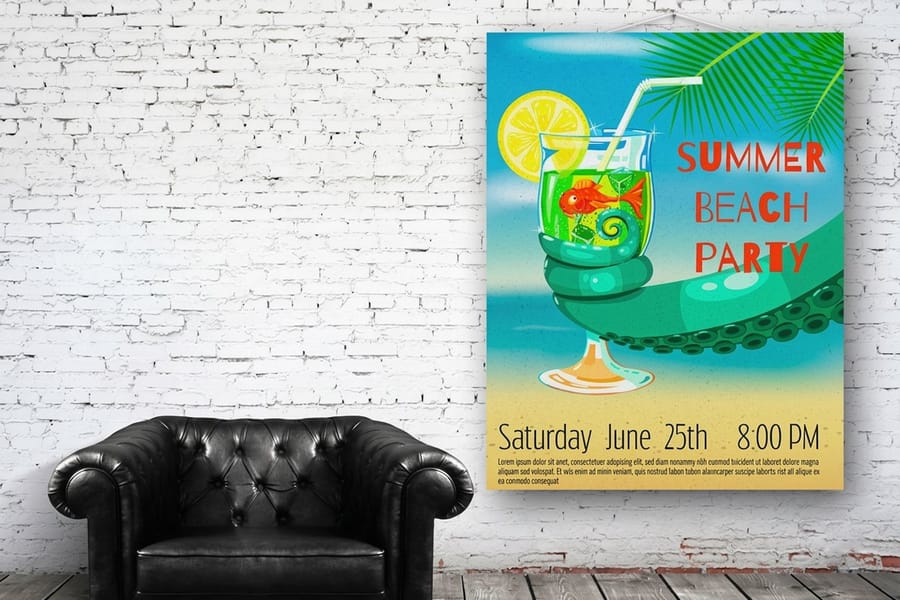 Standard Posters Large-format prints that turn a wall into a billboard, with bold, saturated color edge to edge. From $108.75 Configure and order →
 Beyond the products themselves, a modern shop is really a bundle of services built around the press. Need it fast? Same-day printing and rush delivery compress the timeline for launches and events. Want a finishing touch the old letterpress masters would admire? The tip-on printing service glues a separate printed card onto a larger piece, a small flourish that still turns heads.
How a modern printing press works
Strip away five centuries of engineering and the job is the same as Gutenberg's: get ink onto paper in a repeatable pattern. Modern presses just do it faster, cleaner, and in full color. Two methods dominate commercial work, offset and digital, and understanding the split is the key to ordering print well.
Offset lithography, the workhorse
Offset is the descendant of Gutenberg's press and the backbone of long-run printing. It relies on a simple chemistry trick: oil-based ink and water do not mix. Your image is put on a plate where the printing areas hold ink and the blank areas hold water, so the plate inks only where it should. Here is the path a single sheet takes.
- Plate. Your artwork is burned onto a thin metal plate, one plate per color. Image areas attract ink, blank areas attract water, so the two never mix.
- Blanket. The plate never touches the paper. Instead it hands the inked image to a rubber blanket cylinder, which is where the word offset comes from.
- Impression. The blanket rolls the image onto the sheet as it passes over the impression cylinder, laying down clean, even ink at high speed.
- Finishing. Sheets are cut, folded, scored, laminated, or bound, turning flat printed paper into a brochure, booklet, or poster.
Because the plates cost time and money to make, offset only makes sense once you print enough copies to spread that setup across the run. But once you cross that line, offset is unbeatable on price per piece and color richness. For the deeper mechanics, 4OVER4.COM keeps a full explainer on offset lithography.
Live pricing
Watch the per-piece cost fall
Real configurator numbers for Standard Brochures. The more you print, the less each one costs, exactly the offset advantage.
| Quantity | Price Per Unit | Total |
|---|---|---|
| 50 | $1.14 | $57.11 |
| 100 | 82.4¢ | $82.38 |
| 200 | 53.3¢ | $106.55 |
| 300 | 41.0¢ | $123.02 |
| 400 | 34.9¢ | $139.49 |
| 500 | 31.2¢ | $155.97 |
Digital printing, built for the short run

Digital presses skip the plates entirely. They fire toner or inkjet directly onto the sheet from a digital file, the same way an office printer does, only far larger, faster, and calibrated for professional color. That one difference changes the economics completely.
With no plates to make, there is almost no setup cost, so a run of 50 flyers is affordable and printing can start in minutes. Digital is also the only practical way to change the artwork on every copy, which is how you print 500 mailers each addressed to a different person. The trade-off is that at very high volumes, offset pulls ahead on cost again. The digital versus offset comparison lays out exactly where that line sits.
The methods around the edges
Offset and digital cover most of what you order, but the printing world is wider. Flexographic printing uses flexible relief plates to run labels and packaging at speed. Screen printing pushes ink through a mesh for apparel and posters with heavy, vivid color. And letterpress, the direct descendant of Gutenberg's method, has come back as a premium craft finish for cards and invitations that people can feel with a fingertip.
Big-format specs
What a poster press can do
Sizes, stocks, and finishing options for Standard Posters, produced on wide-format equipment.

Offset or digital, which press prints your job
You do not choose a press so much as choose a method, and the method almost always comes down to how many copies you need and whether each one is identical. Here is the short version.
- Offset for long runs. Once the plates are made, each additional sheet costs very little. For thousands of identical pieces with rich, consistent color, offset is hard to beat.
- Digital for short runs. No plates means no setup, so 50 postcards or a run of personalized mailers print fast and affordably. It is also the only practical way to change the artwork on every copy.
- Large format for scale. Posters, banners, and signage run on wide-format presses built to hold color and detail at arm-length viewing distances and beyond.
The good news is you rarely have to decide alone. When you configure a product at 4OVER4.COM, the shop routes your job to the right press automatically based on your quantity and options, so you get the best method without managing it yourself.
Compare formats
Popular press products, side by side
Stock, finish, quantity, turnaround, and from-price across some of the most-ordered products that run on modern presses.
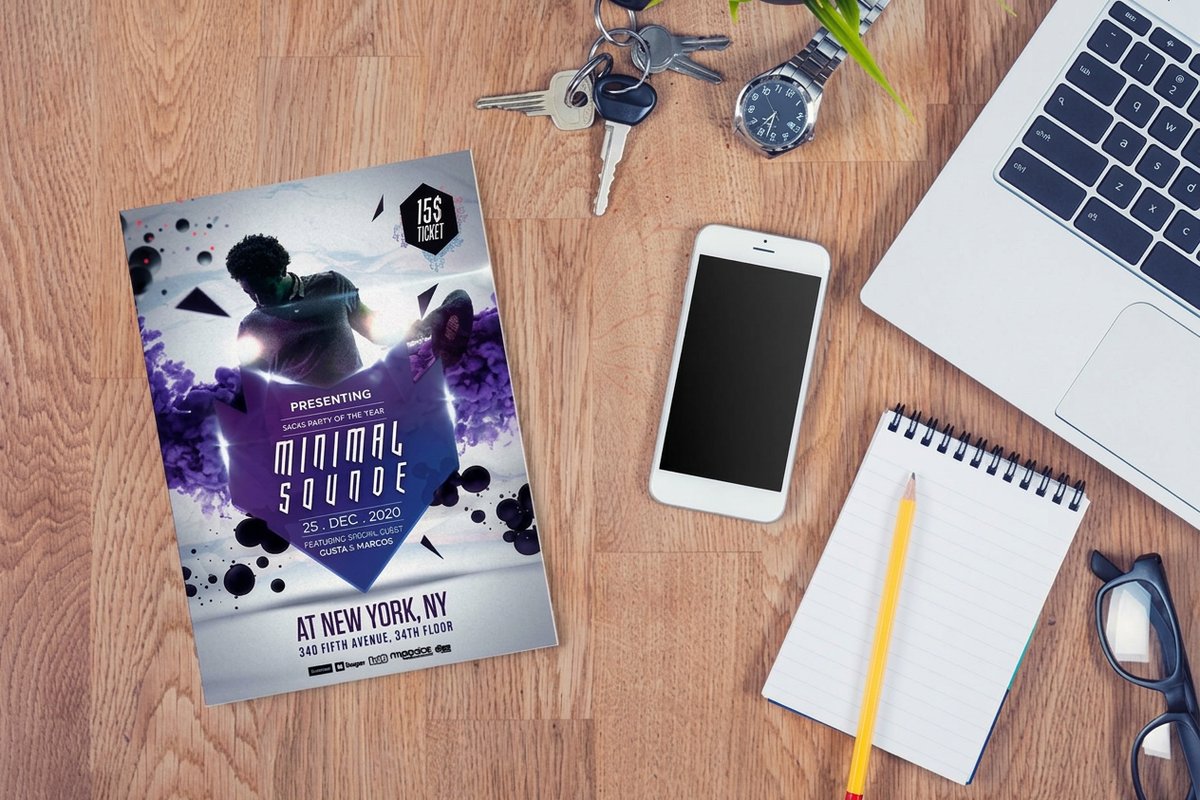 Standard Flyers | 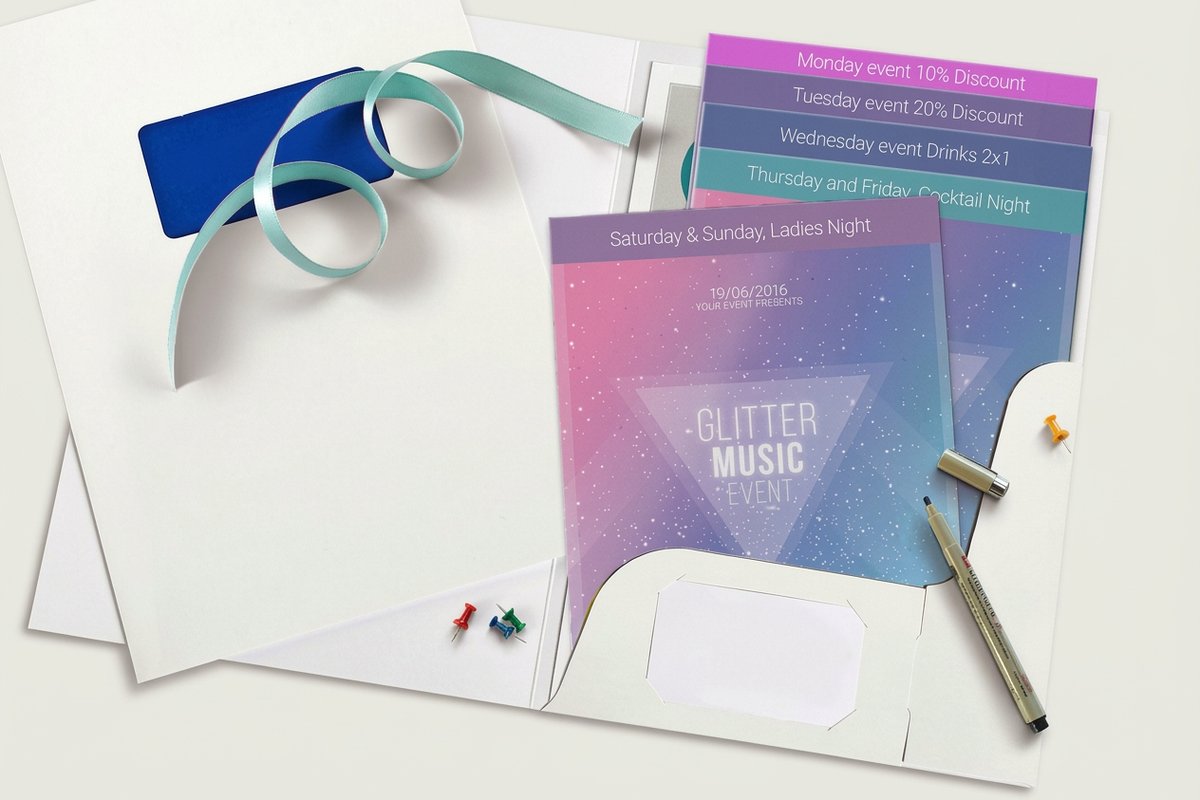 Staggered Cut Flyers | 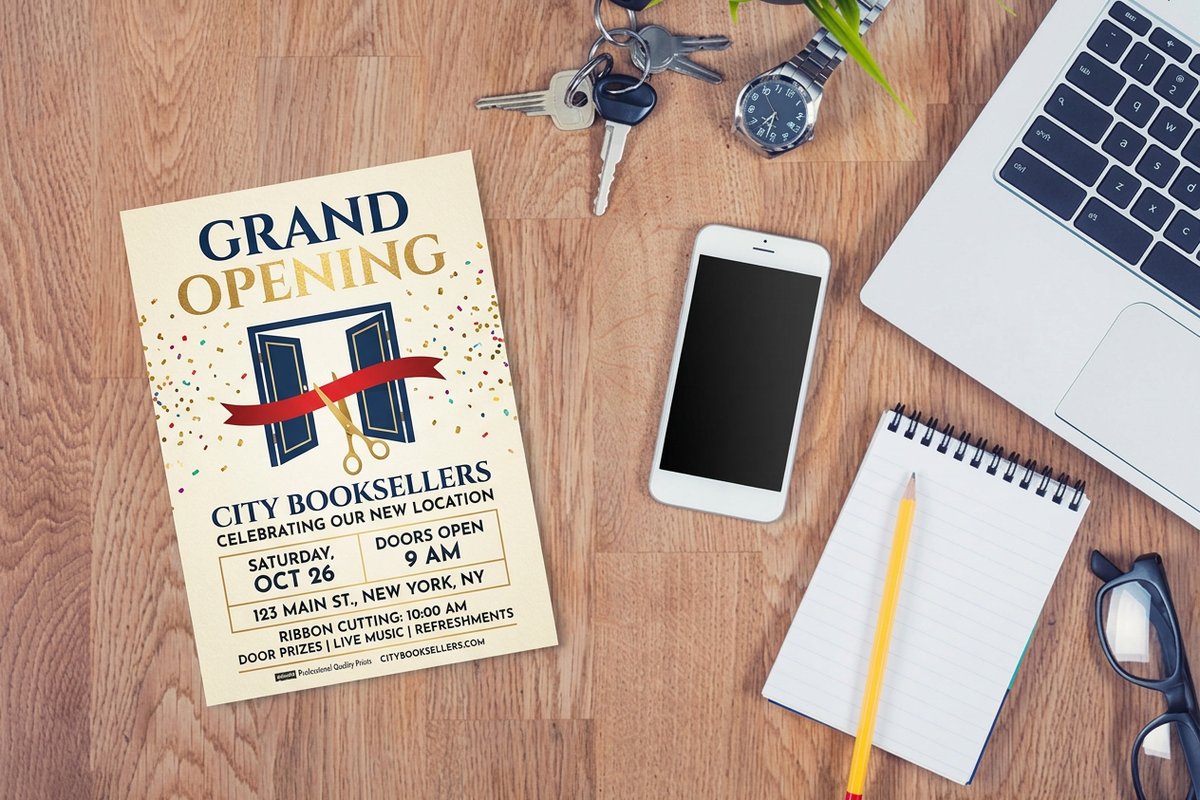 Grand Opening Flyers | 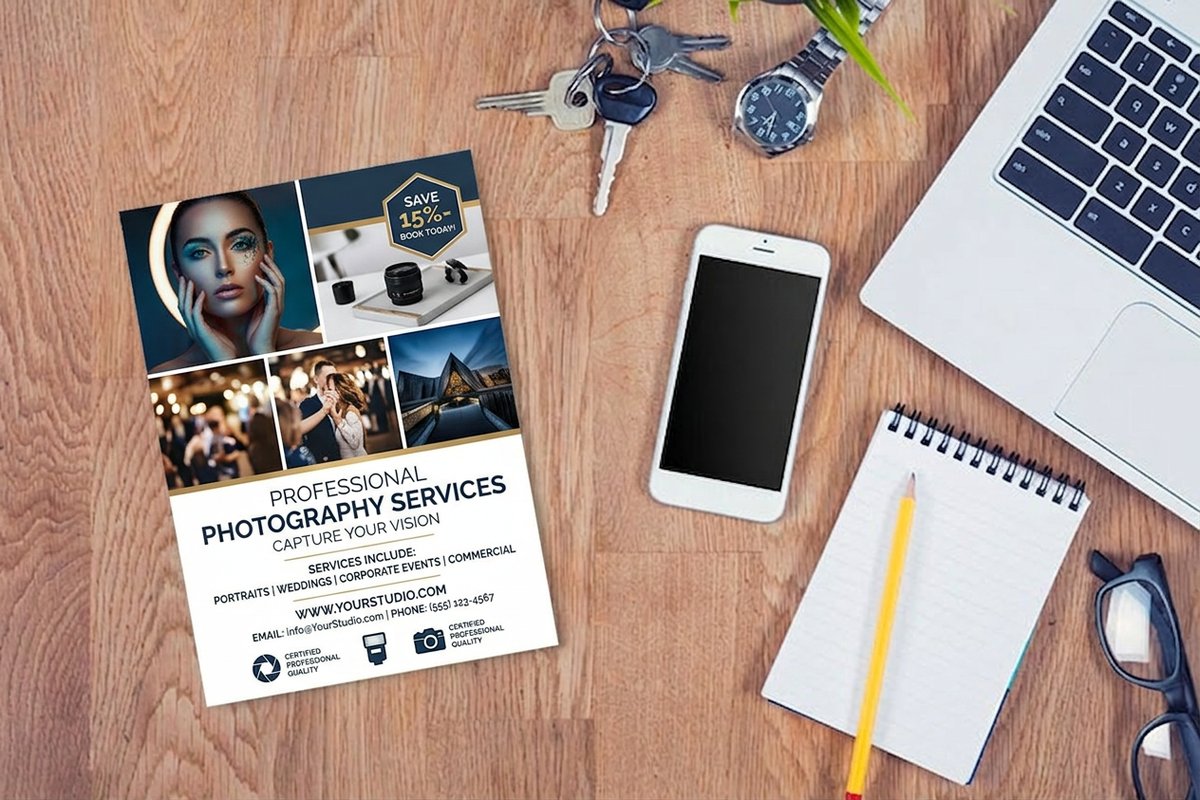 Photography Flyers | |
|---|---|---|---|---|
| Min price | $39.54 | $218.59 | $39.54 | $39.54 |
| Paper / stock | 100# Gloss Text | 100# Gloss Text | 100# Gloss Text | 100# Gloss Text |
| Finish | Standard Finish | Standard Finish | Standard Finish | Standard Finish |
| Size | 4.25" x 5.5" | 8.5" x 11" | 4.25" x 5.5" | 4.25" x 5.5" |
| Default qty | 50 | 50 | 50 | 50 |
| Turnaround | 3 business days | 5 business days | 3 business days | 3 business days |
| Rating | ||||
| View & customize | View & customize | View & customize | View & customize |
What the printing press means for your business today
The press turned a rare, hand-made object into something everyone could own. That same shift is why a two-person startup can now print like a Fortune 500 brand. The machine does not know or care how big you are. It reproduces whatever quality you put into your file.
So the real work moved upstream, into your artwork. Send vector logos, the correct resolution, and a print-ready color mode, and a modern press will hand it back multiplied and flawless. Get the file right and the rest is the oldest promise in printing kept at scale. For the paper side of that decision, the guide to the best paper for printing is a smart next read, and if you love print history, the story behind Pantone colors shows how the trade standardized color itself.
Start printing
Put a press to work today
Branded stationery is one of the fastest ways to look established. Configure letterheads and see live pricing.
Wally traces the press to your print job
Five centuries of printing, still working for your brand
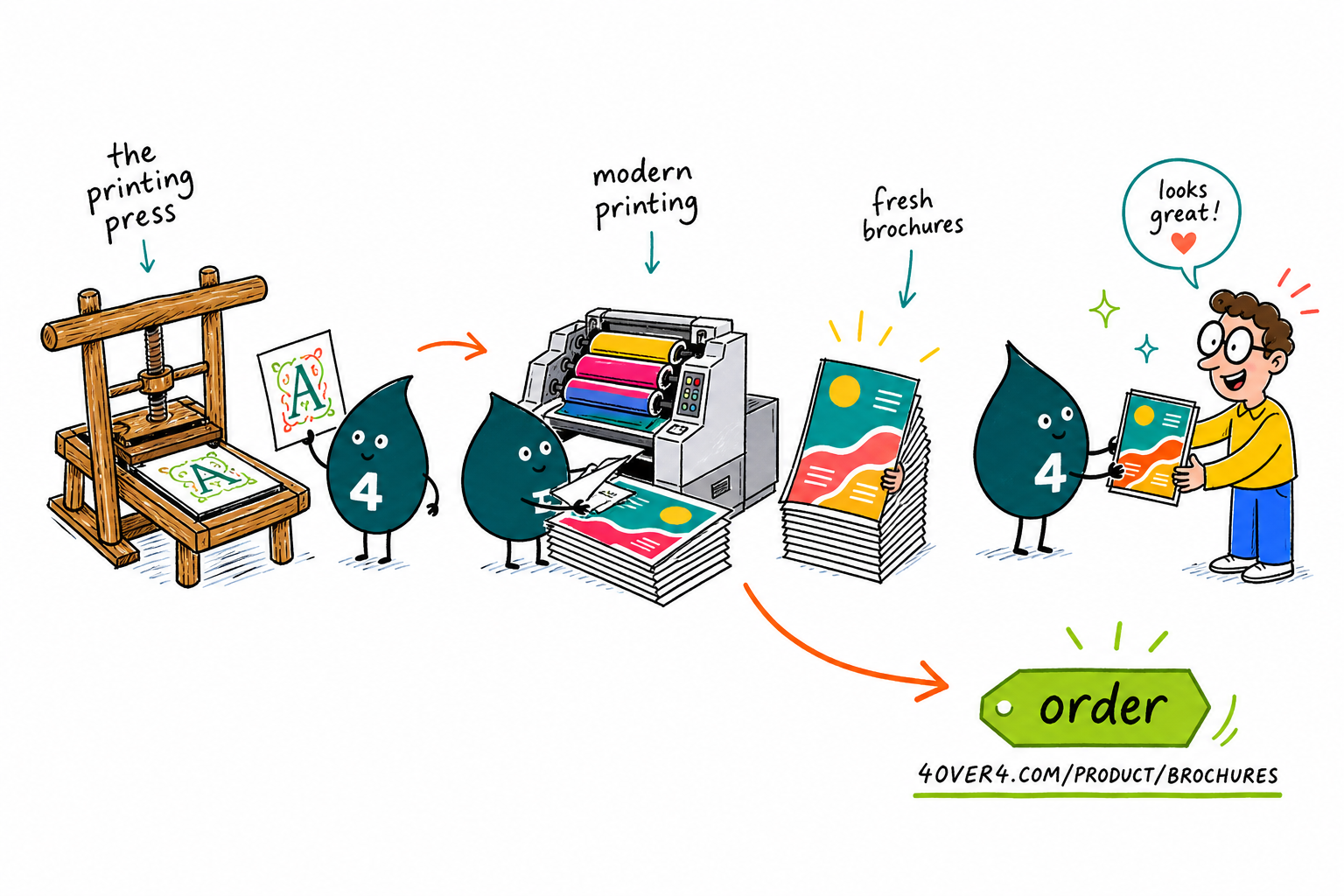
The printing press took writing out of the monastery and put it in everyone's hands. Today that same idea runs on offset and digital presses that turn your file into thousands of sharp, consistent prints. Pick offset for long runs and rich color, digital for small batches and fast turnaround, and 4OVER4.COM handles the plates, ink, calibration, and finishing for you.
Explore offset printing →What to remember about the printing press
What a modern press gives your brand
- Consistency at volume. A modern press lays down the same color on the first sheet and the ten-thousandth, so your brand looks identical across a whole run.
- Lower cost per piece. Setup is a fixed cost. The more you print, the less each finished piece costs, which is why bulk orders always beat one-offs on price.
- A physical presence. A printed piece sits on a desk, a fridge, or a shelf for weeks. Unlike an ad that scrolls past, print earns repeat impressions for free.
- Finishes screens cannot fake. Foil, spot gloss, soft-touch, embossing, and heavy stocks give print a texture and weight no display can reproduce.
- Trust and permanence. People treat printed materials as more official and credible, which is why contracts, certificates, and packaging still live on paper.
- Speed when it counts. With rush and same-day options, a modern shop can turn files into finished, shipped print faster than most people expect.
Explore more
Keep exploring print, from press to product
Every related page type on 4OVER4.COM, one card each, so you can follow the thread from the printing press to a finished, ordered product.
Shop Flyers Printing High-volume flyers, a classic press product. Hub Marketing Materials Every print that markets your business. Product Standard Posters Large-format prints from $108.75. 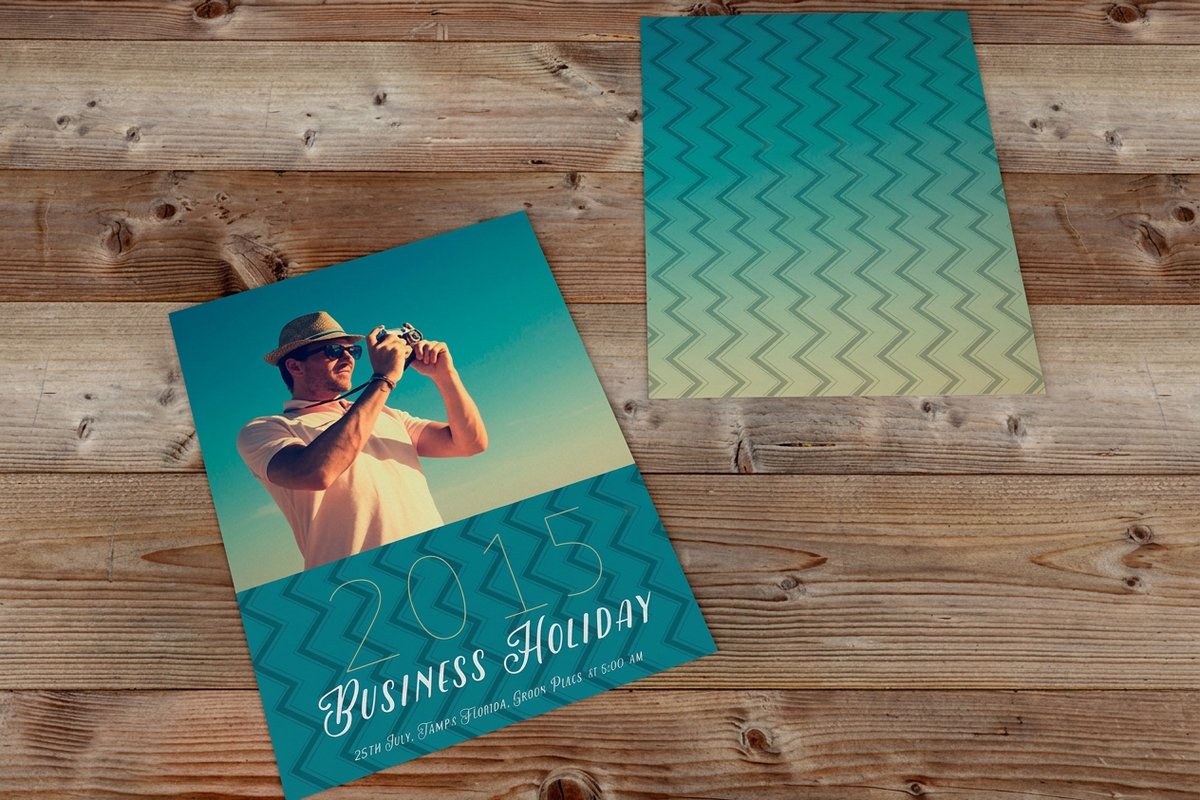 Collection Offset Printing The modern heir to the printing press.
  Guide Types of Presses and Equipment The machines behind modern printing.
  Statistics Printing Industry Data Market size and trends for print.
 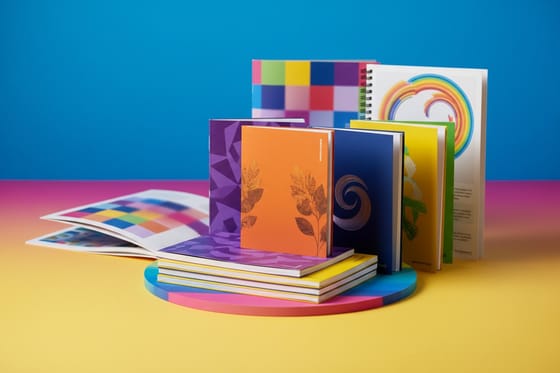 Showcase Brochure Showcase Real customer brochure designs.
 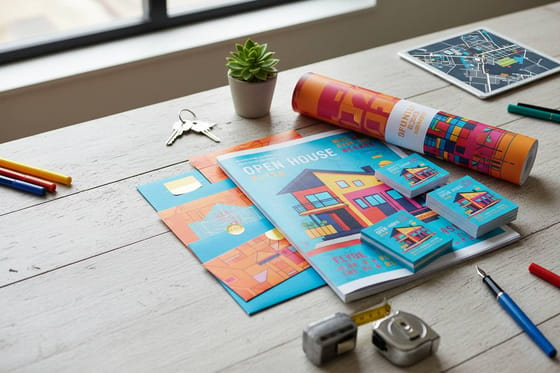 Case study Real Estate Print Kit How print built a brand and closed deals.
  Alternative GotPrint Alternative How 4OVER4.COM compares for print.
  Reviews Poster Reviews Ratings from real customers.
  Location Flyer Printing NYC Local same-day flyer printing.
  Benefit Same Day Printing Order today, ship today on rush jobs.
 Ready to put a press to work?
Send your file and 4OVER4.COM handles the plates, ink, and finishing, printing sharp and consistent from one copy to ten thousand, as fast as same day.
Common questions about the printing press
What is a printing press?
A printing press is a machine that presses inked type or an inked image onto paper to make many identical copies. Gutenberg's version used reusable metal letters set into a frame, and the same core idea, transfer ink to paper under pressure, still drives today's offset presses. Modern digital presses reach the same goal without physical type, using toner or inkjet heads instead. For the machines used across the industry, see types of presses and equipment.
How do I choose the right printing method for my project?
Match the method to the run length. Choose offset lithography when you need thousands of identical pieces with rich, consistent color, since the cost per piece drops sharply at volume. Choose digital printing for short runs, fast turnaround, or artwork that changes on every copy, like personalized mailers. The digital vs offset guide walks through the trade-offs in detail.
How is print pricing set?
Price is driven by quantity, size, paper stock, number of colors, and any special finishing like foil or lamination. Setup is a fixed cost, so per-unit price falls as your quantity climbs, which is why 500 flyers cost far less per piece than 50. You can see live numbers move on any 4OVER4.COM product page, for example Standard Brochures, before you commit.
What sizes, stocks, and finishes can I get?
Modern printing supports everything from small business cards to wall-sized posters, on 60+ paper stocks ranging from light text weights to heavy cover stocks. Finishes include matte, gloss, soft-touch, spot UV, and foil. Unfamiliar with a term? The printing terms glossary defines the vocabulary, and each product page lists its exact options.
How long does printing and shipping take?
Turnaround depends on the product and finishing, but many jobs print in a few business days, and rush and same-day printing options exist for tight deadlines. 4OVER4.COM tracks orders with 99.8% on-time delivery, so the estimate you see at checkout is one you can plan around.
