3D Lenticular Postcards

See 3D Lenticular Postcards in action
Watch the 3D Lenticular Postcards overview from 4OVER4.COM. A short walkthrough of options, premium stocks, live pricing and fast turnaround.
- From $1,097.28 per set of 500, with the per-card price falling as the run grows (2,000 at $1,866.15, 10,000 at $5,490.79).
- One specialty stock: a thick 31pt lenticular lens, the ridged surface that makes the motion read as you tilt the card.
- Flip effect, 2 to 4 frames: tilt the postcard and the art swaps between your images, running top to bottom or left to right.
- 6 sizes from a 4" x 4" square up to a 7" x 5", printed full color on the front (4/0) or both sides (4/4), with optional rounded corners.
- Rated 4.8 out of 5 across 102 reviews, on a 22 business day standard turnaround (15 business day rush option), with a free online proof.
Postcards That Move When You Tilt Them
A flat postcard sits still on the counter. A lenticular one moves: tilt it under the light and your artwork flips between two, three, or four frames, so a product reveals itself, a logo spins, or a before turns into an after right in someone's hand. Printed on a thick 31pt lenticular lens by a shop that has run specialty postcards online since 1999, these 3D lenticular postcards start at $1,097.28 for a set of 500 and are rated 4.8 out of 5 across 102 reviews. That motion is the whole point, because people stop, tilt it again to catch the trick, and then keep it, which is exactly what a promo piece is supposed to do.
This is the postcard you hand over when you want to be remembered, not recycled. The flip is printed onto a ridged plastic lens, so the change happens in the real world, with no app and no QR scan needed. See where it sits next to every other style on postcards printing, then come back here to set yours up.
The price rewards a real run. A set of 500 starts at $1,097.28, and the per-card cost keeps dropping as the count climbs, so a full order of 2,000 or 5,000 lands far cheaper per card than the smallest batch. Tap any tier below to see the live set total and exactly what each step up saves before you commit.
How Do 3D Lenticular Postcards Work?
A lenticular postcard layers your images under a sheet of fine plastic ridges, and each ridge shows a different frame depending on the angle you hold it at. You pick a Flip effect with 2, 3, or 4 frames and a direction, top to bottom or left to right, then hand over one image for each frame. Tilt the card one way and you see the first frame. Tilt it back and the next one snaps into place. With four frames you get a short loop of motion, almost a tiny animation printed on a postcard. The 31pt lens is thick on purpose, since that depth is what keeps the effect crisp instead of muddy.
Choosing your lenticular effect
Lenticular printing covers a family of effects, and they are not interchangeable. Knowing which one you are buying decides how the artwork has to be built.
- Flip swaps between separate images as the card tilts. This is what these postcards print, with 2, 3 or 4 frames running top to bottom or left to right: a closed door becomes an open one, a logo becomes an offer, a before becomes an after. It is the effect that reads from the furthest away and survives being handed round a room.
- 3D depth keeps one scene and separates it into layers so the picture sits behind the surface. It wants a clear foreground subject against a distinct background, which most flat brand artwork does not have.
- Animation uses several frames of the same subject a step apart, so a wave or a wink plays out through the tilt rather than swapping between two pictures.
- Zoom scales one subject up between frames so it appears to come toward the viewer.
- Morph blends one shape into another across the frames, so a bottle turns into a glass or one face becomes another.
For a mailer or a handout, flip is the effect that works hardest, and it is the one this stock is set up for. Two frames give the cleanest, sharpest swap because each image gets the widest slice of the tilt. Three and four frames tell more of a story but each frame holds the lens for less of the movement, so keep the artwork bolder as the frame count goes up.
Artwork recommendations for lenticular printing
A lenticular card is not one file, it is a set of frames interlaced into fine strips under a 31pt lens. Build it accordingly:
- Send each frame as its own full size layer at the finished card size, not a flattened composite. Layered files are what the interlacing step needs.
- Keep the key element in roughly the same place across every frame. Something that jumps from one side of the card to the other fights the lens and reads as a smear halfway through the tilt.
- Push the contrast between frames. Two images that are nearly identical produce a flip nobody notices; a dark frame against a light one, or a closed shape against an open one, reads instantly.
- Set type large and keep it off the flip. Fine serif text, thin strokes and small print sit across the lens ridges and blur. If a phone number or an address has to stay readable, put it on a face or an area that does not change between frames.
- Run the important motion in the same direction as the lens, top to bottom or left to right, and match your artwork to whichever direction you ordered.
Nothing goes to press unseen. Every order includes a free online proof, which is the point to check that the frames are the ones you meant and that the type still reads.
Where lenticular postcards get used
- Real estate mailers: the exterior of a listing flipping to the kitchen, or a for sale sign flipping to sold. Agents use it because it is the one card in the day's post that gets picked up twice.
- Event invitations: the venue flipping to the date, or a closed envelope motif flipping to the details, on a card guests keep on the counter instead of filing in a drawer.
- Movie and product promos: two key frames of a trailer, or a product opening and closing, which is why lenticular has been a launch handout for decades.
- Trade show handouts: it survives the walk back to the office. A flat flyer goes in the bin at the door; a card that moves gets shown to a colleague.
If the run is going in the post rather than into hands, plan the mailing early. A 31pt lenticular lens is far thicker and stiffer than a standard postcard stock, so confirm the piece with your mailing house or post office before the artwork is finalized, and design for a card that will be handled rather than machine sorted.
What Sizes Do They Come In?
3D lenticular postcards print in 6 sizes, so you can match the canvas to the message. Two squares, a 4" x 4" and a roomier 5" x 5", read modern and give the motion space to play. The classic 4" x 6" comes vertical or horizontal, and a 5" x 7" or 7" x 5" gives photos and a headline real room. Each one prints full color on the front only (4/0) or on both sides (4/4), and you can round the corners at a 1/8" or 1/4" radius. The full set of choices is laid out below, grouped the way the live configurator on this page presents them.
How Many Should You Order?
A lenticular postcard is a piece you hand out on purpose, at a launch, a booth, or a counter where you want people to stop. The minimum run is 500, and most orders go up from there. Drag the slider below to set your quantity and watch the set total and the true per-card cost update live, so you can find the point where one more step up barely moves the budget.
How Much Do 3D Lenticular Postcards Cost?
3D lenticular postcards start at $1,097.28 per set of 500, and the per-card price keeps dropping as the quantity climbs, so 1,000 runs $1,316.96 and 2,000 runs $1,866.15. This is a made-to-order specialty print, not a stock card, which is why it sits well above the flat $16.48 Standard Postcards you would mail by the thousand. Size the run on the slider above and the set total updates live before you order.
How Do They Compare to Other Standout Postcards?
Lenticular is the postcard that actually moves, but it is not the only way to make someone look twice. For shine instead of motion, the mirror-bright foil on Metallic Foil Postcards catches the light, and Spot UV Postcards add a raised gloss over a matte base. If you love the flip and want it in another format, the same effect runs on 3D Lenticular Greeting Cards and pocket-size 3D Lenticular Business Cards. The chart below lines these up by starting price so you can weigh the trade-off before you choose.
See How a Finished Lenticular Postcard Lands
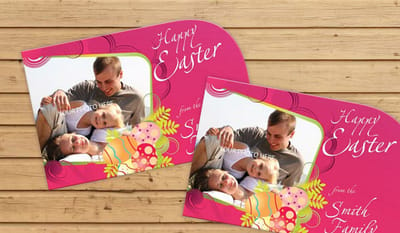
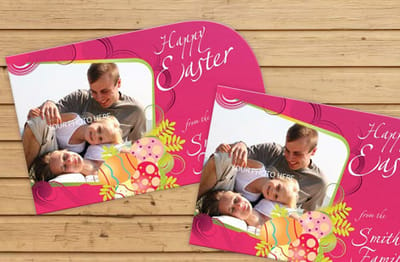
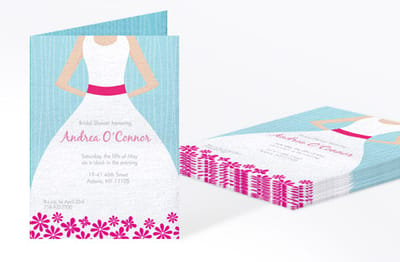
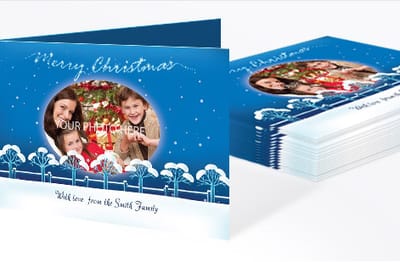
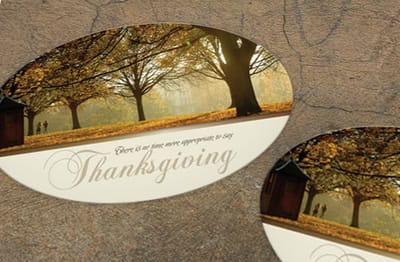
Words only go so far with an effect built on motion. The gallery below collects real lenticular and specialty prints made in-house, across different frames, sizes, and finishes, so you can borrow ideas and see how a flip actually reads once it is on a card. Tap any print to see it larger.
Real Postcards Our Customers Printed



How Long Do 3D Lenticular Postcards Take?
3D lenticular postcards print on a 22 business day standard turnaround, with a faster 15 business day option when a date is tight. The lens and the frame alignment take real production time, which is why this runs longer than a flat postcard. Turn on the free online proof and you sign off on exactly how the flip looks before anything goes to press, so there are no surprises when the box arrives. Compare both turnaround tiers below before you pick.
Wally makes the postcard move
Why a card that flips between images gets picked up, not filed away.
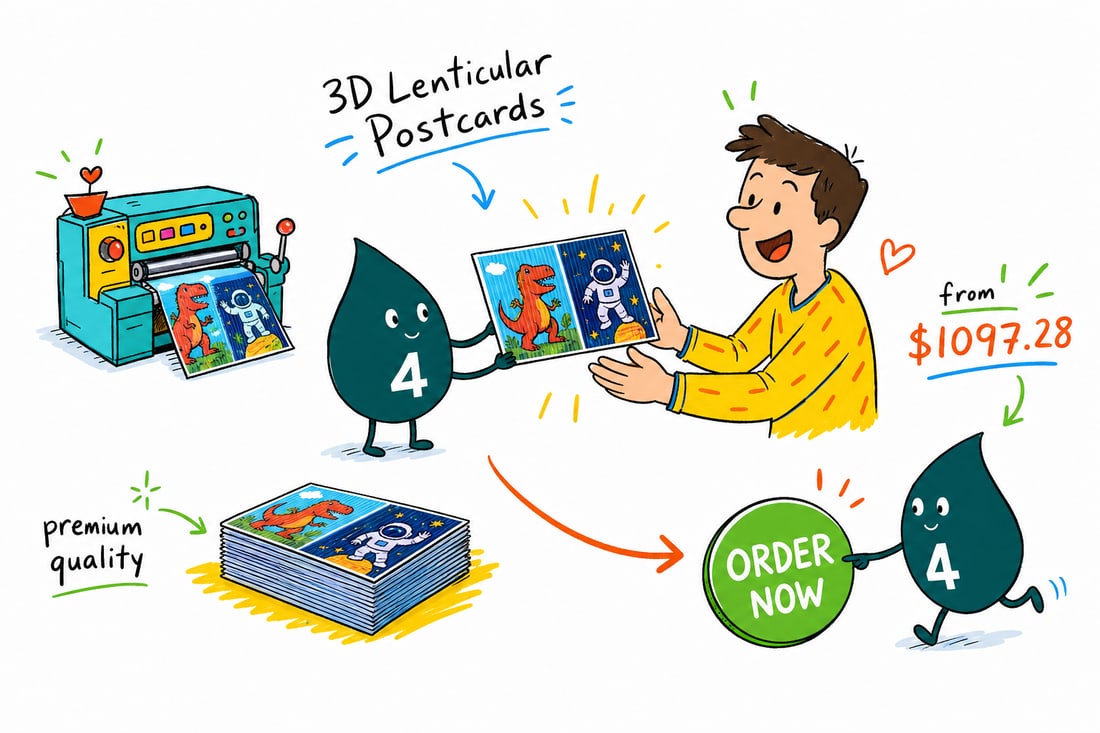
A 3D lenticular postcard tilts to switch between 2, 3, or 4 full-color images on one card. Printed on a 31pt lenticular lens from $1,097.28 per 500, it turns a flat mailer into something people hold and tilt. Pick a size, set your flip, and Wally prints the motion.
Production is only half the clock. The other half is the truck. Drop your ZIP code below to see the realistic ground delivery window to your door, so you know the full print-plus-ship timeline before you order rather than after.
See the Rest of Our Postcards
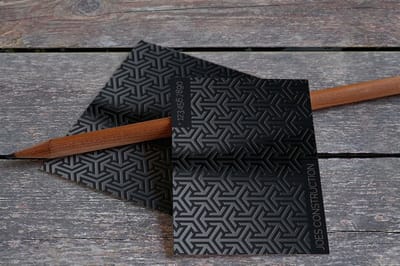
Lenticular is one stop in a much larger lineup, and you can scan the full print product range any time. If a foil, a raised gloss, or a flat card you can mail by the thousand fits the job better, the rest of the family is one tap away. Each option below shows its own starting price and links straight to its product page, so finding the right fit takes seconds.
More From Postcards - Professional Quality




Why Print With 4OVER4.COM
Ordering a 3D effect online means trusting a shop to land the frame alignment, and that is where lenticular goes wrong elsewhere. Here is the track record that earns yours. The numbers below are the ones we hold ourselves to on every order, including on-time shipping, since we started printing online in 1999. Read them before you commit your run.
Print Your 3D Lenticular Postcards Today
At 4OVER4.COM, quality comes first, and it's backed by a satisfaction guarantee and 25+ years of printing since 1999. Pick your size, set your flip, and hand out a postcard nobody drops in the recycling. Print your 3D lenticular postcards today.
One last thing before you check out. A standout postcard rarely travels alone, so here are the products our customers most often order alongside their lenticular postcards, each priced and ready to drop into the same cart.
Pairs Well With 3D Lenticular Postcards
3D Lenticular Postcards: Frequently Asked Questions
How much do 3D lenticular postcards cost?
They start at $1,097.28 for a set of 500, which is the minimum run. The per-card price drops as the order grows, so 1,000 runs $1,316.96, 2,000 runs $1,866.15, and 10,000 runs $5,490.79. It is a made-to-order specialty print, which is why it sits well above a flat postcard.
How does the lenticular flip effect work?
Your art is printed under a 31pt lenticular lens made of fine plastic ridges. You pick a Flip effect with 2, 3, or 4 frames and a direction, top to bottom or left to right, then supply one image per frame. Tilt the postcard and it swaps between your frames in the hand.
What sizes do 3D lenticular postcards come in?
Six sizes: a 4" x 4" and a 5" x 5" square, a 4" x 6" and a 6" x 4", and a 5" x 7" and a 7" x 5". Each prints full color on the front (4/0) or both sides (4/4), with optional 1/8" or 1/4" rounded corners.
How long do 3D lenticular postcards take to make?
The standard turnaround is 22 business days, with a faster 15 business day option when a date is tight. The lens and the frame alignment take real production time, and a free online proof lets you approve how the flip looks before it goes to press.
What artwork do I need to supply for the flip?
One image for each frame on the flip side, so 2, 3, or 4 images depending on the effect you choose, plus your direction (top to bottom or left to right). The other side can be a normal static design with your headline and contact details.
Can I mail 3D lenticular postcards?
These are built on a thick 31pt lens, so they are a hand-out and display piece for launches, booths, and counters rather than standard letter mail. For a campaign you drop in the mailbox, the flat $16.48 Standard Postcards are the mailing-ready pick.