
Rebranding Process Steps, Strategy & Design Guide


Rebranding design turns a new strategy into a look you can hold. Here is the full process, how to tell a rebrand from a refresh, and the exact print touchpoints that make a relaunch real.
Rebranding design is the process of turning a new brand strategy into a complete visual identity and printing it consistently across every touchpoint. It runs in order: audit the brand you have, set the strategy behind the change, design the new identity as a system, then roll it out all at once on your business cards, letterhead, and signage. Decide first whether you need a full rebrand or a lighter refresh, because that choice sets the scope, the budget, and how much print you replace.
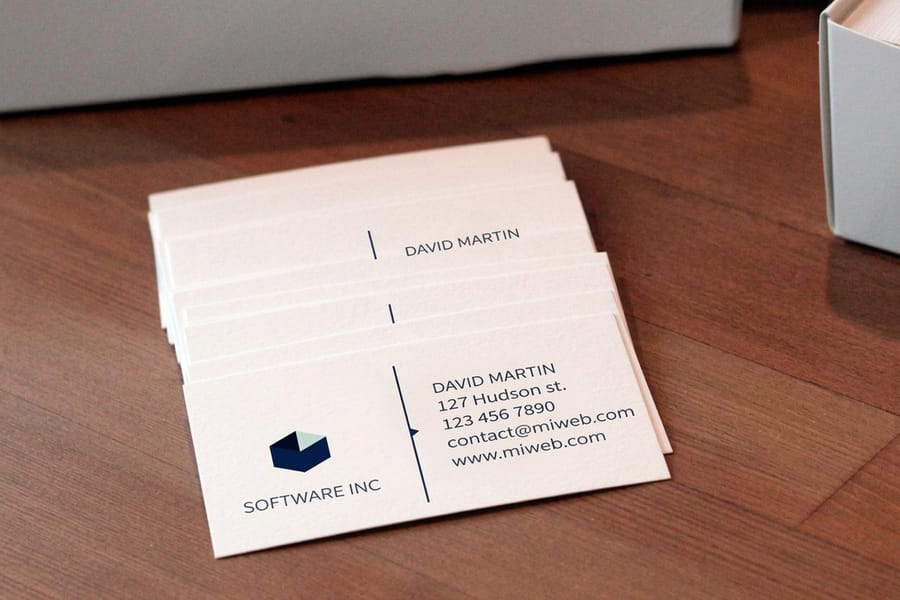
Quick tips
Quick tips for a clean rebrand
Decide rebrand or refresh, set the strategy, then design and print as one system. Keep your new palette to two or three colors and your logo simple enough to read on a business card and a banner. Proof the look on a real printed sample before the full run, reprint the core touchpoints together, and retire the old stock cleanly. 4OVER4.COM customers who launch every printed piece at once are the ones whose rebrand reads as confident rather than accidental.
What is rebranding design?
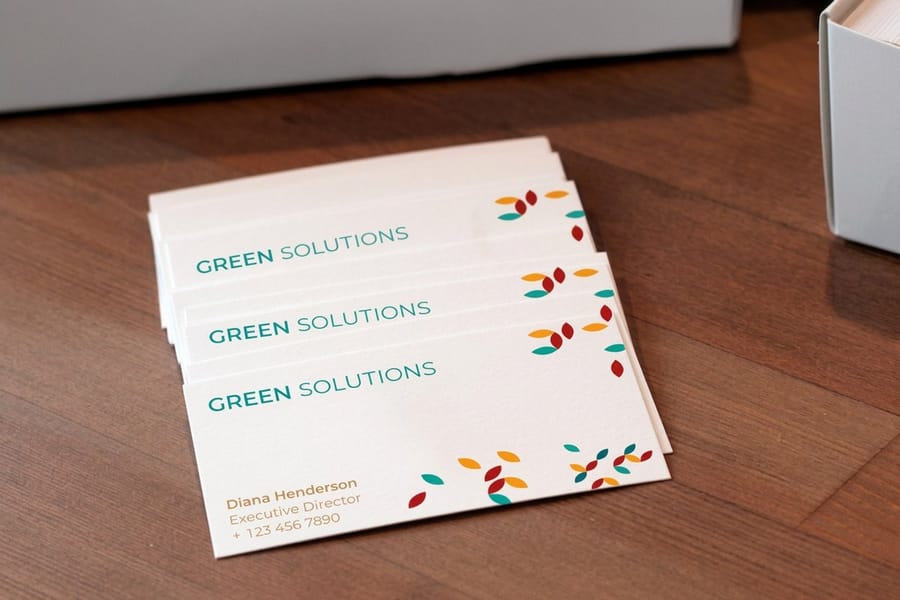
Rebranding design is the work of taking a new brand direction and turning it into a complete visual identity, then putting that identity onto everything a customer meets. It covers the logo, the color palette, the typography, and the layout rules, and it ends where most guides stop short: on the physical pieces people actually hold. A rebrand that lives only in a slide deck has not really happened yet.
Think of it as strategy made visible. The strategy decides what you now stand for and who you are speaking to, and the design translates that into something you can see, read, and touch. When the same logo, colors, and finish show up on your business card, your letterhead, and your signage, the new brand reads as one confident system instead of a pile of loosely related files.
That is the lens this guide uses. Rather than treating a rebrand as an abstract mood board, we tie each decision back to the printed touchpoint that delivers it, and 4OVER4.COM prints all of it. If you are still deciding what your brand should stand for in the first place, start with our practical primer on what branding is and come back here to redesign it.
Why are you rebranding?
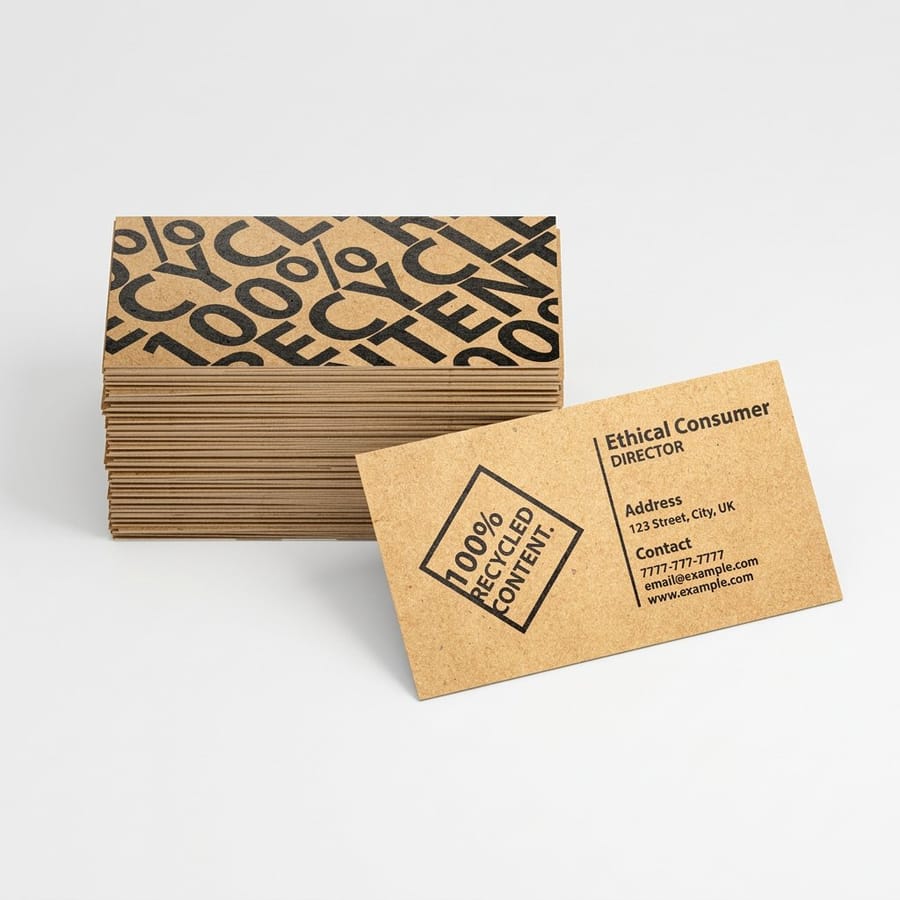
Before a single color is chosen, answer one question honestly: why are you rebranding at all? The reason is the brief that every later decision answers to, and a rebrand without a clear reason usually produces a nicer version of the same confusion. Write the reason in one plain sentence you could say out loud to a stranger.
Most rebrands are driven by one of a few real triggers. You have outgrown the old look and it no longer matches the company you have become. Your audience has shifted and the brand speaks to a customer you no longer serve. A merger, acquisition, or name change forces a fresh start. Or the market moved and competitors now look sharper than you do. Each of those points to a very different design, which is why naming the trigger first saves you from redrawing the logo three times.
Be equally clear about what you are keeping. A rebrand is not an excuse to throw away recognition you have already earned. If customers still know your color or your mark, protect that equity and build around it. The goal is a brand that fits the company you are now, printed cleanly across a business card, a pocket folder, and the rest of your business stationery.
Rebrand vs. refresh: which one do you need?
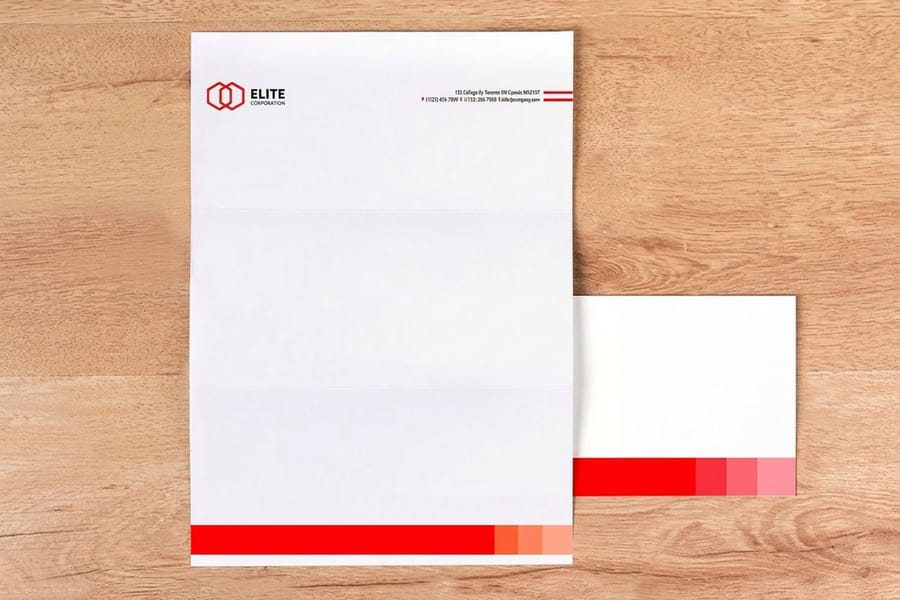
People use the word rebrand for two very different jobs, and confusing them wastes money. A refresh modernizes the look while keeping the core recognizable, and a full rebrand rebuilds the promise itself and redraws the identity to match. Deciding which one you are doing sets your budget, your timeline, and how much of your print stock you replace.
| Question | Brand refresh | Full rebrand |
|---|---|---|
| What changes | The look is modernized while the core stays recognizable: cleaner logo, updated palette, better finishes. | The strategy, name, or promise itself moves, and the visual identity is rebuilt to match the new direction. |
| When it fits | Customers still know and like you, but the design feels dated next to competitors. | A merger, a new audience, a name change, or a reputation reset makes the old brand the wrong fit. |
| Print impact | Reprint the hero pieces, keep the structure. Business cards and letterhead in the new finish. | Replace the whole system: cards, letterhead, folders, postcards, and signage together. |
| Risk | Low. You keep the recognition you have already earned. | Higher, because you trade known recognition for a better long-term fit, so the rollout has to be clean. |
When in doubt, lean toward a refresh. Recognition is expensive to build and easy to throw away, so keep the strongest equity you have and update around it. A refresh often means reprinting your business cards and letterhead in a cleaner finish, while a full rebrand means replacing the whole system at once. If your reason for changing is strategic rather than cosmetic, though, a full rebrand is the honest choice, and the rollout section below shows how to land it cleanly.
Steps to rebranding your business
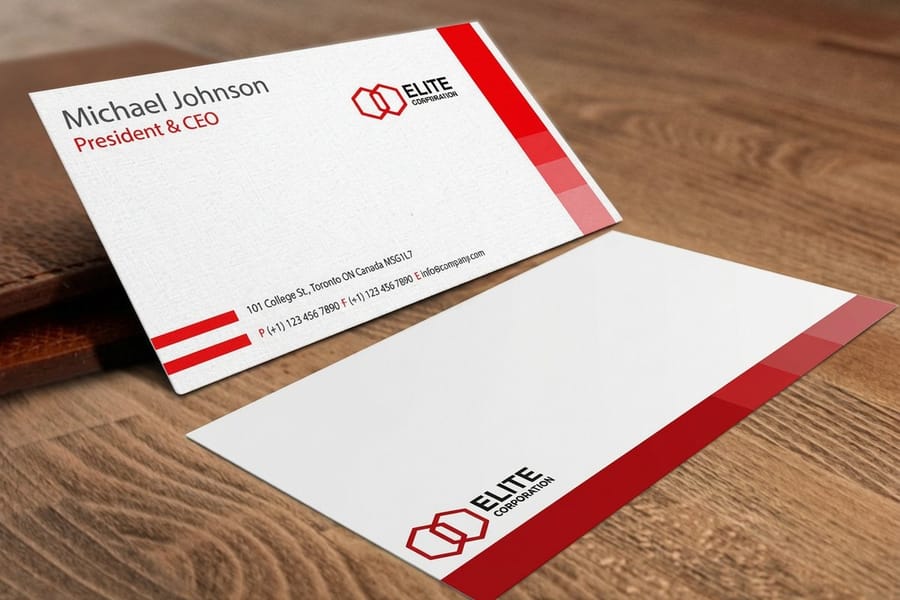
A rebrand feels chaotic when it is done out of order, and calm when it follows a sequence. Work through these six steps and you will end up with an identity that is consistent enough to print on anything, plus a clear record of the choices you made.
- Audit the brand you have today. Lay out every piece a customer currently sees: your logo, colors, fonts, business card, letterhead, and signage. Mark what still works, what feels dated, and where the look already drifts from one piece to the next. You cannot fix a brand you have not honestly measured first.
- Pin down why you are rebranding. Write the single reason in one plain sentence. A new audience, a merger, a name change, or a look that no longer matches the company you have become each point to a very different design. The reason is the brief that every later decision answers to.
- Set the strategy before the visuals. Decide who you are speaking to, what you want them to feel, and the one thing that makes you different. Lock those answers down first so the new colors, type, and finish have something solid to express instead of chasing a trend.
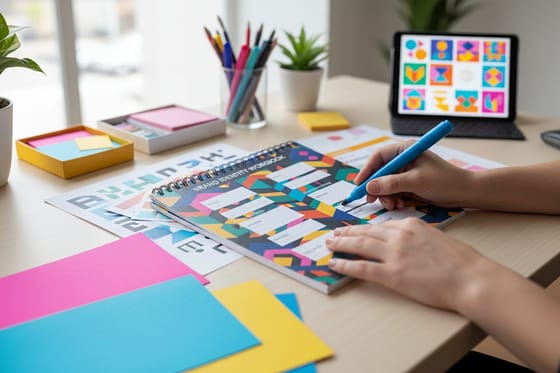
- Design the new identity system. Build the logo, palette, typography, and layout rules as a system that reproduces cleanly on a small business card and a large banner alike. Record the hex values, fonts, and spacing in one short brand sheet so every printer and teammate makes the same brand every time.
- Proof it on a real printed piece. Order a sample of the touchpoint you use most, usually the business card, before you commit to the full run. Colors shift between screen and paper, and a finish that looks flat on a monitor can sing in soft touch or foil. Proof it in the hand.
- Roll it out everywhere at once. Reprint the core touchpoints together and switch them over on the same day. A brand that arrives all at once reads as confident, while a slow trickle of half-updated pieces reads as an accident. Retire the old stock cleanly so nothing mixed slips out.
Notice that the last two steps are physical. The brand becomes real the moment it lands in someone's hand, so treat proofing and printing as part of the rebrand, not an afterthought bolted on at the end. When you reach step four, the Online Designer and free design templates make building and testing the new look fast, and our logo design best practices keep the centerpiece sharp.
The rebrand design process, stage by stage

The design process itself is where strategy turns into something you can see. It runs in five stages, and each one feeds the next. Skip a stage and the crack shows up later, usually on the printed piece where it is most expensive to fix.
Audit takes stock of what you have and what still holds value. Strategy settles who you are for and what you want them to feel. Identity is the creative core, where the logo, palette, and typography are drawn to express that strategy. System writes the rules down so the identity reproduces the same way everywhere, from a tiny business card to a large sign. Rollout is the physical finish line, where the whole thing prints and ships as one set.
The most common failure is jumping from audit straight to identity and skipping strategy, which produces a pretty logo with nothing underneath it. Keep the palette tight and the mark simple enough to survive being shrunk onto a card or blown up onto a banner. If minimalism is your direction, our guide to creating a minimal brand identity shows how far restraint can take you.
Rolling the new brand onto print
Here is the bridge most rebranding advice skips. Every decision above is invisible until it lands on something a customer can hold, and a rebrand that arrives half printed reads as a mistake rather than a relaunch. The rollout is where the new brand either feels deliberate or feels like an accident.
Reprint the core touchpoints together and switch them over on the same day. Start with the two almost every business needs, the business card and the letterhead, then add the folders, postcards, envelopes, and flyers your work depends on. For a service business, the brand also has to travel, so yard signs and magnets carry the new look into the field. Browse the full marketing materials range to match products to your plan.
If you want an order to work through, this is the sequence that leaves the fewest old details in circulation.
- Business cards first. The 3.5 x 2 card is handed over more often than anything else you print, so it becomes the reference everything else gets matched to. Print it first, then judge the new brand color on that card in daylight rather than on a screen, and hold every later piece against it.
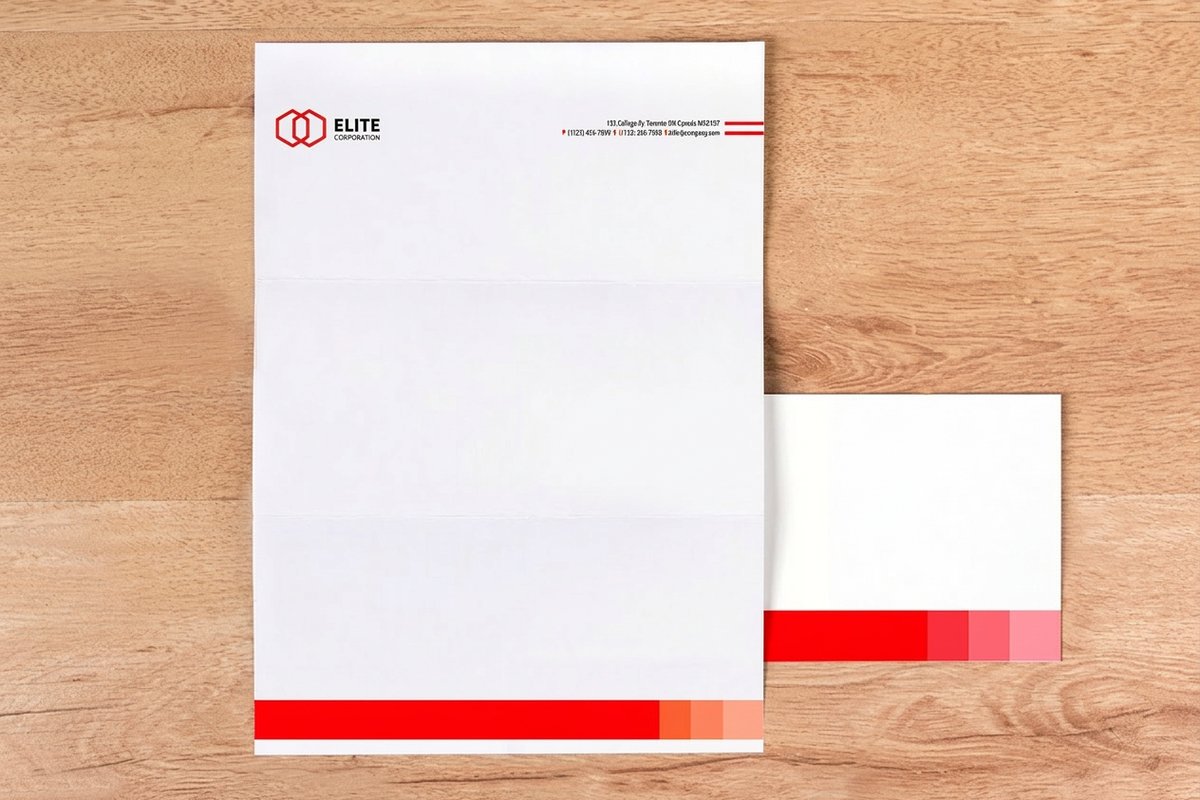
- Letterheads next. The 8.5 x 11 sheet carries the new logo, address and phone into every quote, invoice and contract you send, which makes it the piece that keeps the old details alive longest if you leave it for later. Update the digital template the same day you order the paper so the two never disagree.
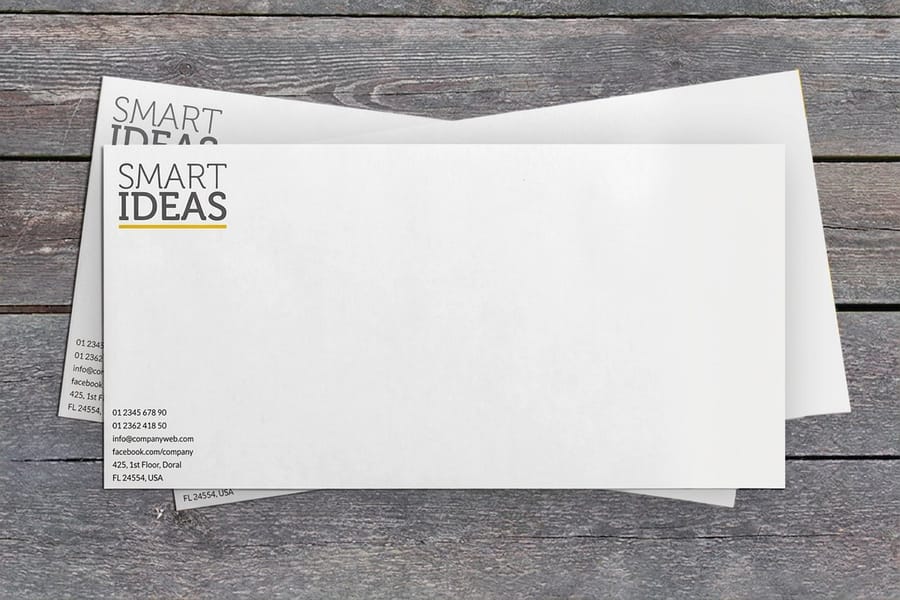
- Printed envelopes in the same run. A new letterhead posted inside an old envelope announces the rebrand twice and contradicts itself on the way in. Order the envelopes alongside the sheets so the return address, the logo and the ink match before the first batch of mail goes out.
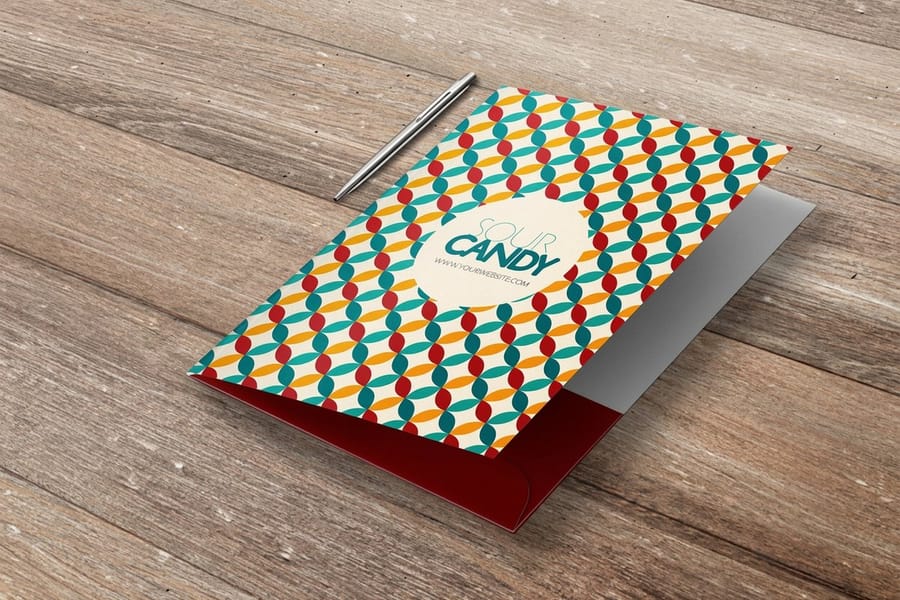
- Pocket folders for anything you hand over in person. Proposals, onboarding packs and sales leave-behinds all end up inside the folder, so it is the piece that turns a stack of loose sheets into one identity. It is also the piece a client keeps on a desk for months, which is a long time to be showing the old look.
- Yard signs if the brand leaves the office. Job sites, storefronts and events are where most people meet the new identity without ever visiting your website. A sign still wearing the old logo on a live job is the slowest mistake to catch, so count the signs already in the field before you set the order quantity.
Timing matters as much as the design. When a launch date is fixed, 4OVER4.COM offers same-day printing and rush delivery so the new brand is in hand on day one. Retire the old stock cleanly so nothing mixed slips out, because one leftover old card in a stack of new ones undercuts the whole relaunch.
How to choose the right rebranding design
When several design directions are on the table, it is tempting to pick the one you like best. Resist that. Choose the direction that fits your customer and your reason for rebranding, not your personal taste, because the brand has to work for the people who pay you, not for the person who signs off on it.
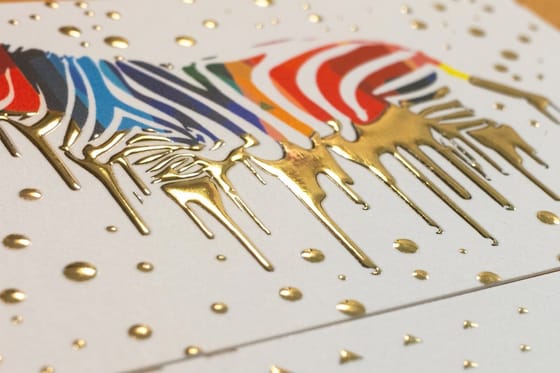
- Match the feeling to the audience. A premium audience rewards a heavier stock and a foil or soft-touch finish, while an approachable brand stays clean and matte. The finish is part of the design, not a detail added at the end.
- Keep the palette small. Two or three colors reproduce reliably across print runs and screens. A sprawling palette drifts from one piece to the next and quietly erodes recognition.
- Test the extremes. Print the logo at business-card size and imagine it at banner size. A design that only works at one scale is not a system, and a rebrand needs a system.
- Proof it in the hand. Order a sample of your most-used piece before the full run, because color and finish behave differently on paper than on a monitor.
Try more than one direction quickly with the Online Designer and free design templates, then judge the finalists as printed samples rather than files. The difference between a good rebrand and a forgettable one is usually decided on paper, which is exactly why a printed premium business card is the truest test of the new look.
What rebranding design costs and how prices are set
There is no single price tag on a rebrand, because the cost splits into two parts: the design work and the printing. The design side depends on scope and who does it, from a founder building it with templates to a studio engagement. The print side is where we can be precise, because printing is priced by exact, measurable choices.
At 4OVER4.COM, every product is priced by quantity, size, paper stock, and finish, and the figure updates live in the configurator as you choose those options. Higher quantities lower the price per unit, which is why reprinting a full rebrand at once is often cheaper per piece than trickling out small batches. Premium finishes like soft touch, spot UV, and foil add to the cost but also do the most to make a new brand feel considered. The live specs and price widgets further down this page pull real per-unit pricing straight from the product data, so you can size the print side of your rebrand accurately instead of guessing.
A practical way to budget: list the touchpoints you will reprint, price each one in its configurator, and total them. Start with the business cards and letterhead that carry the brand most, then add the rest as the rollout continues. If you want the wider context on how brands spend to stay recognized, the small business marketing data puts print in perspective.
Rebranding mistakes to avoid
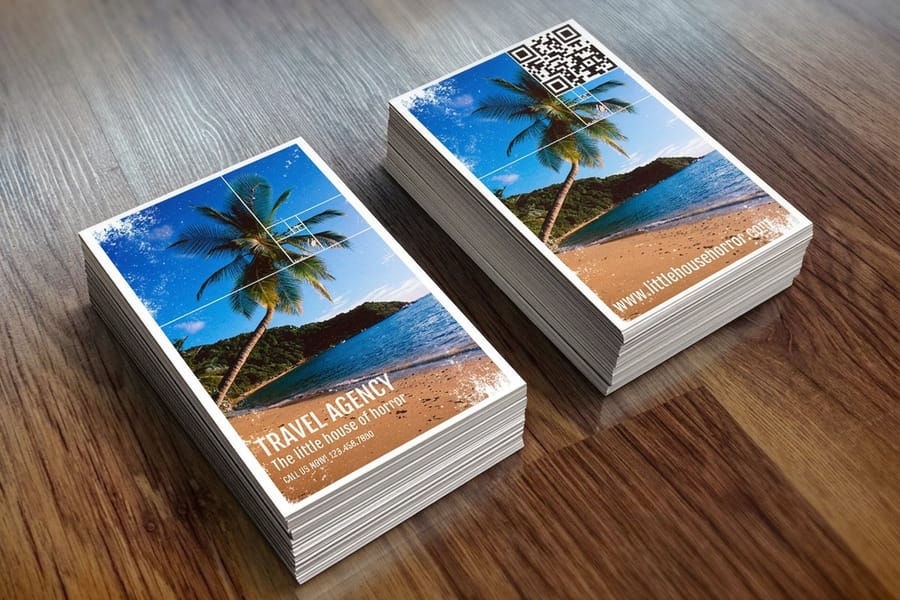
Most rebrands do not fail on taste. They fail on process and on the rollout. Avoid these and you will already be ahead of most companies that attempt a relaunch.
Starting with the logo. A mark drawn before the strategy is decided has nothing to express, so it gets redrawn again and again. Settle the reason and the audience first, then design.
Throwing away hard-won equity. If customers already recognize your color or your name, keep what works and rebuild around it. A rebrand is a chance to fit better, not a reason to erase everything.
Rolling out in a slow trickle. Mixing old and new pieces in the same drawer reads as an accident. Reprint the core touchpoints together and switch on the same day. Our write-up on print marketing campaigns shows how a coordinated launch lands.
Great design, cheap print. A strong new identity on a thin, dull card sends a contradiction. Match the quality of the print to the quality of the promise, which is what a premium card is for.
No written system. If the new colors and fonts only live in one person's head, every new piece drifts back toward chaos. Write the rules down so any printer or teammate reproduces the same brand, and 4OVER4.COM prints to those specs every time.
Wally explains rebranding
A rebrand is only real once it prints
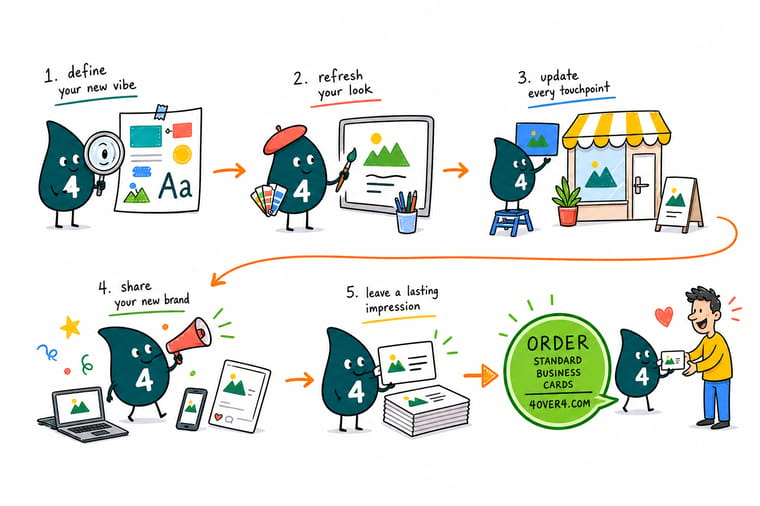
Wally thinks of a rebrand like changing the stamp on the world: the new mark means nothing until it presses onto something people hold. A logo in a folder does nothing. The same logo on a fresh business card, a matching letterhead, and a new sign, all rolled out on the same day, is what makes a relaunch feel deliberate. Decide why you are changing, write the new rules down, then print the whole set at once at 4OVER4.
Print your new business cards →Specs and pricing
Business card specs and live pricing
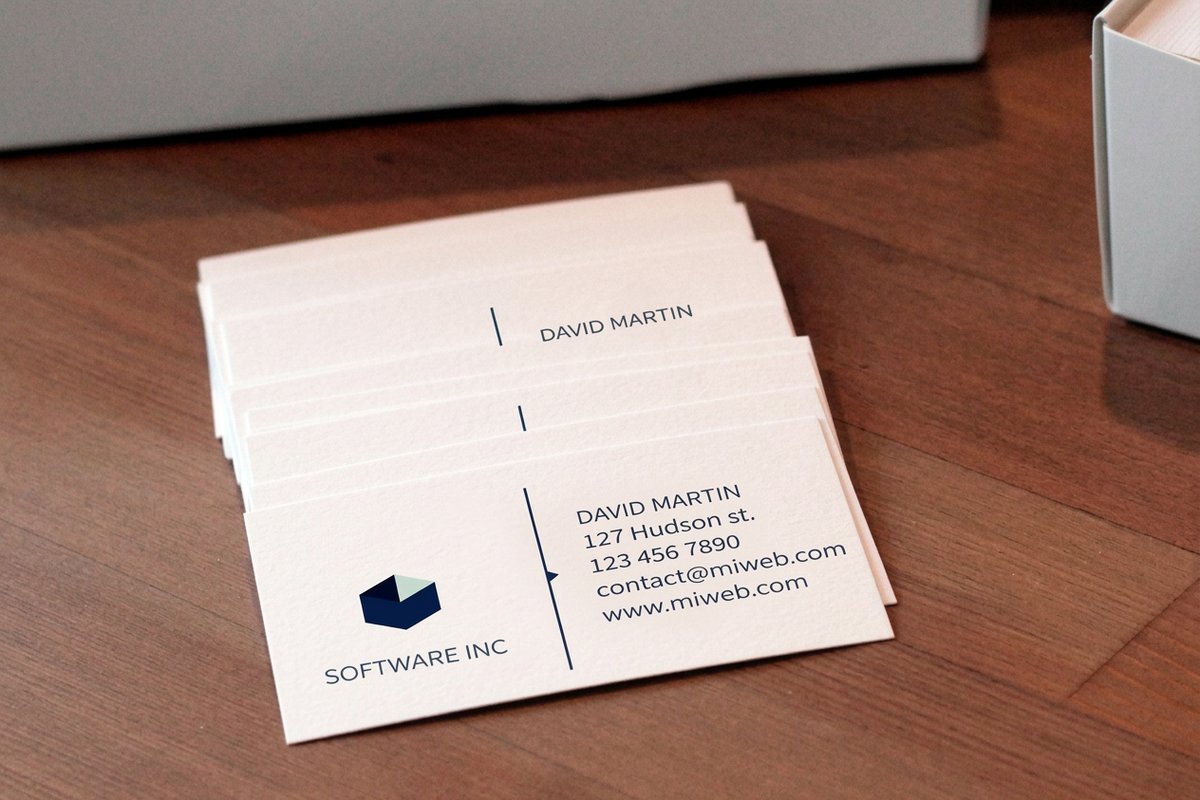
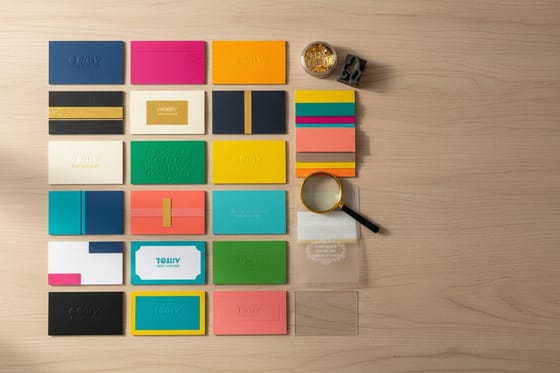
The business card is the touchpoint almost every rebrand starts with. Here are the live specs and price-per-unit for standard business cards at 4OVER4.COM, straight from the configurator, so you can size the print side of your relaunch and see the stocks and finishes your new brand can wear.
| Quantity | Price Per Unit | Total |
|---|---|---|
| 100 | 17.6¢ | $17.57 |
| 200 | 11.5¢ | $23.07 |
| 300 | 9.15¢ | $27.46 |
| 400 | 7.96¢ | $31.86 |
| 500 | 7.25¢ | $36.26 |
| 600 | 6.77¢ | $40.64 |
| 700 | 6.43¢ | $45.04 |
| 800 | 6.18¢ | $49.43 |
Print it
Print the core of your new brand at 4OVER4
See it in use
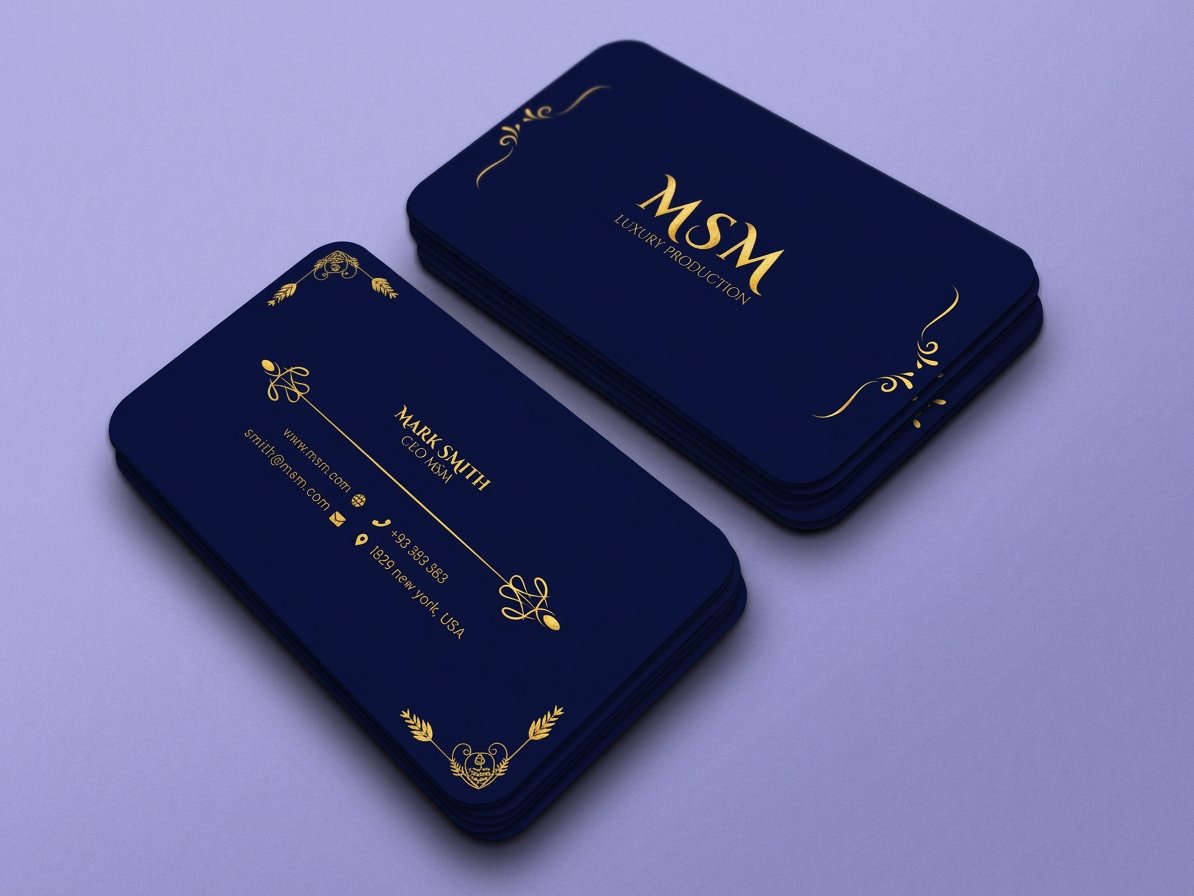
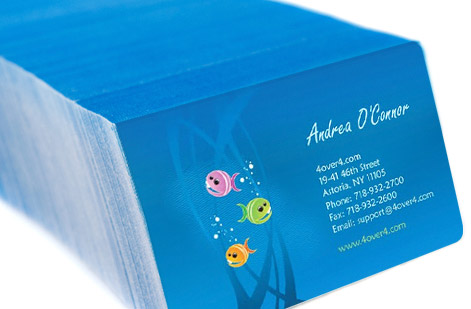
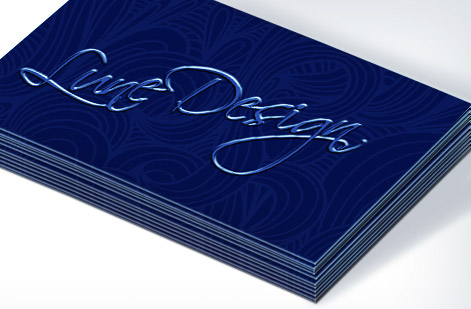
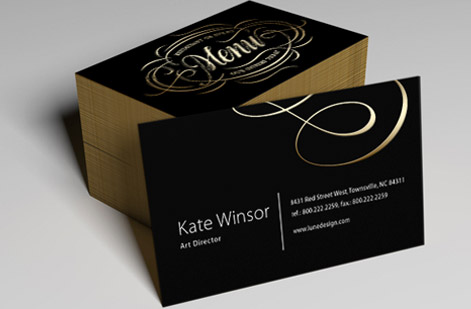
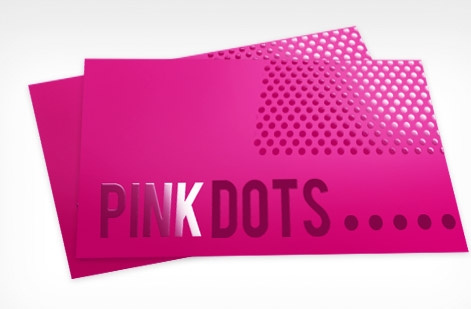
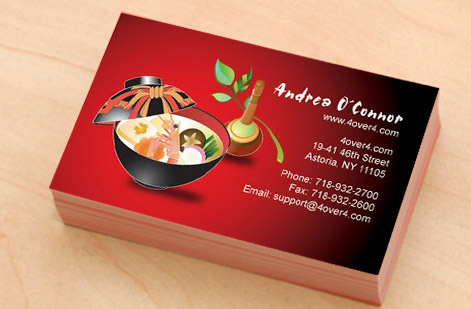
Real rebranded print, made in-house
Explore more
Where to go next
By the numbers
Printing you can count on at 4OVER4
Common Questions
Common questions about rebranding design
What is rebranding design, in plain terms?
Rebranding design is the work of turning a new brand strategy into a complete visual identity and then putting that identity onto everything a customer sees. It covers the logo, color palette, typography, and layout rules, but it does not stop at the screen. The design is only finished once it is printed consistently across the touchpoints people actually hold, from your business card to your letterhead to your signage. A good rebrand design keeps all of those pieces saying the same thing, so the new brand reads as one confident system rather than a set of loosely related files.
What are the steps to rebranding your business?
Rebranding runs in a clear order. First, audit the brand you have now and mark what works and what drifts. Second, pin down the single reason you are rebranding, because that reason is the brief everything else answers to. Third, set the strategy: who you serve, what you want them to feel, and what makes you different. Fourth, design the new identity as a system with written rules for color, type, and spacing. Fifth, proof it on a real printed sample before the full run. Sixth, roll every core touchpoint out together on the same day and retire the old stock cleanly. Skipping straight to the logo is the most common mistake, because a design drawn before the strategy is decided has nothing solid to express.
How do I choose the right rebranding design?
Start with your customer and your reason, not your taste. Decide who the new brand is speaking to and what you want them to feel, then pick colors, type, and finishes that match that feeling and hold up across sizes. Keep the palette to two or three colors and the logo simple enough to read clean on a small business card and a large banner alike. Test more than one direction on a real printed piece before you commit, because a look that feels bold on a monitor can read differently in the hand. The 4OVER4.COM Online Designer and free design templates let you try directions quickly before you order the full run.
What does rebranding design cost, and how are prices set?
There is no single price for a rebrand, because the cost splits between the design work and the printing, and the printing is spread across the pieces you reprint. At 4OVER4.COM, each product is priced by quantity, size, paper stock, and finish, and the exact figure updates live in the configurator as you choose those options. Higher quantities lower the price per unit, and premium finishes like soft touch or foil add to it. Rather than quote one number that could be wrong for your setup, the live specs and price widgets on this page pull real per-unit pricing straight from the product page, so you can size the print side of your rebrand accurately.
Should I do a full rebrand or just a refresh?
Choose a refresh when customers still know and like you but the design simply feels dated, and choose a full rebrand when the strategy, name, or promise itself has changed, such as after a merger or a shift to a new audience. A refresh modernizes the look while keeping the recognition you have already earned, so you reprint the hero pieces and keep the structure. A full rebrand rebuilds the whole system and carries more risk, which means the print rollout has to arrive all at once to read as deliberate. When in doubt, keep the strongest equity you have and refresh around it rather than throwing away recognition you cannot easily rebuild.
How long does the printed rollout of a rebrand take?
The design phase varies, but the printing itself moves quickly once your files are final. Turnaround depends on the product, quantity, and finish you choose, and the estimated date shows on each product page before checkout. Many everyday pieces like business cards can move fast, and 4OVER4.COM offers same-day printing and rush delivery when a launch date is fixed. The practical approach is to reprint the core touchpoints, your cards and letterhead first, so the new brand is in hand on day one, then add folders, postcards, and signage as the rollout continues.
Get Started
Ready to put your new brand in people's hands?
Pick your stock and finish, drop in the new logo, and we print business cards that make your relaunch look every bit as considered as the strategy behind it.
Legal Disclaimer
Gold Standard guarantees apply to all standard orders placed through 4over4.com. Price match requires verifiable proof of a competitor's published price for an equivalent product with matching specifications and turnaround time. Satisfaction guarantee covers manufacturing defects and print quality issues. Contact support with order number and documentation. On-time delivery rate based on tracked orders 1999 to 2026. Individual results may vary based on shipping carrier performance.
