
How to Build a Strong Brand Identity


Emma is our prepress and print production voice, built from the knowledge of our production team, with over 20 years in printing.
Define your audience, lock four building blocks, logo, color, type, and voice, then bring them to life on the cards and stationery your customers keep. The real test is not the mood board, it is whether the logo still reads at 3.5 by 2 inches. The kit to print first is business cards, letterheads and printed envelopes.
To build a strong brand identity, start with strategy, not looks: define your audience and positioning, then lock a simple logo, two or three colors, one or two fonts, and a clear voice. Apply that same kit consistently across everything, and make it real by putting it on business cards, stationery, and signage. Brand is the feeling customers have. Brand identity is the printed toolkit you use to create it.
Quick tips
Quick tips for building a brand identity
Define your audience and positioning before you choose a single color. Lock a simple logo, two or three brand colors, and one or two fonts, then use that exact kit everywhere. Consistency is what makes a small business look established, so match your business cards, letterhead, and signage to the same look. 4OVER4.COM customers who print a cohesive identity build recognition faster than those who stop at a logo on a screen.
Before you print
Stock, size and file choices for the first brand kit
Match the stock to your positioning. A value brand does well on 14pt or 16pt gloss cards; a premium brand steps up to 24pt ultra thick gloss or an 18pt uncoated card people can write on. Letterhead comes on 70# uncoated text or 24# Royal Laid, and printed envelopes on white wove, Royal Laid or Royal Linen, so the paper can match across the set.
Send one file set for every piece: the logo as vector art, your two or three colors as CMYK values, and your one or two fonts outlined. Order 100 cards first, check the color in hand, then order the letterhead and envelopes from the same values.
What brand identity means (and how it differs from your brand)
People use "brand" and "brand identity" as if they mean the same thing. They do not. Your brand is the reputation and feeling that lives in your customer's head, the gut reaction they have when they hear your name. Your brand identity is everything you deliberately design so people form that feeling: your logo, your colors, your fonts, your imagery, and the tone of your words. The identity is the half you print, and its first test is a 3.5 by 2 inch business card.
Put simply, the brand is the impression and the identity is the toolkit that creates it. You cannot control the impression directly, but you can control every visible piece that shapes it. For a small business, that means you do not need a marketing department to decide what your cards, signage, and stationery look like.
The fastest way to make an identity real is to put it on something you can hand to a customer. That is why this guide keeps ending each step in the same place: your printed materials. If you want a head start, our Online Designer lets you build the whole kit in the browser and send it straight to print.
The building blocks: logo, color, type, and voice
A strong identity is built from four pieces. Lock these four and every printed piece has its rules.
- Logo. The single mark that represents you. It should read clearly at the size of a business card and still work in one color. Simple beats clever almost every time.
- Color palette. Two or three colors, no more. One primary, one accent, and a neutral. These are the colors people will start to associate with you.
- Typography. One or two fonts, one for headlines and one for body text. Consistent type is what makes two different pieces look like one company.
- Voice. How you sound in writing, friendly, formal, playful, or plain. Voice is part of identity even though you cannot see it.
Think of these four as a kit. Once you lock them, you apply the same kit to your business cards, your letterhead, your website, and your signs. That repetition is what turns a small shop into a recognizable brand.
Step by step: define your audience and positioning first
Before you touch a color picker, get clear on two things. This is the step most small businesses skip, and it is why so many identities feel generic.
Your audience. Who exactly are you serving? A wedding photographer, a plumber, and a boutique coffee roaster all need different looks because their customers expect different things. Write down who your customer is, what they care about, and where they will first see your brand. That place picks your first print order: a counter means a 3.5 by 2 inch card from 100 pieces, a street means an 18 by 24 inch yard sign.
Your positioning. What is the one thing that makes you different or better? Fastest turnaround, most personal service, best materials, lowest price. Pick a lane. Your positioning becomes the compass for every visual decision that follows.
Once you can finish the sentence "We are the [positioning] choice for [audience]," your identity choices get easier. A premium positioning justifies a specialty finish on your business cards. A value positioning points you toward clean, affordable standard cards that still look sharp.
Choosing colors and fonts that fit your brand
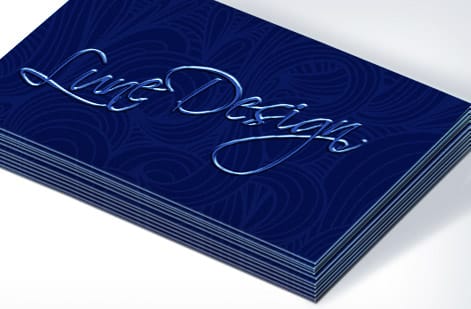
Color and type carry more meaning than most owners realize. They set the mood before anyone reads a single word.
Color. Pick a primary that matches your positioning, then one accent and one neutral. Blues and greens read as calm and trustworthy, which suits finance, health, and services. Warm reds, oranges, and yellows read as energetic and friendly, which suits food and retail. Whatever you choose, use the same values everywhere so a card, a sign, and a website all match.
Fonts. Keep it to one or two. A clean sans-serif for body text keeps things readable. A stronger display font for your name or headlines adds character. Avoid mixing more than two, because that reads as chaotic and undoes the consistency you are working to build.
The safest test is a real one: put your colors and fonts on an actual business card in our Online Designer and look at it at full size. Colors that pop on a screen sometimes fall flat in print, and this is the fastest way to catch it before you order.
Translating your identity into print: cards, stationery, and signage
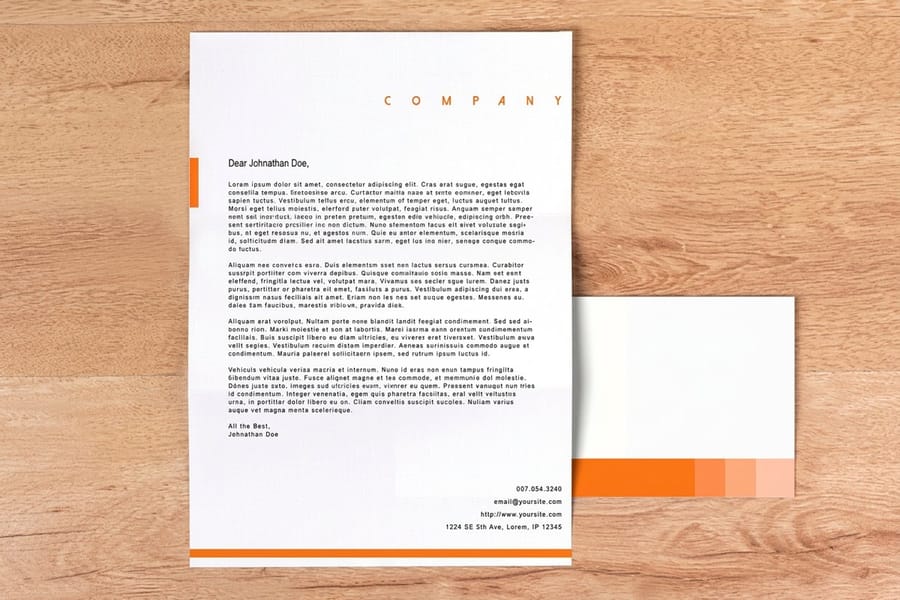
This is where an identity stops being a mood board and becomes a business. Your logo, colors, and fonts only build recognition once they are on things people keep and see. Cards run 3.5 by 2 inches from 100, letterheads 8.5 by 11 inches from 50, and printed envelopes No. 10 from 250.
Business cards are the anchor. They are the piece you hand across a counter, drop in a bag, or leave on a desk. A well-designed card does more brand work per dollar than almost anything else you print, which is why we point every branding decision back to your business cards.
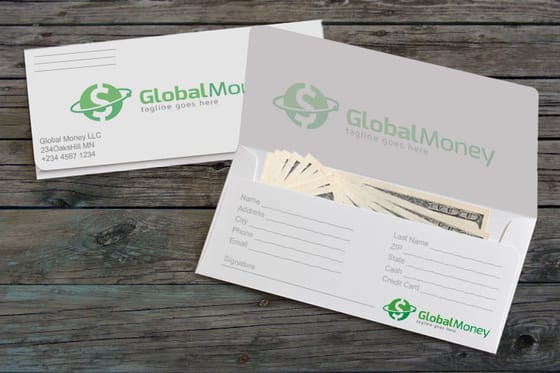
Stationery extends the identity into every letter and invoice you send. Matching letterheads and printed envelopes make even routine mail look intentional and established. When a customer receives a letter that matches the card they already have, the brand feels bigger than it is.
Signage takes your identity into the physical world. Consistent color and type on a sign or banner ties your storefront or booth back to everything else you print. Order these together and the whole system arrives matching, ready to launch on the same day.
Your brand consistency checklist
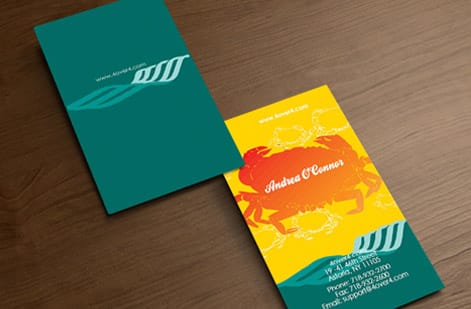
Consistency is the single biggest multiplier for a small brand. The same look, everywhere, every time, is what makes a young business feel established. Run through this before you print anything.
- Same logo file on every piece, at the right size and never stretched.
- Same exact colors across cards, stationery, signs, and web. Note your color values and reuse them.
- Same one or two fonts in the same roles: display for headlines, body for text.
- Same voice in your copy, whether it is a card tagline or a shop sign.
- Same contact details and web address on everything, formatted the same way.
Save your logo, color values, and font names in one place so you never have to guess. When it is time to order, that little kit makes designing your business cards and stationery fast and mistake-free.
Common branding mistakes that make a small business look smaller

Even careful owners make these errors. Each one shows up first on the 3.5 by 2 inch card, where there is no room to hide a third font. Avoid them and the brand reads as established.
Too many colors and fonts. A palette of six colors and three fonts reads as amateur. Discipline looks professional. Two or three colors, one or two fonts, everywhere.
An inconsistent logo. A logo that is one shade of blue on your card and another on your sign quietly tells customers you are not paying attention. Lock the exact values and reuse them.
Chasing trends instead of fit. The point is to match your audience and positioning, not to copy whatever looks fashionable this year. A trend fades. A fitting identity lasts.
Skipping print entirely. A brand that lives only on a screen is easy to forget. The businesses people remember put their identity in customers' hands. Get it onto business cards first, then extend it across your stationery and signs.
Waiting until it is perfect. A clean, consistent identity you actually use beats a perfect one that never ships. Start with cards, learn what works, and refine from there.
Wally explains brand identity
A brand people can hold is a brand people remember
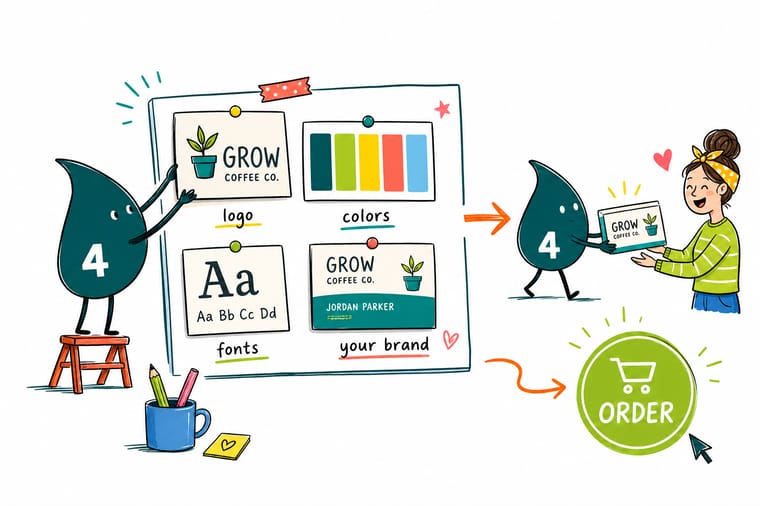
Wally treats brand identity like a printing kit: one logo, two or three colors, a couple of fonts, and a clear voice, applied the same way on everything. The trick is not the theory, it is the follow-through. A brand that lives only on a screen fades fast, so put it on a business card people keep and pass along. Build your look in the free Online Designer, then print it at 4OVER4 so your identity shows up crisp and consistent in every hand.
Design your business cards →
Specs and pricing
Business card specs and pricing
When you are ready to put your identity in customers' hands, standard business cards start at 100 for $17.57 at 3.5 by 2 inches, with square, slim and 2.125 by 3.375 inch sizes, on 14pt to 80pt gloss or uncoated cover, printed on one or both sides in 3 business days. The live specs and price per unit below come straight from the configurator.

| Quantity | Price Per Unit | Total |
|---|---|---|
| 100 | 17.6¢ | $17.57 |
| 200 | 11.5¢ | $23.07 |
| 300 | 9.15¢ | $27.46 |
| 400 | 7.96¢ | $31.86 |
| 500 | 7.25¢ | $36.26 |
| 600 | 6.77¢ | $40.64 |
| 700 | 6.43¢ | $45.04 |
| 800 | 6.18¢ | $49.43 |
Print it
Order the pieces that carry your brand
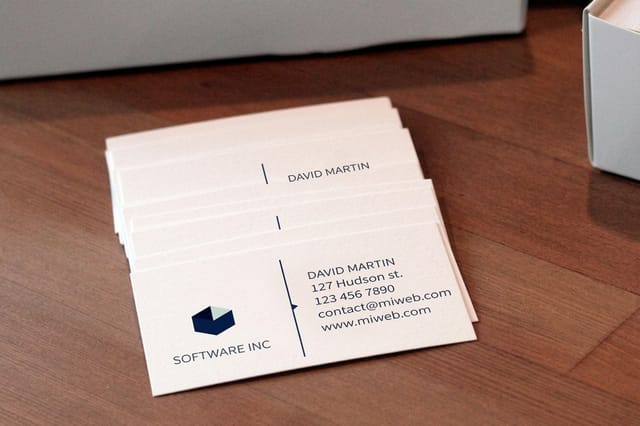
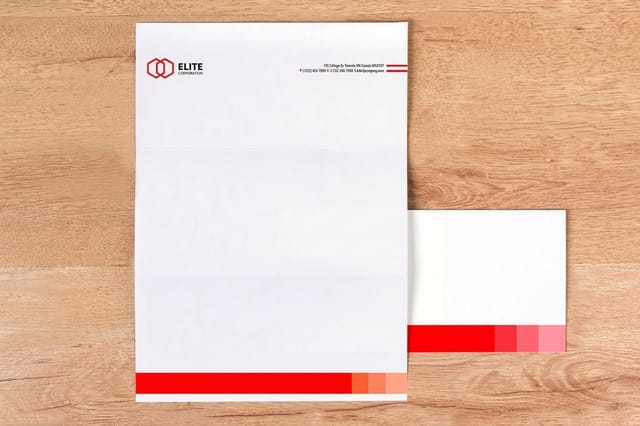
Cards print in 3 business days, letterheads in 5 and printed envelopes in 7. Order them in one cart from the same color values and the kit arrives matching.

See it in use
Brand systems we printed for small businesses
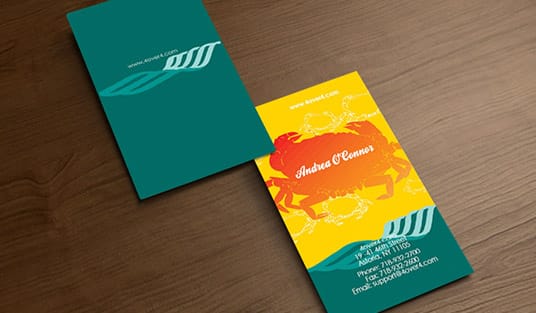
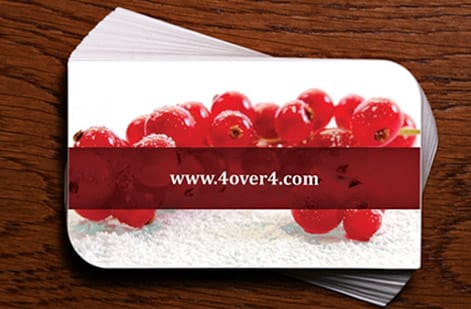
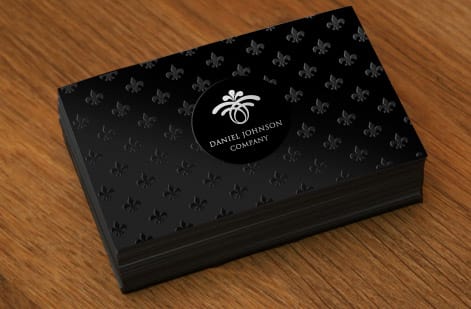
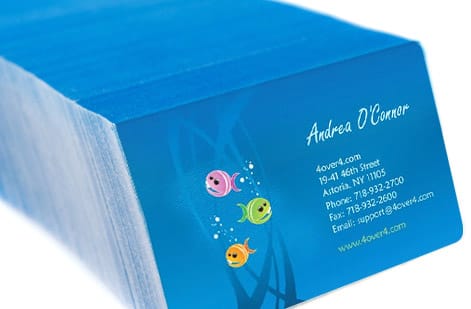
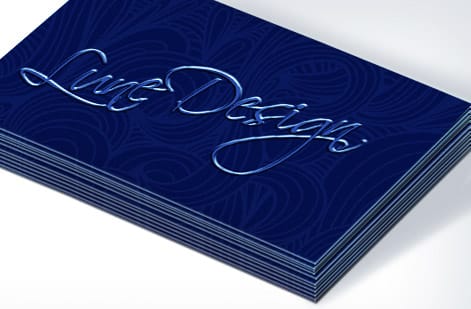
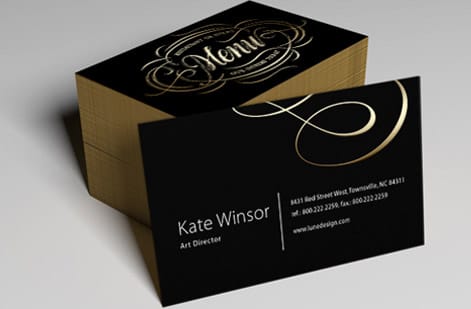
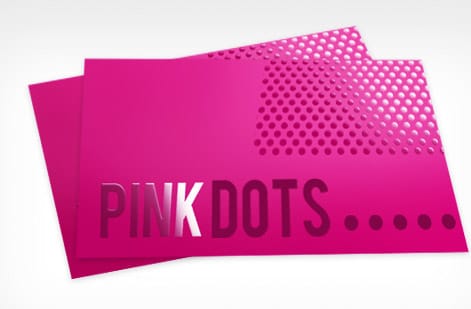
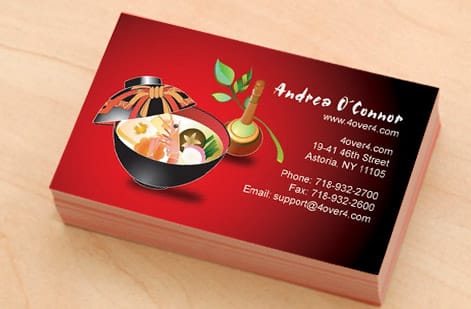
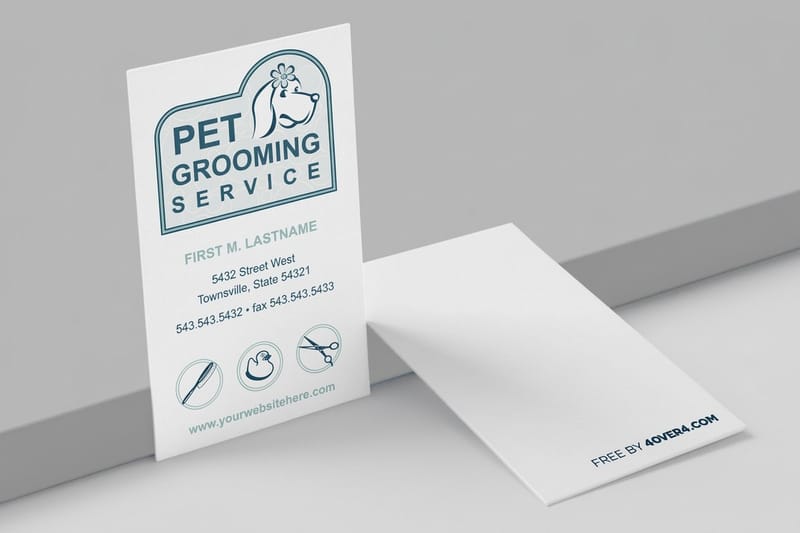
Customer business cards printed in-house at our Queens plant, from standard stock to specialty finishes, so you can see how a two or three color palette reads at card size.

Explore more
Where to go next
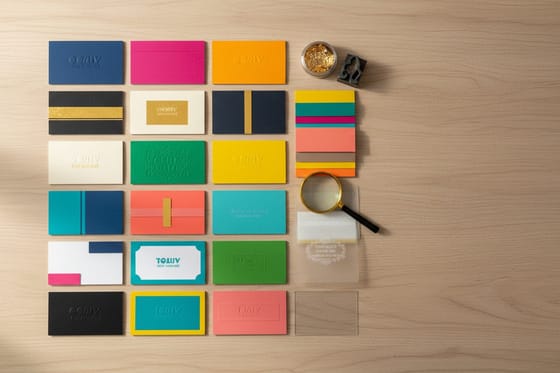
Browse real customer card designs, carry the identity onto flyers, set up a folded brochure file, build the kit in the online designer, and shop business card printing.

By the numbers
Cards at 100 for $17.57, letterhead at $2.00 a sheet
Common Questions
Common questions about brand identity
What is brand identity?
Brand identity is the collection of visible, tangible elements that represent your business: your logo, color palette, typography, imagery style, and the tone of your writing. It is the part of your brand people can actually see, read, and hold. Your brand is the reputation and feeling customers carry about you. Your brand identity is the toolkit you use to create that feeling and keep it consistent everywhere, from your website to a business card you hand across a counter.
Do I start with the logo or with what makes me different?
Start with strategy, not aesthetics. Define who your customer is, what you sell, and the one thing that makes you different from competitors. From there, pick a logo style, two or three colors, and one or two fonts that match that positioning. A calm, trustworthy accountant leans on clean type and blue or navy. A bold food truck can use brighter color and heavier fonts. Choose elements you can repeat everywhere, then test them on a real business card before you commit to a full print run.
What does brand identity cost and how are prices set at 4OVER4.COM?
The identity itself, your logo, colors, and fonts, can cost nothing if you build it yourself with our free Online Designer. The cost comes when you print it. Pricing at 4OVER4.COM is driven by the product, the size, the paper stock, the finish, and the quantity. Standard business cards, for example, start from an accessible per-order price, and the price per card drops sharply as your quantity climbs. Every widget on this page pulls live pricing straight from the configurator, so you always see the real number, never an estimate.
What sizes, stocks and finishes are available for brand identity print materials?
It depends on the product, and the choices are wide. Business cards come in standard and custom sizes with matte, gloss, silk, and specialty finishes across 60-plus paper stocks. Letterheads print on premium uncoated and text-weight stocks. Printed envelopes match your letterhead for a complete stationery set. Use the specs widget on this page to see the exact sizes, stocks, and finishes available for each product, all pulled live from the 4OVER4.COM configurator.
How long does brand identity print work take to produce and ship?
Turnaround depends on the product and the finish you choose, and it is shown at checkout before you pay. Many core products like standard business cards ship fast, and 4OVER4.COM prints and ships from our own Queens, NY facility with a 99.8% on-time delivery record. For rush needs, look for same-day and expedited options on the product page. If you are launching a brand on a deadline, order your cards and stationery together so everything arrives at once.
Get Started
Order 100 business cards from $17.57 with matching letterhead
Pick your card, drop in your logo, colors, and fonts, and we print crisp, consistent business cards that make your small business look established.
Legal Disclaimer
Gold Standard guarantees apply to all standard orders placed through 4over4.com. Price match requires verifiable proof of a competitor's published price for an equivalent product with matching specifications and turnaround time. Satisfaction guarantee covers manufacturing defects and print quality issues. Contact support with order number and documentation.