
How Raised Foil Builds Height and What It Asks of Your Artwork


Raised foil is jetted resin wearing metal. The build runs four steps, it bonds to some stocks and not others, and the artwork minimums decide whether your logo comes back sharp.
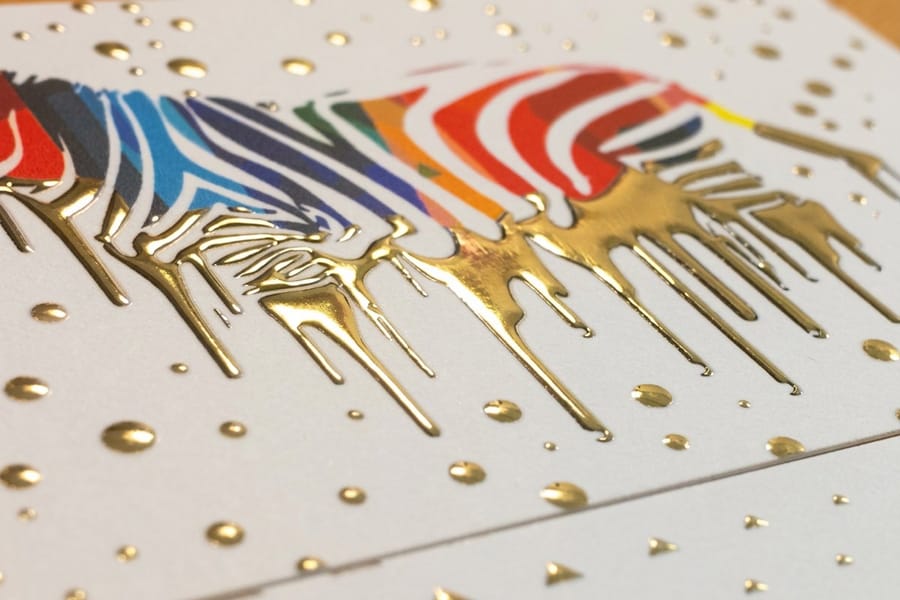
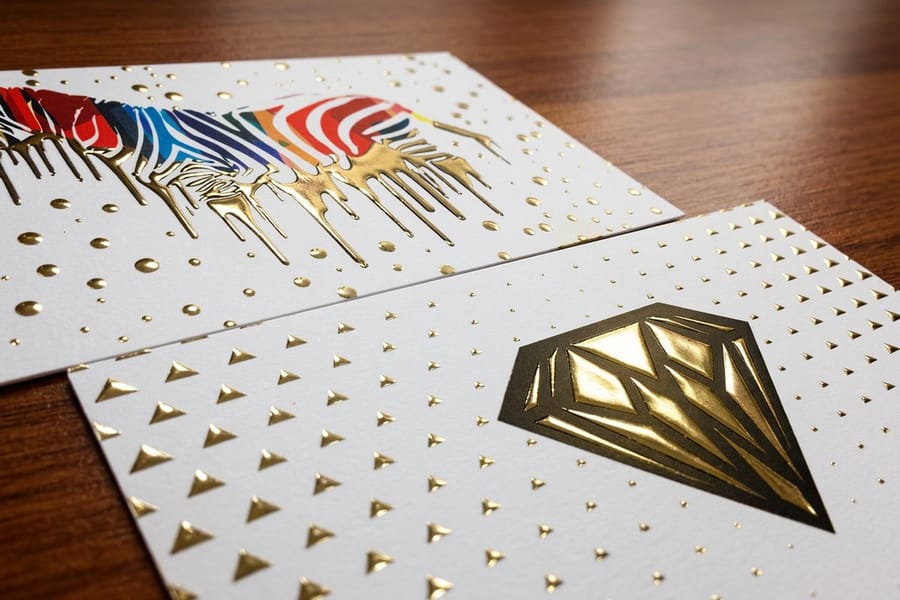
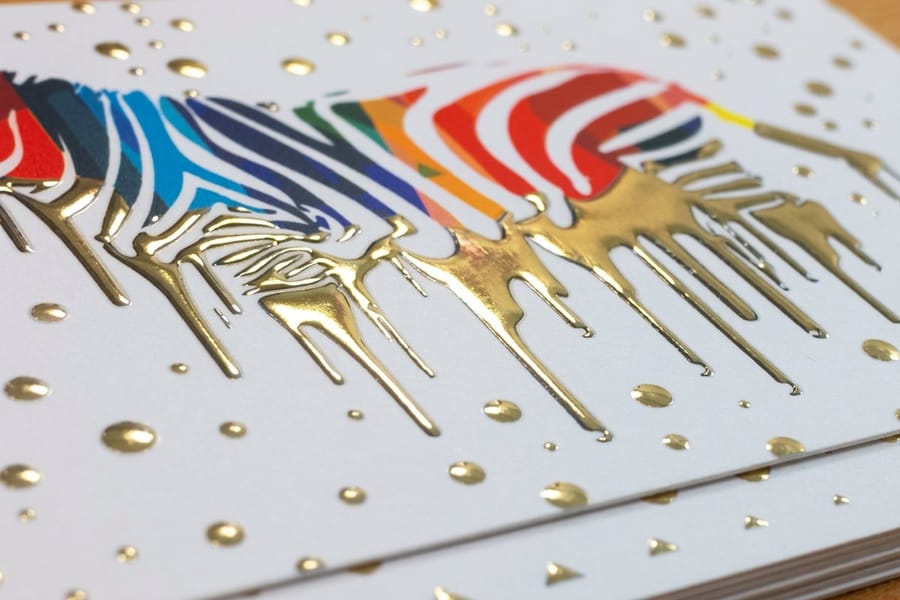
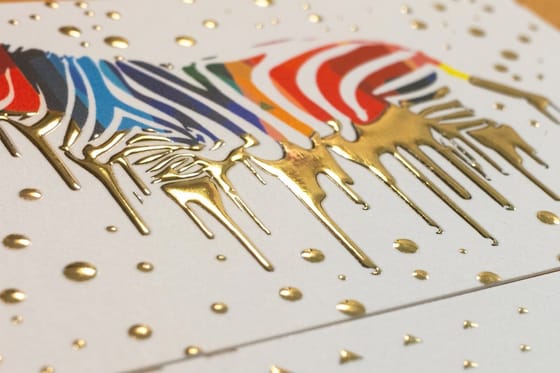
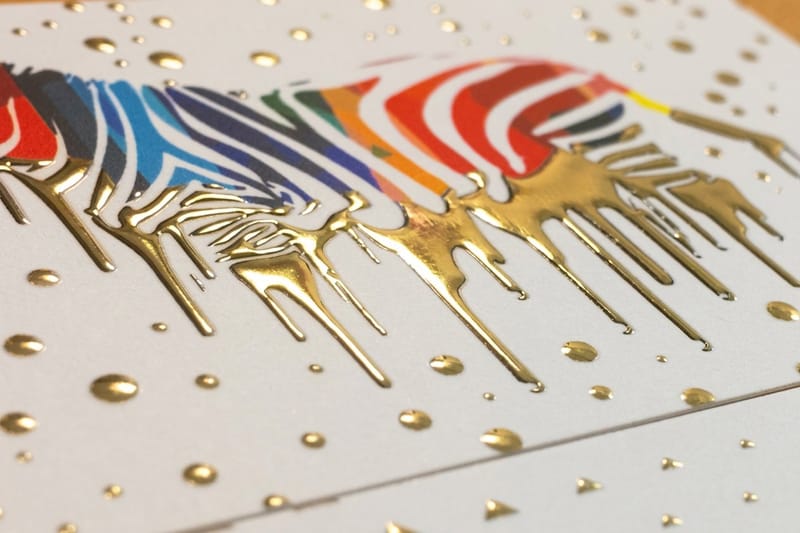
Raised foil prints a clear UV resin onto a laminated sheet in the exact shape of your foil art, then bonds metallic film to that resin under heat, so the metal sits above the surface instead of being pressed into it. No die is cut, which is why short runs cost what long runs cost per setup, and why the back of the sheet stays flat. In exchange it will only bond to laminated coated stock, and it needs strokes of half a point or heavier to hold a clean edge.
Quick answer
Resin first, metal second, and no die anywhere in the process
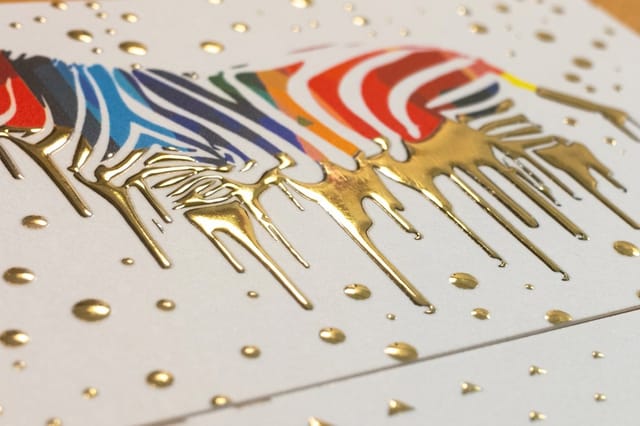
Raised foil builds height with a clear polymer, then bonds foil to it. The sheet prints, takes a laminate film, receives a jetted UV resin in the shape of the foil artwork, and passes under a metallic film that transfers only where the resin is. Nothing presses the paper, so the reverse stays flat and printable. The trade is a narrower stock list, laminated coated board only, and artwork that has to be built as a solid mask with strokes at half a point or heavier.
How the Raised Layer Is Actually Built
The metal is the last thing to arrive. Everything that makes raised foil feel raised happens before any foil touches the sheet, and knowing the order tells you why the rules about stock and line weight exist.
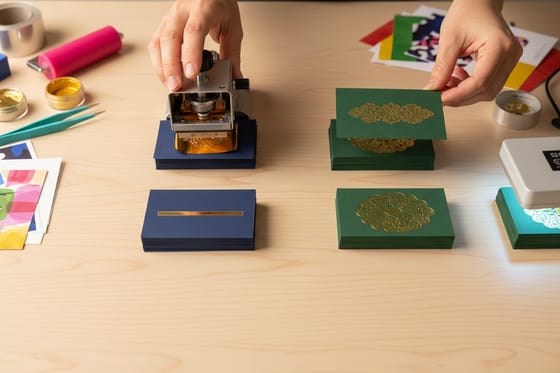
One, the sheet prints and gets laminated. Your CMYK artwork prints first, then the sheet takes a matte, soft touch or gloss film. The lamination is not decoration at this stage. It seals the surface so the next layer has something flat and non porous to sit on.
Two, a clear resin is jetted in the shape of your foil art. An inkjet head lays down a UV curable polymer only where the foil file says to, then a lamp cures it. This is the step that creates height. Thicker deposit, more relief.
Three, metallic film is bonded to the resin. A roll of foil passes over the sheet under heat and pressure. The metal releases from its carrier wherever it meets the cured polymer and stays put on everything else.
Four, the carrier peels away. The unused foil lifts off with the film and leaves a metallic surface sitting proud of the card, following the exact outline of the resin underneath.
That is the whole thing. The foil layer itself is a skin measured in microns, so when you run a fingernail across a finished raised foil business card you are feeling the resin, wearing metal. It also explains the failure modes. Resin that cannot anchor gives foil that lifts, and resin laid too thin along a hairline gives foil that breaks up.
Raised Foil Against Flat Foil Stamping and Raised Spot UV
Three finishes get quoted against each other constantly, and the specs read similarly on paper. Turn the sheet over and they separate immediately.
| Finish | How the effect is made | Tooling per design | Back of the sheet | Best at |
|---|---|---|---|---|
| Raised foil | Clear resin jetted from your file, metallic film bonded to it under heat. | None. Driven digitally. | Flat, undisturbed. | Logos, monograms and display type that need to be both metallic and tactile. |
| Flat foil stamping | A heated metal die presses foil into the sheet. | A magnesium or copper die, cut per design. | A faint impression behind the stamped area. | Fine detail, script, and stocks that cannot take lamination. |
| Raised spot UV | The same clear resin, cured and left clear. | None. Driven digitally. | Flat, undisturbed. | Gloss on matte contrast where you want texture without a metallic color. |
| Dual raised | Raised foil and raised spot UV on the same sheet in one workflow. | None. Driven digitally. | Flat, undisturbed. | Cards where the mark is metal and the surrounding pattern is clear gloss. |
Read the tooling column before the aesthetics column. If you are printing one design in a modest quantity, the die cost is what decides the job, and raised foil removes it entirely. If the artwork is a fine engraved script or a 4 point legal mark, a die still holds detail that jetted resin will not, and the full comparison of foil stamping and raised foil walks through where that line falls. When you want both effects at once, the dual raised printing collection runs them together rather than as two passes.
The Stocks That Show Raised Foil, and the Ones That Fight It
Stock choice does two separate jobs here, and people usually only think about one of them. The surface has to hold the resin, and the finish has to give the metal something to contrast against. A stock can pass the first test and still waste the effect.
| Surface | Does the resin bond | Contrast with the foil | Verdict |
|---|---|---|---|
| 16pt matte laminate | Yes. Sealed and even. | Strong. The sheet stays quiet and the foil is the only bright thing. | The default. Safe on any artwork that meets the minimums. |
| 16pt soft touch suede | Yes. Same sealed film with a velvet hand. | Strongest. The surface reads almost matte to the eye and drags slightly on the finger. | Best contrast available, and the reason to spend up. |
| 16pt gloss laminate | Yes. | Weak. Both surfaces reflect, so the foil competes instead of standing out. | Works mechanically, wastes the effect. Choose matte instead. |
| Uncoated and linen | No. Resin sinks into the fiber and cures unevenly. | Would be excellent if it were possible. | Not a raised foil candidate. Use flat foil stamping. |
| Kraft and recycled board | No. Porous, and the texture breaks the bond line. | Good on paper. | Not a raised foil candidate. |
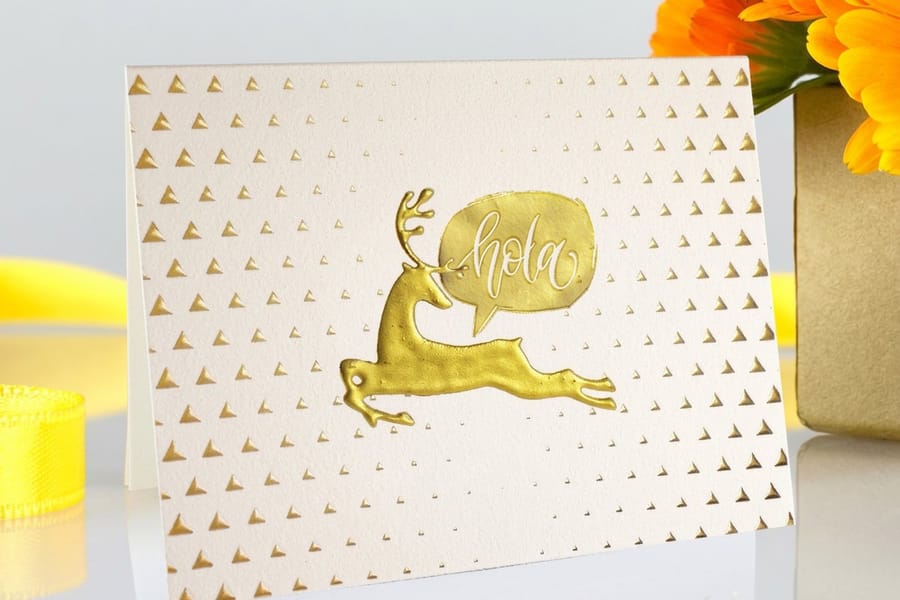
The pattern is simple once you see it. Raised foil lives on laminated 16pt board, and the only real decision is matte against soft touch. That is why the effect appears on cards, postcards, folders and greeting cards rather than across the whole catalog, and why raised foil suede greeting cards exist as a separate product from the standard ones. If your brief demands an uncoated or textured sheet, stop specifying raised foil and go look at what the foil printing collection offers with a die instead.
Setting Up the Foil Layer So It Prints the Way You Drew It
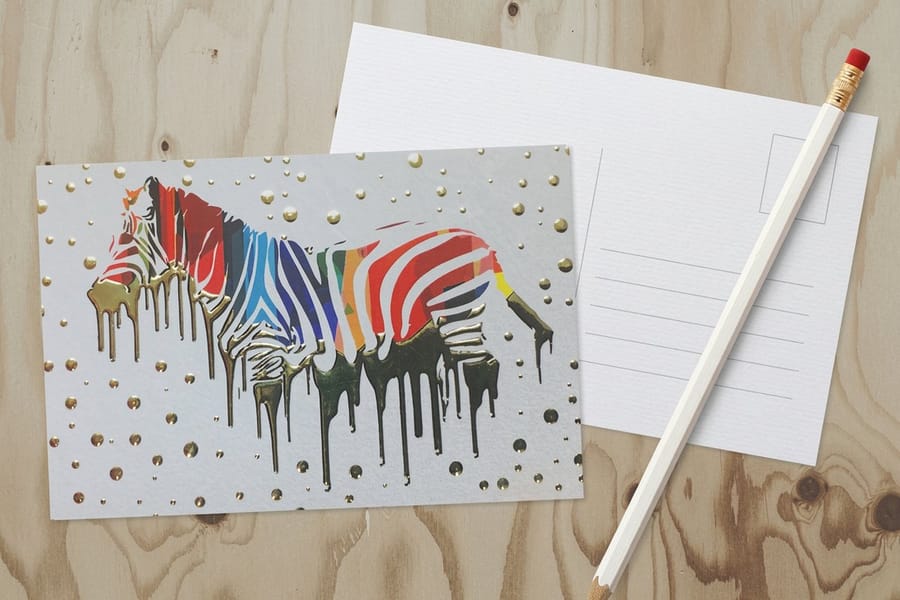
The foil file is a mask, not a picture. Everything in it is either solid or absent, and the press has no way to interpret anything in between. Most reprints come from a foil layer that was drawn as artwork rather than as a mask.
Build it as a separate layer or a separate page, name it clearly, and fill every foil element with 100 percent black on white. Keep the underlying CMYK artwork in position so registration is obvious, but do not leave a colored copy of the mark inside the foil file.
- Strokes at 0.5pt or heavier. Thinner lines lose foil in patches once the resin domes at the edges.
- Type at 6 point and above, in a weight that is not hairline. Thin serifs at small sizes are the most common casualty.
- Reversed detail one or two sizes larger than you would set it in ink, because the gap is squeezed from both sides.
- An eighth of an inch of clearance from trim, and the same from any score or fold. Foil bleeding off the edge is not supported the way ink bleed is.
- A small gap between neighboring foil elements. Two heavy shapes close together can bridge and fill the space between them.
- No gradients, screens, transparencies or drop shadows in the foil layer. Flatten the intent into solid shapes before you export.
One habit saves more jobs than any of the individual minimums: split the artwork deliberately. Raise the logo and the name, print the address block, the legal line and the small type flat. A card where three elements are metal and everything else is ink reads as a decision. A card where every mark was pushed into the foil layer reads as a mistake, and the fine parts of it will be the parts that fail. The same split applies at larger sizes, and it is what keeps a raised foil pocket folder from looking busy when the foil area is measured in inches rather than millimeters.
Where Raised Foil Earns Its Price, and Where It Does Not
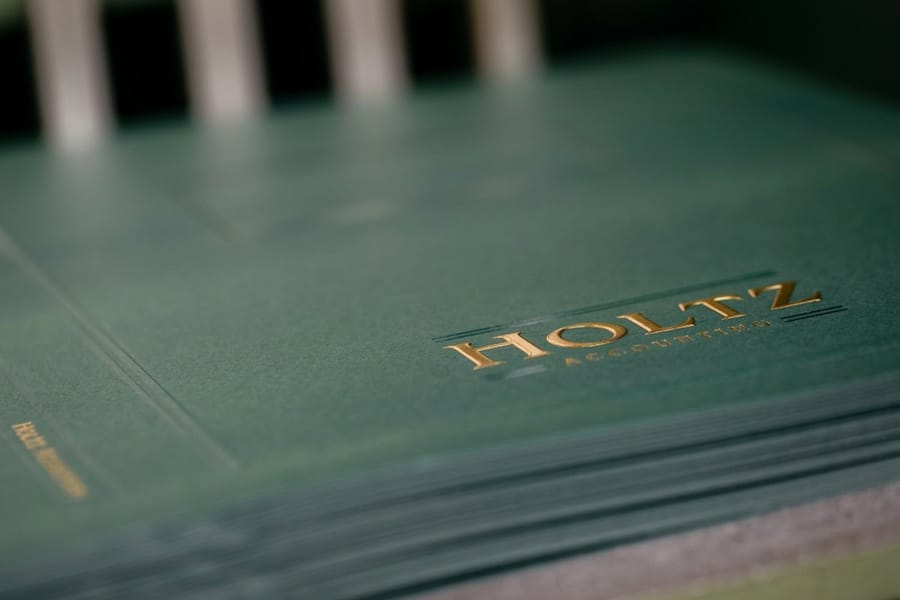
Raised foil is a tactile argument, so it pays where the piece gets handed over and held rather than skimmed and dropped. A business card is the clearest case, since it is taken, turned, and put in a pocket, which is exactly the sequence a raised surface is built for. Raised foil business cards start at $86.78.
Above card size, the calculation shifts. Raised foil postcards start at $299.00 and work hardest as an invitation or an announcement that will sit on a desk, not as a bulk mail piece. Raised foil greeting cards start at $618.16 and are handled slowly, often kept, which is the ideal case for a finish you have to touch to appreciate. Raised foil pocket folders start at $1,037.97 and earn it in a room where the folder is placed in front of someone across a table.
Where it does not earn its price: anything that has to run through an office laser printer afterward, anything folded through the foil area, and high volume mail that is sorted at arm's length. For those, put the money into stock weight or a coating instead. If you are still weighing the finish against the rest of the catalog, the design and process guides cover the neighboring decisions, and the raised foil printing collection lists every product the finish is available on with live pricing.
Wally explains raised foil
Clear resin goes down first, the metal only follows it
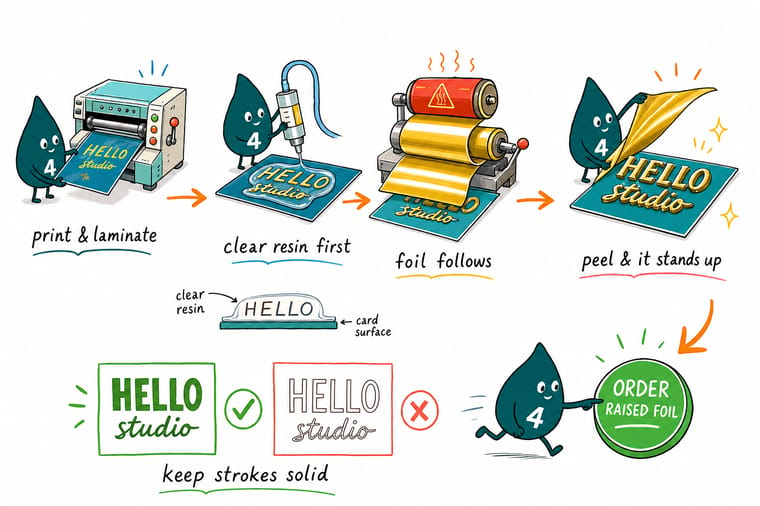
Wally prints the card, laminates it, then jets a clear resin exactly where the logo sits. He runs metallic film over the top under heat, and the metal sticks only to the resin. Peel the film away and the logo is standing up in gold. No die was cut, so the second card costs the same to set up as the two thousandth. Give him a solid shape at half a point or heavier and it comes back sharp. Give him a hairline and the resin has nothing to build on.
Order raised foil business cards →Specs and pricing
Raised foil products, sizes, and starting prices
Raised foil postcards start at 100 for $299.00 and pocket folders at 50 for $1,037.97, both on laminated cover.

Print it
Order a metallic mark people reach out and touch
Explore more
Where to go next


By the numbers
The resin and foil line we run
Common Questions
Your raised foil questions, answered
What is raised foil printing?
Raised foil is a digital foil process that builds height with a clear resin before the metal goes on. The sheet is printed and laminated, a UV curable clear polymer is jetted onto it in the exact shape of the foil artwork, and a roll of metallic foil film is then pressed against that polymer under heat so the metal transfers only where the resin is. The carrier film peels away and takes the unused foil with it. The result is a metallic mark that stands above the surface of the card and catches light from an angle, not just head on.
How is raised foil different from foil stamping?
Foil stamping uses a heated metal die that presses foil down into the sheet, so the foil finishes level with or slightly below the paper surface and leaves an impression you can feel on the reverse. Raised foil adds material on top and never deforms the sheet, so the back stays flat. The practical difference is tooling. A stamping die has to be made for each design and is charged per job, while raised foil is driven from your file. Stamping still wins on hairline detail and on stocks that cannot be laminated.
What stock does raised foil need?
A smooth coated sheet that has been laminated, which in practice means 16pt cardstock with a matte, soft touch or suede finish. The lamination gives the clear resin a sealed, non porous surface to bond to and stops it soaking into the fiber. Uncoated, kraft, linen and heavily textured stocks are not candidates, because the resin sinks in or sits unevenly and the foil then transfers in patches.
What is the minimum line weight for raised foil?
Keep strokes at half a point or heavier and text at 6 point or larger in a weight that is not hairline. The resin edge domes very slightly as it cures, so anything thinner than that either fails to hold foil along its length or reads as a broken line once the metal is on. Reversed type inside a foil block should be a size or two larger than you would set it in ink, because the gap has to survive the same doming from both sides.
Can raised foil cross a fold or a score?
Avoid it. The cured resin is harder than the stock underneath, so a score that runs through a foiled area can crack the layer along the fold and leave a hairline of exposed paper. On greeting cards and pocket folders, keep the foil art clear of the score line by at least an eighth of an inch and let the fold run through plain printed area instead.
How much does raised foil cost at 4OVER4.COM?
Raised foil business cards start at $86.78, raised foil postcards at $299.00, raised foil greeting cards and raised foil suede greeting cards at $618.16, and raised foil pocket folders at $1,037.97. Those are starting prices for the smallest configuration of each product, and the per piece cost drops steeply with quantity because the foil pass runs at the same speed whether the run is short or long.
Get Started
100 raised foil business cards cost $86.78 on 16pt velvet
Pick a 16pt matte or soft touch suede stock, supply the foil art as a solid mask, and we print a raised metallic mark that stays flat on the back.
Legal Disclaimer
Gold Standard guarantees apply to all standard orders placed through 4over4.com. Price match requires verifiable proof of a competitor's published price for an equivalent product with matching specifications and turnaround time. Satisfaction guarantee covers manufacturing defects and print quality issues. Contact support with order number and documentation. On-time delivery rate based on tracked orders 1999 to 2026. Individual results may vary based on shipping carrier performance.
