
What Is Branding? A Practical Guide for Small Business


Marcus is our print marketing voice, built from the knowledge of our production team, with over 20 years in printing.
Branding is how your business looks, sounds, and feels at every point a customer meets it. A color is a hex code until it prints on a business card, a letterhead or a postcard, and that is where a brand stops being a document. This guide shows how to choose the size, stock and finish of each piece.
Branding is the whole impression your business makes, not just its logo. It is your name, colors, voice, and the quality of everything you put in a customer's hands, all pointing to one clear promise. For a small business, branding is built by deciding what you stand for and then printing it consistently across the touchpoints people actually touch, starting with your business card and letterhead.
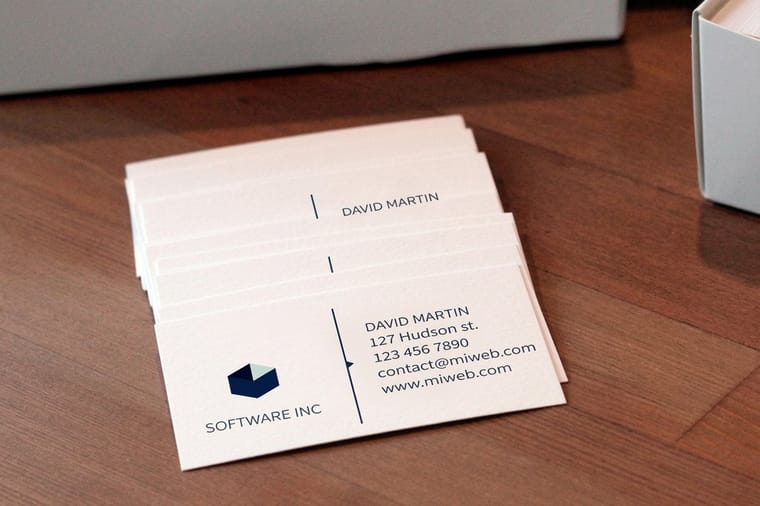
Quick tips
Quick tips for branding a small business
Decide what you stand for, write the rules down, then print it consistently. Keep your palette to two or three colors and your logo simple enough to read on a business card and a banner. Match your print quality to the promise you are making, and start with the two touchpoints every business needs: a business card and letterhead. 4OVER4.COM customers who keep their brand consistent across every printed piece are the ones people actually remember.
What is branding?
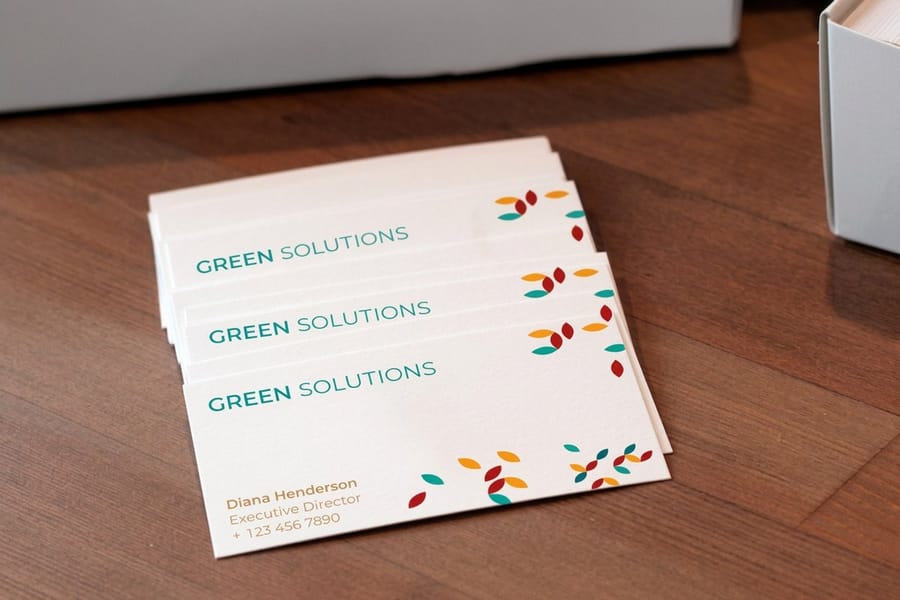
Branding is the total impression your business leaves every time someone meets it. It is your name, your logo, your colors, the words you choose, the quality of your printed materials, and the feeling all of that creates. On paper it comes down to specifics you can write on one sheet: the same colors, the same two typefaces and the same stock on a 2 by 3.5 inch business card and an 8.5 by 11 inch letterhead. Your brand is the promise people expect you to keep, and branding is the work of making that promise clear and consistent.
A lot of small business owners think branding means "get a logo." A logo helps, but it is one small piece. The brand is the experience around it. When a customer picks up your business card, reads your letterhead, or drives past your yard sign, every one of those moments either reinforces the same promise or quietly undermines it.
That is the lens this guide uses. Instead of treating branding as an abstract mood board, we tie each idea back to the physical touchpoint that delivers it, because a brand that only lives on a screen is a brand nobody can hold. Everything below is built to be printed, and 4OVER4.COM prints all of it.
Branding is more than a logo
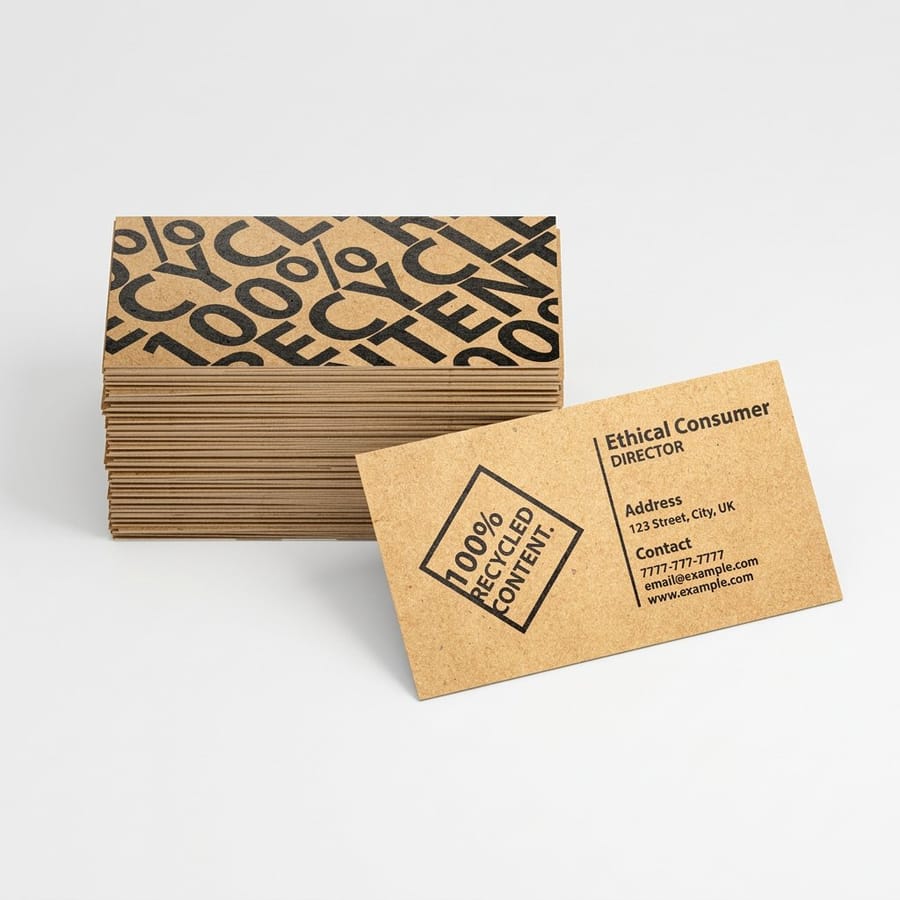
Your logo is a flag. Your brand is everything the flag comes to mean. You can commission a gorgeous logo and still have weak branding if the pieces around it do not agree with each other. A crisp logo on a flimsy card sends a mixed message, and mixed messages erode trust faster than a plain design ever could. Standard cards run on stocks from 14pt gloss cover to 24pt ultra thick gloss, so pick the weight once and reorder the same one. The guide to logo vs branding and what actually sets them apart draws the line between the mark and everything around it.
Think of branding as three layers working together. There is the visual layer (logo, colors, type, and the finish of your print), the verbal layer (your name, tagline, and the tone of everything you write), and the experience layer (how it feels to buy from you and hold what you hand over). Strong branding keeps all three saying the same thing.
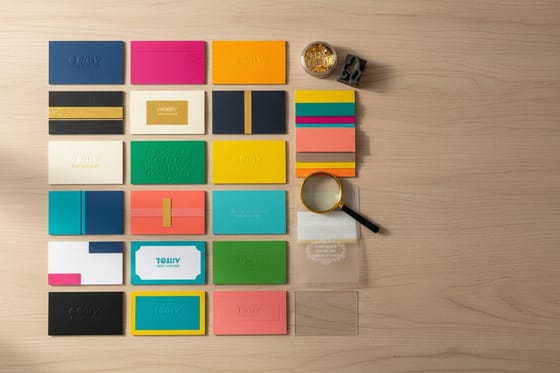
This is why finish matters so much for a small business. A premium business card with a soft-touch or foil finish tells the visual layer story in a way a logo file never can. If you want to see how far that can go, the business card styles and finishes showcase walks through real examples.
How to create your brand
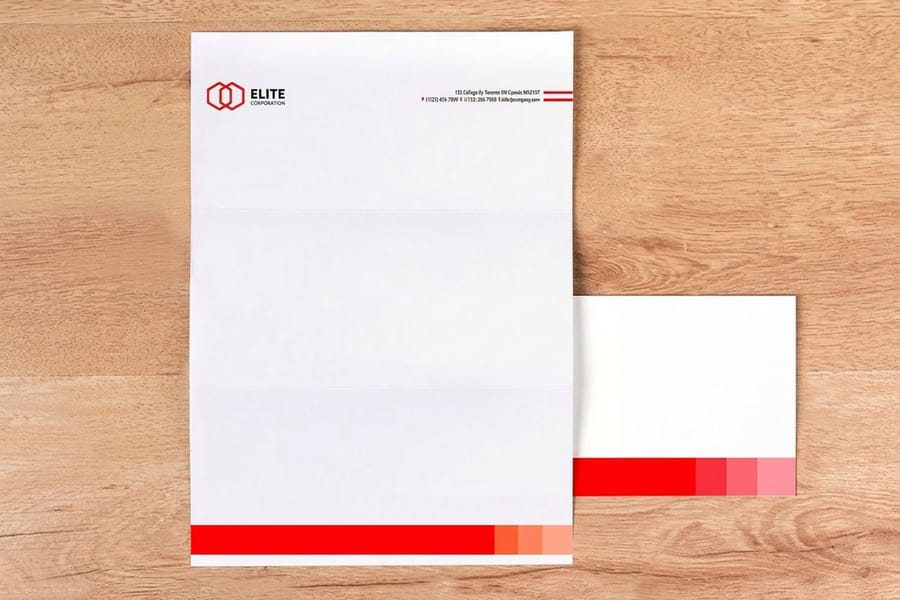
You do not need a big agency budget to build a brand that works. You need a clear order of operations. Follow these six steps and you will end up with something consistent enough to print on anything.
- Define what you actually sell. Write one plain sentence that says what you do and who it helps. If a stranger cannot repeat it back after reading it once, tighten it. This sentence becomes the spine of every message and every printed piece.
- Name your audience and the problem you solve. Picture the exact person who pays you and the frustration you remove. Branding that speaks to everyone speaks to no one, so pick a clear customer and build the look and tone around them.
- Choose your voice, colors, and logo. Settle on two or three colors, one or two typefaces, and a tone of voice. Keep it simple enough to reproduce on a small business card and a large banner without losing itself.
- Write the rules down in one place. Record your hex colors, fonts, logo spacing, and voice in a short brand sheet. This is what keeps every printer, designer, and teammate producing the same brand instead of a slightly different one each time.
- Put the brand on real touchpoints. Move the brand off the screen and into a customer's hands. Start with business cards and letterhead, then add the folders, postcards, and signage your industry needs.
- Keep it consistent everywhere. Use the same colors, finishes, and voice on every reprint and every new product. Consistency is what turns a nice design into a brand people recognize on sight.
Notice that the last two steps are physical. A brand becomes real the moment it lands in someone's hand, so treat the printing stage as part of building the brand, not an afterthought. When you are ready, our Online Designer and free design templates make step three and step five fast.
Defining your product before you brand it
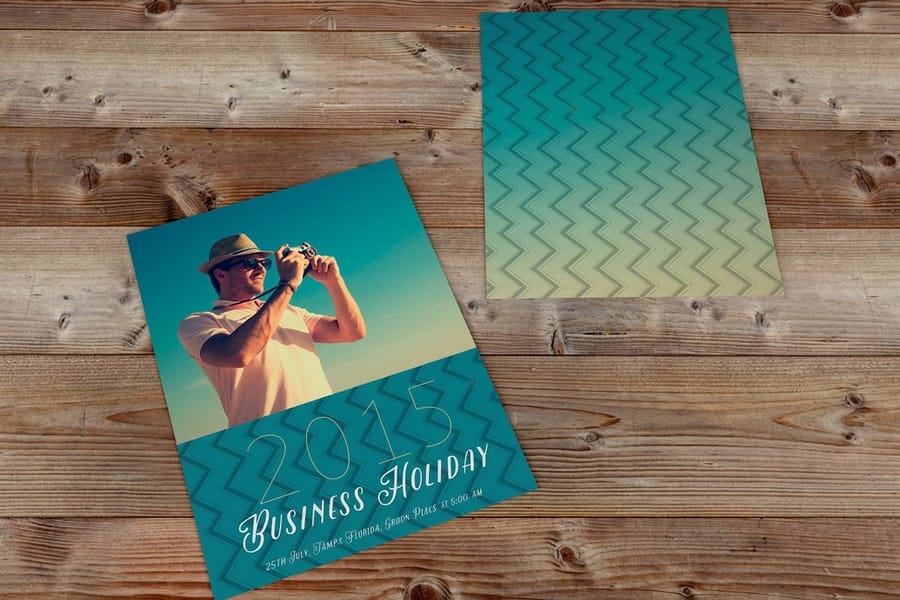
Branding without a clear product is decoration. Before you pick a single color, write down what you sell and why anyone should care, in a sentence short enough to fit the back of a 4 by 6 inch postcard. The tighter your product definition, the easier every branding choice becomes, because you finally have something to be consistent about.
Answer three plain questions. What is the thing a customer walks away with? What problem does it remove from their day? Why you instead of the option down the street? When those answers are sharp, your postcards, brochures, and flyers are quick to write, because you know what to promise.
This is also where print earns its keep. A postcard forces you to say the one thing that matters in a small space, and that discipline sharpens your whole brand. If direct pieces are part of your plan, the numbers in our small business statistics show why local firms keep physical mail in the plan.
4 key questions to shape a strong brand
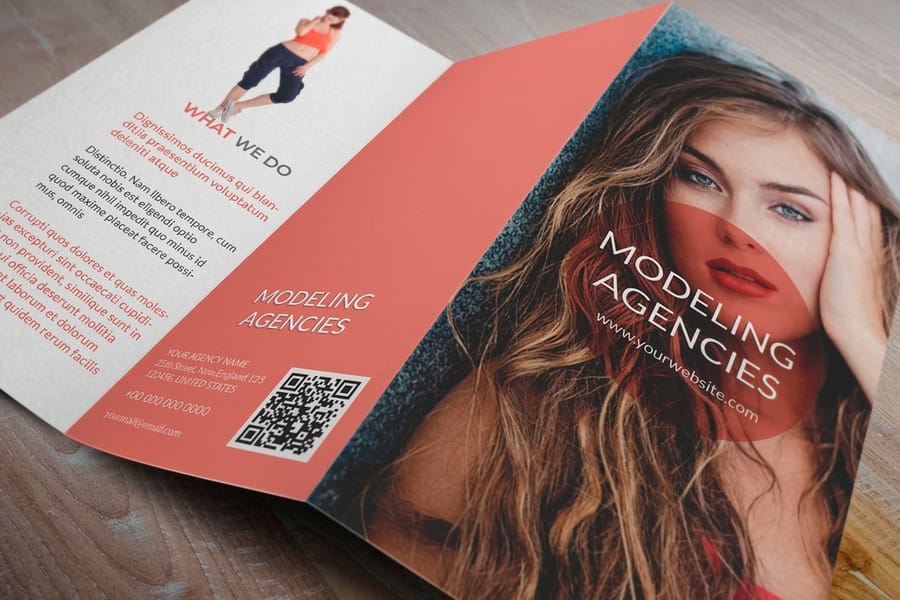
When a brand feels muddy, one of these four questions usually has no clear answer. Work through them and write the answers down. They become the test you hold every design and every print order against.
- Who is this for? Name the exact customer. A brand aimed at everyone lands with no one, and the moment you pick a person, your colors, tone, and even your paper choices get easier.
- What do we want them to feel? Trust, energy, calm, prestige. The feeling drives the finish, so a "premium" brand reaches for foil and heavy stock such as 24pt ultra thick gloss, while an "approachable" brand stays clean and matte, or on 14pt uncoated cover.
- What makes us different? Say the one thing a competitor cannot copy. Then make sure that difference is visible on the first thing a customer touches, usually the business card.
- Where will people meet us? In the mail, on the street, across a desk. Each answer points to a different print product, and mapping them is exactly what the next section does.
Keep the answers short enough to fit on an index card. If they do not fit, they are not decided yet, and an undecided brand cannot be consistent.
Where branding becomes physical
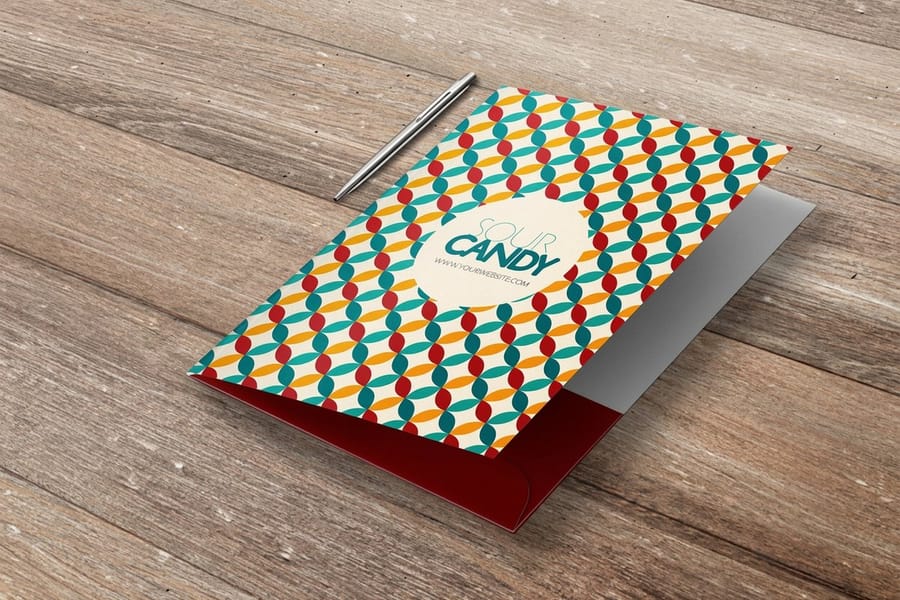
This is the bridge most branding advice skips. Every principle above is invisible until it lands on something a customer can hold. A color is just a hex code until it prints on a card. A voice is just a document until it fills a brochure. Branding becomes real at the touchpoint, and each touchpoint has a job.
Read the map as a checklist. The business card is your first handshake and the piece you will hand over most. Letterhead carries trust onto every quote and invoice. A pocket folder packages your pitch so it arrives as one considered set. Postcards keep you in mind between visits, and signage plants your brand in the physical world. Miss one and there is a gap where a competitor's brand can slip in.
You do not have to print all of it on day one. Start with the card and the letterhead, the two touchpoints almost every business needs, then add the rest as your business stationery system grows.
Choosing the size, stock and finish for each piece
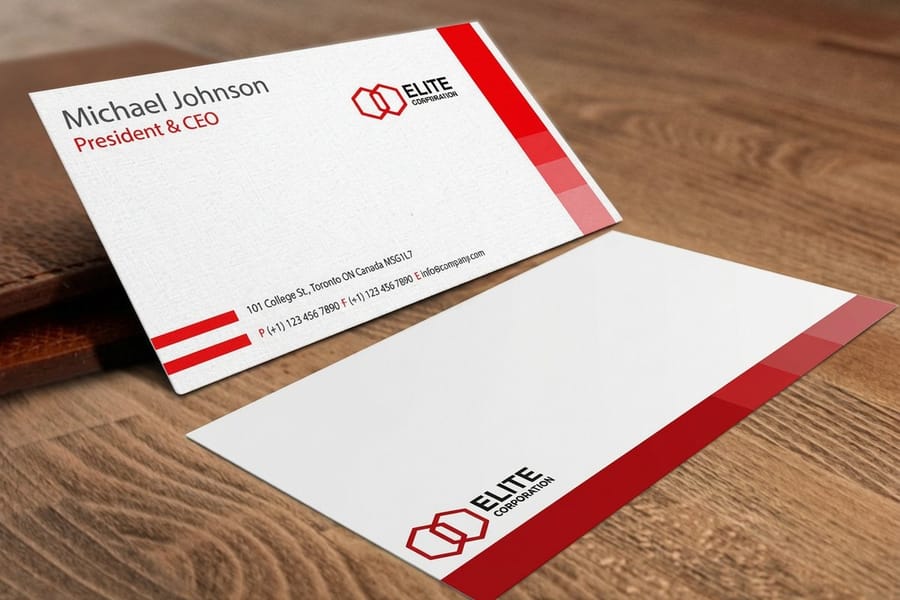
Once the brand sheet is written, each printed piece needs a few decisions. Make them once, record them next to your colors and fonts, and repeat them on every reorder.
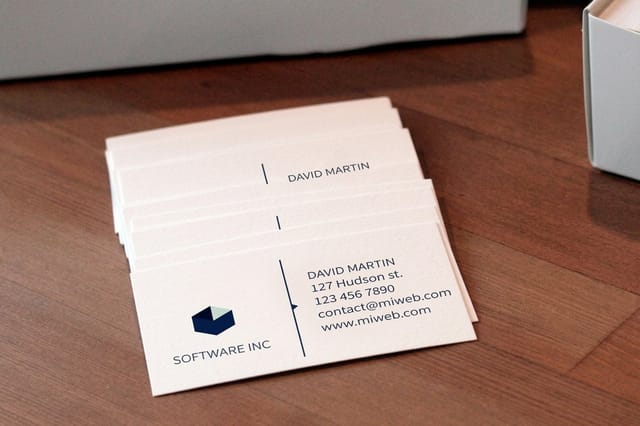
- Business cards. 2 by 3.5 inches is the standard size; 2 by 2, 1.5 by 3.5 and 2.125 by 3.375 inches suit a brand that wants a different shape. Stocks run from 14pt gloss cover to 24pt ultra thick gloss, with cream, kraft, uncoated and soft touch options, and rounded corners at a 1/8 or 3/8 inch radius.
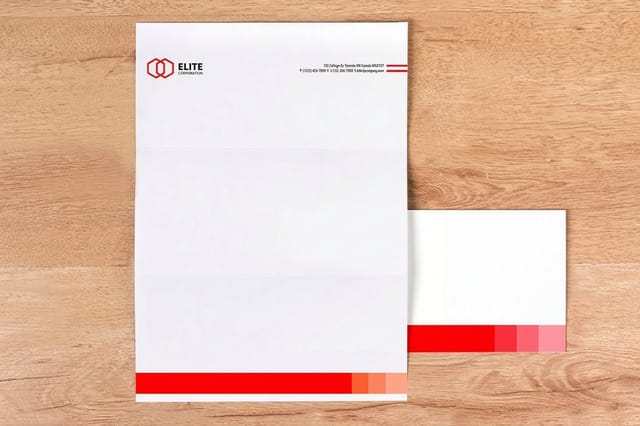
- Letterhead. 8.5 by 11 inches on 70# uncoated text, 24# Royal Laid in bright white, natural white or gray, or 28# Royal Linen bright white, printed in black or full color on one or both sides.
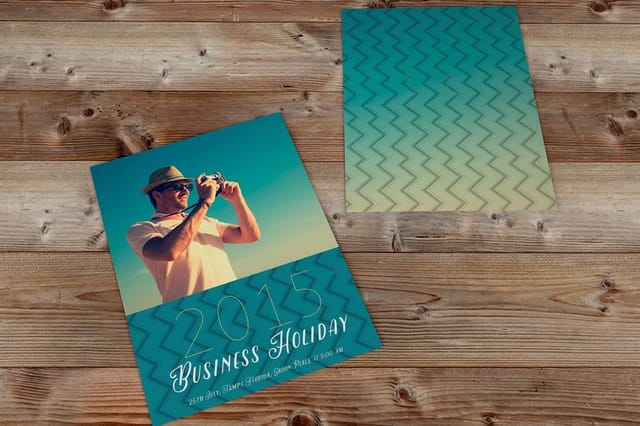
- Postcards. Fourteen sizes from 2.5 by 2.5 to 6 by 11 inches, on the same gloss, uncoated and linen stocks as the cards, so a 4 by 6 mailer can match your card exactly.
- Finish and proof. Standard finish or a high gloss UV coating, and a next day hardcopy proof before the first large run, so you judge your brand colors on the real stock.
Build every piece from the same master artwork and the card, the letterhead and the postcard carry one logo in one set of colors.
How modern markets changed branding
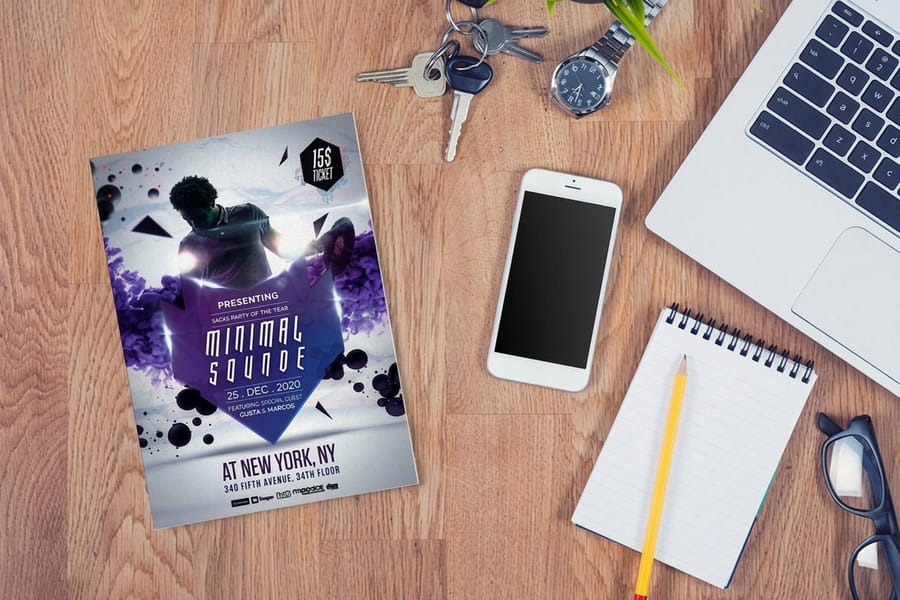
Branding used to be a one-way broadcast: a company decided what it stood for, printed it, and the customer received it. Today your customers compare you with three competitors on a phone and form an opinion from a dozen small signals before they call.
Two shifts matter most for a small business. First, the gap between big and small has narrowed. A one-person shop can now order 100 business cards on 16pt gloss cover with a high gloss UV coating, the same options a national brand picks, so a polished physical touchpoint is one of the few places a small firm can look every bit as credible as a large one. Second, digital noise gave physical print its edge back. A well-made flyer or postcard cuts through an inbox that everyone has learned to ignore.
In a screen-saturated market, a well-branded physical piece stands out because fewer competitors send one. Our write-up on print marketing campaigns digs into how local businesses use that to their advantage.
Branding for different industries
The branding fundamentals are the same for everyone, but the touchpoints that matter most change from one industry to the next. A startup and a plumber both need a clear brand, yet they meet customers in different places: the founder across a table with a 2 by 3.5 inch card, the plumber on a lawn with a yard sign. Use this table to jump straight to the pieces your vertical leans on hardest.
| Industry | The branding move that matters most | 4OVER4.COM print that delivers it |
|---|---|---|
| Startups & founders | Look established before you are. A tactile, well-finished card makes a two-person company feel funded and serious. | Business cards, postcards, letterheads |
| B2B & professional services | Signal reliability and detail. Your paperwork is the product before the contract is signed, so it has to feel considered. | Pocket folders, letterheads, brochures |
| Public sector & nonprofit | Read as trustworthy and accessible. Clean, consistent mailers keep the message about the cause, not the design. | Printed envelopes, postcards, brochures |
| Local services & trades | Be impossible to forget in your service area. Your brand has to travel on the truck, the lawn, and the fridge. | Business cards, yard signs, magnets |
Startups live and die by first impressions, so they over-invest in the card and the postcard that make a small team feel established. B2B firms win on perceived diligence, which is why the folder and letterhead carry so much weight. Public sector and nonprofit groups need to read as trustworthy and clear, so clean envelopes and mailers keep the focus on the cause. Local trades need to be unforgettable in a service radius, so the brand travels on yard signs and magnets as much as on the card.
Whatever your vertical, the rule holds: pick the two or three touchpoints your customers actually see, and make them consistent before you spread thin across everything else. Browse the full marketing materials range to match products to your plan.
Branding mistakes small businesses make
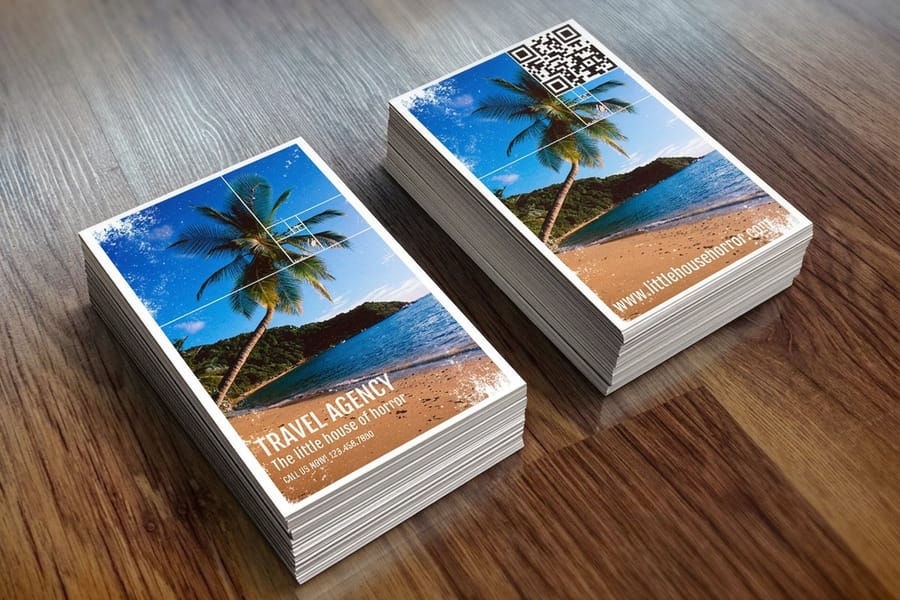
Most branding problems come from small inconsistencies that add up. Avoid these five and your print reads as one company.
Changing the look every few months. Recognition is built through repetition. Swapping colors or fonts on each reprint resets the clock and keeps you forgettable. Lock your brand sheet and stick to it, stock included: if the first 100 cards went out on 16pt gloss cover, reorder 16pt gloss cover.
Great logo, cheap print. A strong logo on a thin, dull card sends a contradiction. Match the quality of your print to the quality of your promise, which is exactly what a premium card is for.
No written rules. If your colors and fonts only live in one person's head, every new piece drifts. Write them down so any printer or designer reproduces the same brand.
Skipping the physical entirely. A brand that never leaves the screen misses the moments that build trust in person. Even a simple business card anchors your brand in the real world.
Trying to be on every touchpoint at once. Spreading a thin budget across ten products beats nothing, but it usually means ten mediocre pieces. Nail the two that matter most for your industry first, then expand. If you want a quick primer on picking a printer for that first order, see where to print business cards.
Wally explains branding
A brand people can hold is a brand people remember
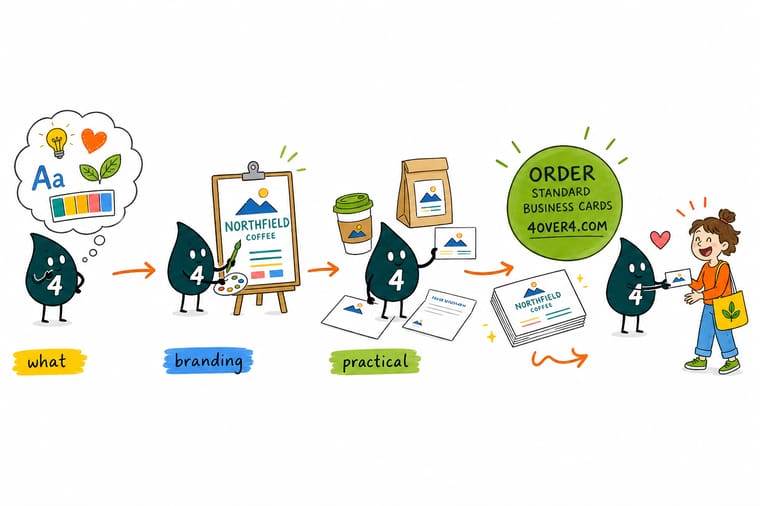
Wally thinks of a brand like a stamp on the world: it only exists once it presses onto something real. A logo in a folder does nothing. The same logo on a crisp business card, a matching letterhead, and a sign out front is what turns a small business into one people recognize. Decide what you stand for, write the rules down, then print it the same way every time at 4OVER4.
Print your business cards →%22%2F%3E%3Ccircle%20cx%3D%2242%22%20cy%3D%221%22%20r%3D%2217%22%20fill%3D%22%2314b8a6%22%20opacity%3D%220.15%22%2F%3E%3Ccircle%20cx%3D%2240%22%20cy%3D%2250%22%20r%3D%225%22%20fill%3D%22%2314b8a6%22%20opacity%3D%220.1%22%2F%3E%3Crect%20x%3D%2272%22%20y%3D%22-7%22%20width%3D%2227%22%20height%3D%2210%22%20rx%3D%224%22%20fill%3D%22%2314b8a6%22%20opacity%3D%220.08%22%20transform%3D%22rotate(7%2080%2030)%22%2F%3E%3C%2Fsvg%3E)
Specs and pricing
Business card specs and live pricing
The business card is the touchpoint almost every brand starts with. Standard business cards run 100 for $17.57 with 3 business days of production, in 2 by 3.5 inches or three other sizes, full color on the front, or on both sides. The live specs and price per unit below list every stock and finish your brand can wear.

| Quantity | Price Per Unit | Total |
|---|---|---|
| 100 | 17.6¢ | $17.57 |
| 200 | 11.5¢ | $23.07 |
| 300 | 9.15¢ | $27.46 |
| 400 | 7.96¢ | $31.86 |
| 500 | 7.25¢ | $36.26 |
| 600 | 6.77¢ | $40.64 |
| 700 | 6.43¢ | $45.04 |
| 800 | 6.18¢ | $49.43 |
Print it
Print the core of your brand at 4OVER4
Most small brands start with these three: business cards, letterhead on 8.5 by 11 inch sheets from 50 at $99.95, and postcards in fourteen sizes from 2.5 by 2.5 to 6 by 11 inches.
Printed for customers
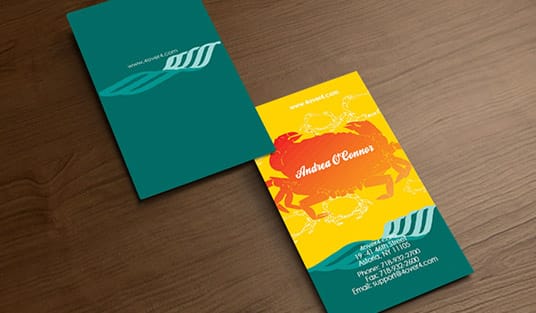
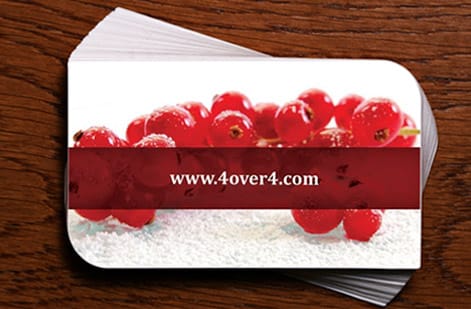
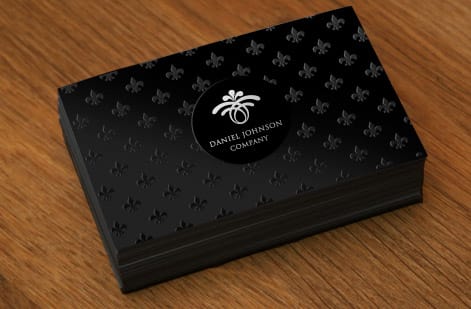
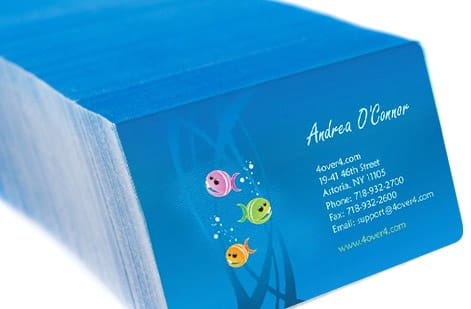
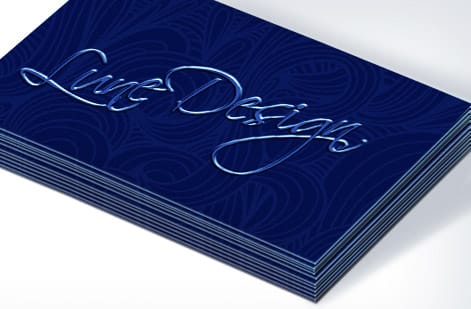
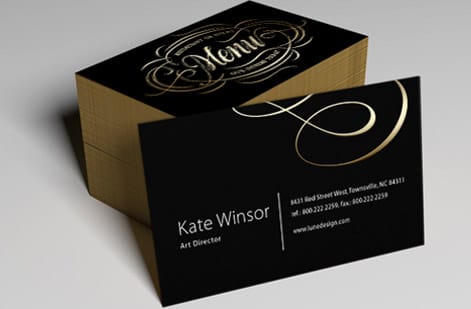
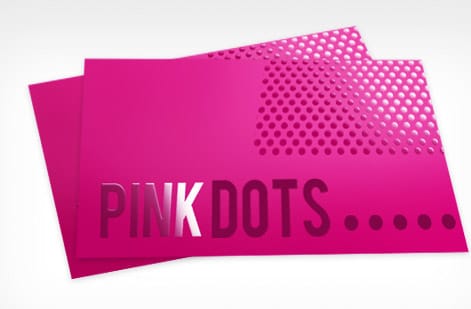
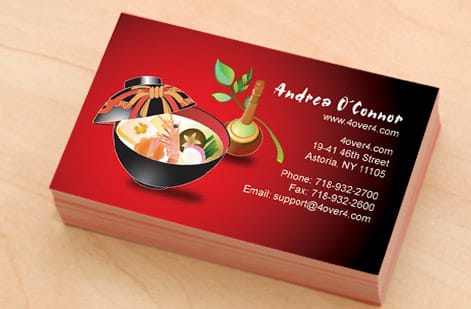
Real branded print, made in-house
%22%2F%3E%3Ccircle%20cx%3D%2241%22%20cy%3D%2249%22%20r%3D%2226%22%20fill%3D%22%2314b8a6%22%20opacity%3D%220.15%22%2F%3E%3Ccircle%20cx%3D%2278%22%20cy%3D%2258%22%20r%3D%2214%22%20fill%3D%22%2314b8a6%22%20opacity%3D%220.1%22%2F%3E%3Crect%20x%3D%2271%22%20y%3D%2228%22%20width%3D%2226%22%20height%3D%2234%22%20rx%3D%224%22%20fill%3D%22%2314b8a6%22%20opacity%3D%220.08%22%20transform%3D%22rotate(36%2080%2030)%22%2F%3E%3C%2Fsvg%3E)
Explore more
Where to go next

By the numbers
Cards, letterhead, folders and magnets in one order
Common Questions
Common questions about branding
What is branding, in plain terms?
Branding is the sum of how your business looks, sounds, and feels every time someone runs into it. That includes your name, logo, colors, tone of voice, the quality of your printed materials, and even how you answer the phone. A logo is one visible piece of a brand, but the brand itself is the overall impression and the promise people expect you to keep. For a small business, strong branding is what makes you memorable and trusted before anyone has spent a dollar with you.
Where does a small business start, the name or the look?
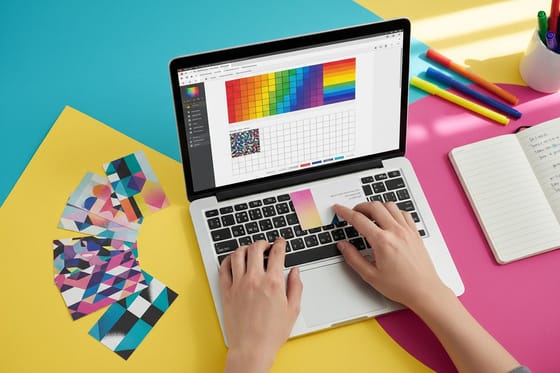
Start with your customer, not your taste. Decide who you serve and what you want them to feel when they meet you, then pick colors, type, and tone that match that feeling and hold up across sizes. Keep the palette small and the logo simple enough to print clean on a business card and a banner alike. If you are unsure where to begin, our free Online Designer and free design templates let you test looks quickly. See the Online Designer at /benefit/online-designer and templates at /benefit/free-design-templates.
What does branded print cost, and how are prices set?
There is no single price for branding because it is spread across the pieces you print. At 4OVER4.COM, each product is priced by quantity, size, paper stock, and finish, and the exact figure updates live in the configurator as you choose those options. Higher quantities lower the price per unit, and premium finishes like soft touch or foil add to it. Rather than quote a number that could be wrong for your setup, we show real per-unit pricing straight from the product page, for example on standard business cards at /product/standard-business-cards.
What sizes, stocks, and finishes can I get for branded print like business cards?
Standard business cards print at the classic 3.5 by 2 inch size, and 4OVER4.COM offers a range of stocks and finishes so your brand can feel exactly how you want. Options run from clean matte and gloss to soft touch, spot UV, and foil, plus specialty stocks. Letterhead, folders, and postcards each carry their own size and stock choices. Every available combination is shown on the product configurator, and the live specs widget on this page lists what is on offer for business cards.
How long does branded print take to produce and ship?
Turnaround depends on the product, quantity, and finish you choose, and the estimated date shows on each product page before you check out. Many everyday items like business cards can move fast, and 4OVER4.COM offers same-day printing and rush delivery when a deadline is tight. You can see those speed options at /benefit/same-day-printing and /benefit/rush-delivery. For a full brand rollout, order the pieces you need first, then add the rest once your look is locked.
Is branding just a fancy logo?
No. A logo is a mark. A brand is the whole experience that mark stands for. You can have a beautiful logo and still have weak branding if your card feels cheap, your tone is inconsistent, or your colors change from one piece to the next. The logo is the flag, but the brand is everything the flag comes to mean. That is why this guide keeps tying each branding idea back to a real printed touchpoint, because the brand is only as strong as the pieces people can actually hold.
Get Started
Put the brand on 50 letterheads and 100 cards
Pick your stock and finish, drop in your logo, and we print business cards that make your small business look every bit as serious as you are.
Legal Disclaimer
Gold Standard guarantees apply to all standard orders placed through 4over4.com. Price match requires verifiable proof of a competitor's published price for an equivalent product with matching specifications and turnaround time. Satisfaction guarantee covers manufacturing defects and print quality issues. Contact support with order number and documentation.
