
The 16-Piece Tattoo and Piercing Studio Starter Pack for Fully Booked Chairs
A studio sells art, and everything it prints gets judged as a portfolio sample. These are the 16 pieces a new shop needs, from the banner that marks the door to the consent form on the clipboard, each pulling its own weight.
The studio starter pack is 16 print pieces that open a tattoo and piercing shop properly: business cards, stickers, flash posters, flyers, printed consent and aftercare forms, die-cut hangtags, a vinyl banner, shop signs, appointment cards, gift certificates, aftercare rack cards, postcards, window clings, merch t-shirts, tote bags, and magnets. The street pieces pull people through the door, the forms, appointment cards, and rack cards make every session professional, and the stickers, posters, hangtags, merch, and certificates keep your art circulating and your merch selling. One dark, consistent look across all 16 and the shop reads as an institution from day one.
The picks
The 16 pieces, priced live
Start here. These are the 16 products that open a studio properly, each priced live from the configurator. Order them together so the blacks and color saturation match across vinyl, paper, and card stock, then read on for what each piece does.

Design and print help
Keep all 16 pieces in your style
A studio's brand is its art style, and the print has to carry it faithfully. These 4OVER4.COM services keep your linework sharp and your look consistent across the whole pack.
How they work together
Print in the order the shop runs
Each piece owns a moment: the street, the session, and everything the client carries out afterward. Print all three stages and the shop never goes quiet.
The banner and shop signs mark the studio from the street, the window clings answer walk-in questions from the glass, flyers carry convention dates and flash-day promos to record shops and bars nearby, and postcards bring the client list back for every drop.
Printed consent and aftercare forms make the paperwork as professional as the linework, the appointment card locks the session and the touch-up, the aftercare rack card rides home in every bag, and the artist’s card goes out for the referral.
Stickers ride out on laptops and toolboxes, flash posters sell the next piece from the shop walls, hangtags price the merch, and the shirts, totes, magnets, and gift certificates keep the studio’s art moving through town and onto new skin.
1. Tattoo business cards: a one-inch portfolio in every pocket
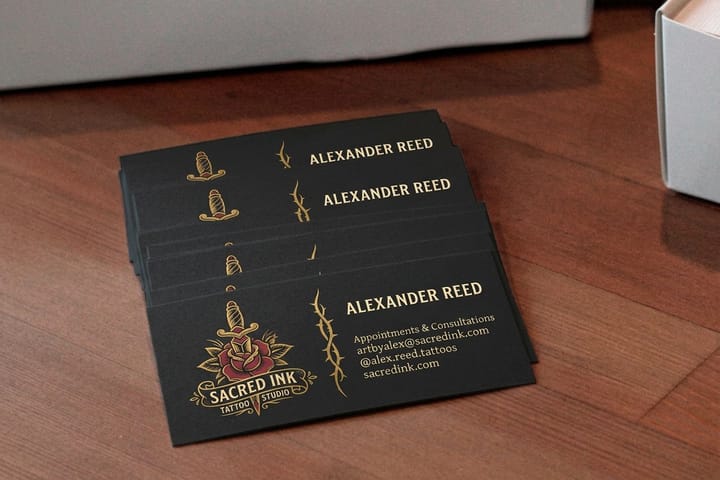
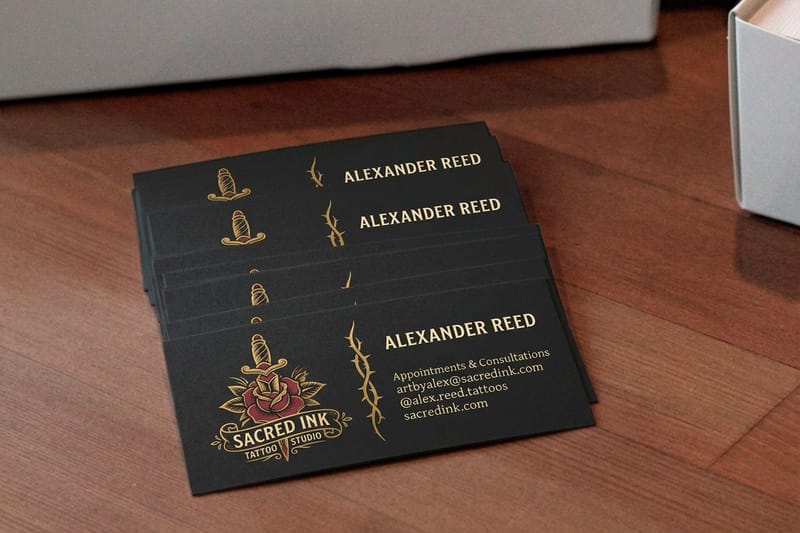
Clients book artists, not shops, and the card is how an artist gets carried out the door. One strong piece of your own linework, your handle, your booking link, printed on a stock heavy enough to feel deliberate. When someone at a party asks about the fresh ink, this is the object that answers.
Print a version per artist rather than one generic shop card; the personal card gets kept and the generic one gets binned. A matte or soft-touch finish suits dark artwork, and the finish options in laminated business cards hold up in wallets for months. Browse business card printing for the heavier stocks if you want the card to land like a plate.
Slip two into every aftercare bag: one for the client, one for the friend who will ask about the tattoo tomorrow.
2. Tattoo stickers: your flash on every laptop in town
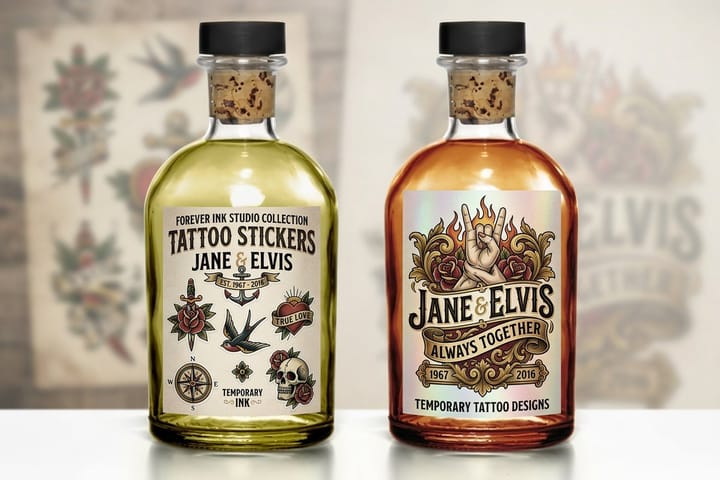
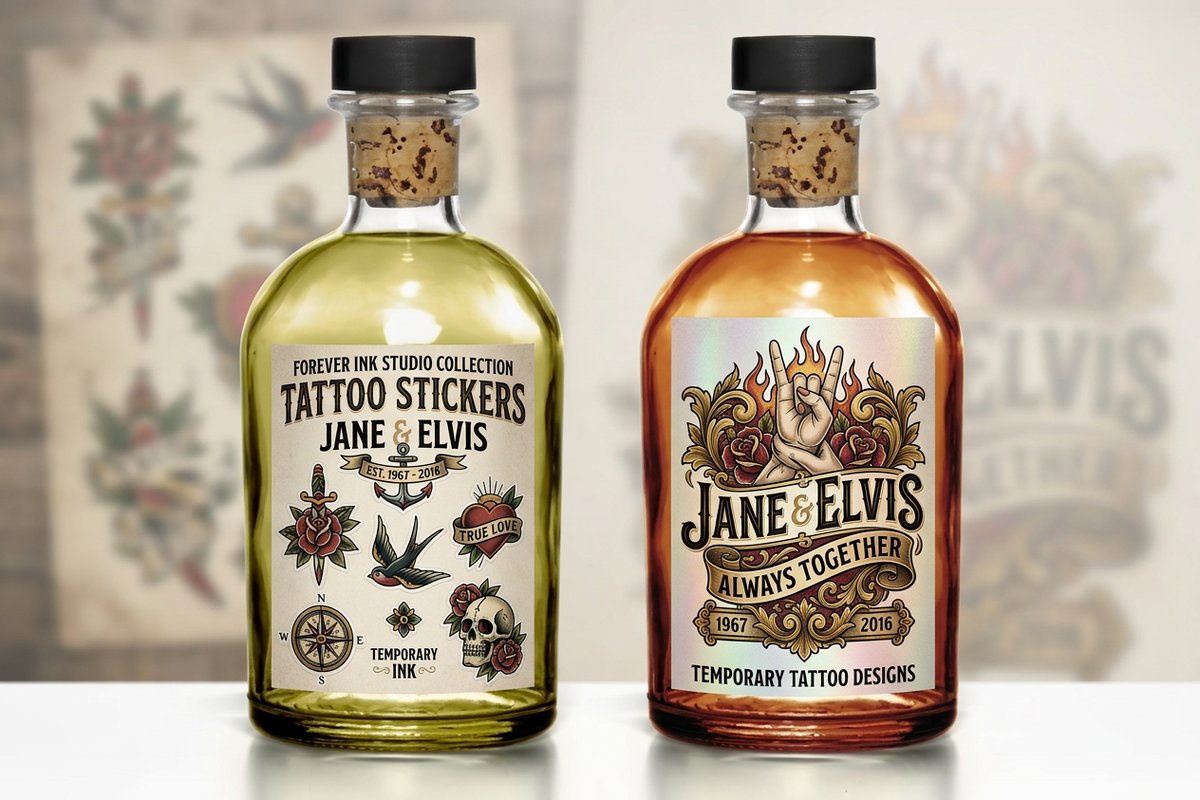
No industry moves stickers like tattooing. A die-cut sticker of your best flash is a tiny, free tattoo people apply to laptops, toolboxes, water bottles, and van windows, and every one of them advertises your linework permanently. Clients collect them, trade them, and hand them to friends, which makes the sticker bowl by the register a distribution network you never have to manage.
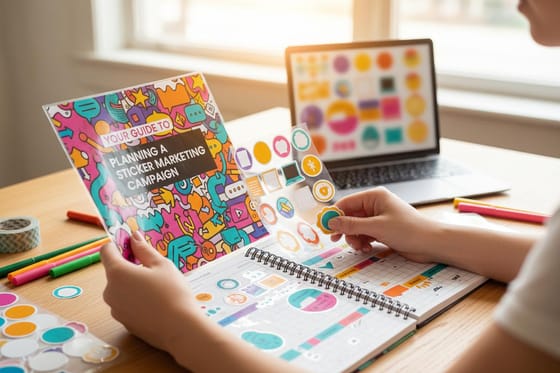
Cut to the artwork's silhouette, never a square around it; the shape is the whole appeal. Durable vinyl keeps the design sharp outdoors and through dishwashers, and choosing sticker materials explains which stock does what. When you want to be strategic about it, planning a sticker campaign turns the giveaway into a system.
Refresh the designs a few times a year. Collectible drops give regulars a reason to grab a new one every visit.
3. Tattoo posters: walls that sell the next piece
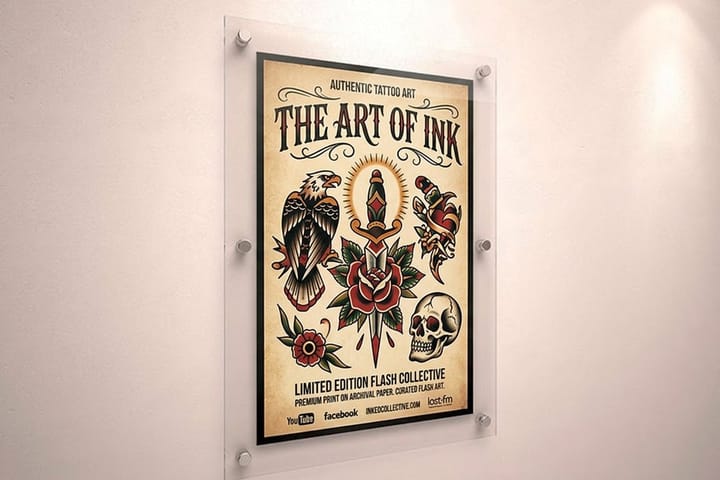
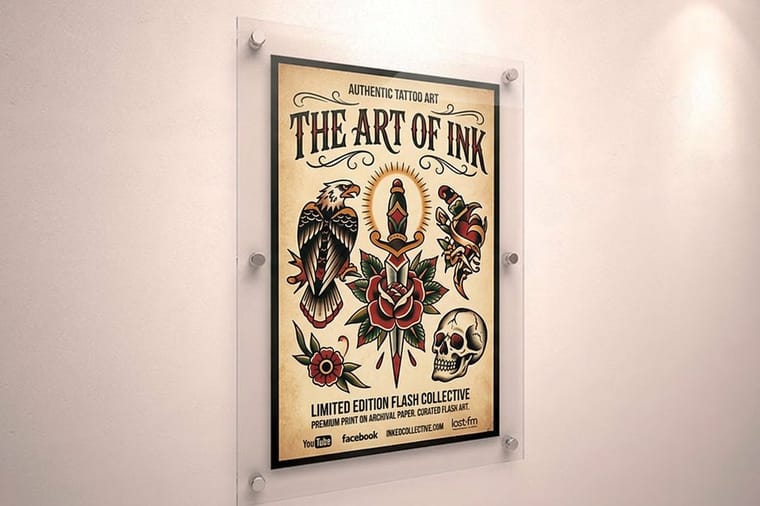
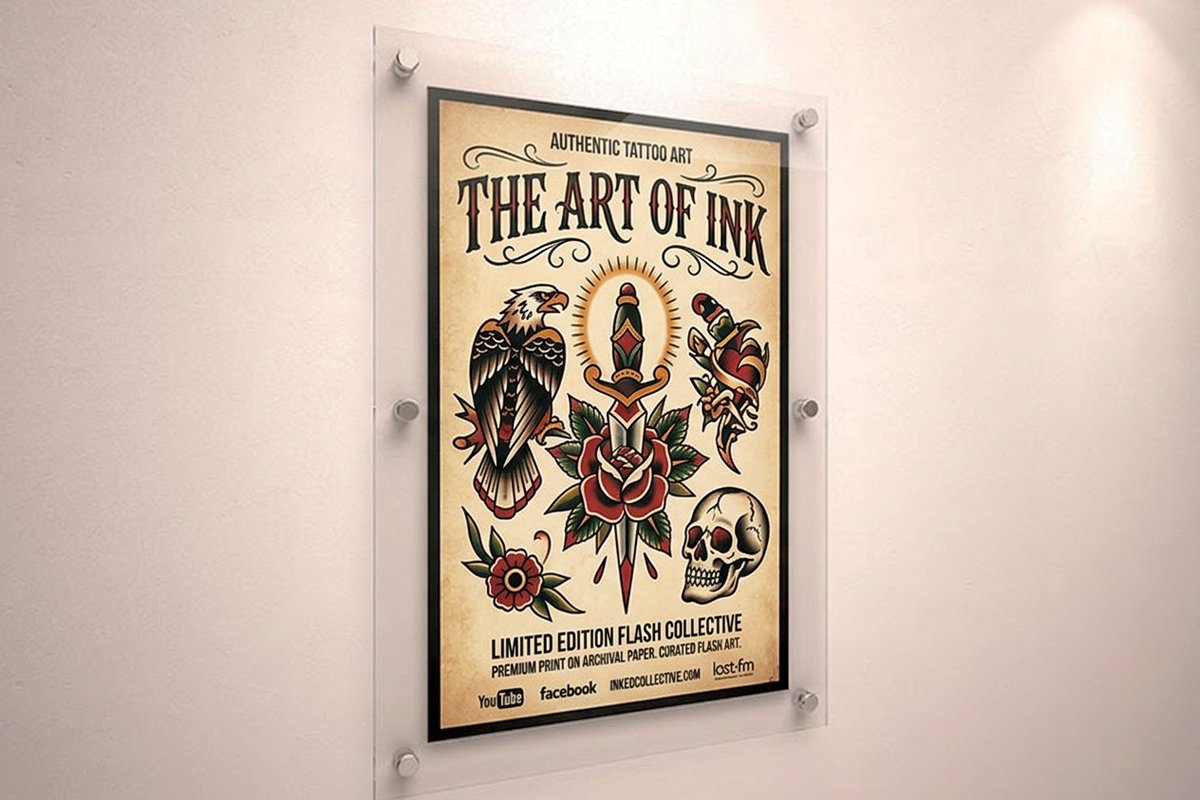
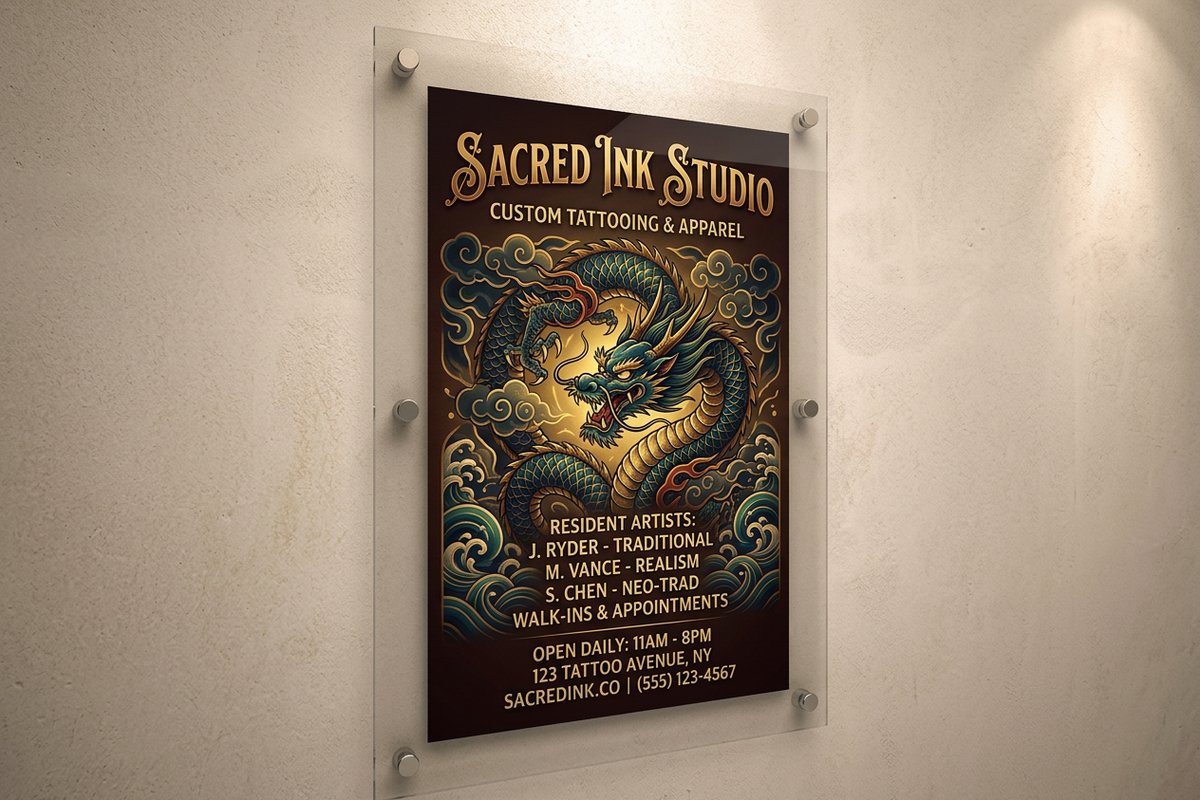
A studio's walls are its showroom. Printed flash posters show the styles the shop is strongest in, give every waiting client something to browse, and quietly plant the next tattoo while the current one is still wrapped. They also finish the room: a wall of crisp, framed flash reads as an institution, not a storefront.
Print from clean scans at full resolution so fine lines stay fine at 18 by 24 inches. Our guide on how to make posters covers file prep, poster sizes and dimensions helps you plan the wall, and hanging posters without frames keeps the install cheap while you grow.
Swap a few each season and date them. A changing wall tells regulars the shop is alive, and dated prints become collectible.
4. Flyers: flash days and guest spots, announced on paper
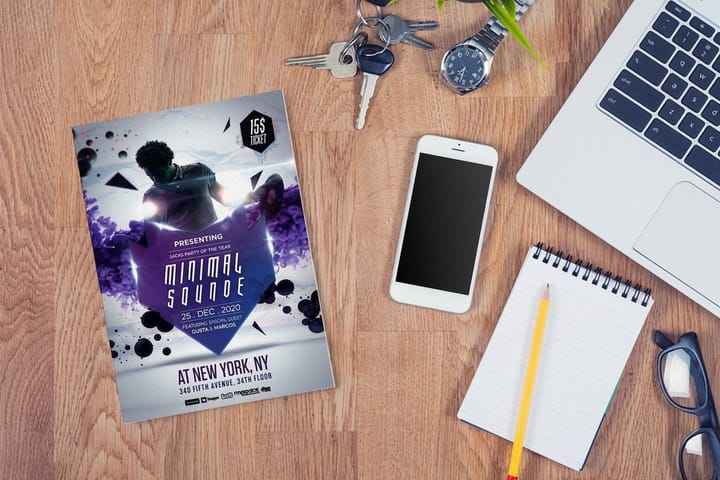
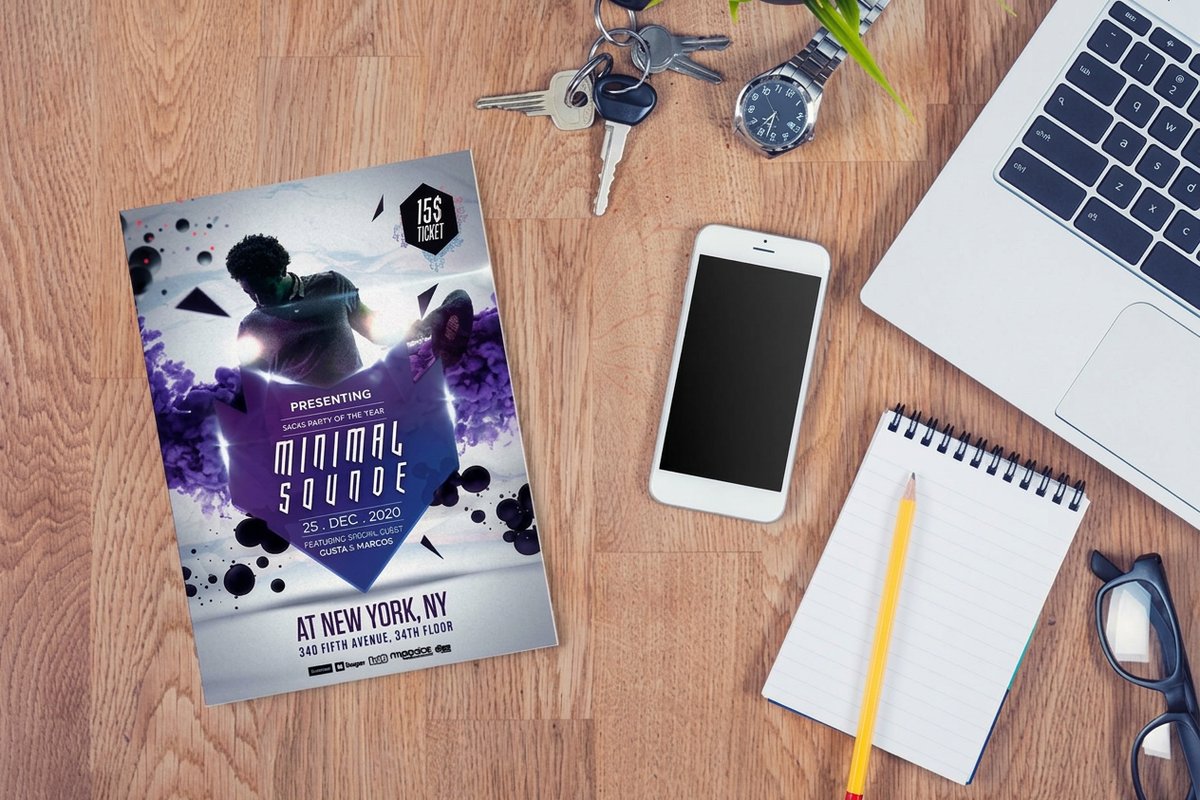
Flash days, guest artists, anniversary parties, convention appearances: studio life runs on events, and events run on flyers. A stack at the record shop, the barber, the dive bar, and the coffee place puts your announcement in front of the exact crowd that gets tattooed, in spaces where a poster on the wall is still the local news feed.
One event per flyer, the date huge, the artwork doing the talking. The focal-point discipline in how to design flyers matters double when your audience judges design for a living, and flyer distribution best practices maps the drop-off route.
Print them alongside the posters so the campaign matches wall to hand. The same flash on both makes the event feel bigger than it is.
5. Business forms: consent and aftercare, printed properly
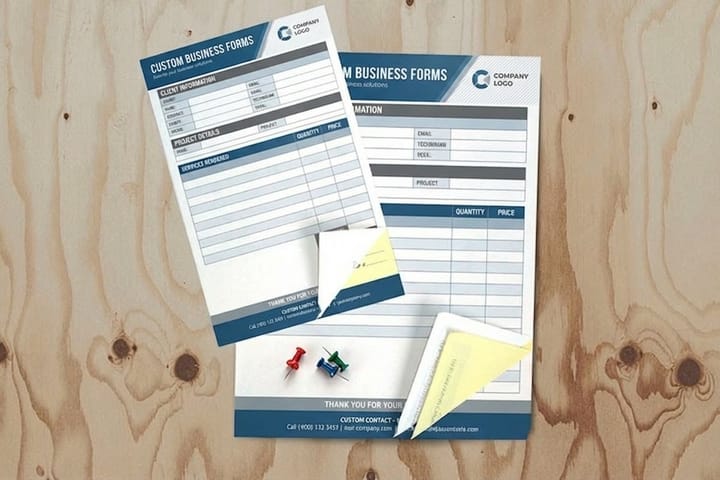
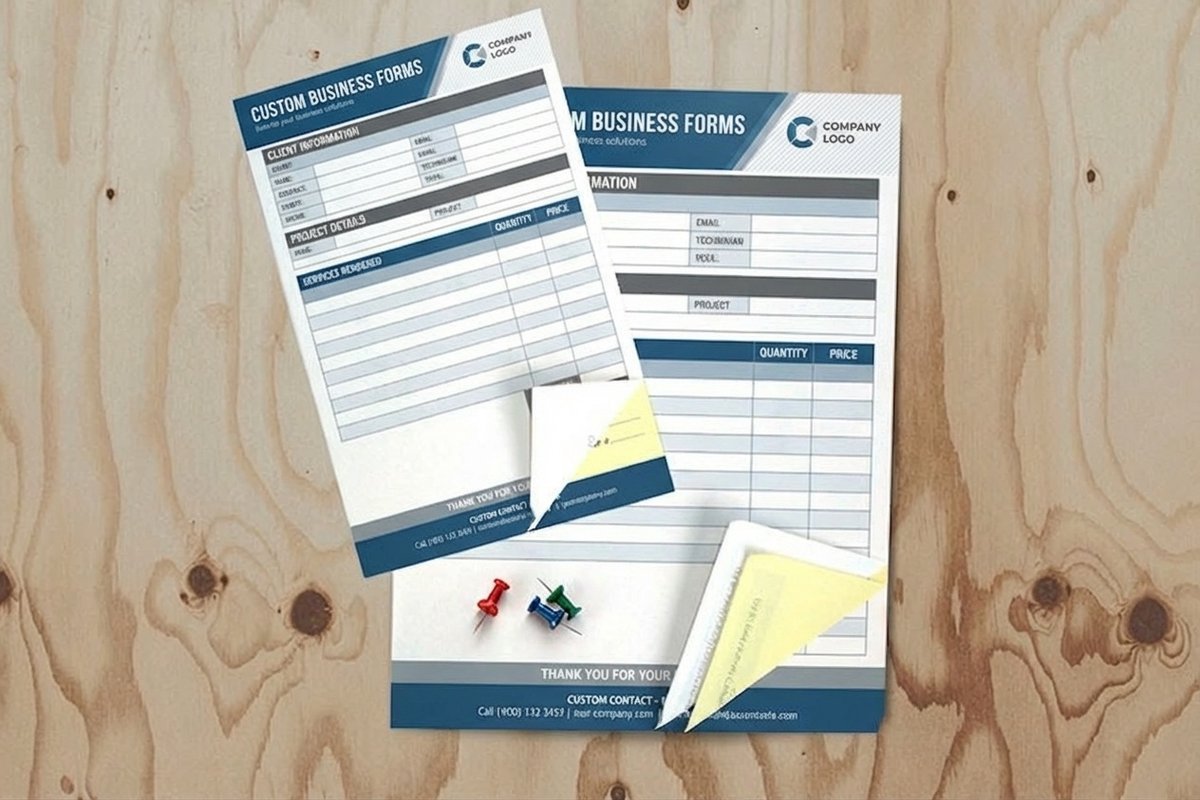
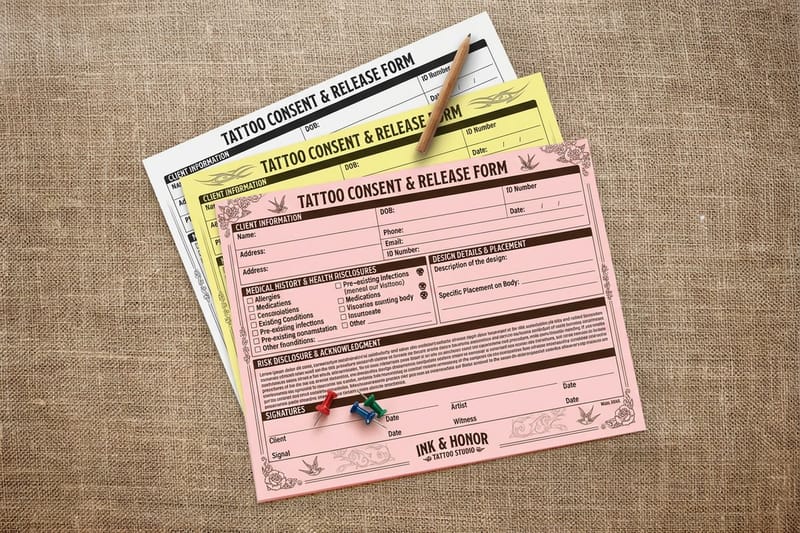
The least glamorous piece in the pack is the one that keeps the doors open. Consent forms are legally required for tattooing and piercing in most jurisdictions, and aftercare instructions in writing protect both the healing and the studio. Printing them as custom forms, with your logo, checkboxes, and signature lines, turns a legal chore into a professional ritual clients notice.
Carbonless duplicate sets give the client a copy and keep yours on file without a photocopier in the back room. Order consent, piercing release, and aftercare as one matching set from business forms, and keep the layout consistent with the rest of the kit so even the clipboard is on brand.
A client signing a crisp branded form trusts the needle more. Paperwork is part of the craft's presentation whether you like it or not.
6. Die-cut hangtags: merch and aftercare that price themselves
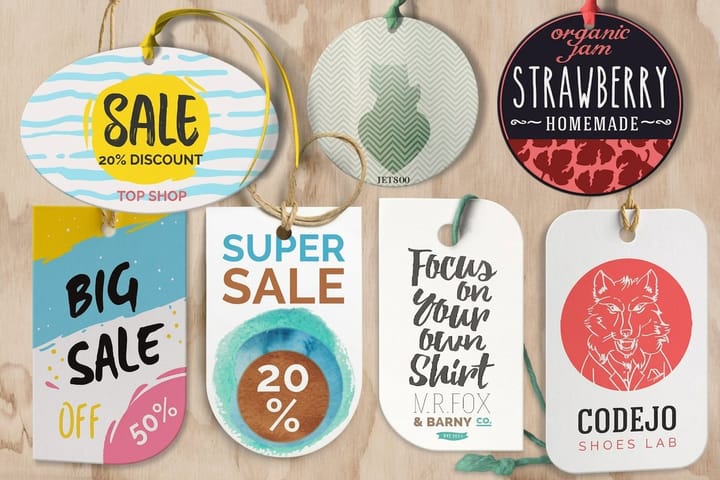
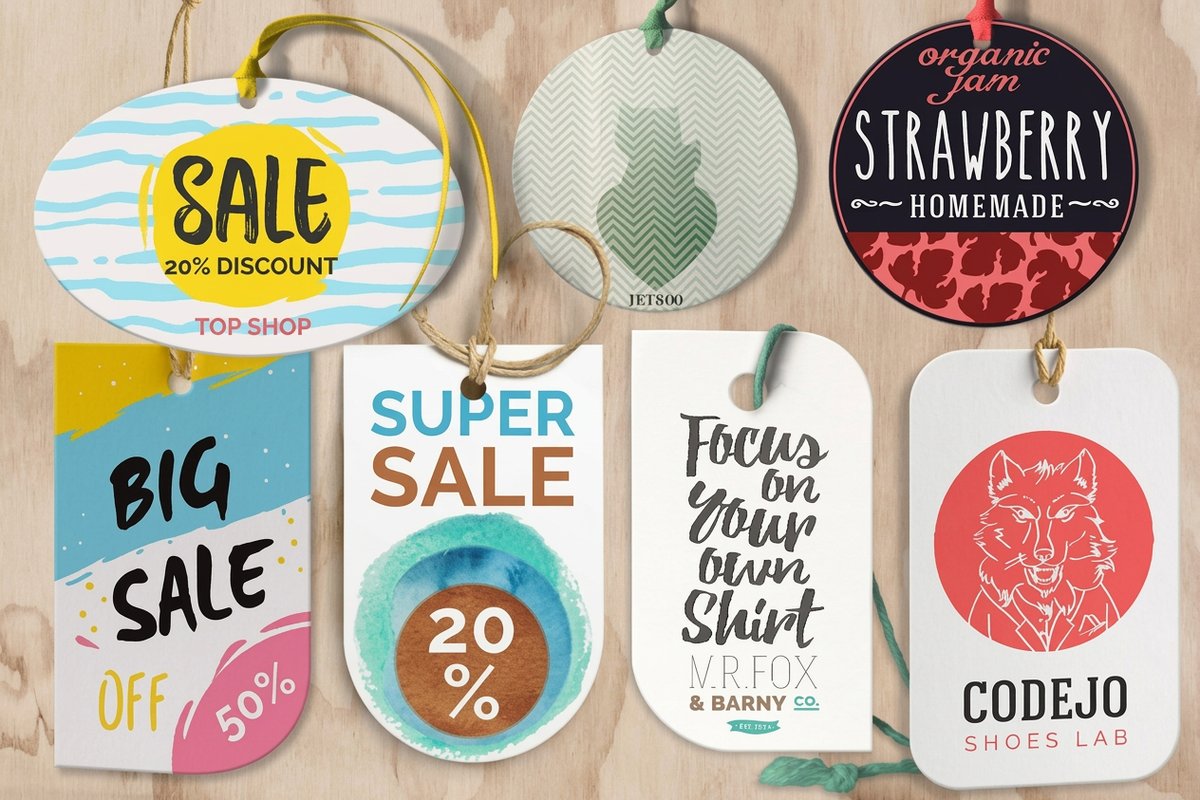
Most studios sell more than tattoos: shirts, prints, aftercare balm, jewelry for piercings. A die-cut hangtag answers the two questions every browsing client has, what is this and what does it cost, without anyone leaving the chairside conversation to play shopkeeper. Tagged merch sells itself from the shelf while the artists keep working.
Cut the tag to match your logo or a flash motif so even the price tag carries the brand. Use the back for care instructions on balms and jewelry. Order them from die-cut hangtags in the same palette as the stickers and cards, and the whole counter reads as one designed object.
Tag everything before it hits the shelf. Unpriced merch is decor; priced merch is revenue.
7. Vinyl banners: the shop marked from the street
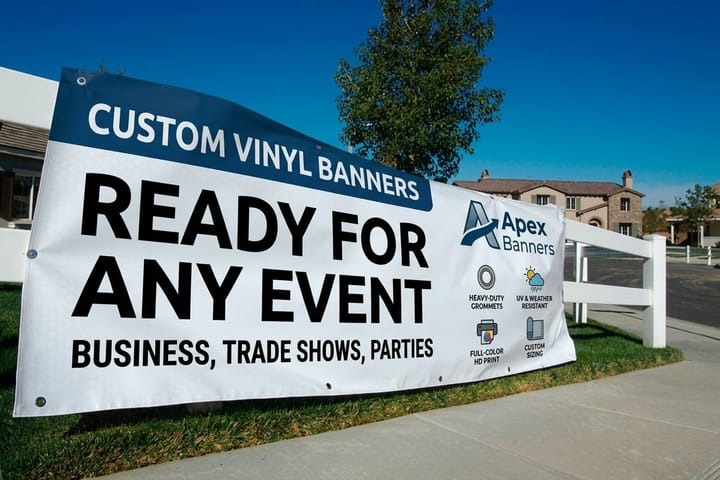
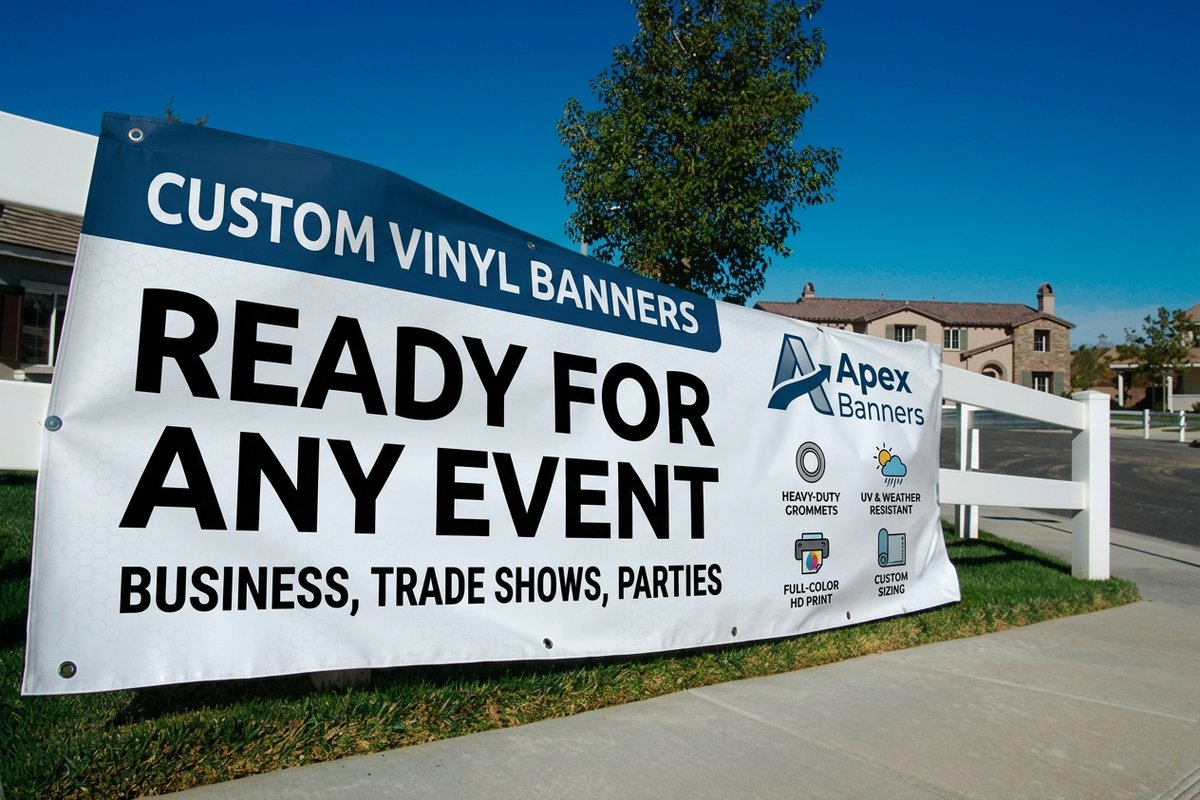
Walk-ins still matter, and walk-ins start with being findable. A vinyl banner announces the shop to the street, and a second one flips to the occasion: walk-ins welcome, guest artist this week, flash day Saturday. At conventions, the same banner turns a rented table into your booth the moment it unrolls.
Keep the message to a few words in your boldest lettering, readable at a passing glance. Our guide to making banners covers sizing the type to the distance, and types of banners compares the formats if you want a retractable for the convention circuit.
Hang the walk-ins banner on slow weekdays and take it down when the books fill. A banner you rotate is a message; one that never moves is wallpaper.
8. Shop signs: the studio, findable from the sidewalk
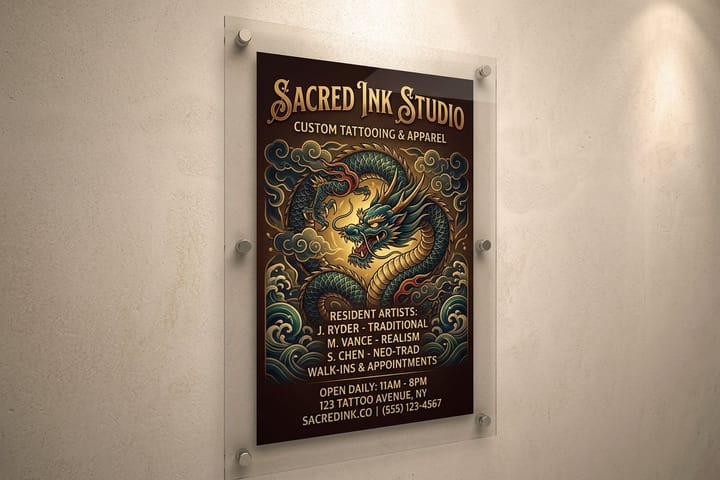
Studios end up in walk-up spaces, second floors, and side streets, and half the first-time clients arrive slightly lost. Printed shop signs fix the last fifty feet: the name and arrow at the stairwell, open and walk-ins-today at the door, the hours where the streetlight hits. Every sign is a chance to show the lettering style clients are about to pay for.
Design them like flash: bold, high contrast, no more than five words each. Rigid signs handle the weather at the door while lighter ones mark the interior stairs and the counter. Print them from the same art files as the banner so the street, the stairwell, and the chair all speak in one hand.
At twenty-five dollars to start, print the full wayfinding set at once. A client who found the shop easily starts the session relaxed, and relaxed clients book bigger pieces.
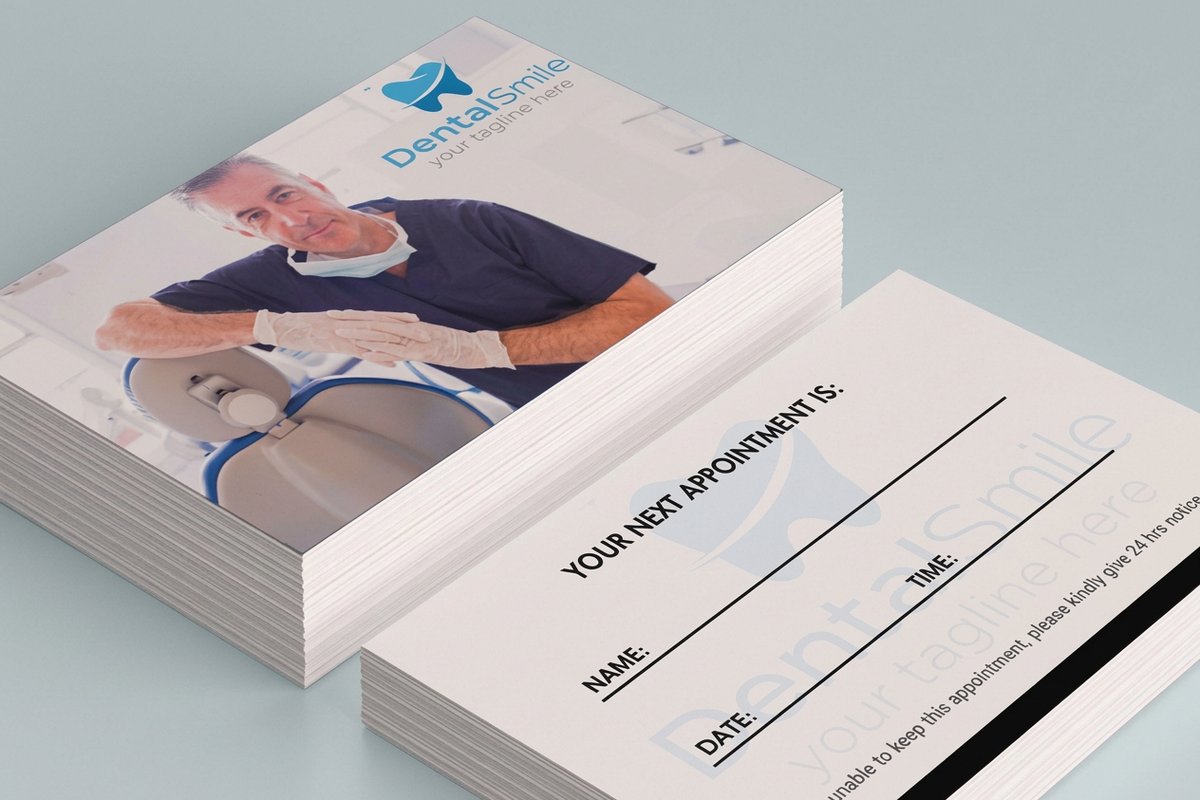
9. Appointment cards: the session, the touch-up, and the next piece
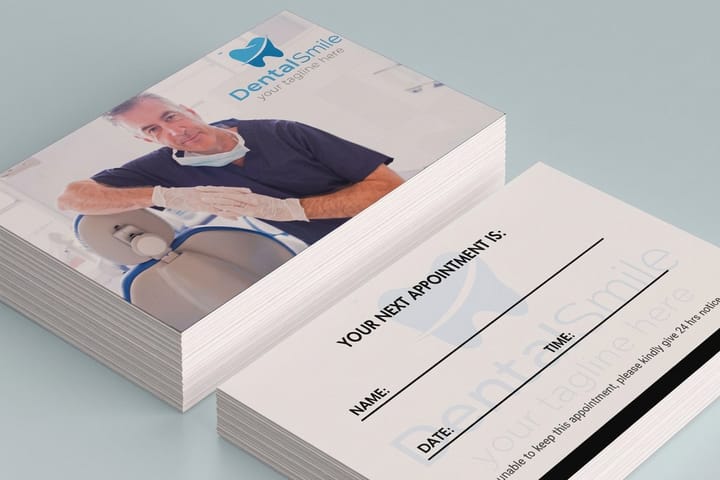
Tattoo work is booked work: the consult, the session, the touch-up at six weeks. An appointment card with the date written by hand does what a calendar notification cannot, it survives in a wallet as a physical promise, and it cuts the no-shows that cost an artist a full day's rate. The touch-up line at the bottom brings the client back through the door exactly when the healed piece looks its best.
Match the card to the artist business cards in stock and lettering, leave generous blanks for date and artist, and print the deposit policy in small type on the back where it politely does its job. Order appointment cards in the same run as the rest of the set so the front desk reads as one system.
A client leaving with a card in hand has committed twice: once out loud and once on paper. The second commitment is the one that shows up.
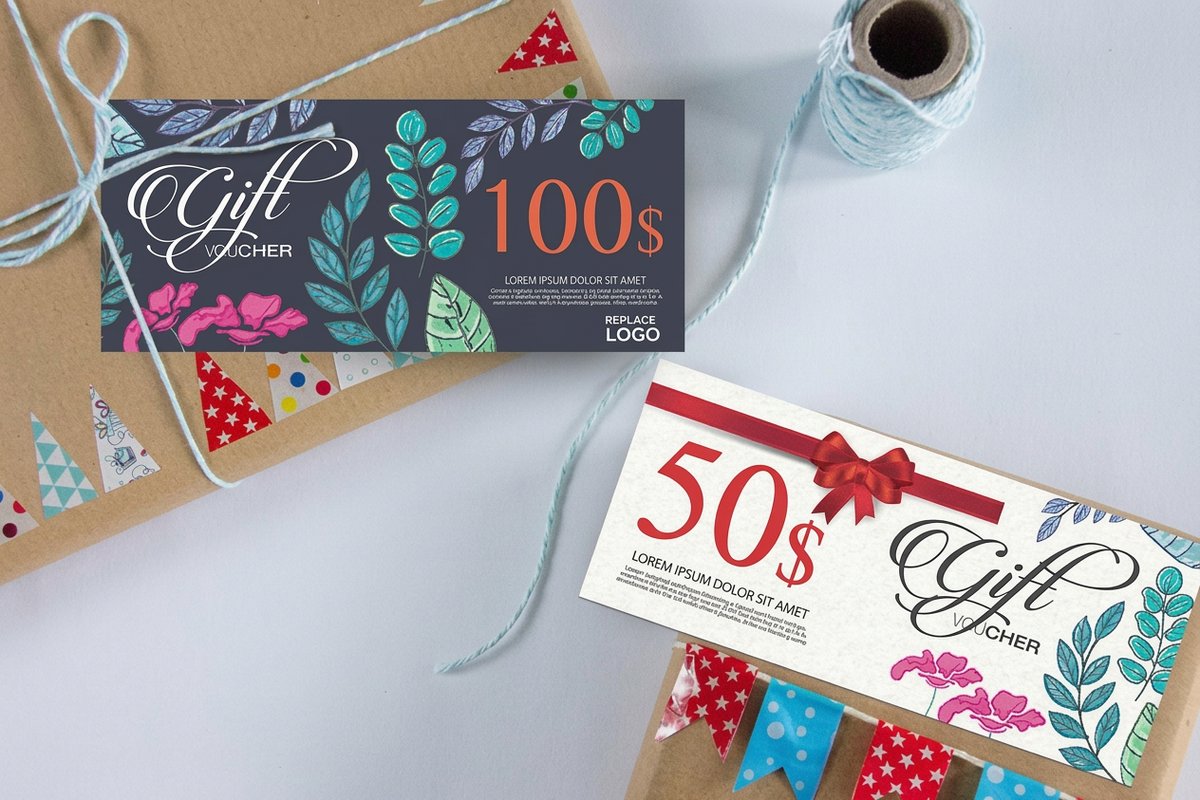
10. Gift certificates: ink, given as a present
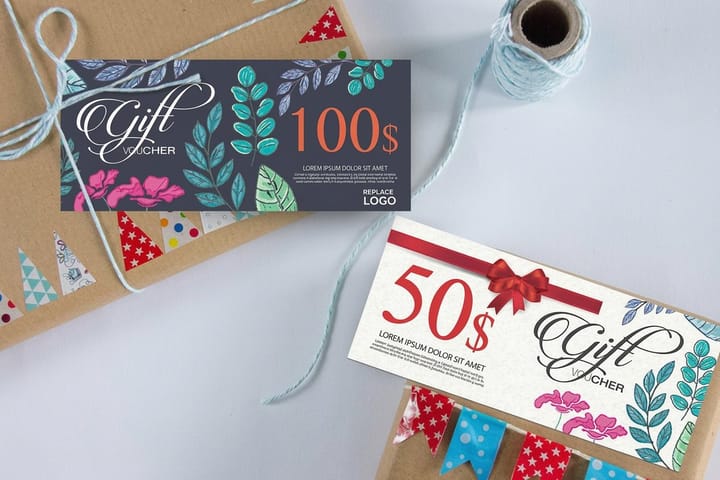
A surprising amount of first tattoos arrive as gifts: birthdays, graduations, the friend who has talked about it for years. A printed gift certificate captures that intent at the counter, collects the money now, and books a future session with someone who might never have walked in cold. For piercing studios the effect doubles; jewelry upgrades make perfect small gifts.
Print it dark and beautiful on heavy stock, because the certificate will be judged as a preview of the work. Keep denominations flexible with a written-amount line, and check gift certificate expiration rules before setting any dates; several states regulate them tightly.
Rack them visibly from November through Valentine's Day. The certificate that sells at Christmas becomes a full sleeve consultation in January.
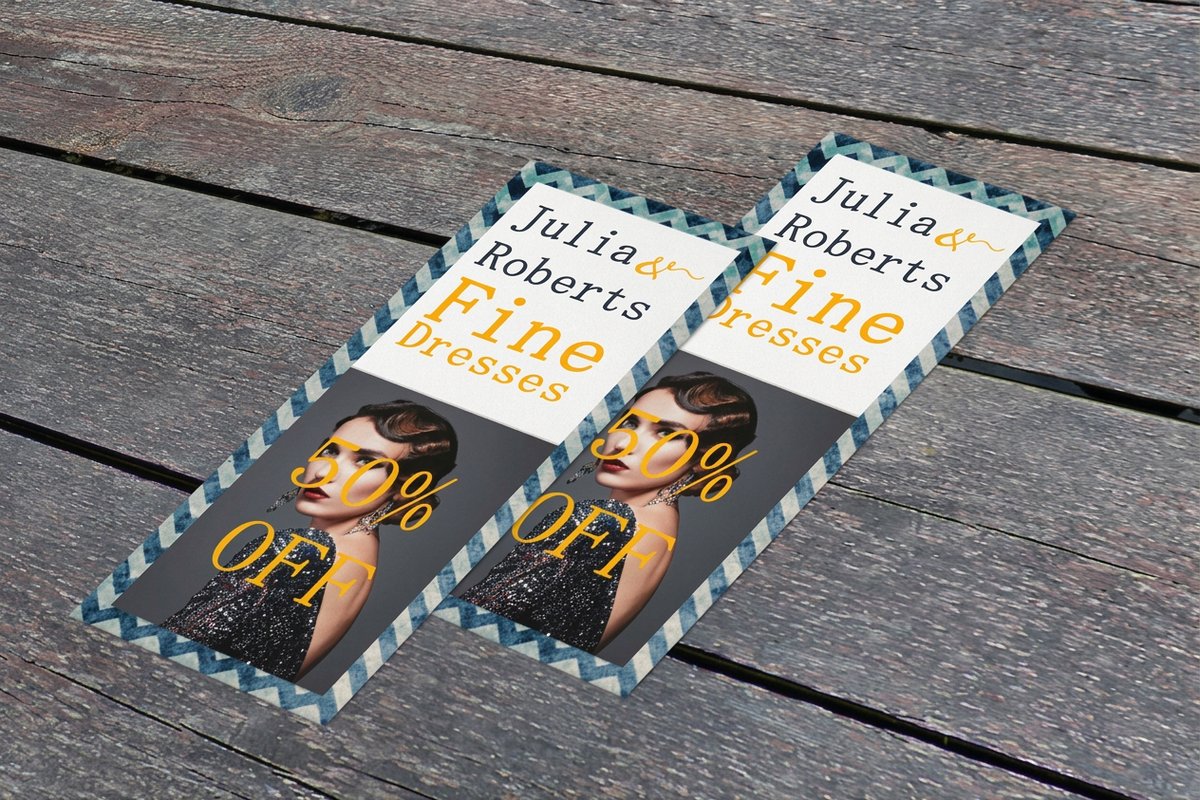
11. Rack cards: aftercare instructions that go home in every bag
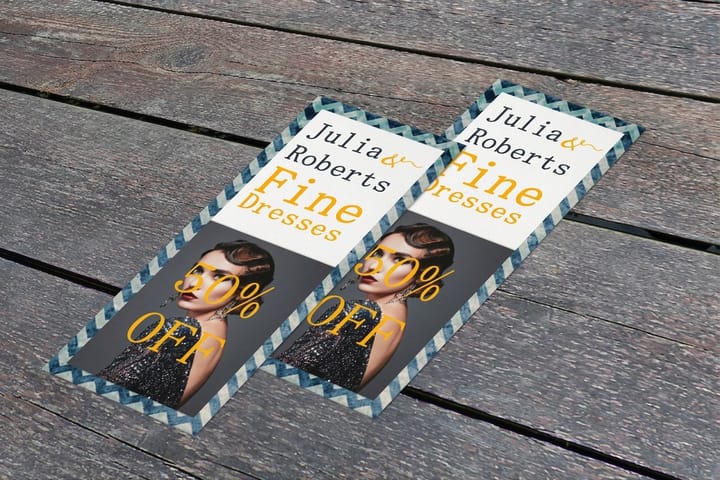
The signed aftercare form covers the studio legally; the rack card is the version the client actually uses. One tall panel, the healing timeline day by day, what is normal, what is not, and the shop's number for the panicked question at day four. It rides home in every aftercare bag and gets pinned to a fridge for two weeks, your branding attached to the client's most attentive fortnight.
Print tattoo aftercare on one side and piercing aftercare on the other, and the single card covers the whole studio. The format basics live in what rack cards are, and rack card design keeps the narrow panel readable.
Good aftercare protects the work, and protected work is the portfolio photo that books the next client. The card is quality control disguised as a handout.
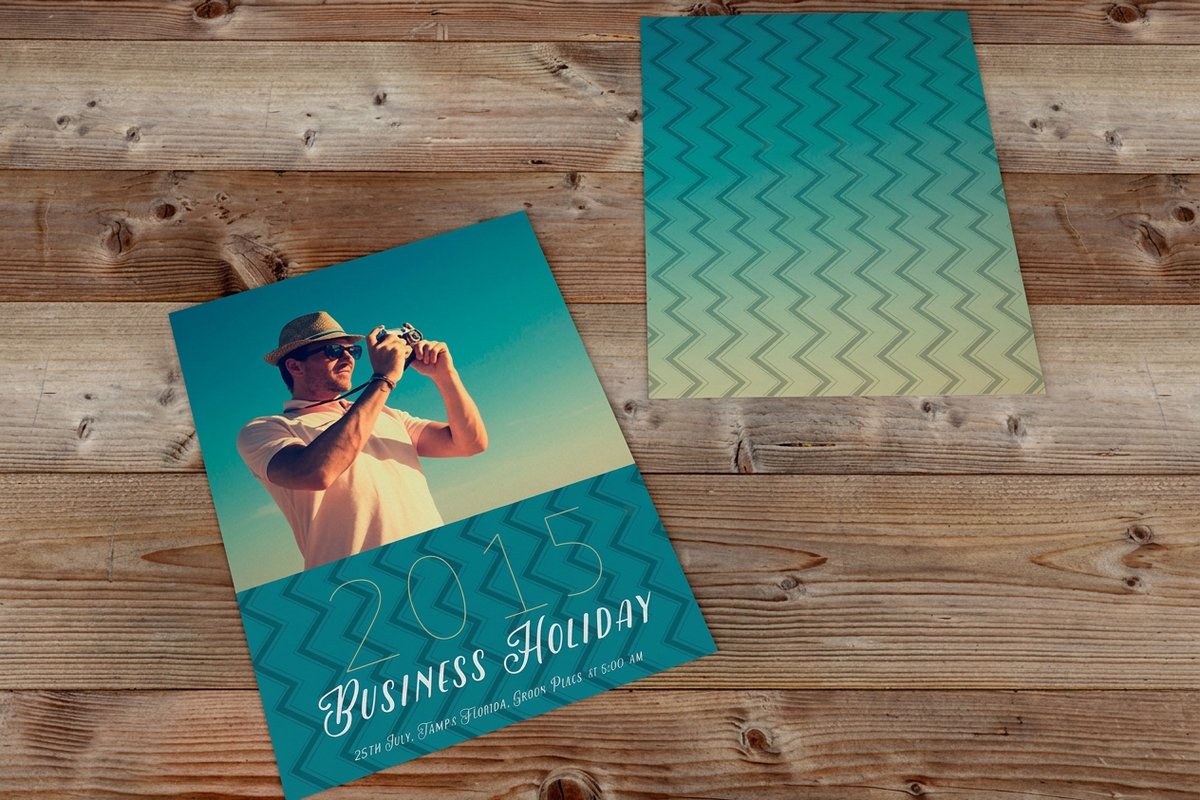
12. Postcards: flash drops mailed to the client list
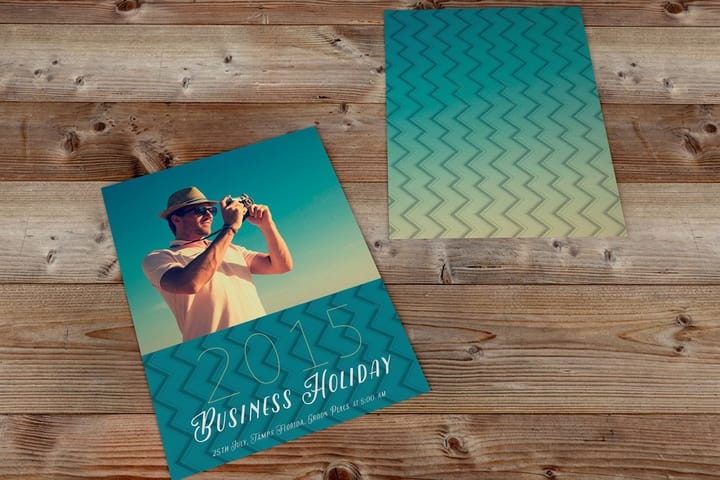
Every consent form collects an address, which means every studio owns a mailing list it never uses. A postcard puts it to work: the new flash sheet as the image, the books-open date on the back, mailed to everyone the studio has ever tattooed. Unlike a story that vanishes in a day, the card sits on a desk until the decision gets made.
Lead with the art at full bleed, keep the back to the date and the booking link, and mail two weeks before books open. The conversion checklist in postcard design for direct mail applies even when the audience is already inked, and building a mailing list covers organizing the file.
Starting under twenty dollars a run, one returning client covers the postage for a year of drops.
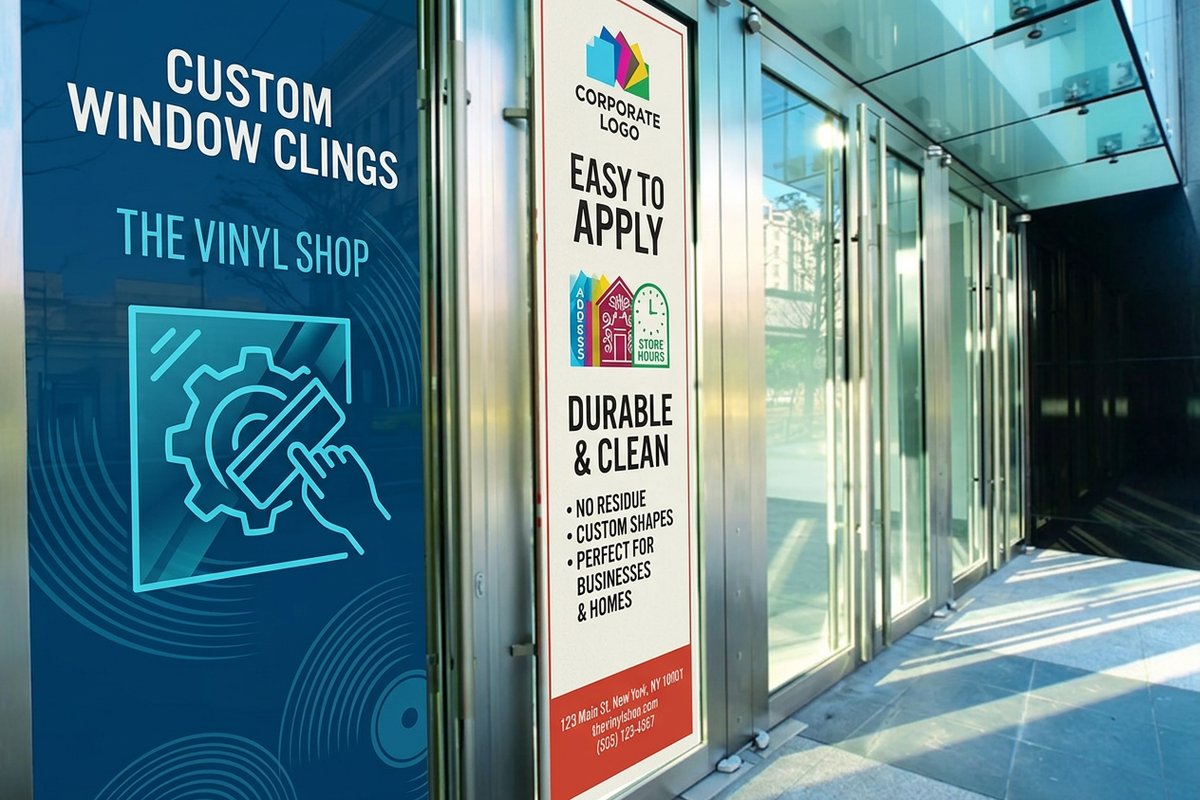
13. Window clings: walk-in answers on the glass
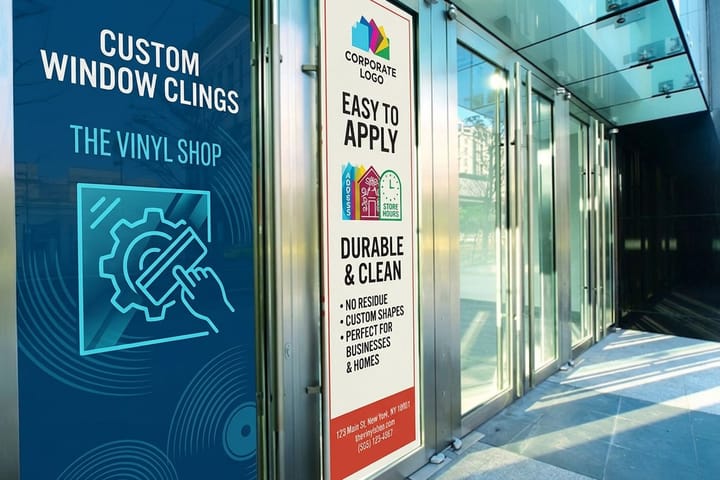
Someone deciding whether to walk into a studio for the first time hesitates at the glass. Window clings answer their questions before the hesitation wins: walk-ins welcome, piercings daily, the artists' names and styles, the hours. A confident window converts the curious; a blank one sends them back to their phone and someone else's booking page.
Keep the palette dark and the lettering yours, because the window is the first portfolio sample anyone sees. Clings reposition without residue, so the guest-artist announcement swaps in and out cleanly; the practicalities are in what window clings and decals are and how to apply window clings.
Put one small cling at eye level by the door handle: walk-ins today. It is the lowest-pressure invitation a nervous first-timer will ever accept.
14. T-shirts: the shop merch clients actually wear

Tattoo clients are the rare customers who want to wear the brand: the studio shirt says something about them, not just about you. A tee with your best flash on the back sells from a shelf by the register, outfits the crew on convention weekends, and walks your linework through festivals and gyms on bodies you have already tattooed.
Big back print, small chest mark, art doing all the talking. Our how to make custom t-shirts covers separations for dark garments, and the print size guide keeps the back piece proportioned like a back piece should be.
Drop a new design with each flash release. Limited runs sell faster, and the collector instinct that drives sticker culture pays retail prices for cotton.
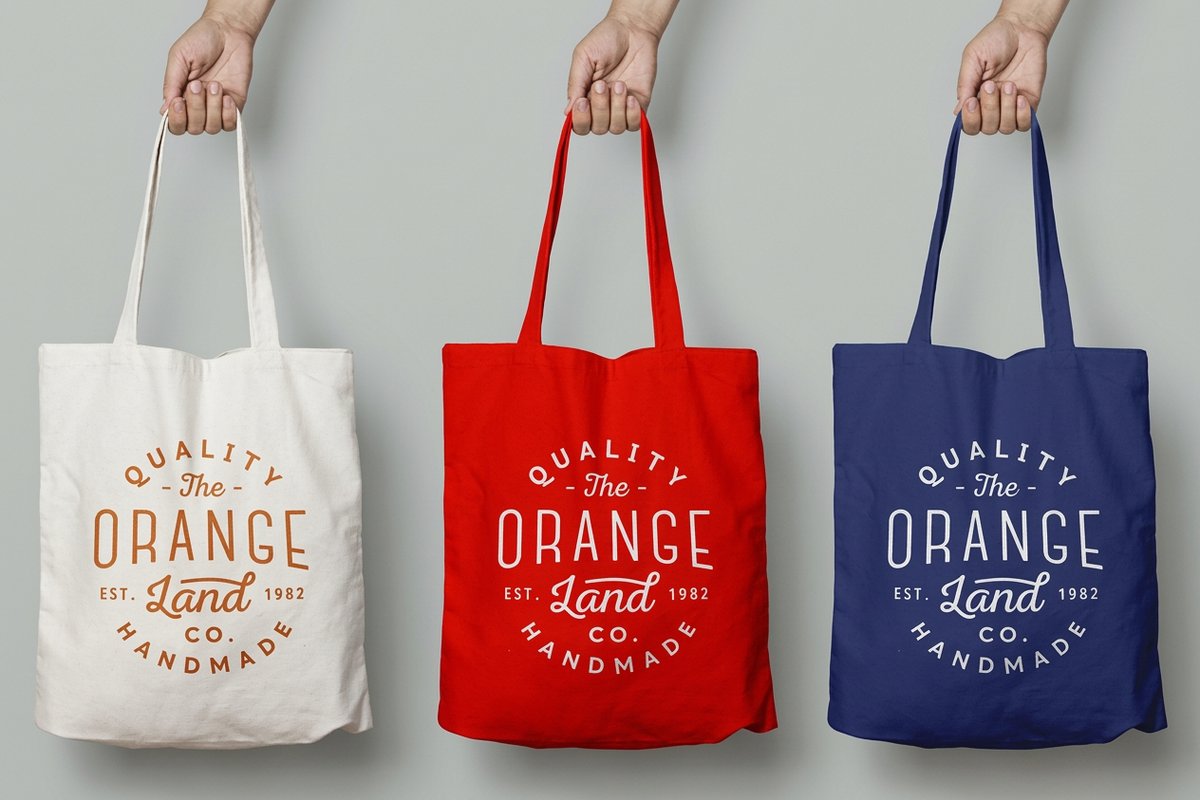
15. Tote bags: the aftercare bag worth keeping
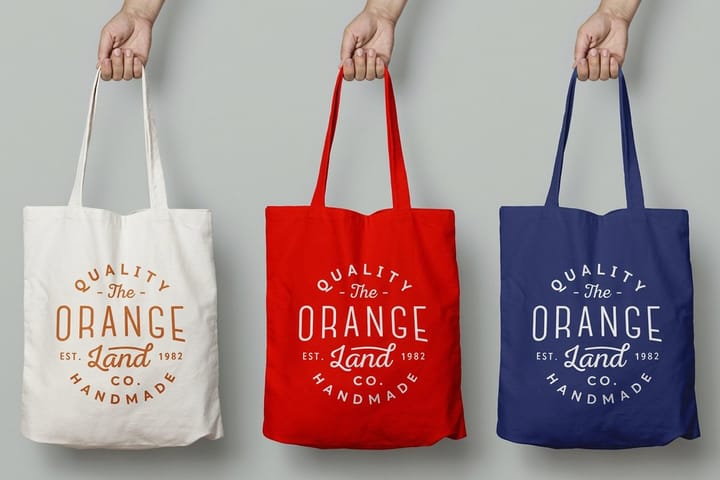
Every client leaves with a handful of aftercare, and it has to go in something. A printed tote turns that necessity into merch: the flash design on canvas gets reused for groceries, records, and gym gear, which puts your art on shoulders all over town for years after the session healed. Nobody keeps a plastic bag; everybody keeps a good tote.
Print one bold design per side and treat it like a print release, not packaging. A mark built on solid logo fundamentals reads across a room, and the tote doubles as a sellable item on the merch shelf next to the shirts.
Give one free with large pieces and sell the rest. At about twenty-three dollars to start, the tote is the aftercare bag that markets the shop for free afterward.
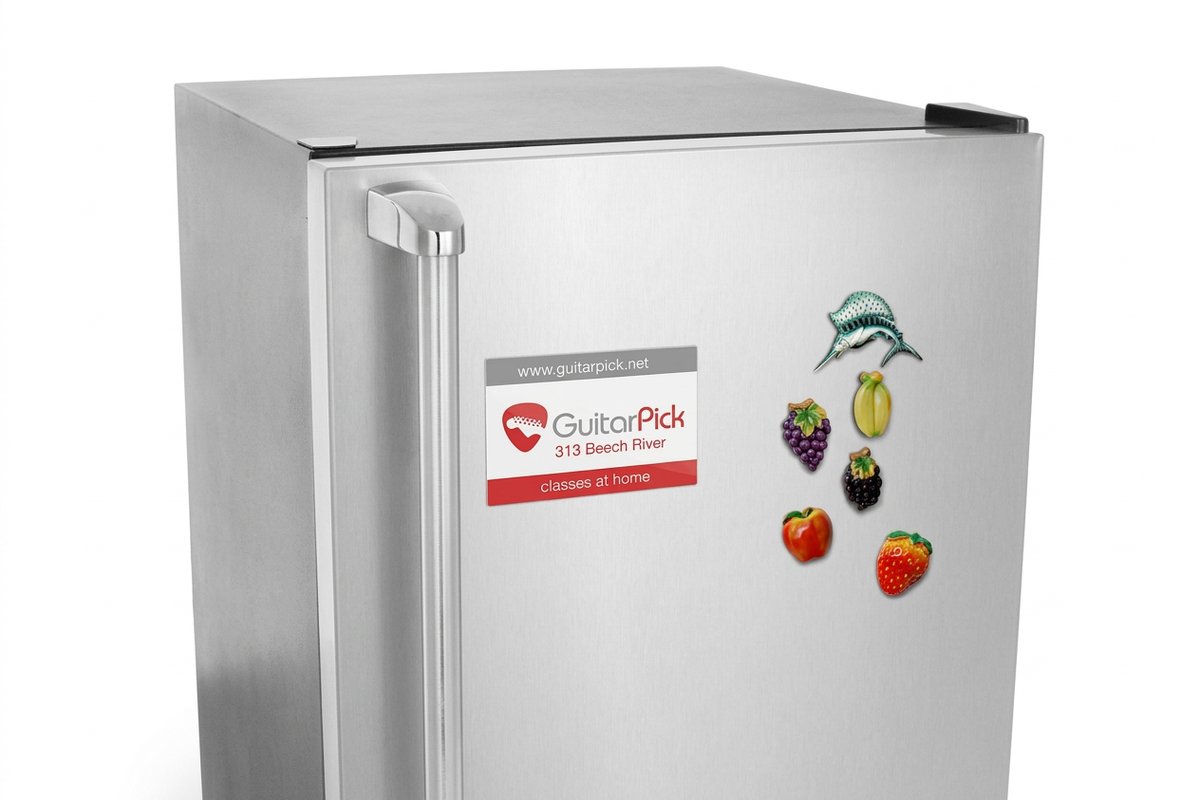
16. Magnets: flash for the fridge
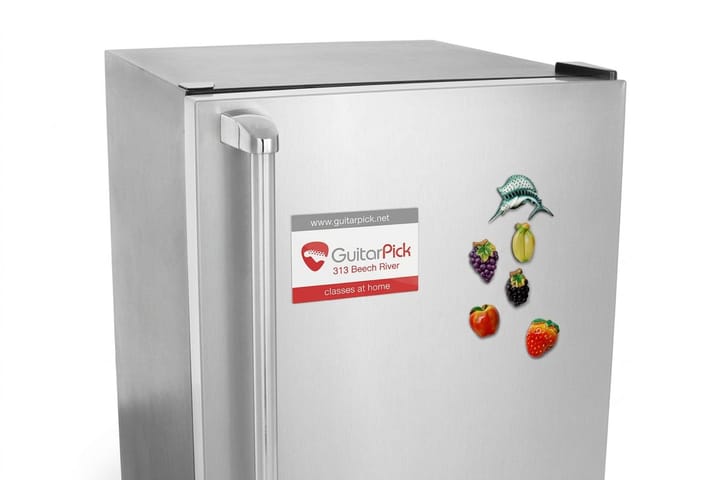
A flash magnet is the sticker's domesticated cousin: the same collectible art, stuck where the client and everyone they live with sees it daily. It carries the shop's name and booking handle into kitchens, and it survives there for years, quietly present every time the idea of the next tattoo comes up over coffee.
Print a small set of designs so clients can pick, and drop one into every aftercare bag alongside the stickers. The production notes in how to make custom magnets cover sizes, and magnets versus stickers explains why the fridge piece reaches people the laptop lid never will.
At cents apiece in volume, the magnet is the cheapest way the studio's art has ever entered a stranger's home, invited.

Specs and pricing
Anchor the pack: tattoo business card specs and live pricing
The artist card is the piece clients judge closest, so it sets the stock and finish standard for the set. Here are the live specs and price-per-unit for tattoo business cards at 4OVER4.COM.
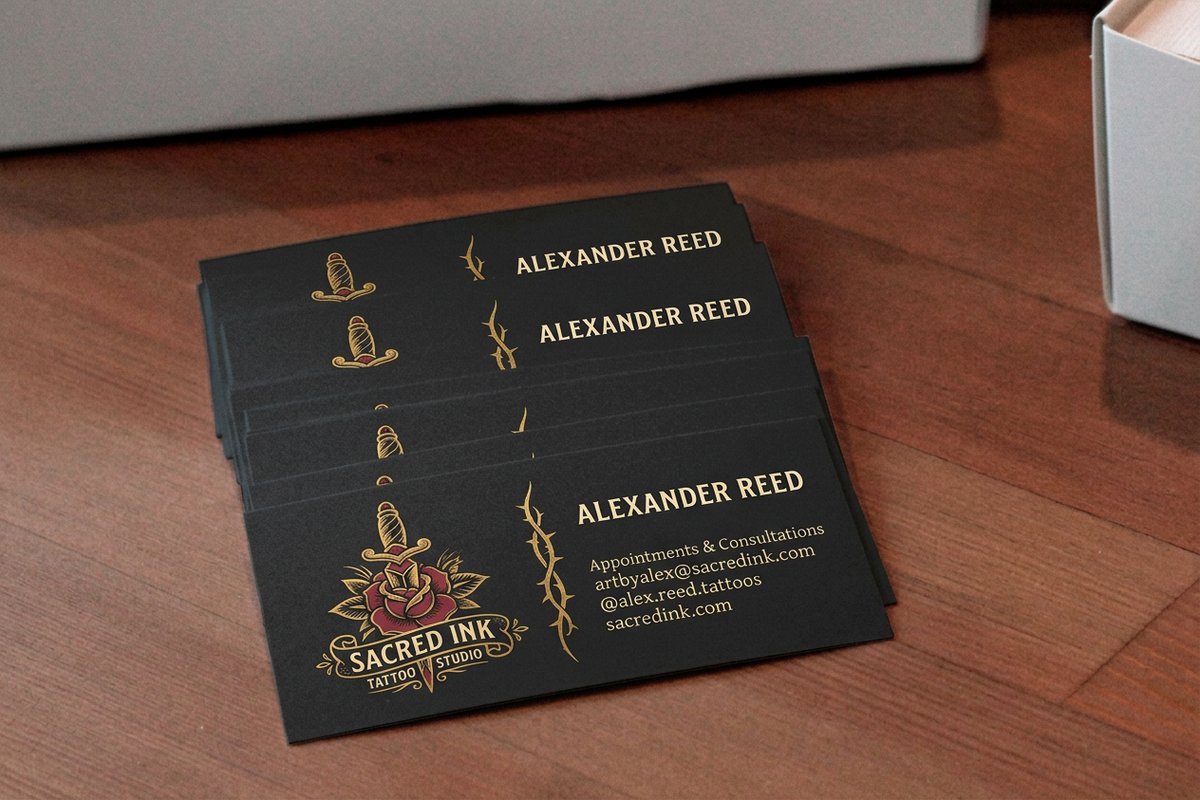
| Quantity | Price Per Unit | Total |
|---|---|---|
| 100 | 17.6¢ | $17.57 |
| 200 | 11.5¢ | $23.07 |
| 300 | 9.15¢ | $27.46 |
| 400 | 7.96¢ | $31.86 |
| 500 | 7.25¢ | $36.26 |
| 600 | 6.77¢ | $40.64 |
| 700 | 6.43¢ | $45.04 |
| 800 | 6.18¢ | $49.43 |
Wally explains the pack
16 pieces, one art style, printed to open a studio
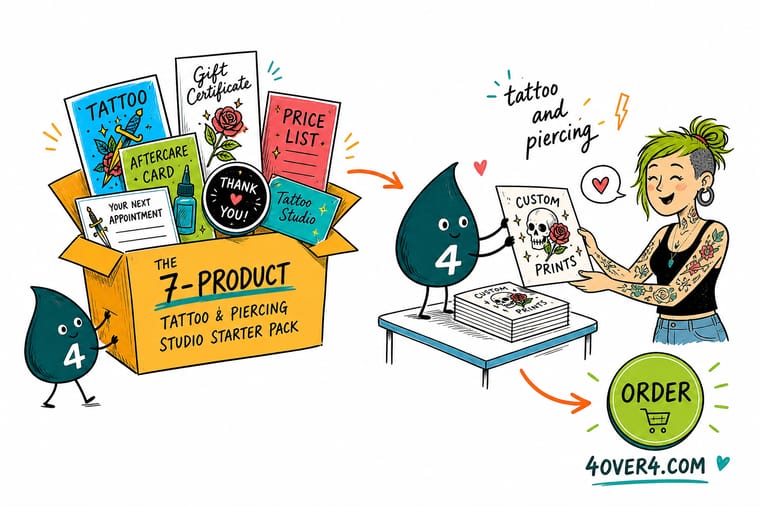
Wally treats a studio launch like hanging a show. The banner, signs, and window clings put the name on the street, flyers and postcards invite the crowd, and inside, every printed piece is part of the exhibition: the consent form on the clipboard, the flash on the walls, the aftercare card and artist card in the tote, the sticker and magnet that ride out on laptops and fridges, and the shirt that walks the art through town. Keep one style across all 16 and let 4OVER4 print the set with the blacks rich and matching.
Shop the tattoo collection →See it in use
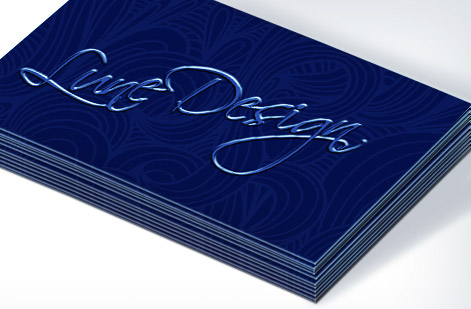
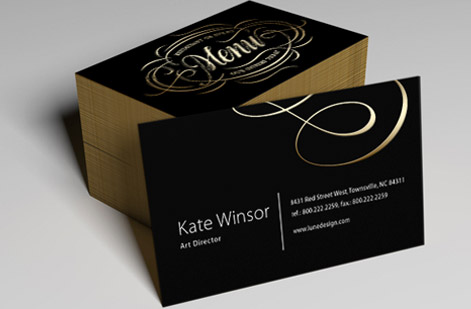
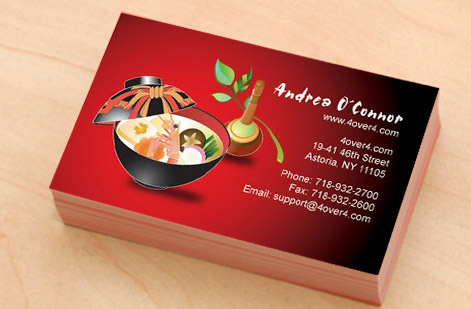
Real studio print work, printed in-house
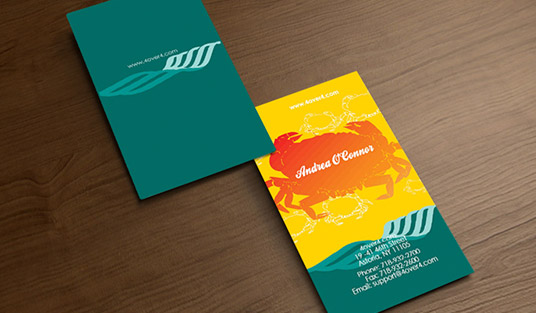
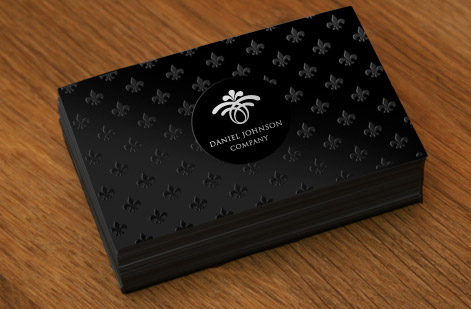
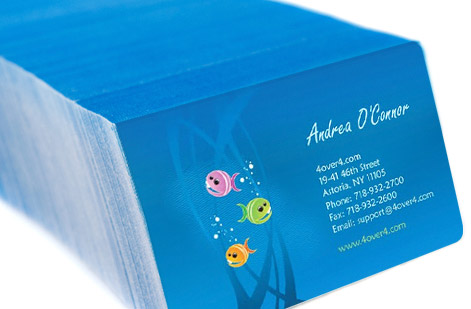

Explore more
Where to go next



By the numbers
One pack, printed to open the shop
Common Questions
Common questions about the studio starter pack
What is in the tattoo and piercing studio starter pack?
16 print pieces that cover a studio from the street to the chair: tattoo business cards, stickers, flash posters, flyers, printed consent and aftercare forms, die-cut hangtags, a vinyl banner, shop signs, appointment cards, gift certificates, aftercare rack cards, postcards, window clings, merch t-shirts, tote bags, and magnets. The street pieces pull people in, the forms, appointment cards, and rack cards make each session professional, and the stickers, posters, hangtags, merch, and certificates keep your art circulating and your merch selling.
Why do tattoo studios need printed consent forms?
Most jurisdictions require signed consent before tattooing or piercing, and many require documented aftercare instructions too. Printed forms with your studio name, checkboxes, and signature lines make compliance systematic instead of improvised, protect you if a dispute ever arises, and signal to clients that the studio takes health and process seriously. Custom business forms let you print consent, aftercare, and release forms as matching carbonless sets.
What makes a good tattoo business card?
Treat it as a one-inch portfolio. Put one strong piece of your own linework on the card, keep the type minimal, and use a heavy or laminated stock so the card feels as deliberate as your work. Each artist in the shop should carry their own version with their Instagram handle and booking link, because clients book artists, not studios.
How do studios actually use stickers?
As currency. A few stickers go into every aftercare bag, a bowl sits by the register, and trades happen at conventions. Your flash on a laptop or a toolbox is a permanent ad seen by everyone that person meets, and unlike an online post it never gets buried. Die-cut vinyl survives water bottles and weather, which keeps the art looking sharp for years.
What should go on the shop walls, posters or originals?
Both, but printed flash posters do the commercial work. They show the styles the shop is strongest in, give waiting clients something to browse, and plant the idea for the next piece while the current one heals. Rotate a few new designs each season so regulars always see something they have not considered yet. Large-format posters from your scanned flash keep the linework crisp at size.
How much does the full studio starter pack cost?
Every product prices live by quantity and options. Business cards start under twenty dollars, stickers and posters at twenty-five, hangtags around thirty-six, flyers near fifty-16, the banner at seventy-nine, and printed form sets near one hundred twenty. Set your real quantities in each configurator and the totals update as you choose stocks and sizes.
Can all 16 pieces share one look?
They should. A studio’s brand is its art style, so carry the same logo, lettering, and palette from the banner outside to the consent form on the clipboard. Start each piece from your flash assets in the online designer, then print the set in one order so the blacks and color saturation match across vinyl, paper, and card stock.
Get Started
Ready to open the studio?
Order the full starter pack from 4OVER4.COM and print all 16 pieces in one turnaround, with the blacks rich and matching across every stock. Adjust size, finish, and quantity on any product and watch the price update live.
Legal Disclaimer
Gold Standard guarantees apply to all standard orders placed through 4over4.com. Price match requires verifiable proof of a competitor's published price for an equivalent product with matching specifications and turnaround time. Satisfaction guarantee covers manufacturing defects and print quality issues. Contact support with order number and documentation. On-time delivery rate based on tracked orders 1999 to 2026. Individual results may vary based on shipping carrier performance.
