
Types of Banners With Styles, Costs and Tips


Tobias is our voice for cutting, binding and large format, built from the knowledge of our production team, with over 20 years in printing.
Retractable, hanging vinyl, mesh, X-stand, pop-up fabric, and step-and-repeat all print the same file but do very different jobs. Whether the banner hangs, stands or travels is the question that sorts them.
The main banner styles are retractable, hanging vinyl and mesh, X-stand, pop-up fabric, and step-and-repeat. Each pairs a printed graphic with different hardware, so choose by location and use: retractable stands for events, vinyl or mesh for outdoors, step-and-repeat for photo walls, fabric tension for a premium indoor look, and an X-stand for a quick, low-cost promo. Price follows material, size, and finishing.
Quick tips
Quick tips for picking a banner style
Choose the banner style by where it lives, not by how it looks flat. Retractable stands set up in a minute and travel well for events. Vinyl handles weather, mesh survives wind, and fabric tension displays kill glare indoors. Step-and-repeat is sized for the camera, not the wall. Price tracks material, square footage, and finishing like hems and grommets, so lock in the location first and the rest falls into place.
What a banner actually is, and why the style decides everything
A banner is a large printed graphic meant to be read from across a room or across a parking lot, anywhere from a 12" x 24" indoor sheet to an 8' x 20' outdoor vinyl. What people call a banner "style" is the pairing of two decisions, the material it is printed on and the hardware that holds it up: 13oz outdoor vinyl or 8oz perforated mesh with grommets every 2 feet, say, or 13oz smooth blockout vinyl rolled into an aluminum retractable stand. That pairing matters more than most first-time buyers expect. A strong design on the wrong style still fails, because it sags in the wind, glares under the booth lights, or will not stand where you need it.
Think of the printed sheet and the display as one product. A grommeted vinyl sheet zip-tied to a fence, the same artwork on a spring-loaded roll-up base, and that artwork tiled across a photo wall are three different banner styles, even though the file never changed. Getting the pairing right is the whole game, and it is why the full banners printing collection is organized by style rather than by picture.
This guide walks through the styles you will actually shop for, what each one costs, and where each one shines. If a term on the order screen ever trips you up, keep the printing terms glossary open in a second tab. And if you are outfitting a whole booth or storefront, the wider signs and banners lineup covers the rigid signage that pairs with soft banners.
Why banners still earn a line in the budget
Banners survive because the math is friendly. One print, such as a 2' x 4' outdoor vinyl banner at $79 or a 24" x 72" mesh at $75, gets read by everyone who walks or drives past it, for weeks or years, with no per-view cost after the day it goes up. A roll-up you buy for a spring expo comes back out for the fall one. A vinyl banner over a storefront pays for itself the first weekend of a sale. That reusability is why banners hold their spot next to flashier channels, and why event teams treat them as gear rather than a one-off expense.
The most popular styles cluster around a few jobs. Retractable stands own the trade-show and lobby world because they travel and reset in seconds. Hanging vinyl owns the outdoors. Step-and-repeat owns the photo op. If you want the hard numbers behind live events before you commit a budget, the event marketing and trade show data page lays them out, and the trade shows and events hub groups the displays that tend to ship together.
One more reason they endure: they are easy to compare on price and turnaround. If you are weighing suppliers, our 4OVER4 versus BannerBuzz comparison puts materials and lead times side by side so the decision is about substance, not guesswork.
Retractable banners, built for the aisle
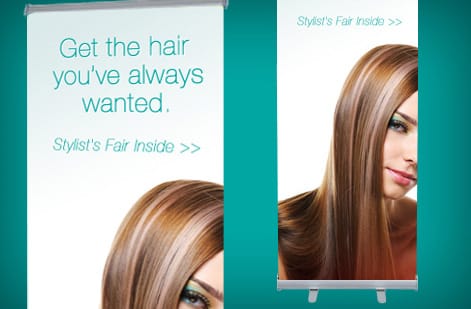
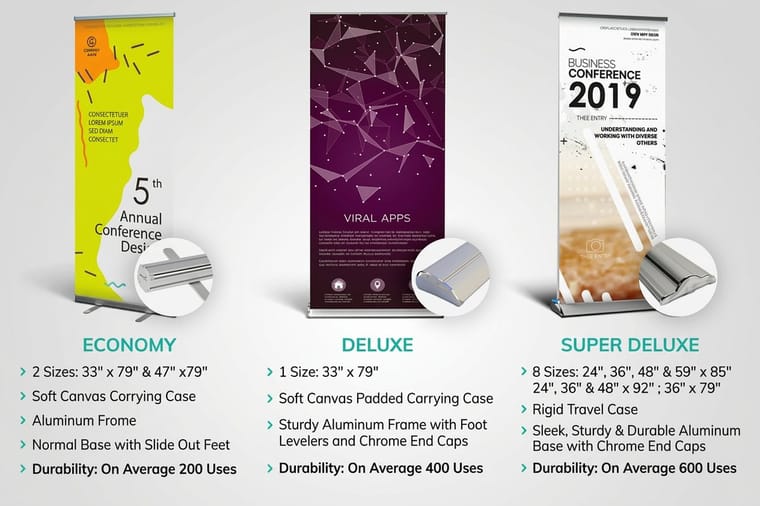
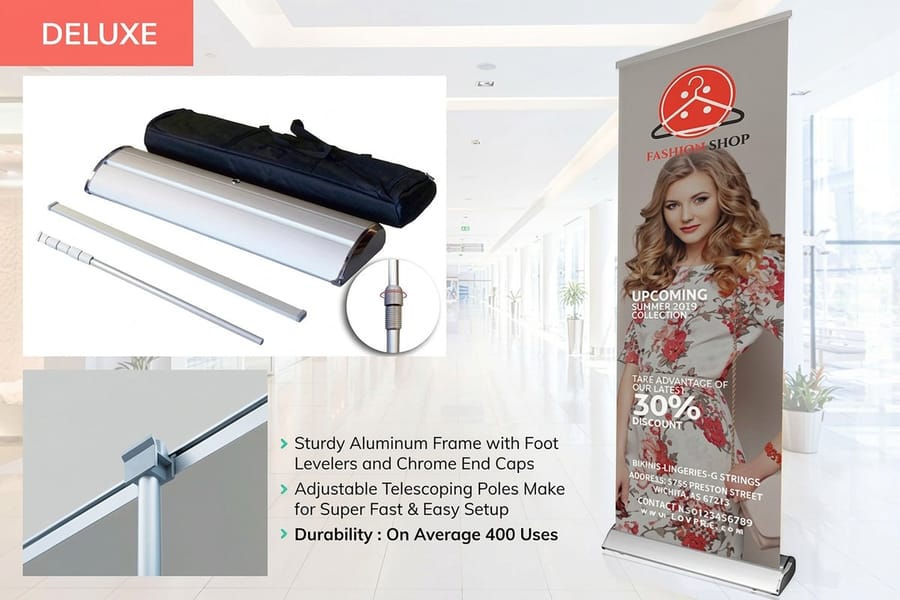
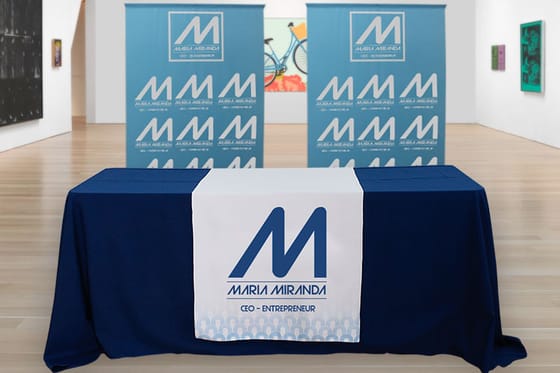
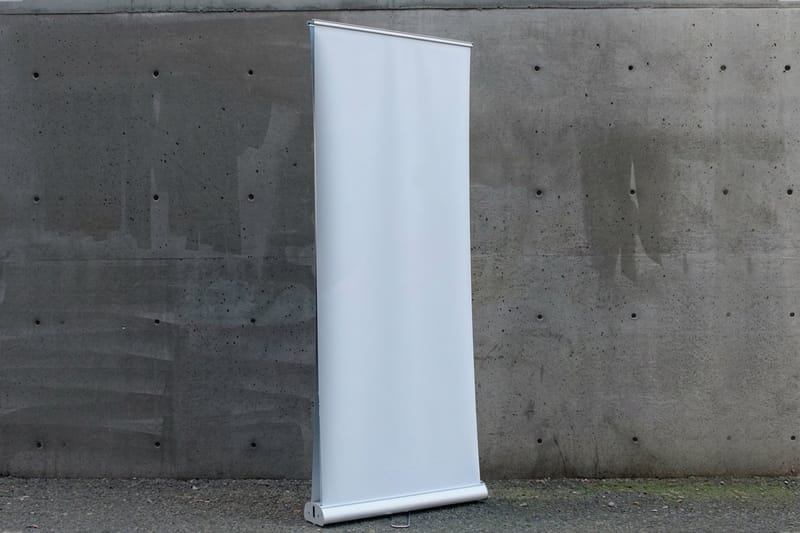
Retractable banners, also called roll-up or pull-up banners, are the ones you have seen a thousand times without naming. The graphic lives rolled inside a weighted base. You pull it up, clip it to a slim support pole, and it stands on its own, all in under a minute and without tools. At the end of the day it rolls back down into the base for the trip home. That combination of self-standing, self-storing, and one-person setup is exactly why they crowd every booth aisle and hotel lobby.
There is a size for every footprint. A full retractable banner stand starts around $139 and gives you a roughly waist-to-overhead display for a booth or entrance. A mini retractable stand starts near $49.41 and sits on a counter or registration table where a full stand would tower. When you want a premium, no-glare finish, a retractable fabric stand starts around $159.85 and swaps the shiny vinyl for dye-sublimated cloth.
- Best for: trade shows, conferences, lobbies, and anywhere the display moves and resets often.
- Watch for: they are indoor-first, so keep them out of real wind, and store the graphic rolled to avoid curl.
Browse the full banner stands category to compare heights, bases, and hardware kits side by side.
Hanging, mesh, and pole banners: cover the big spans
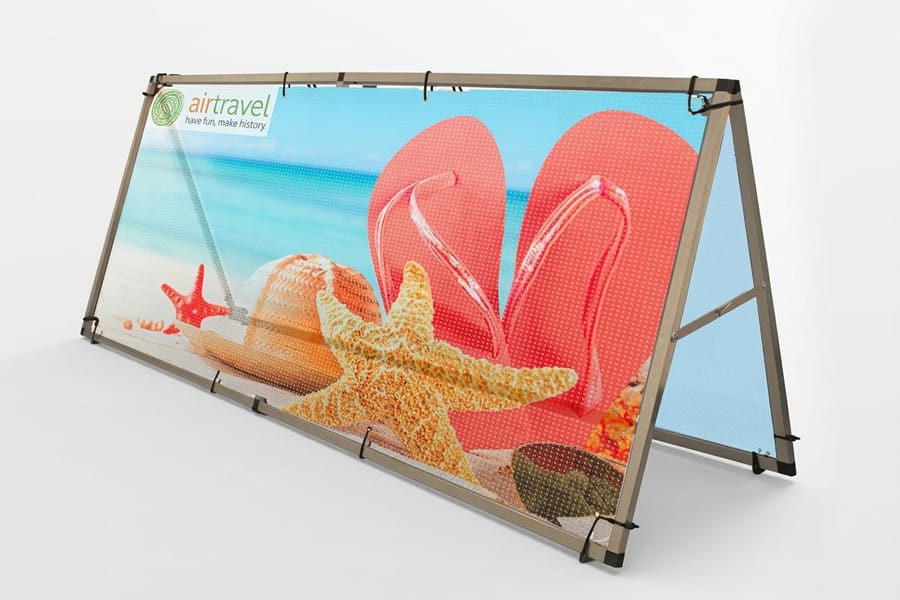
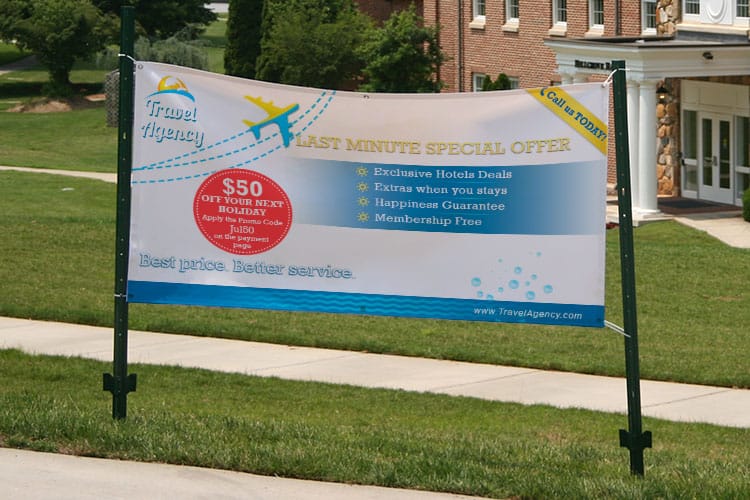
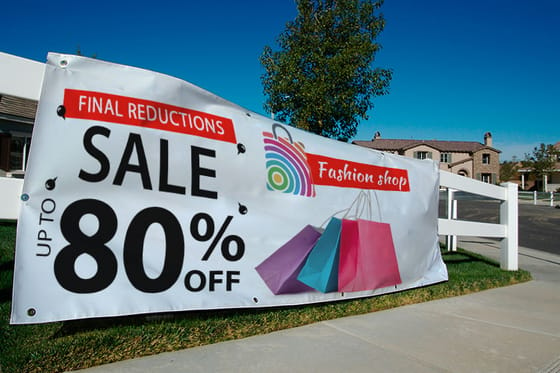
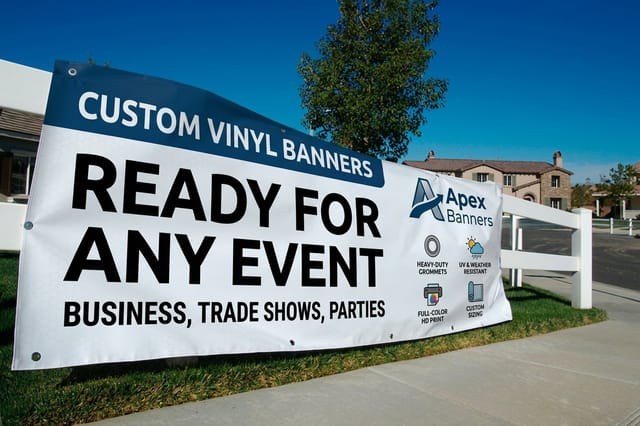
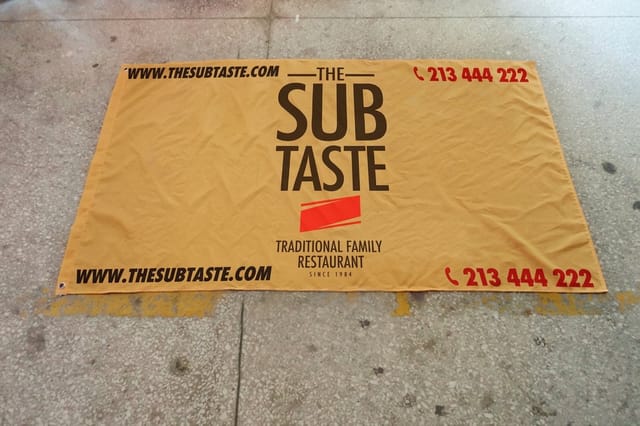
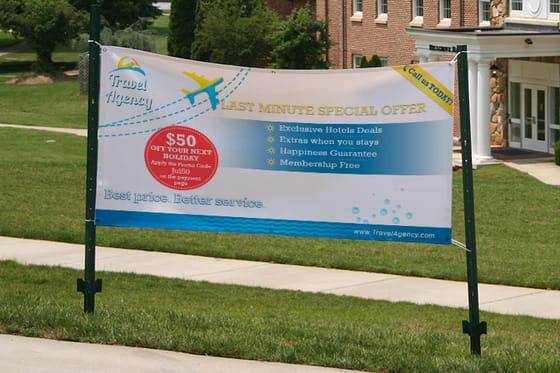
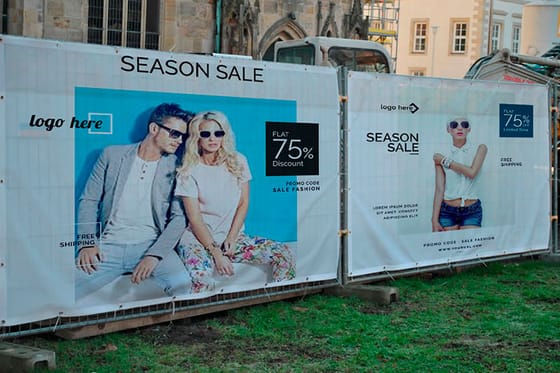
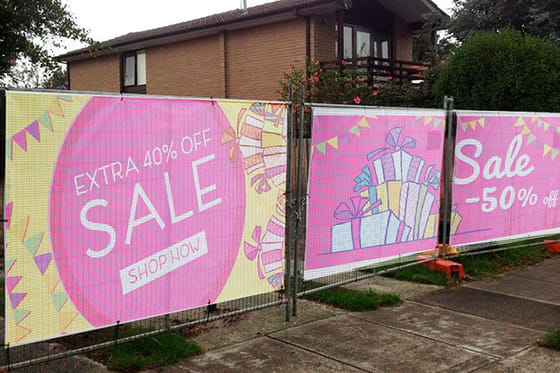
When you need to cover a wall, a fence, or a stretch of storefront, you want a hanging banner, printed flat with reinforced hems and metal grommets so you can zip-tie or rope it into place. The material is the decision here, set by where the banner lives and how much wind it will meet.
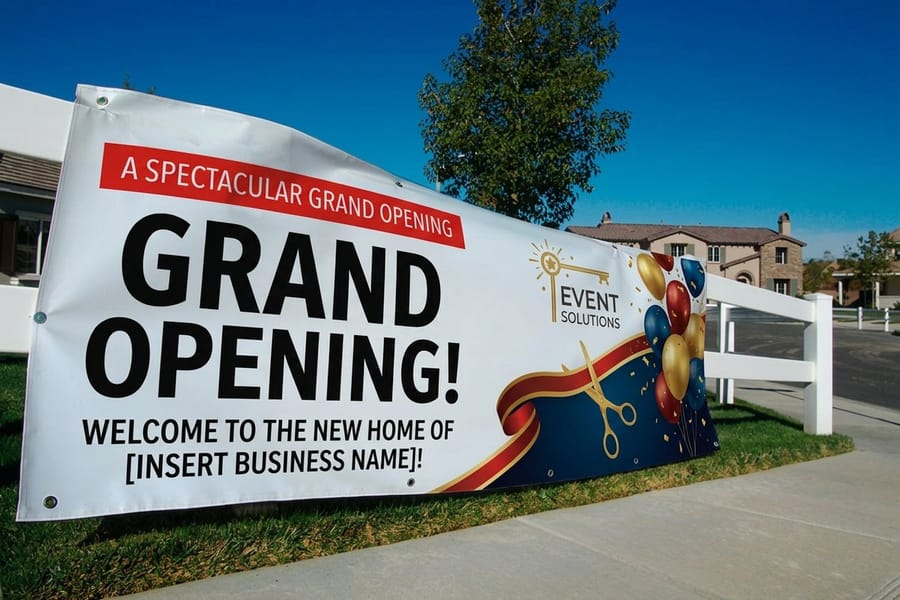
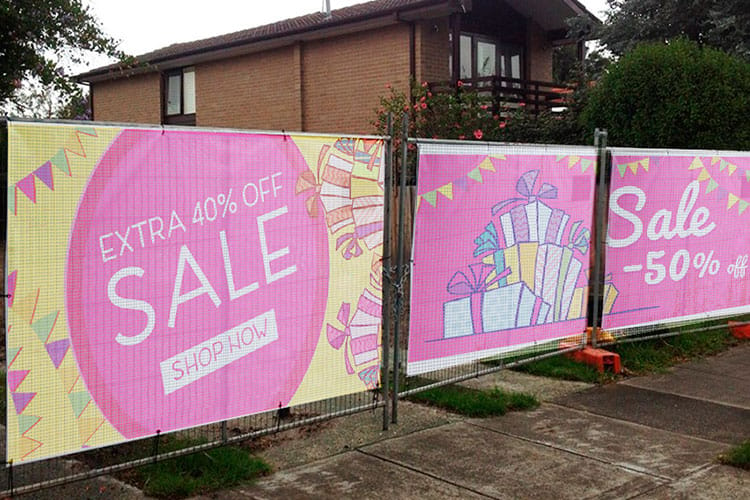
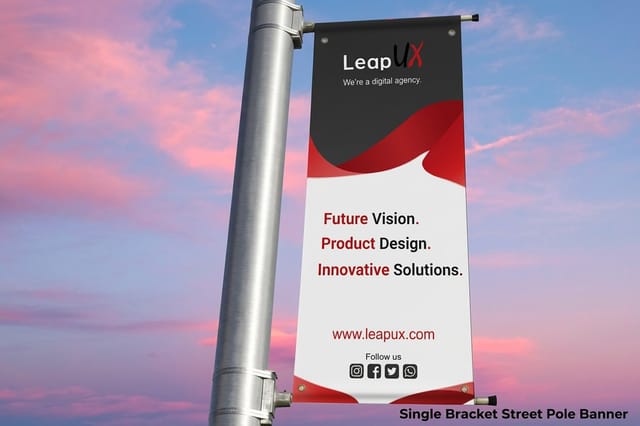
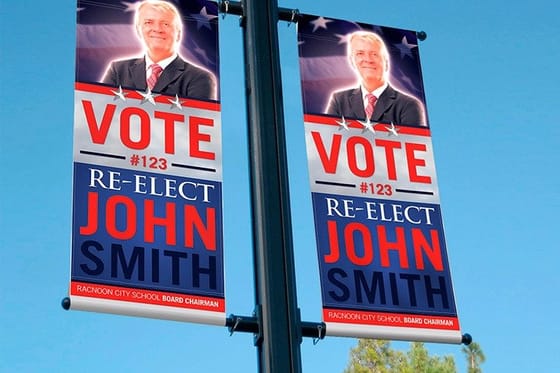
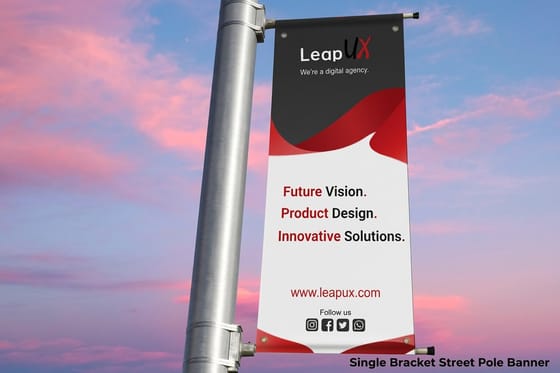
Vinyl is the solid, coated default. It blocks light, shows the punchiest color, and is the standard for building signs and outdoor vinyl banners starting around $79. Mesh is a perforated cousin that lets roughly a third of the wind through, which is what keeps a large mesh banner from behaving like a sail on a long fence, starting near $75. See large mesh banners in the product video before you order one. For interiors, a lighter indoor banner starts at just $25, and for streetlight rows, pole banners use pole pockets top and bottom and start around $97.76.
Not sure which coated stock to specify? The vinyl banners category breaks the weights and finishes out by use. For a full weatherproof outdoor build, the outdoor banners product covers the durable options in one place.
X-stand banners: light, cheap, and up in seconds
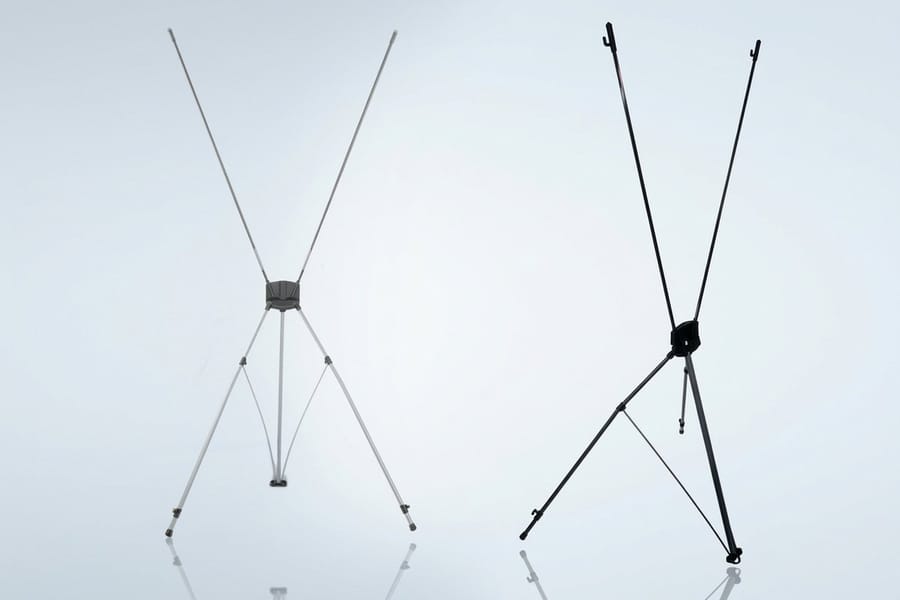
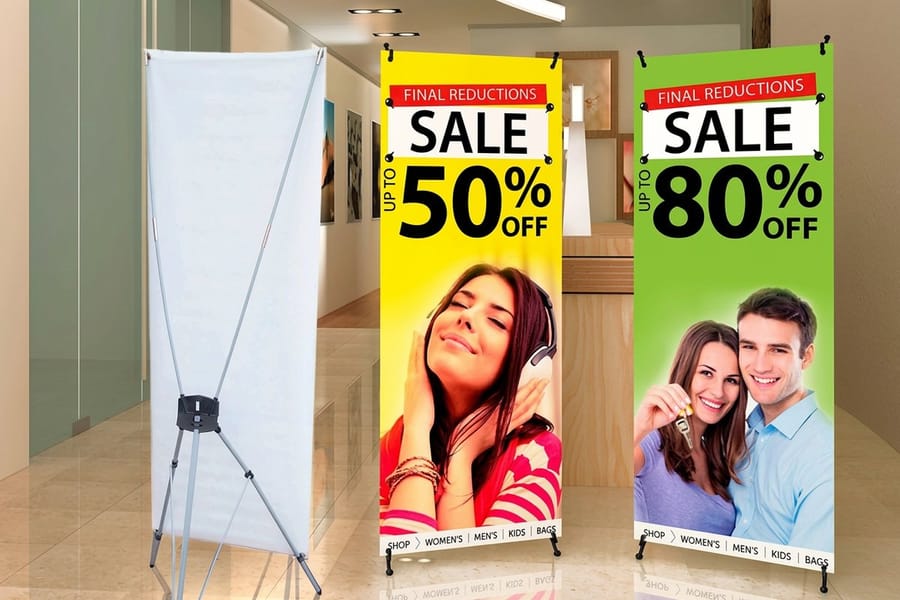
An X-stand, or X-frame banner, is the budget sprinter of the group. The hardware is a collapsible X-shaped frame that clips into the four grommets of a lightweight banner and pulls it taut. There is no rolling mechanism and no weighted base, which is exactly why an X-frame banner stand starts around $91 and folds down to almost nothing.
The trade-off is stability. Because the frame is light and the footprint is small, an X-stand is happiest indoors, out of drafts, for short promotions where you value low cost and instant setup over ruggedness. It is a natural pick for a registration desk, a store aisle, or a pop-up that only needs to hold up for an afternoon.
- Best for: quick indoor promos, retail aisles, and anywhere you want the cheapest self-standing display.
- Watch for: keep it out of wind and high-traffic bumps, since it tips more easily than a weighted retractable base.
Pop-up fabric tension banners: one-piece backdrops
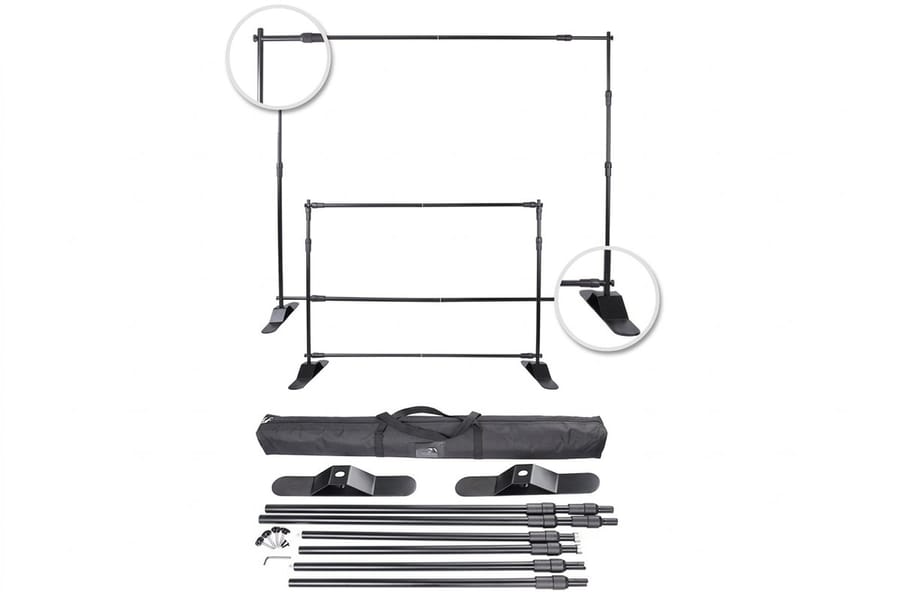
When you want a big, unbroken wall of color rather than a single narrow panel, you move up to a pop-up fabric tension display. A collapsible frame springs open like an accordion, and a dye-sublimated fabric graphic stretches over it under tension, hiding the hardware completely. The result reads as one clean surface with no glare and no visible seams, which is why it looks a class above a shiny vinyl roll-up on camera.
Fabric is the quiet advantage. Dye-sublimation bakes the ink into the cloth, so the graphic is soft, wrinkle-resistant, and often machine-washable, which matters when the same backdrop travels to a dozen shows. A step-and-repeat banner stand in this family starts around $192.22 and gives you a photo-ready wall, while the retractable fabric stand brings the same no-glare cloth to the roll-up format.
These displays anchor the kind of polished booth you see in the banner stand showcase, where the fabric walls do the heavy lifting behind the product tables.
Step-and-repeat banners: the photo-op backdrop
Step-and-repeat is the banner style built for the camera, not the wall. The name comes from the layout: a logo, or a pair of logos, repeated in a tight grid so that no matter where a person stands and how a phone or press camera crops the shot, a full logo lands in frame. It is the red-carpet backdrop, the sponsor wall, the shot everyone posts afterward.
Sizing is the part people miss. A step-and-repeat is sized for how tall a person is and how a camera frames them from the waist up, so the logo tile has to be large enough to read in a cropped, slightly angled phone photo. A grommeted step-and-repeat banner starts around $217.50 and can hang on a wall or clip to a stand. For a self-standing photo wall that travels, pair it with the step-and-repeat stand.
Done well, it turns every attendee into a distributor of your brand. For a real example of a small team using one to punch above its weight, read how a startup made an impact at its first trade show, then browse the trade shows and events gear that surrounds it.
What banners cost and how the price is set
Banner pricing looks mysterious until you see the levers. There are only a handful, and they explain almost every quote you will get.
- Material. A light indoor stock is the cheapest, coated vinyl and mesh sit in the middle, and dye-sublimated fabric is the premium tier.
- Size. Hanging banners price by the square foot, so doubling the height and width roughly quadruples the area and the cost.
- Sides. Double-sided printing on a blockout material costs more than a single-sided banner because it prints twice on an opaque stock.
- Finishing. Reinforced hems, metal grommets, and pole pockets each add a little, and they are what make a banner survive being hung.
- Hardware. With stand styles you are buying the frame and base as well as the print, which is why a retractable costs more than a bare vinyl sheet of the same size.
- Quantity. Per-piece cost drops as the run grows, so ten of one design is far cheaper each than one.
In real numbers from the live catalog, indoor banners start at $25, outdoor mesh and vinyl around $75 to $79, a retractable stand near $139, and a step-and-repeat backdrop around $217.50. Ordering several at once unlocks bulk discounts, and it is worth ordering free samples first so you can feel the material before you commit to a large run.
Which banner style should you choose?
Skip the spec sheets for a second and match the style to the scene. That is how the choice actually gets made.
- Trade-show booth or a lobby that changes often: a retractable stand for its one-minute setup and clean travel.
- Building, fence, or storefront outdoors: vinyl for a solid wall, or mesh anywhere wind is a factor.
- Rows of streetlight poles: pole banners, which are engineered for that top-and-bottom mount.
- Press wall or photo op: a step-and-repeat backdrop sized for the camera.
- Premium indoor look with no glare: a fabric tension display.
- Tight budget, quick indoor promo: an X-stand or a light indoor banner.
Once the style is settled, the art is the easy part. Start from a print-ready template that already carries the right bleed and safe zones, or build it from scratch in the Online Designer. If you are also producing flyers or handouts for the same event, the how to make flyers guide keeps the whole set on brand, and the marketing materials hub rounds out the rest.
Wally explains banner styles
Pick by the room, not by the render
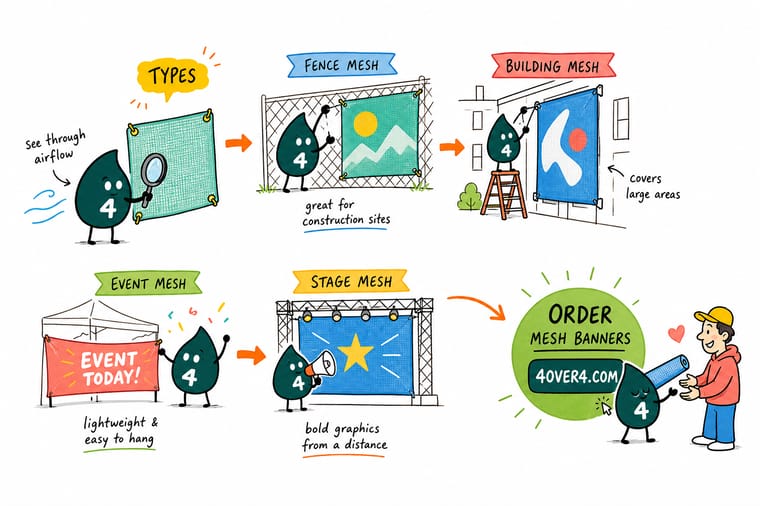
Wally thinks of banners like shoes: the right pair depends entirely on where you are walking. A retractable stand is your everyday sneaker for booths and lobbies, mesh is the trail shoe that shrugs off wind outdoors, and step-and-repeat is the dress shoe you save for the camera. Decide where the banner lives first, and the material, hardware, and price sort themselves out. Then browse every style in one place at 4OVER4.
Browse banner styles →
In four steps
How to choose your banner in four steps
- 1 Pin down where it lives. An indoor booth, an outdoor fence, a row of street poles, and a photo wall each want a different answer, so start with the location before anything else.
- 2 Match the material to that spot. Coated vinyl shrugs off weather, mesh lets wind pass through, fabric softens glare under indoor lights, and a light indoor stock keeps short-run promos inexpensive.
- 3 Pick the hardware. Decide between a retractable stand, an X-frame, grommets on a wall, pole pockets, or a tension frame, because the hardware is what turns a printed sheet into a display.
- 4 Size it and drop in your art. Size for the read distance, then upload a print-ready file or start from a free layout in the Online Designer and print-ready templates.
Browse the range
Every banner style in one collection
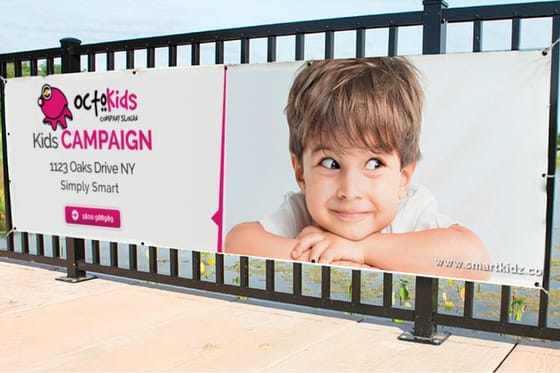
Hanging banners come in 13oz outdoor vinyl from 2' x 4' to 8' x 20', 8oz perforated mesh from 24" x 72" to 48" x 144", and 13oz smooth blockout indoor vinyl from 12" x 24" to 48" x 96", each with hem, grommet and pole pocket options. Retractable stands run from 24" x 79" to 59" x 85", and street pole banners print both sides on 18oz blockout vinyl from 18" x 24" to 30" x 72".
Specs and pricing
Mesh banner specs and live pricing
Mesh is the go-to when wind is in play, letting air pass through a large outdoor span instead of catching it. Mesh banners ship in 3 business days, with live specs and price-per-unit below.

| Quantity | Price Per Unit | Total |
|---|---|---|
| 1 | $75.00 | $75.00 |
Print it
Popular banner styles to order now
See it in use
Every banner style off one press

Explore more
Where to go next


By the numbers
Pole banners at $97.76, mini stands at $49.41
Common Questions
Common questions about banner types and styles
What are the different types of banners?
The common styles are retractable (roll-up) banners, hanging vinyl and mesh banners, X-stand banners, pop-up fabric tension banners, and step-and-repeat photo backdrops. Each pairs a printed graphic with a different way of holding it up: a spring-loaded base, grommets, an X-frame, or a collapsible tension frame. There are also specialty formats like pole banners for streetlights and indoor banners for short indoor runs.
What are banner styles, exactly?
A banner style is the combination of the printed material and the display hardware, not just the artwork. The same logo can become a retractable stand, a grommeted vinyl banner, or a step-and-repeat wall. When people say banner styles they usually mean that format-plus-hardware pairing, because it decides how the banner travels, sets up, and holds up.
Does this banner hang, stand or travel?
Start with location and reuse. For a trade-show booth or a lobby that changes often, a retractable banner stand wins on setup speed. For an outdoor building or fence, hanging vinyl or mesh is the call. For a press wall or photo op, step-and-repeat is purpose-built. For a premium indoor look with no glare, a pop-up fabric tension display is worth the step up. Budget and how often you will move it usually break any remaining tie.
What do banners cost and how is the price set?
Price is driven by material, size in square feet, single versus double sided printing, finishing like hems and grommets or pole pockets, and any stand hardware. At 4OVER4.COM indoor banners start around $25 and outdoor vinyl and mesh around $75 to $79, while a retractable stand starts near $139 and a step-and-repeat backdrop around $217.50. Larger quantities lower the per-piece cost through bulk discounts.
What sizes, stocks, and finishes can I get?
Banners range from small counter-top roll-ups to wall-spanning outdoor vinyl and full media walls. Common stocks include 13oz and heavier scrim vinyl, wind-friendly mesh, dye-sublimated polyester fabric, and lighter indoor material. Standard finishing includes reinforced hems, metal grommets on set spacing, pole pockets for hanging, and hardware kits for the stand styles. Exact sizes and options appear live on each product page.
Which banner is best for outdoor use?
For a solid wall or a short fence run, heavy vinyl is the durable default. For a long fence, a rooftop, or anywhere wind is a factor, mesh is safer because it lets air pass through instead of catching it like a sail. For streetlight poles, pole banners use pole pockets and are engineered for that mount.
What is the difference between vinyl and mesh banners?
Vinyl is a solid, coated material that blocks light and shows the brightest, most opaque color, which makes it the standard for building signs and backdrops. Mesh is a perforated vinyl that lets roughly a third of the air and light through, so it stands up to wind on large outdoor spans and fences without needing extra bracing. Choose vinyl for color punch, mesh for windy or oversized outdoor jobs.
Can I set up a retractable banner myself?
Yes. A retractable, or roll-up, banner is designed for one person and no tools. You pull the graphic up out of the base, clip it to the support pole, and it stands on its own in well under a minute. At the end of the event the graphic rolls back down into the base for storage and transport, which is a big part of why the style is so popular for events.
Get Started
Order a pole banner at $97.76
Pick your style, set the size, drop in your art or start from a template, and we print a banner built to hold up exactly where you are hanging it.
Legal Disclaimer
Gold Standard guarantees apply to all standard orders placed through 4over4.com. Price match requires verifiable proof of a competitor's published price for an equivalent product with matching specifications and turnaround time. Satisfaction guarantee covers manufacturing defects and print quality issues. Contact support with order number and documentation.
