
What Is Hot Foil Stamping? Types, Uses & Finishes


A heated die presses real foil onto your stock, so the metallic shine is bonded to the paper, not printed on it. Here is what hot foil stamping is, the foil types to know, where it works hardest, and how to order it right.
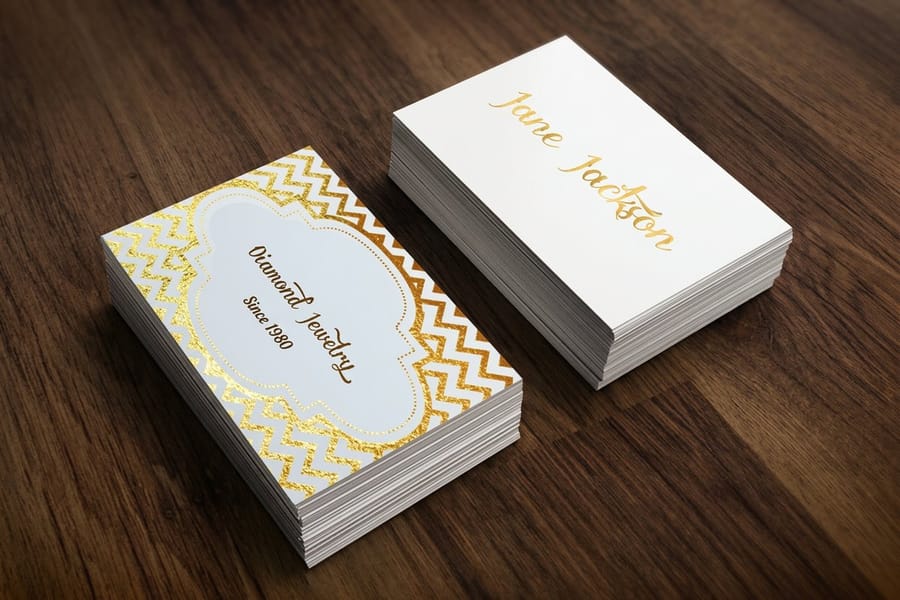
Hot foil stamping is a finish, not ink: a heated metal die presses a thin film of colored foil onto your stock, and the heat bonds a real metallic layer to the paper wherever the design lands. That gives you a bright, reflective mark that catches light like ink never can. Foil comes in metallic, matte pigment, holographic, and raised types, and it works best on logos, type, and accents on cards, invitations, and packaging.
Quick tips
Quick tips for great foil stamping
Treat foil as an accent, not a background. Reserve it for logos, type, and borders where the shine has room to work, and put it against dark, uncoated, or soft-touch stock so the metallic contrast pops. Supply the foil as a solid vector shape on its own layer, keep it above hairline weight, and skip gradients. Order free samples before a big run, and let bigger quantities absorb the one-time die cost so each piece comes out cheaper.
What hot foil stamping actually is
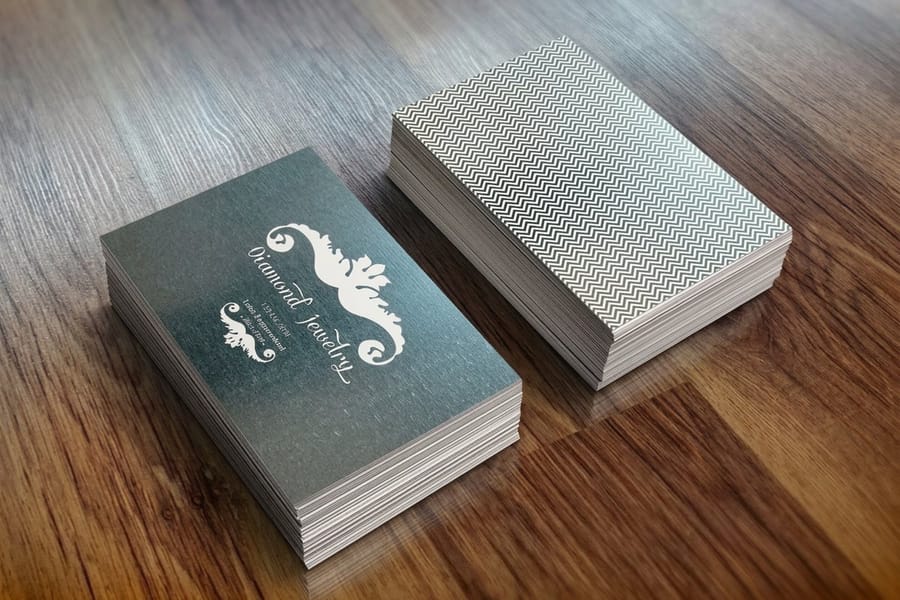
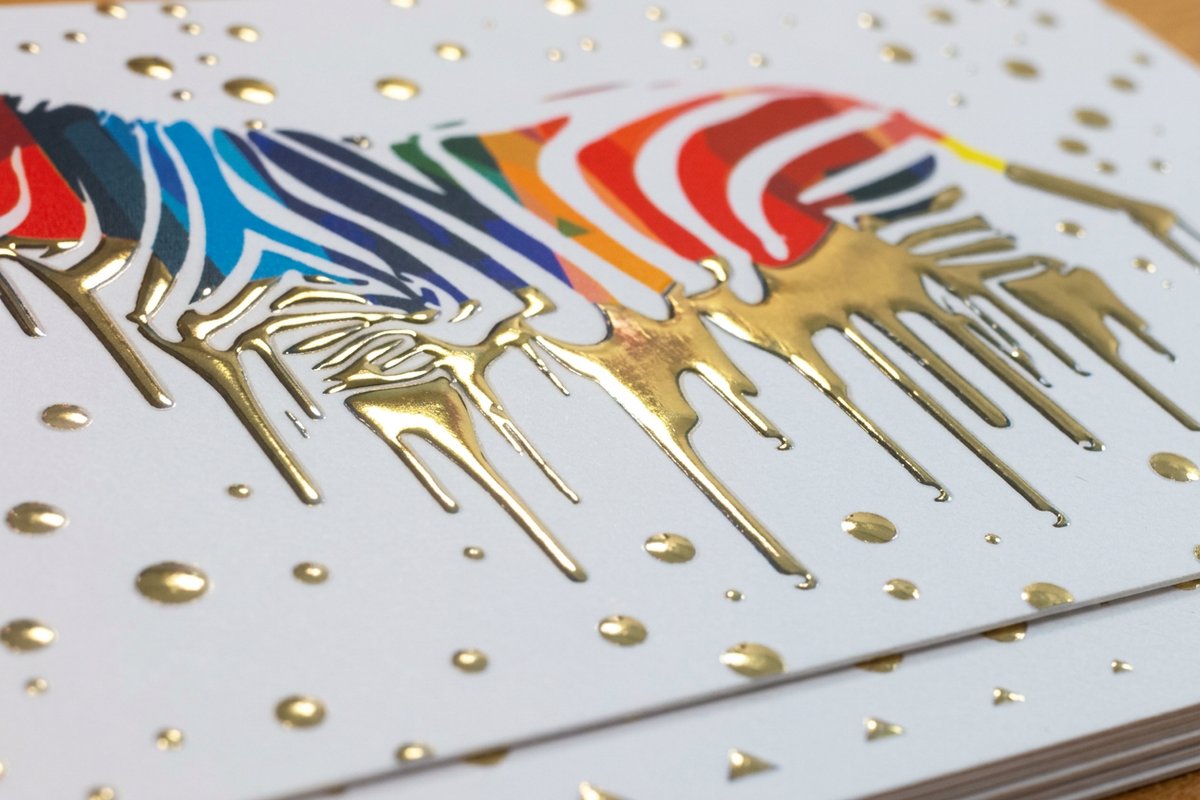
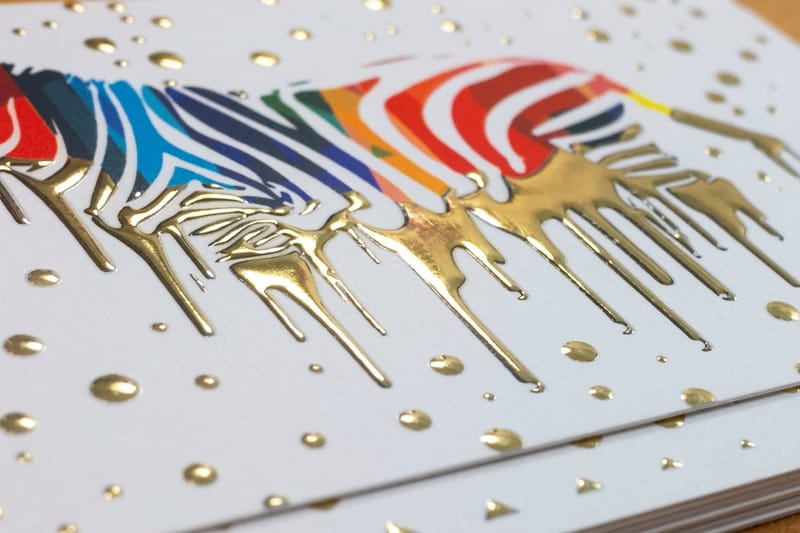
Hot foil stamping presses a heated metal die against a roll of foil and your stock, so the foil layer bonds only where the die touches. The result is a true metallic or pigment shine that sits on the paper surface, brighter than any printed ink can reach. It is a finishing method that skips ink entirely: instead of printing a metallic color, the die drives a thin film of real foil onto the sheet and the heat bonds that pigment layer to the paper wherever it makes contact. The mark it leaves is bright and reflective, and it changes as it moves under a light, which is something a printed silver or gold simply cannot fake.
That distinction matters more than it sounds. A printed metallic ink is still ink sitting in a flat layer, so it reads as a slightly shiny color. Foil is an actual metal-coated film fused to the sheet, so it mirrors light and gives a piece that unmistakable premium weight. If you have ever run a thumb over a business card and felt the logo shine catch differently than the rest, that is foil at work. It is closely related to a foil accent on a business card, just applied with intent across a whole design language.
Because foil is a finish rather than a full-color print, it goes on top of, or instead of, your regular printing. That is why 4OVER4.COM groups every foil-finished product into one foil stamping collection, so you can start from the effect you want and work back to the right product.
How the hot foil stamping process works, step by step
The process is old and mechanical, and that is exactly why it looks so good. Five things happen in order, and each one is easy to picture.
- Prepare the artwork. Start with clean vector art that marks exactly where the foil goes, as a single solid shape with no gradients and no hairlines too thin to hold foil.
- Etch the die. That shape is cut into a thin metal plate, usually magnesium or copper, which becomes the stamp that carries your design onto the press.
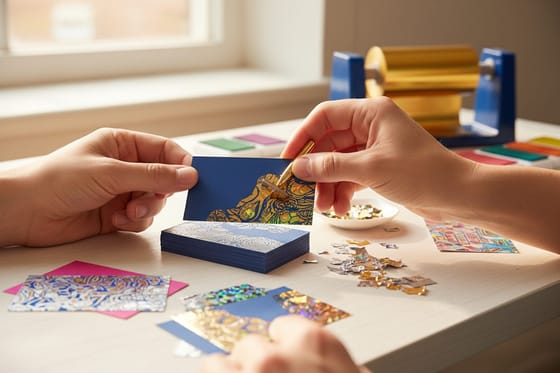
- Load the foil film. A roll of colored foil is fed between the heated die and your stock, pigment side down, ready to release under heat.
- Heat and press. The die warms up and presses down, and the heat lifts the pigment layer off the carrier film so it bonds permanently to the paper.
- Strip the carrier. The foil roll peels away and leaves only your design behind, a bright, sharp metallic mark sitting right on the surface of the stock.
The whole sequence is what separates foil from a printed shine. There is a physical tool, a real film, and heat doing the bonding, so the edges come out sharp and the metal stays put for the life of the piece. It is the same family of craft behind Wonderfoil metallic effects, where foil is pushed even further into moving, dimensional finishes.
The main types of foil: metallic, pigment, holographic and specialty

Foil is not one thing. The film comes in families, and picking the right one is half the design decision.
Metallic foils are the classics. Bright gold, silver, rose gold, and copper give you that mirror shine, and they are the go-to for logos, monograms, and anything that should read luxury. Pigment or matte foils trade the mirror for a solid, satiny color, so you can get a deep opaque white or a muted tone that still has the crispness of foil without the glare.
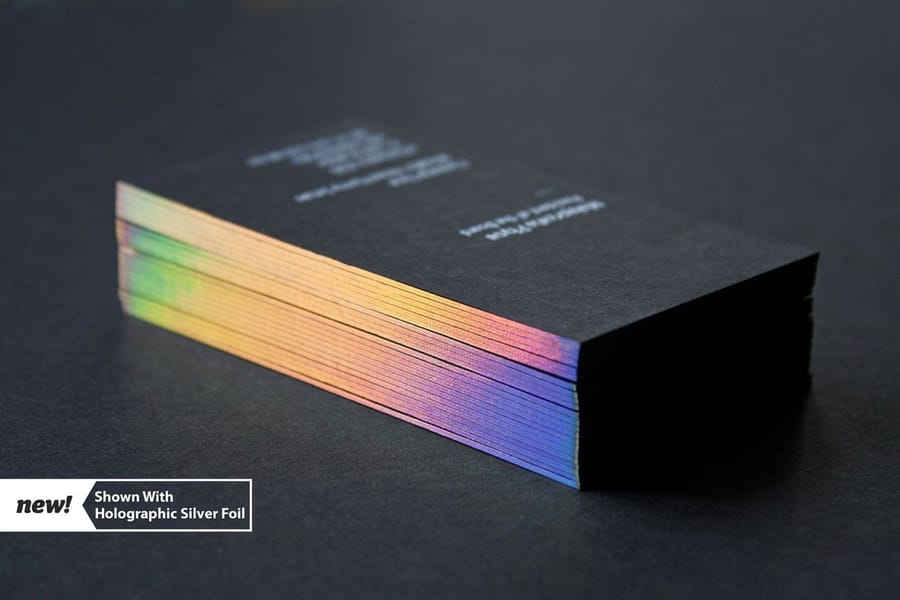
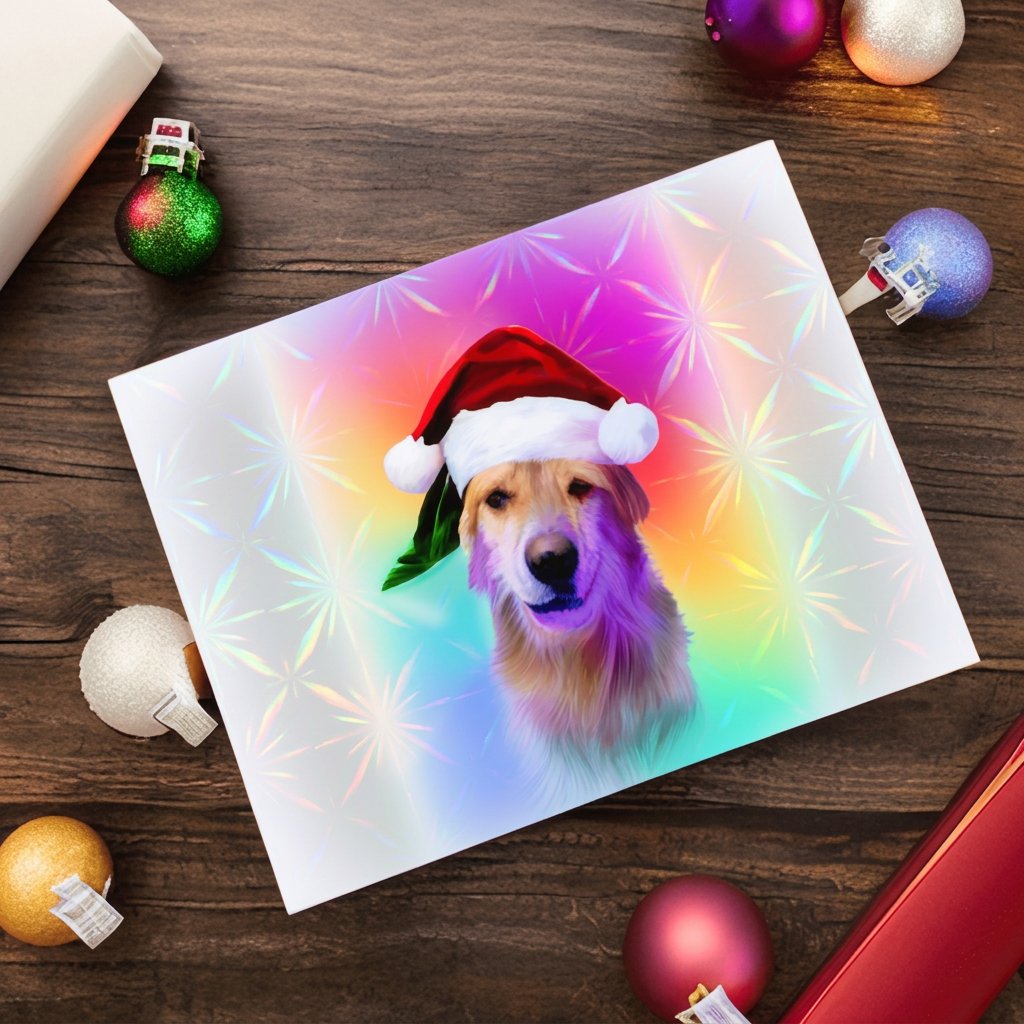
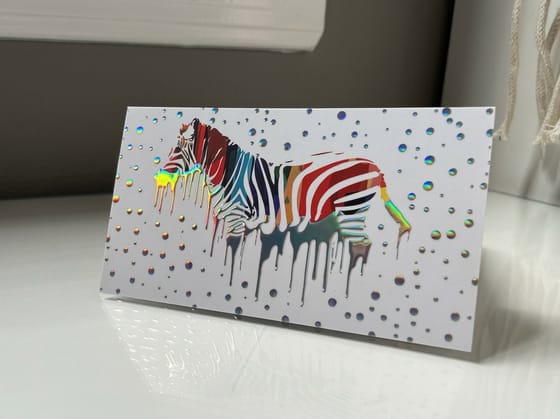
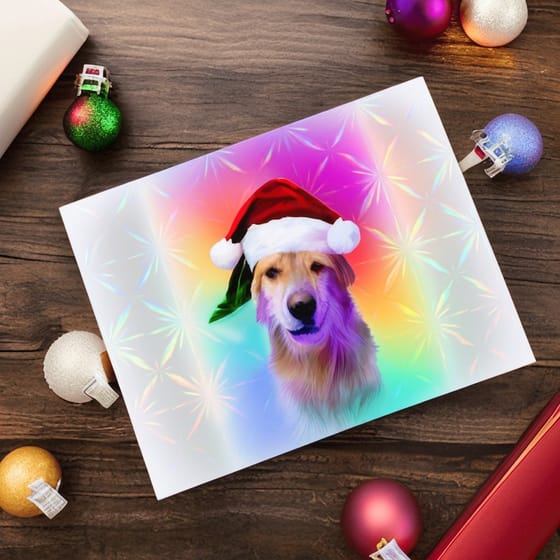
Holographic and rainbow foils shift color as they move, which is why they carry so much energy on holographic foil stamping pieces and on holographic business cards. They read modern, playful, and hard to ignore. Then there are specialty effects like the raised and dimensional looks in our metallic foil collection, where the foil is not just colored but textured.
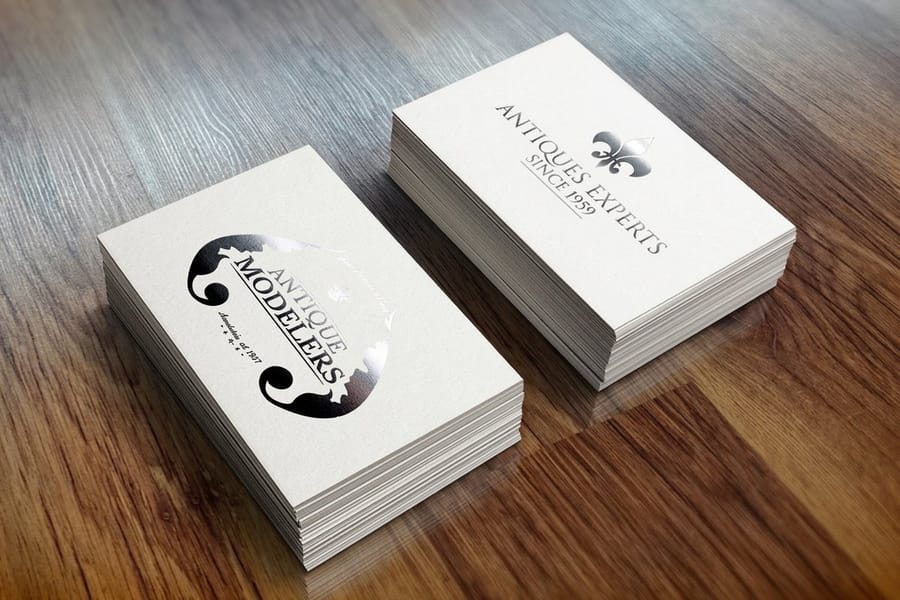
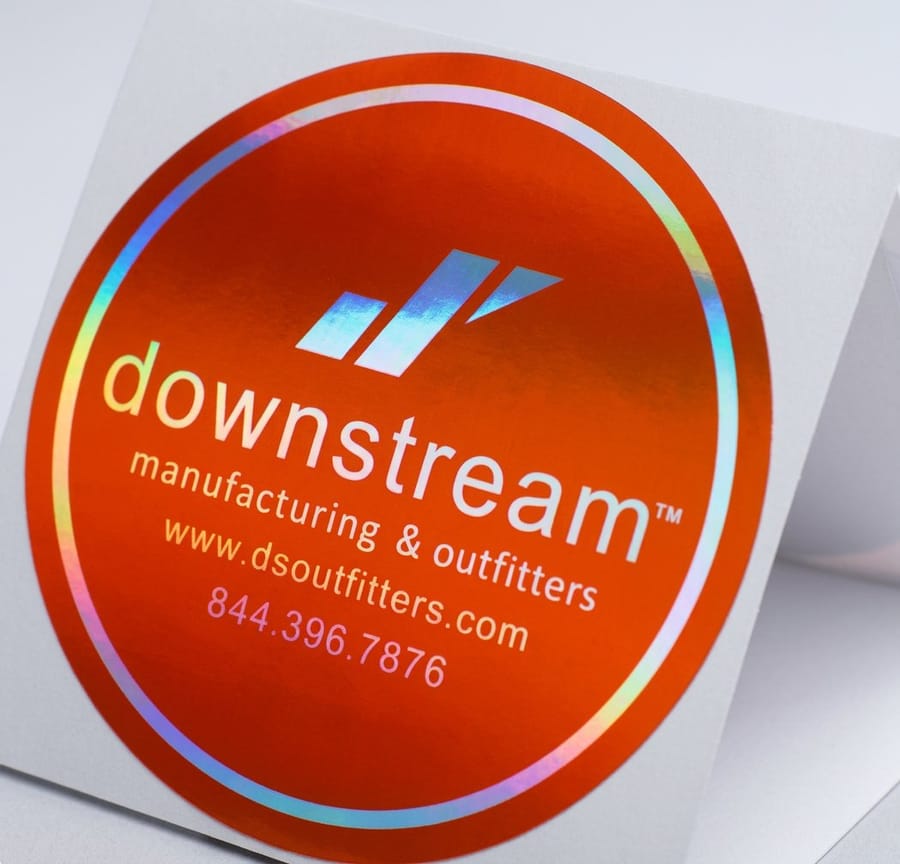
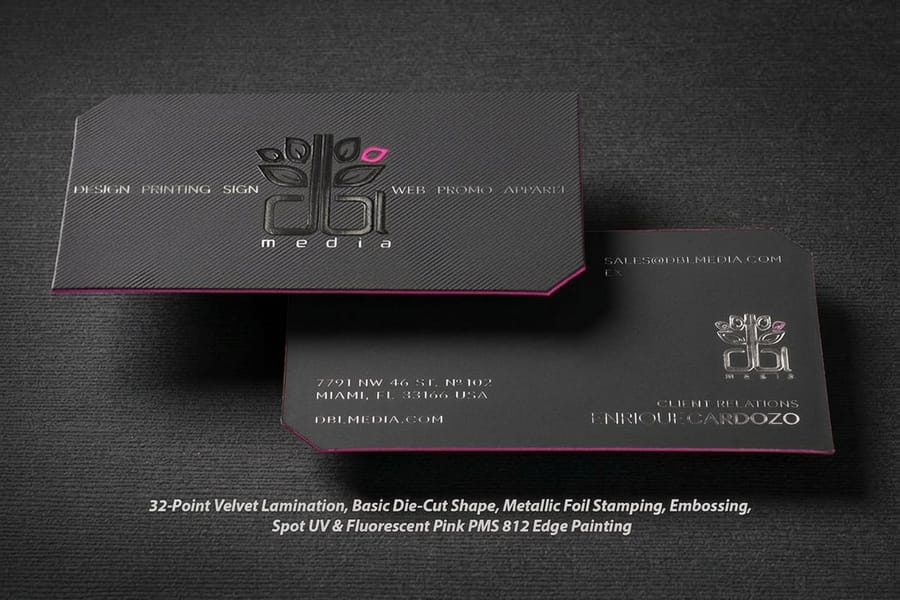
None of these is better than the others in the abstract. A jeweler and a skate brand might both use foil and land in completely different places, and that range is the point.
Flat foil, raised foil, and where edge gilding fits
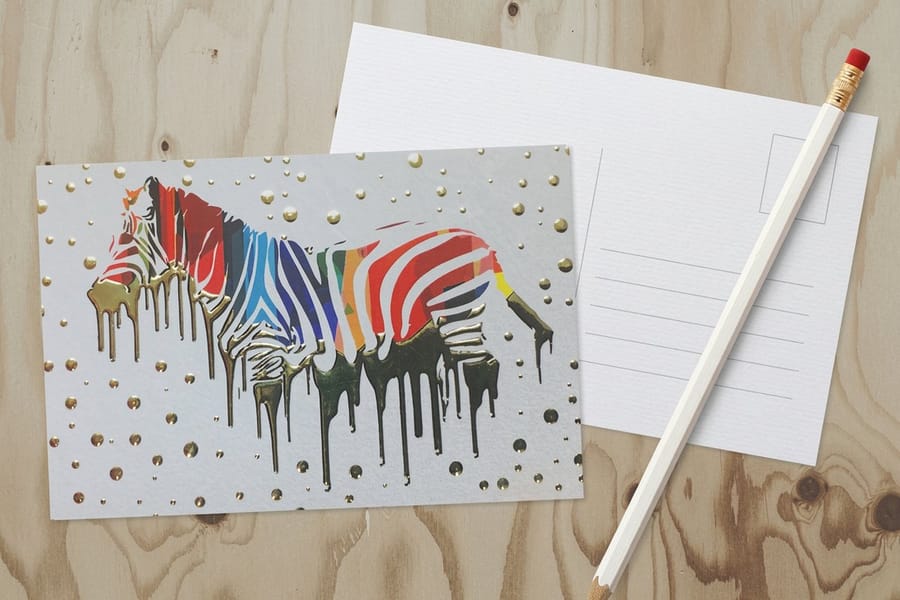
Beyond color, foil has a dimension question. Flat foil lies level with the stock, a clean metallic mark that feels smooth to the touch. It is timeless and works on almost anything.
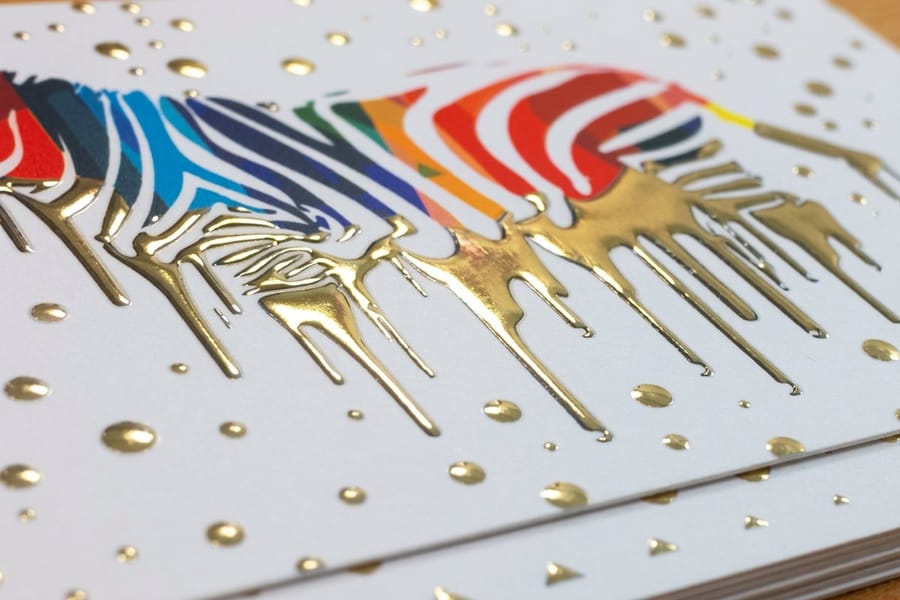
Raised foil builds the design up off the surface so the shine has height, which you can feel with a fingertip and see from an angle. It is the star of our raised foil collection and on raised foil postcards, where the texture makes a mailer impossible to set down without touching it.
Then there is edge gilding, a cousin of foil that runs metallic color along the cut edges of a thick card rather than across the face. Paired with a foil front, edge gilding from our edge gilding collection turns a card into an object, the kind of piece people keep in a drawer instead of a bin. Flat, raised, and gilded can all live on the same design, and choosing among them is really about how loud you want the shine to feel.
Where foil stamping shines: cards, invitations, packaging and more
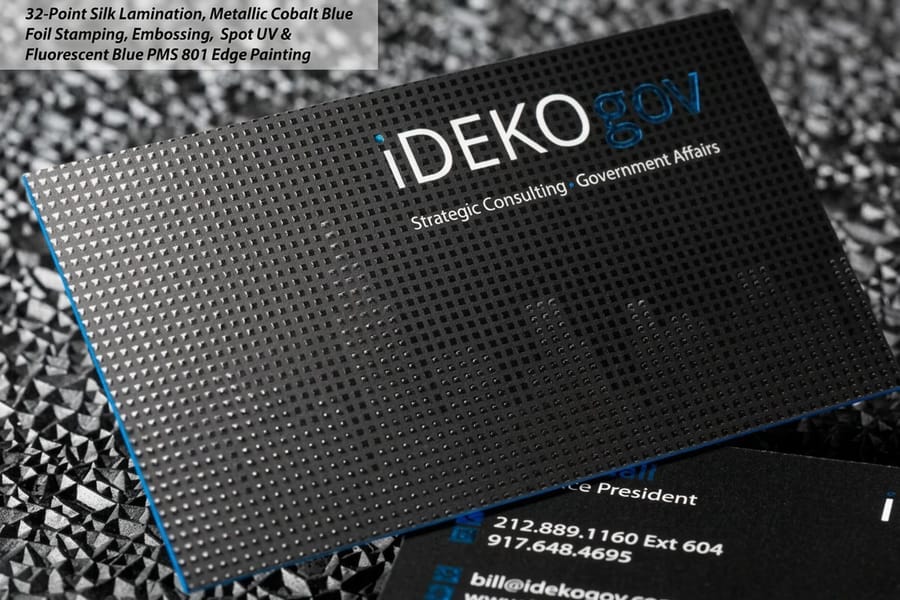
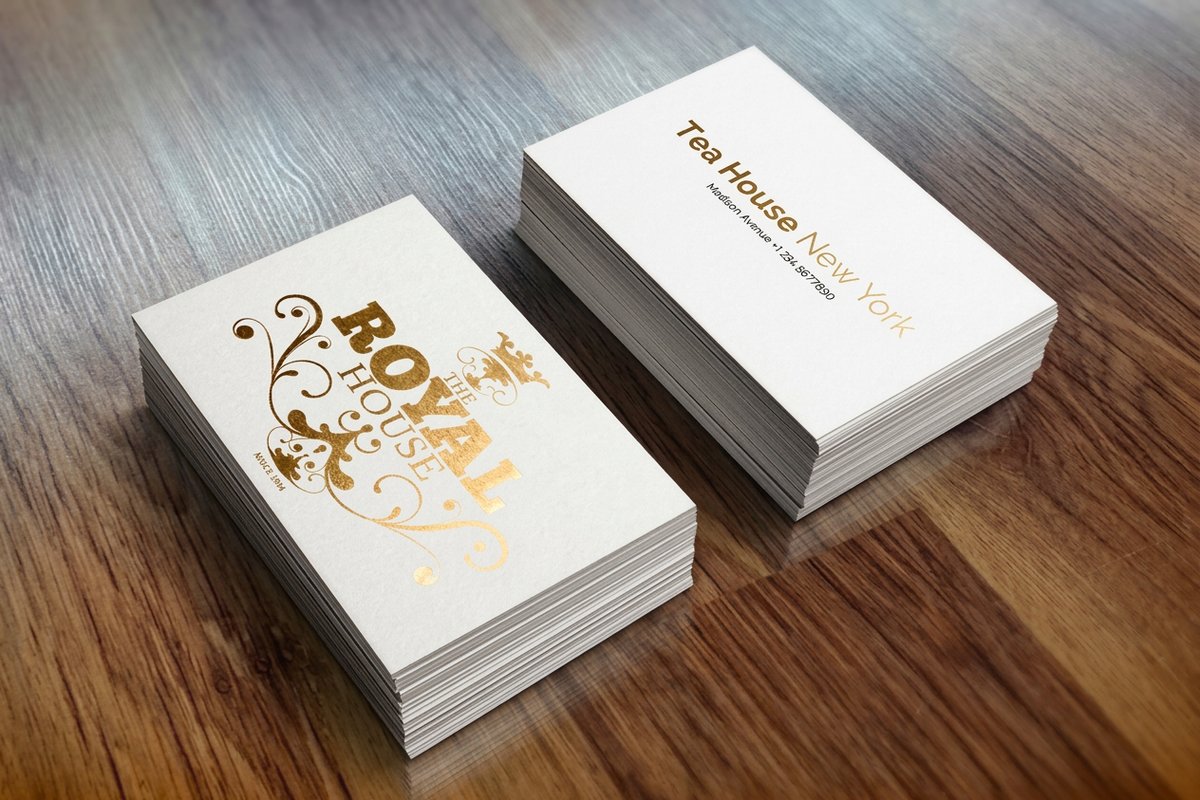
Foil earns its cost anywhere a first impression carries weight. The obvious home is stationery. Foil on metallic foil business cards and across our business card range turns a hand-off into a small moment, and that is exactly what you want a card to do.
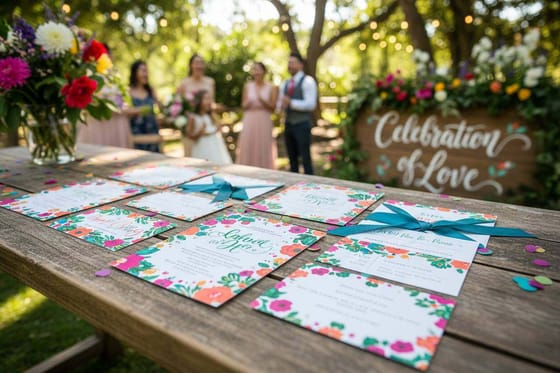
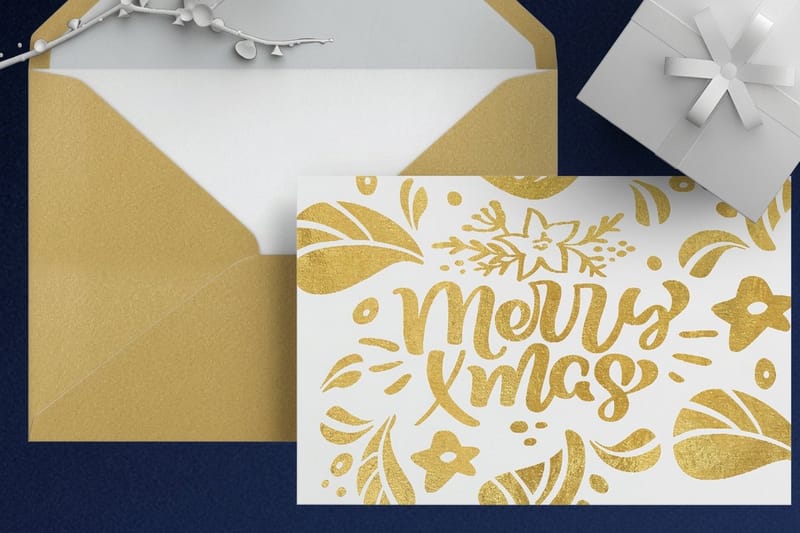
Invitations and events lean on foil hard. A gold monogram on a dark greeting card signals that the day matters, which is why a boutique in our wedding invitation case study reached for foil to set the tone before anyone read a word. Retail and direct mail use it to stop a scroll or a hand mid-air. A foil headline on a postcard or a metallic seal on packaging reads as care, and care reads as value.
The common thread is intent. Foil says someone chose to spend a little more on this, and people feel that even when they cannot name it. Used on the right piece, it is one of the cheapest ways to look far more expensive than you are.
Pairing foil with embossing and spot finishes
Foil is good alone, but it really stands out next to other finishes. Contrast is the trick, and there are three pairings worth knowing.
Foil over embossing gives you shine plus a raised edge in the same shape, so a logo both gleams and stands up off the card. It is the natural next step from embossed gloss business cards, and you can build the whole look from our embossing collection. Foil against spot UV plays metallic against high-gloss, letting one design carry matte, gloss, and mirror all at once, which is why the ideas in our spot UV guide and spot UV collection pair so cleanly with foil.
The one rule with pairing is registration. Each finish is its own pass, so your artwork needs clean, separated layers that line up exactly. Get that right and the finishes stack into something you keep turning over in your hands.
How to choose the right foil for your project
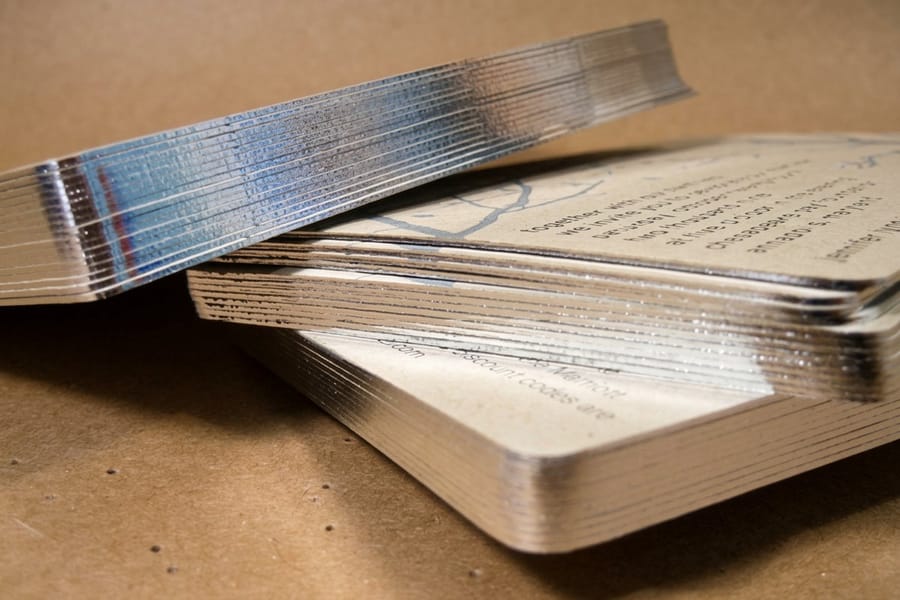
Choosing foil comes down to three quick calls, and you can make all of them in a few minutes.
Pick the mood first. Gold and silver read established and premium, rose gold and copper feel warm and boutique, and holographic reads young and bold. Then read your stock. Foil pops most against contrast, so it sings on dark, uncoated, or soft-touch surfaces and can wash out on busy, bright backgrounds. If you are weighing shine against a plain finish in general, our matte versus glossy comparison is a useful gut check. Last, decide how far to push it, flat for restraint, raised or gilded for drama, and browse the premium collection when you want every option on the table.
When you are close but not sure, look before you leap. The copper foil showcase shows real customer work, and 4OVER4.COM will send free samples so you can hold the actual shine against your design before you order a single piece.
What foil stamping costs and how prices are set
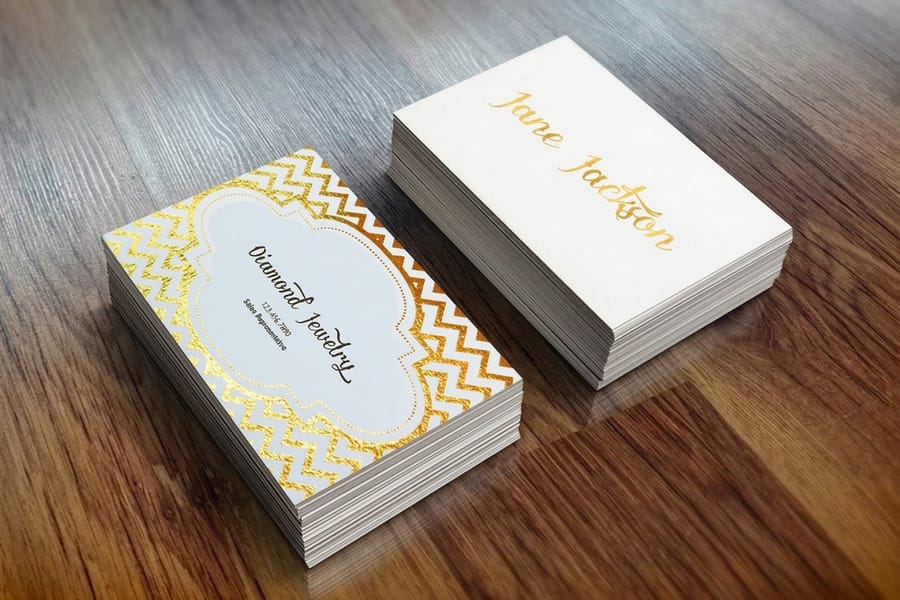
Foil costs more than flat printing, and the reason is baked into the process. Every foil job carries a one-time die and an extra pass on the press, so there is a fixed setup behind the run no matter how large it is.
That fixed cost is why quantity moves the needle so much. Spread over 100 cards, the die is expensive per piece, but spread over 500 or 1,000 it nearly disappears, so bigger runs get dramatically cheaper each. Beyond quantity, price tracks size, the number of foil colors, and any pairing like raised texture or edge gilding, since each adds a step. The same logic sits behind our wider transparent pricing and the ranges in our business card cost guide.
The honest way to get a number is to configure it. Open any foil product on 4OVER4.COM and the price updates live as you change quantity and options, so you can see exactly where your run lands before you commit. And if you want to feel the foil before you spend, start with free samples.
Setting up a clean file and what to expect on turnaround
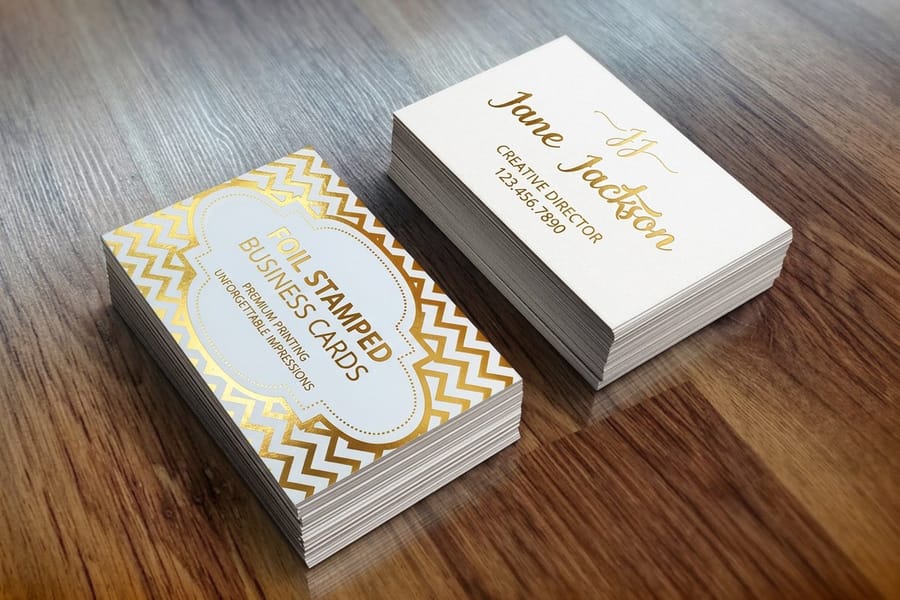
Foil rewards clean art. Because the die can only stamp a shape, your foil needs to be a single solid color in vector form, on its own layer, clearly marked so we know it is the foil mask and not part of the printed image.
- Keep foil elements above hairline weight so the die holds them without breaking up.
- No gradients in the foil layer, since foil is either present or it is not, with no in-between tones.
- Separate every finish onto its own layer so foil, emboss, and spot UV each land in register.
- Leave a little breathing room between foil and the trim edge so nothing critical gets cut.
If layered artwork is not your world, you do not have to build it by hand. The 4OVER4.COM online designer and our design templates let you place foil-ready elements without wrestling with files. On timing, foil adds a pass, so it runs a touch longer than plain printing, and each product page shows the live production window and ships from our Queens, New York facility on a 99.8 percent on-time record.
Wally explains foil
Foil is a mirror you press into paper
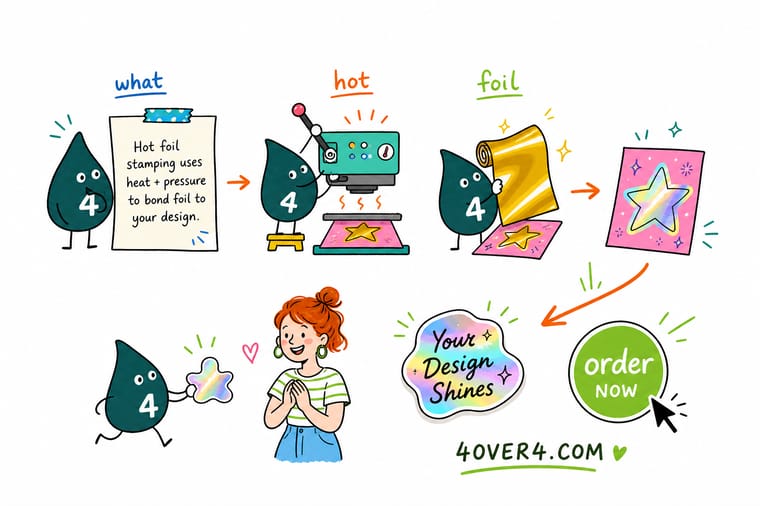
Wally thinks of foil stamping like branding a keepsake: a heated die presses a real sheet of metallic foil into the stock, so your logo does not just print, it shines and shifts in the light. Keep the foil to the parts that matter, put it against a dark or uncoated card, and it does the heavy lifting for you. When you are ready, 4OVER4 stamps it in-house on the stock and finish you choose.
Order foil stamping →Specs and pricing
Live foil product specs and pricing
Here is a foil-finished product with live specs and price-per-unit pulled straight from the 4OVER4.COM configurator, so you can see how quantity and options move the number before you order.
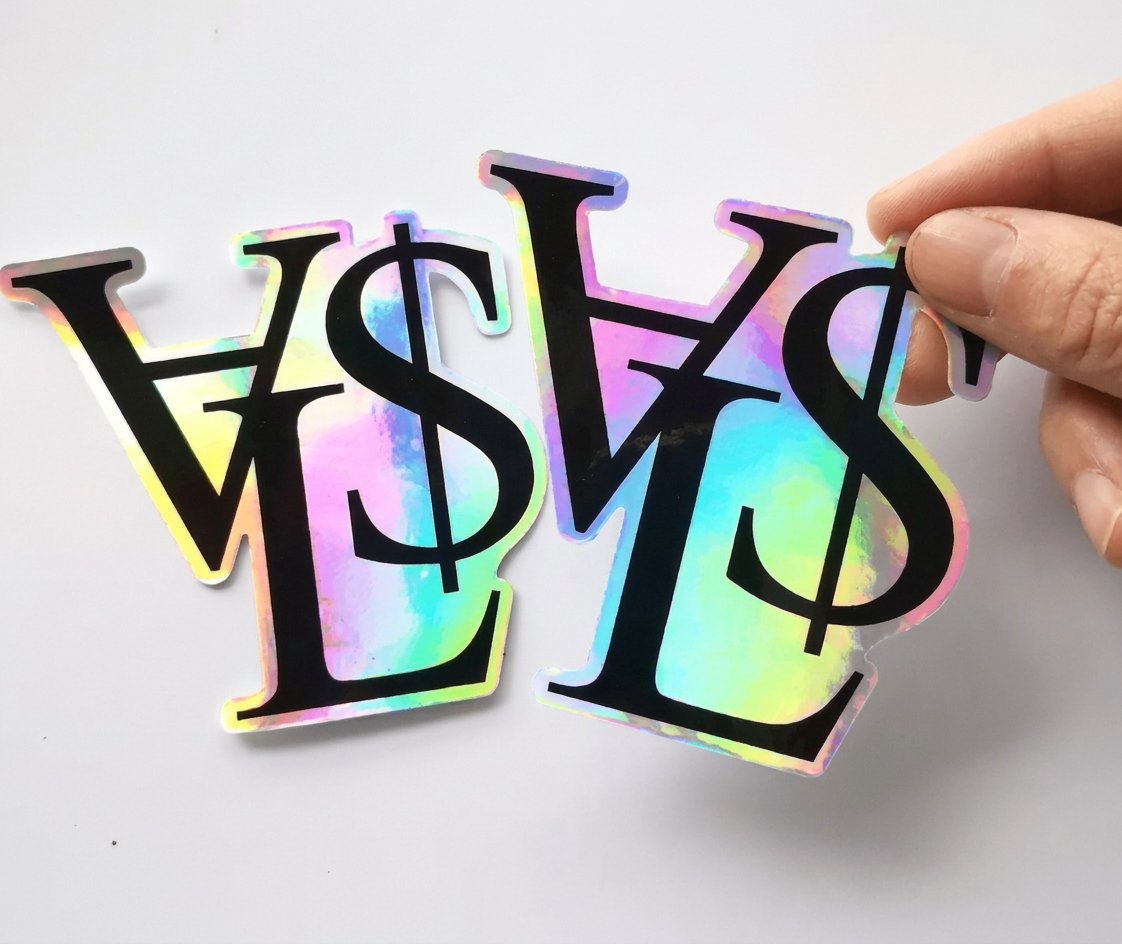
| Quantity | Price Per Unit | Total |
|---|---|---|
| 100 | $3.23 | $322.98 |
| 250 | $1.29 | $322.98 |
| 500 | 64.6¢ | $322.98 |
| 1,000 | 38.1¢ | $380.66 |
| 2,000 | 19.8¢ | $396.66 |
| 2,500 | 20.0¢ | $499.02 |
| 5,000 | 12.5¢ | $627.00 |
| 10,000 | 8.40¢ | $839.93 |
Print it
Popular foil-stamped products at 4OVER4
Explore more
Where to go next

By the numbers
Printing you can count on at 4OVER4
Common Questions
Common questions about foil stamping
What is foil stamping, exactly?
Foil stamping is a finishing process that uses heat and pressure instead of ink. A heated metal die presses a thin film of colored foil onto your stock, and the heat bonds a real metallic or pigment layer to the paper wherever the die touches. The result is a crisp, reflective mark that sits on the surface and shifts in the light. Because it is a finish rather than a full print run, foil works best on logos, lettering, borders, and small design accents.
What is the difference between hot foil stamping and cold foil?
Hot foil stamping uses heat, pressure and a metal die cut to your artwork, so the foil bonds only where that die touches and the edges come out sharp on almost any stock, including uncoated, textured and dark papers. Cold foil skips both the die and the heat: the press lays down an adhesive image, runs foil over it and cures it, so it happens inline at press speed and suits long runs and large solid areas on coated stock. Hot foil reads crisper and richer on stationery and packaging, which is why it is the method behind the foil products here.
Does hot foil stamping need a custom die?
Yes. Every hot foil job needs a metal die cut to your design, a one-time tool made before the run. That is why foil carries a setup cost and why the price per piece falls sharply as the quantity grows: the same die stamps every card in the run, however long it is. It is also why foil pays off on logos, lettering, borders and accents rather than large solid fields, since a simpler die presses more evenly and keeps the edges sharp.
What minimum line weight survives foil stamping?
Foil wants a little more weight than ink. As a rule of thumb, keep rules and strokes at about half a point or heavier, and set type large enough that fine serifs and thin joins do not vanish, because the die has to press a solid area of film for the foil to release cleanly. Hairlines, delicate script and small reversed-out type are where foil fills in or breaks up. If your design lives on thin lines, thicken them slightly, or order free samples first and see how the die handles them before you commit to a run.
How do I choose the right foil for my project?
Start with the mood you want. Metallic gold and silver read classic and premium, rose gold and copper feel warm and boutique, and holographic or rainbow foil feels playful and modern. Then look at your stock, because foil pops most on darker, uncoated, or soft-touch surfaces where the shine has contrast to work against. If you are torn between finishes, order free samples first so you can hold gold next to your card before you commit, and browse our foil stamping collection to see the ranges 4OVER4.COM keeps in stock.
What does foil stamping cost and how is the price set?
Foil stamping is priced by quantity, size, the number of foil colors, and whether you pair it with extras like raised texture or edge gilding. There is a one-time die behind every foil job, so the per-piece cost drops sharply as your run grows, which is why 500 foil cards cost far less each than 100. The fastest way to see real numbers is to open any foil product on 4OVER4.COM and watch the live price update as you change quantity and options in the configurator.
What sizes, stocks, and foil finishes can I order?
Foil stamping runs across business cards, greeting cards, invitations, postcards, stickers, and packaging, on stocks from heavyweight cover to soft-touch laminate. Foil finishes include bright and matte metallics, rose gold and copper, holographic and rainbow, plus specialty looks like raised foil and edge gilding. Every product page lists its exact size, stock weight, and finish options, and you can mix foil with embossing or spot UV on many stationery products.
How long does foil stamping take to print and ship?
Turnaround depends on the product and the finishes you choose, since foil adds a pass on the press beyond standard printing. Most foil stationery ships within a few business days of proof approval, and every product page shows the live production window for the exact options you pick. 4OVER4.COM prints in-house in Queens, New York, and holds a 99.8 percent on-time record, so the date you see at checkout is the date you can plan around.
Can I combine foil with embossing or spot UV?
Yes, and combining finishes is where foil really earns its keep. Registered foil over an embossed shape gives you shine plus a raised edge you can feel, while foil paired with spot UV lets you play matte against gloss against metallic in one design. These pairings need clean, separated artwork layers so each finish lands in register, and our team flags any conflicts before the job goes to press.
What files do I need to send for foil?
Send a print-ready file plus a separate foil layer as solid vector art in a single spot color, named clearly so we know it is the foil mask. Keep foil elements a touch thicker than hairline weight so the die holds them cleanly, and avoid gradients in the foil layer since foil is either present or not. If you would rather not wrestle with layers, the 4OVER4.COM online designer and template library make it easy to build a foil-ready file from scratch.
Get Started
Ready to add foil to your next print job?
Pick a foil product, drop in your logo or headline, and we stamp a bright, bonded metallic finish that makes the piece feel worth keeping.
Legal Disclaimer
Gold Standard guarantees apply to all standard orders placed through 4over4.com. Price match requires verifiable proof of a competitor's published price for an equivalent product with matching specifications and turnaround time. Satisfaction guarantee covers manufacturing defects and print quality issues. Contact support with order number and documentation. On-time delivery rate based on tracked orders 1999 to 2026. Individual results may vary based on shipping carrier performance.
