
Custom Stationery Printing for a Professional Branded Set


Letterhead, envelopes, notecards, notepads, and folders that share one logo, one paper story, and one look. Here is how to spec a coordinated stationery set that makes a small business read established.
Stationery printing is the coordinated set of branded paper a business runs on: letterhead, printed envelopes, notecards, notepads, and presentation folders printed as one system. Choose the pieces you use most, keep writing surfaces uncoated and finishes on covers, lock a single logo-color-margin scheme across every item, build files in CMYK with bleed, and order the suite together so paper and color stay consistent.
Quick tips
Quick tips for a professional stationery set
Keep writing surfaces uncoated and finishes on covers. Reuse one logo lockup, one CMYK color build, and one margin grid across the letterhead, envelopes, notecards, notepads, and folders. Build files in CMYK at 300 dpi with a 0.125 in bleed and a matching safe margin. Order the pieces together to capture the quantity break and keep paper color consistent. 4OVER4.COM customers who print the suite as one system get a set that looks like it cost far more than it did.
What custom stationery printing actually covers
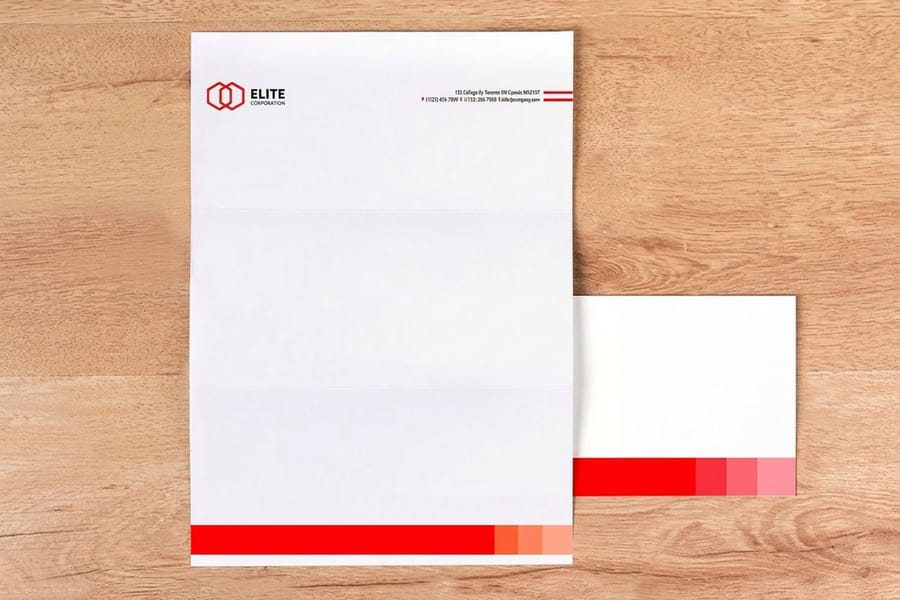
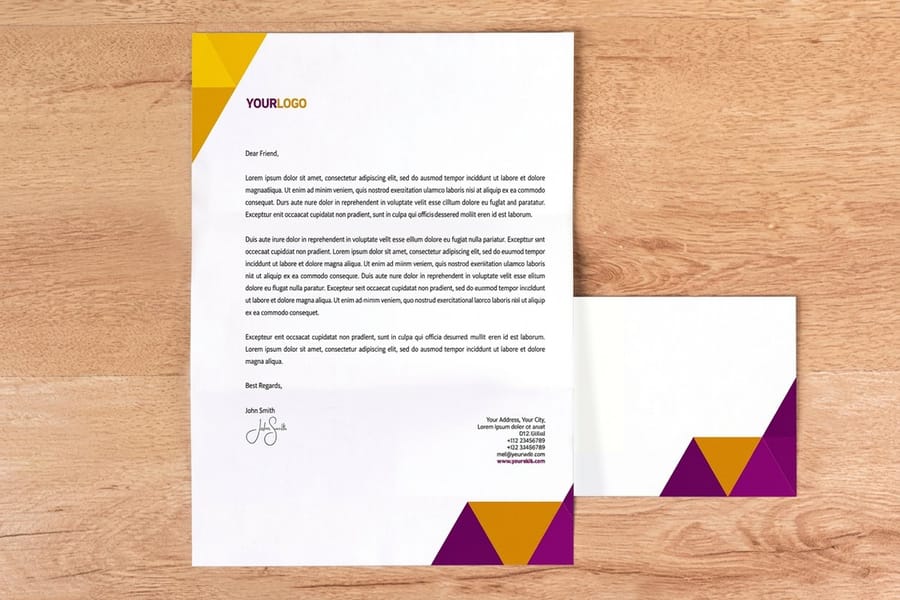
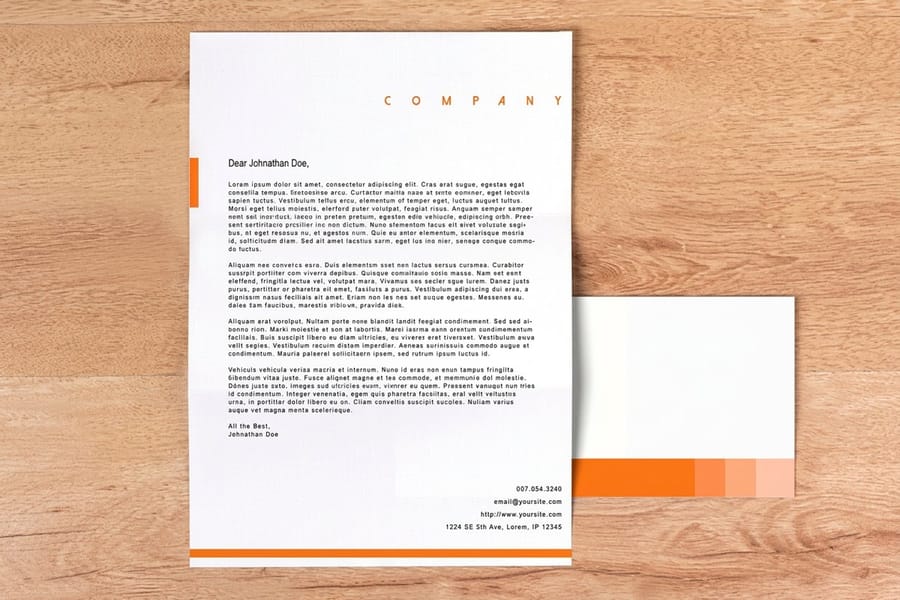
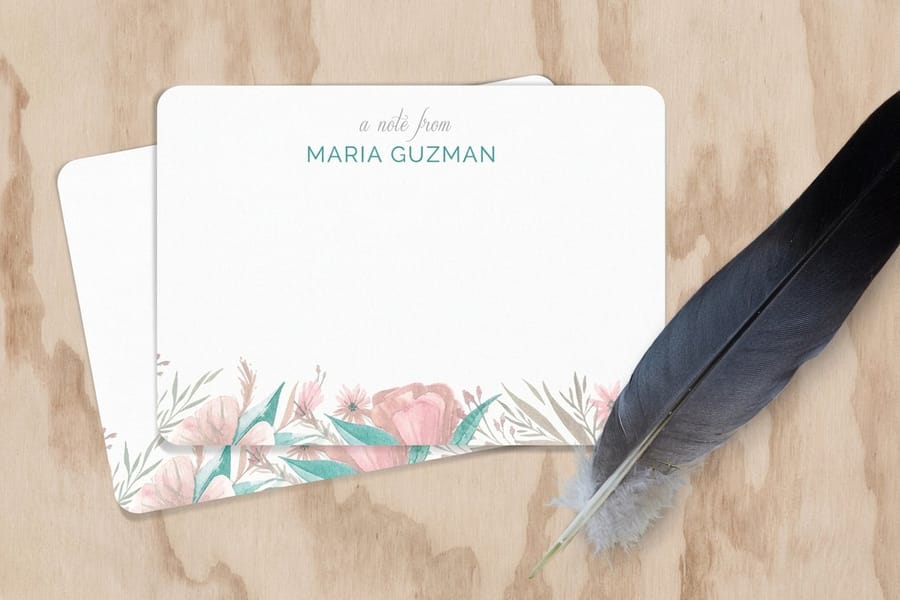
Stationery printing is not one product. It is the coordinated paper system a business writes, sends, and hands things off on: letterhead for formal correspondence, printed envelopes to carry it, notecards for a personal touch, notepads for the front desk, and presentation folders for the sales kit. Printed as a set, those pieces stop looking like office supplies and start looking like a company.
The word people usually search for is "stationery," though "stationary" shows up almost as often. Same intent, one letter apart. What matters is the outcome: a branded suite where the logo, the paper, and the margins agree with each other from the first letter to the last thank-you card. If you are still mapping out which pieces you need, the business stationery hub lays out every print your brand touches in one place.
This guide walks the whole thing end to end: what belongs in a set, how to choose stocks and finishes, how pricing is built, how to prep files that print clean, and how fast it all ships. By the end you will be able to spec a professional branded set at 4OVER4.COM without guessing.
Why a matched set beats one-off prints
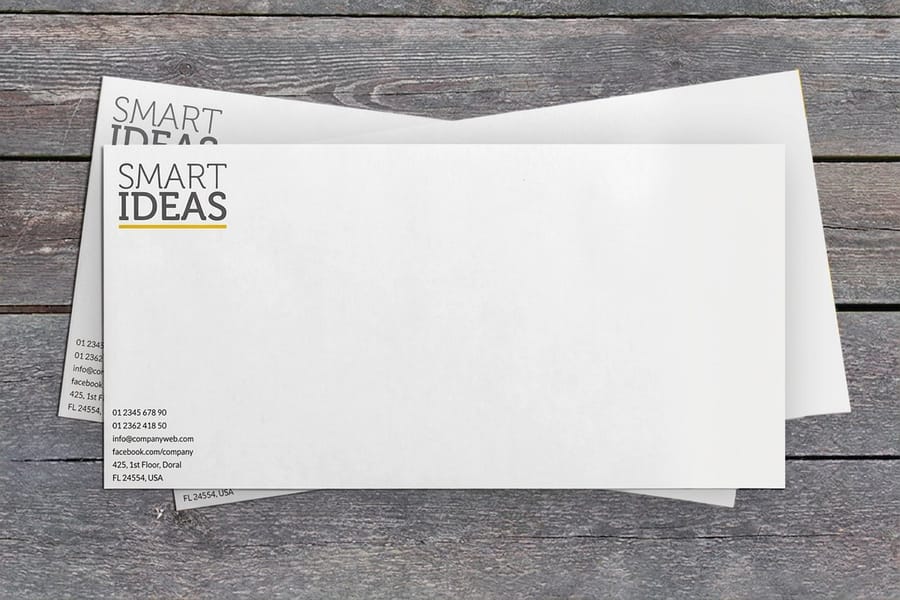
Buy a letterhead here, envelopes there, and notecards somewhere else, and the seams show. The whites do not match. The logo sits a hair off. The paper feels different in the hand. Clients rarely name it, but they feel it, and it quietly reads as "small and improvised" instead of "established."
A matched set does the opposite work. When the envelope that lands on a desk shares the exact ink and stock as the letter inside it, the message before anyone reads a word is consistency. That is the same signal behind repeat business, and the brand loyalty and awareness data backs it up: people trust brands that look the same everywhere they meet them.
There is a practical payoff too. Printing the suite in one pass means one color target, one paper batch, and one turnaround, so nothing arrives three weeks apart in a slightly different shade of cream. If you want proof it holds up in the real world, the real estate print kit case study shows a team that closed more deals on the back of a coordinated set.
How to choose the right stationery for your business
Do not start from a checklist of everything that exists. Start from how your business actually talks to people, then print for that.
- You send formal letters, invoices, or quotes. Letterhead and printed envelopes are the backbone. Get these two right before anything else.
- You meet clients and hand things off. Add pocket folders to hold proposals and a stack of flat notecards for a signed thank-you that outlasts an email.
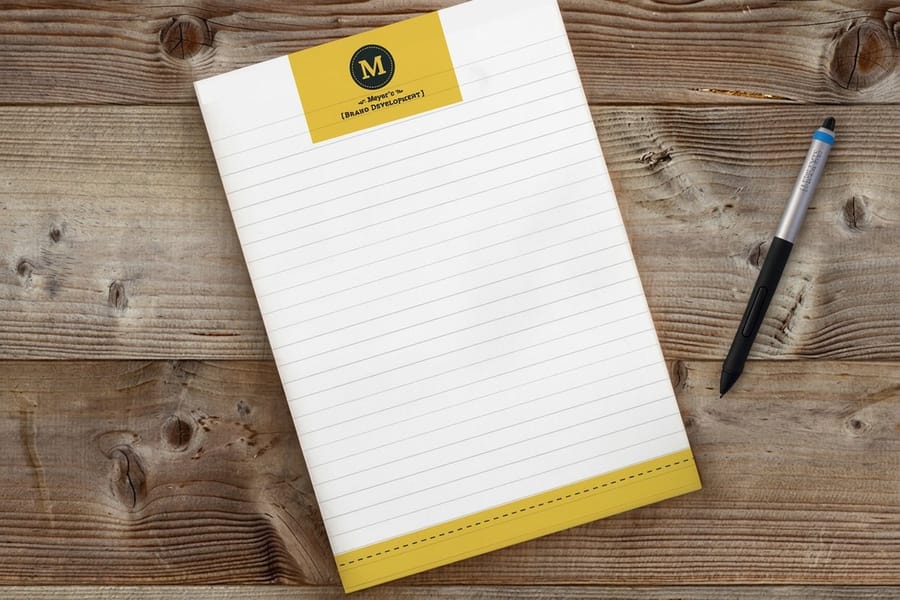
- Your front desk runs on paper. Branded notepads put your logo on every message that leaves the office.
- You send invitations or announcements. Folded notecards and invitation envelopes give events a finished, on-brand feel.
Pick the two or three pieces you touch every week, nail the paper and finish on those, and extend the same look outward as budget allows. You do not have to buy the whole suite on day one. You just have to keep every future piece inside the same visual system. For a broader view of the paper goods most brands standardize on, browse the business basics collection.
Paper stocks, sizes, and finishes that work
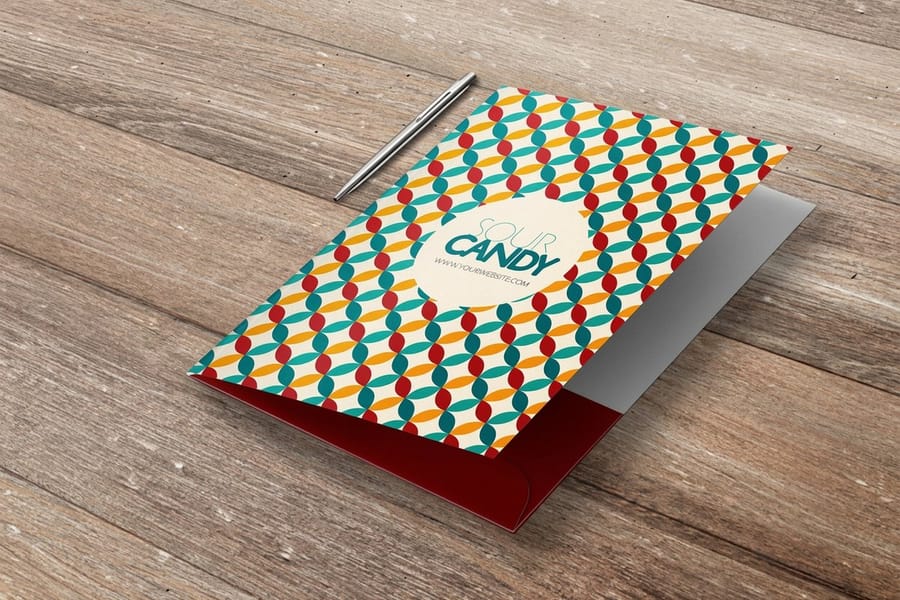
The single biggest quality decision in stationery is coated versus uncoated, and the rule is simple: anything you write on stays uncoated. A pen glides on an uncoated text weight and skates on a glossy one. So letterhead, notepads, and most notecards belong on uncoated stocks, ideally a linen or laid finish that signals quality the moment it is picked up.
Covers and cards that get handled rather than written on are where finishes earn their keep. Presentation folders take foil, embossing, spot UV, and soft-touch lamination beautifully, and a thank-you card printed on a heavier coated stock feels like an object worth keeping. If you are weighing surfaces, the matte vs gloss finish guide breaks down where each one belongs.
Sizes are mostly settled by convention, which is a gift, not a limit. Letterhead runs 8.5 x 11 in. Envelopes come in #10 for letters and A2, A7, and invitation sizes for cards. Notecards and notepads sit in A2, A7, and half-letter formats. Sticking to standard sizes keeps postage predictable and inserts everything neatly. The standard print sizes reference has the exact dimensions if you want to double-check before you set up art.
Building one visual system across the set
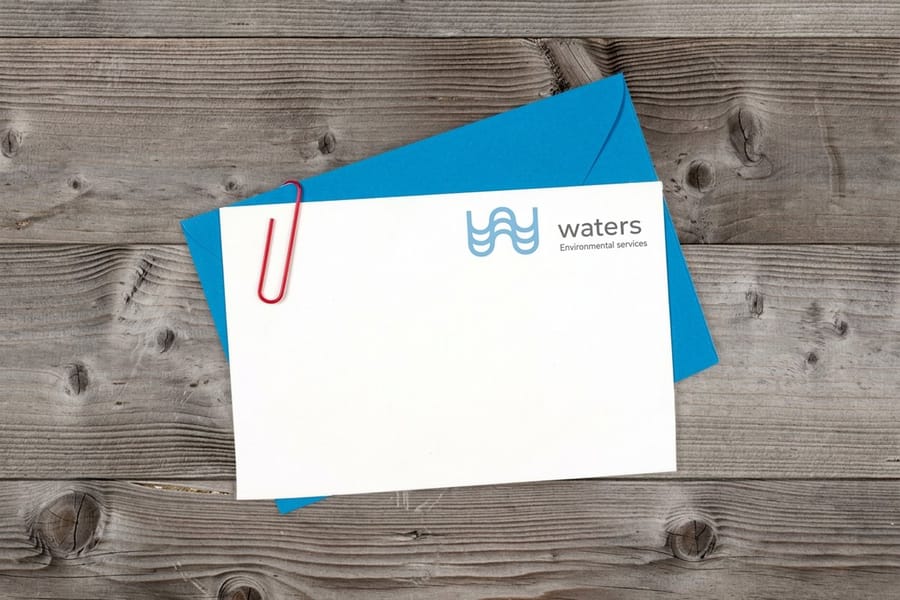
A stationery set fails when each piece was designed alone. It succeeds when every piece is a variation on the same three or four decisions. Lock those decisions once, apply them everywhere, and the suite snaps into a system.
Three things carry a set: the logo lockup, the color palette in CMYK build values so it prints the same every run, and the type and margin grid. Reuse the exact same logo placement and left margin on the letterhead, the return address on the envelope, and the header on the notepad, and the eye connects them instantly. If your logo itself needs tightening before it goes on everything, the logo design best practices guide is the place to start.
Skip the guesswork and you can build the whole system in the browser: the 4OVER4.COM online designer lets you place one lockup and carry it across each template, and there is a full design templates library if you want a professional starting point.
Setting up print-ready files for a clean run
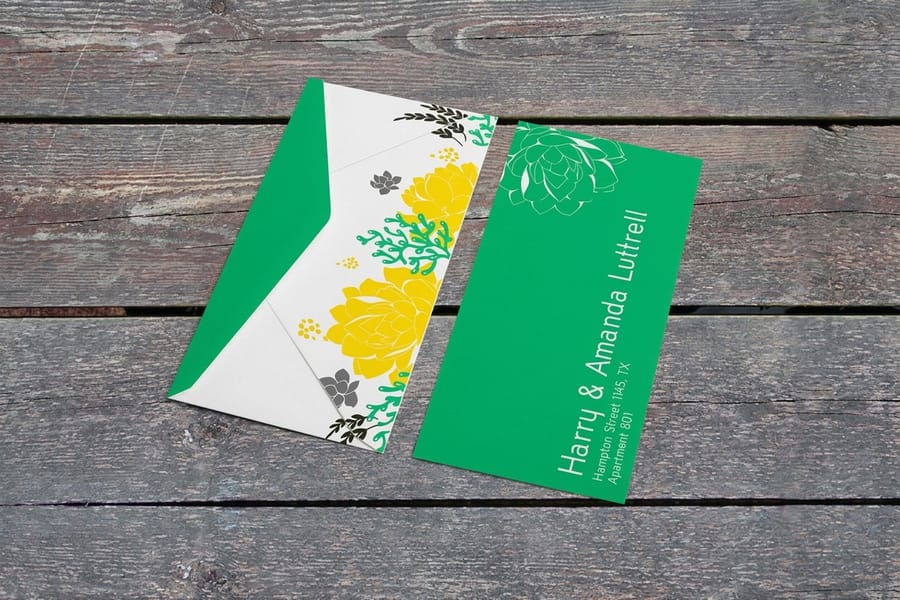
Good stationery art is undone by bad file setup more often than by bad design. Three margins do the heavy lifting, and getting them right is what separates a clean run from a reprint.
- Bleed: extend any background color or image about 0.125 in past the trim so a slight cut shift never leaves a white sliver on your envelope flap or card edge.
- Trim: the final cut line, the actual size of the piece.
- Safe area: keep logos, text, and the return address at least 0.125 in inside the trim so nothing important gets shaved off.
Beyond margins, build the file in CMYK, not RGB, so screen colors do not surprise you on paper, keep raster art at 300 dpi, and outline or embed your fonts before exporting a PDF. Do that and preflight passes on the first upload. If you would rather not wrestle with envelope layouts by hand, the how to make envelopes guide and the pocket folders guide cover the templates and fold lines piece by piece.
What stationery printing costs and how price is set
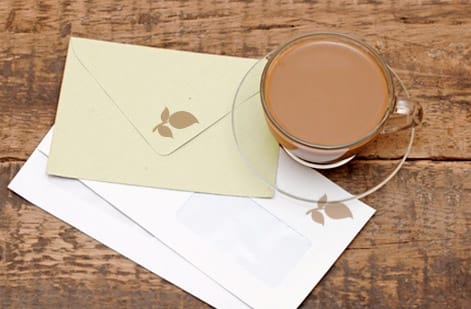
Stationery pricing is not a mystery once you know the four levers. Every quote at 4OVER4.COM moves on the same four inputs, and you can watch the number change live as you configure.
- The piece. A flat notecard is a single small print. A presentation folder is die-cut, scored, and folded, so it costs more to make. Notecards start near $20, letterhead and envelope runs land in the low hundreds, and folders sit higher for good reason.
- The paper. A premium linen or a soft-touch cover costs more than a house text weight, and it is usually worth it on the pieces clients hold.
- The quantity. This is the big one. Setup cost spreads across the run, so per-unit price drops steeply as volume climbs. A set printed together almost always beats ordering each piece in small separate batches.
- The finish. Foil, embossing, spot UV, and specialty lamination add production steps and cost, and they belong on the one or two pieces meant to impress.
The takeaway for budgeting: decide the full set first, then order the pieces you can in one pass to capture the quantity break. If you are pricing a wider branded rollout for a storefront or team, the local business marketing benchmarks put stationery spend in context against the rest of your print budget.
Turnaround, proofing, and shipping the set
Once your files pass preflight, core stationery prints in a few business days, with faster options on many products. Specialty finishes such as foil, embossing, and soft-touch lamination add a little production time, so factor that in if a folder or premium card is part of the run.
Proof carefully before you approve. Read the return address on the envelope, the phone number on the letterhead, and the URL on the notecard out loud. A typo caught on screen is free. A typo caught on 500 printed envelopes is a reprint. When the set matters for a launch or an event, order the whole suite together so every piece lands on the same schedule instead of trickling in over three weeks.
4OVER4.COM ships from its own Queens, New York facility, which keeps timelines tight and predictable across the country. Teams that need local speed can read how it plays out in a market like Los Angeles printing services, and if you want reassurance on quality before committing a full run, the verified customer reviews speak to how the finished work holds up.
Common stationery printing mistakes to avoid
Most stationery problems trace back to a handful of avoidable errors. Sidestep these and the set comes out looking like it cost far more than it did.
Coating the pieces you write on. Glossy letterhead and notepads fight the pen. Keep writing surfaces uncoated and save the shine for covers and cards.
Designing each piece in isolation. When the envelope and the letter are drawn on different days with different margins, the set falls apart. Lock one visual system and apply it everywhere.
Forgetting bleed on full-color pieces. A colored envelope flap or a bordered card with no bleed shows white slivers after trimming. Extend art past the cut line.
Building files in RGB. Bright screen colors shift on paper. Work in CMYK so what you approve is what you receive.
Ordering pieces separately over months. Different runs mean different paper batches and slightly different whites. Print the suite together for one consistent look. When the set is dialed in, browse business cards printing to finish the identity with the one piece every hand-off starts with.
Wally explains the branded set
One look, from the letter to the envelope that carries it
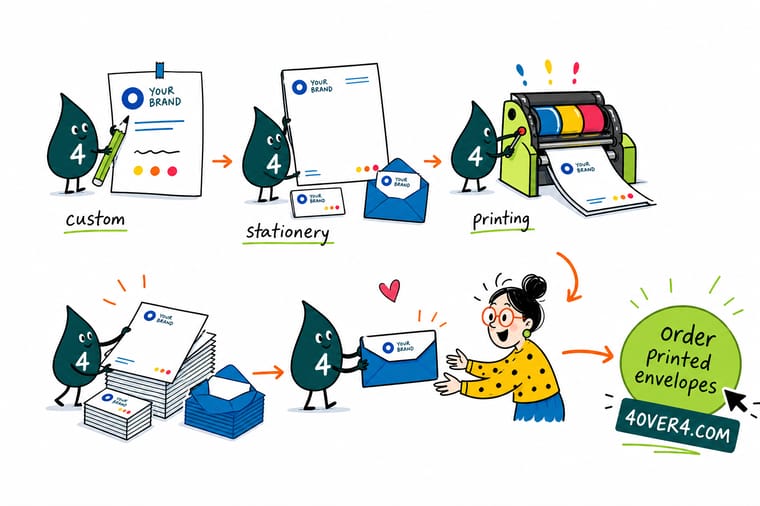
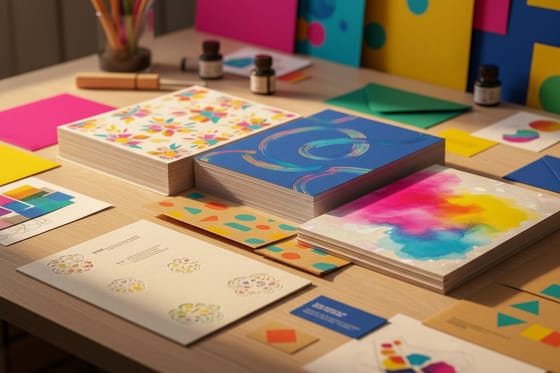
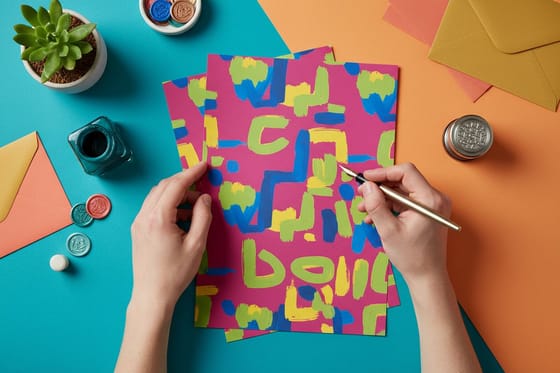
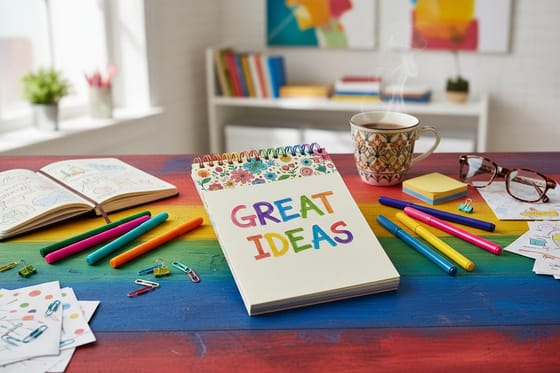
Wally lays the whole set on the desk at once: letterhead, envelope, notecard, notepad, folder. When they share one logo, one color, and one paper story, a small business suddenly reads big. The trick is not printing more, it is printing together. Lock the look, keep writing surfaces uncoated, and order the pieces in one pass at 4OVER4.
Order printed envelopes →Specs and pricing
Printed envelope specs and live pricing
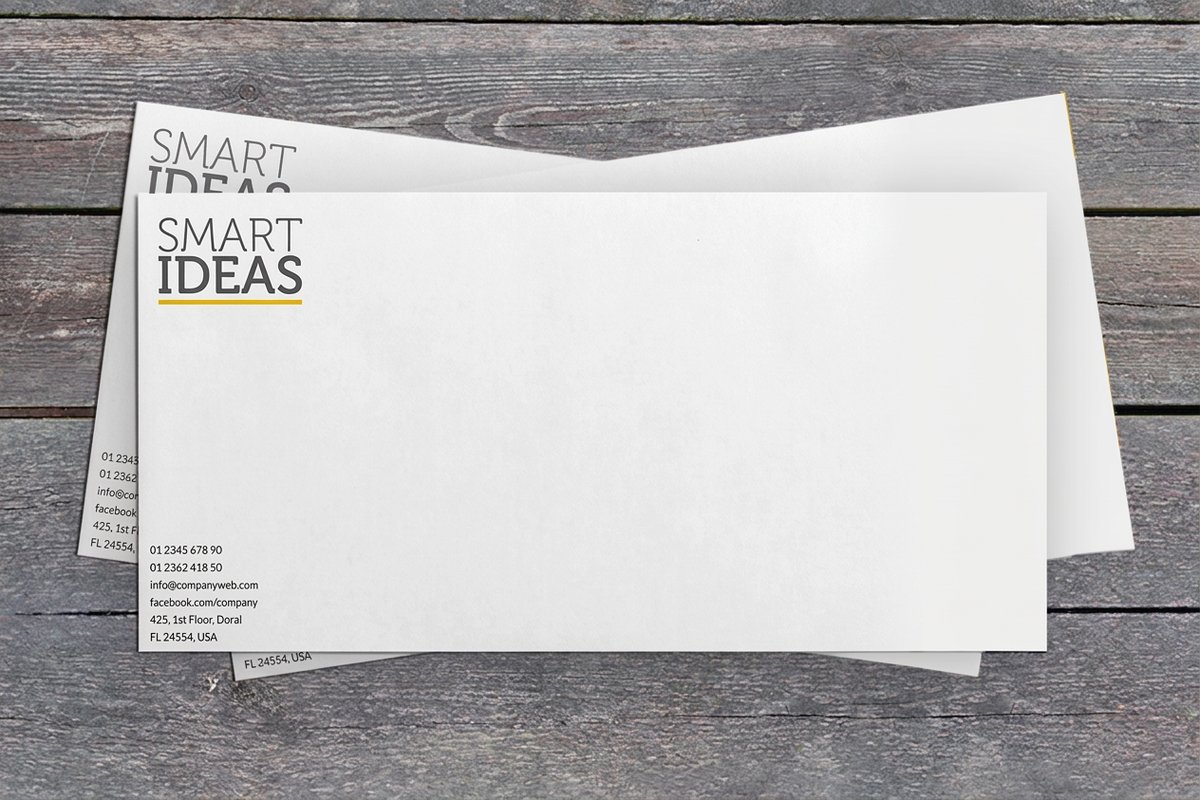
Envelopes anchor almost every stationery set, so here is a made-to-order example with live specs and price-per-unit straight from the 4OVER4.COM configurator. The same options carry across the rest of your suite.
| Quantity | Price Per Unit | Total |
|---|---|---|
| 250 | 57.2¢ | $142.99 |
| 500 | 29.2¢ | $146.12 |
| 1,000 | 15.4¢ | $153.87 |
| 2,500 | 12.8¢ | $319.95 |
| 5,000 | 10.6¢ | $529.40 |
Print it
Build your stationery set at 4OVER4
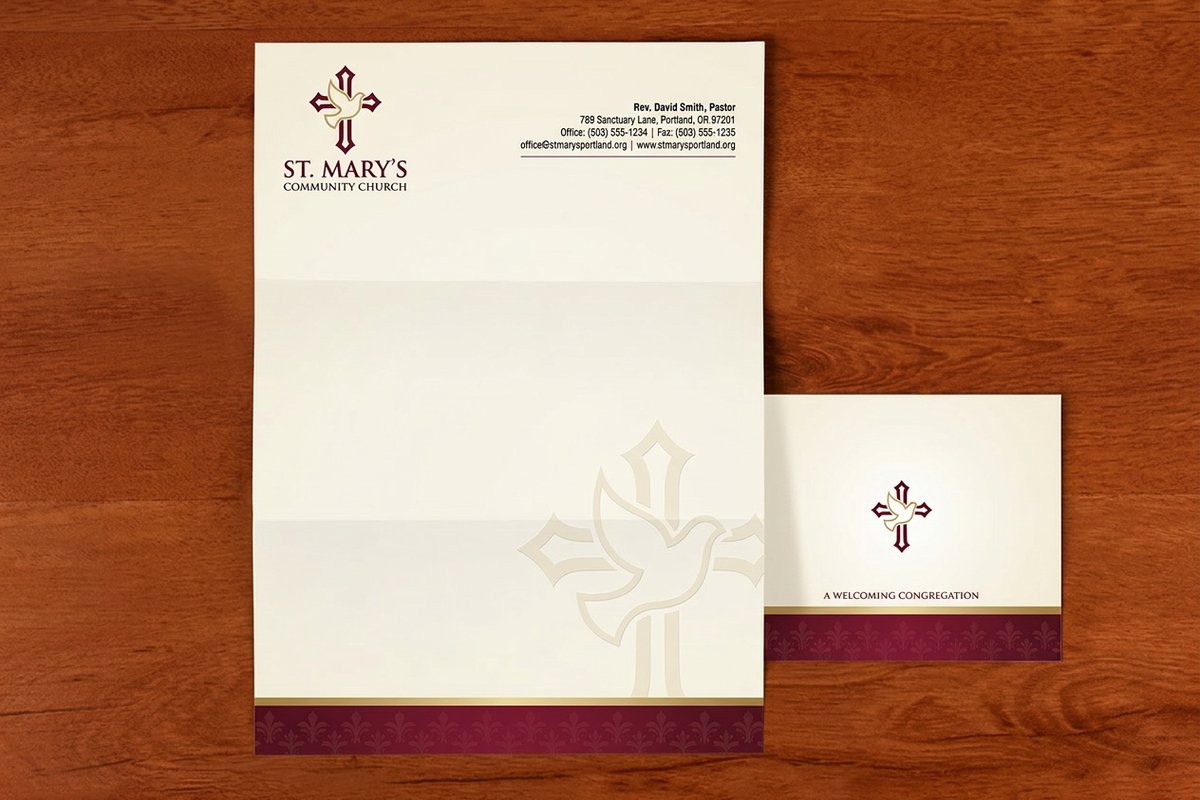
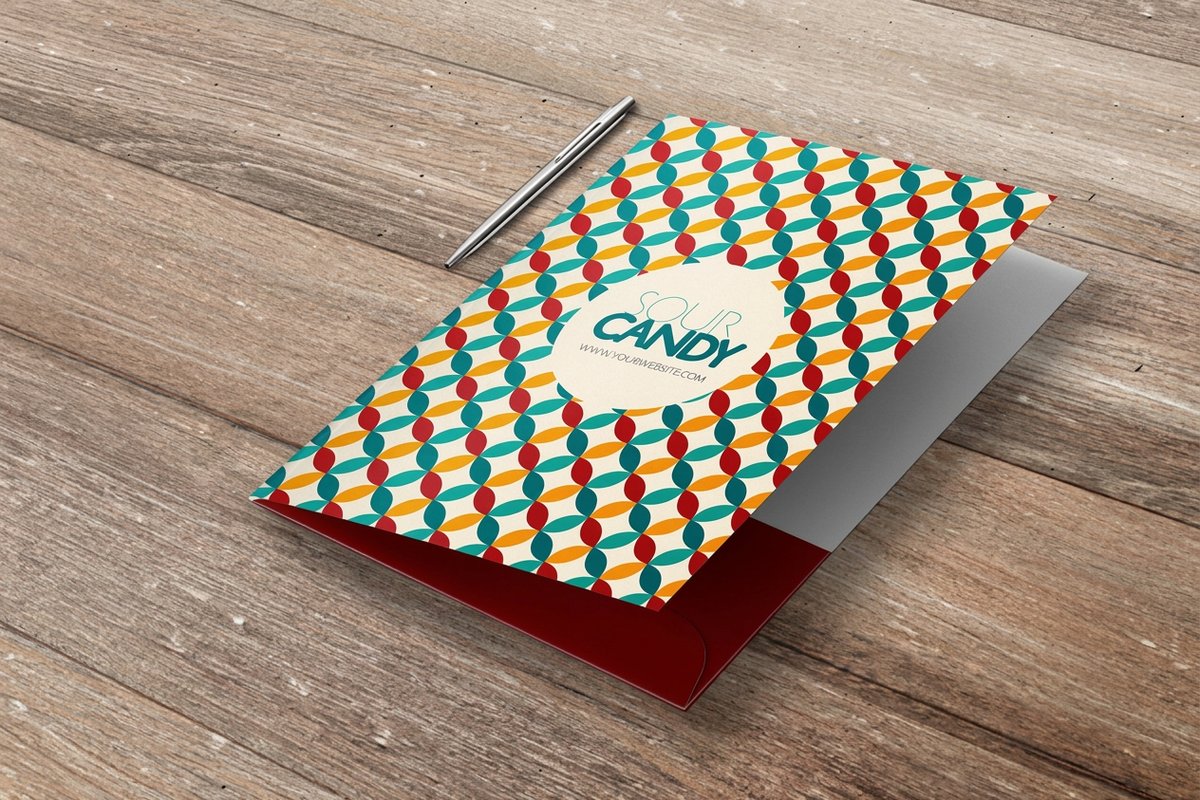
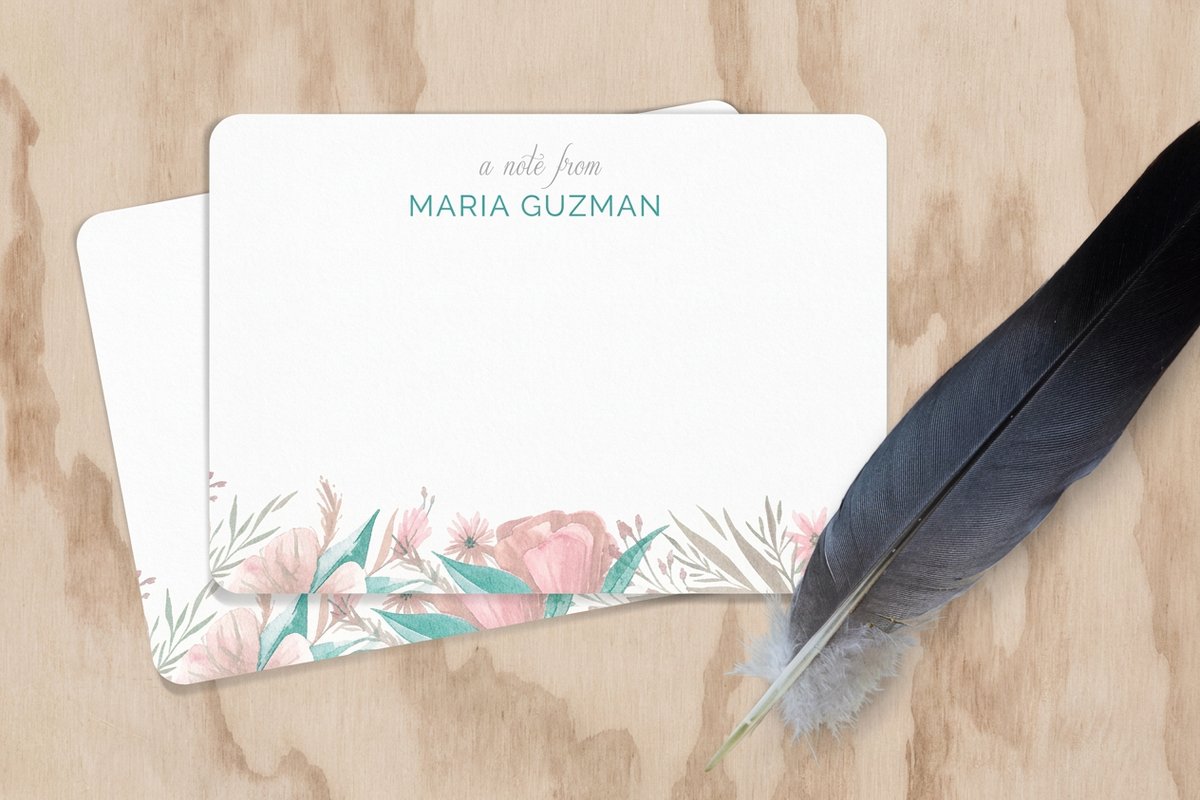
See it in use
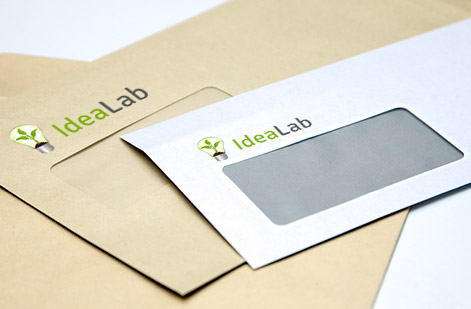
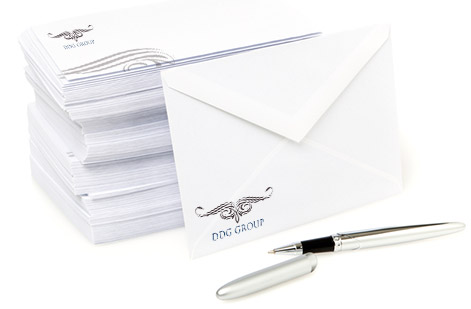
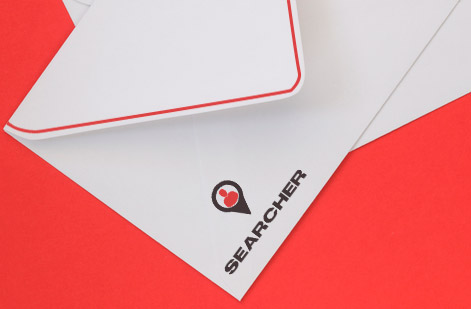
Real stationery work, printed in-house
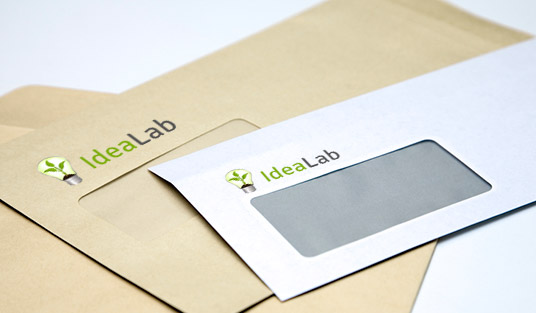
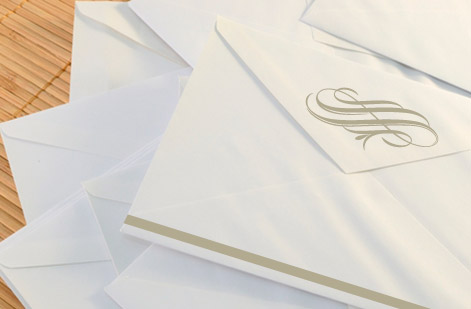
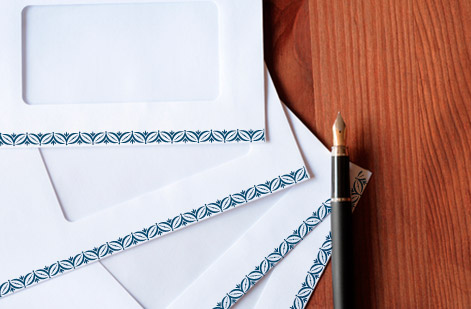
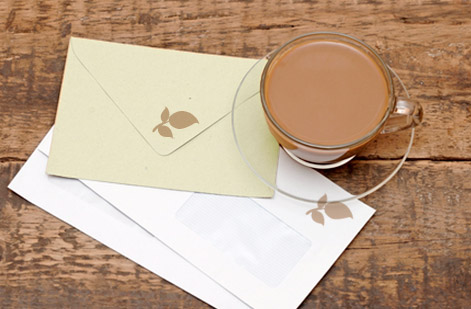
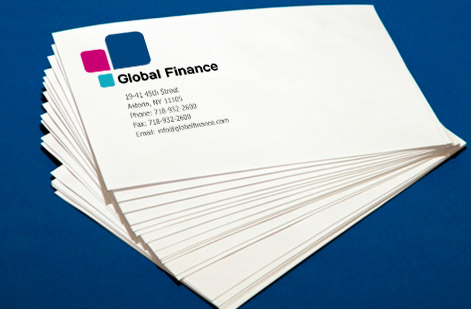
Explore more
Where to go next

By the numbers
Printing you can count on at 4OVER4
Common Questions
Common questions about stationery printing
What is stationery printing?
Stationery printing is the production of a matched set of branded paper goods a business uses day to day: letterhead, printed envelopes, notecards, notepads, and presentation folders. Instead of buying each piece from a different source, you print them as one coordinated system so the logo, colors, paper, and margins line up across everything. At 4OVER4.COM the whole suite is configurable online, from a single letterhead run to a full corporate identity kit.
How do I choose the right stationery for my business?
Start with how you actually communicate. If you send invoices, quotes, and formal letters, letterhead and printed envelopes come first. Client-facing teams add presentation folders and notecards for handoffs and thank-you notes. Front desks and creative teams lean on branded notepads. Pick the two or three pieces you touch every week, get the paper and finish right on those, then extend the same look to the rest of the set over time.
What does custom stationery printing cost and how is the price set?
Price is driven by four things: the piece, the paper stock, the quantity, and any special finish. Flat notecards start around $20, standard letterhead and envelope runs sit in the low hundreds, and presentation folders climb higher because they are die-cut and folded. Per-unit cost drops fast as quantity rises, so a set printed together almost always beats piecemeal ordering. Every product page at 4OVER4.COM shows live price-per-unit as you change options.
What sizes, stocks, and finishes are available for stationery printing?
Letterhead prints on classic 8.5 x 11 in uncoated text weights and premium linen or laid stocks that take a pen well. Envelopes come in #10, A2, A7, and invitation sizes. Notecards and notepads run in A2, A7, and half-letter formats. Folders arrive in standard pocket layouts with foil, embossing, spot UV, and soft-touch options. Uncoated stocks suit anything you write on, and coated and specialty finishes belong on covers, cards, and folders that get handled.
How long does stationery printing take to print and ship?
Standard turnaround on core stationery runs a few business days after your file passes preflight, with faster options on many products. Specialty finishes like foil, embossing, and soft-touch lamination add a little production time. Ordering the full set in one pass keeps every piece on the same schedule so nothing arrives weeks apart. You can check the exact turnaround on each product page before you commit.
Do I have to order every piece of the set at once?
No. Plenty of businesses start with letterhead and envelopes, then add notecards, notepads, and folders as budget allows. The key is to lock your artwork, colors, and margins first so anything you add later drops straight into the same visual system. Save your print-ready files and reorder or extend the set whenever you are ready.
Can I see the paper before I print the whole run?
Yes. 4OVER4.COM offers free paper samples so you can feel the difference between an uncoated text weight, a linen finish, and a soft-touch cover before you commit the set. It is the fastest way to make sure the stock feels the way your brand should feel in a client’s hands.
Get Started
Ready to print a professional stationery set?
Pick your pieces, drop in one logo and color scheme, and 4OVER4.COM prints a coordinated set where the letterhead, envelopes, and cards all match.
Legal Disclaimer
Gold Standard guarantees apply to all standard orders placed through 4over4.com. Price match requires verifiable proof of a competitor's published price for an equivalent product with matching specifications and turnaround time. Satisfaction guarantee covers manufacturing defects and print quality issues. Contact support with order number and documentation. On-time delivery rate based on tracked orders 1999 to 2026. Individual results may vary based on shipping carrier performance.
