
Booklet vs Brochure vs Flyer Format Guide


Flyer, brochure, or booklet? They are the same idea at three lengths, and a pamphlet is a brochure by another name. Here is what each format does best, how they compare on pages and cost, and a simple way to pick the right one for the job in front of you.
A flyer, a brochure, and a booklet are the same message at three lengths. A flyer is a single sheet for one fast announcement, a brochure folds one sheet into a few panels to explain more, and a booklet binds many pages for the full story. Choose by how much you need to say and how far along your reader is: announce with a flyer, explain with a brochure, showcase a full range with a booklet.
Start here
The whole decision in one paragraph
Match the format to how much you need to say. A flyer is a single sheet for one fast message, a brochure folds one sheet into a few panels to explain more, and a booklet binds many pages for the full story. Announce with a flyer, explain with a brochure, and showcase a full range with a booklet. The table and infographic further down line all three up side by side so you can pick with confidence.
Start with one question: how much do you actually need to say?
People treat flyers, brochures, and booklets as three different products, but they are really one idea stretched to three lengths. A flyer is the short version, a brochure is the folded version, and a booklet is the long version. Once you see them that way, choosing between them stops being a design question and becomes a simple content question: how much do you need to say, and how ready is your reader to hear it?
Say too little on a piece that demands detail and the reader leaves with questions. Say too much on a piece meant for a single glance and the message drowns. The format is the container, and the container should fit the story. That is why a busy street promotion belongs on a flyer while a full product line belongs in a bound booklet.
The rest of this guide takes each format in turn, shows where it shines, and ends with a side-by-side comparison plus an infographic you can keep. If you already know roughly what you need and just want to start laying it out, our online designer and design templates cover all three formats.
The flyer: one sheet, one message, built for speed
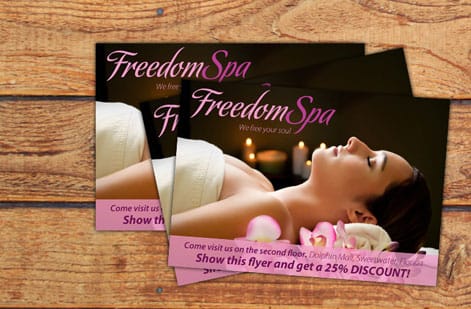
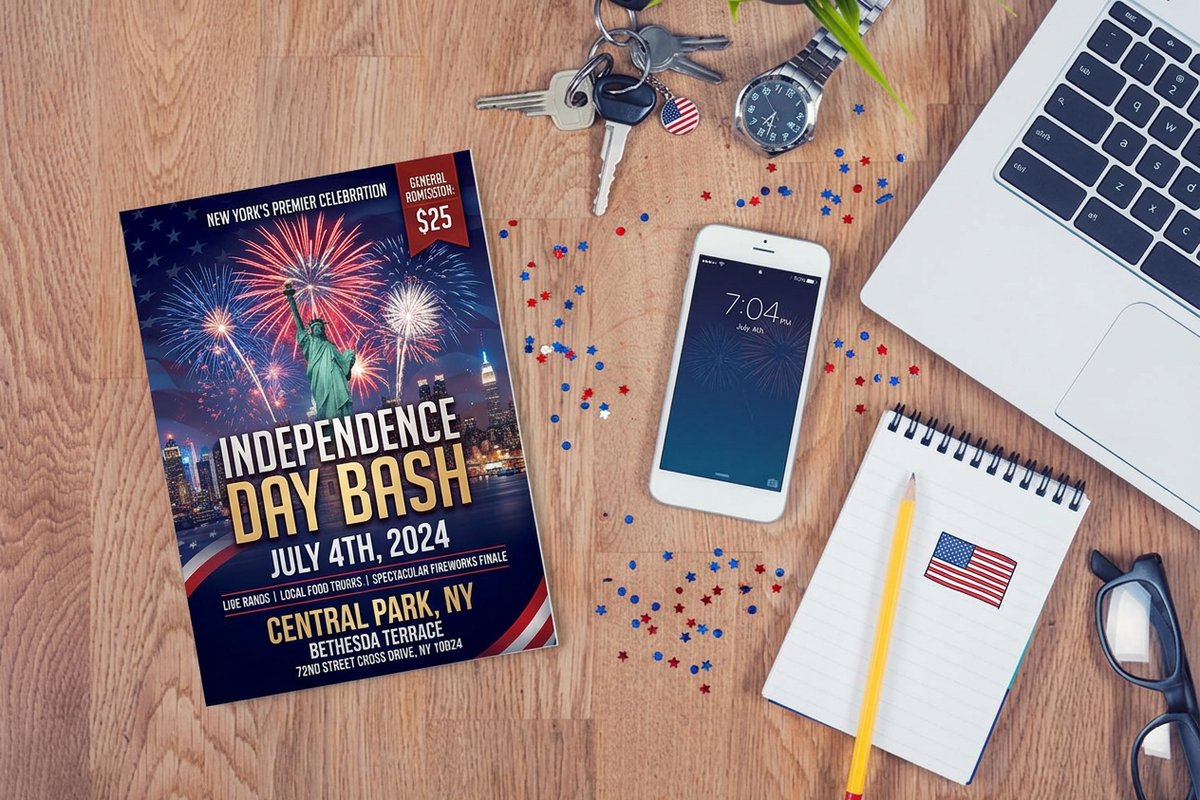
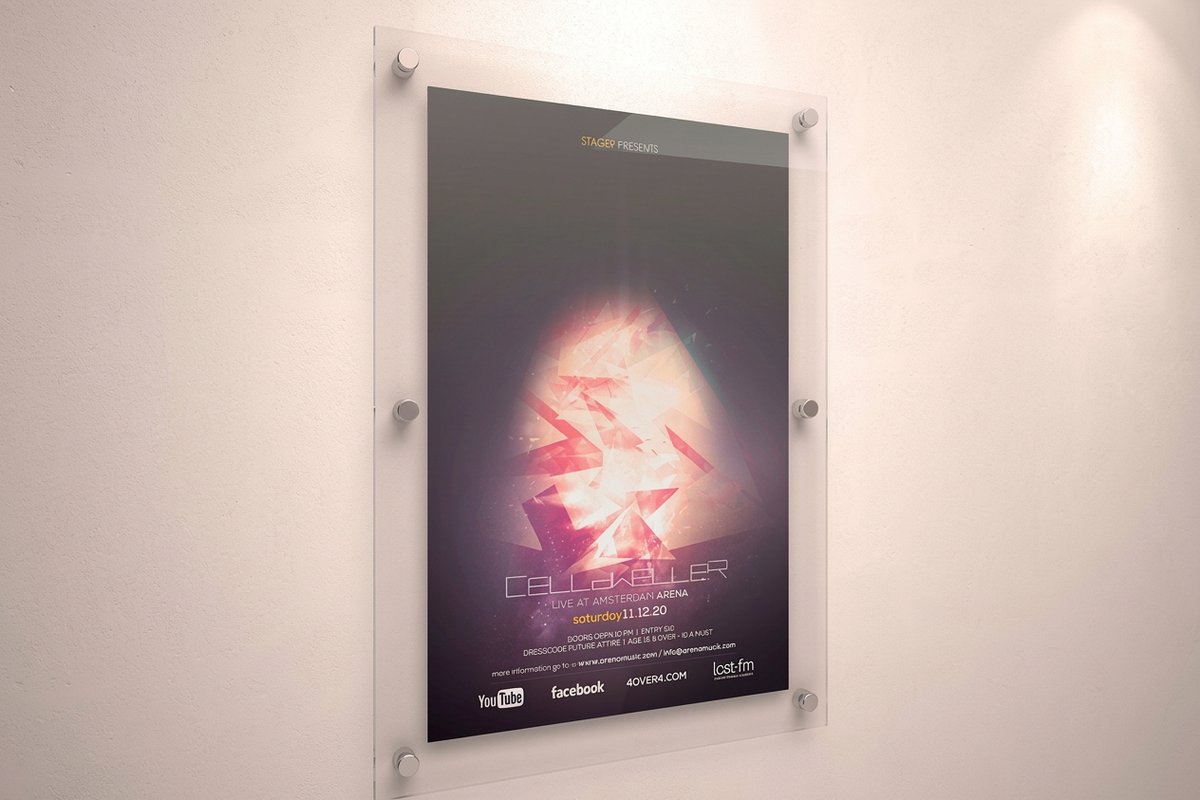
A flyer is a single, unfolded sheet printed on one or both sides. It is the fastest and cheapest way to put a message in front of a lot of people, which is exactly why it suits announcements: a grand opening, a weekend sale, a class schedule, an event. There is no fold to plan and no binding to pay for, so your budget goes straight into quantity and reach.
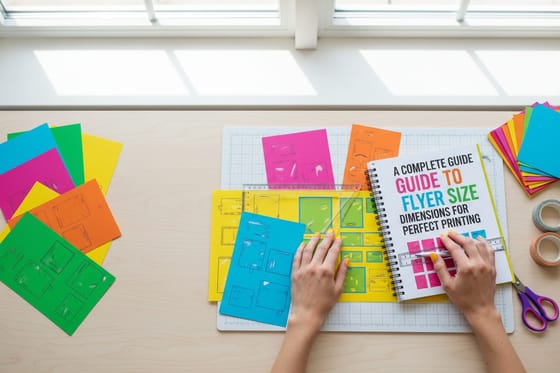
The discipline a flyer demands is focus. With one surface and a few seconds of attention, you get one headline, one image, and one call to action. Anything more competes with itself. That single-minded quality is what makes flyers so effective for early-stage businesses that need to be noticed before they can be understood. Our guide on flyer size dimensions helps you pick a format that carries your message without crowding it.
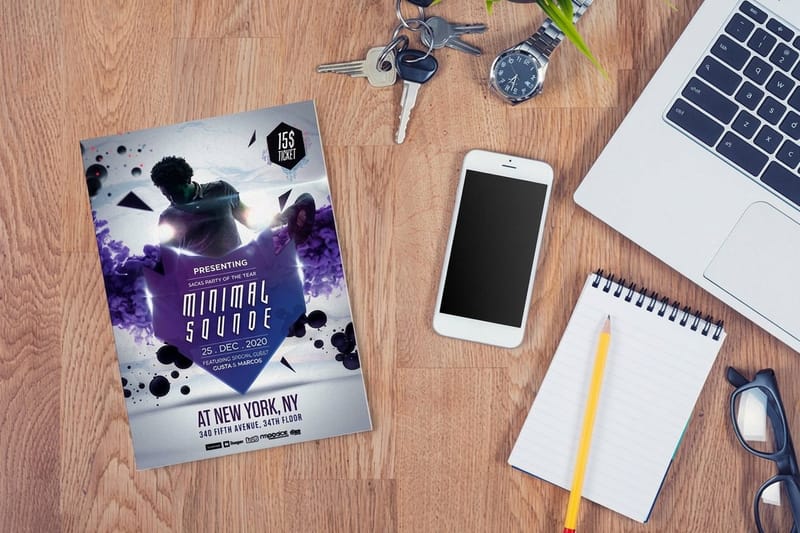
Flyers also live or die by distribution and stock. Where you leave them matters as much as what they say, so it is worth reading up on where to place flyers and the best practices for flyer distribution. For the paper itself, our roundup of the best paper for flyers covers the trade-offs, and you can lay the whole thing out in minutes with our online designer.
The brochure: folded panels that walk a reader through a decision
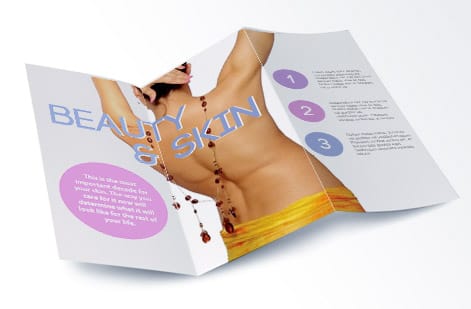
A brochure is a single sheet folded into panels, most often a bi-fold of two panels per side or a tri-fold of three, and it is the same physical piece most people mean when they say pamphlet. That one fold changes everything: instead of a single flat surface you now have a small sequence, a front that hooks, inside panels that explain, and a back that closes with contact details or an offer. The reader unfolds it in a natural order, and the fold does the work of organizing your story.
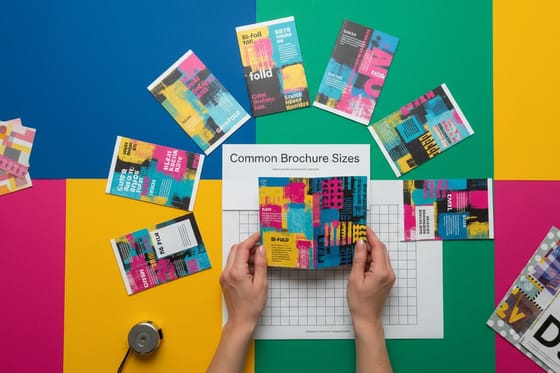
This makes brochures the right tool for growing businesses, the ones whose prospects have moved past first glance and started asking questions. A brochure has room to lay out a service list, a set of packages, or a how-it-works sequence, yet it still slips into a pocket, a mailer, or a countertop rack. It explains without asking the reader to commit to a bound piece. If you are choosing a shape, our guide to common brochure sizes and fold options and the standard brochure size and layout guide map out your choices.
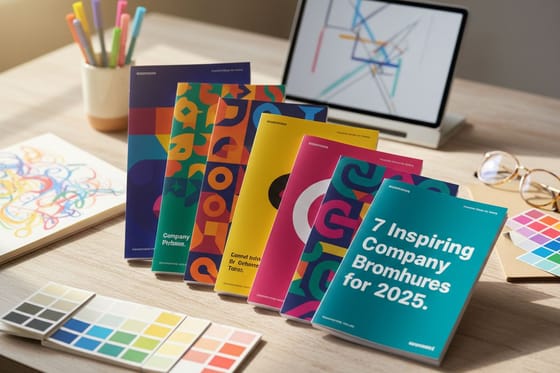
Getting a brochure right is mostly about respecting the fold lines and the finish. Read how to fold a brochure so your panels break where you intend, weigh matte against glossy for the feel you want, and browse real company brochure examples for inspiration. Prefer a running start? Our design templates already handle the panel geometry for you.
Brochure vs pamphlet, what is the difference
A pamphlet is an unbound printed piece that informs on one subject. A brochure is the same folded sheet built to promote. In print production they are the same order. Both are one sheet, folded once or twice, with no binding and no spine, and both are priced by size, stock, fold, and quantity.
The split is intent, not construction. A pamphlet explains something plainly: a clinic leaflet about a procedure, a museum floor plan, the care guide that ships in a product box. A brochure sells: the front panel hooks, the inside panels lay out services or packages, the back panel closes with an offer and a way to reach you. Because the shape is identical, ask a printer for a size and a fold rather than a word, since a shop that hears pamphlet and a shop that hears brochure will both quote you the same folded sheet.
Choose the fold by how many ideas have to stay separate: a bi-fold gives you four panels, a tri-fold gives you six, and our guide to common brochure sizes and fold options lays out the rest. When one subject outgrows those panels, stop folding and bind it. A saddle stitch booklet starts at eight pages and climbs in multiples of four, which is where a pamphlet becomes a catalog.
The booklet: bound pages for the full story
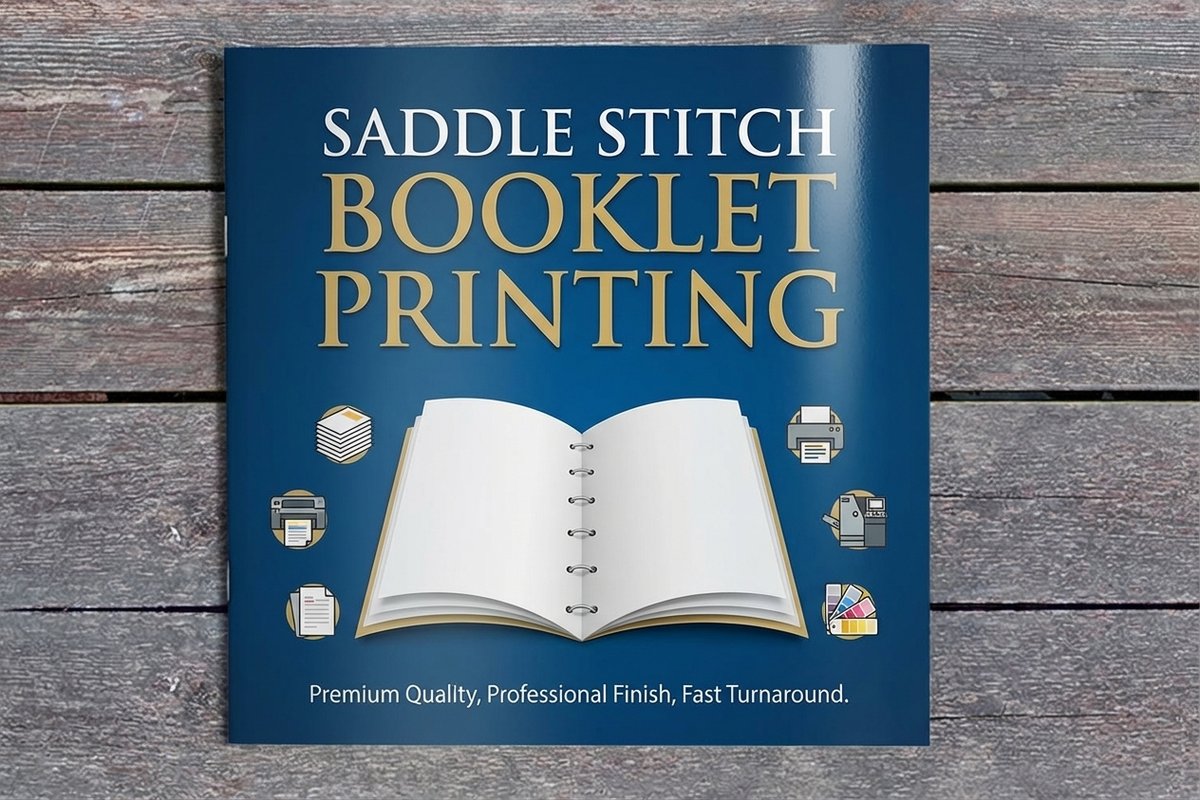
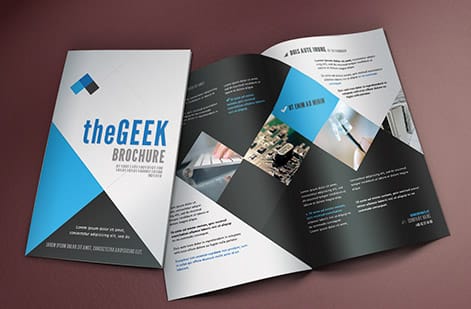
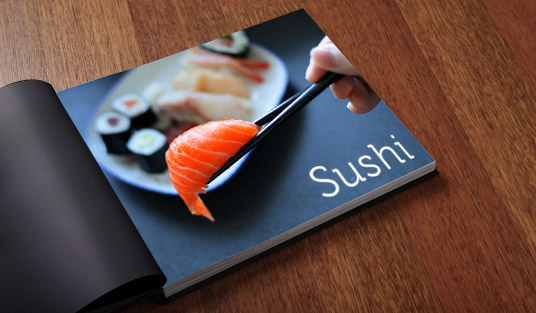
A booklet is made of multiple sheets bound together, most commonly by saddle stitching, which folds the pages and staples them at the spine. Because the page count comes in multiples of four, booklets run from a compact eight pages up to forty-eight or more. That capacity is the whole point: a booklet is where you go when a fold is no longer enough and you need room for a full range, an ordered story, or a genuine reference piece.
This is the format for established businesses presenting depth. Product catalogs, lookbooks, event programs, annual reports, instruction manuals, and menus all live comfortably as booklets, because each page gives a subject room to breathe and the bound object feels substantial enough to keep. A saddle stitch booklet reads as premium while staying affordable, and it tends to survive on a desk long after a flyer would have been recycled.
Booklets reward a little planning. Page count, cover stock, and interior paper all shape how the finished piece feels in the hand, and thoughtful typography keeps a longer read comfortable, so it is worth a look at choosing fonts and sizes and our paper stocks and materials guide. When the layout is ready, you can configure page count, size, and stock and watch the price respond on the booklet product page.
Flyer vs brochure vs booklet, side by side
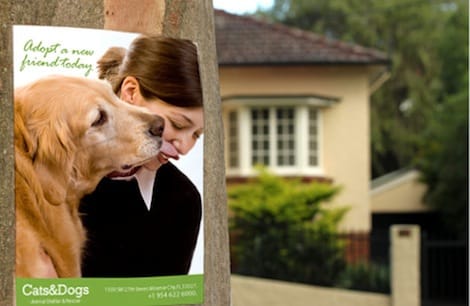
The three formats overlap at the edges, but their sweet spots are distinct. This table lines them up on the questions that actually decide a project: how many pages you get, who each one is for, how it feels in the hand, and where it lands on cost.
| Flyer | Brochure | Booklet | |
|---|---|---|---|
| Pages | 1 sheet, 1 to 2 sides | 1 sheet, 2 to 4 folded panels | 8 to 48 bound pages |
| Best for | Quick announcements, offers, events | Explaining a service or product line | Catalogs, lookbooks, programs, manuals |
| Reader stage | First glance, high volume | Considering, wants a little detail | Committed, wants the full story |
| Feel | Fast and disposable | Polished and portable | Premium and keepable |
| Cost per piece | Lowest | Low to mid | Highest, scales with pages |
Read the table top to bottom and a pattern appears: as you move from flyer to booklet, the piece holds more, costs more, and asks more of the reader. The trick is not to buy the most impressive format, it is to buy the one that matches the job in front of you.
How to choose the right format for your goal
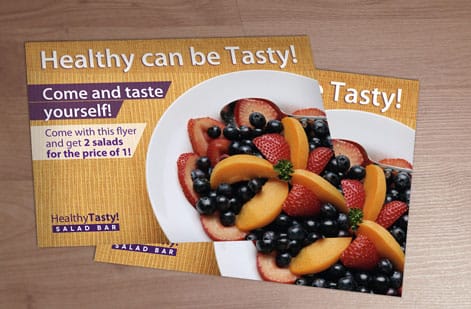
Two questions settle almost every decision. First, what is the job: are you announcing, explaining, or showcasing? Announcing points to a flyer, explaining points to a brochure, and showcasing a full range points to a booklet. Second, where is your reader in their decision: a stranger at first glance, a prospect weighing options, or someone already committed and hungry for detail. Map the job and the reader together and the format usually picks itself.
Budget and quantity are the tie-breakers. If you need thousands of pieces for the least money, a flyer stretches your spend furthest. If you need a smaller number of pieces to do more persuading, a brochure or booklet earns its higher unit cost by carrying more of the sale. Many businesses run a layered kit: a flyer to get noticed, a brochure to hand to interested prospects, and a booklet for serious buyers, each one pointing a step deeper.
When you are close but not sure how a stock will feel at each format, do not guess. Order free paper samples and hold the real thing before you commit a full run. It is the cheapest insurance in print, and it often changes which format and finish you choose.
What each format costs to print, and the specs that set the price
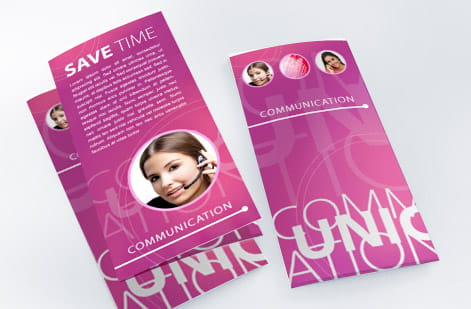
Pricing across all three formats runs on the same handful of levers, so once you understand them you can reason about any quote. Quantity is the big one: more pieces lower the unit price on every format. After that come size, paper stock, and finish, and for brochures and booklets you add the fold or the page count. A flyer is the simplest build, which is why it is the cheapest per piece, while a saddle stitch booklet carries more paper and binding and starts around $240 for a short run before quantity brings the unit price down.
The most useful habit is to price the real thing rather than estimate. At 4OVER4.COM every option lives in the configurator and the total updates live as you change it, so you can see exactly what adding pages, upgrading stock, or bumping quantity does to your cost. Try a couple of combinations side by side and the right trade-off usually becomes obvious.
A pamphlet costs exactly what a brochure costs, because it is the same folded sheet: pick the size and the fold in common brochure sizes and fold options and the price follows the panel count, not the label. Use the specs and live pricing panel just below to size up the booklet format, then jump to flyer printing to compare the entry cost of a single-sheet run. If you want to feel the difference between a text-weight flyer and a heavier booklet cover before deciding, our free samples make the comparison real.
Wally sizes up the formats
The right format is just the right amount of story
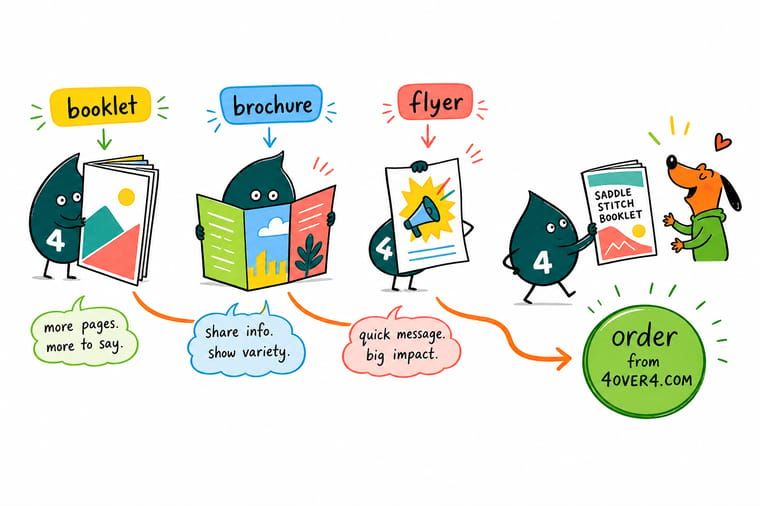
Wally lines the three up and asks one question: how much do you need to say? A flyer for a single fast message, a brochure to fold in a bit more, a booklet when the whole story matters. Get the length right and the piece does its job before anyone reads past the cover. Decide the amount, then let 4OVER4 print it sharp on the size and stock you choose.
Configure your print →Infographic
Flyer vs brochure vs booklet at a glance
One frame, three formats. Save it as a checklist the next time you are deciding how to print your next campaign.
Three formats, one decision. Choose by how much you need to say, then print the flyer, brochure, or booklet on the size and stock that fits the job.
Specs and pricing
Saddle stitch booklet specs and live pricing
When you have landed on a booklet, the print decisions come down to page count, size, stock, and finish. Here are the live specs and price-per-unit for saddle stitch booklets at 4OVER4.COM, straight from the configurator.
| Quantity | Price Per Unit | Total |
|---|---|---|
| 25 | $9.62 | $240.55 |
| 50 | $6.04 | $302.06 |
| 100 | $3.61 | $361.37 |
| 200 | $2.22 | $444.85 |
| 300 | $1.65 | $495.38 |
| 400 | $1.29 | $515.14 |
| 500 | $1.06 | $531.61 |
| 600 | 91.5¢ | $549.19 |
Print it
Pick your format and print it at 4OVER4
See it in use
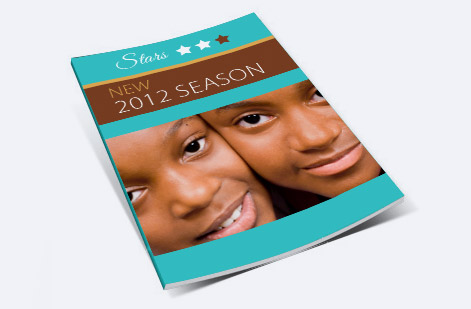
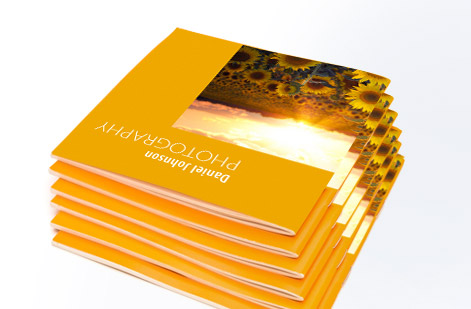
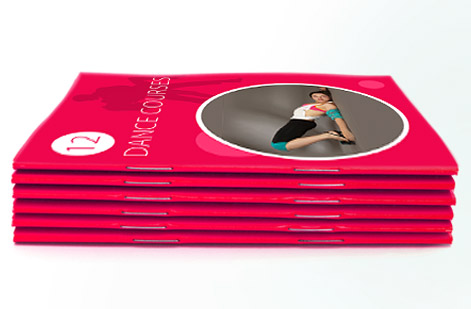
Real printed work, made in-house
Explore more
Where to go next
By the numbers
Printing you can count on at 4OVER4
Common Questions
Common questions about flyers, brochures, pamphlets, and booklets
What is the difference between a flyer, a brochure, and a booklet?
A flyer is a single unfolded sheet printed on one or both sides, built to carry one message fast. A brochure is a single sheet folded into two to four panels, so it holds more information while staying flat and pocketable. A booklet is a set of pages bound together, usually by saddle stitching, and it runs anywhere from eight to forty-eight pages for a longer story. In short, a flyer announces, a brochure explains, and a booklet showcases a full range. A pamphlet belongs to the same family: it is an unbound piece on a single subject, usually a folded sheet, which in print production is ordered exactly the way a brochure is.
Is a pamphlet the same as a brochure?
In a print shop, yes, they are the same order. The difference is purpose rather than construction. A pamphlet informs on one subject, a clinic leaflet, a museum handout, a care guide in a product box, and it is usually a single sheet folded once or twice. A brochure is the same folded sheet built to sell: a front panel that hooks, inside panels that explain the services or packages, a back panel that closes with an offer and contact details. Both are unbound, both are priced by size, stock, fold, and quantity, and asking for one will get you the other, so specify the size and the fold instead of the word. Once your subject needs more than the four to six panels a fold gives you, you have left both behind and you want a booklet.
When should I use a flyer instead of a brochure?
Use a flyer when you have exactly one thing to communicate and you want it in front of as many people as possible for the least money: a grand opening, a limited-time offer, an event date, a menu special. Move up to a brochure when one glance is not enough and the reader needs a little guidance, for example a service list, a set of packages, or a step-by-step of how you work. The fold gives you a natural place to break that story into sections.
Is a brochure the same as a booklet?
No. A brochure is a single sheet that is folded, so it has no binding and typically tops out at four to six panels. A booklet is made of multiple separate sheets that are bound at the spine, which lets it hold far more content and lie open like a small magazine. If you need more than a few panels, or you want page numbers and a table of contents, you have crossed from brochure territory into a booklet.
Which format is cheapest to print?
Per piece, flyers are almost always the least expensive because they are a single sheet with no folding or binding. Brochures add a fold, which raises the price modestly. Booklets cost the most because they carry more pages and require binding, and the price climbs with each additional page. That said, higher quantities lower the unit price on all three, so a large flyer run and a small booklet run can end up closer than you would expect. The live pricing panel on this page shows the real numbers.
How many pages does a booklet need?
Because saddle-stitch booklets are bound by folding sheets in half and stapling them at the spine, the page count always comes in multiples of four: 8, 12, 16, 20, and up. Eight pages is the practical minimum for a piece that reads like a real booklet rather than a folded brochure. Catalogs and lookbooks commonly land between 16 and 32 pages. If your page count grows past roughly 48, a different binding style starts to make more sense.
What is the best format for a product catalog?
A booklet is the natural home for a catalog, because it gives every product room to breathe across ordered pages and it feels substantial enough to keep on a desk. Saddle stitching keeps the cost reasonable while still reading as premium. For a short, focused range you can get away with a multi-panel brochure, but once you are showing more than a handful of items with photos and details, the bound pages of a booklet win.
How do I choose the right format for my business?
Match the format to the moment. Early on, when the job is simply to get noticed, flyers give you reach for very little money. As you grow and prospects start asking questions, a brochure gives you room to answer them in a piece they can carry. Once you are established and want to present a full line, a service story, or an annual program, a booklet delivers the depth and the polish. Many businesses run all three at once, each pointing the reader one step deeper.
Get Started
Know your format? Print it at 4OVER4
Flyer, brochure, pamphlet, or booklet, bring it to 4OVER4.COM and print it on the size, stock, and finish that fits the job. Adjust every option and watch your price update live.
Legal Disclaimer
Gold Standard guarantees apply to all standard orders placed through 4over4.com. Price match requires verifiable proof of a competitor's published price for an equivalent product with matching specifications and turnaround time. Satisfaction guarantee covers manufacturing defects and print quality issues. Contact support with order number and documentation. On-time delivery rate based on tracked orders 1999 to 2026. Individual results may vary based on shipping carrier performance.
