
Business Card Stock Explained From 14pt to 32pt


Two business cards with the same design can feel completely different, and the reason is the stock. Here is the point scale from 14pt to 32pt, the difference between stock and finish, and the premium options like silk and suede.
Business card stock is defined by thickness, measured in points (one point equals a thousandth of an inch), and by finish. 14pt to 16pt is standard, 18pt and 32pt read as premium, and finishes like silk, suede, and uncoated set the surface. 4OVER4 prints cards on 60-plus stocks and finishes.
Start here
Business card stock in one paragraph
Stock is defined by thickness and finish. Thickness is measured in points, where one point is a thousandth of an inch, so a 16pt card is 0.016 in thick. 14pt to 16pt is the everyday range, 18pt and 32pt read as premium, and finishes like gloss, matte, silk, suede, and uncoated set the surface independently of thickness. The diagram below maps the whole point scale.
Why stock is the decision that defines your card
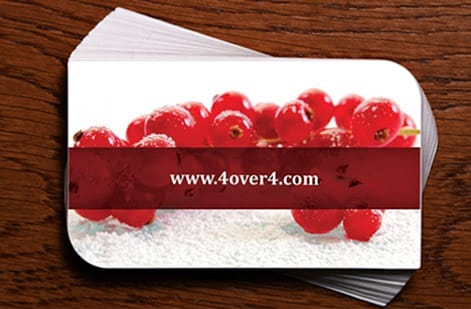
Two business cards can carry the identical design and make completely different impressions, and the reason is almost always the stock. Thickness and surface decide how a card feels in the hand, and that tactile moment, the small surprise of a card that is heavier or smoother than expected, is a large part of what people remember. Design gets attention; stock earns respect.
Yet stock is the choice most people give the least thought to, defaulting to whatever comes standard. This guide fixes that by explaining the two things that define every business card stock: its thickness, measured in points, and its finish, the surface applied on top. Once you understand both, choosing becomes simple and deliberate.
We will walk the full point scale from 14pt to 32pt, the difference between a stock and a finish, the premium options like silk and suede, and specialty materials. If you already know you want something substantial, our premium business cards and business card range cover every option here.
What stock and point actually mean
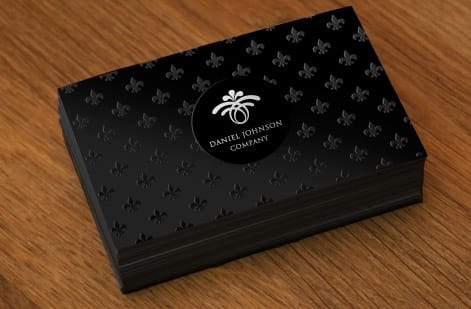
Two words do most of the work here: stock and point. Stock is the material a card is printed on, its paper or specialty substrate. Point, written pt, is how that stock's thickness is measured, and it is refreshingly literal: one point equals one thousandth of an inch. So a 16pt card is 0.016 inches thick, and a 32pt card is 0.032 inches, about twice as substantial.
That is the whole system. A higher point number means a thicker, more substantial card. It is worth noting that point measures thickness specifically, not paper weight in the way text papers are sometimes described, which keeps things simple: when you see a point value, picture the edge of the card and how it feels between your fingers.
Everything else about a card's feel comes from the finish layered on top of the stock, which we cover shortly. If you want the wider view of how thickness and weight work across all print, not just cards, our paper weight guide is a useful companion.
The point scale from 14pt to 32pt
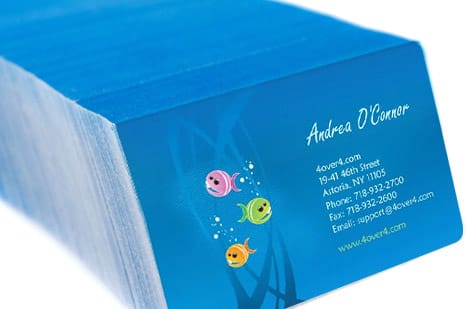
Here is what the numbers feel like in practice. 14pt is the standard everyday thickness: sturdy, dependable, and affordable, with no hint of flimsiness. 16pt is the most common default, a touch thicker and more confident in the hand, and the safe choice for the majority of business cards.
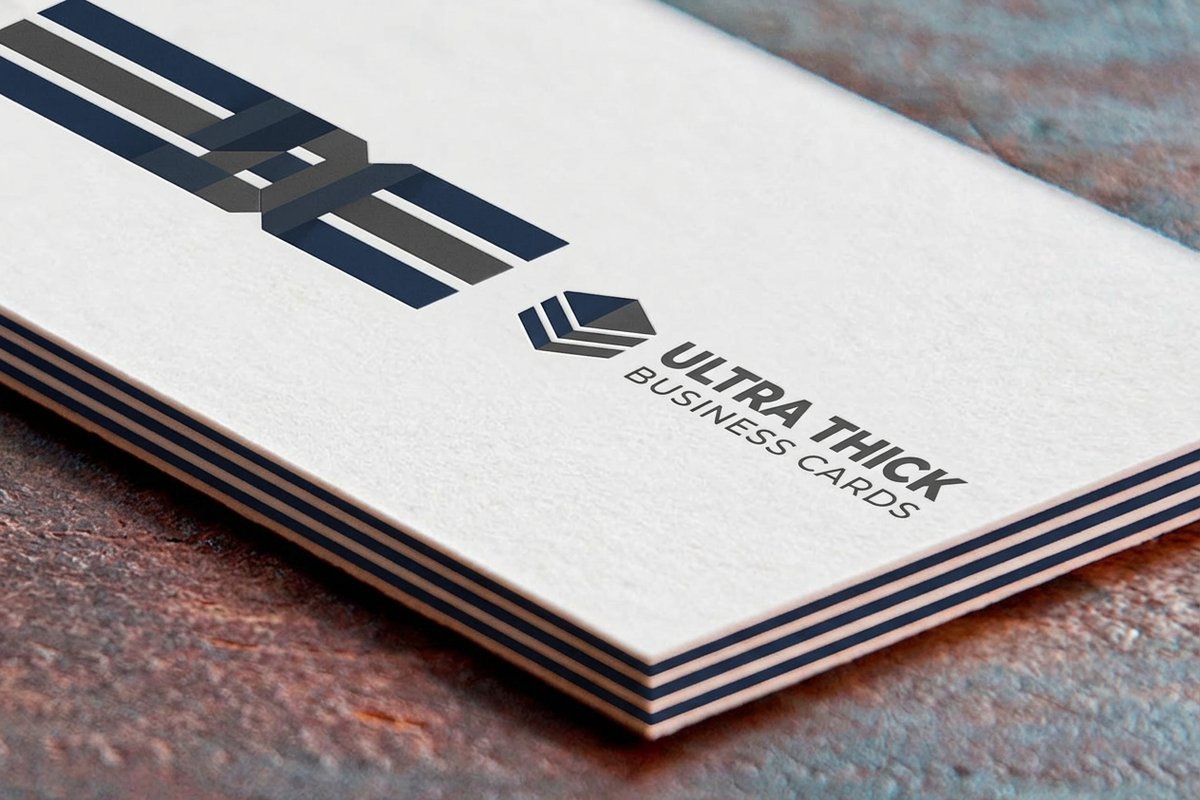
Step up to 18pt and the difference is immediately noticeable, a card with real presence that quietly signals quality. Then there is 32pt ultra-thick, usually made by bonding two sheets together, which feels less like a card and more like a keepsake. That extra mass is not just for show: a 32pt stock is thick enough to carry a painted edge, a color band along the card's rim that is impossible on thinner stocks.
Thickness alone can carry a premium impression, which is why so many upscale cards simply go heavier. For the thickest options, see our ultra-thick business cards. If you want help matching a point weight to a specific project, our guide on choosing the right card stock walks through it.
Coatings and the stock beneath them
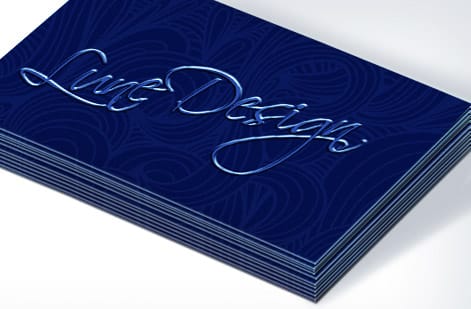
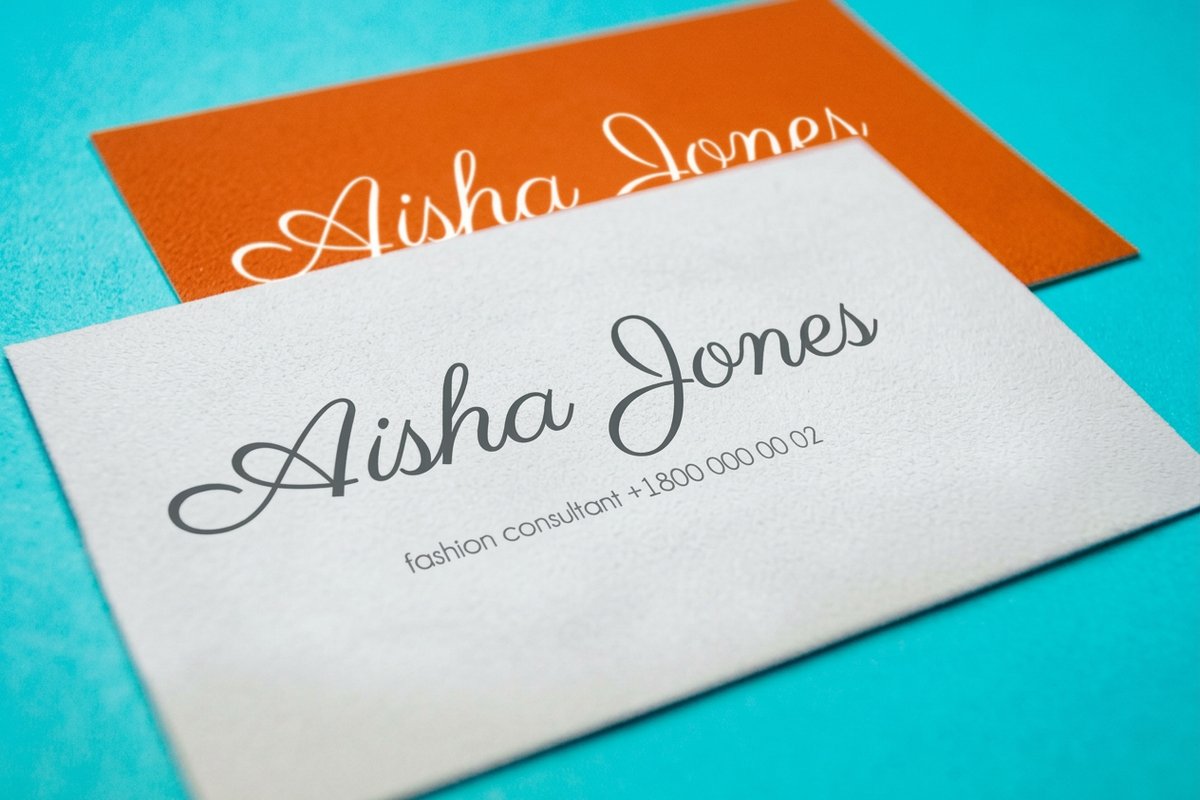
Thickness sets the weight; the finish sets the surface, and the two are separate decisions. The most basic finishes are coatings applied over a standard stock. A gloss coating adds shine and makes colors pop, which suits vivid, photographic designs. A matte coating gives a soft, even, low-glare surface that reads as understated and modern.
Then there is uncoated, which is the bare stock with no surface treatment. Uncoated cards have a natural, tactile feel and one practical advantage: you can write on them by hand, which matters for appointment cards or any card someone needs to annotate. The tradeoff is that colors sit a little softer than on a coated card.
The key insight is that the same 16pt stock can feel glossy, matte, or natural depending only on the coating, so think of thickness and surface as two dials you set independently. Beyond these basics lie the premium finishes, which change the surface far more dramatically. Compare gloss and matte in detail in our guide on silk laminated business cards.
Premium finishes: silk, suede, and ultra-thick
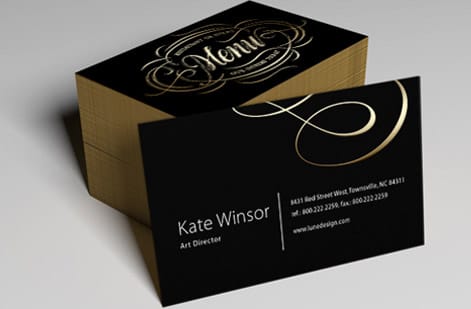
Above the basic coatings sit the premium finishes that make a card feel genuinely upscale. Silk lamination bonds a thin film to the card, producing a surface that is exceptionally smooth, low in glare, and notably tough, tear resistant and water resistant, so a silk card survives wallets and pockets far better than a coated one.
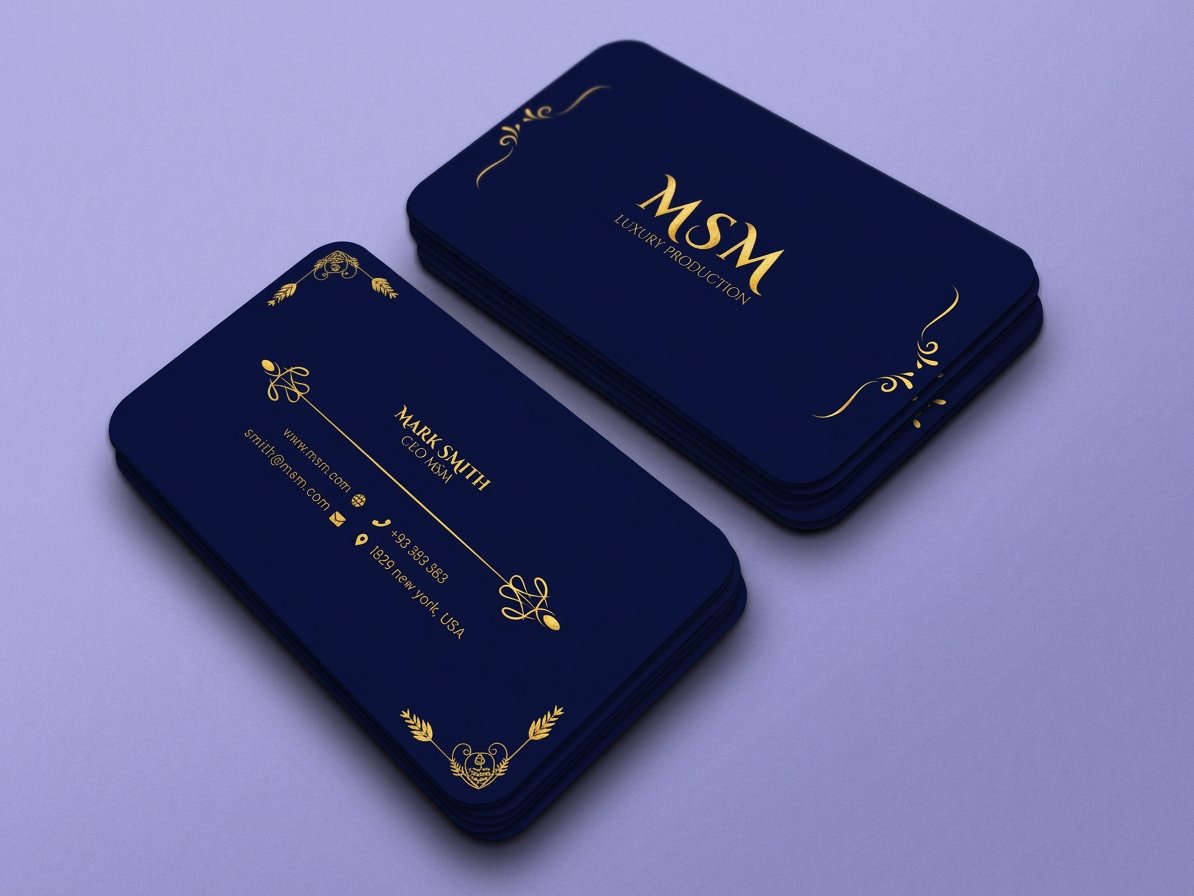
Suede, a soft-touch finish, goes the other direction on feel. It gives the card a velvet, almost peach-skin surface that is warm and matte, the kind of finish people instinctively run a thumb across. It reads as quietly expensive and pairs beautifully with a single accent like foil, where the shiny element contrasts against the muted surface.
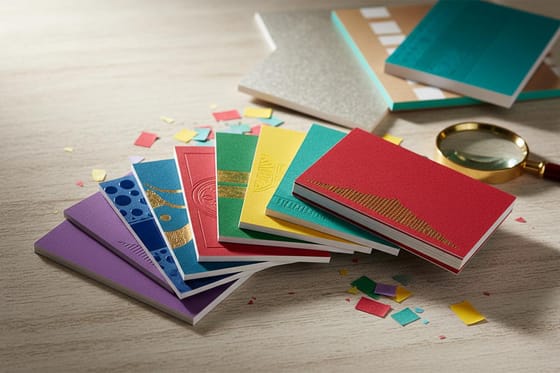
And ultra-thick is a premium choice of stock rather than surface, using 32pt or more for sheer presence. These often combine, a suede ultra-thick card with a foil accent is a stack of premium decisions. Our suede business cards and the premium printing collection gather these options, and the silk and finish showcase shows them on real cards.
Specialty stocks beyond paper

For brands that want to stand out at the material level, the options extend past paper entirely. Plastic stocks make a durable, water-resistant, flexible card that survives conditions paper cannot, and clear or frosted versions create a distinctive see-through effect. These feel unmistakably different the moment they are handled.
Natural materials add character of another kind. Kraft stock has a warm, recycled, earthy look that suits organic and handmade brands, while cotton gives a soft, luxurious, textured feel with a bright surface. Each of these carries its own personality before a single word is printed, which can be exactly the point.
Specialty stocks come with their own printing considerations, since ink and finishes behave differently on plastic than on paper, but the payoff is a card that is memorable by touch alone. If a distinctive material fits your brand, browse the full range under business card printing to see what is possible.
How to choose and order your stock
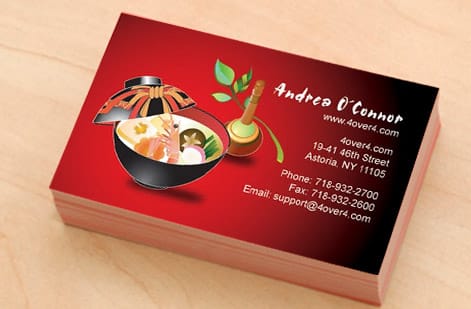
Pulling it together, the decision is a short sequence. First, choose a thickness for how you want the card to feel: 14pt or 16pt for everyday, 18pt or 32pt for premium presence. Second, decide coated or uncoated. Third, choose the finish, gloss, matte, silk, or suede, that matches your brand. Fourth, consider whether a specialty stock or an accent like foil or painted edges belongs.
Because every one of these choices is tactile, the single best step you can take is to order free paper samples. Feeling a 16pt gloss next to an 18pt suede next to a 32pt ultra-thick in your own hand settles the decision instantly, in a way no screen can. It also confirms how your brand colors sit on each surface before you commit.
Then set up your file at 3.5 by 2 in with bleed, and order. Start with premium business cards for upscale stocks, suede business cards for a soft-touch feel, or ultra-thick business cards for maximum weight. The live specs and pricing below show exactly what each stock and finish costs.
Wally picks the stock by feel, not by guess
Thickness first, finish second
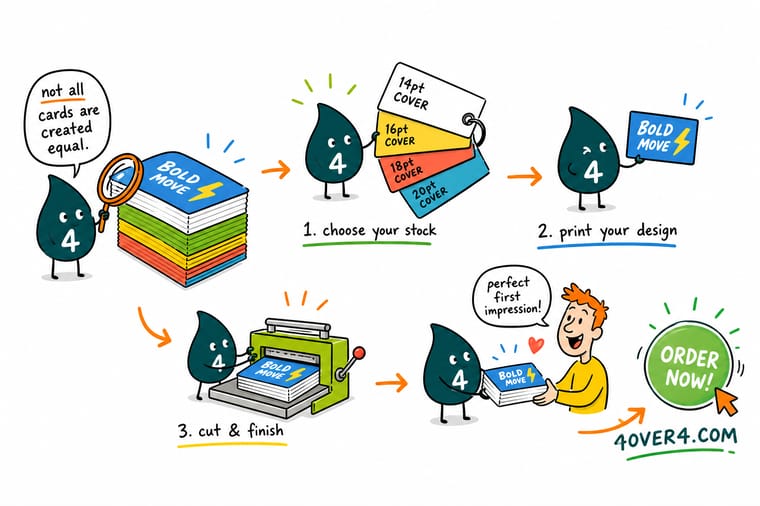
Wally treats stock as two simple dials. First thickness: 14pt or 16pt for everyday, 18pt or 32pt when he wants presence, remembering a point is just a thousandth of an inch. Then finish: gloss, matte, silk, suede, or uncoated, set independently of the weight. And before any full run, he orders free paper samples so the card in his hand matches the impression he means. 4OVER4 prints on 60-plus stocks.
Order on your chosen stock →Quick reference
The business card stock scale, at a glance
Every point weight and premium finish, and what each one feels like. Match these to the impression and durability your brand needs.
| Stock | Feels like | Why it matters |
|---|---|---|
| 14pt | Standard, light and sturdy | A dependable everyday card thickness that keeps cost low without feeling flimsy. |
| 16pt | The common default | Slightly thicker and more confident in the hand, the most popular business card weight. |
| 18pt | Premium presence | A clear step up in substance that signals quality the moment the card is held. |
| 32pt ultra-thick | Keepsake weight | Two sheets bonded for a bold, memorable card that also allows painted edges. |
| Silk laminated | Smooth, tough, low-glare | A durable, tear and water resistant surface with a refined, muted sheen. |
| Suede soft-touch | Velvet matte feel | A warm, low-glare surface that feels expensive and pairs well with foil. |
| Uncoated | Natural and writable | A bare paper surface you can write on by hand, with an organic look and feel. |
Step by step
Choose your business card stock in 7 steps
- Set your thickness first Choose a point weight for how you want the card to feel. Use 14pt or 16pt for everyday cards, 18pt for a premium step up, and 32pt ultra-thick when you want maximum presence.
- Decide coated or uncoated Pick a coating for durability and color, or go uncoated for a natural, writable surface. This single choice sets the base character of the card.
- Choose the finish that fits your brand Layer a finish onto the stock: gloss or matte for a clean coated look, silk for smooth durability, or suede for a velvet soft-touch feel.
- Consider a specialty stock if it suits you If your brand calls for it, look beyond paper to options like plastic for durability or kraft and cotton for character, each with its own printing rules.
- Match finishes to the stock Confirm any add-ons, foil, spot gloss, or painted edges, work with your chosen stock. Painted edges, for example, need a thick stock like 32pt to show.
- Order free paper samples Because stock is a physical decision, order free paper samples to feel the point weight and finish in your hand before committing to a full run.
- Set up files and print Build at 3.5 by 2 in with 0.125 in bleed, use CMYK, keep text inside the safe margin, export a press-ready PDF, and place your order once the stock is confirmed.
Specs and pricing
Premium business card specs and live pricing
Once your stock is chosen, price the run. Here are the live specs and price-per-unit for premium business cards at 4OVER4.COM, straight from the configurator.
| Quantity | Price Per Unit | Total |
|---|---|---|
| 100 | 17.6¢ | $17.57 |
| 200 | 11.5¢ | $23.07 |
| 300 | 9.15¢ | $27.46 |
| 400 | 7.96¢ | $31.86 |
| 500 | 7.25¢ | $36.26 |
| 600 | 6.77¢ | $40.64 |
| 700 | 6.43¢ | $45.04 |
| 800 | 6.18¢ | $49.43 |
Order it
Print on the stock that fits your brand
See it in use
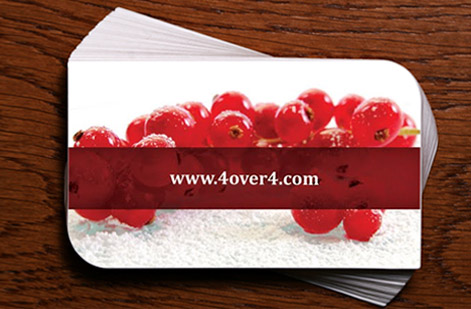
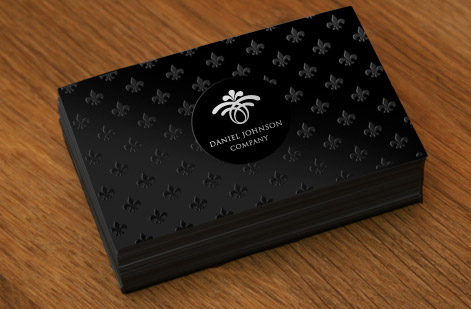
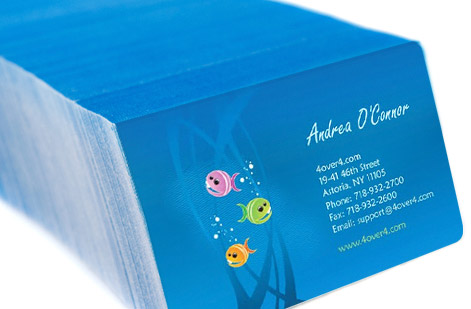
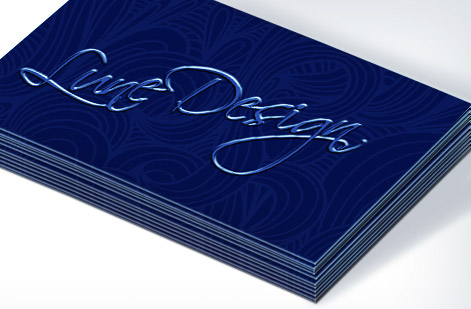
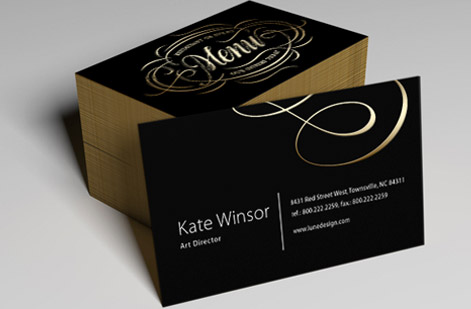
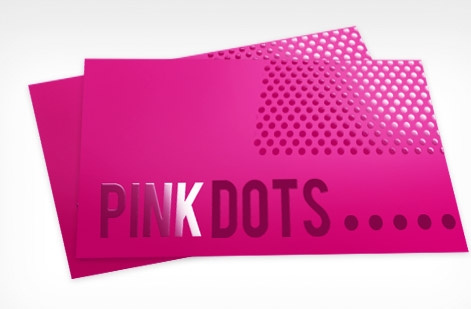
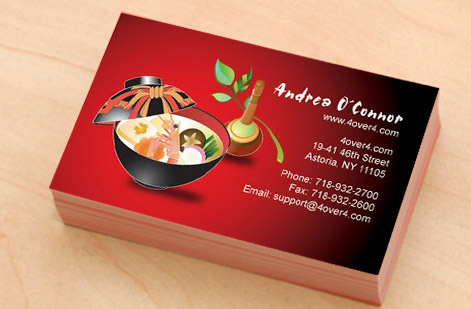
Real cards on premium stock, printed in-house
Explore more
Where to go next



By the numbers
Business card printing you can count on at 4OVER4
Common Questions
Common questions about business card stock
What is business card stock?
Business card stock is the paper or specialty material a card is printed on, defined mainly by its thickness and its surface finish. Thickness is measured in points, where one point equals one thousandth of an inch, so a 16pt card is 0.016 inches thick. The surface is set by the finish, such as gloss, matte, silk, suede, or uncoated. Together, thickness and finish determine how a card looks and, just as importantly, how it feels in the hand, which is a large part of the impression it makes. Choosing the stock is really choosing the physical character of your card.
What do the point weights like 14pt, 16pt, and 32pt mean?
They describe thickness. A point is one thousandth of an inch, so 14pt is 0.014 inches, 16pt is 0.016 inches, and 32pt is 0.032 inches, roughly twice as thick. In practical terms, 14pt and 16pt are the standard everyday range, sturdy and affordable, with 16pt being the most common default. An 18pt card feels noticeably more premium, and a 32pt ultra-thick card, usually made by bonding two sheets together, feels like a substantial keepsake and is thick enough to allow painted edges. The higher the point number, the more presence the card has in the hand.
What is the difference between the stock and the finish?
The stock is the material and its thickness; the finish is the surface treatment applied on top of it. You choose them separately. For example, you might pick a 16pt stock and then decide between a gloss coating for shine and color pop, a matte coating for a soft even look, a silk lamination for a smooth durable surface, a suede soft-touch for a velvet feel, or leave it uncoated so it can be written on. The same point weight can feel completely different depending on the finish, which is why it helps to think about thickness and surface as two distinct decisions.
What premium and specialty stocks are available for business cards?
Beyond standard coated and uncoated paper, premium options include silk laminated cards, which are smooth, tear and water resistant, and low-glare; suede soft-touch cards with a velvet matte feel; and ultra-thick cards at 32pt or more for a bold, memorable weight. There are also true specialty stocks such as plastic for durability, and natural materials like kraft and cotton for a distinctive, tactile character. Many of these pair with finishing effects like foil, spot gloss, embossing, and painted edges. Each stock has its own strengths, so the right one depends on the impression and durability your brand needs.
How do I choose the right business card stock, and how does it affect price?
Start with how you want the card to feel and how durable it needs to be, then pick a thickness and a finish to match. Everyday cards do well at 14pt or 16pt with a gloss or matte coating; premium cards benefit from 18pt or 32pt and a silk or suede finish. Price rises with thickness, premium finishes, and specialty stocks, and falls as quantity increases because setup spreads across the run. Because stock is a tactile choice, the smartest move is to order free paper samples and feel the point weights and finishes in your hand before deciding, so the card you order matches the impression you intend.
Get Started
Ready to print on the right stock?
Bring your design to 4OVER4.COM and print it on the point weight and finish your brand deserves, from a clean 16pt to a suede ultra-thick card. Set every option and watch your price update live.
Legal Disclaimer
Gold Standard guarantees apply to all standard orders placed through 4over4.com. Price match requires verifiable proof of a competitor's published price for an equivalent product with matching specifications and turnaround time. Satisfaction guarantee covers manufacturing defects and print quality issues. Contact support with order number and documentation. On-time delivery rate based on tracked orders 1999 to 2026. Individual results may vary based on shipping carrier performance.
