
Business Postcards vs Business Cards, Which One Wins More Customers


Hand a business card to somebody you have already met, and mail a postcard to somebody you have not. The card is a memory aid built to survive in a wallet until the need shows up, the postcard is a small advertisement with room for a real offer that reaches a street you have never worked, and businesses that grow tend to run both rather than pick one.
Business cards and postcards at a glance
| Format | Trim size | Printable area | How it reaches people | What it costs to send |
|---|---|---|---|---|
| Business card | 3.5 x 2 in | About 7 sq in | Handed over in person, one at a time | Cannot be mailed on its own, it is under the USPS minimum |
| Postcard, 4 x 6 | 4 x 6 in | About 24 sq in | Mailed to a list, or handed out at events | Qualifies for the First-Class postcard price |
| Postcard, 5 x 7 | 5 x 7 in | About 35 sq in | Mailed, or left on a counter where it gets picked up | Letter rate, it is over the postcard maximum |
| Postcard, 6 x 9 | 6 x 9 in | About 54 sq in | Mailed, and hard to lose inside a stack of envelopes | Letter rate, still under the flat threshold |
| Postcard, 6.5 x 9 | 6.5 x 9 in | About 58 sq in | Every door on a carrier route, no list needed | Flat rate, clears the 6.125 in height EDDM needs |
Printable area is the whole reason the two formats behave differently. Seven square inches holds a name and a number, and fifty four holds a headline, a photograph of finished work and a dated offer. You can order classic business cards in any of the standard stocks straight from the configurator.
What each format is actually for
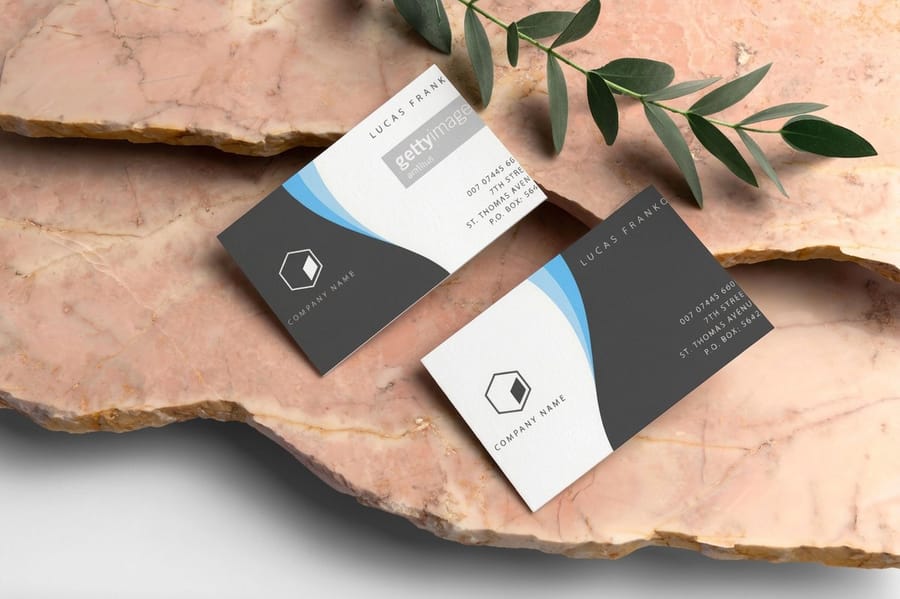
A business card is a memory aid. Somebody already met you, already heard what you do, and the card exists so they can find you again in three weeks when they need you. It is sized for a wallet and a cardholder, which is exactly why it survives: a card gets kept, sometimes for years, and no other print piece you own does that.
A postcard is an advertisement with a stamp on it. Nobody asked for it and nobody knows you, so it has to do the introducing, make the offer and give a reason to act, all in the two seconds between the mailbox and the recycling bin. That is a completely different job, and it needs the room to do it.
The mistake is treating them as competitors. A trade that hands out classic business cards at every job and mails a postcard to the same street a month later is not choosing between formats. It is using the card for people who met the van and the postcard for the neighbours who only saw it parked.
Where the business card wins
Retention, first. A postcard is read once and thrown away. A card goes in a wallet, a drawer, a phone case, and it works months later at the moment the need appears. Second, credibility in the hand: a 16pt card with a soft touch finish tells somebody you have been doing this a while, and it does it before they read a word. Our guide to card stock and coatings for embossed cards covers which combinations actually feel like that and which just cost more.
Third, cost per contact. Cards are the cheapest printed thing you will ever buy per piece, and there is no postage attached, so the only limit on how many you hand out is how many hands you meet. That is also the ceiling. A card cannot reach anyone you have not met.
Where the postcard wins
Reach without a handshake. A postcard lands in front of people who have never heard of you, on a street you picked, on a date you picked. Nothing you can hand over does that.
Room for an actual offer, too. There is space for a headline, a photograph of finished work, a dated coupon, a map and a phone number in a size somebody can read across a kitchen. A business card carries a name and a number and asks the holder to supply the motivation themselves. That is the real difference in response, and it is a layout constraint rather than a marketing theory.
The postage rules that decide the size
Postcard size is not a design decision. It is a postage decision that happens to look like a design decision, and getting it wrong costs you on every single piece for the life of the campaign.
The First-Class Mail postcard price applies to a rectangular card between 3.5 by 5 and 4.25 by 6 inches, and between 0.007 and 0.016 inches thick. Go bigger in any direction and the same card pays the letter rate. Go past 6.125 inches tall or 11.5 inches long and it becomes a flat, which costs more again. Those three thresholds are why the industry standard sizes cluster where they do.
The thickness rule catches people out more than the size rule. A 16pt card measures roughly 0.016 inches, which is the very top of the postcard band, so a 16pt stock with a heavy coating can push over and reclassify the whole mailing. If you are mailing at the postcard rate, print at 14pt and keep the margin.
Why a business card cannot be mailed
The USPS minimum for anything mailable is 3.5 by 5 inches. A standard business card is 3.5 by 2, so it is under half the required length and the mail stream will not accept it loose. It travels inside an envelope, stapled to a letter, or tucked into a folder, and at that point you are paying letter postage to deliver a card that says less than a postcard would have.
The other route people try is worse. Dropping cards into mailboxes without postage is a federal offence, and the rule catches doorknob hangers wedged into the box as well. We wrote up what is and is not allowed in business cards in mailboxes and what the law says before somebody spends a Saturday collecting a fine.
Keep the right side of the back clear
On a mailed postcard the address side has to leave room for the address block, the barcode and the postage. In practice that means the right half of the back belongs to the Postal Service and your copy lives on the left third and on the front. Designs that fail at the mail house nearly always failed because the offer ran across the whole back.
A postcard you only hand out at counters has none of these constraints, which is a genuine reason to print two versions if you are doing both. Same artwork on the front, different back.
Cost per contact, and where the money really goes
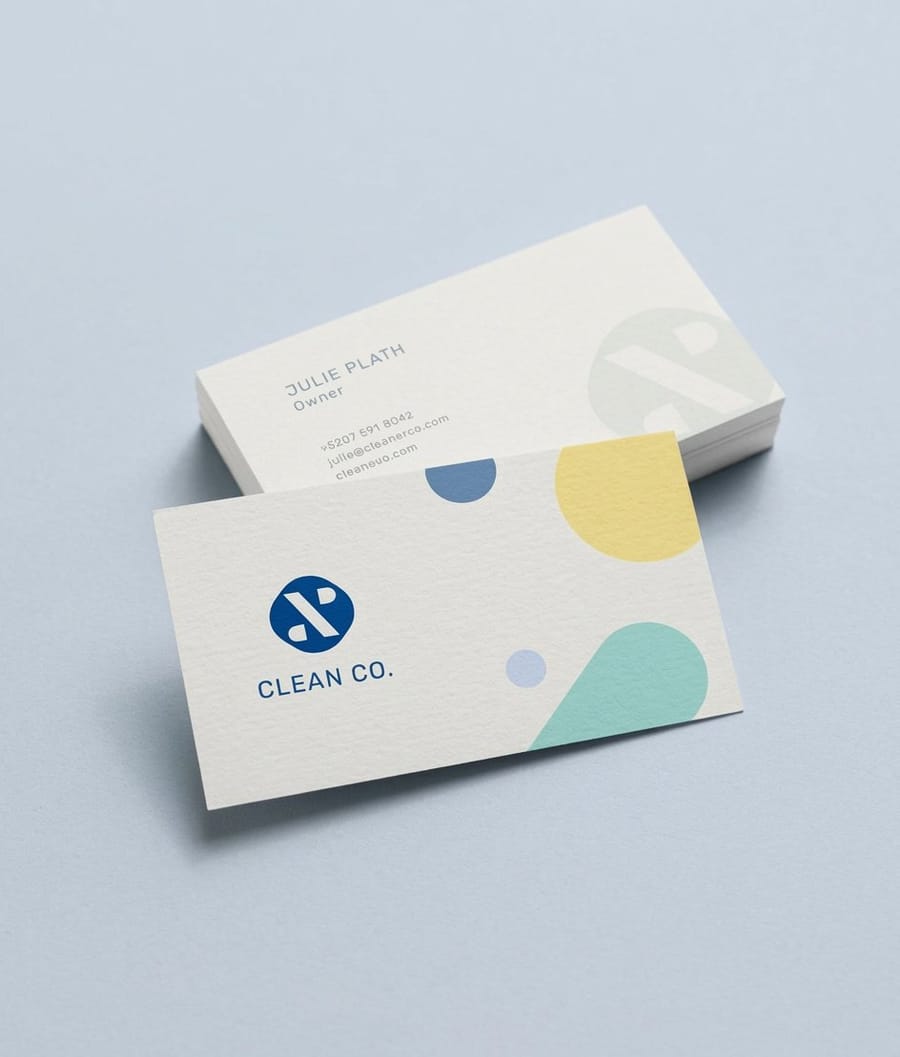
Compare the two on total cost per person reached, not on the price of the print run, because postage changes the arithmetic completely. Business cards at 4OVER4.COM start at $17.57 for a run, and that is the whole cost. You hand them out yourself.
A postcard campaign is printing plus postage plus a list, and postage is usually the biggest of the three. That is why the size question earlier matters so much: the difference between the postcard rate and the letter rate, multiplied by five thousand pieces, dwarfs anything you save by choosing a lighter stock.
It also means a postcard campaign is only as good as the addresses. A beautiful 6 by 9 mailed to a bought list of people outside your service area loses money, and no print decision rescues it. If you cannot answer who is on the list and why, spend the budget on business card printing and hand them to people who already walked past your door.
How to test without committing a budget
Start with a small card run and a single street. Print free business cards or a short run of custom business cards, work the accounts you already have, and see how many people actually keep them. Then mail one carrier route rather than the whole town, with a code or a dedicated phone number on the card so you can count what came back.
Untracked mail is the reason so many businesses believe direct mail does not work. A postcard with no code and no landing page tells you nothing, and after two rounds of nothing the format gets blamed for a measurement problem.
Business card pricing and specs at 4OVER4.COM
Card pricing moves with stock, finish and quantity, and the per unit cost drops sharply as the run grows. The numbers below come straight from the live configurator, so you can size the budget before you decide how much of it goes to postage.
Quantity and price
Business card pricing and specs
Real configurator numbers on classic business cards, where ordering deeper drops the cost of every card in the box.
| Quantity | Price Per Unit | Total |
|---|---|---|
| 100 | 17.6¢ | $17.57 |
| 200 | 11.5¢ | $23.07 |
| 300 | 9.15¢ | $27.46 |
| 400 | 7.96¢ | $31.86 |
| 500 | 7.25¢ | $36.26 |
| 600 | 6.77¢ | $40.64 |
You can also earn coins on every order and redeem them against future printing, which matters when you are running a card reprint and a mailing in the same quarter.
Stock and finish, what changes between the two
Both formats print on the same family of stocks, and the choice pulls in opposite directions. On a card, weight is the message: 16pt feels substantial in the hand and is the cheapest credibility you can buy, while 14pt is fine for a card that lives in a fishbowl by a till. On a mailed postcard, weight is a postage risk, because 16pt sits at the top of the 0.016 inch band and a heavy coating can tip the piece into the letter rate.
Print it
Classic business cards
The standard 3.5 by 2 card on premium stock, from $17.57 a run.
Coating decides what the piece can do after it is printed. Gloss and UV lift photography and shrug off handling, and they also refuse pen ink, which is why an appointment card needs a matte or uncoated back. Soft touch reads expensive and shows fingerprints on dark solids. If you want a card that is remembered for the material rather than the layout, bamboo and other eco stocks do that job, and if you run more than one venture from the same card, putting several businesses or logos on one card has rules worth reading before you lay it out.
Which one to choose, by business type
The right answer changes with how you meet customers, so here is the split by business type.
- Salons, clinics and studios. The card doubles as the appointment reminder, so order it with an uncoated or matte back that takes pen ink. A gloss or UV back looks smart and smears the moment somebody writes a time on it. Compare formats on the appointment card printing page before you commit the back of your card.
- Cleaning and home services. Cards for every job you finish, postcards for the four houses either side. Cleaning services business cards carry a service list on the back, which is the closest a card gets to a postcard offer.
- Artists, photographers and makers. Put the work on the piece. Artist business cards function as a mini portfolio at a fair, and a 5 by 7 postcard of one image works as a leave behind that people actually pin up.
- Real estate and local trades. Postcards win here because the audience is a geography rather than a list of names, and EDDM covers a whole route without buying addresses. The card still does the follow up after the viewing.
- Consultants and new businesses. Cards first, always. Reach is not the problem when you have twenty conversations a week and nothing to hand over at the end of them. Start with the business basics print collection and add mail once the offer is proven.
Templates and print-ready blanks
If you are not starting from a blank artboard, templates save the whole file prep round. 4OVER4.COM sizes its blanks to exact product specs, so bleed and trim are already marked and your type lands inside the safe area. Grab one from the blank template library before you open the file.
Start fast
Templates and print-ready blanks
Business card design templates and exact size blanks so your artwork lands inside the cut line.
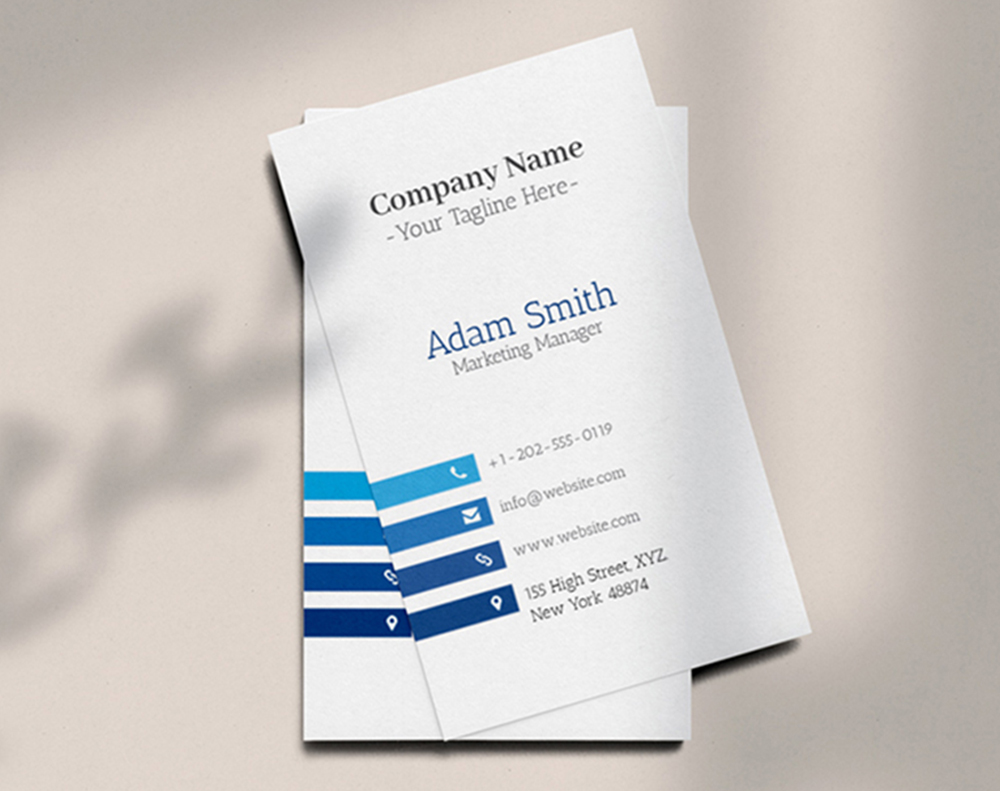
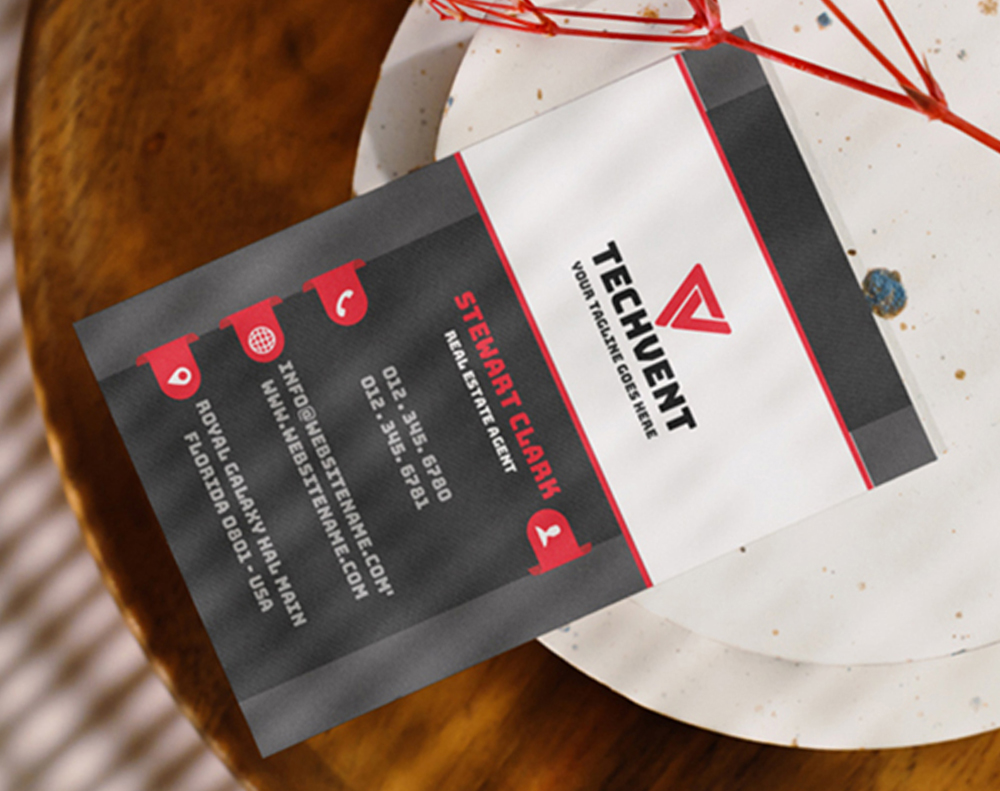
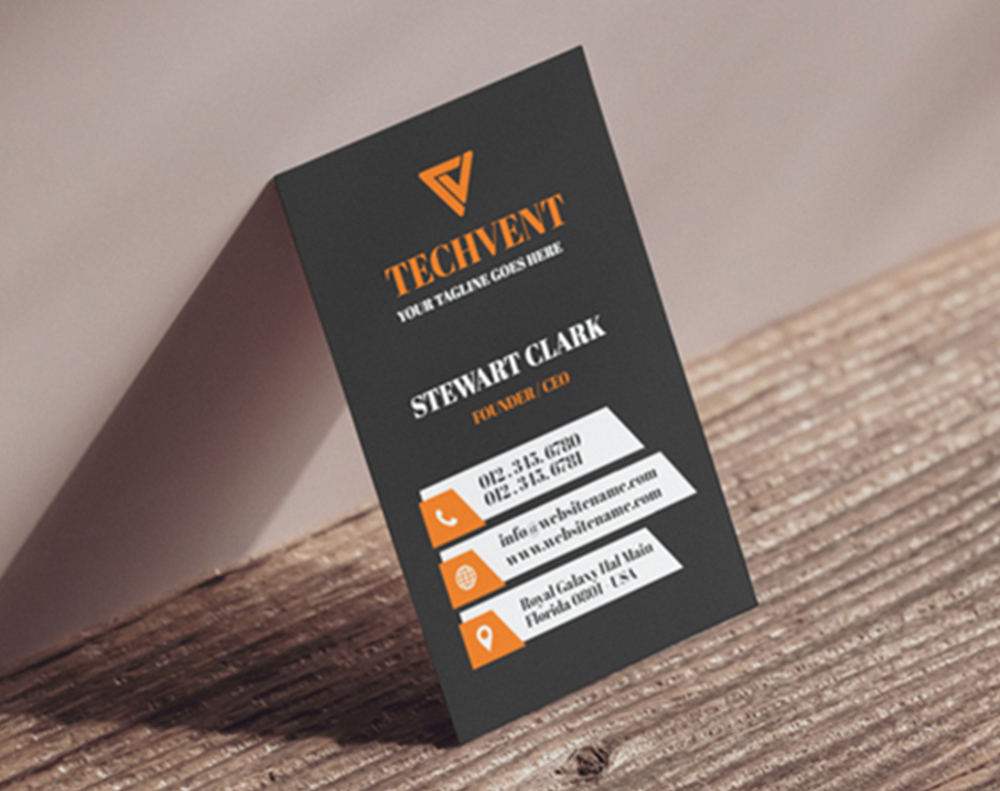
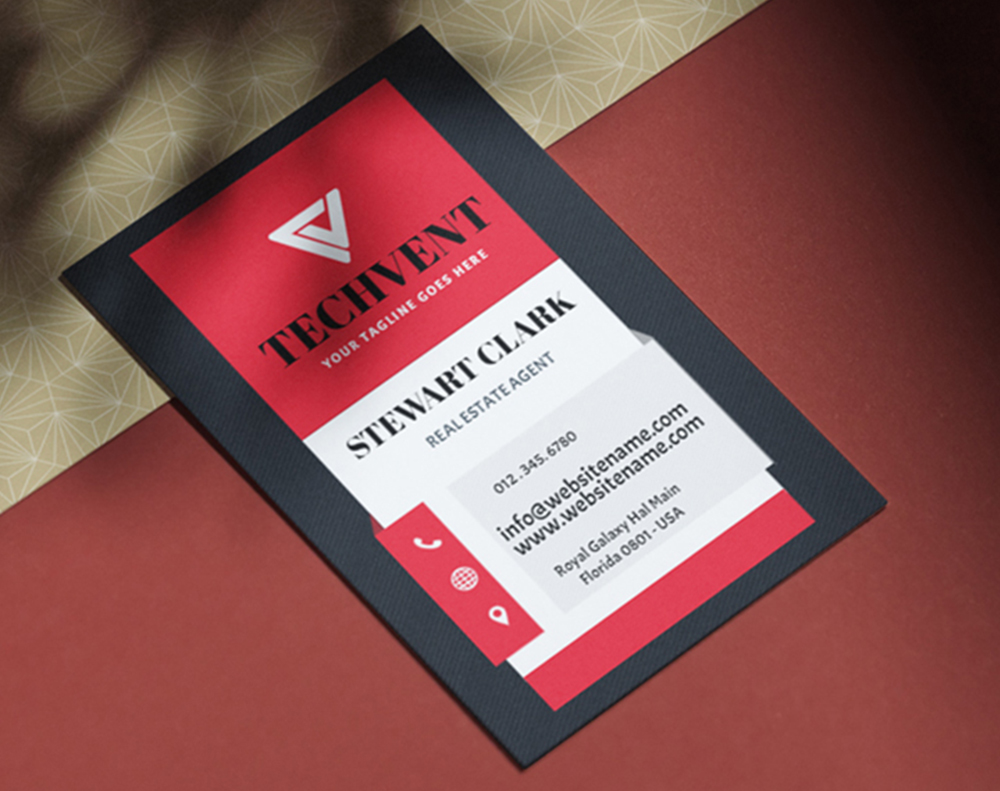

Wally sizes up the card against the postcard
One is for the handshake, the other is for the mailbox
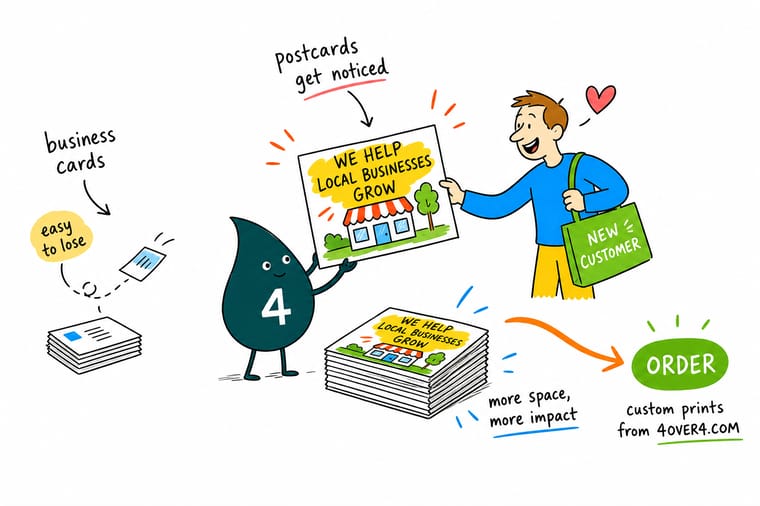
A business card is 3.5 by 2 inches, too small to mail on its own, and it earns its keep by surviving in a wallet. A postcard from 4 by 6 up to 6.5 by 9 carries the headline, the offer and the deadline, and the size you pick sets the postage you pay on every piece. Add 0.125 inch bleed, design at 300 DPI in CMYK, and 4OVER4.COM prints either one on premium stock.
Order business cards →What to remember about cards and postcards
Design rules that apply to both formats
- Give the card one job. Name, what you do in four words, one phone number, one link. A card crammed with services reads as a leaflet that shrank, and nothing on it gets remembered.
- Give the postcard a deadline. An offer with an expiry date gets acted on. An open ended offer gets put on the fridge and forgotten, and you never find out whether the mailing worked.
- Do not reuse one design for both. The aspect ratios and the reading distances are different. A business card is read at arm’s length by somebody who already met you, a postcard from across a hallway by somebody who did not.
- Check the back before you check the front. On a card the back is free space most people waste. On a mailed postcard the back is half owned by the Postal Service. Both decisions happen there, not on the front.
- Keep 0.125 inch bleed and 300 DPI on both. Same file prep either way. Artwork that runs to the edge needs bleed, small type needs to sit inside the safe area, and CMYK at 300 DPI keeps the colour where you put it.
Explore more
More ways to print and follow up
Related products, categories and reading on 4OVER4.COM, one card each, so you can keep planning.
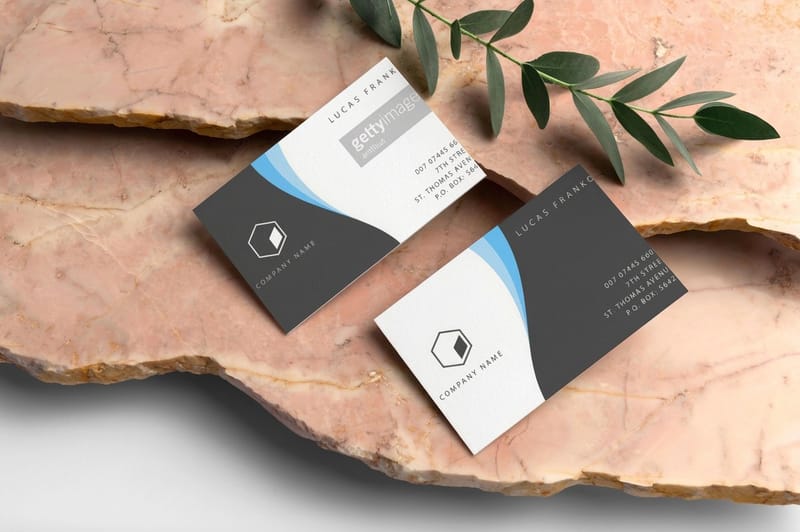 Product Classic Business Cards The standard 3.5 by 2 card, from $17.57 a run.
 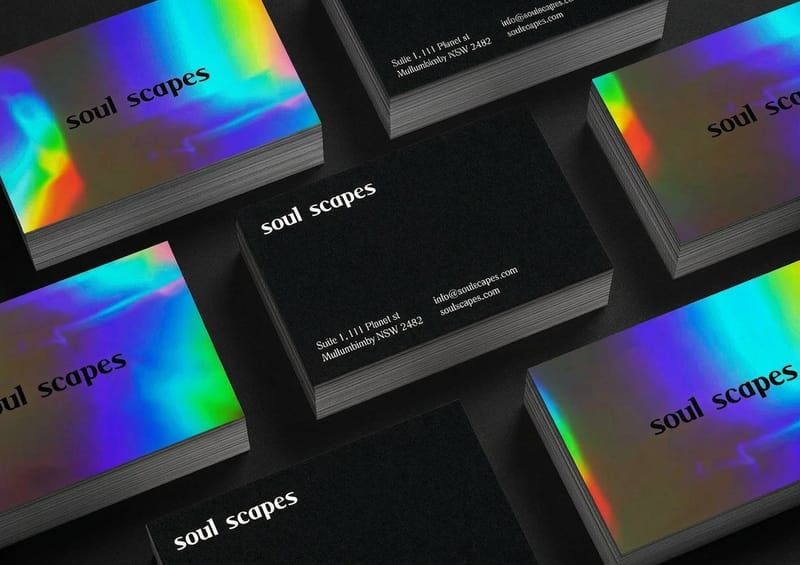 Product Custom Business Cards Your own size, stock and finish combination.
 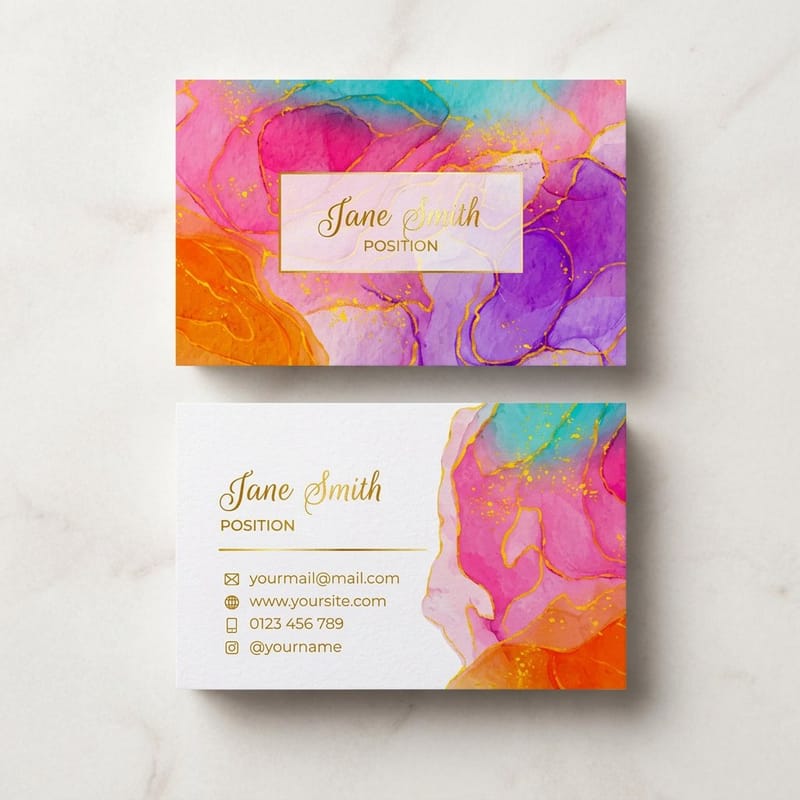 Product Artist Business Cards A mini portfolio you can hand over at a fair.
 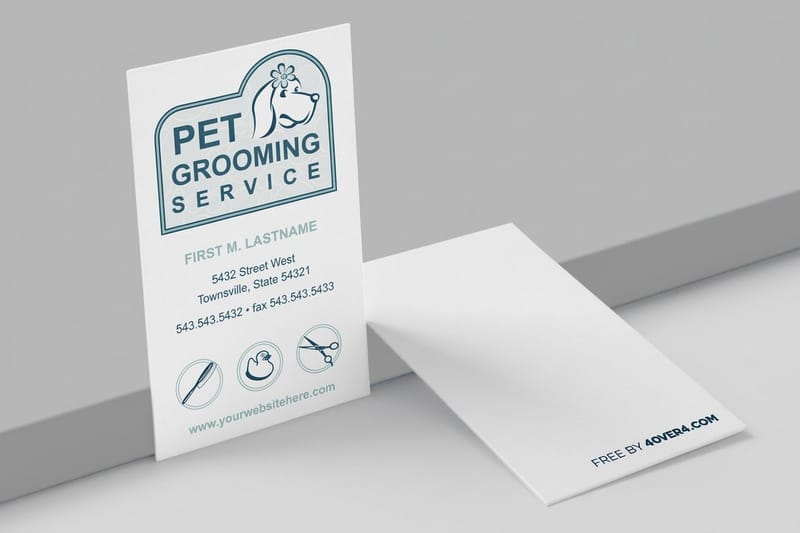 Product Free Business Cards Test a layout before you commit to a full run. Category Business Card Printing Every stock, finish and shape in one place.
 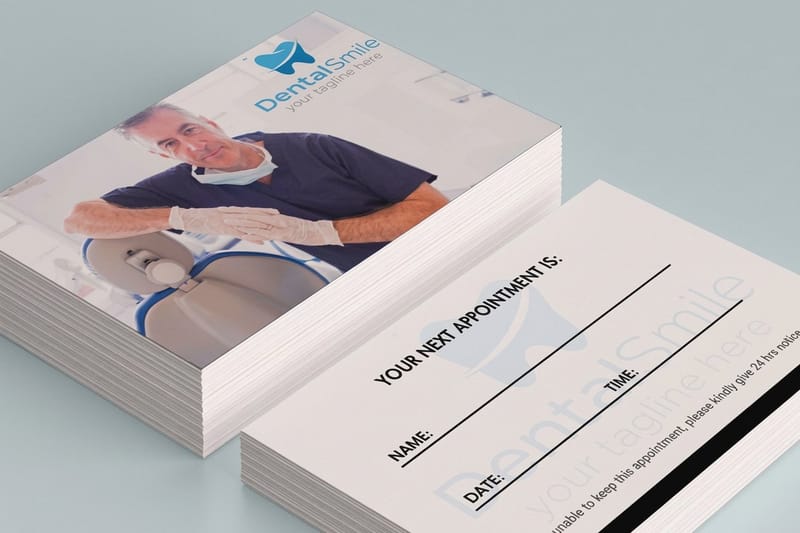 Category Appointment Card Printing Writable backs for booking the next visit.
  Guide Business Cards vs Postcards The spec by spec version of this comparison.
  Article 30 Amazing Business Card Designs Ideas worth stealing before you set your layout.
 Ready to print?
Pick your stock, drop in your design or a free template, and 4OVER4.COM prints it sharp on premium card, as fast as your deadline needs.
Common questions about cards and postcards
Can I mail a business card on its own?
No. The USPS minimum size for a mailable piece is 3.5 by 5 inches and a standard business card is 3.5 by 2, so it is under half the required length and will not be accepted loose in the mail stream. Your options are an envelope, a letter with the card attached, or printing the message on something that is mailable in the first place. If the point of the mailing is to get in front of people who have not met you, a postcard says more for the same postage, which is usually the honest answer to this question.
Which format actually gets a better response?
They are not measured the same way, which is why the comparison usually goes wrong. A postcard can carry a code, a dedicated phone number or a landing page, so you can count exactly what came back from a mailing. A business card has no campaign attached to it and its returns arrive weeks later from somebody who kept it in a wallet, so it never shows up in a report. The practical position is that postcards are the measurable channel and cards are the one that quietly converts people you already met. Run the postcard with tracking and judge it on its own numbers rather than against the card.
What postcard size should a small business start with?
4 by 6 if the budget is tight, because it is the largest size that still qualifies for the First-Class Mail postcard price and the postage saving compounds across the whole run. Move up to 6 by 9 when you need the piece to stand out inside a stack of envelopes and the offer justifies the letter rate. Go to 6.5 by 9 only if you are mailing EDDM to a whole carrier route, since that size clears the 6.125 inch height the flat classification needs.
Can I use the same artwork for both a card and a postcard?
The front image can carry across, but the layout cannot. A business card is read at arm’s length by somebody who already knows what you do, so it needs a name and a way to reach you and very little else. A postcard is read at a distance by a stranger, so it needs a headline they can take in at a glance, one clear offer and a deadline. Scaling a card layout up to postcard size leaves you with a lot of empty space and no reason to act, and shrinking a postcard down makes the type illegible.
Is it legal to put business cards in mailboxes?
No. Under 18 U.S.C. 1725 it is a federal offence to place any unstamped item in a mailbox, and the rule covers cards wedged into the box, tucked under the flag, or stuffed behind it. The legal alternatives are a doorknob hanger, a hand delivered flyer left at the door, or paying postage and mailing the piece properly. We cover the specifics, and where the line actually falls, in our guide on business cards in mailboxes.
