
Business Cards With Multiple Businesses or Logos


Running two businesses, or pairing two logos on one card? Split them across the front and back, give one brand the lead, and keep a single shared contact block. Here is how to design, print, and order it right.
To put multiple businesses or logos on one business card, lead with one brand and support it with the other. The cleanest approach is a front-and-back split, with each business owning one face and a single shared contact block tying them together. Use clean vector logos so both stay sharp at small sizes, pick a heavier stock so the pairing looks intentional, and order the whole run at once for a matched finish. 4OVER4.COM prints everything from a single custom card to a full team order.
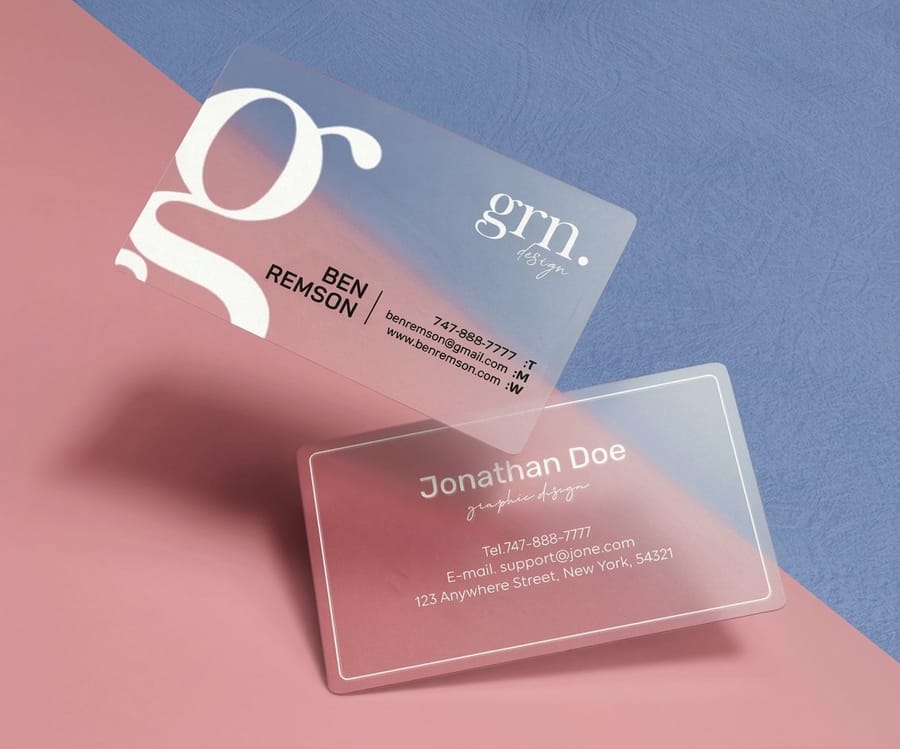
Quick tips
Quick tips for cards that carry two brands
Lead with one brand and let the second support it. Split two businesses across the front and back, share a single contact block, and use clean vector logos so both marks stay crisp at card size. Print on a heavier stock so the pairing reads as deliberate, and order every employee's card in one run for a matched finish. 4OVER4.COM handles a single dual-brand card or a full team order on the same business cards line.
What a business card with multiple businesses or logos actually is
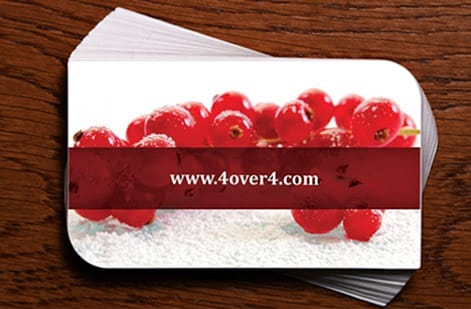
A multi-business card does exactly what the name suggests. It carries more than one company, brand, or logo on a single piece of cardstock, so one card speaks for everything you run. Some people split two ventures across the front and back. Others keep a primary brand up top and tuck a smaller secondary logo into a corner. There is no single correct layout, only the one that matches how you introduce yourself.
The idea shows up in a handful of situations. A founder juggling two side businesses wants a card that covers both without carrying two stacks. A franchise owner needs the corporate logo and their own location badge together. A salon that rents chairs to independent stylists wants the shop mark and each stylist's name on one shared template. In every case the goal is the same: hand over one card and cover the whole story.
If you are starting from a blank page, the business card basics guide walks through the anatomy of a card first. 4OVER4.COM prints every layout below on the same business cards line, from a single custom card to a full team run.
Why one card for two businesses (or two logos) works
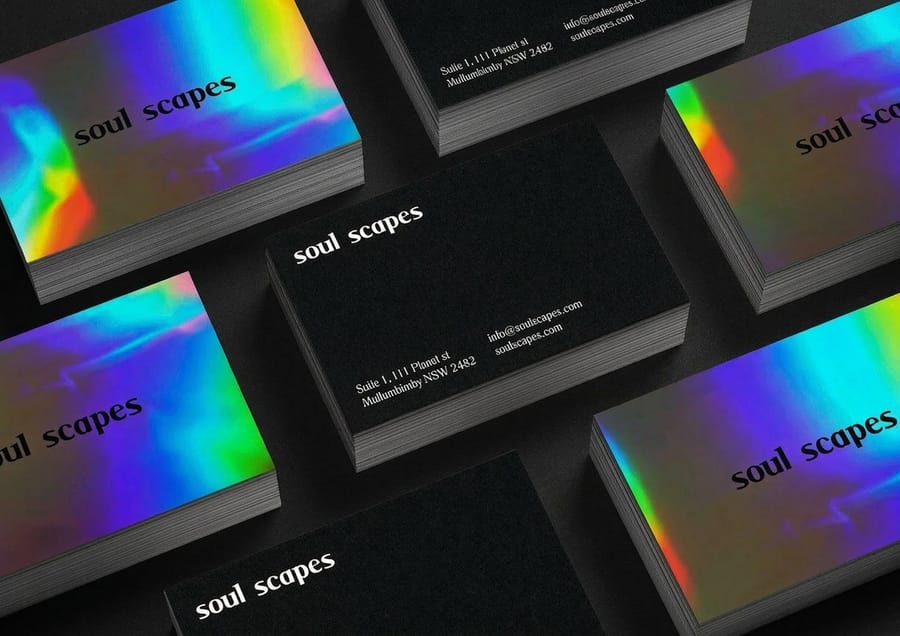
The obvious win is cost. One order, one design pass, one shipment instead of two. But the real advantage is the conversation. When you hand someone a single card that shows both a photography studio and a video arm of the same business, you plant the idea that they are getting one person who does two things well. Two separate cards can feel like two separate strangers.
- One card, two doors. A prospect who came for the first business now sees the second without you having to pitch it.
- Cheaper per contact. You print, carry, and reorder a single card, which matters when you are handing out hundreds at an event.
- Consistent brand voice. Both logos share the same paper, finish, and type, so the pairing looks intentional rather than improvised.
- Less to carry. No digging through your wallet to find the right card for the right person.
There is a ceiling on how much you can stack before a card turns into clutter, and we get to that below. For the pricing side of pairing brands on nicer stock, the bulk discount tiers at 4OVER4.COM are what make a two-logo run on premium paper affordable.
Who should use business cards with multiple businesses or logos

Not everyone needs a dual-brand card, but for a few groups it is the obvious move.
Entrepreneurs running more than one venture. If you own a coffee cart in the morning and consult on the side, one card that carries both saves you from deciding which hat to wear before you have even shaken a hand. Put the shared contact details in the middle and let each brand claim its own corner.
Freelancers and multi-hyphenates. A writer who also shoots photography, a developer who also designs, a stylist who also teaches. Your name is the constant, and the two disciplines sit under it as logos or short labels. The logo prep guide is worth a read here, because two marks at small sizes need clean files to stay sharp.
Networkers, franchisees, and team members. Real estate agents pair a personal brand with the brokerage logo. Franchise owners run the national mark beside their own location. Anyone crossing between two worlds benefits from a card that opens both. For a wider look at what earns attention when you hand a card over, see why business cards still matter.
How to lay out a card that carries two businesses or logos
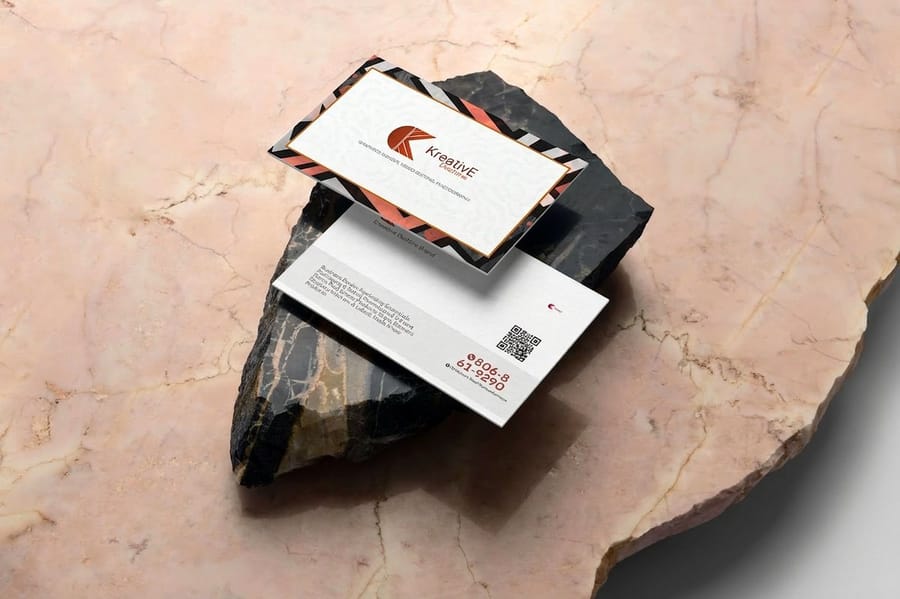
The whole trick is hierarchy. A card with two logos and no clear order reads like a ransom note. Give one brand the lead and let the other support it, or split them cleanly so the eye always knows where to land.
Three layouts do most of the work:
- Front and back split. Business one owns the front, business two owns the back. The cleanest option, and it gives each brand a full canvas. This is where a foldover card shines, since it hands you four panels instead of two.
- Primary and secondary. One logo leads at the top, the second sits smaller near the bottom or in a corner. Best when one business is your main gig and the other is a sideline.
- Balanced pair. Two logos of equal weight, side by side, with shared contact details centered below. Works when the businesses are genuine equals.
Keep the contact block shared wherever you can. One phone number, one email, one site saves space and spares the reader from wondering which line belongs to which brand. When you are ready to place everything, the free online designer lets you drag both logos into a real template, and the formatting guide covers bleed and safe margins so nothing gets trimmed off.
Three layout templates for a two-business card
Here are the same three layouts drawn panel by panel, so you can hand a designer a spec instead of a description. All three fit the standard 3.5 by 2 inch card, and all three assume one shared contact block.
Template 1: the front and back split. Front panel: business one only, logo in the upper third, business name beneath it, then your name and title. Back panel: business two on the same grid with the same margins and its logo in the same upper third, so the two faces line up when the card is flipped. The shared contact block, one phone number, one email, one site, sits at the foot of the front panel, and the back carries only what belongs to the second brand, such as a short service line or a second address. On a foldover card this becomes four panels: outside front for brand one, outside back for brand two, and the two inside panels for the detail neither brand had room for. Whether the extra print side earns its place is covered in the double-sided card breakdown.
Template 2: the dual-logo front. Both marks sit on the front, on one baseline, separated by a thin vertical rule or a clear gap of white space rather than crowded together. Set them to the same optical height rather than the same measured height, because a wide horizontal logo and a tall stacked one look nothing alike at identical heights. Your name sits centered under the pair, the shared contact block under that, and the back stays clean or takes a single line saying what each brand does. Use this one only when the two businesses are genuine equals; if one leads, drop the second mark smaller into a corner instead. Two marks reproduced that small need clean files, which the logo prep guide walks through.
Template 3: the QR pivot. The front carries the lead brand alone at full size with your name and direct line. The back carries the second brand's logo at the top and a QR code below it that routes to that business, so the card covers one venture in print and the other on screen. Keep the code well inside the safe margin with a quiet zone of plain stock around it so trimming and finishing never bite into the pattern, and favor a matte or soft-touch finish, which scans more reliably than high gloss under indoor light. More ideas for that second face are in the what to put on the back guide.
Whichever template you pick, build it once and reuse it for every person on the card. Drop both logos into the free online designer, then check the file against the formatting guide for bleed and safe margins before it goes to print.
Print your two-brand card
Once the layout is settled, the print choice comes down to how many panels each brand needs and which business is leading.
- 4OVER4 business cards. The default for a card carrying two brands: the standard 3.5 by 2 inch size, printing on both faces, and stock, size and finish set by you. Custom business cards start at $17.57 and the per-card cost drops as the quantity climbs, so print the run for both businesses in one go instead of two small runs.
- Foldover business cards. Four panels instead of two, so each business gets a full face and the two inside panels carry the detail neither brand had room for. The pick when neither venture will accept second billing.
- Classic business cards. The straightforward run when one business clearly leads and the second only needs a logo and a line in the corner. A heavier stock or a laminated finish still makes the pairing look deliberate rather than improvised.
Order every version in a single batch so the stock, color and finish match across both brands. Two separate small orders cannot guarantee that, and a mismatched pair of cards undoes the point of carrying both.
Using the back of the card for a second business

The back of a card is prime real estate, and most people waste it. If you run two businesses, the back is the natural home for the second one. Give it the same layout logic as the front so the two sides feel like a matched set rather than two unrelated cards glued together.
A double-sided approach keeps each brand uncluttered because neither has to share a face. The double-sided card breakdown covers when the extra print side is worth it, and the what to put on the back guide has ideas beyond a plain logo, like a short service list or a QR code that routes to whichever site the reader taps.
One caution: print the shared contact details clearly on at least one side. It is surprisingly easy to design two beautiful logo faces and forget the phone number entirely.
Ordering business cards for multiple employees
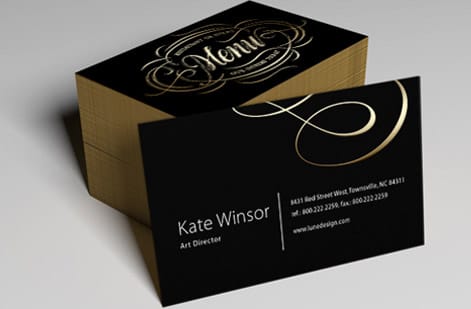
Cards for a whole team are a slightly different problem. The brand stays fixed and only the name, title, and direct line change from card to card. The efficient way to handle it is one locked template plus a name list, so every employee's card is identical except for their own details.
- Lock the shared elements. Logo, colors, address, and the general office number stay the same on every card.
- Vary only the personal block. Name, title, cell, and direct email are the fields that change per person.
- Order in one run. Batching every employee's cards together keeps the stock, finish, and color identical, which a series of small separate orders cannot promise.
Because a team order is a volume order, it is exactly where 4OVER4.COM bulk pricing pays off, and you can pair the cards with matching letterhead and envelopes from the business stationery range. For how many to print per person, the how many business cards to order guide gives a sensible starting count based on how often each person is out meeting people.
Preparing multiple logos so both print sharp
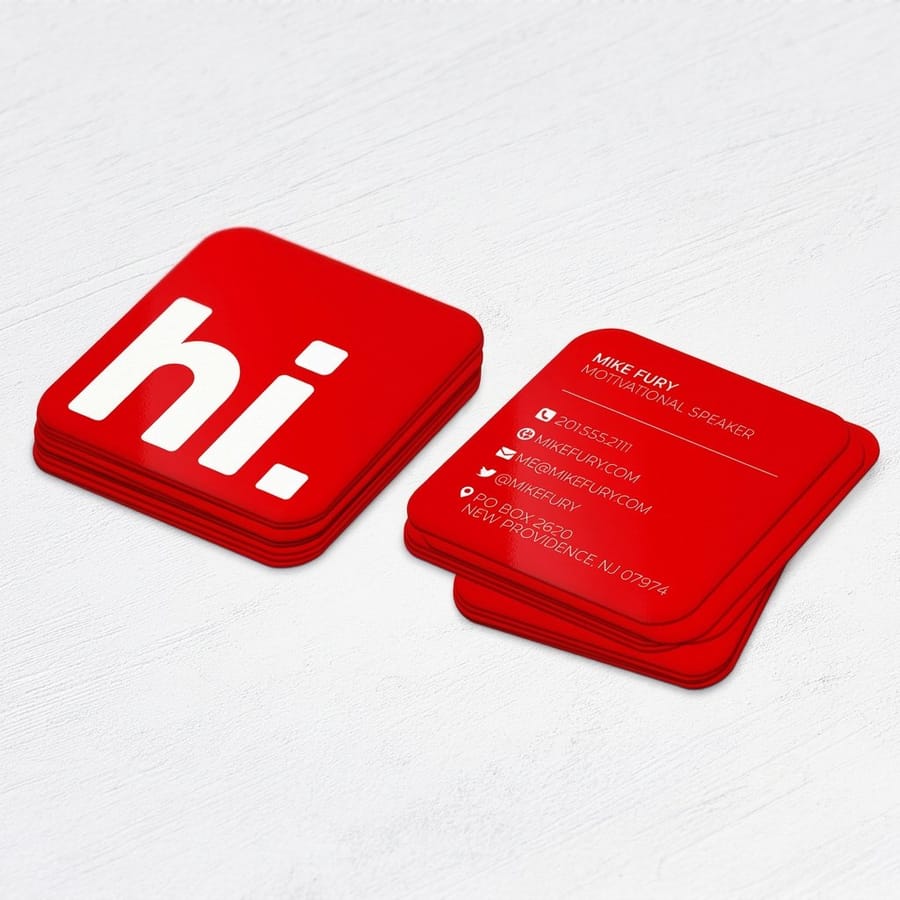
Two logos on one small card means two chances for a blurry, pixelated mark. The fix is boring but it works: use clean vector files, not a screenshot pulled off a website. A logo built as vector art scales down to a corner badge without losing an edge.
Watch the sizing. A logo that looks fine on a screen can turn into a smudge at the size of a thumbnail. Give each mark enough clear space so it does not crash into type or into the other logo. If the two brands use clashing palettes, consider printing one in a single ink or a knocked-out version so the pairing looks deliberate instead of accidental.
The logo prep guide covers file formats, resolution, and safe margins in detail. If you do not have polished logo files yet, the free design templates and the free template guide give you a clean starting frame to drop both marks into.
Common mistakes on multi-business cards
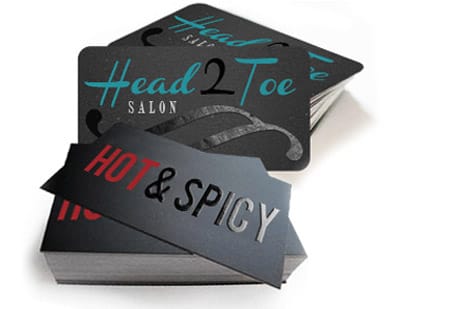
Most weak dual-brand cards fail the same handful of ways. Steer around these and yours will read clean.
Cramming both businesses onto one side. Two full logos, two taglines, and two service lists on a single face is too much. Split across front and back, or demote one brand to a supporting role.
No hierarchy. When both logos shout at the same volume, the reader cannot tell which business you actually lead with. Pick a lead unless the brands are truly equal.
Mismatched contact info. Two phone numbers, two emails, and two sites with no labels leaves people guessing. Share one contact block whenever the businesses share a phone.
Cheap stock for a premium pitch. If you are presenting two brands at once, flimsy paper undercuts both. A heavier classic card or a laminated finish signals that both ventures are serious. For the content and finish tradeoffs, the card content tips and the design and finish gallery show what different stocks and coatings look like in hand.
Wally explains two-brand cards
One card, two businesses, zero confusion
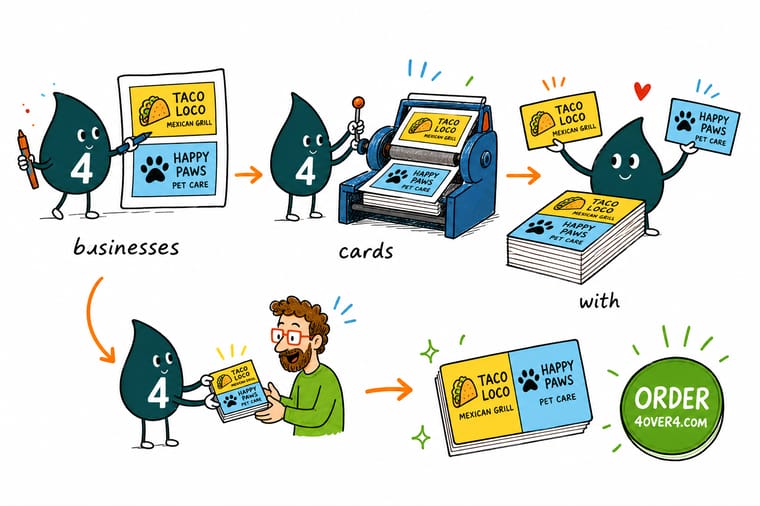
Wally thinks of a two-brand card like a duplex: two front doors, one shared address. Lead with the business you push first, give the second one the back of the card, and run a single contact block so nobody knocks on the wrong door. Use clean vector logos and a stock with some weight, and one card quietly does the work of two. When you are ready, build it in the browser and 4OVER4 prints it.
Design your business card →Specs and pricing
Custom business card specs and pricing
Fully custom cards give you the open canvas a two-brand layout needs. Here is what a custom card offers at 4OVER4.COM, with live specs and price-per-unit straight from the configurator, so you can see how the tiers work for a single card or a team run.

| Quantity | Price Per Unit | Total |
|---|---|---|
| 100 | 17.6¢ | $17.57 |
| 200 | 11.5¢ | $23.07 |
| 300 | 9.15¢ | $27.46 |
| 400 | 7.96¢ | $31.86 |
| 500 | 7.25¢ | $36.26 |
| 600 | 6.77¢ | $40.64 |
| 700 | 6.43¢ | $45.04 |
| 800 | 6.18¢ | $49.43 |
Print it
Cards that carry more than one brand
See it in use
Real business card work, printed in-house
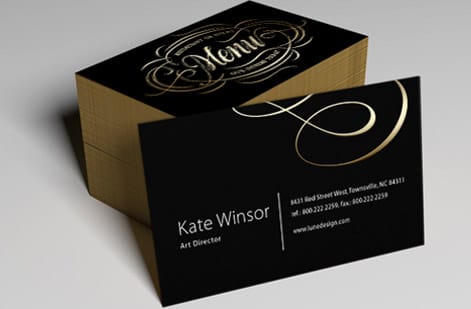
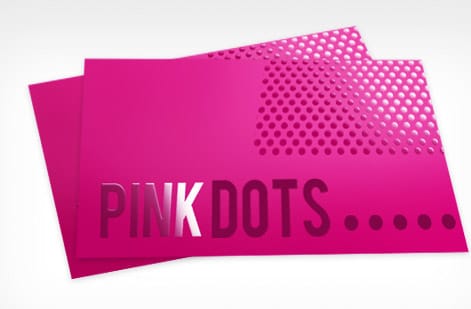
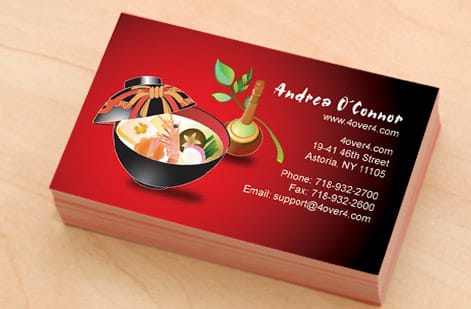
Explore more
Where to go next
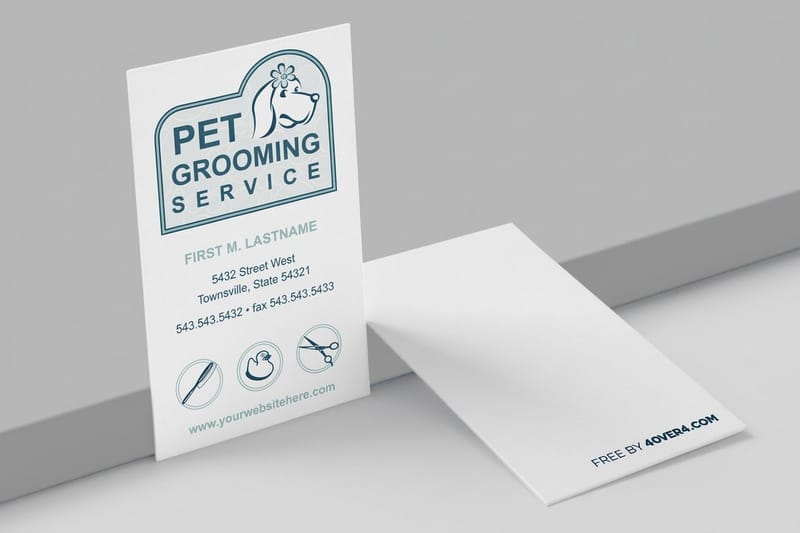
By the numbers
Printing you can count on at 4OVER4
Common Questions
Common questions about multi-business cards
Can I put two businesses on one business card?
Yes. Put one business on the front of the card and the second on the back, a front-and-back split, so each brand gets a clean, full face and neither one crowds the other. That is the most common approach, and it fits the standard 3.5 by 2 inch card without shrinking either logo. If you would rather keep everything on one side, lead with your primary business at the top and place the second logo smaller near the bottom, then run one shared contact block, one phone number, one email, one site, so nobody has to work out which line belongs to which brand. When both businesses need real room, a foldover card gives you four panels instead of two. The key either way is a clear hierarchy so the reader knows which brand you lead with.
Who should use a business card with multiple businesses or logos?
Entrepreneurs who run more than one venture, freelancers who wear two hats such as a photographer who also edits video, franchise owners who pair a national mark with their own location, and anyone networking across two worlds. If handing someone a single card can open two doors instead of one, a multi-brand card is worth it. Real estate agents pairing a personal brand with a brokerage are a classic example.
How do I order business cards for multiple employees?
Lock one template with the shared brand elements, then change only the personal block for each person: name, title, direct line, and email. Order 4OVER4 business cards for the whole team in one batch so the stock, color, and finish are identical across every card, which separate small orders cannot guarantee. If the card carries a second logo, keep it in the same position on every version, so a stack of team cards still reads as one company rather than a set of one-offs. Because a team run is a volume order, it is also where 4OVER4.COM bulk pricing lowers the per-card cost: custom business cards start at $17.57 and the price per card falls as the quantity climbs.
How much do business cards for multiple employees cost, and how is pricing set?
Price is driven by quantity, paper stock, size, and finish rather than by how many logos or names you print. Custom business cards at 4OVER4.COM start at $17.57, and the per-card cost drops sharply as your order quantity climbs, which is what makes a full team order economical. The live price table on this page pulls the current price-per-unit straight from the configurator so you can see how the tiers work.
What sizes, stocks, and finishes work best for multi-business or multi-logo cards?
Standard 3.5 by 2 inch cards handle two brands comfortably when you split them across the front and back. A heavier stock or a laminated finish makes a two-brand pairing look deliberate rather than improvised, which matters when you are presenting two ventures at once. Foldover cards give you four panels instead of two, so they are a strong pick when each business needs real room.
Is it better to use the front and back for two businesses, or fit both on one side?
Front and back is usually cleaner because each business gets its own face with no crowding. Keep both on one side only when one business is clearly primary and the other is a small sideline, in which case a lead logo up top and a smaller secondary mark below works well. Whatever you choose, make sure the shared contact details appear clearly on at least one side.
How many logos can I fit on a business card without it looking cluttered?
Two logos is the comfortable ceiling for a standard card, and even then they need breathing room and a clear hierarchy. Three or more marks almost always read as clutter unless you split them across the front and back. Give every logo clear space so it does not crash into type or into another mark, and consider printing a secondary logo in a single ink so the pairing looks intentional.
Get Started
Ready to put both businesses on one card?
Drop in both logos, split them across the front and back, and we print a crisp, heavyweight card that carries your whole story.
Legal Disclaimer
Gold Standard guarantees apply to all standard orders placed through 4over4.com. Price match requires verifiable proof of a competitor's published price for an equivalent product with matching specifications and turnaround time. Satisfaction guarantee covers manufacturing defects and print quality issues. Contact support with order number and documentation. On-time delivery rate based on tracked orders 1999 to 2026. Individual results may vary based on shipping carrier performance.
