
Are Two Sided Business Cards Worth It? 2026 Specs and Verdict


Are double sided business cards good, and when should you use them?
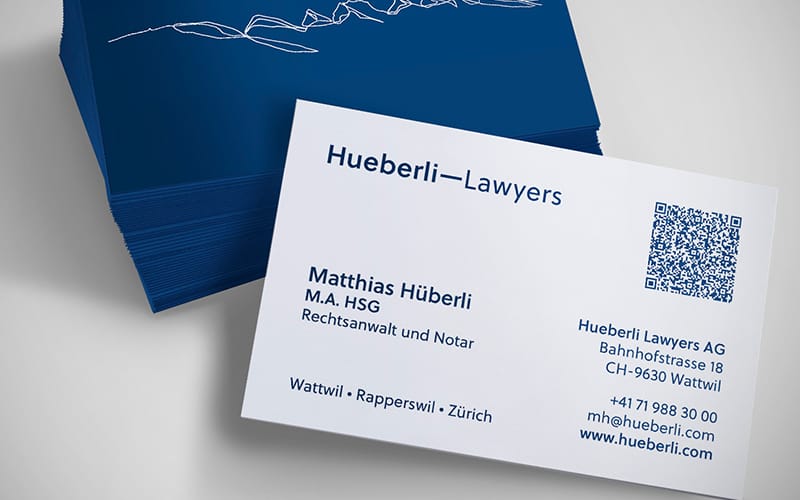
Double sided business cards are one of the smartest upgrades you can make to your networking toolkit. They give you twice the printable real estate on a standard card, so you share contact details on one side and your brand story, services, or a QR code on the other. 4OVER4.COM has printed over 10 billion cards for more than 150,000 businesses, and double-sided printing stays one of the most requested options across every industry.
If you have been wondering whether double sided business cards are good for your brand, the short answer is yes, almost always. A single-sided card wastes 50 percent of your available space. That is prime real estate you are leaving blank. The back of your card can work just as hard as the front, turning a simple introduction into a mini marketing piece people actually keep. When you are exploring custom business card printing options, choosing double-sided is one of the easiest ways to get more value from every card you hand out.
Double sided business card specs and pricing
Before the design talk, here is what you are actually ordering. Double-sided printing is available across every card stock at 4OVER4.COM, so nothing in this table asks you to give up a paper or a finish to get the second side.
| Spec | What you get |
|---|---|
| Trim size | 3.5 by 2 inches, the standard US card, with 0.125 inch of bleed on all four sides |
| Stock | 14pt cardstock, 16pt for the credit-card feel, 32pt ultra-thick when the card has to be kept |
| Printing | Full color on both sides, with no change to the stock or finish options |
| Finishes | Matte, gloss, and soft-touch, plus foil and lenticular on the specialty cards |
| Quantities | 250, 500, and 1,000, with the per-unit cost dropping sharply at each step |
| Cost of the second side | Pennies more per card, because the stock, the cutting, and the shipping are already paid for |
Start with standard business cards for 14pt or 16pt in a straightforward matte or gloss, and move to premium business cards when the card needs the extra thickness and a finish people comment on. Live pricing for each quantity shows on the product page as you pick stock, finish, and turnaround.
Why a blank card back is a missed opportunity
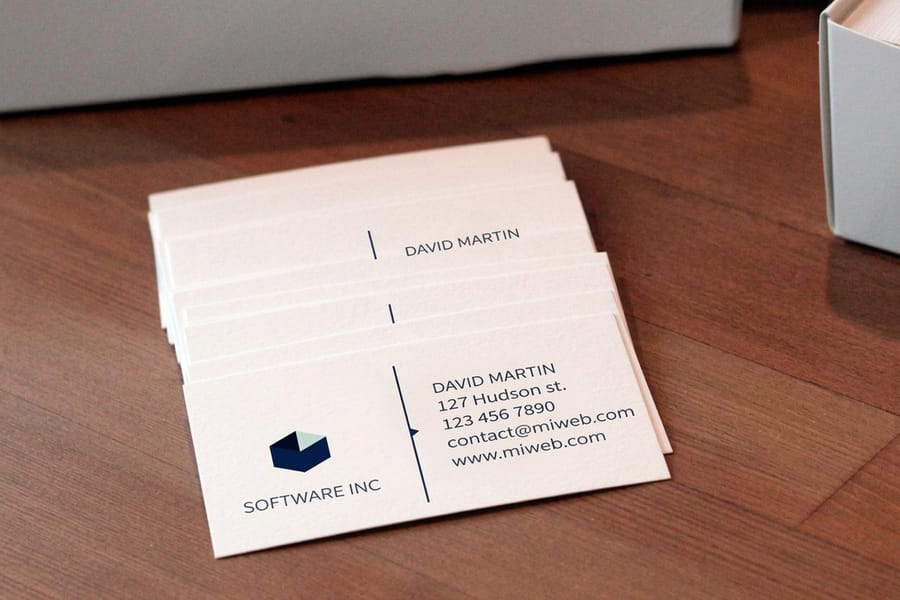
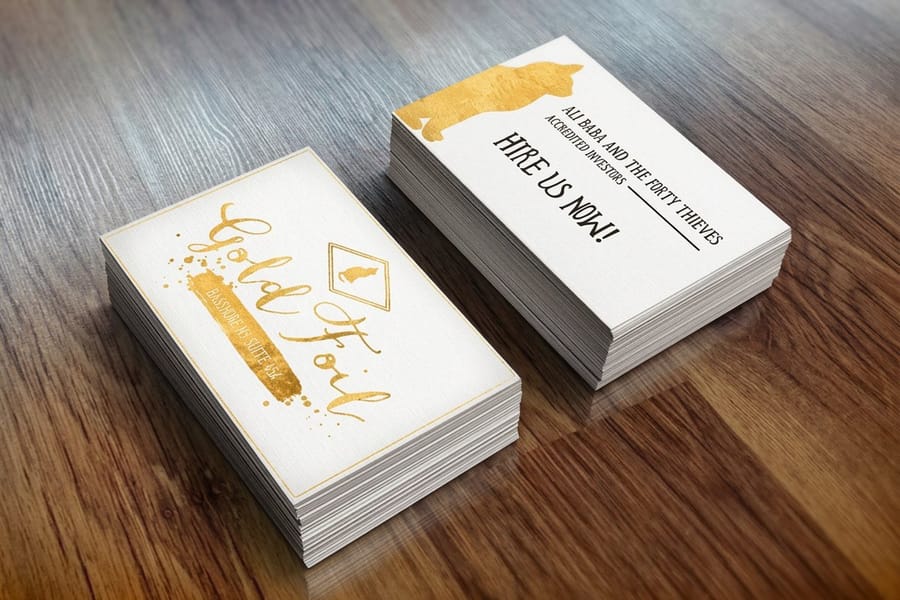
Think about what happens when someone hands you a business card. You glance at the front, then you flip it over. If the back is blank, that moment of curiosity goes nowhere. A double-sided card catches that natural flip and delivers something useful, a tagline, a list of services, a special offer, or a scannable QR code.
That extra side is not just decorative space, it is functional. You can use it to direct people to your website, highlight a promotion, or reinforce your brand colors and logo. The psychology is straightforward. People engage more with objects that have content on both sides. A blank back feels unfinished, while a printed back feels intentional and professional, and this look at what to put on the back of a business card turns that empty side into another moment of engagement.
Print it
Standard business cards, front and back
Preset sizes and premium stocks, with double-sided printing the fastest way to put both surfaces to work.
What goes on the back? Smart layout ideas
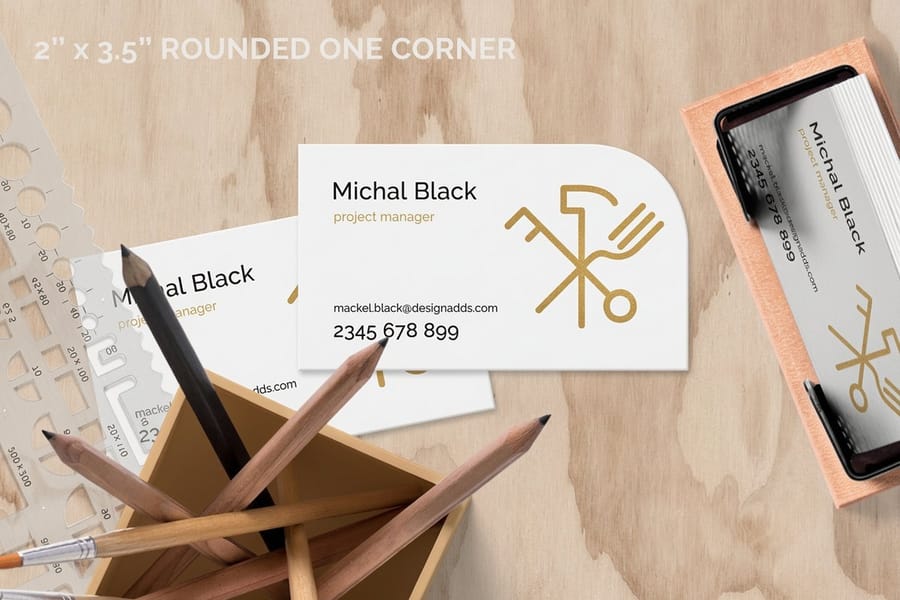
The front of your card handles the basics, your name, title, phone number, email, and company logo. That part is non-negotiable. The back is where you get strategic. Here are the most effective uses for that second side.
- QR codes. Probably the single best use of back-side real estate right now. Link to your portfolio, booking page, or profile, and dedicated QR Code Business Cards give you trackable follow-up in one scan.
- Service lists. Three to five bullet points spell out what you do so nobody has to guess. For balanced, clean layouts, study this classy business card design inspiration.
- Brand storytelling. A short tagline, mission statement, or a compelling statistic makes the card memorable. Think of the back as your elevator pitch in print.
- Maps or directions. For a restaurant, salon, or retail shop, a small map or cross-street address helps people find you without pulling out their phone.
- Social media handles. Match the platform to your audience, Instagram for photographers, LinkedIn for B2B, and keep only the handles where clients actually engage with you.
Double sided vs single sided, the real comparison
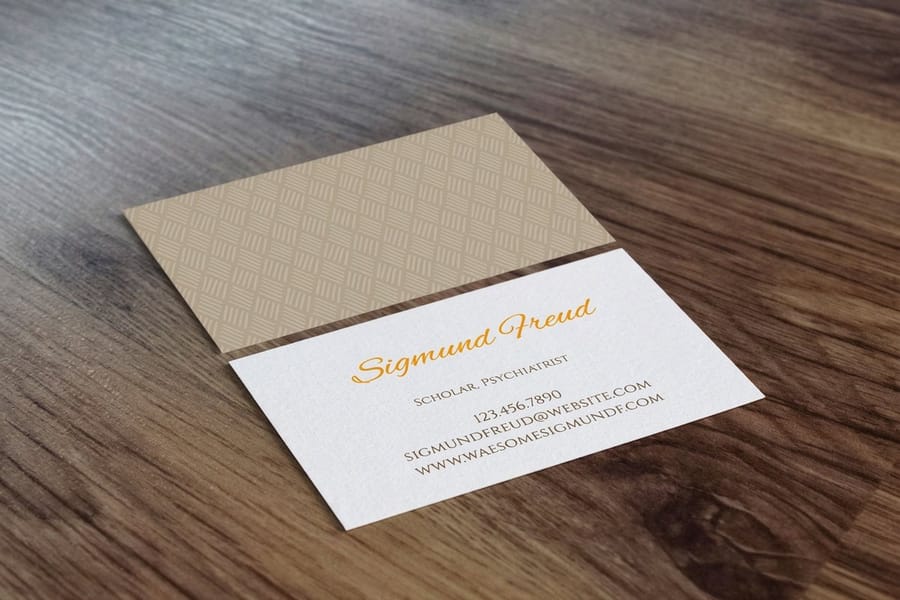
| Factor | Single sided | Double sided |
|---|---|---|
| Usable space | 3.5 by 2 inches, one face | Twice that, and the second face can do a different job from the first |
| Cost per card | Marginally lower | Pennies more, since the stock, cutting, and shipping are already paid for |
| Design effort | One layout to get right | Two layouts that have to share a palette, a typeface, and a purpose |
| Writing on the back | Blank and uncoated, so it takes a pen | Printed, and a coated back resists ink unless you leave an uncoated area for notes |
| Best fit | An ultra-minimalist card carrying a name and a number | Almost everyone else, and anyone with a QR code, a service list, or an offer |
Single-sided cards are not bad, they are just limited. If your brand is ultra-minimalist and you literally only need a name and phone number, a single side can work. For most professionals, that is not enough information to be useful.
The cost difference between single and double-sided printing is minimal. You are already paying for the paper stock, the cutting, and the shipping, so adding ink to the second side costs a fraction more. At 4OVER4.COM, double-sided printing is available across all card stocks, so you never sacrifice paper quality or finish options to get both sides printed.
Here is where it gets interesting. Double-sided cards do not just carry more information, they also feel more complete in the hand. When both sides have full-color printing, the card reads as more polished, and people are less likely to toss a card that looks like real thought went into it. For a premium take, 3D Lenticular Business Cards push double-sided design even further with animated visual effects that demand attention.
Compare formats
Popular business cards, side by side
Stock, finish, quantity, turnaround, and from-price across our most-ordered cards.
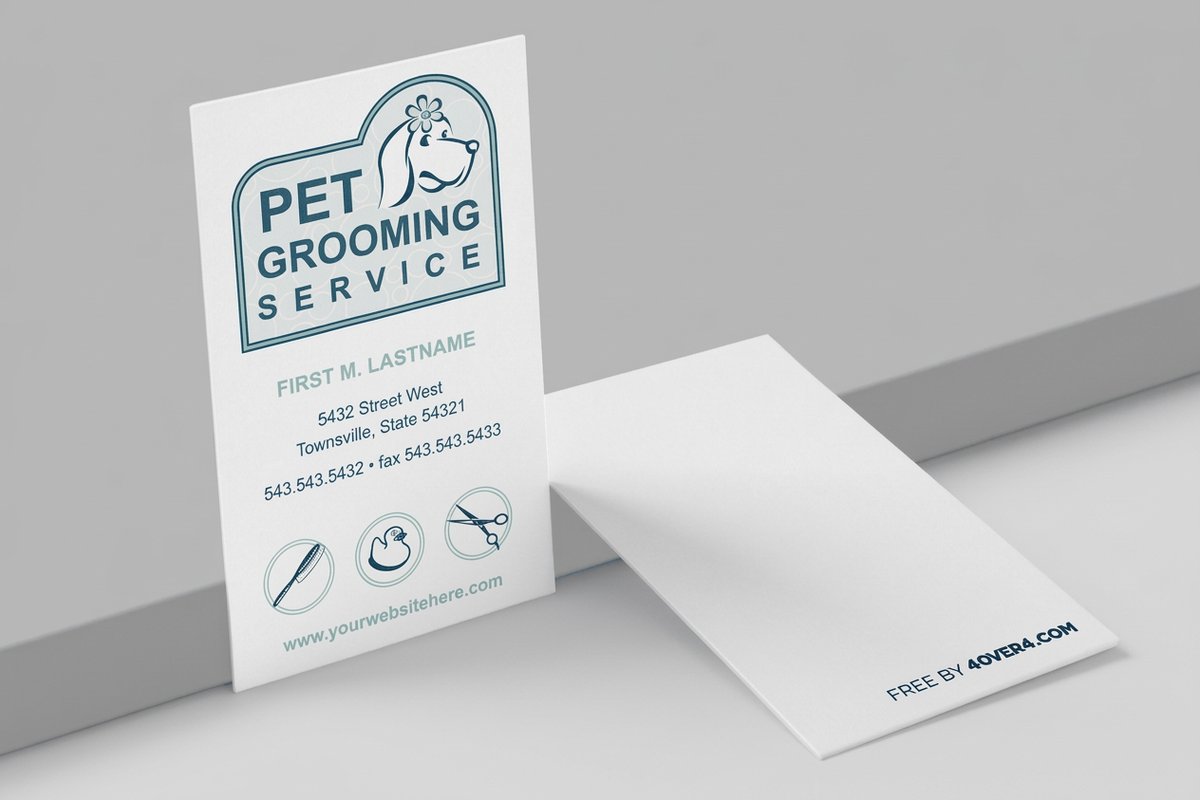 free business cards | 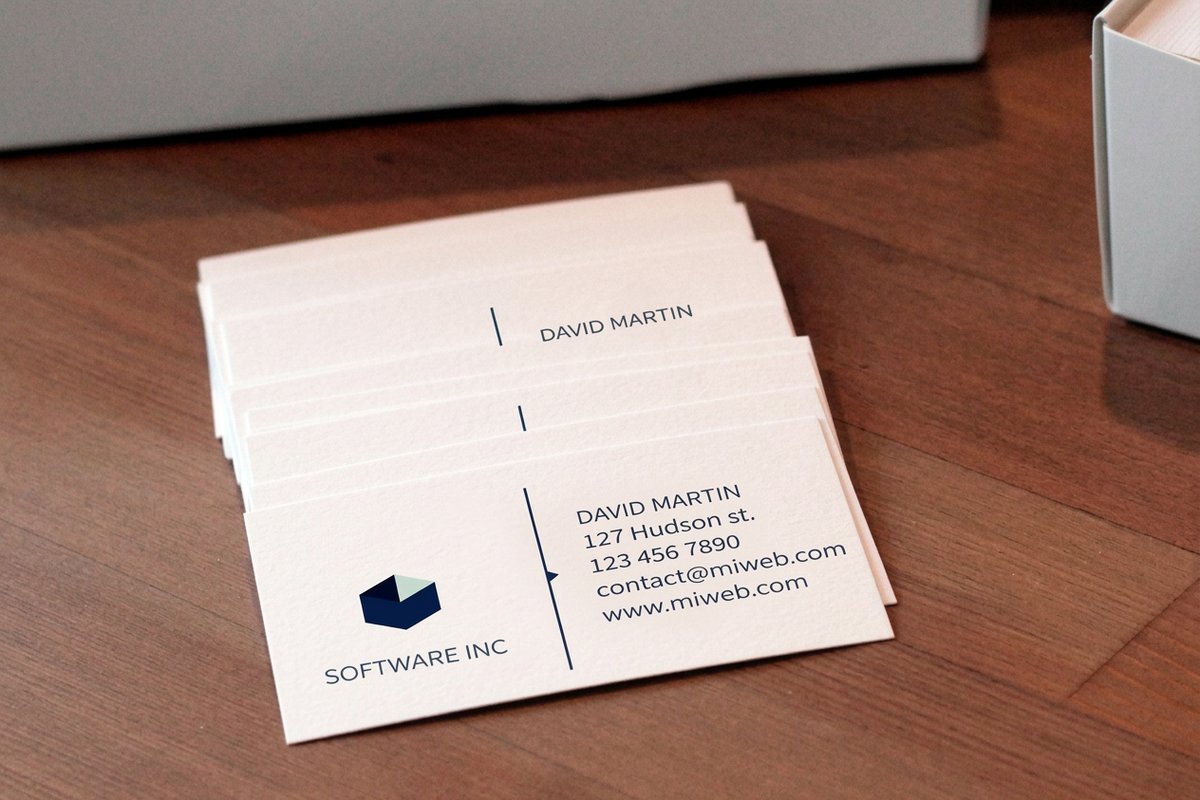 Standard Business Cards |  3D Lenticular Business Cards | 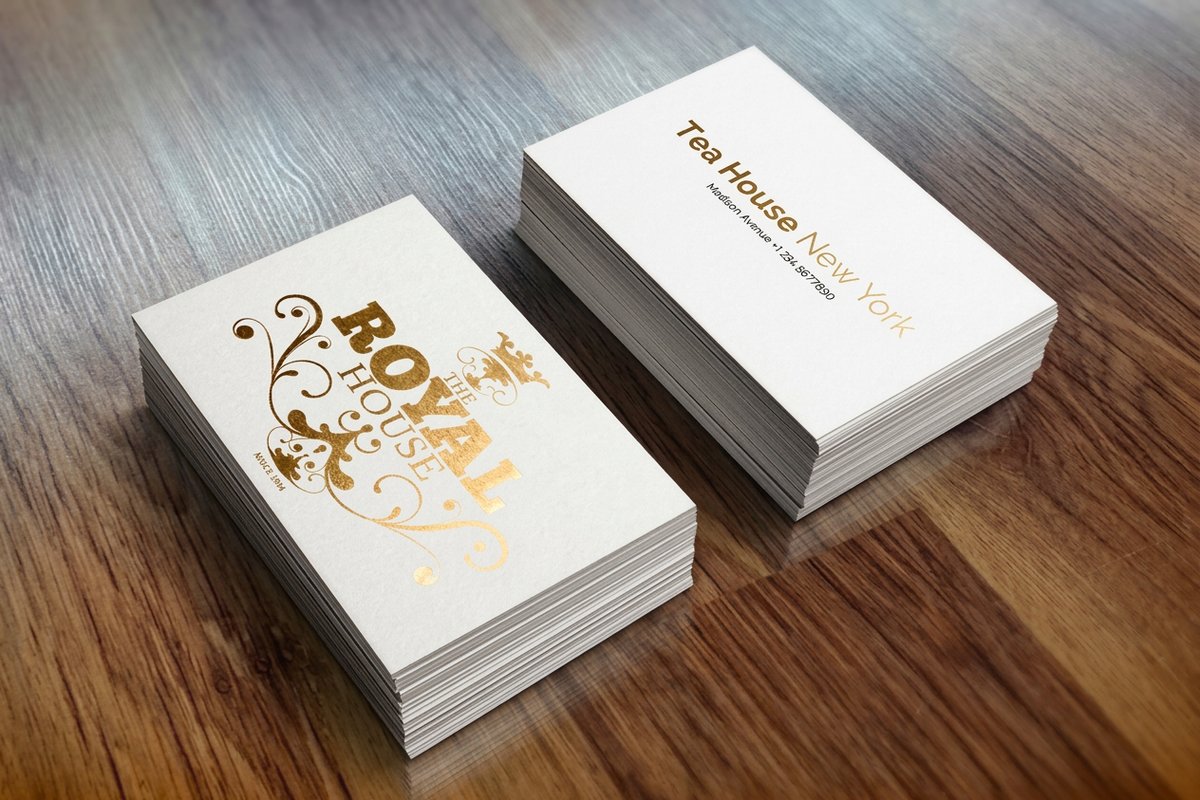 Metallic Foil Business Cards | |
|---|---|---|---|---|
| Min price | Free | $17.57 | $690.88 | $222.13 |
| Paper / stock | 14pt Gloss Cover | 14pt Gloss Cover | 31pt Lenticular Lens | 16 Point Silk Laminated |
| Finish | - | Standard Finish | - | - |
| Size | 2" x 3.5" | 2" x 3.5" | 2" x 3.5" - Vertical | 2" x 3.5" |
| Default qty | 200 | 100 | 500 | 500 |
| Turnaround | 5 business days | 3 business days | 22 business days | 7 business days |
| Rating | ||||
| View & customize | View & customize | View & customize | View & customize |
Design tips that make both sides work together
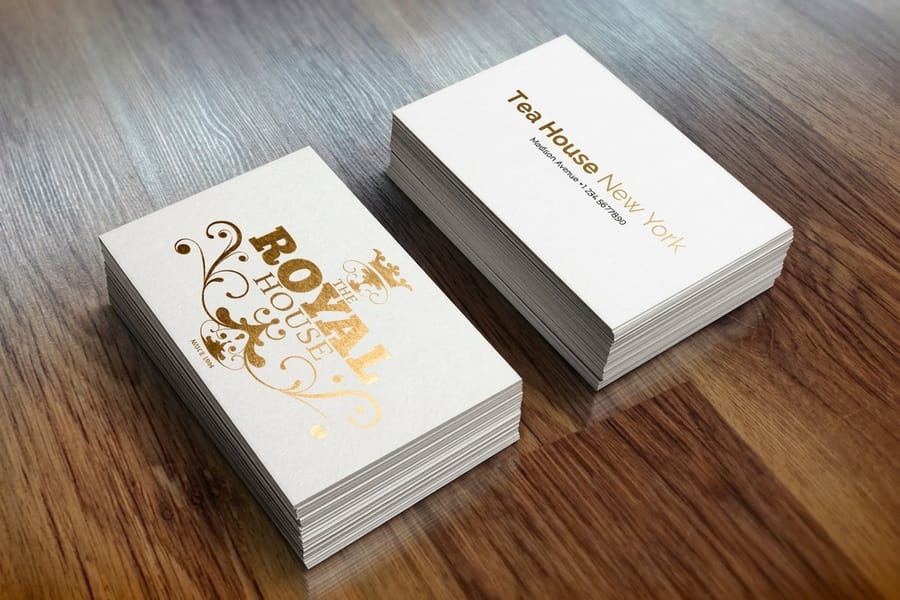
The biggest mistake people make with double-sided cards is treating each side independently. Your front and back should feel like two parts of the same conversation, not two separate flyers crammed onto one card.
Keep your color palette consistent. If the front uses navy and gold, the back should use the same palette. Switching colors between sides creates visual confusion, and this guide on business card color meaning shows what each hue signals about your brand.
Do not duplicate information. If your phone number is on the front, it does not need to be on the back. Use that space for something new, because the whole point of double-sided printing is expanding what you communicate, not repeating yourself.
Leave breathing room. Two sides does not mean you should fill every square millimeter with text. White space makes information easier to read and gives your design a premium feel, and this rundown of what not to put on a business card keeps both sides clean. The 4OVER4.COM Online Designer lets you design both sides at once, so you can see how the front and back work together before you print.
Paper stock and finish choices for double sided cards
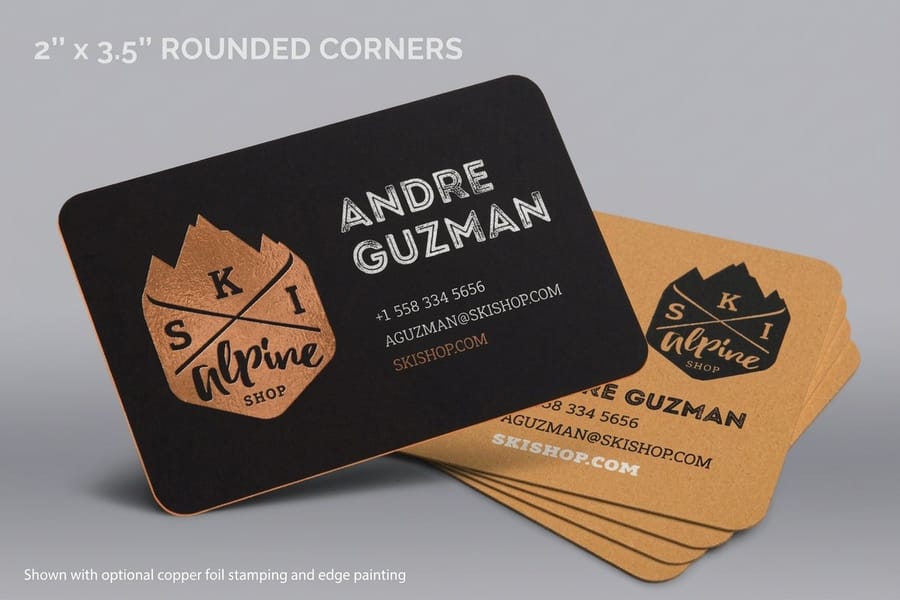
Your paper stock matters just as much as your design, maybe more. A beautifully designed double-sided card printed on flimsy paper undermines the whole effort. The card should feel as good as it looks, and this business card thickness guide helps you match weight to purpose.
- 14pt cardstock. The standard option, about the thickness of a typical card, and a solid choice for high-volume networking at conferences and trade shows.
- 16pt cardstock. Roughly the feel of a credit card, and the sweet spot for most professionals. This look at 14pt vs 16pt business cards breaks down the difference.
- 32pt ultra-thick stock. Three times thicker than standard cards, so people notice the weight, run a thumb across it, and keep it. Reach for Ultra Thick Business Cards when the relationship is worth it.
Finish options change the tactile experience too. Matte feels smooth and modern, gloss makes colors pop, and soft-touch lamination gives a velvety texture people enjoy holding. Spot UV Business Cards add raised, glossy elements to select parts of your design, while Foil Business Cards catch the light for a premium accent. If you are an artist, Artist Business Cards offer specialty stocks built for creative branding, and for a bold, dramatic look, Black Business Cards with white or metallic ink on both sides make an immediate impression.
Quantity and price
Standard business card pricing and specs
Real configurator numbers, the more you order, the lower the per-card cost drops for double-sided runs.
| Quantity | Price Per Unit | Total |
|---|---|---|
| 100 | 17.6¢ | $17.57 |
| 200 | 11.5¢ | $23.07 |
| 300 | 9.15¢ | $27.46 |
| 400 | 7.96¢ | $31.86 |
| 500 | 7.25¢ | $36.26 |
| 600 | 6.77¢ | $40.64 |
Who benefits most from double sided business cards?
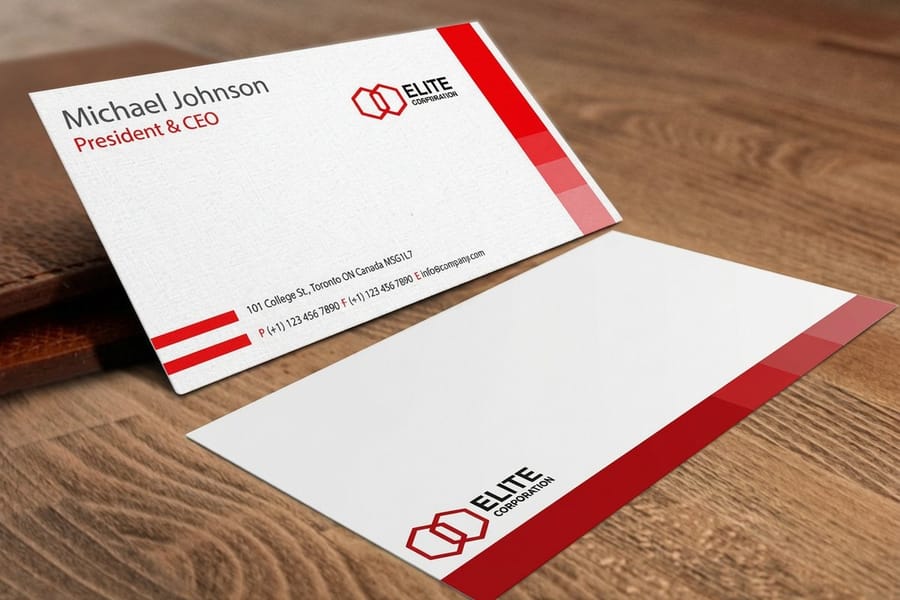
Almost every profession finds a use for that second side, but a few get outsized value from it.
- Real estate agents. Use the back for a headshot and brokerage details, so people remember your face weeks after a showing.
- Restaurant owners. Print a mini menu, daily specials, or happy hour times, and the card doubles as a pocket-sized advertisement.
- Freelancers and consultants. List your core services on the back to eliminate the so what exactly do you do question.
- Event planners. Add a QR code linking to a portfolio or a short testimonial, because social proof on a card is surprisingly effective.
- Startup founders. Explain what the company does in one line, since early-stage brands need that extra context to spark the right conversation.
For those exploring unconventional materials, 30Mil Clear Plastic Cards offer a transparent, waterproof option that makes double-sided printing look especially striking with see-through design elements.
Break the rectangle
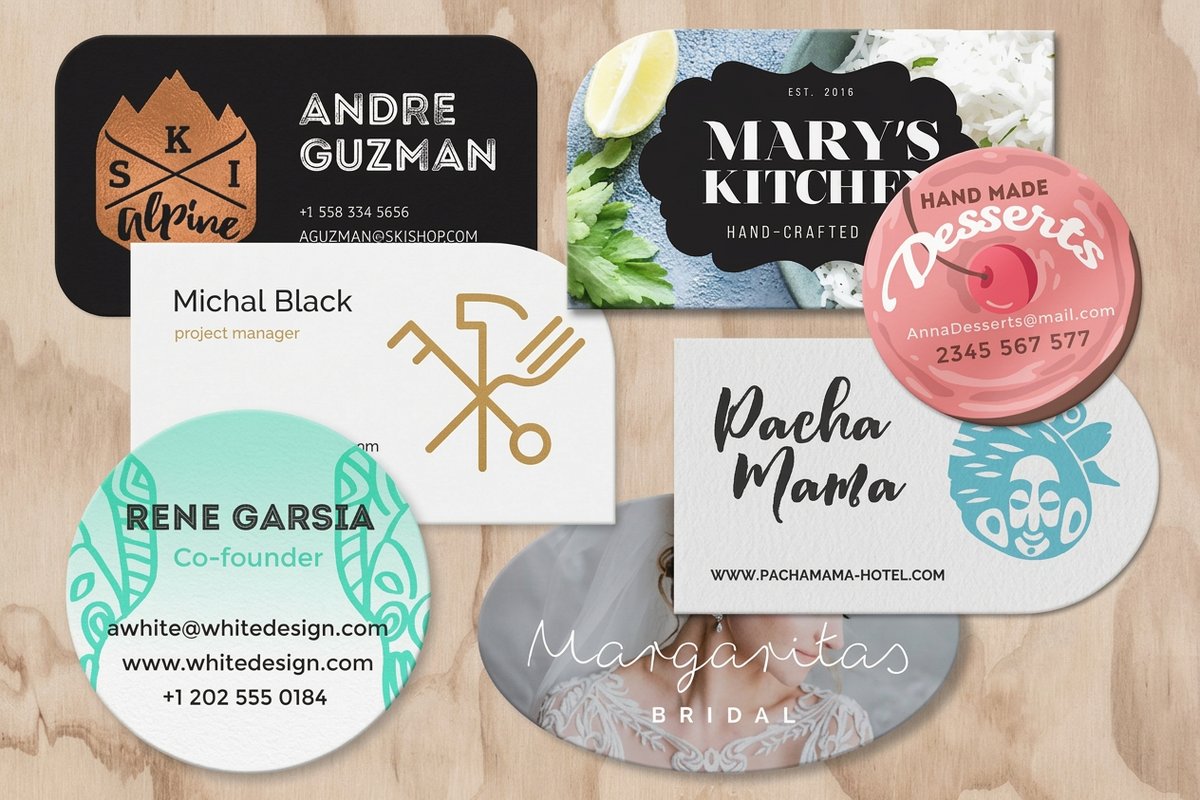
Die-cut business cards, printed both sides
Contour-cut cards that carry your front and back design in a shape a plain rectangle cannot match.
Sustainability and double sided printing
Here is something people do not always consider. Double-sided cards are actually a more efficient use of materials. You communicate more information per card, which means you may need fewer supplementary handouts, brochures, or flyers to convey the same message.
4OVER4.COM offers Green Printing options for businesses that prioritize environmental responsibility. Recycled paper stocks, soy-based inks, and FSC-certified materials are available for double-sided cards, so you do not have to choose between a great card and a clear conscience. Printing on both sides also reduces waste another way, because a card that carries a QR code, a service list, or a compelling design on the back has a longer shelf life in someone's wallet or desk drawer.
Where the paper comes from. FSC-certified stock means the mill can trace the fiber back to a forest that is managed and replanted, and recycled stock means the fiber has already had one life. Ask for either by name when you order, because an uncertified sheet looks identical in the hand and tells you nothing.
Ink coverage is the lever most people miss. A back panel flooded with solid color uses far more ink than a back that is mostly white space with a logo and a QR code, and heavy coverage on both sides is also what makes a thin card curl. Designing the back light is better printing and lighter on materials at the same time.
One sheet beats two pieces. The alternative to a printed back is usually a second object, a flyer, a rate card, a leaflet tucked behind the card. Printing both sides of one 3.5 by 2 inch card replaces that second piece with a second pass of ink on stock you already bought, and it ships as one item instead of two.
Common concerns about double sided cards
Will it look too busy? Only if you design it that way. A well-made double-sided card gives each side a job. The front handles identity, the back handles action, so keep each side focused on one purpose and you avoid clutter.
Is it worth the extra cost? The price difference is marginal. You are already investing in professional cards, and adding content to the back costs pennies more per card while doubling your communication potential. That is one of the best returns on investment in print marketing.
What if people do not flip the card over? Most people do, it is a natural instinct. Even if someone does not flip it right away, they see the back eventually when they pull it from a wallet, sort a stack, or file it away, so the back side works even on a delayed timeline. For creative ideas beyond cards, these logo sticker design ideas show how double-sided design principles carry across print products. If you would rather start from a proven base, exact-size blanks like 3D Lenticular Business Cards and Black Business Cards line your artwork up with the cut and bleed.
Start fast
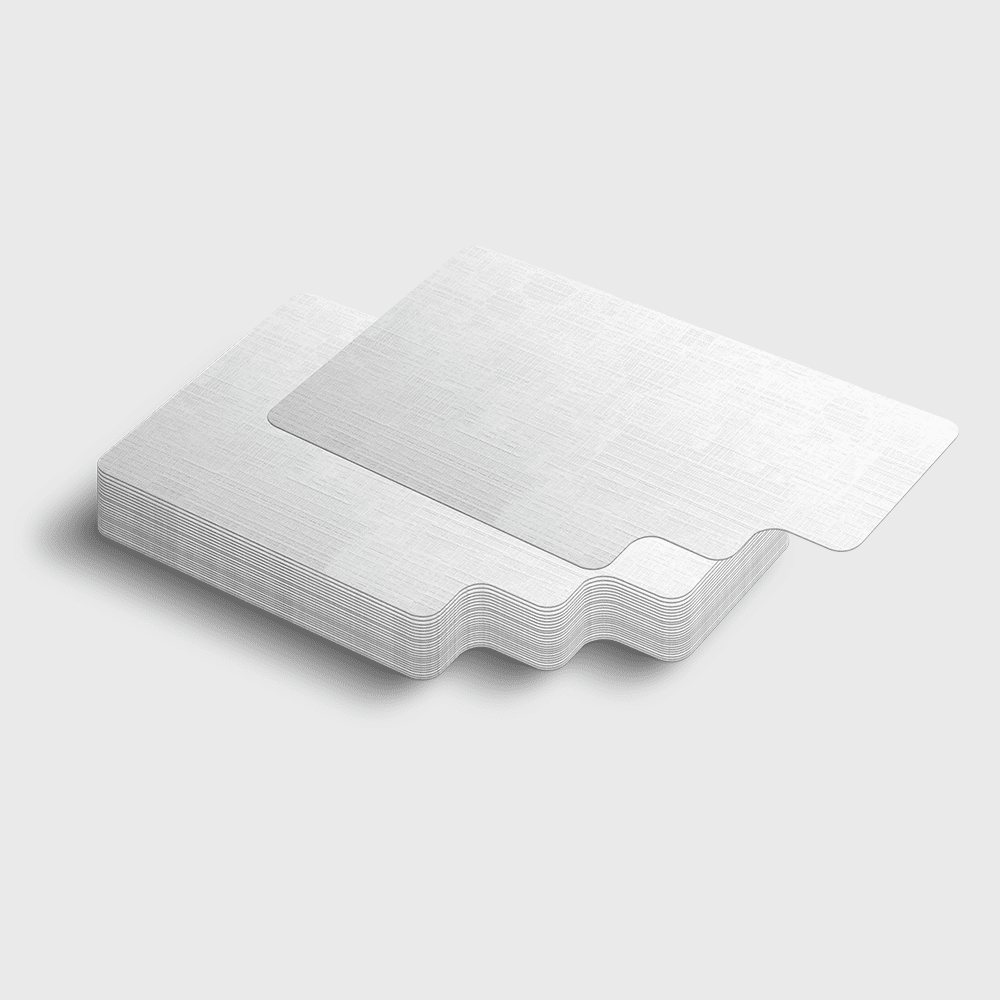
Templates and print-ready blanks
Business card design templates and exact-size blanks so your front and back artwork lands inside the cut line.
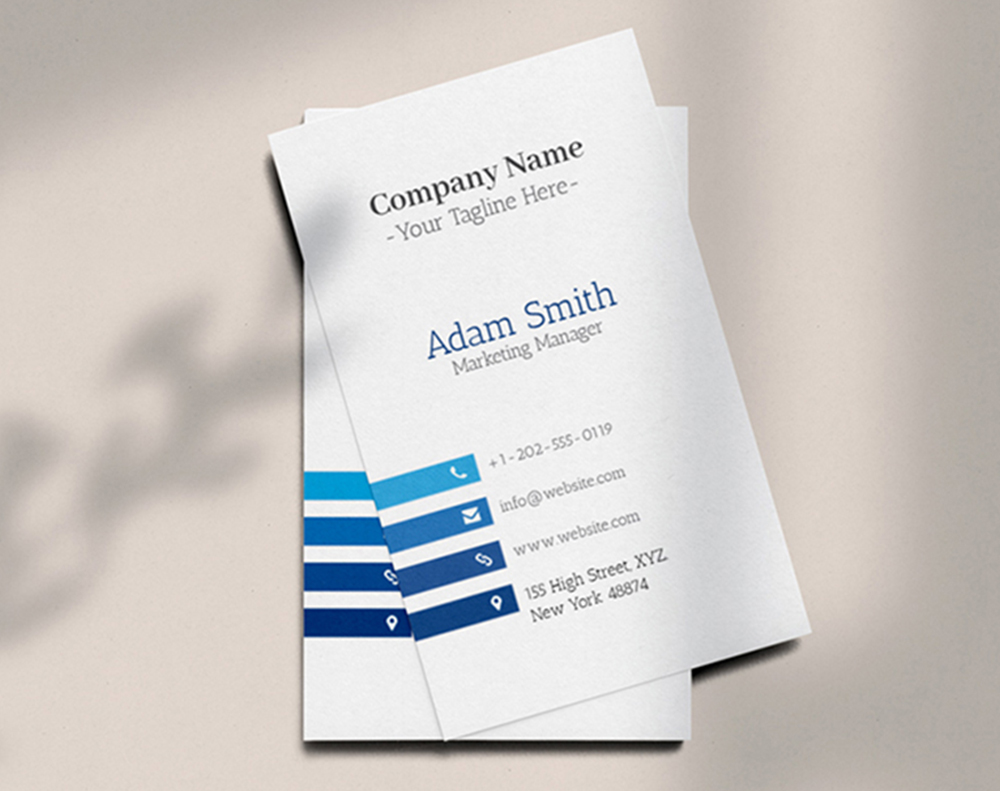
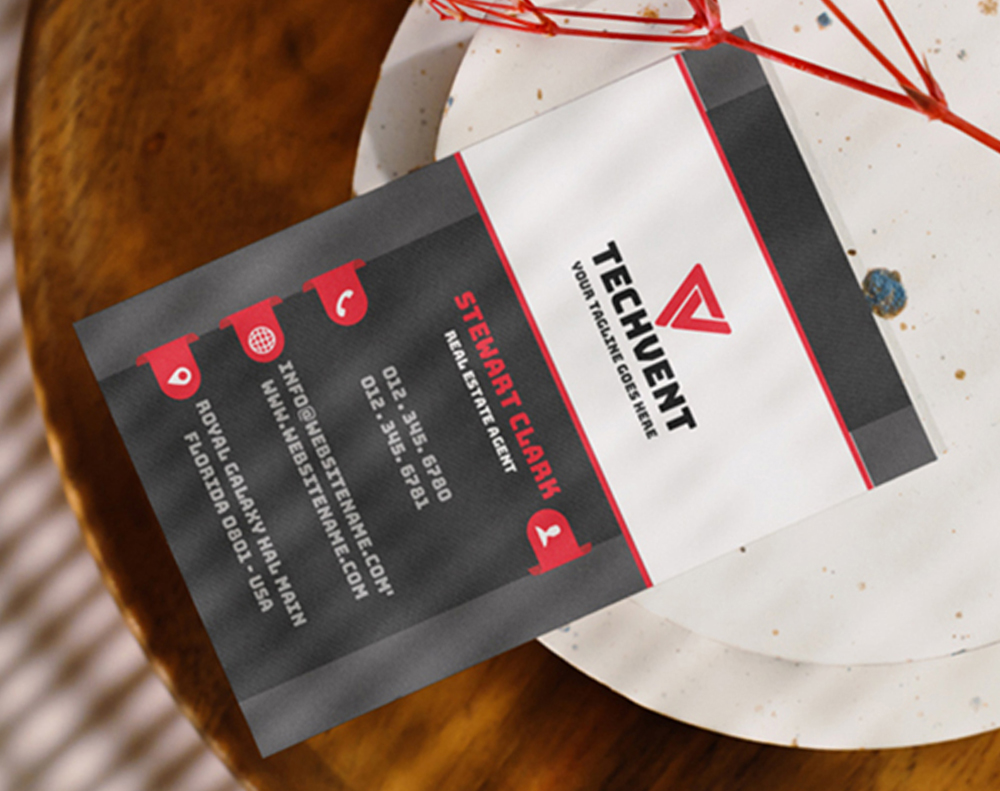
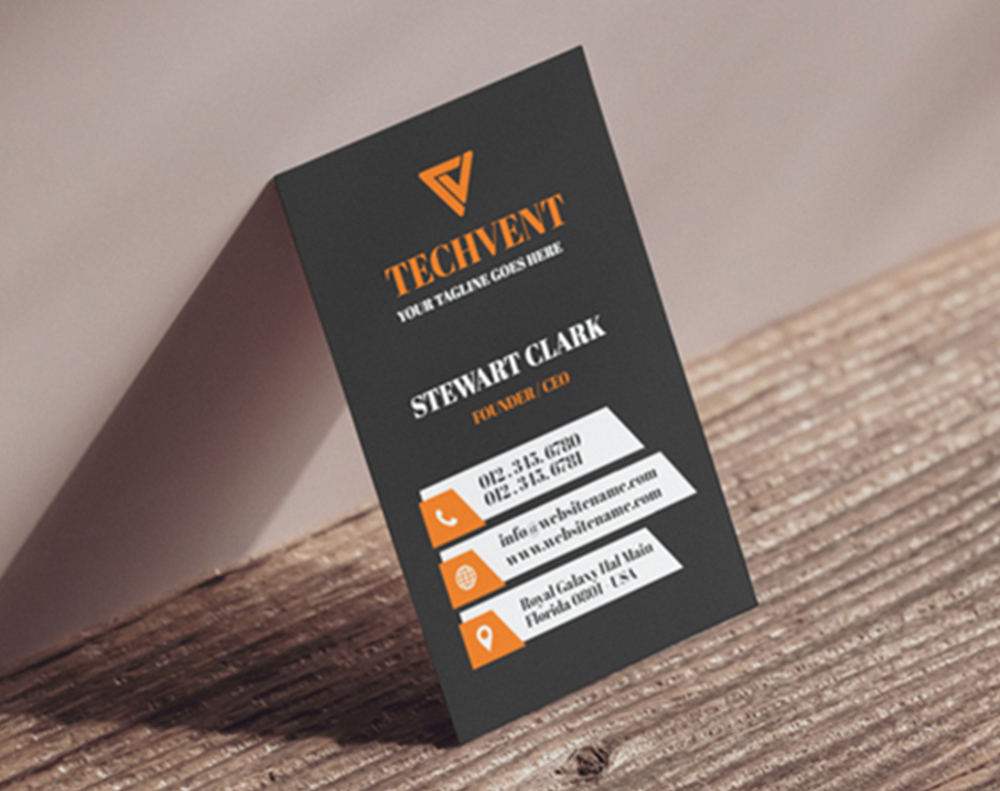
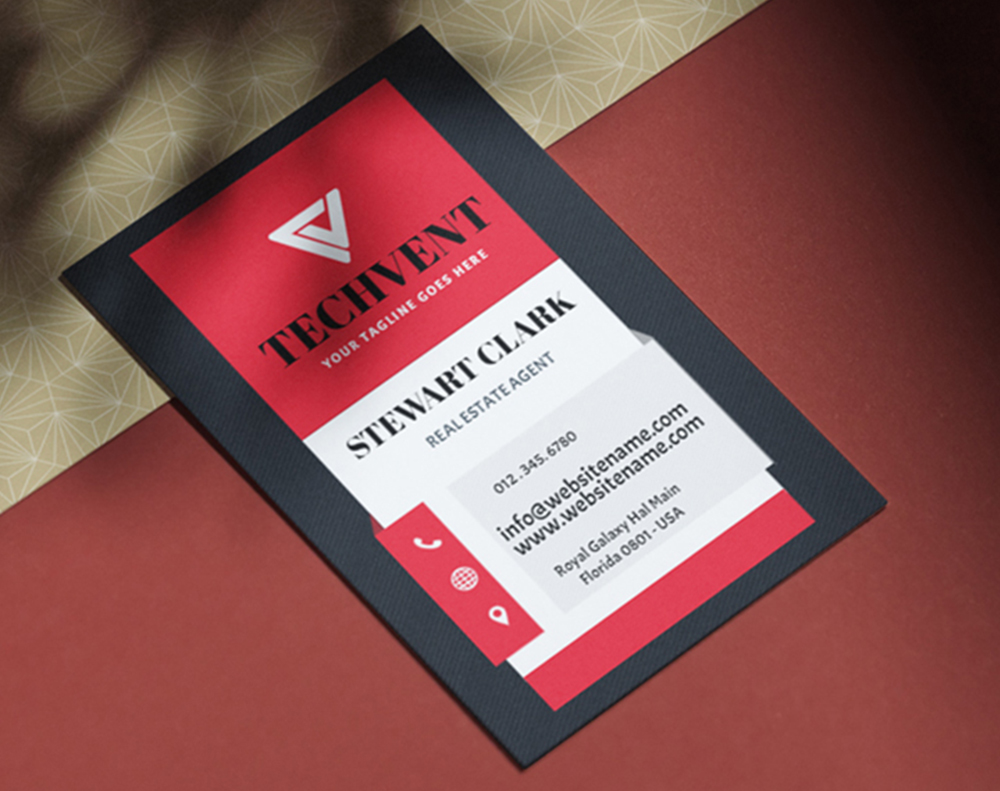





Getting started with your double sided business cards
Ready to put both sides to work? Start by deciding what the back side's job is. Is it informational, meaning services, hours, and location? Is it action-oriented, like a QR code, website, or booking link? Is it brand-building, with a tagline, mission, or visual design? Pick one purpose and execute it cleanly.
If you want to test the waters before a large order, 4OVER4.COM offers free business cards so you can see how your double-sided design looks and feels in person, and ordering free samples lets you judge stock weight before you commit. 4OVER4.COM has been printing business cards since 1999, that is over 25 years of double-sided experience across every industry, and with 10,000+ reviews and a 4.8 out of 5 star rating, the quality speaks for itself.
Wally puts the back of your card to work
A blank back is 50 percent of your card doing nothing
A single-sided card wastes half your printable space. Put contact details on the front, then let the back carry a QR code, a short service list, or a bold tagline. Keep one color palette across both sides, pick a stock from 14pt to 32pt, and 4OVER4.COM prints it sharp on time. The extra ink costs pennies and doubles what your card can say.
Design double-sided cards →What to remember about double sided business cards
Key design strategies for both sides
- Use of space. Put contact details on the front and services, offers, or a QR code on the back so both sides earn their place.
- Visual appeal. Carry one color palette and type system across both sides so the card reads as a single, polished brand.
- QR codes. Link the back straight to a website, booking page, or portfolio and track how many people follow up.
- Brand reflection. Let the design align with your company ethos, from a minimalist tech look to a warm, artisanal feel.
- Increased capacity. Two surfaces let you share more detail without crowding a single side.
- Creative freedom. The back can hold a pattern, an illustration, or a mission statement that humanizes your brand.
Explore more
More ways to design and print business cards
Every related page type on 4OVER4.COM, one card each, so you can keep exploring double-sided business card printing.
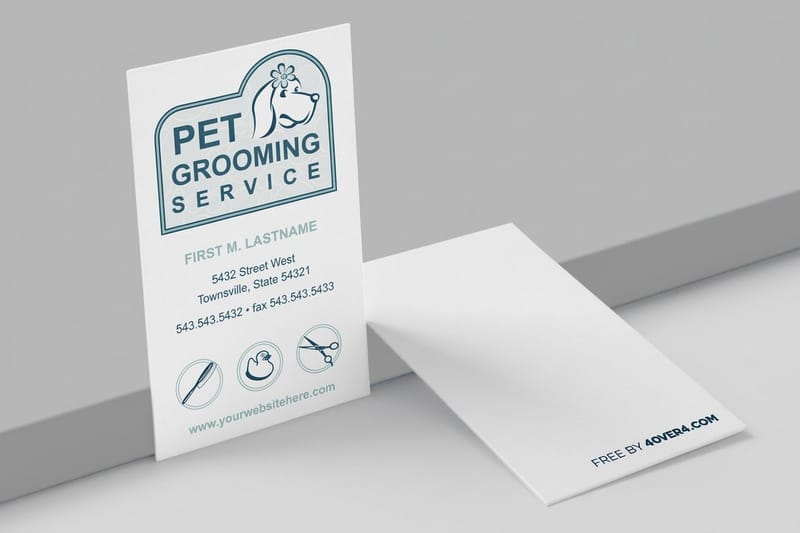 Shop Business Cards Printing Browse every business card format in one place.
 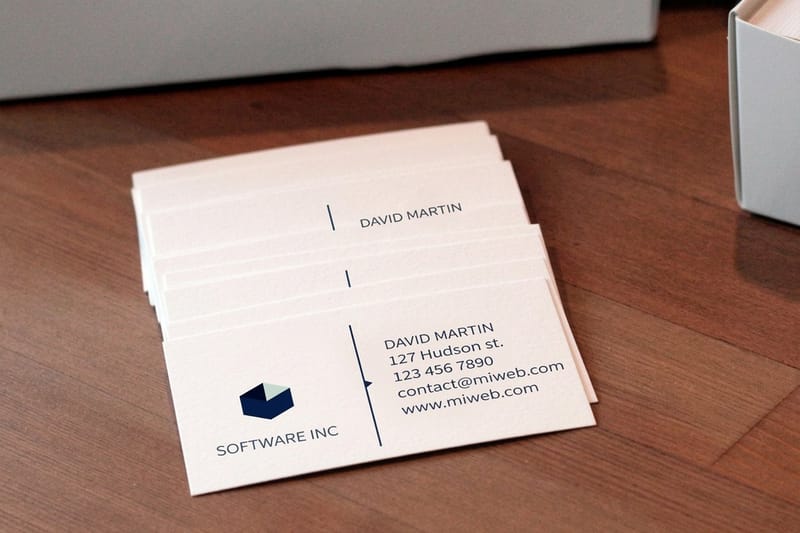 Product Standard Business Cards Double-sided printing from $17.57.
 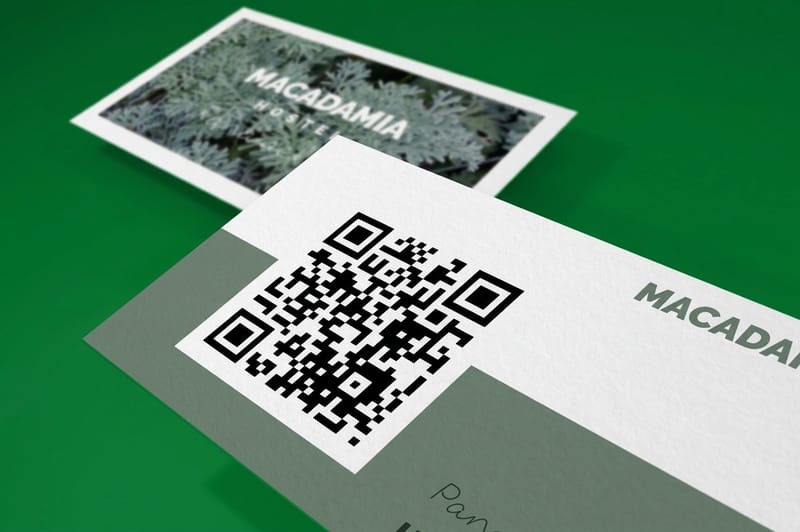 Product QR Code Business Cards Trackable back-side scans in one tap.
 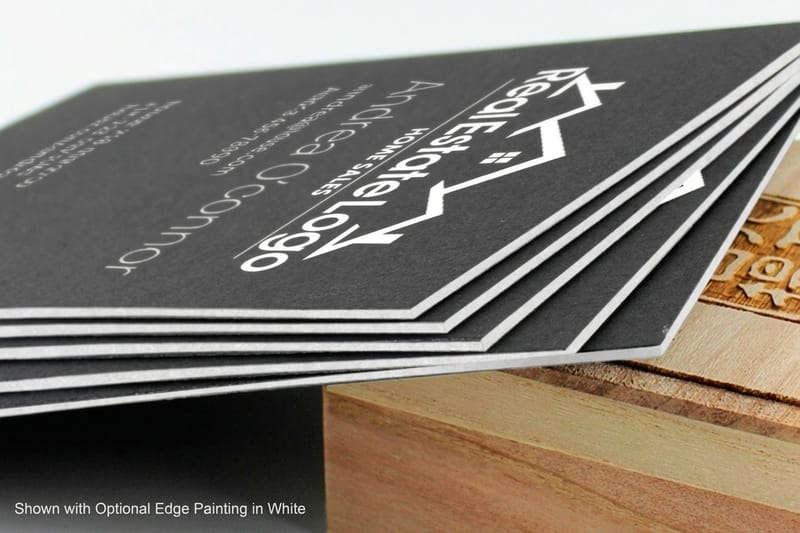 Product Black Business Cards Dramatic dark stock with metallic ink.
 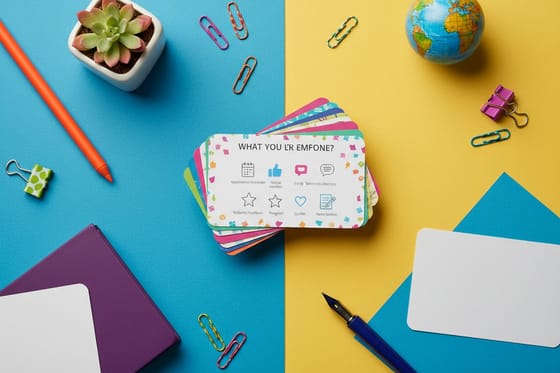 Article What to Put on the Back Make the reverse side earn its space.
 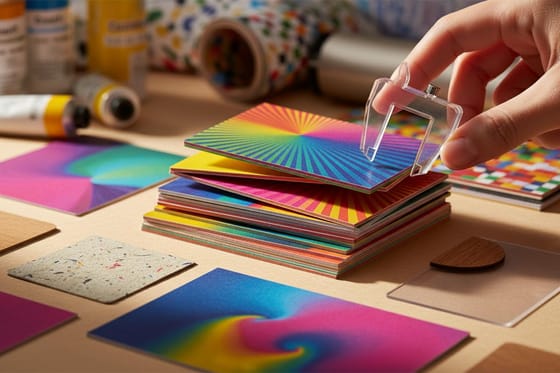 Guide Business Card Thickness Guide 14pt to 32pt, and when to use each.
 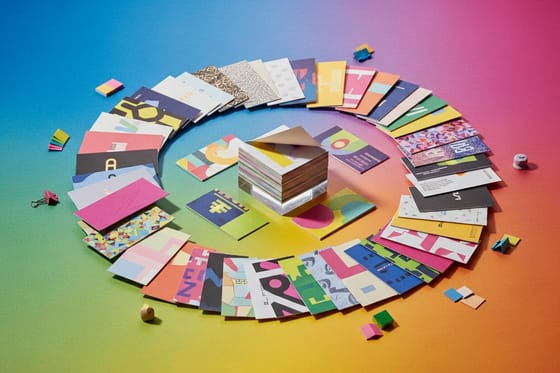 Article Amazing Card Design Inspiration Layouts that balance info and aesthetics.
 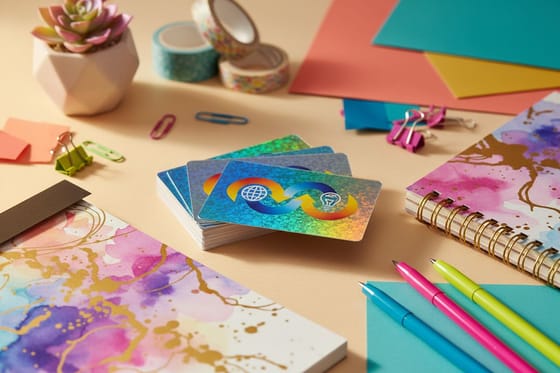 Trend 3D Lenticular Business Cards Motion and depth on both sides.
  Reviews Business Card Reviews Ratings from 10,000+ verified buyers. Samples Free Samples Feel the stock before you commit.
 Ready to put both sides to work?
Pick a stock, drop in your logo or a free template, and 4OVER4.COM prints your front and back sharp, as fast as same day.
Common questions about double sided business cards
What are the best practices for designing double sided business cards?
Keep each side focused on a single purpose. Put contact details on the front and use the back for a QR code, service list, or brand tagline. Maintain consistent colors and fonts across both sides, and leave enough white space so neither side feels cluttered. Browse printing articles for more detailed design guides and layout tips.
How do I choose the right stock for double sided business cards?
Match your stock to your audience. 14pt works well for high-volume networking events. 16pt offers a credit-card-like feel that suits most professionals. 32pt ultra-thick stock signals premium quality for luxury brands and high-value meetings. For a unique material, try 30Mil White Plastic Cards, which are waterproof and incredibly durable.
What makes double sided business cards effective for marketing?
Double sided business cards turn a simple contact card into a mini advertisement. The back can feature promotional offers, portfolio links via QR codes, or service descriptions that spark conversations. People naturally flip cards over, so your back-side message gets seen without any extra effort from you.
How much should I budget for double sided business cards?
Double-sided printing adds only a small premium over single-sided cards, typically just pennies more per card. At 4OVER4.COM, pricing starts low and scales down with larger quantities. A standard order of 250 double-sided cards on quality stock is affordable for any business, and the per-unit cost drops sharply at 500 and 1,000 quantities, making bulk orders the best value.
What are the specs for two sided business cards?
The standard card trims at 3.5 by 2 inches with 0.125 inch of bleed on all four sides. Stock runs from 14pt cardstock for high-volume networking, to 16pt for the credit-card feel most professionals want, up to 32pt ultra-thick when the card has to be kept. Both sides print full color on every stock, finishes include matte, gloss, and soft-touch, and the standard quantities are 250, 500, and 1,000 with the per-unit cost dropping at each step.
Should business cards be double sided?
For almost everyone, yes. The front carries identity, your name, title, company, and contact details, and the back carries action, a QR code, a service list, a tagline, or a map. The one case for a single side is an ultra-minimalist card that needs nothing but a name and a number.
Do double sided business cards cost more?
Only marginally. You are already paying for the paper stock, the cutting, and the shipping, so adding ink to the second side costs a fraction more per card. The gap narrows further at 500 and 1,000 quantities.
What should go on the back of a business card?
Give the back one job and do it properly: a QR code to your booking page or portfolio, three to five service bullets, a short tagline, a map or cross street, or appointment lines. Keep the palette identical to the front and do not repeat the phone number that is already there.
