
Standard vs Rounded Corner Business Cards and Which to Choose


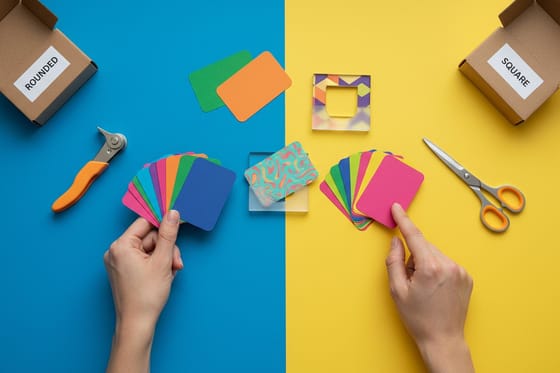
Rounded corners feel premium and survive the wallet longer. Standard square-cut corners cost less and ship faster. Here is how to pick the right edge for your brand, your budget, and your timeline.
Choose rounded corner business cards when the card is part of a premium or personal brand experience, because the soft 1/8 inch radius reads as considered and resists fraying in a wallet. Choose standard square-cut cards when volume, budget, and turnaround matter most, since straight corners are the fastest and least expensive to produce. Both use the same 3.5 by 2 inch size and the same stocks, so the choice is about feel and cost, not a different card.
Quick answer
Standard or rounded corners, in one paragraph
Go rounded when the card represents you. The soft corner feels premium, ages well in a pocket, and works on almost any stock for a small die-cutting fee. Go standard square-cut when cost, speed, and a classic look lead the decision, which is the smart default for large runs and formal brands. Same 3.5 by 2 inch size, same paper choices, so you can decide on feel and budget alone. 4OVER4.COM prints both to order with live specs and pricing.
Quick verdict
- Rounded corners win when the card is handed over in person and then carried: 16pt silk laminate, soft-touch, or 32pt ultra-thick stock, where the curve flatters the weight and there is no sharp tip left to bruise or fray in a wallet. The trade is a small die-cutting fee on top of the identical square-cut card, and that gap shrinks as the quantity climbs.
- Standard square corners win when cost, speed, and a formal read decide it: 14pt gloss or matte, runs in the thousands, and finance, law, or real estate brands that want structure and precision. Square-cut adds no cutting step, so it is the lowest-cost baseline and the fastest version off the press.
Still split? Nothing in your layout has to change either way, because both are cut to the same 3.5 by 2 inch card on the same stocks, so this is a feel and budget call, not a design one. Print the first run square-cut to prove the layout, then round the reprint once the design is settled. If you want the long version of the argument, read rounded vs square business cards.
Why choose rounded corner business cards
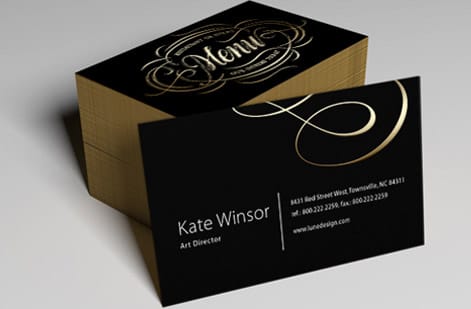
Rounded corners do something quiet but powerful: they make a card feel finished. The moment someone runs a thumb along a soft edge, the card reads as considered rather than mass-produced. That is why salons, studios, boutique agencies, and personal brands so often round their corners, even when everything else about the card is simple.
There is a practical payoff too. A curved corner has no sharp point to catch, so it resists the dog-earing and whitening that square cards pick up after a few weeks in a wallet. If your card is meant to live in someone's pocket for months, the rounded edge is the one that still looks new when they pull it out. You can round almost any stock in the 4OVER4.COM round cornering collection, and the flagship round business cards lean into that soft, premium look.
The trade is small: rounded corners add a light die-cutting pass, so they cost a touch more than a plain square-cut card. For a brand-forward card, most people find that a fair price for an edge that feels good in the hand and holds up over time.
When to stick with standard square-cut cards
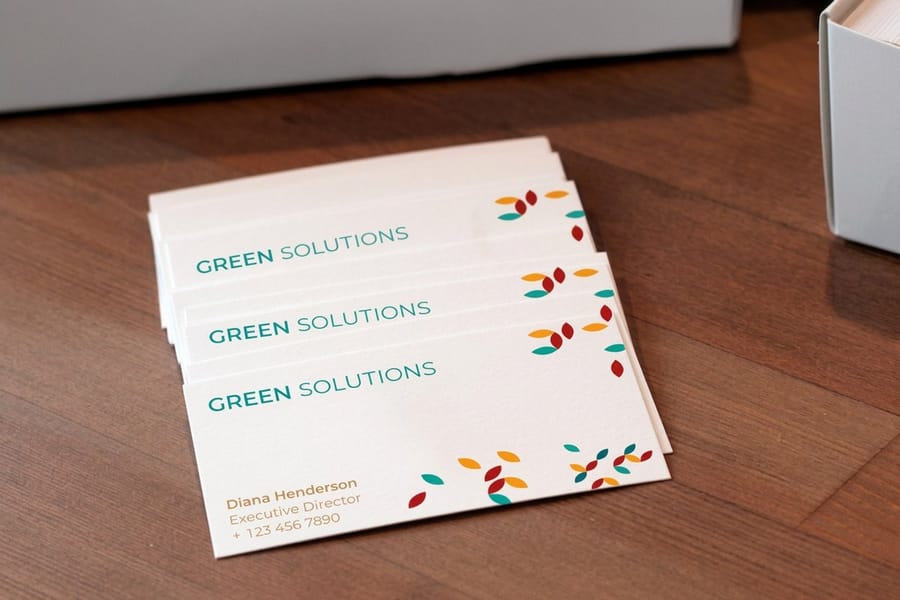
Square corners are not the boring choice, they are the default for good reasons. A straight 90-degree cut is the fastest and least expensive way to trim a card, which means standard cards ship quicker and cost less per unit, especially at volume. When you are printing thousands of cards for a whole company, those savings add up fast.
The classic look matters as well. Law firms, banks, medical offices, and plenty of established brands want the crisp, rectangular silhouette that signals tradition and trust. There is nothing dated about a sharp corner on a well-designed card. If your brand leans formal, or if the card simply needs to do its job at the lowest cost, the standard business card collection and the everyday standard business cards are the right starting point.
Square-cut is also the safe pick when your artwork runs important elements close to the edge, since there is no curve trimming into the corner. Not sure the card is pulling its weight either way? Our guide on why business cards still matter is a good gut-check before you order.
How rounded corners are actually made
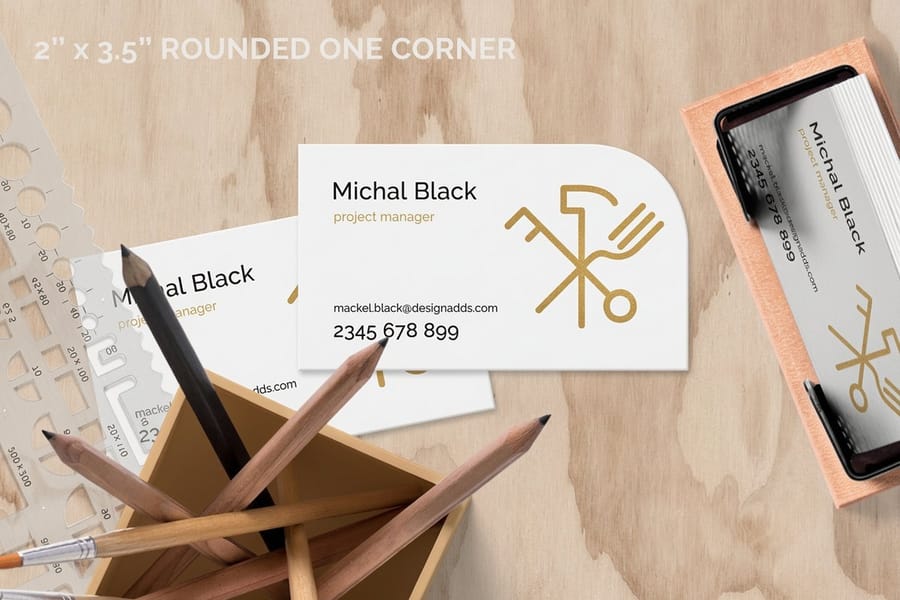
Understanding the cut helps you choose with confidence. A standard card is trimmed on a guillotine cutter that slices clean, straight edges and leaves crisp 90-degree corners. A rounded card takes one extra step: after printing, a die presses a small arc into each corner, usually around a 1/8 inch radius. The footprint does not change, only the four corners do.
That same die-cutting capability is what makes fully shaped cards possible. If a simple rounded corner is not enough and you want the outline itself to carry the design, the die cutting collection and die-cut business cards can trim your card to almost any silhouette. Rounded corners are simply the gentlest, most universal version of that idea.
Because it is a cut and not a coating, rounding sits on top of whatever stock and finish you have already chosen. Your ink, lamination, and paper weight all stay exactly the same. The corner is the last thing to happen, and it is what your fingers notice first.
What paper stocks and finishes work with each edge
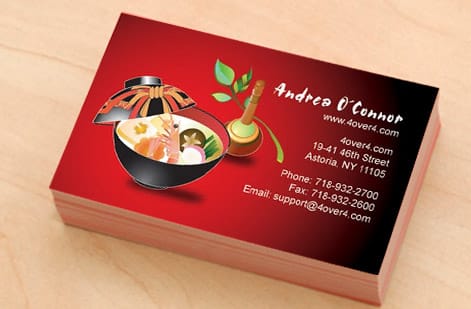
Here is the freeing part: the corner choice barely limits your stock and finish choices. Rounded cornering works with nearly every 4OVER4.COM cardstock, so you can pair it with a slim 14pt gloss or a hefty 32pt ultra-thick card. If anything, heavier and more textured stocks are where rounded corners shine, because the soft edge flatters the thickness instead of fighting it.
A few pairings people love: soft-touch laminate with rounded corners feels like a luxury credit card, while a bright gloss with square corners keeps colors sharp and photos punchy. To dig into the differences, our guides on choosing the right cardstock, 14pt vs 16pt cards, and matte vs glossy finishes break it down without the jargon.
- Lightweight and budget: 14pt gloss or matte, square corners for the fastest, cheapest run.
- Premium everyday: 16pt silk laminate with rounded corners for a soft, durable feel.
- Statement card: ultra-thick or soft-touch stock with rounded corners so the edge shows off the weight.
You can browse options by material and by finish to see what a rounded or square version would look like on the stock you have in mind.
Are rounded or square business cards better? Neither is better in the abstract, they answer different briefs. Rounded is better when the card is handed over face to face and then carried, and when it is printed on 16pt silk laminate, soft-touch, or 32pt ultra-thick stock, because the curve suits the weight and leaves no tip to fray. Square is better when you want the classic, formal look at the lowest cost and the fastest turnaround, which is why it stays the default on 14pt gloss or matte and on large runs. Same 3.5 by 2 inch card, same stocks, so you are choosing a feel, not a format.
Do people notice rounded corners on a business card? They notice by feel before they notice by eye. The corner is the first part of the card a thumb touches, so a rounded edge reads as softer and more finished even when nobody can name why. Sitting in a stack of square-cut cards it also reads as different at a glance, and a month later the difference is plain: the rounded card has no bruised tips showing white core, while the square-cut one usually does.
What each option costs and how pricing is set
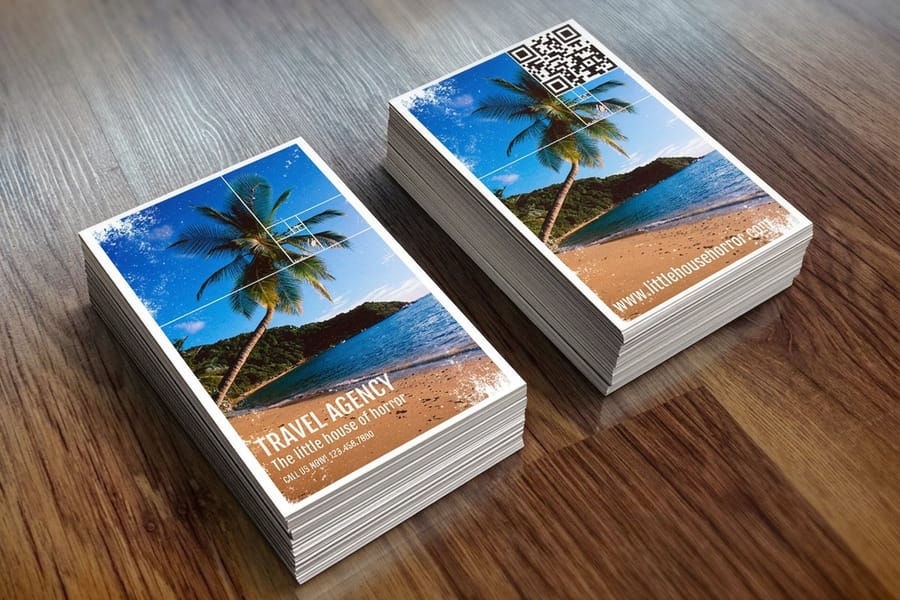
Price on a business card is driven by four things: quantity, stock weight, finish, and any extra cuts. Corner style falls into that last bucket. A square-cut card carries no cutting surcharge, so it is always the lowest-cost baseline. Rounding the corners adds a small die-cutting step, which is why a rounded card runs a little more than the identical square-cut card.
The important detail is that the gap is proportional and shrinks with volume. At a few hundred cards you may notice it, and by a few thousand it is often a rounding error next to the total. The honest way to compare is to configure both versions and read the live per-unit price, which is exactly what the pricing table further down this page does. For a broader view of what drives the number, see how much business cards cost and how card size affects your order.
One more money tip: before you place a big run, it is worth checking daily deals for a discount on the stock you want, and grabbing free paper samples so you can feel a rounded corner on your chosen weight before you commit.
Durability and everyday handling
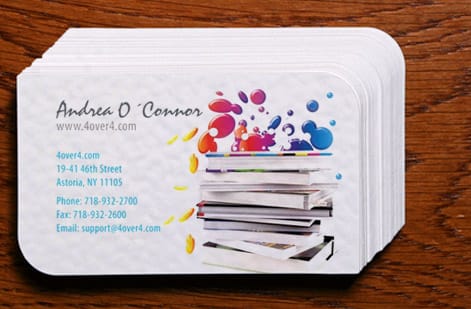
A business card lives a rough life. It gets shuffled into wallets, clipped into holders, slid across counters, and stacked in drawers. The corners take the worst of it. On a square-cut card, those sharp points are the first thing to bend and whiten, and once a corner frays the whole card starts to look tired.
Rounded corners remove the weak point entirely. With no sharp tip to catch on fabric or other cards, a rounded edge stays clean far longer. Pair that with a heavier stock and the card becomes genuinely hard to damage. Thickness plays a role here too, so if longevity is a priority it is worth reading how card thickness changes how a card feels and survives.
None of this means square corners are fragile, a well-made 16pt card holds up fine. It simply means that if you expect your card to circulate for months, the rounded corner is the one that ages best.
What the corner says about your brand
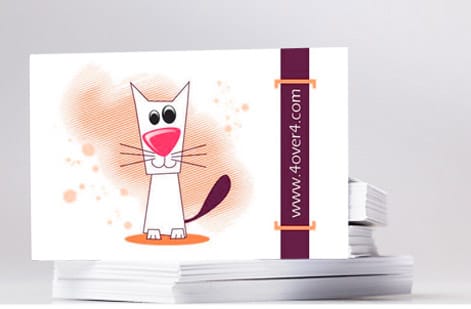
Corners carry a subtle message. Sharp, square corners feel structured, formal, and established, which suits finance, law, real estate, and any brand that trades on trust and precision. Soft, rounded corners feel approachable, modern, and human, which fits wellness, hospitality, creative studios, and consumer brands that want to feel warm rather than corporate.
Neither reading is better, they are tools. The goal is alignment: the corner should agree with the rest of your identity so the card feels intentional. Getting the front and back working together matters just as much, so our roundup of what to include on a business card and the piece on using the back of the card are worth a look while you decide.
Size sends a signal too. If you are weighing a non-standard footprint alongside the corner choice, what your card size says about your brand is a quick, useful read.
What customers say about each corner style
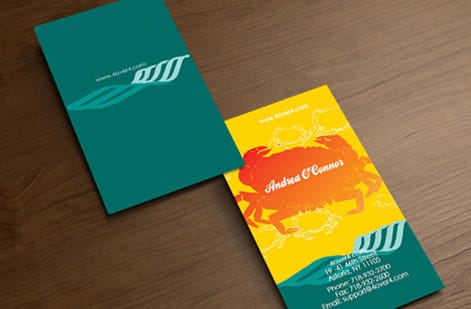
Strip out the design talk and the feedback on corners lands in three places every time: how the card feels in the hand, how it holds up in a wallet, and what people change at reprint. None of it is about the artwork, which is why the corner is usually decided last and regretted first.
Handling. The corner is the first part of the card a thumb finds, so it registers before the logo does. On 16pt silk laminate or soft-touch stock a rounded edge is the thing people comment on, because the curve makes the thickness read as deliberate. Square-cut gets the opposite comment: the crisp 90 degree corner is what makes a card feel formal and cut to spec, and softening it on a law or accounting card can make it feel less serious than the brand wants.
Wallet fit. Carrying is where the two styles separate. A square corner is the first thing to take the wear, and once a tip bruises you see the white core through the ink, especially on a dark or full-bleed design. A rounded corner has no tip to catch, so a card that spends a month in a wallet or a badge holder still looks like the one you handed out on day one. That is the single most common reason people round the second run after keeping the first square.
Reprints. At reprint the corner is almost never decided on its own, it moves with the stock and the finish. The usual path is a first run of 14pt gloss or matte square-cut to prove the layout and the copy, then a rounded 16pt or 32pt ultra-thick version once nothing is going to change. If that is where you are, decide the finish at the same time with matte vs glossy business cards and the finish options, and use the online designer to see the rounded and square versions of your own layout before you commit the run.
Beyond corners: square, circle, and shaped cards
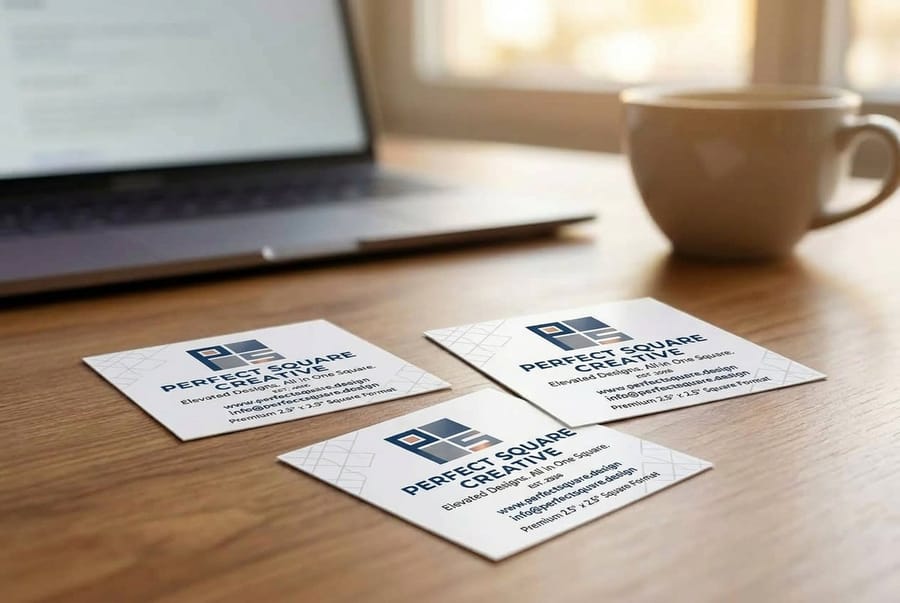
Rounded versus square corners is really the entry point to a bigger question about shape. Once you accept that the outline is part of the brand, a few more options open up, all built on the same die-cutting that rounds a corner.
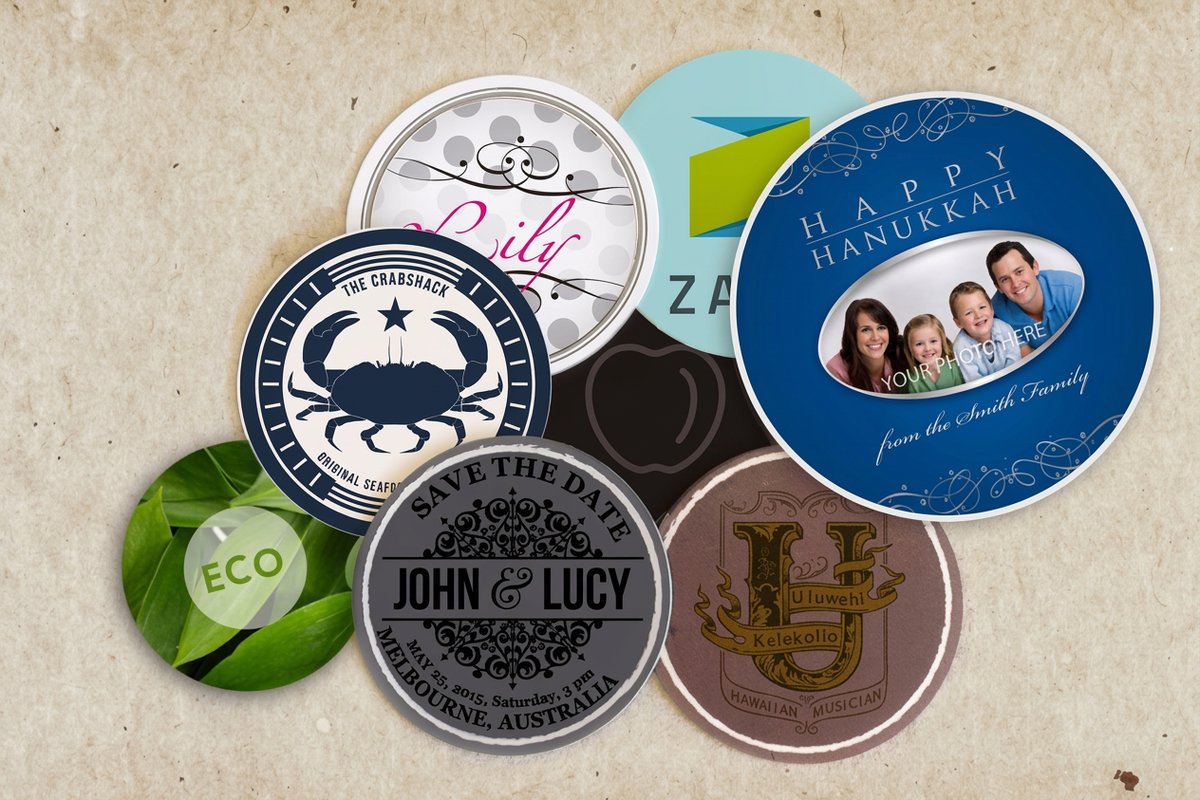
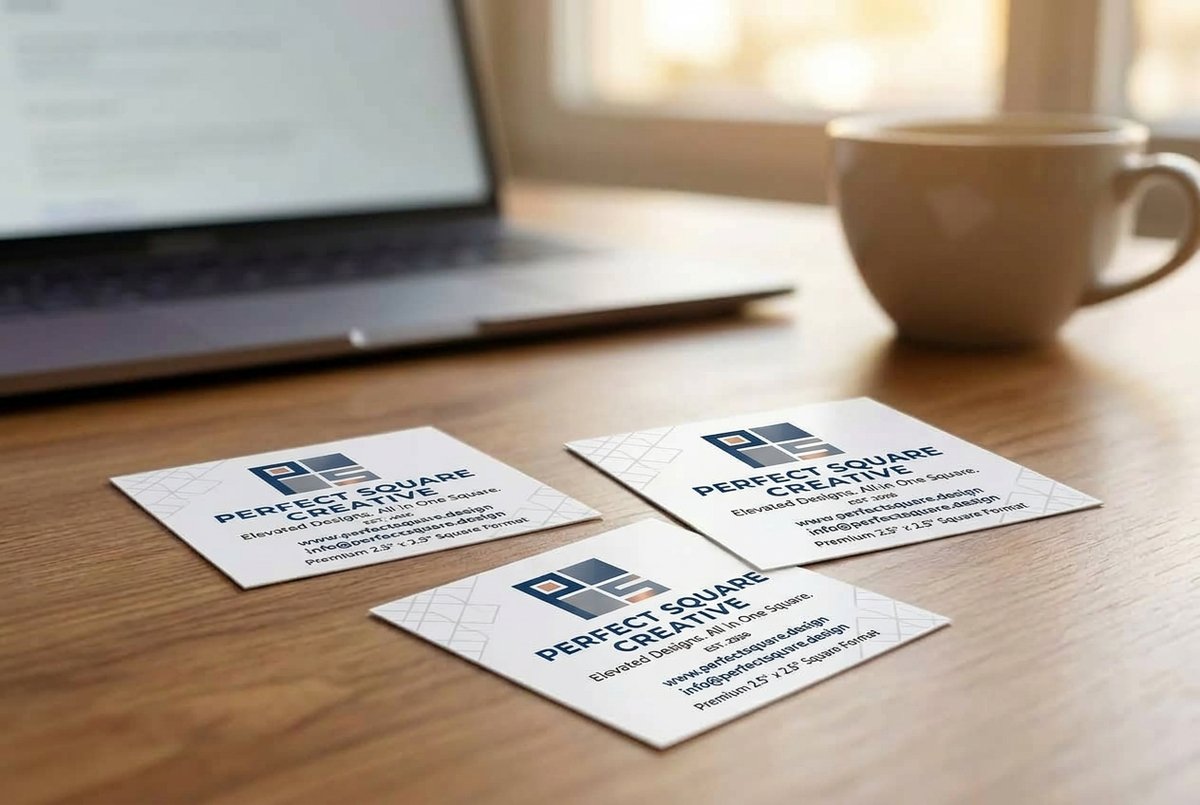
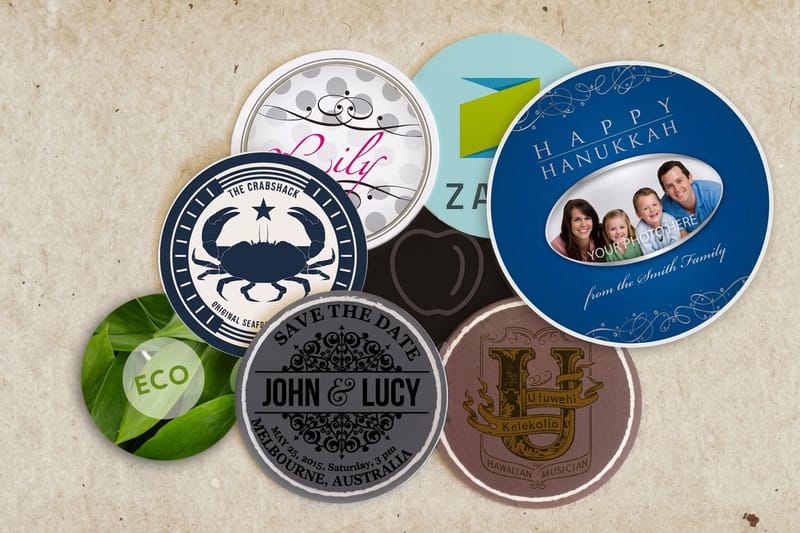
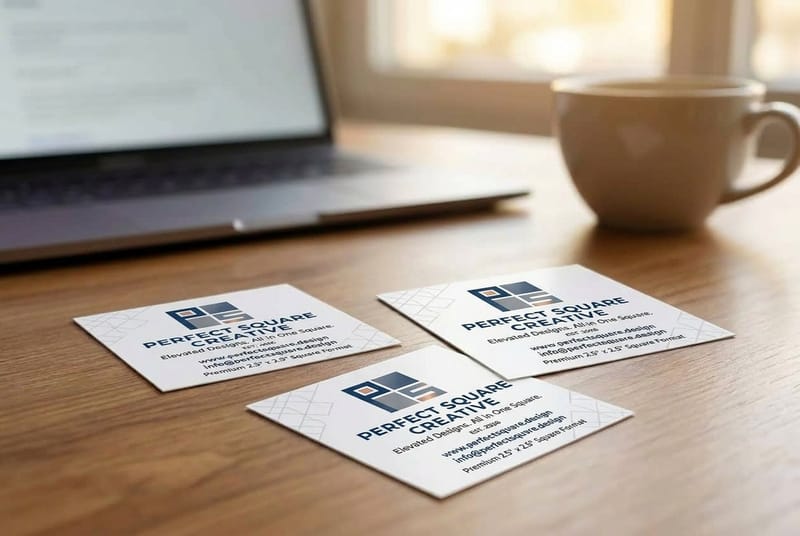
- Square cards swap the 3.5 by 2 inch rectangle for a bold, symmetrical footprint. Explore the square card collection and the square business cards, and see the case for them in are square business cards a good idea.
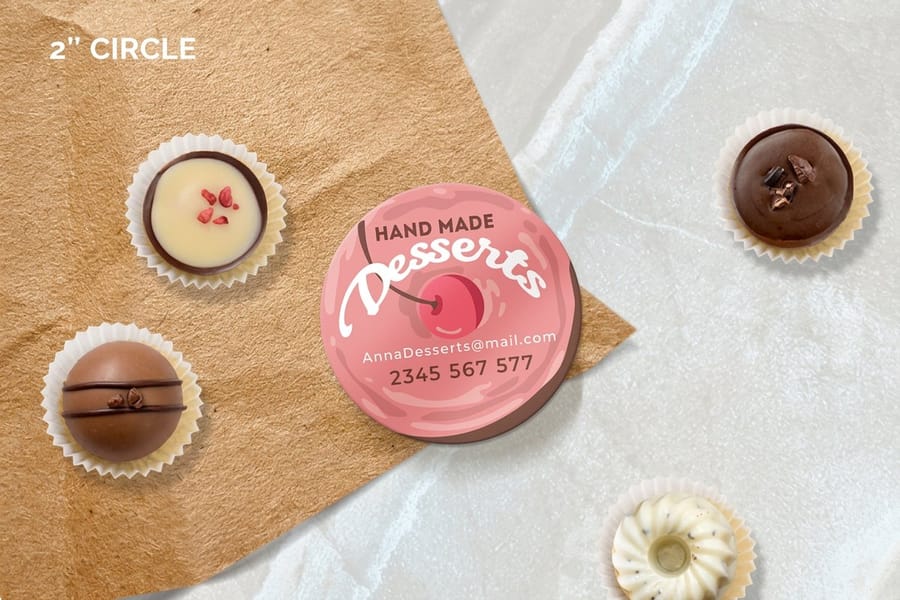
- Circle and oval cards go fully curved for a playful, memorable look. Browse the circle card collection and the oval card collection when you want the shape itself to be the hook.
- Custom shapes trim the outline to match your logo or product for maximum standout, all handled by the same shaped-cutting process.
If you want the full comparison of the two most common choices, our guide on rounded vs square business cards sits right alongside this one. And to see the whole range in one place, the business cards category and a browse by shape lay out every option 4OVER4.COM prints.
How to choose: a quick decision framework
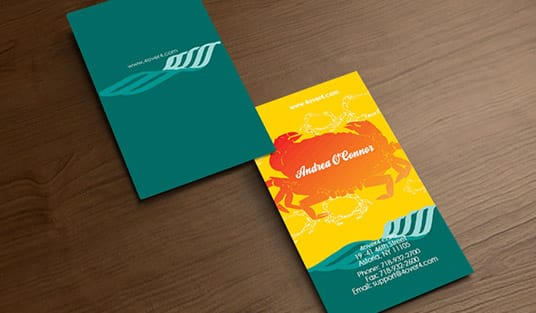
When it comes down to it, the decision is fast. Ask three questions and the answer usually reveals itself.
- Is the card part of the brand experience, or just contact info? If it represents a premium or personal brand, round the corners. If it is a functional card for a large team, square-cut is fine.
- How long will it circulate? Cards that live in wallets for months earn their rounded corners. Cards handed out en masse at an event can stay square.
- What leads the budget, unit cost or impression? If cost and turnaround lead, go standard. If impression leads, the small rounding fee is easy to justify.
Still torn? A common answer is both: square-cut cards for the whole company and rounded cards for client-facing roles. Whichever way you lean, you can preview the exact look in the online designer, start from a ready layout in design templates, or follow our walkthrough of the free business card design tool. Then round or keep it square and send it straight to print with round business cards or the standard collection.
Wally weighs the corners
The edge is the first thing a thumb notices
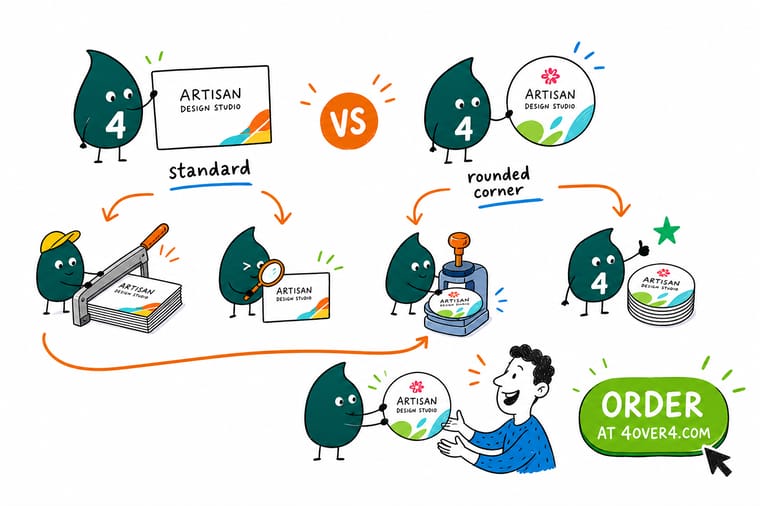
Wally likes to say the corner is the handshake of a business card. Round it, and the card feels premium and shrugs off wallet wear. Keep it square, and you get the classic look at the lowest cost with the fastest turnaround. Same size, same stocks, so pick the feel your brand should give, then let 4OVER4 cut it to match.
Order round business cards →Specs and pricing
Round business card specs and live pricing
Here is what a rounded corner card gives you at 4OVER4.COM, with real specs and price-per-unit straight from the configurator. Configure a standard card the same way to compare the exact difference for your run.
| Quantity | Price Per Unit | Total |
|---|---|---|
| 100 | $1.42 | $141.70 |
| 200 | 92.8¢ | $185.63 |
| 300 | 76.5¢ | $229.57 |
| 400 | 65.6¢ | $262.52 |
| 500 | 59.1¢ | $295.47 |
| 600 | 51.4¢ | $308.65 |
| 700 | 46.0¢ | $321.83 |
| 800 | 41.9¢ | $335.02 |
Print it
Compare corner styles side by side
| Corner style | Pros | Cons | Best for | Cost impact |
|---|---|---|---|---|
| Square cut, 90 degree corner | The classic, formal look, no extra cutting step so it is the fastest version off the press, and every stock and finish is available. | The sharp tips take the wear first, so the white core shows after a few weeks in a wallet, and the card reads the same as everyone else in the stack. | Large runs, 14pt gloss or matte, and finance, law, and real estate brands that trade on precision. | The baseline, no cutting surcharge. |
| Rounded, 1/8 inch radius | Softens the card without announcing it, feels premium in the hand, and survives pocket and wallet carry because there is no tip to catch. | Adds a die-cutting step, and any border or rule near the trim needs checking so the curve does not clip it. | The everyday premium card: 16pt silk laminate or soft-touch, where you want the upgrade felt rather than seen. | A small die-cutting fee over the identical square-cut card, proportionally smaller as quantity rises. |
| Rounded, 1/4 inch radius | An obvious, deliberate curve that shows off thickness, and the most forgiving corner of all in a badge holder or back pocket. | It eats more of the corner, so logos, page numbers, and framing rules have to sit further in from the trim, and thin borders can look uneven. | Statement cards on 32pt ultra-thick or soft-touch stock, and wellness, hospitality, and creative brands that want to read as approachable. | The same small die-cutting step as the 1/8 inch radius. |
| Square footprint, clean corners | Drops the 3.5 by 2 inch rectangle for a symmetrical outline, so the shape itself is the thing people remember. | It will not sit flush in a standard card slot or holder, and the layout has to be redrawn rather than reused. | Brands that want the outline to do the standing out, and cards handed out at events rather than filed. | Priced with the shaped cut, so configure it and read the live per-unit price. |
See it in use
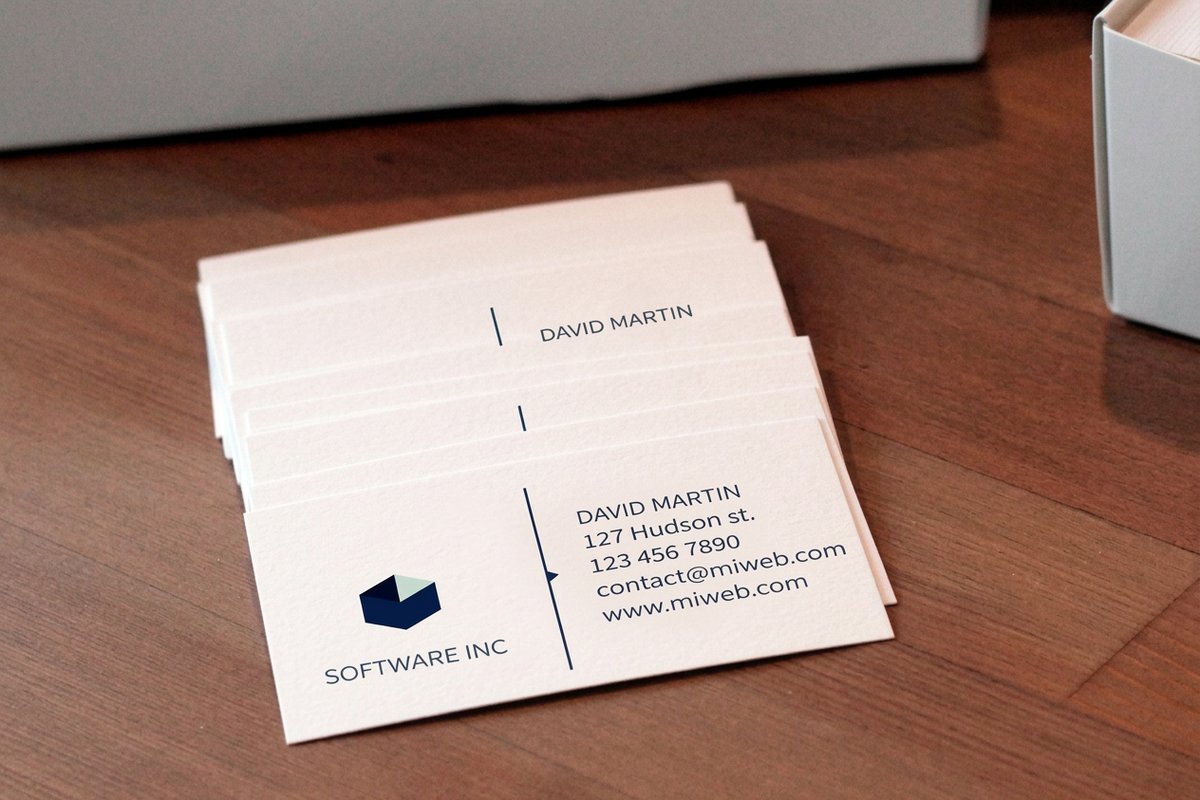
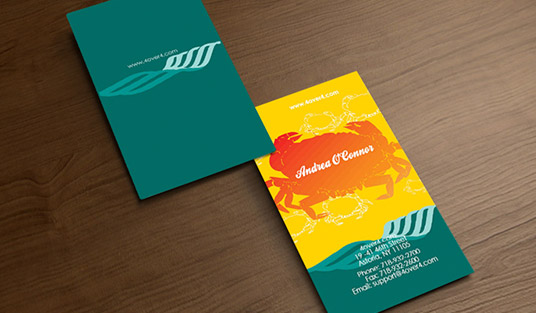
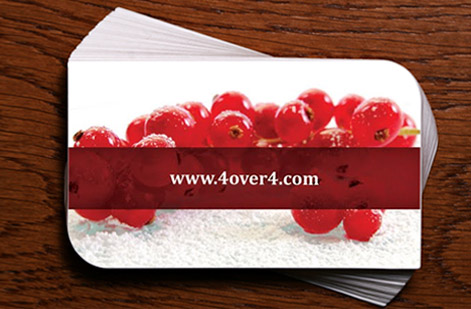
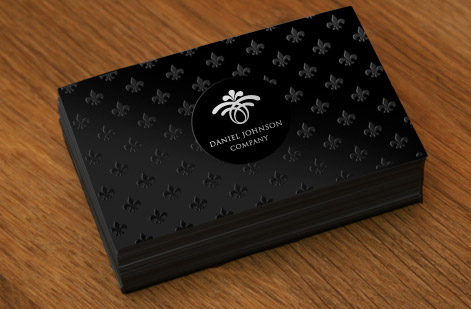
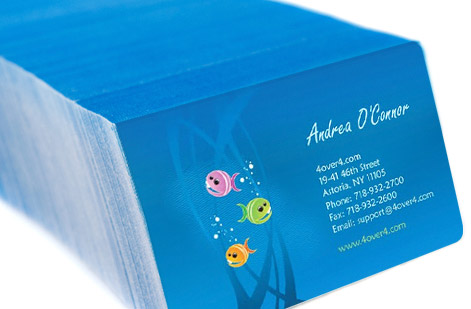
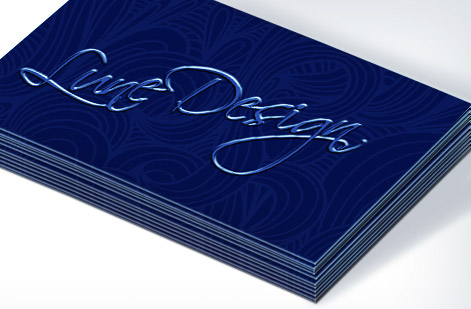
Real business card work, printed in-house
Explore more
Where to go next
By the numbers
Business card printing you can count on at 4OVER4
Common Questions
Common questions about standard and rounded corner cards
Are rounded corner business cards more expensive than standard cards?
Rounded corners add a small die-cutting step, so they usually cost a little more than a plain square-cut card of the same stock and quantity. The gap is modest on most runs, and it shrinks as your quantity climbs. If you want the exact difference, drop the same size and stock into the 4OVER4.COM configurator for both a standard card and a round-cornered one and compare the live per-unit price.
What does "rounded corner" actually mean on a business card?
It means each of the four corners is cut to a gentle curve instead of a sharp 90-degree point. The most common radius is about 1/8 inch, which is enough to soften the look and feel without eating into your design area. The card stays the same 3.5 by 2 inch footprint as a standard card, so it still fits every wallet and cardholder.
Do rounded corners hold up better than square corners?
Yes, in everyday carry they do. Sharp corners are the first part of a card to bend, whiten, or fray once the card spends time in a pocket, purse, or stack. A rounded corner has no point to catch, so it keeps a clean edge much longer. That durability is a big reason premium and heavier cards so often ship with rounded corners.
Can I get rounded corners on any cardstock or finish?
Almost always. Rounded cornering is a cut, not a coating, so it layers on top of nearly any 4OVER4.COM stock and finish, including gloss, matte, soft-touch, silk laminate, and thick ultra stocks. The heavier and more textured the card, the more a rounded corner tends to flatter it. The main exception is a design that runs critical artwork right into the corner, since the curve trims that area.
Should I choose square or rounded corners for a large business card order?
For a large run where budget and turnaround lead the decision, standard square-cut cards are usually the smart call because they are the fastest and least expensive to produce. If the card is the face of a premium brand and the impression matters more than a few cents per card, rounded corners are worth it even at volume. Many teams split the difference: standard cards for the whole company, rounded cards for client-facing roles.
Will rounded corners change my business card size or template?
No. The trim size stays the same, so a rounded card drops into standard wallets, badge holders, and cardholders just like a square-cut one. You do want to keep important text and logos inside the safe zone, away from the very edge, so the corner curve never clips anything. If you design in the 4OVER4.COM online tool, the safe-area guides handle that for you automatically.
Get Started
Ready to pick your corner and print?
Choose rounded for a premium feel or standard square-cut for speed and value, drop in your design, and we print a crisp card that looks right the moment it leaves your hand.
Legal Disclaimer
Gold Standard guarantees apply to all standard orders placed through 4over4.com. Price match requires verifiable proof of a competitor's published price for an equivalent product with matching specifications and turnaround time. Satisfaction guarantee covers manufacturing defects and print quality issues. Contact support with order number and documentation. On-time delivery rate based on tracked orders 1999 to 2026. Individual results may vary based on shipping carrier performance.
