
How Do 3D Lenticular Business Cards Work?


A lenticular business card moves. Tilt it and the image flips, animates, or gains real depth, all from a ridged lens bonded over a specially interlaced print. Here is exactly how that works, what it costs, how thick the card is, and how to order one.
A 3D lenticular business card works by bonding a ridged plastic lens over a print made of several interlaced images. Each row of tiny lenses bends light so your eye sees a different slice depending on the viewing angle. Tilt the card and those slices swap fast enough to read as a flip, an animation, or 3D depth. The effect is printed into the card itself, so it never needs power and never wears out.

Start here
What a lenticular business card actually is
A lenticular business card is a printed card topped with a ridged lens that reveals different images at different angles. Instead of one static face, the card holds several interlaced images under a grid of tiny lenses. Move the card and the lenses switch which image reaches your eye, producing a flip, an animation, or genuine 3D depth. Everything below breaks down the lens, the interlacing, the three effects, the thickness, the cost, and how to set up your file.
How the lens bends light into motion
Run a fingertip across a lenticular card and you feel fine parallel ridges. Each ridge is a lenticule, a long cylindrical micro-lens, and thousands of them sit side by side across the card. A lens has one job: it bends the light passing through it toward a focal point, so from any single angle your eye receives light from only one narrow strip of the print underneath.
Because every lens is pointed slightly differently relative to your eye, the whole surface shows one coherent image at a given angle. Shift the card a few degrees and the focal point slides to the next strip, so a completely different image snaps into view. That is the entire trick: the card is not changing, your viewing angle is, and the lenses are translating that angle into which hidden image you see.
The density of those lenses, measured in lenses per inch or LPI, decides how crisp the effect looks and how many frames it can carry. A finer lens holds more information but demands tighter print registration, which is why lenticular work belongs with a printer that runs it regularly rather than a general desktop press.
Interlacing: how two images become one moving card
Before anything is printed, the source images are interlaced. Each image is cut into thin vertical strips, and the strips are shuffled together so that strip one of image A sits next to strip one of image B, then strip two of A, strip two of B, and so on. The combined file looks like a blurry mess of stripes on a screen, which is exactly right, because it is built to be read through the lens, not by your eye directly.
The strips are spaced so that each set falls under one lenticule. When the lens focuses your eye on the A strips you see image A, and a small tilt moves the focus to the B strips and image B appears. For a multi-frame animation the same logic scales up, with three, four, or more frames interlaced under each lens. If you would rather not build interlaced art yourself, our online design tool and ready-made design templates give you a clean starting point, and every 3D lenticular business card order is checked before it prints.
Registration is everything here. The interlaced print and the lens ridges have to align to a fraction of a millimeter, or the images bleed into each other and the effect turns muddy. That alignment is done on press, which is part of what separates a genuinely crisp lenticular card from a gimmicky one.
Flip, animation, and 3D depth explained
The same lens carries three distinct effects depending on how you build the art. A flip swaps between two images, so a logo becomes a tagline, or a product becomes a price, as the card tilts. It is the boldest, most legible effect and the easiest to read across a room.
An animation interlaces a short sequence of frames, so a small motion plays as you rock the card: an arrow that advances, a character that waves, a shape that spins a quarter turn. It needs more frames per lens, so keep the movement simple and high-contrast. A 3D depth effect interlaces views of the same scene from slightly different angles, the way your two eyes see the world, so the card gains real front-to-back layering with a foreground that floats above the background.
Each effect suits a different goal. Use a flip for a memorable two-part message, animation for a moment of delight, and 3D for a premium, tactile sense of depth. If you are weighing a lenticular card against other attention-grabbing finishes, our guides on holographic business cards and clear business cards cover the alternatives.
How thick and durable a lenticular card is
The lens is a solid plastic sheet, so a lenticular card is noticeably thicker and stiffer than a standard 14pt or 16pt paper card. That extra body is a feature, not a drawback: the card feels weighty and premium, resists bending, and the plastic lens shrugs off the fingerprints and scuffs that dull a coated paper card over time.
Because the surface is plastic, it is also more water-resistant and harder to tear than paper stock. The tradeoff is that the card will not take a pen the way an uncoated card does, so plan any handwritten notes out of your workflow and keep all information printed. For a sense of how standard paper weights compare, our business card thickness chart lays out the usual options next to this heavier lens stock.
What lenticular business cards cost and how prices are set
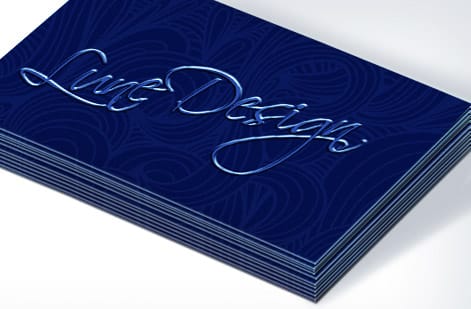
Lenticular cards cost more than standard cards, and the reason is the process: the specialty lens material, the interlacing work, and the tight on-press registration all add up. Price then scales the way every print job does, with quantity as the biggest lever, since setup is a large share of the cost and spreads thinner across a larger run.
The number of frames also matters. A simple two-image flip is the most economical effect, while a multi-frame animation or a layered 3D scene asks more of the file and the press. You set the quantity and options in the live configurator and watch the price update as you go, so you can see exactly what a bigger run does to the per-card cost before you commit. Because these cards are an investment, order a proof or samples first so you can confirm the effect in hand.
Weigh the cost against the payoff. A card that physically moves stops people, gets kept instead of tossed, and starts a conversation on its own, which is a hard result to buy with a flat card at any price.
Designing art that reads cleanly through the lens
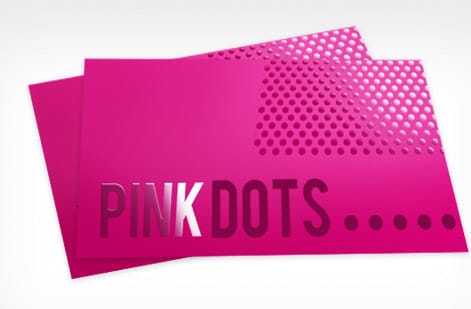
Lenticular art rewards simplicity. Because each frame is only ever seen in thin strips, bold shapes, heavy contrast, and large type survive the effect far better than fine detail or small text. Keep your essential contact information on a stable part of the design that reads clearly from the main viewing angle, and save the motion for a logo, an icon, or a single word.
Limit a flip to two strong, clearly different images so the switch is obvious, and keep animation to a few frames of simple movement. High contrast between frames helps the transition land; low-contrast frames tend to ghost into each other. When you are ready, upload your file to the 3D lenticular business card product page, and if you want a matching set, the full lenticular collection carries postcards, stickers, and more in the same technology.
Wally tilts the card so the lens does its trick
Motion is printed in, not powered on
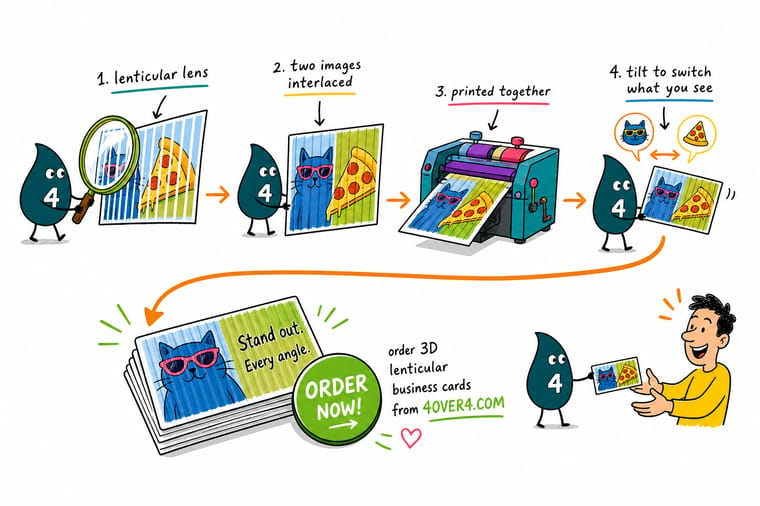
Wally shows how the ridged lens hands your eye one image strip at a time, so a small tilt swaps the whole picture. Two images make a flip, a few frames make an animation, and angled views make real 3D depth. It never needs a battery and never wears out, because the effect lives in the card itself. Build bold, high-contrast frames, keep your contact details steady, and 4OVER4 handles the interlacing and press registration.
Order your lenticular cards →Quick reference
Lenticular business card setup at a glance
The lens and the interlacing set the ground rules. Match these and your art will read cleanly through the finished card.
| Setting | What to pick | Why it matters |
|---|---|---|
| Effect type | Flip, animation, or 3D depth | Pick one intent per card; combining effects on a small surface muddies all of them. |
| Frames | 2 for a flip, 3 to 5 for animation | More frames need finer interlacing, so keep motion simple for a card-sized lens. |
| Contrast | High between frames | Strong differences read as a clean switch; similar frames ghost into each other. |
| Text | Keep contact info static and large | Fine type breaks up when sliced into strips, so lock key details to the main angle. |
| Card body | Rigid plastic lens stock | The lens adds thickness and durability, giving the card its premium in-hand feel. |
| Proof | Order a sample before a full run | Motion effects are best judged in hand, so confirm the flip or 3D before scaling up. |
Step by step
How to order a lenticular business card in 6 steps
- Choose your effect Decide whether the card should flip between two images, play a short animation, or show 3D depth. That choice shapes how you build the art.
- Prepare your frames Create each image as its own layer or file at full resolution, using bold shapes and high contrast so every frame survives the lens.
- Keep contact details stable Place your name, title, and contact information where they read clearly from the main viewing angle, off the moving element.
- Open the product configurator Go to the 3D lenticular business card page, set your quantity, and review the options as the live price updates.
- Upload and let us interlace and check Send your layered art. Our team handles the interlacing and on-press registration, and every order is reviewed before it prints.
- Proof, then run the full order Confirm the effect on a sample so you know exactly how the motion reads, then approve the full run with confidence.
Specs and pricing
Lenticular business card specs and live pricing
Set quantity and options below to see the live per-card price and full specs for 3D lenticular business cards, straight from the configurator.
| Quantity | Price Per Unit | Total |
|---|---|---|
| 500 | $1.38 | $690.88 |
| 1,000 | 80.1¢ | $800.72 |
| 2,000 | 53.2¢ | $1,064.33 |
| 3,000 | 43.5¢ | $1,305.98 |
| 5,000 | 35.1¢ | $1,756.30 |
| 10,000 | 31.8¢ | $3,184.20 |
| 15,000 | 26.4¢ | $3,953.06 |
| 20,000 | 23.6¢ | $4,721.92 |
Order it
Order lenticular cards that move

See it in use
Real business card work, printed in-house
Explore more
Where to go next

By the numbers
Printing you can count on at 4OVER4
Common Questions
Common questions about lenticular business cards
How do 3D lenticular business cards work?
They work by bonding a ridged lens over a print made of several interlaced images. Each micro-lens bends light so your eye sees only one thin strip of the artwork at a time, and which strip you see changes with the viewing angle. Tilt the card and those strips swap fast enough to read as a flip between two images, a short animation, or genuine 3D depth. The whole effect is printed into the card, so it needs no power and does not wear out.
How do I choose the right lenticular effect for my card?
Match the effect to your message. A flip is the boldest and most legible, ideal for turning a logo into a tagline or a product into a price. An animation adds a moment of delight with a few frames of simple movement. A 3D depth effect gives the card a premium, layered feel with a floating foreground. If your goal is a clear two-part message pick a flip, if it is a wow moment pick animation, and if it is a tactile premium impression pick 3D.
What do lenticular business cards cost and how are prices set?
They cost more than standard cards because of the specialty lens material, the interlacing work, and the tight on-press registration. From there, price scales with quantity, since setup is a large share of the cost and spreads thinner across a bigger run, and with the number of frames, as a simple flip costs less than a multi-frame animation or 3D scene. You set quantity and options in the live configurator and the price updates as you adjust, so you can see the per-card cost before ordering.
How thick are lenticular business cards?
They are noticeably thicker and stiffer than a standard 14pt or 16pt paper card because the lens is a solid plastic sheet. That extra body makes the card feel weighty and premium, resists bending, and the plastic surface shrugs off fingerprints and scuffs. The tradeoff is that the plastic will not take a pen, so keep all information printed rather than handwritten.
How long do lenticular business cards take to print and ship?
Lenticular cards are a specialty product, so they run on a longer schedule than standard cards because of the interlacing and precise lens registration involved. The live turnaround and shipping options appear in the configurator when you set your quantity. For a time-sensitive event, order early and request a proof so you can confirm the motion effect before the full run is produced.
Can I put a lot of text on a lenticular card?
Keep text minimal on the moving element and large where it needs to stay readable. Because each frame is only ever seen in thin strips, fine or small type breaks up through the lens. The reliable approach is to lock your name, title, and contact details to a stable part of the design that reads from the main viewing angle, and reserve the motion for a logo, an icon, or a single bold word.
Get Started
Ready to hand out a card that actually moves?
Build your frames, upload your art, and let 4OVER4 handle the interlacing and lens registration. Set quantity and options and watch your price update live.
Legal Disclaimer
Gold Standard guarantees apply to all standard orders placed through 4over4.com. Price match requires verifiable proof of a competitor's published price for an equivalent product with matching specifications and turnaround time. Satisfaction guarantee covers manufacturing defects and print quality issues. Contact support with order number and documentation. On-time delivery rate based on tracked orders 1999 to 2026. Individual results may vary based on shipping carrier performance.
