
Custom Step and Repeat Backdrops From Sizing to Setup


A step-and-repeat puts a logo in every event photo. Here is how to size the backdrop to your crowd, from 8 by 8 ft up to 10 by 20 ft, tile logos so they survive heads and shoulders, pick a stand, and choose fabric or vinyl.
A step-and-repeat is a banner with a logo tiled in a repeating grid, so a logo lands in every photo. Size it to how many people pose at once, from 8 by 8 ft up to 10 by 20 ft, stagger the logos so a full one shows above heads and shoulders, pick matte fabric or matte vinyl to kill glare, and mount it on an adjustable stand.
Sizes at a glance: 8 by 8 ft for two to four people and tight corners, 8 by 10 ft when the space is wider than it is tall, 10 by 10 ft for four to six and the size most events order, 10 by 20 ft for a red-carpet line of eight to ten. Allow 2.5 to 3 ft of width per person, and about half a foot of ceiling above the banner for the top bar of the stand.
Sizes
Standard step and repeat backdrop sizes: 8x8, 8x10 and 10x10
Pick the size by the number of people who pose at once, then confirm the room can take the height. Allow 2.5 to 3 ft of backdrop width per person, so two people need about 6 ft, four about 10 ft and six about 16 to 18 ft, and add roughly half a foot above the banner for the top bar of the stand.
| Backdrop size | People per shot | Minimum ceiling | Logo rows to plan | Best for |
|---|---|---|---|---|
| 8 by 8 ft | 2 to 4 | about 8.5 ft | 4 staggered rows | Small photo corners, low ceilings, 64 sq ft of print |
| 8 by 10 ft | 4 to 6 | about 8.5 ft | 4 staggered rows | A wide corner under a low ceiling, 80 sq ft of print |
| 10 by 10 ft | 4 to 6 | about 10.5 ft | 5 staggered rows | Galas and openings, the default size, 100 sq ft of print |
| 10 by 20 ft | 8 to 10 | about 10.5 ft | 5 rows across a doubled width | Red-carpet lines and sponsor walls, 200 sq ft of print |
| Custom size | Set by width, at 2.5 to 3 ft per person | Banner height plus about half a foot | Enough rows that a full logo clears the shoulders | Stages, alcoves and rooms no standard size fits |
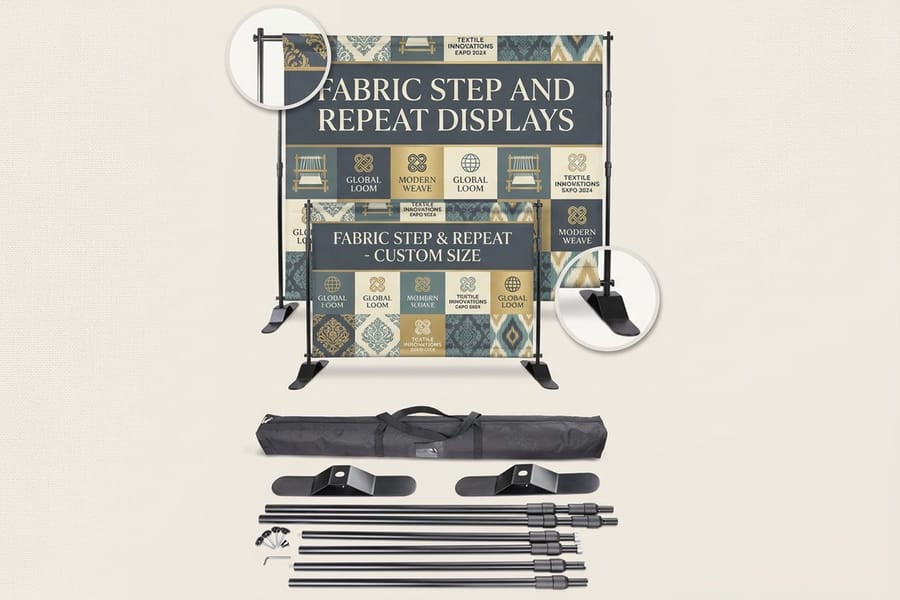
Every size prints on matte fabric or matte vinyl to keep flash glare off the logos, and every size pairs with an adjustable telescopic or retractable frame. See the sizes on step-and-repeat banners, the fabric version on fabric step-and-repeat, and the matching frames on step-and-repeat banner stands.
Start here
Step-and-repeat backdrops in one paragraph
A step-and-repeat is a banner printed with a logo tiled in a repeating grid, mounted on a stand behind an event photo spot. Size it to how many people pose at once, stagger the logos so a full one always shows above heads and beside shoulders, choose a matte fabric or matte vinyl surface to stop flash glare, and pair it with an adjustable stand rated for the banner. The layout diagram below shows where logos need to land.
What a step-and-repeat backdrop is
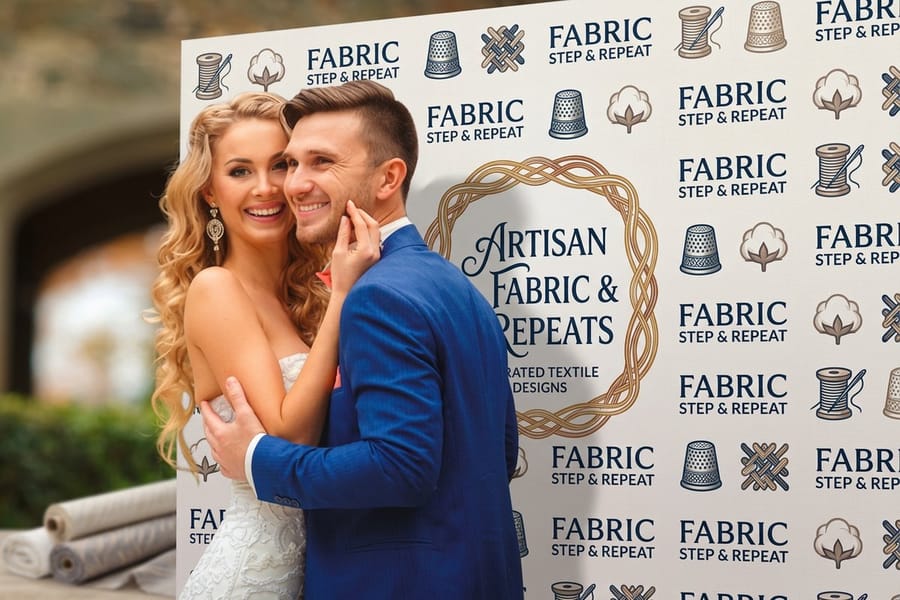
A step-and-repeat is a large banner printed with a logo, or a mix of brand and sponsor logos, tiled in a repeating grid across the whole surface. The name comes from the red carpet: guests step up, pose, and the pattern repeats behind the next person, so a logo lands in every photo taken in front of it.
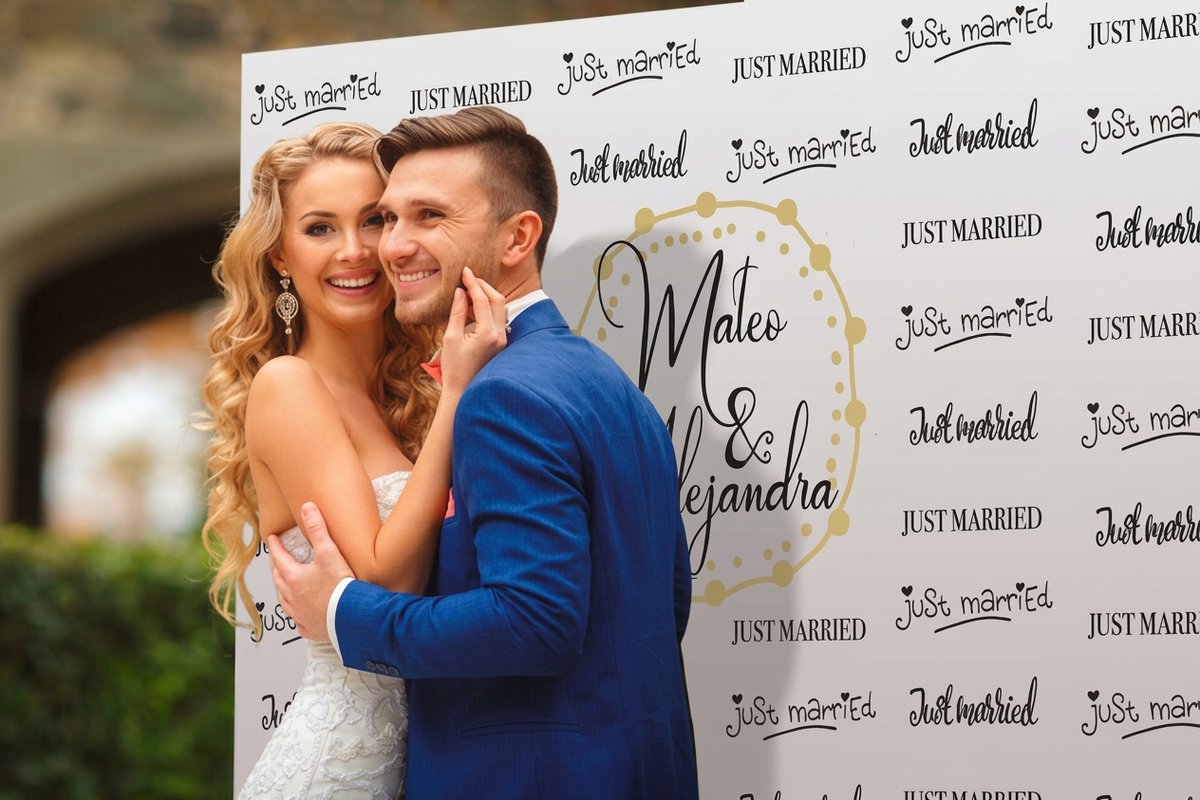
The repeating layout is the entire trick. A single centered logo would vanish behind whoever stands there, but a tiled pattern guarantees a full, readable logo shows above the head and beside the shoulders no matter where a person poses. That is why every gala, premiere, and product launch uses one for its photo wall.
Set on an adjustable stand, a step-and-repeat turns any wall or open corner into branded media. This guide walks the whole build in order: sizing, logo spacing, the stand, the material, and setup. Our step-and-repeat banners and online design tool make it straightforward to get right.
Sizing your backdrop to the crowd and the room
The first decision is size, and the right way to make it is to count people, not guess dimensions. Figure out how many will pose at once and match the width to them. An 8 by 8 ft wall suits two to four people and small photo corners. A 10 by 10 ft wall, the popular default, holds four to six for galas and openings. A 10 by 20 ft wall handles a full red-carpet line of eight to ten.
The arithmetic behind those step and repeat sizes is one number: allow 2.5 to 3 ft of backdrop width per person standing in the shot, plus a little air at each end so nobody gets cropped. Two people need about 6 ft, four people about 10 ft, and six people about 16 to 18 ft. That is why 8 by 8 ft works for a group of two to four who stand close, why a 10 by 10 ft wall is comfortable for four and still holds six when they close ranks, and why a real red-carpet line needs the 10 by 20 ft. An 8 by 10 ft wall is the in-between pick: the same 10 ft of width as the popular size, but only 8 ft tall for a room that cannot take a 10 ft frame.
Then check the room. Measure the ceiling height so the stand fits under it, confirm the floor space for the frame's footprint, and leave enough clearance for guests to step back far enough that a photographer can frame the whole group. A backdrop that is too big for the ceiling or too wide for the corner causes headaches on the day.
Height is where most orders go wrong. Add roughly half a foot above the banner for the top bar of the stand, so an 8 ft tall wall wants about 8.5 ft of ceiling and a 10 ft tall wall about 10.5 ft. Hotel suites, restaurants and low ballrooms are exactly where the 8 ft high sizes earn their keep. Leave 8 to 10 ft of clear floor in front of the wall as well, or the photographer shoots too tight and the tiled logos fall outside the frame.
When a standard size does not fit the space or the stage, order a custom size and match the wall to the room exactly. Pair the banner with a matching stand from the start, and browse the custom printing collection to size an event set together.
Compare the step and repeat sizes side by side on the step-and-repeat banners page, check the same sizes in fabric on fabric step-and-repeat, and set the width you picked against the frames on step-and-repeat banner stands before you commit.
Logo spacing and layout that survives a crowd
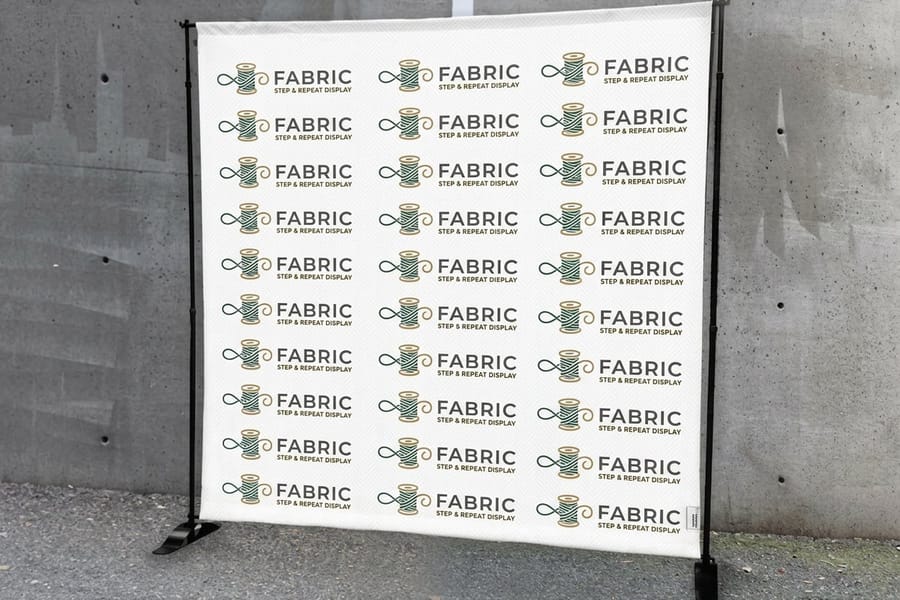
A step-and-repeat lives or dies by its logo spacing. Because a person blocks a vertical band from about the waist up, any logo trapped in the center disappears behind them. The fix is a staggered, tiled grid where full logos sit in the upper third of the wall, right where cameras frame faces, and along the sides beside the shoulders.
Size each logo to read clearly from several feet away, and keep the vertical repeat tight enough that a complete logo always lands above head height. Offsetting alternate rows, rather than stacking logos in straight columns, means a gap in one row is covered by a logo in the next, so there is never a dead zone.
Extend the pattern past the trim on every side so no edge shows a half-cut logo, and avoid placing critical text only in the center band. Our design tool lets you preview the tiled layout before printing, and the diagram in this guide shows exactly where logos need to land.
Choosing a stand that sets up fast
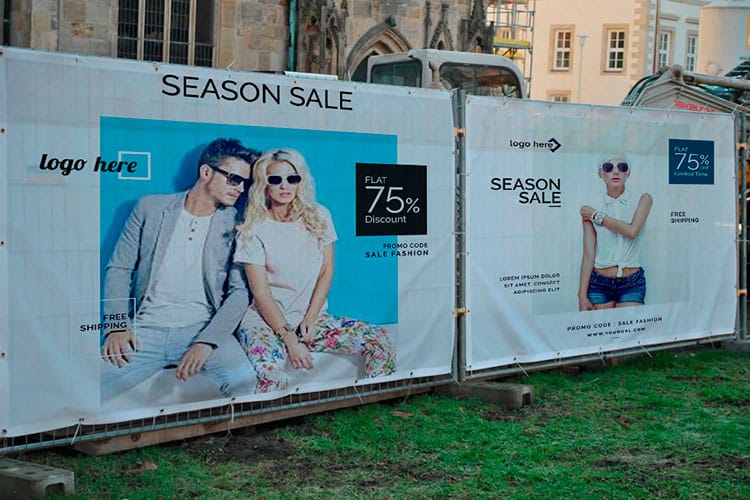
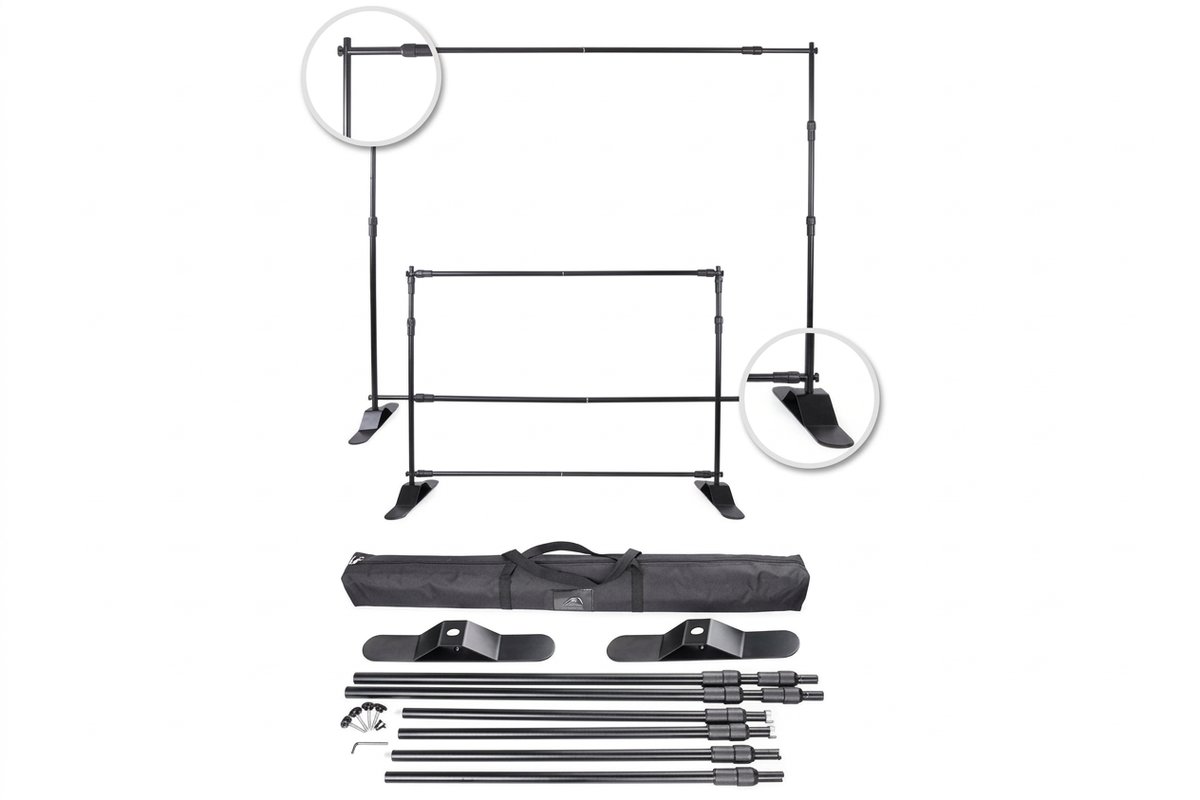
The banner is only half the kit. A step-and-repeat needs a stand to hold it taut, level, and wrinkle-free, and the stand is what makes setup quick at the venue. Two styles cover most needs. An adjustable telescopic frame widens and heightens to your exact backdrop size and is the standard choice for a dedicated photo wall.
A retractable stand trades some size flexibility for speed, popping up in minutes, which is handy when staff set up under time pressure or the backdrop travels between events. Whichever you pick, confirm it is rated for your banner's dimensions so the fabric or vinyl hangs drum-tight rather than sagging.
Order the banner and the step-and-repeat stand together so they arrive matched and ready to assemble. Our banner stands range covers the sizes and styles that fit each backdrop, and pairing them up front avoids a mismatch on event day.
Set the frame to the size you ordered and check three numbers before you book the room. 8 by 8 ft: two to four people in the shot, about 8.5 ft of ceiling once the top bar is on, and plan four staggered logo rows so two of them clear head height. 8 by 10 ft: four to six people, the same 8.5 ft of ceiling, four staggered rows across a wider grid. 10 by 10 ft: four to six people, about 10.5 ft of ceiling, five staggered rows. 10 by 20 ft: eight to ten people, about 10.5 ft of ceiling, five rows carried across a doubled width, and a frame rated for the full span so the center does not sag. On a custom size, work back from the same rules: 2.5 to 3 ft of width per person, half a foot of clearance above the banner, and enough rows that a full logo always sits above the shoulders.
Material: fabric or vinyl for a glare-free photo wall
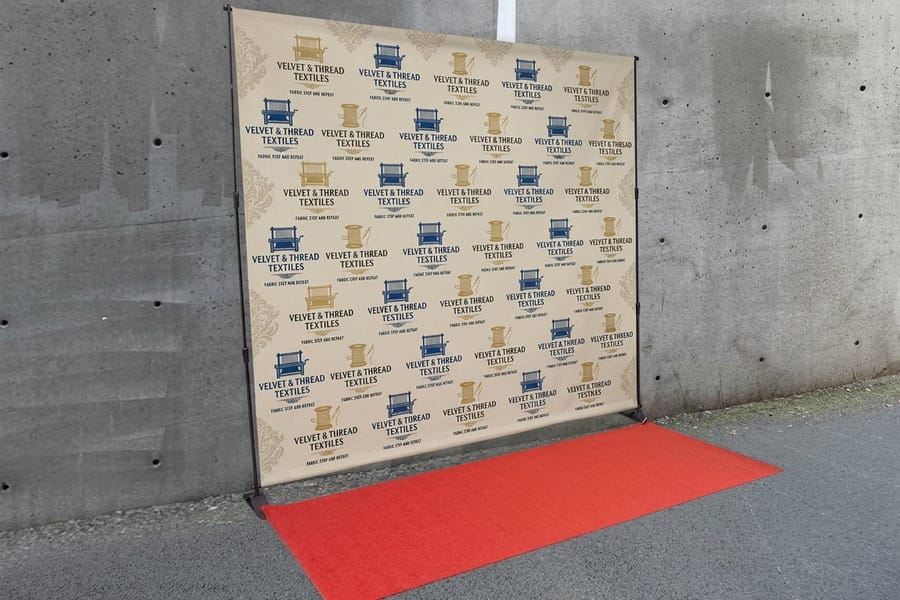
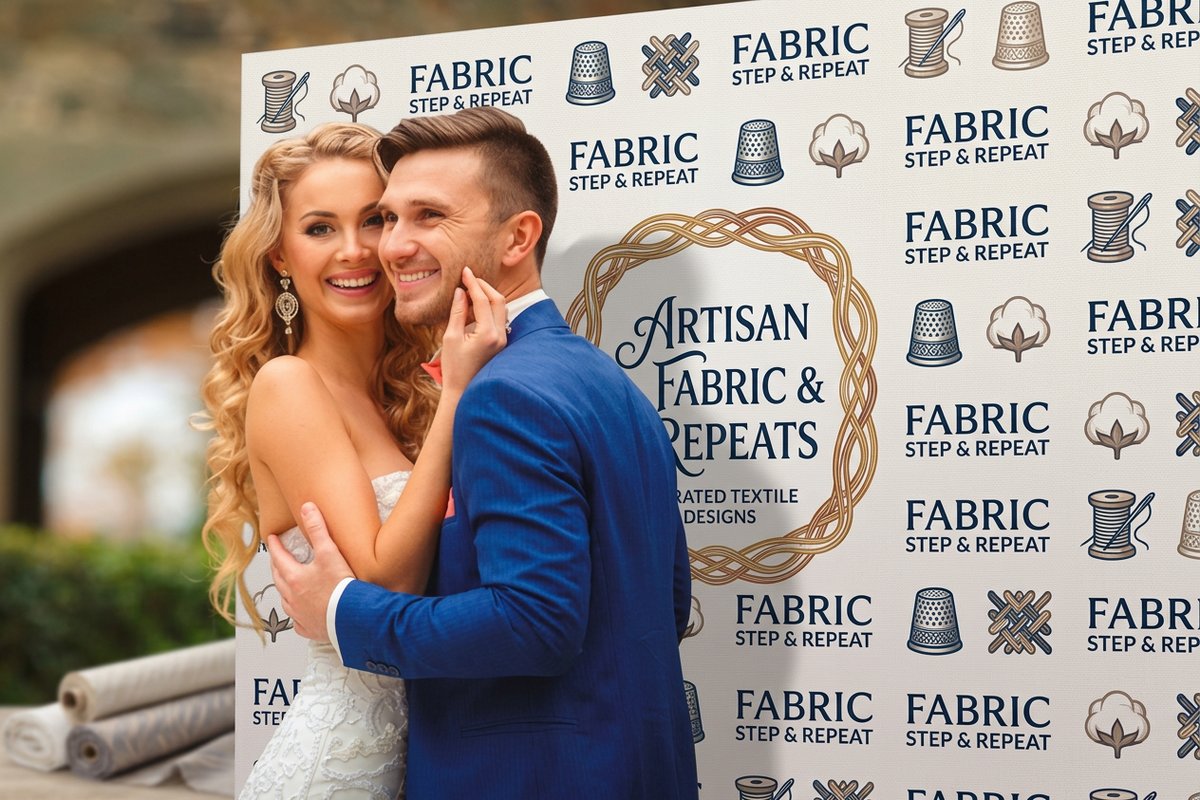
Material matters most for one reason: camera glare. A shiny surface bounces flash straight back and blows out logos in photos, so both good options are matte. A matte fabric backdrop has a premium, wrinkle-resistant finish that photographs beautifully, packs down small for travel, and is the go-to for upscale events and repeated use.
A matte vinyl backdrop is the rugged, more affordable route. It stands up to high-traffic and outdoor settings and cleans easily, which suits one-off events or venues where the wall takes a beating. Both kill glare, so the choice comes down to look, durability, and budget rather than photo quality.
If the backdrop will appear in polished, close-up photography or gets reused across a season of events, lean fabric. If it needs to be tough and economical for a single big day, lean vinyl. Either way, a matte surface keeps every posed shot clean and every logo readable.
Printing and setting up at the venue
With the design done, export a print-ready file at the full backdrop size with the pattern bleeding past every edge. Order the banner and the stand together so nothing is missing on event day, and if the wall is large or the day is important, build in a comfortable turnaround buffer.
Setup at the venue is quick with the right stand. Assemble the frame first, then attach the banner and tension it so the surface is drum-tight with no sag or wrinkle, since slack fabric reads as sloppy in photos. Position the wall where guests can step back for a clean shot and where venue lighting will not throw a hotspot across the logos.
Do a test photo before guests arrive to confirm the logos read and the surface is glare-free. Use the live specs and pricing panel below to build your step-and-repeat banner and stand, so the whole photo wall arrives ready to assemble.
Choosing the right backdrop for your event
Bring the decisions together and the right backdrop almost picks itself. Size by the crowd and check the room, tile your logos so they survive heads and shoulders, choose matte fabric for a premium reusable wall or matte vinyl for a tough economical one, and match a stand rated for the banner.
Think about reuse, too. If this is one big night, a vinyl wall on a simple stand may be all you need. If your brand runs events all year, a fabric backdrop on an adjustable frame pays for itself across every launch, gala, and conference it appears at.
Ready to build one? Use the live specs and pricing panel below to configure your step-and-repeat backdrop, add a matching stand, or explore the full custom printing range to plan a complete event set.
Wally poses so the logo always shows
Tile the logos, kill the glare, print it big
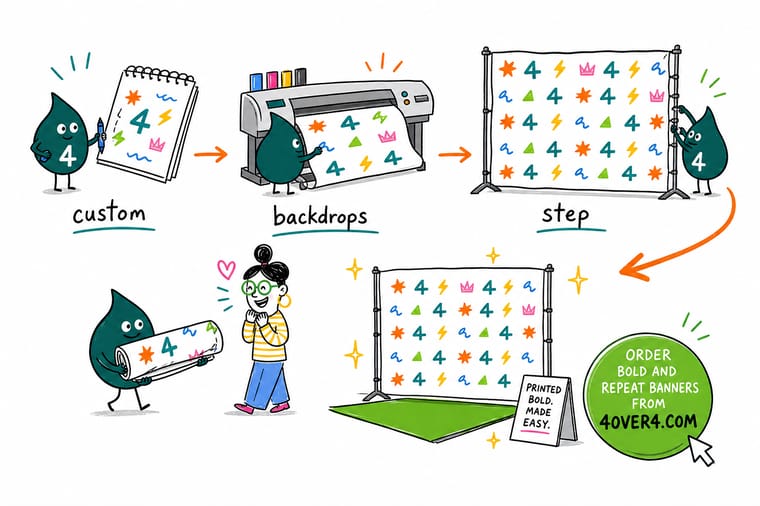
Wally sizes the wall to the crowd, tiles the logos in a staggered grid so a full one sits above every head, and picks a matte surface so the flash never blows them out. Banner and stand ship together, tension it drum-tight, and every posed photo carries the brand. That is a step-and-repeat done right, printed at 4OVER4.
Print your backdrop →Quick reference
Backdrop sizes, at a glance
Match the backdrop size to how many people will pose in front of it at once. These are the standard step-and-repeat sizes and where each fits.
| Size | Fits | Best for |
|---|---|---|
| 8 x 8 ft | Fits 2 to 4 people | Compact backdrops for small events, photo corners, and tight spaces. |
| 8 x 10 ft | Fits 3 to 5 people | A flexible middle size for parties, launches, and press walls. |
| 10 x 10 ft | Fits 4 to 6 people | The popular default for galas, openings, and branded photo ops. |
| 10 x 20 ft | Fits 8 to 10 people | Wide red-carpet walls for premieres, conferences, and large step-and-repeats. |
| Custom | Any dimensions | Set an exact size when your space, stage, or crowd needs a non-standard wall. |
Step by step
Design and order a backdrop in 7 steps
- Pick the size for your crowd Decide how many people will pose at once and choose the backdrop size to match, from an 8 by 8 ft photo corner up to a 10 by 20 ft red-carpet wall.
- Build the repeating logo grid Lay your logo or logos out in a staggered, tiled pattern that fills the whole banner, so a full logo appears in every part of the frame.
- Size logos for the camera Make each logo large enough to read from several feet back, and stagger the rows so a full logo still shows above and beside people standing in front.
- Set bleed and safe area Extend the pattern past the trim so no edge shows a half-cut logo, and keep any single hero logo away from the very center where heads land.
- Choose your material Pick a matte fabric for a premium, wrinkle-resistant, glare-free look, or a matte vinyl for a durable, budget-friendly wall that still cuts flash glare.
- Select a stand Choose an adjustable telescopic or retractable stand rated for your backdrop size so the banner hangs taut, level, and wrinkle-free.
- Export, print, and set up Export a print-ready file at full size, order the banner and stand together, then assemble the frame and hang the backdrop at the venue.
Infographic
Where logos need to land
People block the center band. Stagger the logo grid so a full logo always shows above heads and beside shoulders.
Offset alternate rows so a gap behind one person is covered by a logo in the next row. Never trap critical text only in the center.
Specs and pricing
Step-and-repeat specs and live pricing
Once your layout is set, the choices come down to size, material, and stand. Here are the live specs and price per unit for step-and-repeat banners at 4OVER4.COM, straight from the configurator.
| Quantity | Price Per Unit | Total |
|---|---|---|
| 1 | $217.50 | $217.50 |
Print it
Build your event backdrop at 4OVER4
See it in use
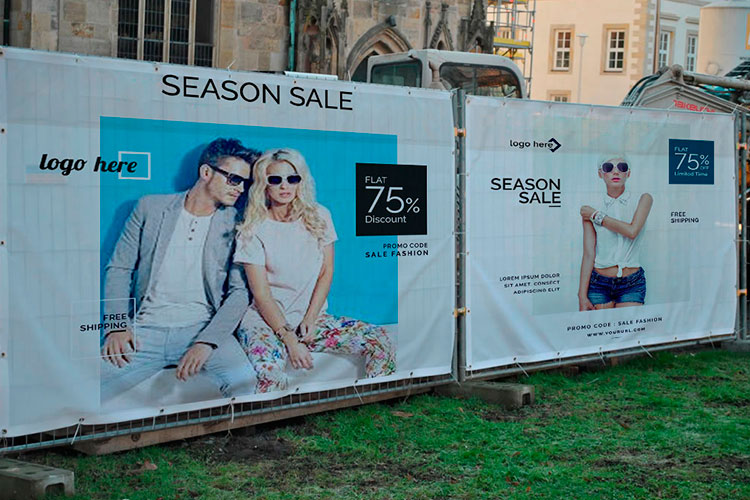
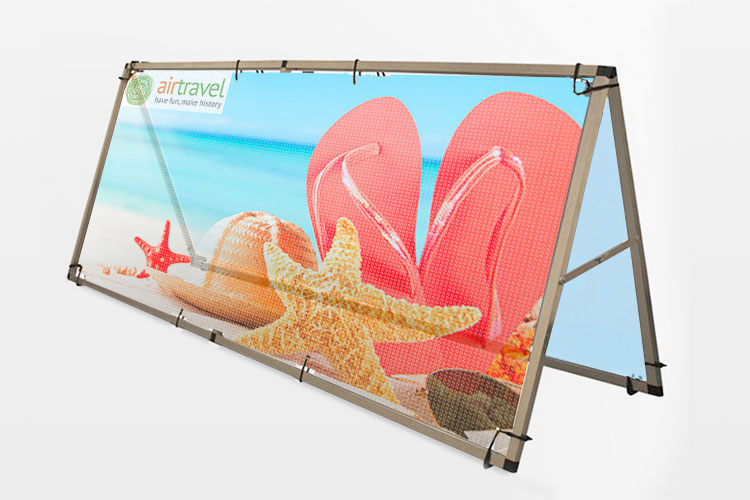
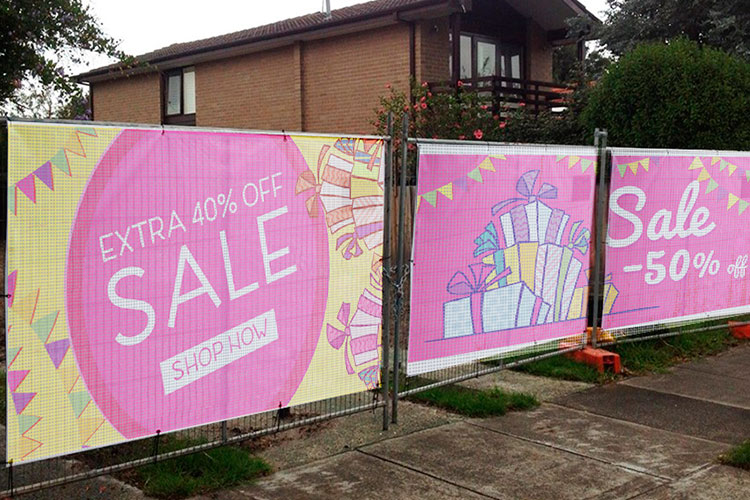
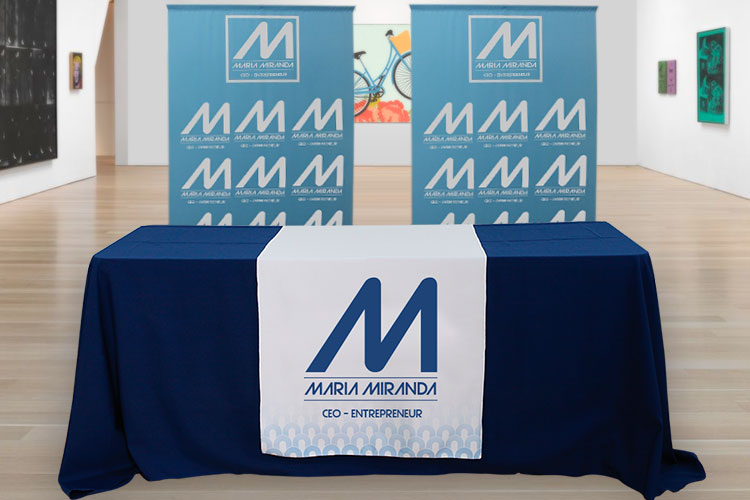
Event backdrops we have printed
Explore more
Where to go next
By the numbers
Event printing you can count on at 4OVER4
Common Questions
Common questions about step-and-repeat backdrops
What size should a step and repeat backdrop be?
Start at 8 by 8 ft. It is the smallest step and repeat backdrop size that still photographs cleanly, it holds two to four people, and it fits the corner most venues can spare. Step up to 8 by 10 ft when the space is wider than it is tall and the ceiling is low, to 10 by 10 ft when four to six people need to be in frame, which is why it is the most ordered size for galas and openings, and to 10 by 20 ft for a full red-carpet line of eight to ten. The rule behind those numbers is 2.5 to 3 ft of backdrop width per person in the shot, so two people need about 6 ft, four people about 10 ft, and six people about 16 to 18 ft unless they close ranks. Height decides as much as width: leave about half a foot above the banner for the top bar of the stand, so an 8 ft tall wall wants roughly 8.5 ft of ceiling and a 10 ft tall wall roughly 10.5 ft. If neither the room nor the stage suits a standard size, order a custom width and height and match the wall to the space exactly.
What is a step-and-repeat backdrop?
A step-and-repeat is a large banner printed with a logo, or a set of logos, tiled in a repeating grid that fills the whole surface. It gets its name from the red carpet, where guests step in front of it, pose, and repeat, so that a brand or sponsor logo appears in every photo taken. The repeating pattern is the whole point: because heads and shoulders block part of the wall, tiling the logo guarantees at least one full, readable logo lands in the frame no matter where a person stands. Paired with an adjustable stand, it turns any wall or open space into a branded photo backdrop. The same wall is printed at any size from 8 by 8 ft up to 10 by 20 ft, and the grid is scaled to the wall so the logo reads at the same distance whichever size you pick.
How do I choose the right backdrop size?
Size the backdrop to how many people will pose in front of it at once. An 8 by 8 ft wall suits two to four people and small photo corners, a 10 by 10 ft wall is the popular default for galas and openings that need four to six people in frame, and a 10 by 20 ft wall handles a full red-carpet line of eight to ten. Also check your venue: measure the ceiling height and the floor space so the stand fits, and leave room for guests to step back far enough for a clean shot. When a standard size does not fit the space, a custom size lets you match the wall to the room exactly. The working rule is 2.5 to 3 ft of width per person: about 6 ft for two, about 10 ft for four, and 16 to 18 ft for six, which is why a 10 by 10 ft wall is comfortable for four and holds six only when they stand shoulder to shoulder. For clearance, add about half a foot above the banner height for the top bar of the stand, so the 8 ft tall sizes want roughly 8.5 ft of ceiling and the 10 ft tall sizes roughly 10.5 ft, and give the photographer 8 to 10 ft of clear floor in front of the wall.
What does a step-and-repeat backdrop cost, and how are prices set?
Price scales with the backdrop size, the material you choose, whether you add a stand, and the quantity. A compact matte-vinyl wall costs less than a large premium-fabric one, and adding an adjustable stand raises the total but makes setup far easier. You choose the size, material, and stand in the configurator and the price updates live as you go, so you can weigh a fabric upgrade or a bigger wall against your budget before you commit. Ordering the banner and stand together keeps everything matched and ready to assemble on arrival. Printed area is the biggest lever: an 8 by 8 ft wall is 64 sq ft of print, 8 by 10 ft is 80 sq ft, 10 by 10 ft is 100 sq ft and 10 by 20 ft is 200 sq ft, so the red-carpet size carries roughly three times the area of the smallest wall before any material or stand choice is made.
What sizes, materials, and stands are available?
Step-and-repeat backdrops come in standard sizes from 8 by 8 ft up to 10 by 20 ft, plus custom dimensions, printed on matte fabric or matte vinyl to control flash glare. Stands range from adjustable telescopic frames that set the exact width and height to retractable options for quick setup. Because the banner and the stand are chosen together, you can match a fabric backdrop to a sturdy adjustable frame for a premium look, or a vinyl wall to a simpler stand for value. Use the live specs and pricing panel below to see the current sizes, materials, and finishing options. The 8 by 10 ft size sits between the two most common walls and is the pick for a wide corner under a low ceiling, since it needs about 8.5 ft of clearance rather than the 10.5 ft a 10 ft tall wall wants, while keeping the same 10 ft of width for a group of four to six.
How long does it take to print and ship a backdrop?
Turnaround depends on the size, material, and any stand or finishing you select, and the estimated production time appears in the configurator as you build the order. Standard sizes on common materials move quickly, while large custom fabric walls add time. Because an event has a fixed date, order with a comfortable buffer and check the live turnaround and shipping options on the product page before checkout, so your backdrop and stand arrive well ahead of the day.
Should I choose fabric or vinyl for a step-and-repeat?
Both control glare, which is the main concern for a photo wall, so the choice comes down to look, durability, and budget. A matte fabric backdrop has a premium, wrinkle-resistant finish that photographs beautifully and packs down small for travel, making it the go-to for upscale events and repeated use. A matte vinyl backdrop is more rugged and typically more affordable, which suits one-off events, outdoor use, or high-traffic settings where the wall takes a beating. If the backdrop will appear in polished, close-up photography, lean fabric, if it needs to be tough and economical, lean vinyl.
How do I keep logos visible when people stand in front?
The trick is in the layout. Because a person blocks a vertical band roughly from the waist up, a single centered logo often disappears behind them. Tiling the logo in a staggered grid solves this, so a full logo always sits above the head and to either side of the shoulders. Size each logo large enough to read from several feet away, keep the vertical spacing tight enough that a full logo lands in the upper third where cameras frame faces, and avoid putting critical text only in the center. Done right, every posed photo carries at least one clean, readable logo.
Get Started
Ready to put your logo in every photo?
Size your backdrop, tile your logos, and print a custom step-and-repeat with a matching stand at 4OVER4.COM. Adjust every option and watch your price update live.
Legal Disclaimer
Gold Standard guarantees apply to all standard orders placed through 4over4.com. Price match requires verifiable proof of a competitor's published price for an equivalent product with matching specifications and turnaround time. Satisfaction guarantee covers manufacturing defects and print quality issues. Contact support with order number and documentation. On-time delivery rate based on tracked orders 1999 to 2026. Individual results may vary based on shipping carrier performance.
