
9 Ecommerce Packaging Solutions That Protect Orders and Sell Your Brand


Pick the container by how the product fails, not by how it looks: soft and flat ships in a poly or padded mailer, anything with a rigid edge or glass needs a corrugated box packed tight enough that nothing moves. Then brand it with printed tape, a packaging label and an insert card, which together cost a fraction of a custom printed box and can change on any reorder.
Ecommerce packaging formats compared
| Format | Protection | Cost to ship | Branding potential | Best for |
|---|---|---|---|---|
| Poly mailer | None. Crush and puncture pass straight through | Lowest postage, lowest material cost | Low unless printed, and printed poly has high minimums | Apparel, textiles, anything soft and flat |
| Padded mailer | Light cushioning, no crush resistance | Low | Low. A label carries the branding | Books, small hard goods, jewellery boxes |
| Rigid stay-flat mailer | Bend resistance only | Low to medium | Medium with a full-face label | Prints, photos, certificates, trading cards |
| Corrugated shipping box | High. Six rigid sides plus void fill | Medium material, higher dimensional weight | Low on its own, high with printed tape and labels | Fragile, heavy, multi-item orders |
| Mailer box | Medium. Rigid but shallow | Highest per unit, high minimums | Highest. The box is the ad | Subscription boxes, gifting, premium unboxing |
| Printed tape and labels on stock board | Inherits the box it seals | Low add-on to a cheap stock box | High, and changeable per season | Any seller under a custom-box minimum |
Cost to ship is not the same as cost to buy. A cheap oversized box loses on dimensional weight every time it goes out, while a slightly dearer box that fits pays for itself across a season. You can order premium packaging labels in the size you need straight from the configurator.
Protection first: what actually breaks in transit

Parcels rarely fail because the packaging was thin. They fail at the corners, where a drop concentrates the whole weight of the order into one point, and under compression, where a box near the bottom of a cage carries everything stacked above it. A mailer has no answer to either. A corrugated box answers both, as long as the product cannot move inside it.
The rule that decides the format is simple. If the item bends without harm and has no corners to crush, a mailer is enough. If it has a rigid edge, a hinge, a screen, a lid, or glass, it needs six sides of board and enough void fill that nothing shifts when you shake the sealed parcel. Shake it. That one test catches more packaging faults than any spec sheet.
Void fill is where most new sellers underbuy. An air pillow the size of the gap is not the same as an air pillow that fills the gap under compression, and paper that settles overnight leaves a product loose by the time it reaches a sort facility. Fill until the product does not move, then seal. If you want the full breakdown of formats before you choose, our guide to the nine types of packaging covers each one in turn.
Dimensional weight is the cost nobody budgets for
Carriers charge on the greater of actual weight and dimensional weight, and dimensional weight comes from the outside measurements of the parcel rather than what is inside it. A box with four inches of empty air on every side bills as if that air were product, on every single order, forever. Confirm the divisor on your own carrier contract, because it differs between retail and negotiated rates.
The practical fix is to carry fewer box sizes but the right ones. Three well-chosen sizes that fit your real order profile beat a wall of sizes that nobody picks correctly at the packing bench.
Seal quality decides whether the box performs
A box only reaches its rated strength when it is sealed properly. An H-tape pattern, centre seam plus both edge seams, keeps the flaps from peeling apart under compression, and a single strip across the middle does not. Tape width matters too: a narrow strip on a heavy carton is the most common reason a parcel arrives open.
This is also the cheapest place to add branding, which is why custom packaging tape earns its place twice. It does a structural job you already have to pay for, and it prints your name across every seam.
The nine solutions, and who each one is for

Here are the nine packaging solutions worth considering, in the order most sellers should evaluate them. The first five are the outer container. The last four come from our packaging printing range and are what turns a plain parcel into something that looks like a brand made it.
Read them against your actual order profile rather than against what looks good on a competitor unboxing video. The seller shipping folded shirts and the seller shipping ceramics are solving different problems, and the wrong answer costs money on every order.
Solutions one to five: the outer container
1. Poly mailers. The cheapest way to ship anything soft and flat. They weigh almost nothing, they take up no dimensional volume, and they are waterproof. They also offer no protection at all, so the moment a product has a corner or a rigid edge, they are the wrong choice.
2. Padded mailers. A thin layer of bubble or paper padding between two walls. Good for books, small hard goods and anything already boxed at the item level. Do not mistake padding for crush resistance: a padded mailer at the bottom of a stack still crushes.
3. Rigid stay-flat mailers. The right answer for anything flat that must not bend. Prints, certificates, trading cards, photo orders. They resist bending and nothing else, so a rigid mailer is not a substitute for a box on a fragile item.
4. Corrugated shipping boxes. The default for fragile, heavy or multi-item orders. Six rigid sides, a real compression rating, and room for void fill. The cost is dimensional weight, so keep the box close to the product.
5. Mailer boxes. The folding box with the tuck-in lid, the one that shows up in every unboxing video. It is the best branded experience on this list and also the most expensive per unit, with the highest minimums and the longest lead time. Worth it for subscription and gifting, hard to justify below a few thousand units.
Solutions six to nine: what makes it yours
6. Printed packaging tape. Prints your brand along every seam of a plain box and does the sealing job you were already paying for. It is the single highest-impact branding change available to a seller who is not buying custom boxes.
7. Printed packaging labels. A large label on the top face turns a stock box into a branded one. Standard packaging labels start at $23.88 and premium packaging labels at $29.16, so a full seasonal change costs less than a single pallet of custom board.
8. Roll labels for the packing bench. Once you are applying labels to every parcel, sheets slow the bench down. Roll packaging labels feed by hand or through a dispenser and are priced as a production run rather than a small pack, which is why the entry price sits at $322.98.
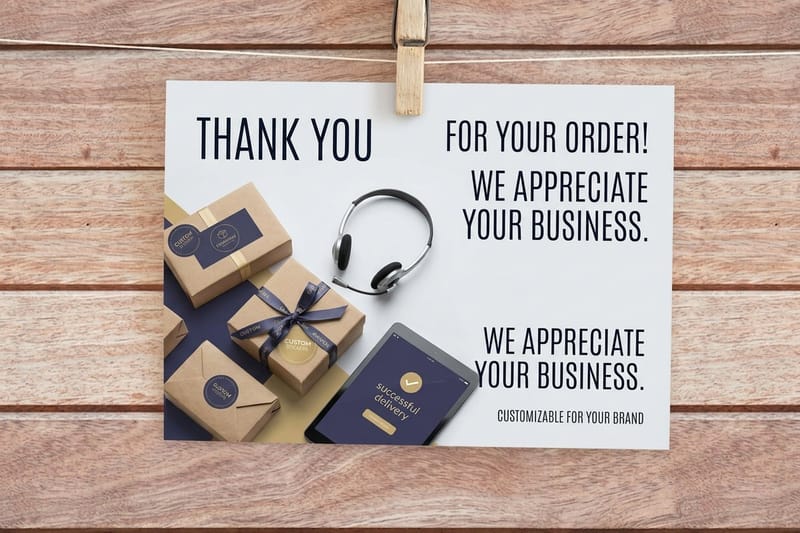
9. Printed inserts and thank you cards. The cheapest thing in the parcel and the one customers photograph. Ecommerce thank you cards start at $19.77 and carry a reorder code, a care instruction, or a request for a review, which is more useful than a compliment.
Branding a plain box for the price of a label
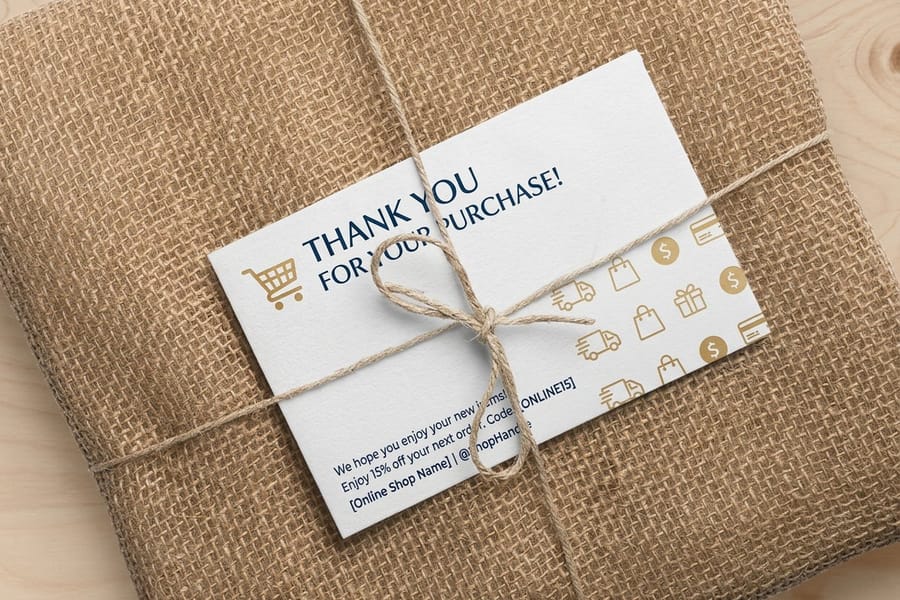
Custom printed boxes are the obvious answer and usually the wrong first move. They carry minimum order quantities in the thousands, lead times measured in weeks, and they lock in your dimensions and your artwork at the same time. Change the product range, or the logo, and you are storing board you cannot use.
Printed tape, a printed label and an insert do most of the same work on a stock box you can buy today. The tape brands the seams, the label brands the top face, and the card brands the moment the customer opens it. Together they cost a small fraction of a custom box run, and any one of them can be changed on the next reorder without writing off inventory.
The honest limit: a printed stock box will never photograph like a well-made mailer box. If the unboxing itself is the product, as it is for subscription and gifting, buy the mailer box. For everyone else, brand the cheap box properly and put the saved money into what is inside it. Our article on custom product packaging boxes, labels and ideas that sell walks through both routes with examples.
What to print, and where it earns attention
Keep the outside quiet and the inside loud. A parcel covered in branding on the outside tells a porch thief exactly what is in it, and it does nothing for the customer until they are already holding it. The tape and a clean label are enough on the outside.
Inside, the card does the selling. A reorder code, a care instruction and one sentence in a real voice outperforms a printed paragraph of thanks nobody reads. Keep the type large enough to read without glasses and leave white space around it.
Packaging label pricing and specs at 4OVER4.COM
Label pricing moves with size, stock, finish and quantity, and the per unit cost drops as the run grows. The numbers below come straight from the live configurator, so you can size the packaging budget before you order.
Quantity and price
Packaging label pricing and specs
Real configurator numbers, where ordering deeper drops the per unit cost on every label you apply at the bench.
| Quantity | Price Per Unit | Total |
|---|---|---|
| 25 | 95.5¢ | $23.88 |
| 50 | 72.9¢ | $36.44 |
| 100 | 42.7¢ | $42.72 |
| 150 | 32.7¢ | $49.01 |
| 200 | 27.6¢ | $55.29 |
| 250 | 24.6¢ | $61.57 |
You can also earn coins on every order and redeem them against future printing, which matters when packaging is a cost you carry on every parcel rather than once a year.
Stock and adhesive, chosen for a parcel
A packaging label lives on the outside of a box that gets rained on, scraped along a conveyor and stacked under other parcels. Paper face stock is fine indoors and lifts at the corners once it gets damp. A synthetic film with a laminate over it takes the abrasion instead of the ink, which is what keeps a top-face label legible after a week in the network.
Print it
Packaging labels, ready to apply
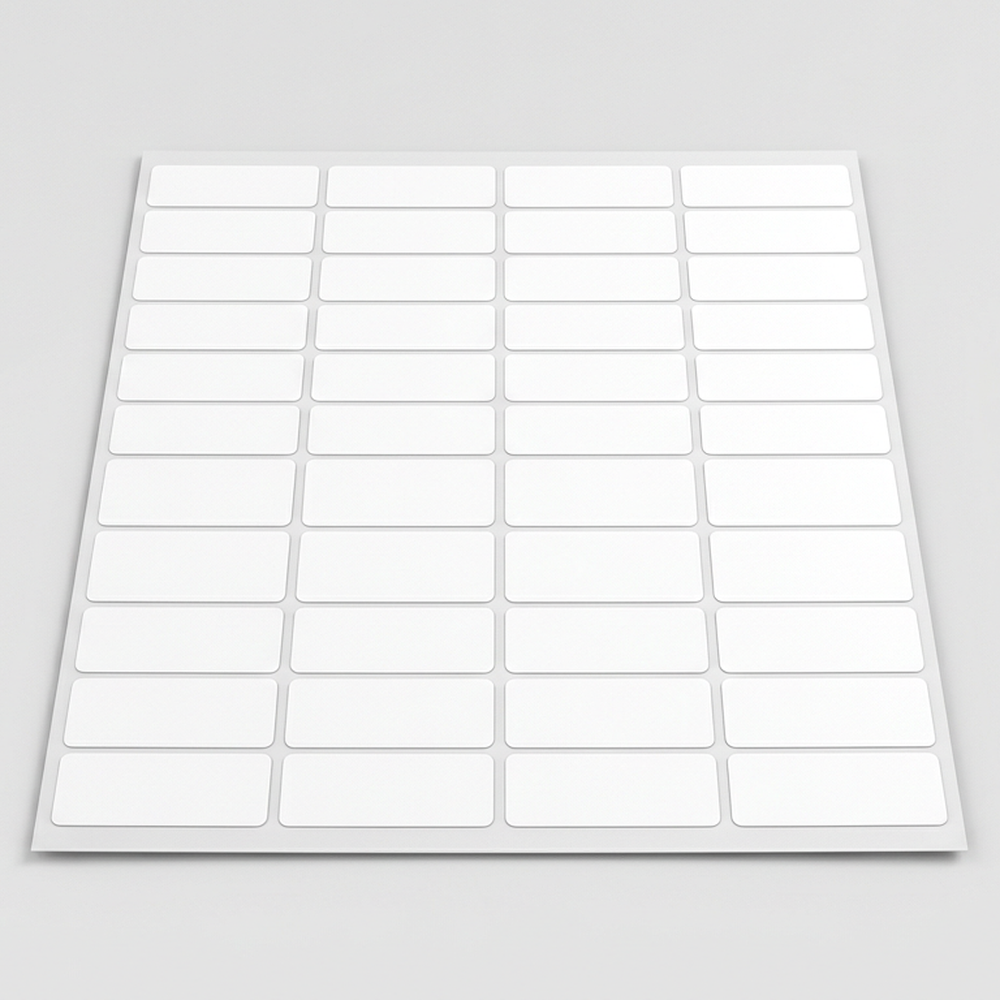
Preset sizes and stocks for the top face of a shipping carton, from $23.88.
Adhesive matters as much as the face. Corrugated board is a rough, dusty surface with a low surface energy, so a general purpose adhesive that grips glass will not always hold a carton edge through a cold warehouse. Tell your printer what the label is going onto and at what temperature it will be applied, and browse the stocks in packaging label printing before you settle on one. For the packaging that goes around a gift or a seasonal run, custom holiday packaging ideas covers the seasonal version of the same decisions, and our cosmetic packaging guide covers the tighter tolerances of small jars and tubes.
Choosing packaging by what you sell
Different categories fail in different ways, so here is the short version by business type.
- Apparel and textiles. Poly mailers, sealed with a printed label rather than plain tape. The product cannot break, so every dollar should go into postage weight and the insert.
- Homewares and ceramics. Corrugated boxes sized close to the item, filled until nothing moves, sealed with an H-tape pattern in printed tape.
- Beauty and skincare. Small corrugated boxes with a printed label on the top face, because leaking or crushed product is the most expensive failure in the category.
- Print and paper goods. Rigid stay-flat mailers. Bend resistance is the only protection that matters and a box is wasted dimensional weight.
- Subscription boxes. Mailer boxes, where the unboxing is the product and the minimum order quantity is spread across a recurring shipment.
Templates and print-ready blanks
If you are not starting from scratch, templates save a round of proofs. 4OVER4.COM sizes its blanks to exact product specs so your artwork lines up with the cut lines and the bleed. Grab a print ready blank from the blank template library with bleed and trim already marked.
Start fast
Templates and print-ready blanks
Packaging label templates and exact size blanks so your artwork lands inside the cut line.
Wally packs an order that arrives intact and looks like a brand
Protection first, branding second, and both on one parcel
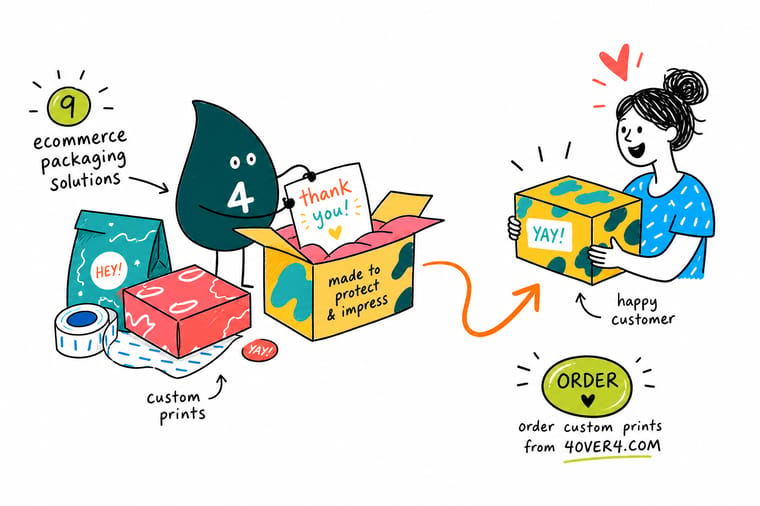
Size the box close to the product so dimensional weight does not bill you for air, fill until nothing moves when you shake it, and seal in an H pattern with printed tape. Then brand the top face with a packaging label and drop a thank you card inside with a reorder code on it. 4OVER4.COM prints the tape, the labels and the cards.
Order packaging labels →What to remember about ecommerce packaging
Packing bench habits that pay for themselves
- Size the box to the product. Dimensional weight bills the air as if it were product, on every order. Three sizes that fit your real order profile beat a wall of sizes nobody picks correctly.
- Shake the sealed parcel. If anything moves, add void fill and seal again. This single test catches more packaging faults than any specification sheet.
- Seal in an H pattern. Centre seam plus both edge seams. A single strip across the middle lets the flaps peel apart under compression.
- Keep branding off the outside, mostly. Loud outer packaging advertises the contents to whoever walks past the porch. Brand the seams and the top face, then save the rest for inside.
- Give the insert a job. A reorder code, a care instruction or a review request earns its place. A printed paragraph of thanks does not.
Explore more
More ways to print and protect
Related products and categories on 4OVER4.COM, one card each, so you can finish specifying the parcel.
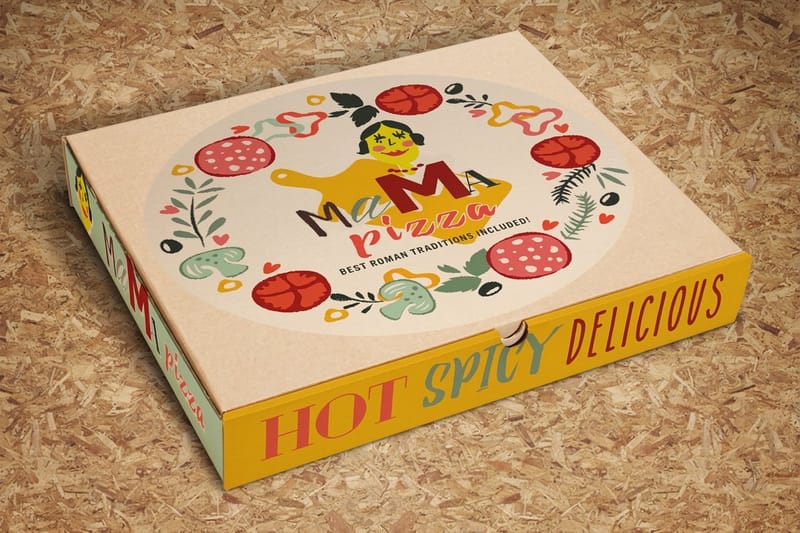
 Product Custom Packaging Tape Brand every seam while doing the sealing job you already pay for.
  Product Premium Packaging Labels Durable stock and finishes for the top face of a shipping box.
 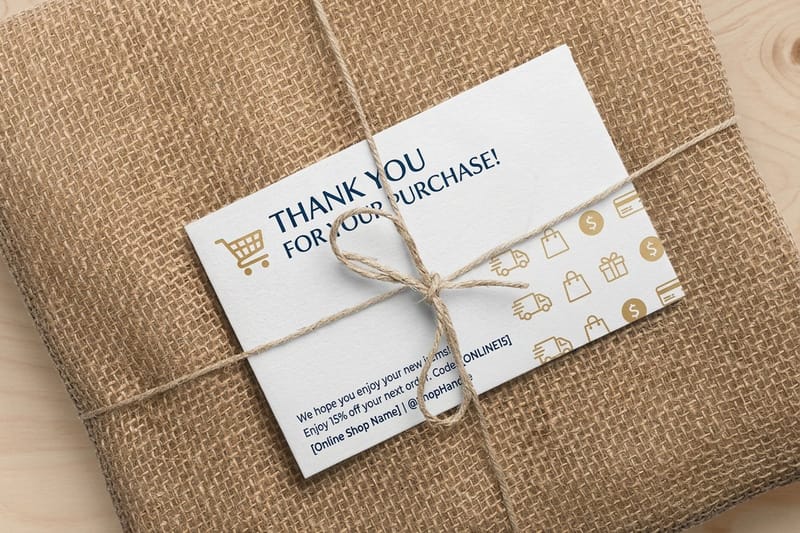 Product Ecommerce Thank You Cards The insert customers photograph, from $19.77.
  Product Standard Packaging Labels The cheap way to turn a stock carton into a branded one.
 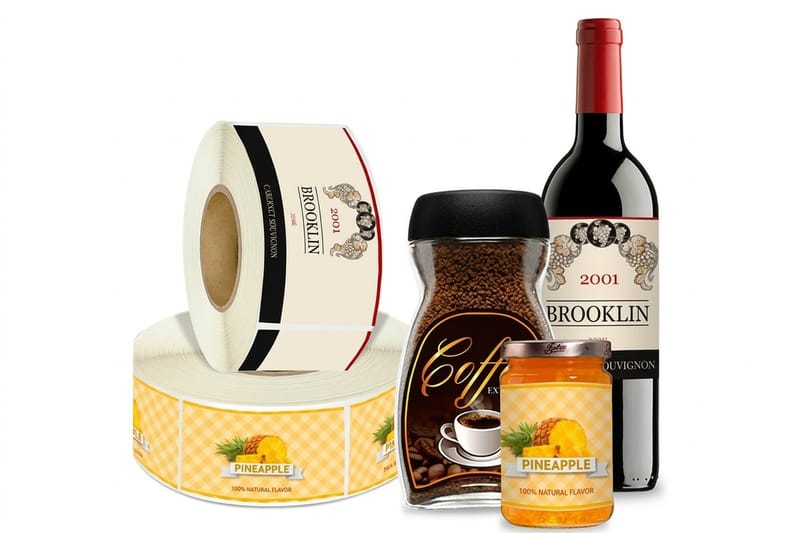 Product Roll Packaging Labels Rolls that keep a busy packing bench moving. Category Packaging Label Printing Every packaging label stock, size and finish in one place.
  Category Ecommerce Printing Print built around online orders and repeat customers.
  Category Packaging Printing The full packaging range, outside and inside the parcel.
 Keep reading: seven eco-friendly packaging ideas for the sustainability side of the same decisions, brand packaging examples from small businesses for what this looks like when it is done well, and candle packaging ideas for a category where fragility and presentation collide. If the brand voice on the insert is the part you are stuck on, brand messaging explained is the place to start.
Ready to print your packaging?
Pick your size, drop in your design or a free template, and 4OVER4.COM prints the tape, the labels and the cards on stock built for a parcel, as fast as your deadline needs.
Common questions about ecommerce packaging
Poly mailer or box: which one should I use?
Use a poly mailer when the product bends without harm and has no corners to crush, which covers most apparel and textiles. Use a corrugated box for anything with a rigid edge, a hinge, a screen or glass. The deciding question is not fragility in the abstract, it is whether a drop onto a corner or the weight of a full cage stacked on top would damage the item, because those are the two ways parcels actually fail. A mailer answers neither. If you are unsure, pack one of each, seal them, and drop them from waist height onto a hard floor.
Are custom printed boxes worth it for a small store?
Usually not as a first upgrade. Custom boxes carry minimum order quantities in the thousands and lead times in weeks, and they fix both your dimensions and your artwork at the point of order, so a product range change or a rebrand leaves you storing board you cannot use. Printed packaging tape, a printed label on the top face and an insert card deliver most of the branded effect on a stock box you can buy today, at a small fraction of the cost, and each of the three can change independently on the next reorder. The exception is subscription and gifting, where the unboxing is the product.
What is dimensional weight and how much does it matter?
Carriers bill the greater of a parcel actual weight and its dimensional weight, which is calculated from the outside measurements rather than the contents. A box with four inches of empty space on every side is billed as though that space were product, on every order you ship. It matters more than almost any other packaging decision because it is a recurring cost rather than a one-off purchase. Check the divisor written into your own carrier agreement, because retail and negotiated rates use different figures, then size your boxes to your real order profile.
How do I brand packaging without a big minimum order?
Print the tape, the label and the insert rather than the box. Custom packaging tape brands every seam of a plain carton, a large label brands the top face, and a thank you card brands the moment the customer opens the parcel. At 4OVER4.COM standard packaging labels start at $23.88, premium packaging labels at $29.16, and ecommerce thank you cards at $19.77, so all three together sit far below the entry cost of a custom box run. You also keep the freedom to change any one of them seasonally without writing off unused board.
What should actually go on the insert card?
Give it a job. A reorder code, a care instruction, a size or fit note, or a direct request for a review all do measurable work; a printed paragraph thanking the customer does not. Pick one message, set it in type large enough to read without glasses, and leave white space around it so it reads as designed rather than crowded. If you sell something with a care requirement, that instruction is the highest-value thing you can print, because it reduces the returns that come from misuse rather than from a fault.
