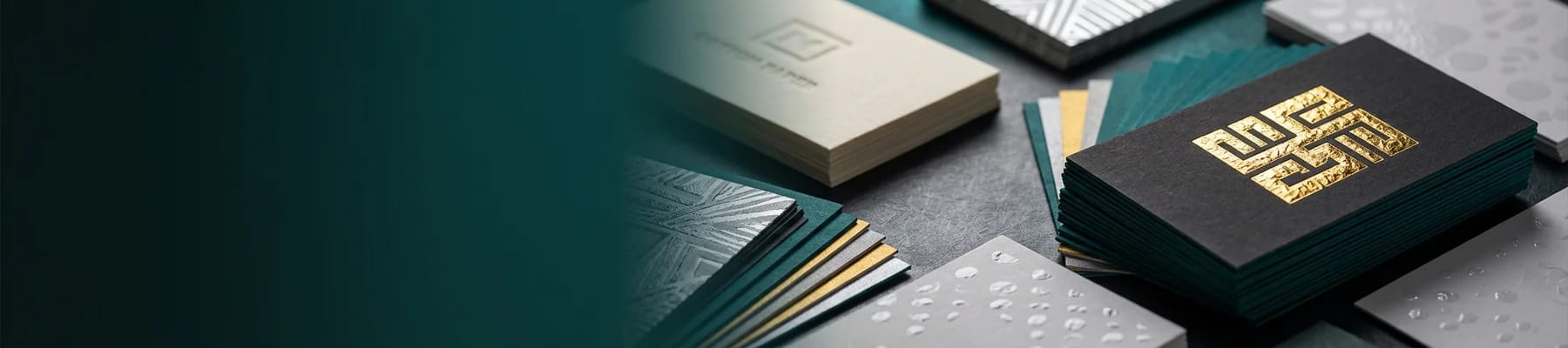
Debossed Business Cards

See Debossed Business Cards in action
Debossed business cards on a 2 minute video: 32pt and 48pt silk or velvet stock, 3 sizes from 2" x 3.5" to a 2.5" square, from $251.36 for 250.
- From $251.36 per 250 cards, with the per-card price sliding from about $1.01 down to roughly 37 cents as the run climbs to 2,000.
- 4 thick stocks: 32pt and 48pt Silk Laminated, plus 32pt and 48pt Velvet Laminated, all soft-touch and built to hold a deep impression.
- 3 sizes, from the standard 2" x 3.5" card to a 1.5" x 3.5" slim cut and a 2.5" x 2.5" square, plus custom sizing up to 3" x 4".
- Pressed-in debossing on the front, back or both, plus embossing, foil stamping, spot UV, die cutting, edge painting, edge gilding and rounded corners.
- 15 business day standard production with a free online proof, rated 4.6 out of 5 across 22 reviews and backed by 4OVER4 guarantees.
Hand Out a Card People Feel Before They Read It
A debossed card is the one people notice with their fingers. Instead of ink sitting flat on the surface, your logo or name is pressed down into a thick, soft-touch stock, leaving a clean recessed impression that catches shadow and texture. Handed to a high-value client, closing a deal, or introducing a studio, it tells the person holding it that you paid for more than ink. Debossed business cards start at $251.36 for a set of 250, rated 4.6 out of 5 across 22 reviews.
On the 48pt stock a debossed card is roughly double the thickness of a normal card, and the pressed logo gives a thumb something to find. Still choosing a card type? Every style sits on business cards printing. If debossed is the one, the choices below build your order.
A first run of 250 debossed cards costs $251.36, about $1.01 a card. Order 2,000 and each card drops to roughly 37 cents, so a firm printing for a whole team pays far less per card than one person reordering small sets. The tiers below give the set total at 250, 500, 1,000 and 2,000.
What Are Debossed Business Cards
Debossed business cards are premium cards with a design pressed into the surface, printed full color on thick 32pt or 48pt silk or velvet laminated stock, in 3 sizes from a standard 2" x 3.5" card to a 2.5" x 2.5" square. A metal die presses your logo, monogram, or name down into the card, so the mark sits in a recessed impression you can feel. People reach for debossing when a flat card would undersell the brand: law firms, real estate, design studios, architects, salons, and executives who want the first impression to be tactile. If you want the raised version instead, the Embossed Business Cards push the design up rather than down, and the debossed card sits right beside it as the subtler, pressed-in option.
What Size Should a Debossed Business Card Be
Most people want the standard 2" x 3.5" card, since it drops straight into any wallet or cardholder. A 1.5" x 3.5" slim cut reads leaner and modern, and the 2.5" x 2.5" square stands out in a stack and gives a centered logo room to sit inside its own impression. Need a different shape? Set a custom size up to 3" x 4". All 3 sizes, the 4 stocks, the ink options and the full finishing list are grouped below exactly the way the live configurator presents them, so you know what you can change before you change it.
Three choices decide how a debossed card turns out.
Pick a stock that holds a deep press
The stock is where a debossed card earns its feel. You get 4 options: 32pt or 48pt thickness, each in a silk or velvet soft-touch lamination. The 48pt is roughly double a normal card, and both the silk and velvet coatings are smooth to the touch and take a deep, clean impression without cracking. A blind deboss on a matte soft-touch stock is the classic luxury look, understated until someone runs a thumb across it. When you want the finishing to go further, the Foil Business Cards lay bright metallic across the design.
Combine the press with ink, foil or gloss
A deboss can stand alone or work with color. Set your ink coverage to 4/0 for the front only, 4/1 for a black back, or 4/4 for full color on both sides, and choose where the deboss lands, front, back, or both. Fill the pressed area with foil for a foil-deboss, or add spot UV so a matte card carries one glossy element that catches light. The Spot UV Business Cards are built around that glossy accent if it is the whole point of the card.
Design it without a designer
A deboss works best on one bold element, so build the layout around a logo or monogram. 4OVER4 offers more than 10,000 free design templates across its whole range, and the business card design templates are the set to start from here: pick a layout, then swap in your colors, copy and logo in the online editor. Leave the phone number and email as flat ink, where fine type stays sharp.
Ready-to-Edit Business Card Design Templates
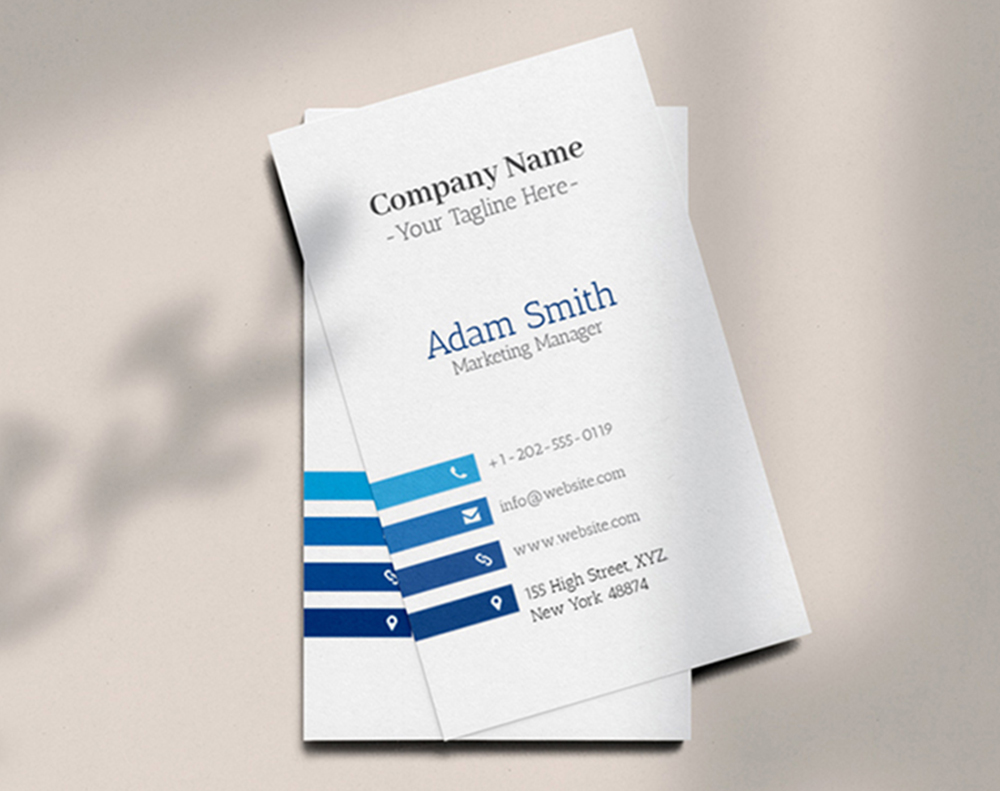
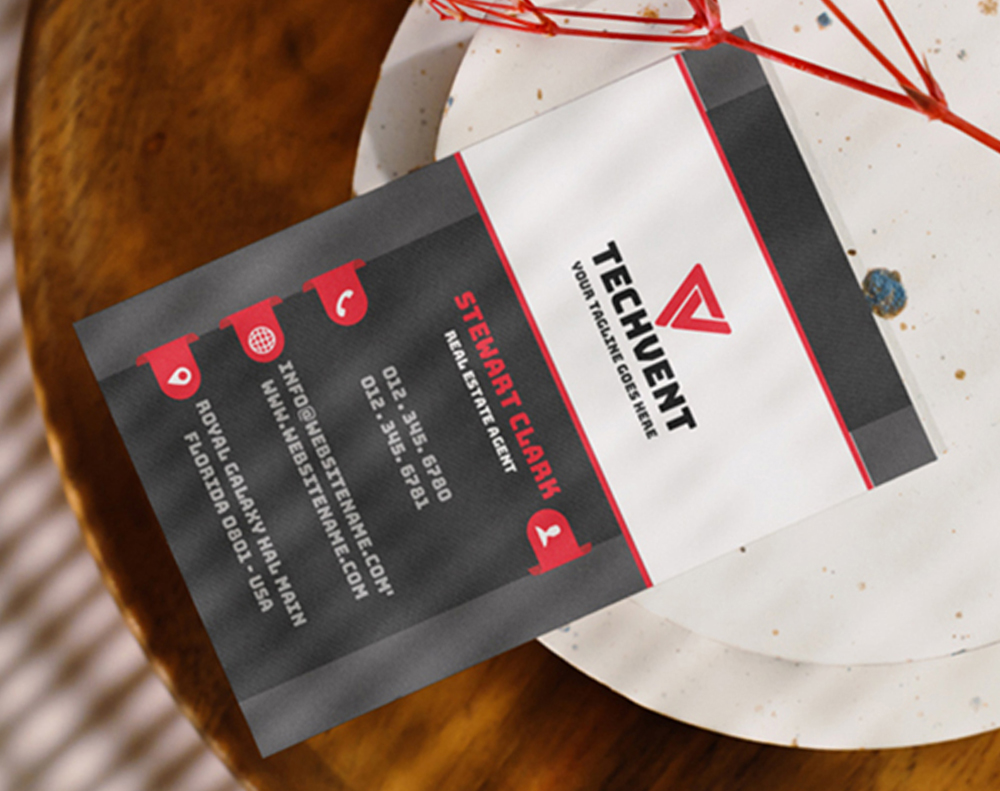
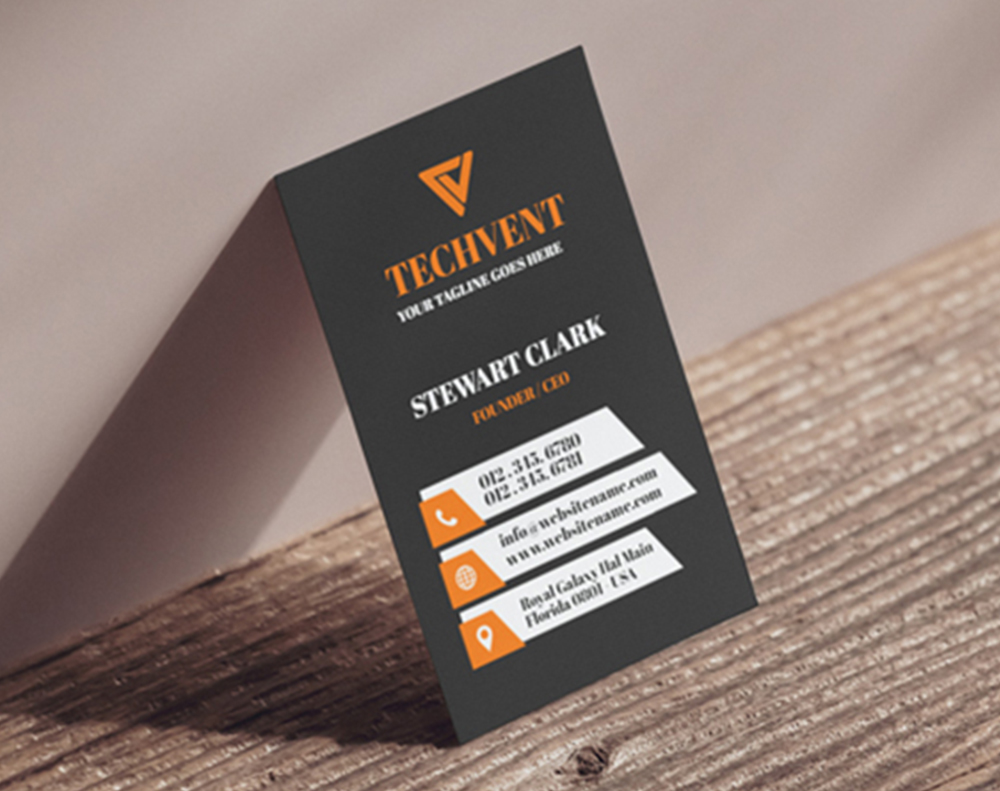
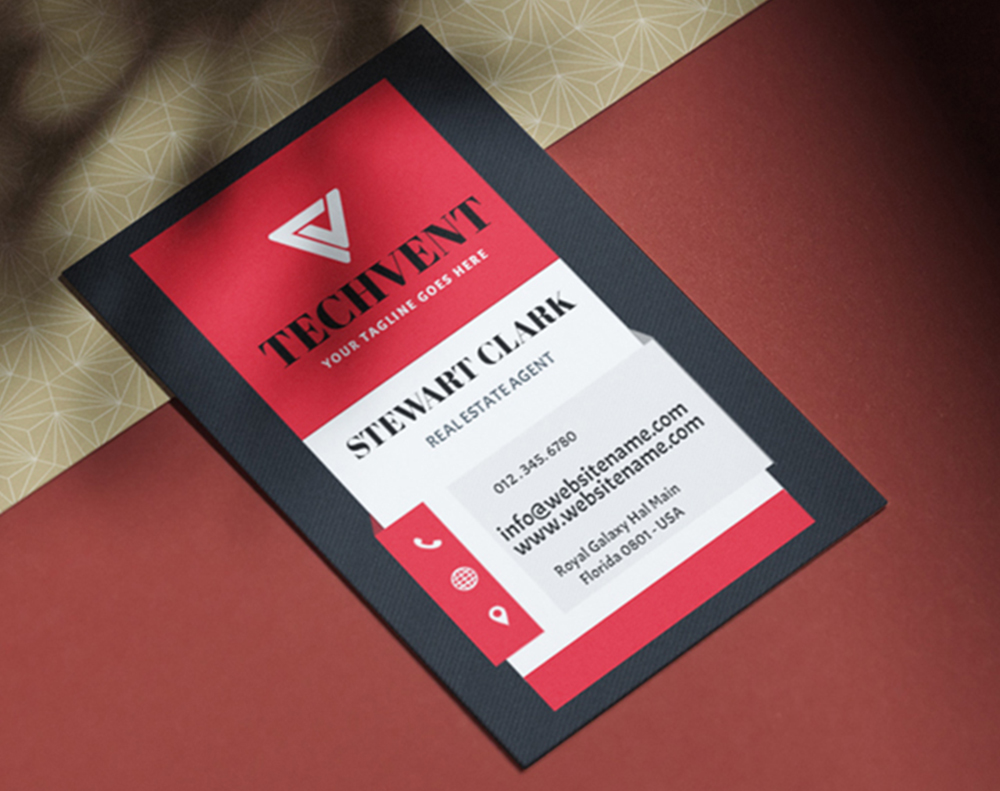
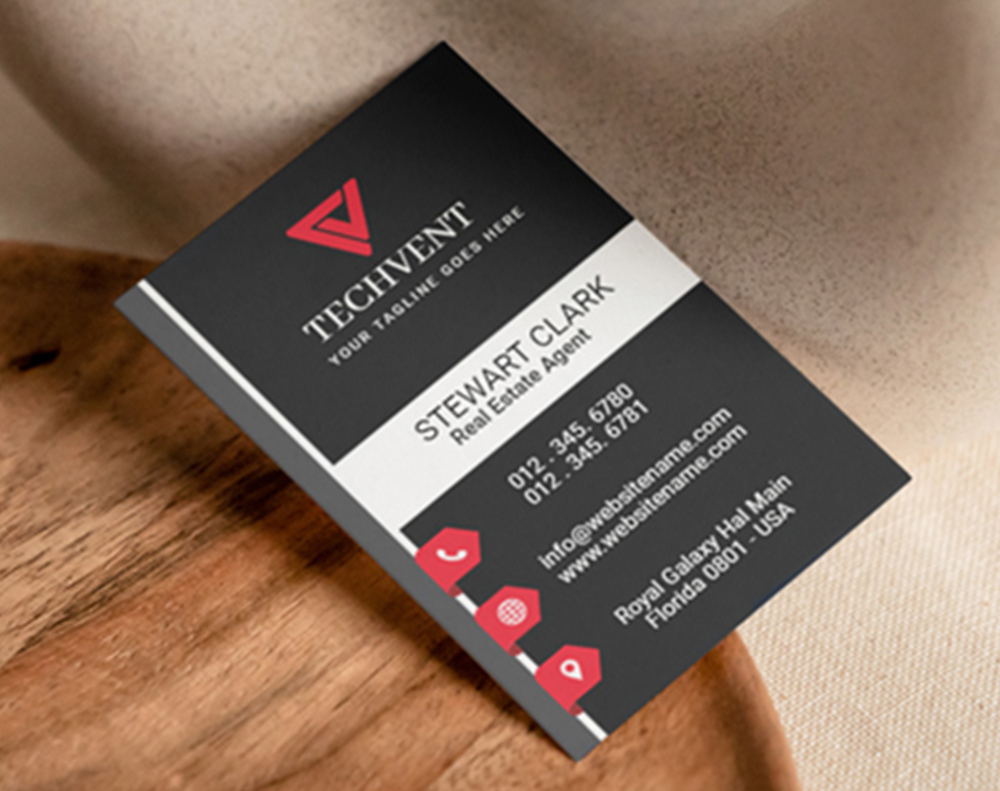
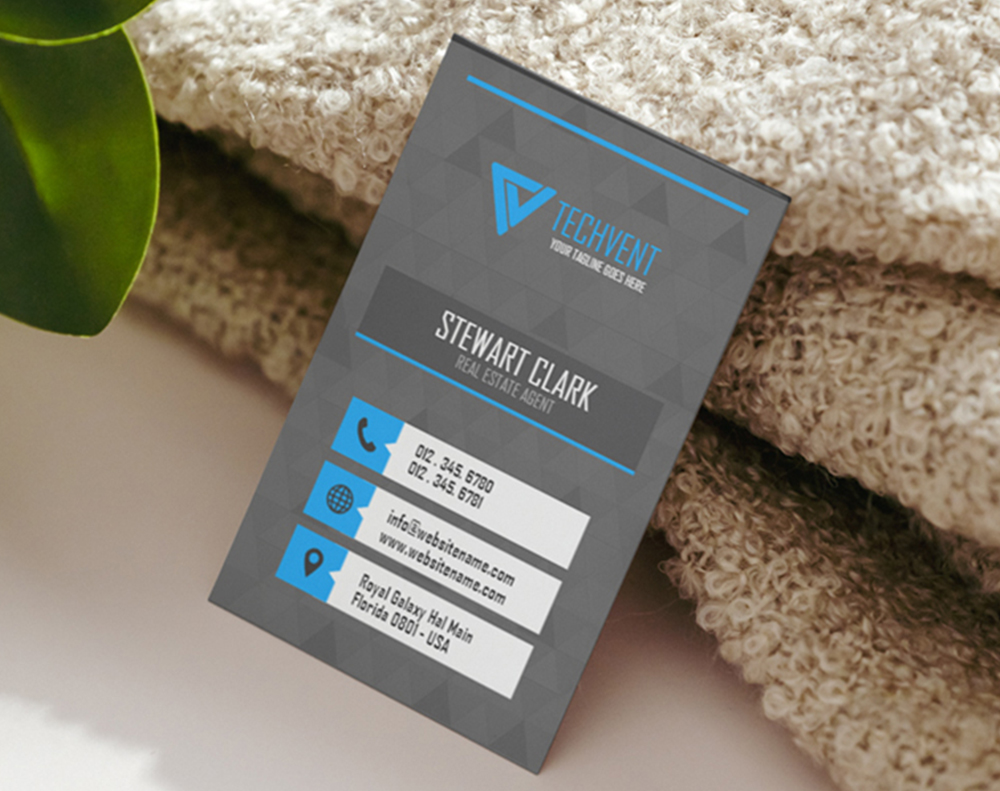
Already have your artwork? Skip the editor and download a press-ready blank instead. Each blank business card template is built at the real trim size with the 1/8" bleed and safe margin already drawn in, so your design never crowds the cut. Grab the size that matches your order below, drop your art in, and upload.
Press-Ready Blank Templates
How Much Do Debossed Business Cards Cost
Debossed business cards start at $251.36 per set of 250, which is the specialty-finishing price rather than the plain-card price, and the per-card cost keeps dropping as the quantity climbs to 2,000. A 500-card run is $327.15, a 1,000-card run is $377.68 at about 38 cents a card, and a 2,000-card run is $731.35, close to 37 cents each. So how many do you actually need? Drag the slider below to set your count and watch both the set total and the true per-card cost update live, and find the point where one more step up barely moves the budget.
Wally presses your logo into the card
Why a debossed card gets felt, remembered, and kept.

A debossed card puts your logo in a recessed impression you can feel, pressed into thick 32pt or 48pt soft-touch stock from $251.36 per 250. Add foil, embossing, or painted edges, pick your size, and Wally presses a card that reads premium the second it lands in a hand.
What Finishes Can You Add to a Debossed Card
Debossing is the headline, but it rarely travels alone. Add embossing to raise one element up while your deboss presses another down, or foil stamping to lay bright metallic across the pressed area. Spot UV drops a glossy layer on a matte stock so a logo catches light, and die cutting shapes the card into a basic or complex outline. Around the edges, edge painting adds a band of color to the thick stock and edge gilding adds a foil shine, both of which pop on the 48pt cards, and rounded corners at a 1/8" or 1/4" radius soften the finish. Each of these is set on the front, back, or both in the configurator, so you can stack exactly the ones you want on a single card.
How Do Debossed Business Cards Compare to the Rest of the Range
Torn between a pressed logo, a raised emboss, a foil finish or a spot UV accent? Price usually settles it. The chart below puts the starting price of debossed business cards beside those close relatives.
See How a Finished Debossed Card Lands
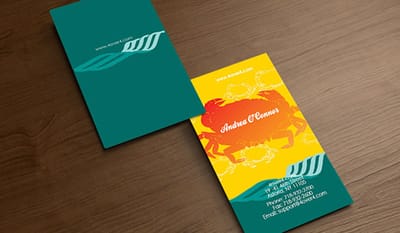
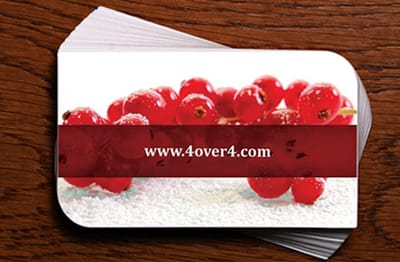
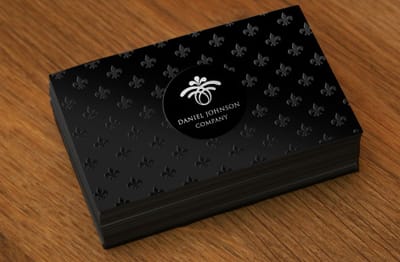
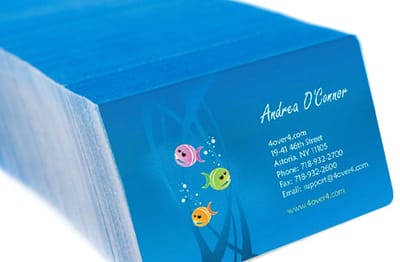
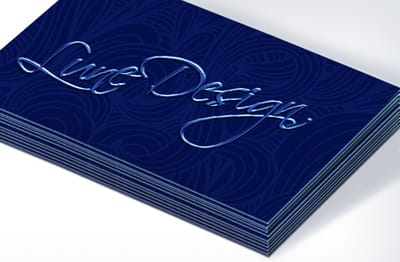
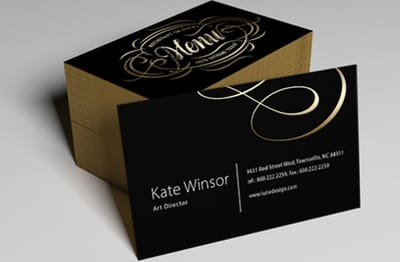
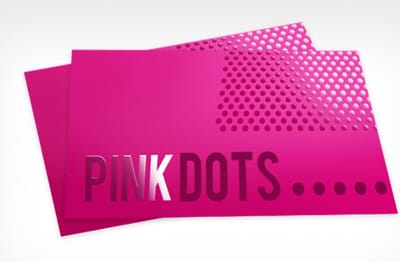
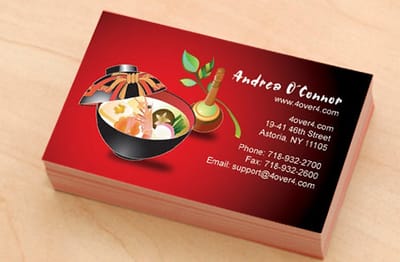
A recessed logo is hard to judge on a screen, so study the shadow line around each impression in the prints below. Our own customers printed every one of them with us in-house, on different sizes, stocks and finishes. Tap any print to see it larger.
Real Business Cards Our Customers Printed
How Fast Can You Get Debossed Business Cards
Count on 15 business days of production for this card. Those days cover cutting your custom press die and each foil, embossing, spot UV or edge step you add, all in-house. Before anything runs, you choose how to sign off: send your file straight to production to save a step, or request a free online proof and approve the layout first, which is the safer path on a premium card where the pressed finishing is permanent. 4OVER4 has printed since 1999 with 99.8% of orders arriving on time, so the date you are quoted is the date you can plan around.
See the Rest of Our Cards
If a 15 business day wait does not suit this job, the full print product range lists every other card and format we print. Each card below opens its own product page with its starting price.
More From Professional Business Cards






Print Your Debossed Business Cards Today
At 4OVER4.COM, quality comes first, and it's backed by a satisfaction guarantee and 25+ years of printing since 1999. Whatever size, stock or finish you pick, these debossed business cards are built to feel premium in a hand and leave an impression that lasts past the conversation. Approve a free online proof, and every order is covered by our Price Match, which beats a real competitor quote by an extra 10% - the 110% price-match guarantee. Print your debossed business cards today.
Debossed and Embossed Cards Side by Side
Both start with a metal die and a lot of pressure, and the difference is which way the card moves. A deboss presses your logo or monogram down into the surface, leaving a recessed impression that catches shadow along its edges. An emboss pushes the same shape up off the surface, so it stands proud and catches light instead. The Embossed Business Cards are that raised version of this card.
A deboss reads quieter, which is why law firms, architects and design studios lean on it, and the recess holds fine detail on a thick stock. The stock is what makes either one work: 32pt or 48pt in a silk or velvet soft touch lamination, smooth to the touch and thick enough to take a deep press without cracking. You can also run both on one card, raising one element while another presses in.
Choosing Between a Pressed and a Raised Finish
Start with the mark, not the method. A deboss suits a simple logo, a monogram or a wordmark with some weight behind it, because the impression needs area before a thumb can feel it. Fine hairlines and small type lose the effect whichever way the die moves, so simplify the artwork before the die is cut.
Then decide how loud it should be. A blind deboss, with no ink in the impression at all, is the quietest version and the one that stays understated until someone runs a thumb across it. Foil inside the pressed area is the loud version, laying bright metal where the card already sits lower than the surface. An emboss is the right call when the mark should catch light from across a table rather than reward a touch. Undecided? Put the deboss on the front only, on the standard 2" x 3.5".
Debossed Business Cards: Frequently Asked Questions
What is the minimum order for debossed cards and what do they cost?
The minimum is 250 cards at $251.36, about $1.01 each. The per card price slides down to roughly 37 cents as the run climbs to 2,000, so the gap between a starter set and a full run is significant.
Which stocks can be debossed?
There are 4 thick stocks: 32pt and 48pt Silk Laminated, and 32pt and 48pt Velvet Laminated. All four are soft touch laminated and heavy enough to hold a deep impression, and the 48pt options give the most depth to press into.
How long does production take?
Standard production is 15 business days, which is the pace the pressing and finishing work runs at, and an online proof is part of the process before the job goes to press. Plan the order well ahead of an event, and add shipping transit on top of production.
Can debossing be combined with foil or other finishes?
Yes. Foil stamping is available with 1, 2 or 3 foil colors on the front, and the card can also carry embossing, spot UV, die cutting, edge painting, edge gilding and rounded corners. Debossing itself can be pressed on the front, the back or both.
How should I set up artwork for the debossed area?
Debossing is pressed from a die, so the element you want recessed should be a clean solid shape such as a logo or a name rather than a photograph or a soft gradient. Very fine hairlines and small text lose definition once they are pressed into a thick laminated stock.
What sizes are available?
There are 3 sizes: the standard 2" x 3.5", a 1.5" x 3.5" slim cut and a 2.5" x 2.5" square, with custom sizing up to 3" x 4". The square is worth considering when a single debossed mark is the whole design.
What is the difference between embossed and debossed paper?
Direction. A debossed area is pressed down into the sheet, leaving a recess you can feel with a thumb, while an embossed area is pushed up so it stands above the surface. Both are made with a metal die and pressure rather than with ink, so the mark is there even with no color in it. On this card the press runs on 32pt or 48pt silk or velvet laminated stock, on the front, the back or both.
How to make an embossed business card?
Supply the mark as clean artwork, keep it simple enough to hold a press, and pick a stock thick enough to take one, which here means 32pt or 48pt in a silk or velvet soft touch lamination. Choose the finishing on the front, the back or both, and add foil or spot UV when the raised area should carry color as well as shape. Production runs 15 business days because the die is made for your artwork, and a free online proof lets you sign off first.
Questions about Debossed Business Cards? See answers