
The 9-Piece Construction Lead-Gen Toolkit That Wins Bids
Construction leads are made within sight of the work: the neighbor watching the new roof go on, the driver passing the job-site sign, the homeowner holding a signed, carbon-copied estimate. These nine print pieces turn every project into the marketing campaign for the next one.
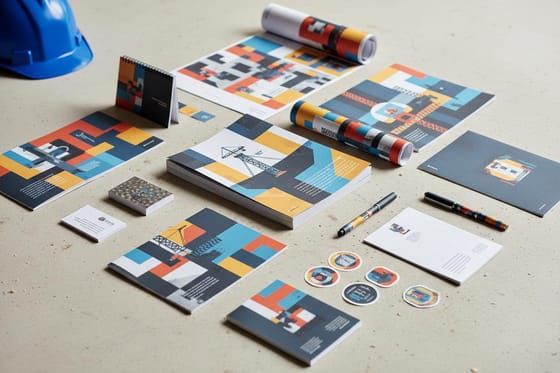
The construction lead-gen toolkit is nine print pieces that turn job sites into lead sources: rugged construction business cards and a generous crew-card stack cover every handshake, yard signs, a fence-line vinyl banner, and truck magnets make each active project advertise to its own street, carbonless estimate forms make the quote professional at the tailgate, and seasonal flyers, door hangers, and after-job postcards work the neighborhoods where your crews are already visible.
The picks
The nine pieces, priced live
Start here. These are the nine products in the toolkit, numbered in the order a lead actually forms on a street: the handshake, the sign, the truck, the signed estimate. Each pick is priced live from the configurator, so order them together and the company reads identically from the tailgate to the mailbox.





Design and print help
One jobsite-tough look on every piece
Homeowners hire the contractor whose details look handled. These 4OVER4.COM services keep your logo, license line, and phone number identical across all nine pieces.
How they work together
How a street becomes a pipeline, in three moves
Each piece owns a stage of the neighborhood cycle. Print the whole loop and every finished project quietly bids on its own street.
The magnetted truck arrives looking like a company, the estimator's card survives the handshake, and the carbonless estimate gets signed at the tailgate with a copy for each side.
The sign goes up with the first ladder and the fence-line banner goes up with the scaffolding, working the street for the length of the project and telling every passerby who is doing the work they can see improving.
After-job postcards mail the surrounding streets with proof attached, door hangers canvass the same radius without postage, seasonal flyers time the next offer to the weather, and the crew's card stack makes sure the neighbor's question always gets a professional answer.
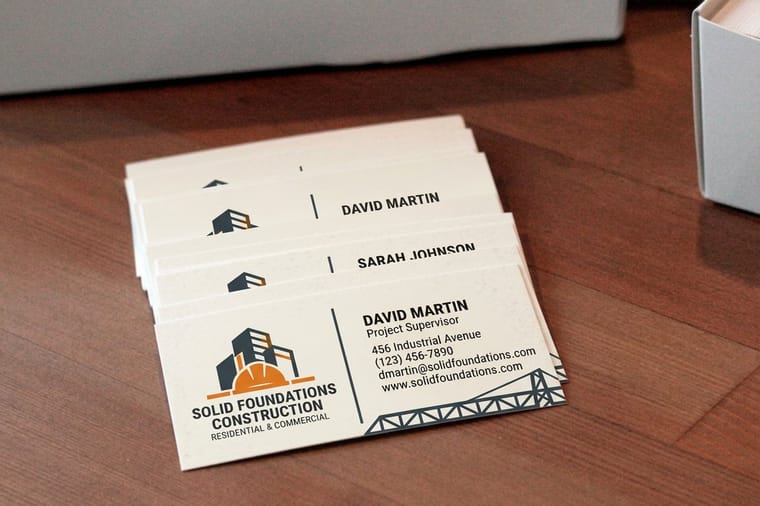
1. Construction business cards: the estimator's handshake
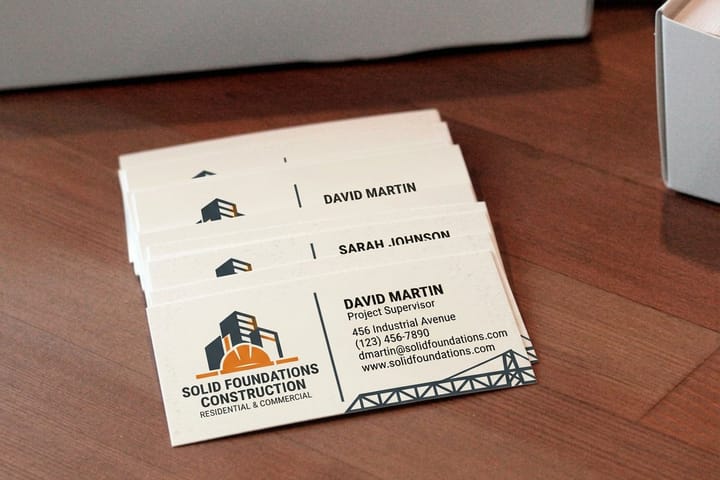
Construction is hired months after the first contact: a homeowner collects names in spring and signs in summer. The card is what survives that gap, pinned to the fridge or rubber-banded to the project folder, and the contractor whose card still looks sharp after three months of that treatment starts the final conversation ahead.
Build it like your work: heavy stock, big legible type, the trade stated plainly, the license number where trust can find it, and a finish that shrugs off a job-site pocket. Layout fundamentals live in how to make business cards, and the wider business cards range has thicker and laminated stocks made for exactly this abuse.
Every estimate leaves two cards: one for the decision, one for the neighbor who will ask how it went.
2. Yard signs: the job site that bids on its own street

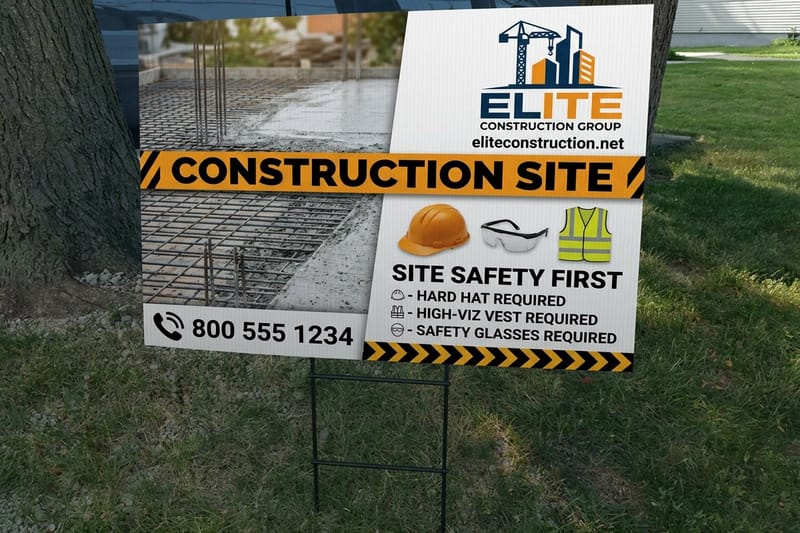
A construction project is the best ad the company will ever run, if it is signed. The neighbors watch the roof go on, the deck take shape, the crew show up on time, and the yard sign converts that weeks-long demonstration into a phone number. Unsigned job sites do the same demonstration for free and hand the leads to whoever the homeowner half-remembers.
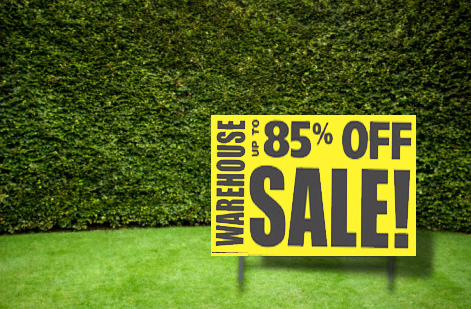
Ask for sign placement in every contract, then make the sign worth the lawn: company name, trade, number, readable from a moving car. Materials and stake choices for month-long outdoor duty are in how to make yard signs, and the yard signs range covers every size up from the standard 18 by 24 inches.
Collect the sign when the job wraps and it goes straight to the next site. A dozen signs cover a season of rotation.
3. Car magnets: the fleet you already own

A contractor's trucks spend their days doing what billboards dream of: parked for eight hours at a time on residential streets, in front of visible work, watched by the exact homeowners most likely to need the same trade. Magnets brand that fleet for less than a set of saw blades, and they move between vehicles as crews and trucks change.
Keep it to three elements, name, trade, phone, sized to read from across the street, and match the colors to your sign and card so the street sees one company everywhere. The magnets range has door-sized formats that fit a pickup with room to breathe.
There is a subtler payoff too: a marked truck in the driveway reassures the client who hired you and the neighbor deciding whether to ask for a quote. Official-looking is half of trustworthy.
4. Business forms: the estimate that wins at the tailgate
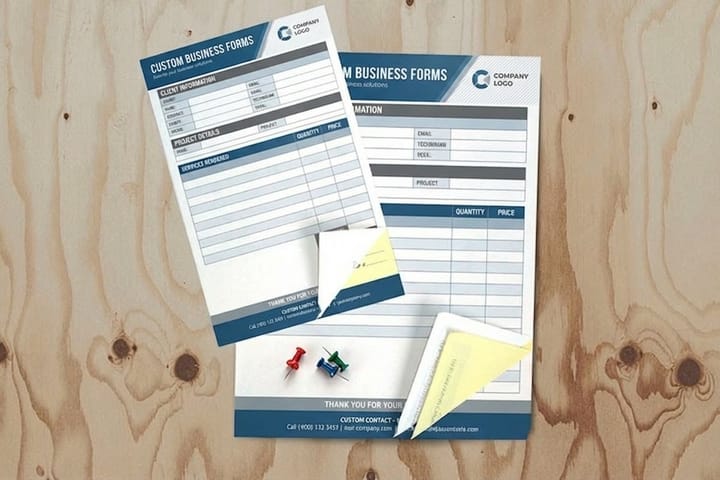
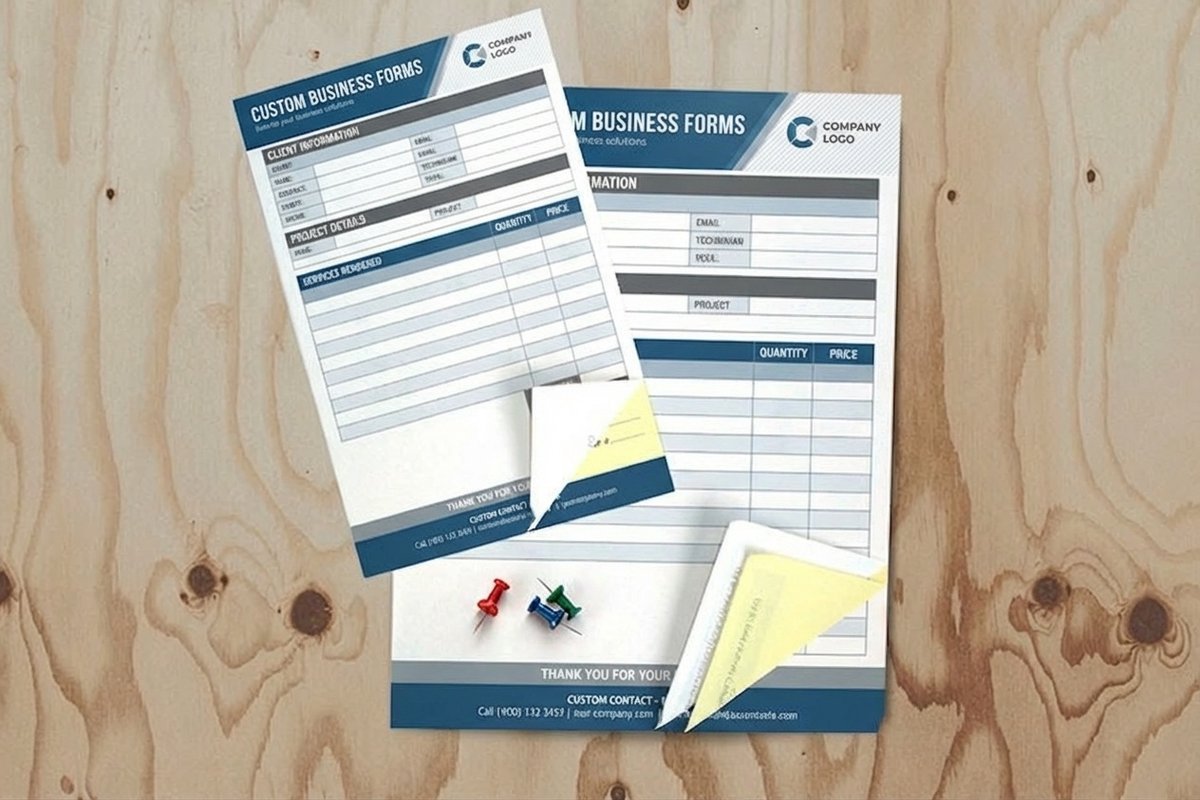
Two contractors quote the same deck: one texts a number, the other writes a carbonless estimate on a branded form, itemized, signed, one copy in the homeowner's hand before the truck leaves. The second contractor is not just easier to trust; they are easier to say yes to, because the paper made the decision feel safe.
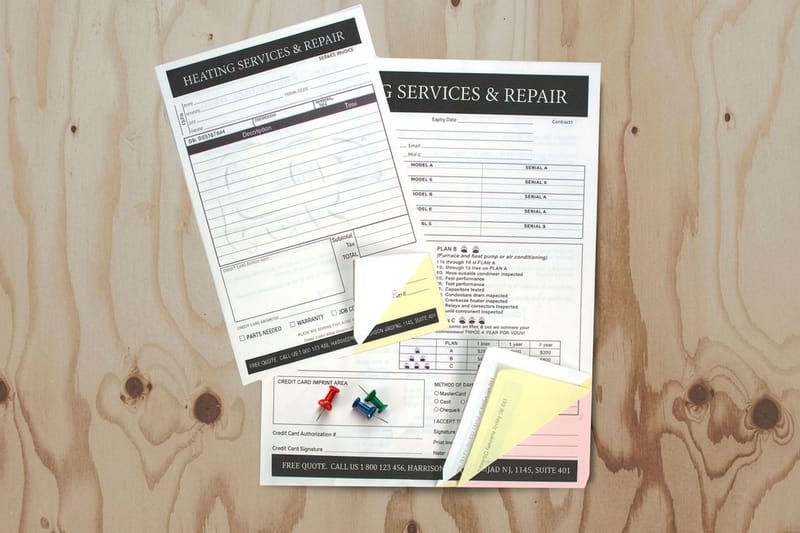
Printed forms carry the whole paper trail of a job: estimates, change orders, completion sign-offs, each with duplicates so both sides hold the same truth, which is precisely what prevents the disputes that eat margins. Design the form once around your real workflow and print custom business forms with numbering; the carbonless forms range covers two- and three-part copies.
The change order pad pays for the entire toolkit the first time a scope change gets signed instead of remembered.
5. Flyers: time the offer to the season

Homeowners think about their houses on the weather's schedule: roofs after the first storm, decks at the first warm weekend, gutters when the leaves turn. The seasonal flyer meets that thought at the door with one offer, a free storm inspection, a spring deck quote, priced and dated. Timing does most of the selling; the flyer just has to be there.
One offer per flyer, the benefit in the headline, and a deadline that makes this season's version expire. The focal-point rules in how to design flyers apply straight across, and the same layout doubles as the handout at the supply house and the home show. Print each season's batch in one run with the postcards below and the whole quarter's marketing arrives together.
Walk them to the doors within sight of an active job first. The flyer with your crane in the background needs no testimonial.
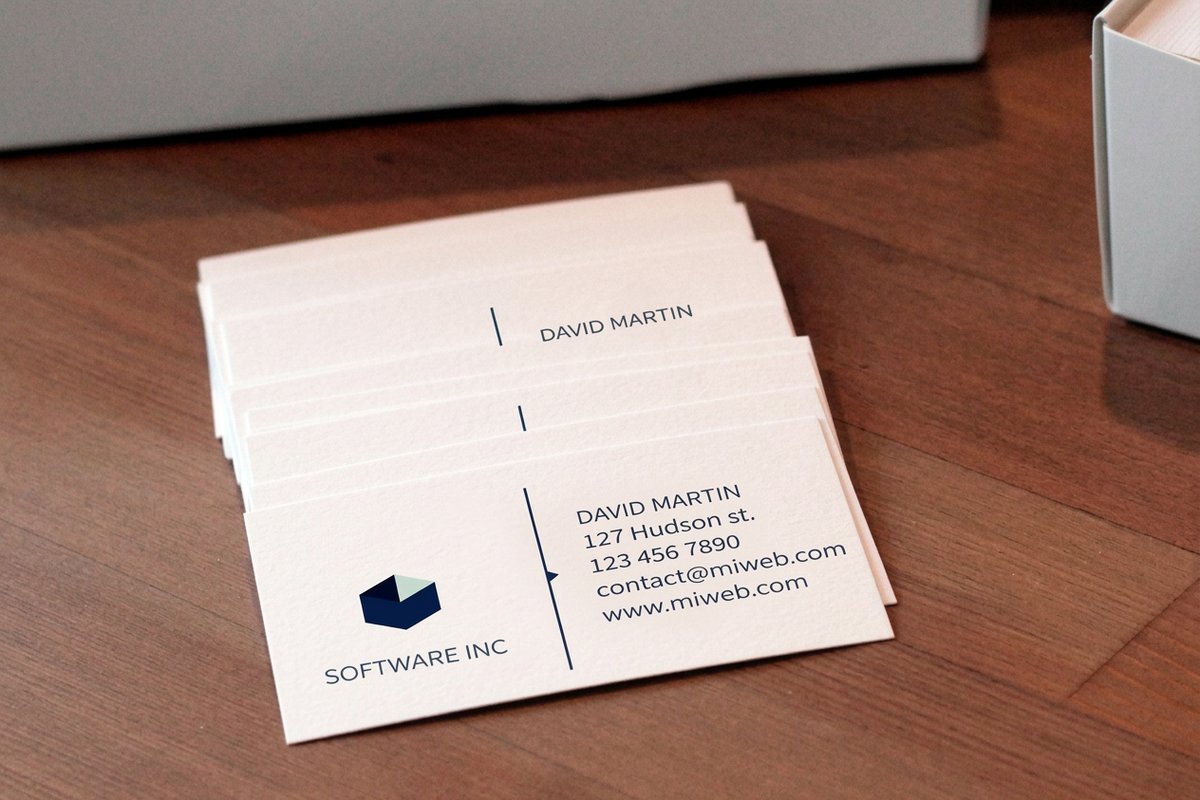
6. Standard business cards: a stack for every hand on the crew
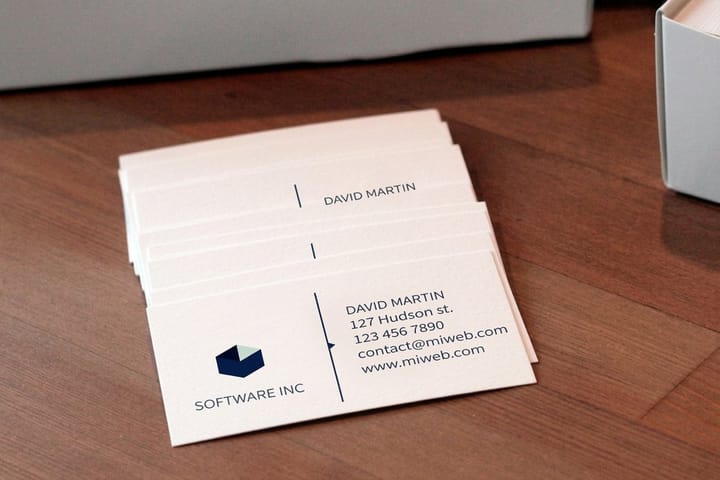
The most common lead in residential construction is a neighbor walking up to whoever is on site and asking who does your fencing. If the answer is a shrug, the lead dies on the lawn. The crew card fixes that: a simple, generous company card, no individual name, just the trade, number, and license, stacked in every truck's glovebox and every foreman's pouch.
Keeping the crew card separate from the estimator's premium card solves the economics: one is a relationship piece, the other is inventory, handed out by the dozen without a second thought. Print the generous one on the standard stock from the business cards range and restock the gloveboxes monthly.
Tell the crew the rule: every question from a neighbor ends with a card. It is the cheapest sales training in the trade.
7. Postcards: mail the radius after every job

The week a job wraps, the surrounding streets know your company: they watched the work, heard the compressor, saw the sign. The after-job postcard converts that familiarity while it is warm: we just completed a roof on this street, here is what the neighbors chose, here is a free quote for yours. Proof by proximity beats any cold offer in the mailbox.
Make it a system, not a decision: every completed job triggers a mailing to the same-radius list, same design, new address line. The cadence-and-list math in the direct mail response benchmarks backs the habit, and how to make postcards covers the formats that mail economically.
Batch a quarter's worth with the seasonal flyers and the whole neighborhood program runs on two reorders a year.
8. Door hangers: the canvass that needs no postage

The postcard reaches the radius through the mail; the door hanger reaches it through the crew's spare half hour. While the truck is already parked on the street, a walk around the block puts the offer on every knob within sight of the work, no list, no postage, no waiting on delivery. The homeowner finds it the same evening they watched your crew pack up on time.
Design it like a job-site piece: the trade in the headline, the current project referenced by street, a free-quote offer with a deadline, and the license number where trust can find it. The layout rules in how to make door hangers keep the narrow canvas readable at a glance, and a die-cut hook that survives wind beats a folded flyer wedged in the frame every time.
Print one generic version per season and a blank line for the street name. A crew that hangs fifty on wrap-up day canvasses a whole subdivision by the end of the quarter.
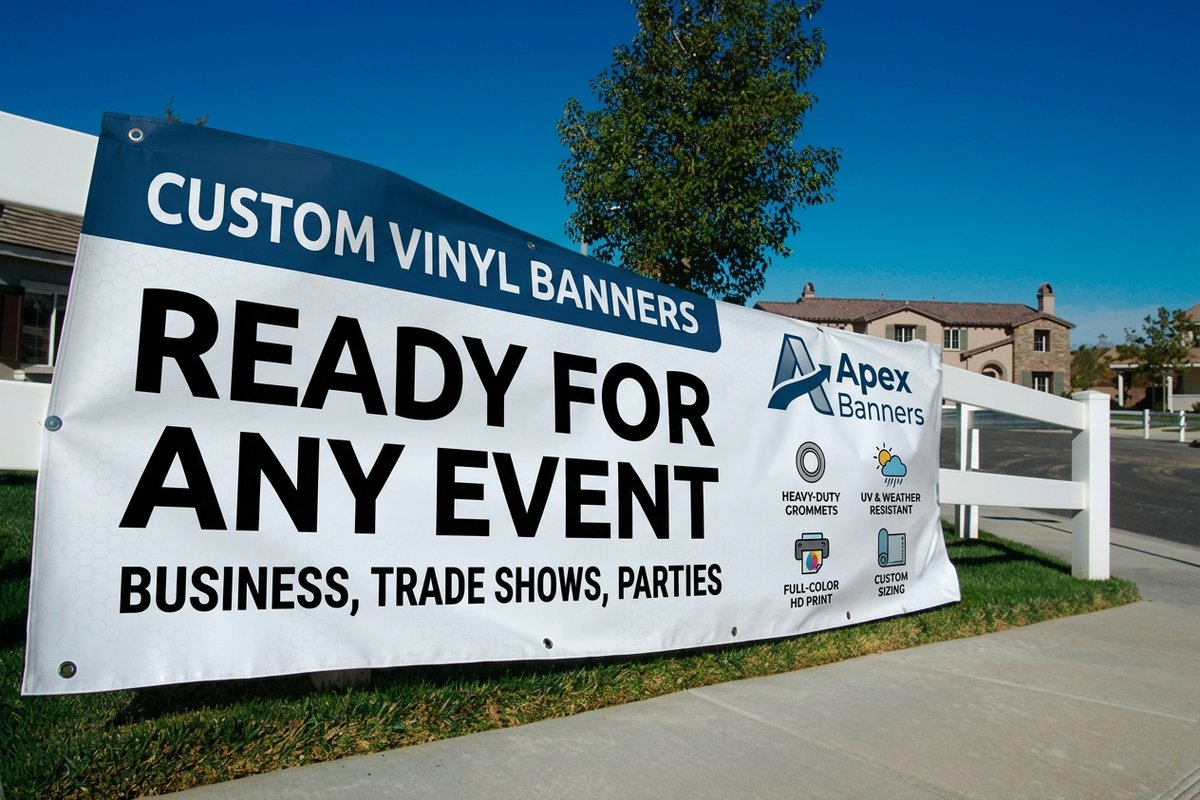
9. Vinyl banners: the fence line that says who is building
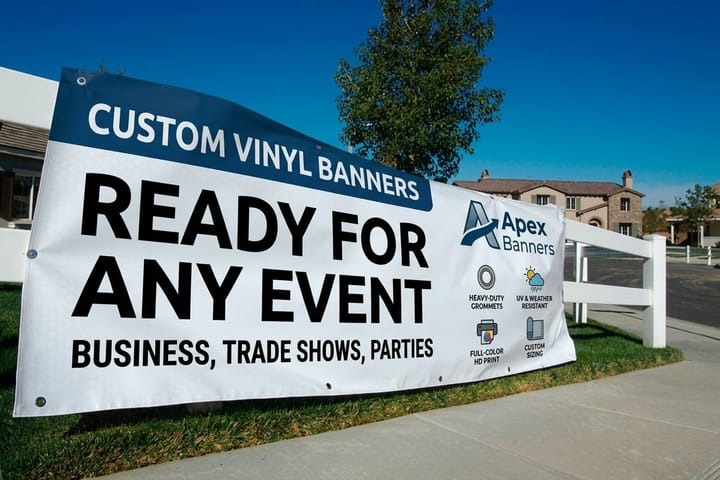
A yard sign works a residential lawn, but a remodel with scaffolding, a fence, or a dumpster out front has a bigger canvas begging to be used. A vinyl banner zip-tied to the fence line turns the most visible weeks of the project into a full-color company ad, readable from a moving car in both directions, for less than a tank of diesel.
Keep it to the essentials at highway scale: company name, trade, phone number, license line. Vinyl shrugs off sun and rain for the length of any build, and grommets let the same banner move from fence to fence as projects roll over. The guide to making banners covers sizing and hems, and banner material types settles vinyl versus mesh for windy corners.
Order two: one for the active site, one staged in the shop for the next start date. The banner should go up the same day the permit box does.

Specs and pricing
Anchor the toolkit: construction card specs and live pricing
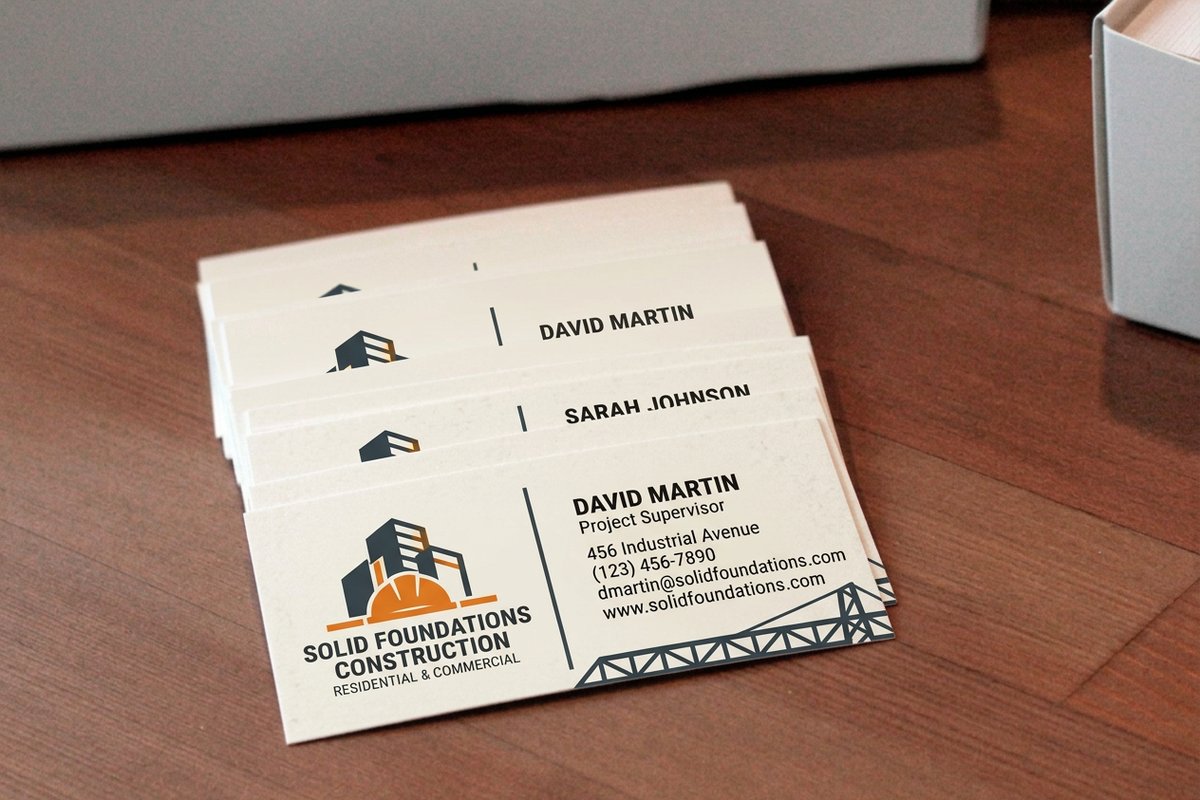
The estimator's card is the piece that survives the longest between first contact and signed contract, so it anchors the toolkit. Here are the live specs and price-per-unit for construction business cards at 4OVER4.COM, straight from the configurator.
| Quantity | Price Per Unit | Total |
|---|---|---|
| 100 | 17.6¢ | $17.57 |
| 200 | 11.5¢ | $23.07 |
| 300 | 9.15¢ | $27.46 |
| 400 | 7.96¢ | $31.86 |
| 500 | 7.25¢ | $36.26 |
| 600 | 6.77¢ | $40.64 |
| 700 | 6.43¢ | $45.04 |
| 800 | 6.18¢ | $49.43 |
Wally explains the toolkit
Nine pieces that make every job site bid on the next one
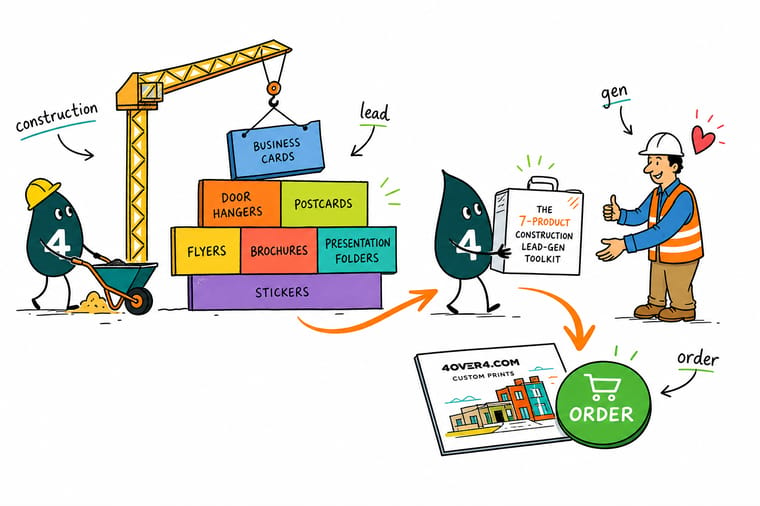
Wally works a street the way a smart contractor does. The magnetted truck and the yard sign turn the job site into a weeks-long demonstration, the crew card answers every neighbor's question, and the carbonless estimate closes at the tailgate with a copy for each side. When the job wraps, the postcard mails the radius with the proof still visible from the curb. Print all nine at 4OVER4 in one run and the whole operation reads as built-to-last.
Shop construction printing →See it in use
Real sign work, printed in-house








Explore more
Where to go next


By the numbers
One toolkit, printed to keep crews booked
Common Questions
Common questions about the construction toolkit
What is in the construction lead-gen toolkit?
Nine pieces that turn job sites into lead sources: construction business cards for the estimator, job-site yard signs, truck magnets, carbonless estimate and change-order forms, seasonal offer flyers, a generous crew-card stack, after-job postcards for the surrounding streets, door hangers for the no-postage canvass, and a fence-line vinyl banner that announces the build to every passing car. Together they cover the handshake, the demonstration, the paperwork, and the follow-up.
What should a contractor print first?
Cards and yard signs. The card starts surviving homeowners' long decision cycles immediately, and the sign converts your current job site's audience, which is the warmest traffic you will ever have. The carbonless estimate forms come next, because they raise the close rate on every quote you are already giving.
Do job-site yard signs actually bring leads?
They convert the best audience in the trade: neighbors who watch your work progress for weeks and can judge the result from their own porch. The sign simply attaches a name and number to a demonstration that is already running. Contractors who sign every site and rotate the signs between projects turn each street into a small pipeline.
Why carbonless paper forms instead of an app?
Use both if you like, but the signed paper copy left in the homeowner's hand does two jobs software cannot: it makes the estimate feel safe to accept on the spot, and it prevents scope disputes because both sides hold identical duplicates of every change order. On a tailgate, in gloves, in weather, paper also just works.
How should the after-job postcard campaign run?
Automatically. Every completed project triggers a mailing to the surrounding streets, referencing the street by name and the work the neighbors watched. The proof is visible from their curb, which is why this mailing outperforms any cold drop. Keep the design fixed and swap the address line, and the habit costs minutes per job.
What legal details belong on contractor print?
Most states require the contractor license number on advertising, and some regulate offer wording for home-improvement services. Put the license line on cards, signs, magnets, flyers, and postcards as standard, and have the estimate and change-order forms reviewed once by your attorney so every signed copy stands up when it matters.
How much does the full toolkit cost to print?
Each piece is priced live on its own product page and scales with quantity and material. Cards start under twenty dollars, yard signs around twenty-five, magnets under fifty, and the forms, flyers, and postcards price by volume. Set your quantities in each configurator and the totals update as you choose.
Get Started
Ready to make every job site sell the next one?
Order the full lead-gen toolkit from 4OVER4.COM and print all nine pieces in one turnaround, on matching stocks. Adjust size, quantity, and finish on any product and watch the price update live.
Legal Disclaimer
Gold Standard guarantees apply to all standard orders placed through 4over4.com. Price match requires verifiable proof of a competitor's published price for an equivalent product with matching specifications and turnaround time. Satisfaction guarantee covers manufacturing defects and print quality issues. Contact support with order number and documentation. On-time delivery rate based on tracked orders 1999 to 2026. Individual results may vary based on shipping carrier performance.
