
Postcard Postage Rates and How Size Changes What You Pay


"Postage is where a postcard campaign quietly wins or loses money, and the deciding factor is size. Here is how USPS postcard rates are tiered, the exact dimensions that keep you at the cheapest rate, and when a bigger card is still worth it."
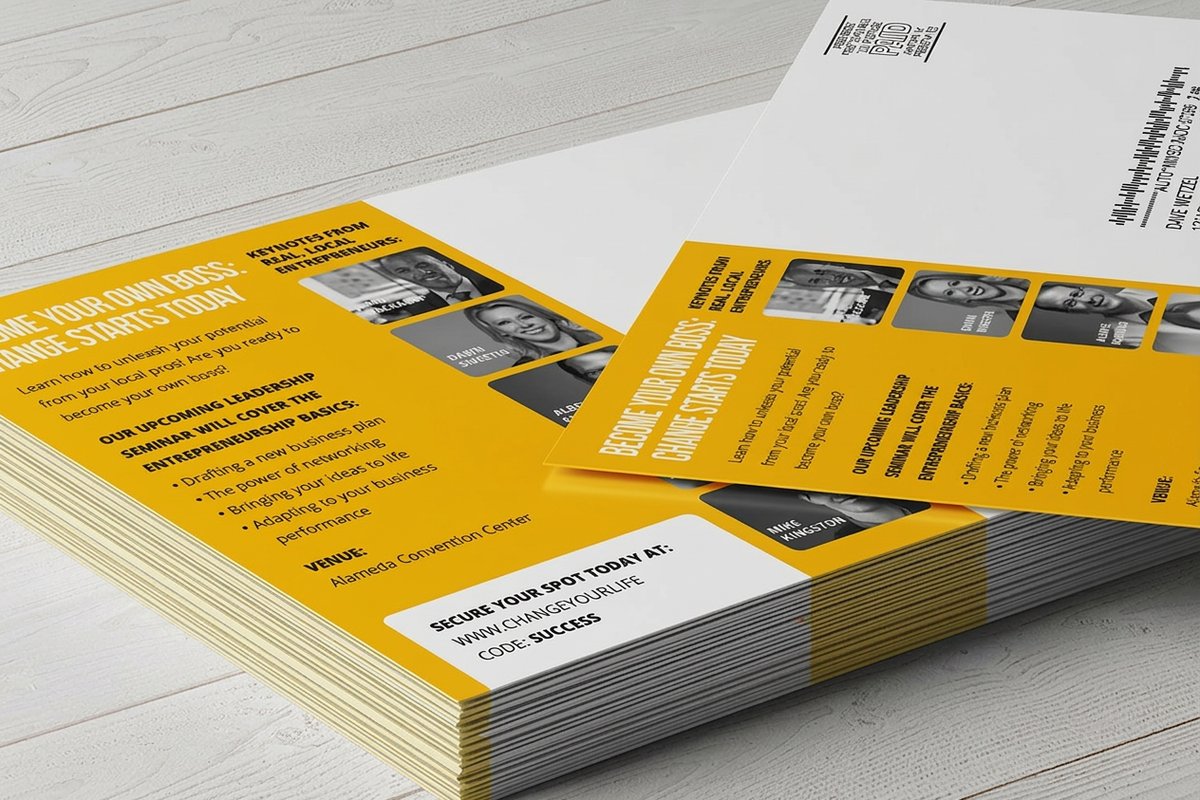
"USPS charges the lowest postcard rate only for cards inside a fixed size window: rectangular, at least 3.5 by 5 inches, no larger than 4.25 by 6 inches, and 0.007 to 0.016 inch thick. Go bigger than that and the card mails at the higher First-Class letter rate. So the single biggest lever on postage is keeping your card within the postcard-rate dimensions, unless a larger format earns its extra cost."

Start here
"Postcard postage in one paragraph"
Postcard postage is priced by size, not weight, and there is a specific dimension window that earns the lowest rate. A card that is rectangular, at least 3.5 by 5 inches, no bigger than 4.25 by 6 inches, and 0.007 to 0.016 inch thick mails at the USPS postcard rate. Anything larger jumps to the First-Class letter rate. The size tiers are stable, but the exact cent amounts are set by USPS and change, so confirm current rates before you budget.
Why size, not weight, sets postcard postage
With most mail, weight drives the price. Postcards flip that. They are light and thin, so USPS prices them by dimensions instead, offering a discounted postcard rate for cards that fit a specific size window and charging the standard First-Class letter rate for anything bigger. That single fact is the key to controlling a campaign budget: manage the size and you manage the postage.
The lowest rate applies to a card that is rectangular, at least 3.5 by 5 inches, no larger than 4.25 by 6 inches, and 0.007 to 0.016 inch thick. The wildly popular 4 by 6 postcard sits comfortably inside that window, which is exactly why it is the default for direct mail. You can print it as a direct mail postcard built for exactly this job, and browse the full range on the postcards page.
The exact dimensions that keep you at the postcard rate

The postcard-rate window is precise, and stepping outside it in any direction costs you. The card must be rectangular: square or odd-shaped cards do not qualify. It must be at least 3.5 by 5 inches, or it is too small to machine-process at the postcard rate. And it must be no larger than 4.25 by 6 inches. Cross that upper limit by even a little and the card mails at the higher letter rate.
Thickness matters too: a card thinner than 0.007 inch is too flimsy, and one thicker than 0.016 inch falls out of the window, so your stock choice is part of the postage decision. These size rules are stable and worth memorizing. For the mailing-side layout that goes with them, our guides on postcard mailing dimensions and USPS postcard guidelines cover the address block, barcode zone, and machinability in detail.
When a bigger, letter-rate card is worth it
Staying in the postcard window is the cheap play, but it is not always the smart one. Larger cards, a 5 by 7, a 6 by 9, or an oversized 6 by 11, mail at the First-Class letter rate, so each piece costs more postage. What they buy is attention: a big card is physically hard to ignore in a stack of envelopes, and that can lift response enough to more than cover the extra postage.
The right metric is cost per response, not cost per piece. If you are blanketing a neighborhood on a budget, the 4 by 6 postcard rate wins. If you are selling something high-value and need to stand out, an oversized postcard can pay for itself. Our guide on designing an effective direct-mail postcard shows how to make either size convert.
Laying out the mailing side
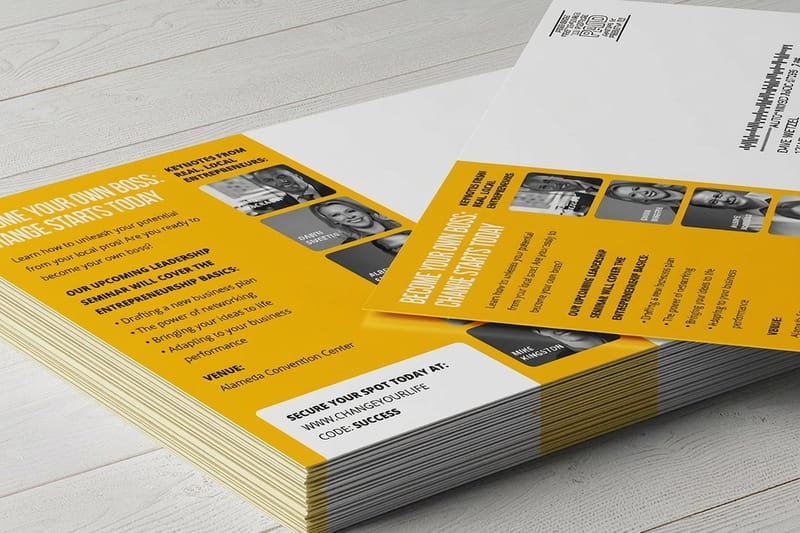
Whatever size you choose, the mailing side has to obey the same rules or the post office will not machine it cleanly. Reserve the upper-right for postage, keep the address block clear and legible, and leave the bottom bar open for the barcode. Heavy dark ink or busy art in those zones can jam the scanners and slow, or reject, your mail.
Keep the address side simple: your message and imagery live on the front, and the back stays clean enough to address and scan. If you are mailing at volume, 4OVER4 offers direct mail services that print, address, and send the campaign for you, and our guide on addressing a postcard correctly walks the layout step by step.
Print, stamp, and mail at 4OVER4
Once the size and layout fit your postage plan, printing is quick. Pick your size, stock, and finish, choose a mailable thickness, and set your quantity, and the print price updates live as you go. Remember there are two costs to budget: the printing you set here, and the postage USPS charges by size tier, which you should confirm at current rates before the run.
4OVER4 prints in-house and ships from Queens, New York, and can handle the mailing end too through direct mail services. Order free paper samples to check a stock stays in the postcard-rate thickness window, then print your run on the direct mail postcards page and drop it in the mail.
Wally keeps your postage low
Size decides what you pay
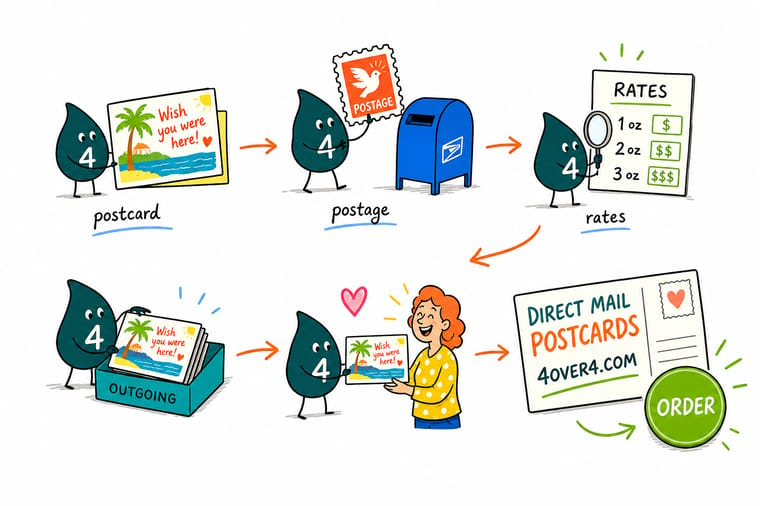
Wally treats postage as a size game. Stay rectangular, at least 3.5 by 5 and no bigger than 4.25 by 6 inches, and your card mails at the cheap postcard rate. Go larger and it jumps to the letter rate, which can still pay off when standing out matters more than reach. The tiers are stable, the cent amounts change, so confirm current USPS rates, then let 4OVER4 print and mail the run.
Order direct mail postcards →Quick reference
"Postage tiers by postcard size"
"Postage is decided by which size window your card falls into. These tiers are stable; confirm the current USPS price for each before you mail."
| "Card size" | "Postage tier" | Why it matters |
|---|---|---|
| 4 x 6 in | USPS postcard rate | The most popular size and the cheapest to mail; sits inside the postcard window. |
| 4.25 x 6 in (max) | USPS postcard rate | The largest card that still qualifies for the lowest postcard rate. |
| 5 x 7 in | First-Class letter rate | Exceeds the postcard window, so it mails at the higher letter rate. |
| 6 x 9 in | First-Class letter rate | A high-impact size that mails at the letter rate; judge by response. |
| 6 x 11 in | First-Class letter rate | Maximum standard direct-mail impact, still within letter limits. |
| Thickness | 0.007 to 0.016 in | Too thin or too thick and a card loses the postcard rate; stock choice matters. |
Step by step
"How to keep postcard postage low in 6 steps"
- Decide the goal firstMaximum reach on a budget points to the postcard rate. Maximum attention may justify a larger, letter-rate card. Pick before you design.
- Design to the rate windowFor the lowest rate, keep the card at or under 4.25 by 6 inches and at least 3.5 by 5, rectangular, at a mailable thickness.
- Choose a mailable stockPick a stock inside the 0.007 to 0.016 inch thickness range so the card qualifies and still feels substantial.
- Lay out the mailing sideReserve the address block, postage area, and barcode clear zone, and keep heavy ink off them so scanners can read it.
- Confirm current USPS ratesLook up the live postcard and letter rates before you budget, because the amounts change even though the size tiers do not.
- Print and mailPrint the run, then hand-stamp, meter, or use a mailing service so the whole campaign goes out clean.
Specs and pricing
"Postcard specs and live pricing"
"Once you have picked a size that fits your postage plan, the rest is stock, finish, and quantity. Here are the live specs and price-per-unit for direct mail postcards at 4OVER4, straight from the configurator."
| Quantity | Price Per Unit | Total |
|---|---|---|
| 500 | 17.9¢ | $89.68 |
| 1,000 | 17.1¢ | $170.53 |
| 2,000 | 9.35¢ | $186.95 |
| 3,000 | 6.84¢ | $205.13 |
| 4,000 | 5.58¢ | $223.31 |
| 5,000 | 4.83¢ | $241.51 |
| 6,000 | 4.56¢ | $273.85 |
| 7,000 | 4.37¢ | $306.18 |
Order it
"Print your postcards at 4OVER4"
See it in use
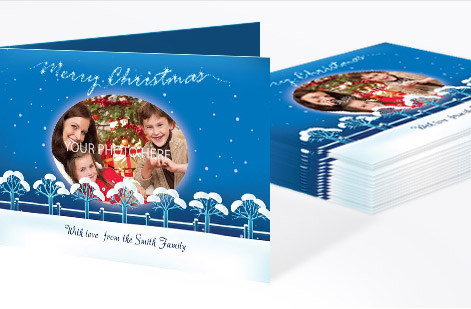
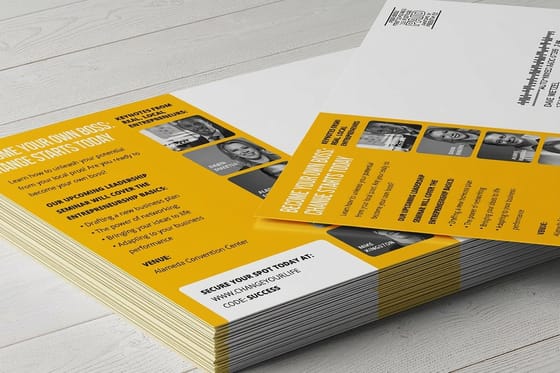
"Real direct mail postcards, printed in-house"

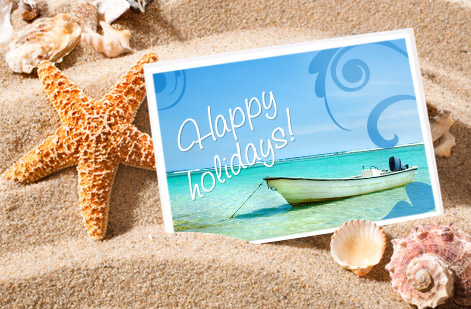
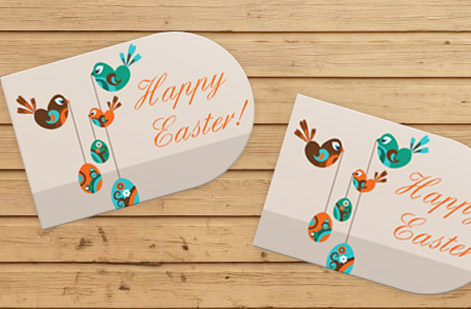
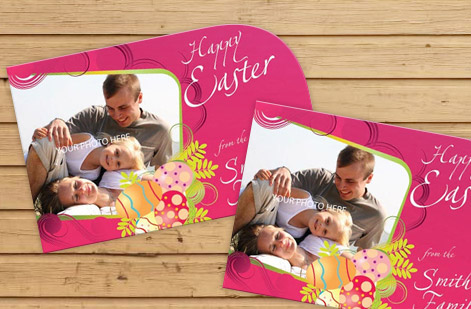
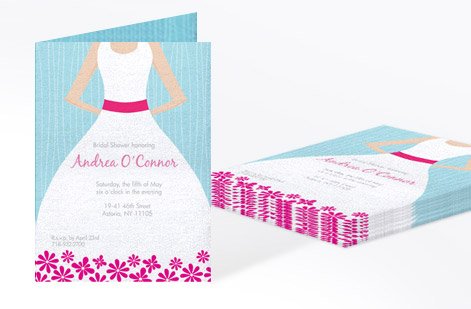


Explore more
Where to go next



By the numbers
"Custom postcards you can count on"
Common Questions
"Common questions about postcard postage"
What is postcard postage?
Postcard postage is the amount USPS charges to mail a postcard, and unlike a heavy parcel it is decided by the card's dimensions rather than its weight. USPS offers a lower postcard rate specifically for cards that fall inside a set size window, and a higher First-Class letter rate for cards that exceed it. Because postcards are light, size is the whole game: keep the card within the postcard window and you pay the cheapest rate, go larger and the postage steps up. The size tiers are stable over time, but the exact cent amounts are set by USPS and change periodically.
How do I choose the right postcard size for postage?
Balance reach against attention. If your goal is to mail as many pieces as possible for the lowest cost, design to the postcard-rate window: rectangular, at least 3.5 by 5 inches, no larger than 4.25 by 6 inches. A 4 by 6 card is the popular sweet spot. If your goal is to stand out in a crowded mailbox and you can afford more per piece, a 5 by 7, 6 by 9, or 6 by 11 mails at the higher letter rate but commands far more attention. Judge the decision on cost per response, not cost per piece.
What does postcard mailing cost and how are prices set?
There are two costs: printing and postage. Printing scales with quantity, size, stock, and finish, and drops per unit as the run grows. Postage is set by USPS based on the card's size tier, plus any discounts you qualify for through bulk or presorted mailing. A card inside the postcard-rate window is cheapest to mail; a larger card costs more in postage but can lift response. You set the print options in the configurator and see the price live, then confirm the current USPS postage separately before you budget the full campaign.
What sizes, stocks and finishes are available for postcards?
4OVER4 prints postcards from the mail-friendly 4 by 6 up through 5 by 7, 6 by 9, and oversized 6 by 11 formats, on sturdy cardstocks with finishes from uncoated (easy to write on and address) to gloss and matte, plus specialty looks. For campaigns, direct-mail postcards are built with the address side and mailing zones in mind. The live specs panel on this page shows the current sizes, stocks, and finishes with pricing from the configurator, so you can match the format to your postage plan.
How long do postcards take to print and ship?
Turnaround depends on the size, the stock, the finish, and the quantity, and the configurator shows the production time for your exact card before checkout. 4OVER4 prints in-house and ships from Queens, New York, and also offers direct-mail services that print, address, and mail the campaign for you. If you have a drop date, check the estimated ship or mail date in the cart and choose a faster option when the timeline is tight, especially for large mailings.
Does a bigger postcard always cost more to mail?
Yes, crossing the postcard-rate window into letter or flat territory raises the postage, but bigger is not automatically a worse deal. A larger card is harder to ignore in a stack of mail, so while each piece costs more to send, it can pull a higher response rate that lowers your true cost per lead or sale. The right way to decide is to compare cost per response, not cost per piece. If reach on a tight budget matters most, stay in the postcard window; if standing out matters more, the larger letter-rate card can win.
Get Started
Ready to print postcards that mail on budget?
Design to the size tier that fits your postage plan, print a mailable stock, and let 4OVER4 print or even mail the whole campaign. Adjust every option and watch your price update live.
Legal Disclaimer
Gold Standard guarantees apply to all standard orders placed through 4over4.com. Price match requires verifiable proof of a competitor's published price for an equivalent product with matching specifications and turnaround time. Satisfaction guarantee covers manufacturing defects and print quality issues. Contact support with order number and documentation. On-time delivery rate based on tracked orders 1999 to 2026. Individual results may vary based on shipping carrier performance.
