
How to Expand a Business the Smart Way


Marcus is our print marketing voice, built from the knowledge of our production team, with over 20 years in printing.
How to expand a business the smart way: wait until demand outruns capacity, choose a single path, then launch it with print you can measure, from yard signs and direct mail postcards to table tents and counter cards.
To expand a business, confirm demand is outrunning capacity, then pick one growth path and commit: open a new location, reach into a new market, franchise your brand, or sell more to the customers you already have. Fund each move with marketing you can measure, yard signs for a new site, direct mail for a new area, and table tents or counter cards that lift the average order everywhere you already operate. Grow one lever at a time, track the return, and reinvest what works. Commercial expansion, a new location or market, runs on yard signs at 18 by 24 inches on 4mm coroplast and direct mail postcards at 6 by 9 inches on 14pt cardstock. Format expansion, a new line for the customers you have, runs on 4 by 6 inch folded table tents and counter cards at the register.

The short version
One path, one trackable offer, one read
Expand only when demand keeps outrunning capacity, such as a calendar that stays full weeks ahead or a waitlist that forms on its own. Name whether you need to grow the model you have or add a new location, market, or line. Then pick a single path and commit: 18 by 24 inch yard signs and 24 by 36 inch posters to launch a new site, 6 by 9 inch direct mail postcards to test a new area, brochures and brand kits to franchise, and table tents plus counter cards to sell more to the customers you already have. Put a trackable offer on every piece, read the result, and scale only what pays back. 4OVER4.COM customers grow this way because print lets them test small and reorder cheap.
When is the right time to expand a business?
Treat expansion as a decision you make on evidence gathered over at least a quarter. The single best signal that you are ready is simple: demand keeps outrunning what you can deliver. When your calendar stays full weeks ahead, product sells out, or a waitlist forms on its own, the market is telling you it wants more of you.
Check the instinct against the small business growth benchmarks and you will see that the businesses that scale cleanly tend to expand from a position of strength, with healthy margins and a cash cushion, not from a panicked reaction to a slow quarter. The flip side is sobering: a hard look at the small business failure rate data shows how often overexpansion, not a lack of ambition, is what sinks a company.
Before you commit, run a short readiness check. Are margins steady enough to absorb a new cost center? Do you have a few months of operating cash in reserve? Can your current team hold the line while you build the new thing? If you are nodding, the timing is on your side. If you are stretching to say yes, tighten the core first and revisit in a quarter.
Expand vs. grow: they are not the same thing
People use these words interchangeably, and it costs them money. Growing is scaling the engine you already have: more customers, more orders, more revenue from the same model. Expanding changes the model itself by bolting on a new location, a new market, or a new line. In a print budget, growing looks like a reorder of the 6 by 9 inch postcard that already pulls, and expanding looks like a first run of 18 by 24 inch yard signs for an address with no customers yet.
The distinction decides how you spend. Growth is usually fueled by marketing that drives volume through a proven system. Expansion needs capital, planning, and a longer runway before it pays back, because you are building something that does not exist yet. Plenty of owners convince themselves they need to expand when a sharper look at their small business marketing trends shows they only need to grow, and growing is far cheaper and less risky.
A quick gut check: if the answer to "what is holding us back?" is capacity or awareness, you probably need to grow. If the honest answer is "we have squeezed everything out of this model," expansion is the real move. Either way, get precise about the word before you write the plan.
The four proven ways to expand a business
The Ansoff growth matrix below maps four directions to grow, by whether the market and the product are new or existing. You either sell more to the customers you already have, take what you sell into a new area, add a new line for your current audience, or do something genuinely new for a genuinely new market. Each square carries a different level of risk, and each has a print piece that tests it: 4 by 6 inch folded table tents for current customers, 6 by 9 inch postcards for a new area, counter cards for a new line.
The smart order is bottom-left to top-right in terms of risk. Deepen relationships with existing customers first, because that is the fastest, cheapest payback. Push into new areas next. Add new lines when the core is solid. Save true diversification for last, once you can afford to be wrong. The sections below walk through the moves you will actually make, and the print marketing that funds each one without draining the bank. If you want proof it works across industries, browse the real-world marketing case studies for the tactics behind each win.
Strategy one: open a new location

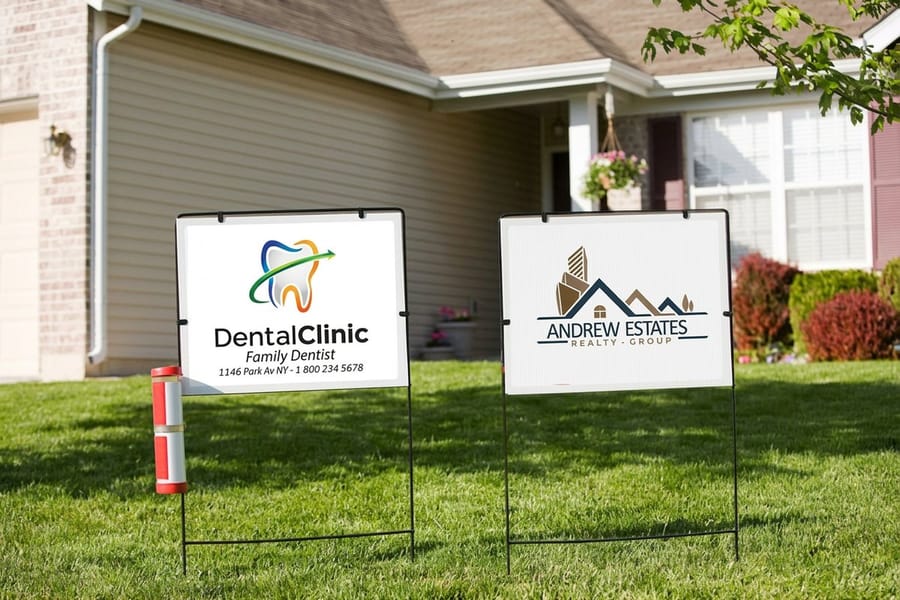
A second site is the most visible way to expand, and the most capital-heavy. Get the fundamentals right first: pick the location on data, not on a good feeling, and make sure the new site can stand on its own without starving the original. Budget the launch print with the lease: 18 by 24 inch yard signs on 4mm coroplast at the two nearest intersections and a 3 by 6 foot vinyl banner across the storefront, up two weeks before the doors open.
Then make the opening loud. Physical signage turns a quiet launch into a busy one. Yard signs and posters announce that you have arrived and pull the foot traffic an online ad simply cannot, while a run of banners from the wider signs and banners range turns your storefront into its own billboard. The steps for artwork, material and mounting are in how to make custom signs from design to print. The numbers hold up too: the signage effectiveness data shows how much a well-placed sign lifts awareness and walk-ins.
One contractor turned simple job-site signage into a steady source of leads, and you can read exactly how in the construction yard sign case study. For a grand-opening push, spin up your artwork in the browser with the online designer and have signs shipping within days.
Strategy two: reach into a new market

Sometimes the growth is not next door, it is in the next zip code, a new demographic, or a region that keeps finding you online. You do not need a building to test a new market. You need to land your offer in front of the right people and see if they bite. Mail 500 postcards at 6 by 9 inches on 14pt cardstock to the carrier routes in that area, give each route its own offer code, and scale only the routes that answer.
Direct mail does the quiet work here. A targeted run of postcards or flyers puts a real, physical offer in mailboxes your storefront will never reach, and unlike a feed that scrolls past, a postcard sits on the counter. The return justifies the test: the direct mail ROI data shows why mail still earns its place next to digital, and the print vs. digital comparison spells out exactly where each one wins.
- Postcards for a sharp, single offer with a clear call to action. See how to make postcards that get kept.
- Flyers for detail, menus, and multi-offer drops. The 20 places to leave flyers guide covers where they actually get picked up.
- Format matters more than most people think, so skim the most effective direct mail formats before you print.
A nonprofit doubled its donations on the back of a single mail program, documented in the direct mail case study. The same playbook works for donors and for first-time buyers.
Strategy three: franchise, license, or partner

Once your model is proven and repeatable, you can let other people run it for you through franchising, licensing, or partnership. This is how a strong local business becomes a regional or national one without funding every new site from your own pocket. Write the print kit down before the first partner signs: the logo file, the stock and finish of each piece, and the same 8.5 by 11 inch brochure and counter card at every register.
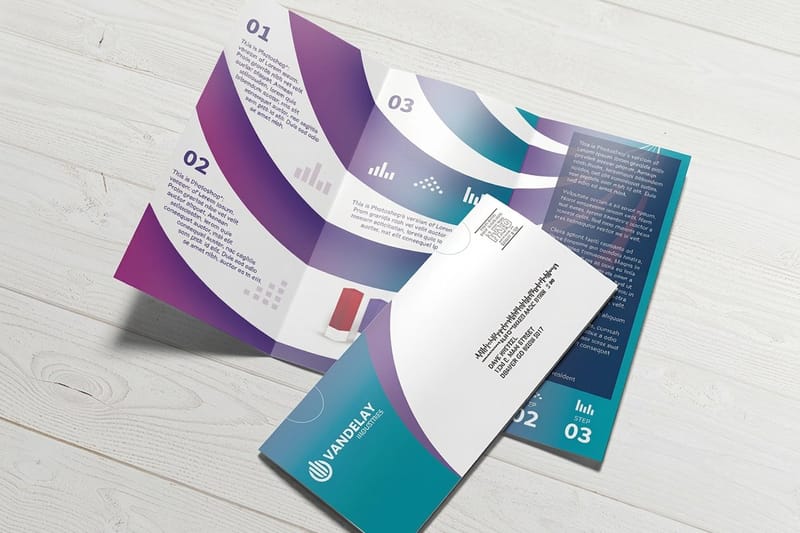
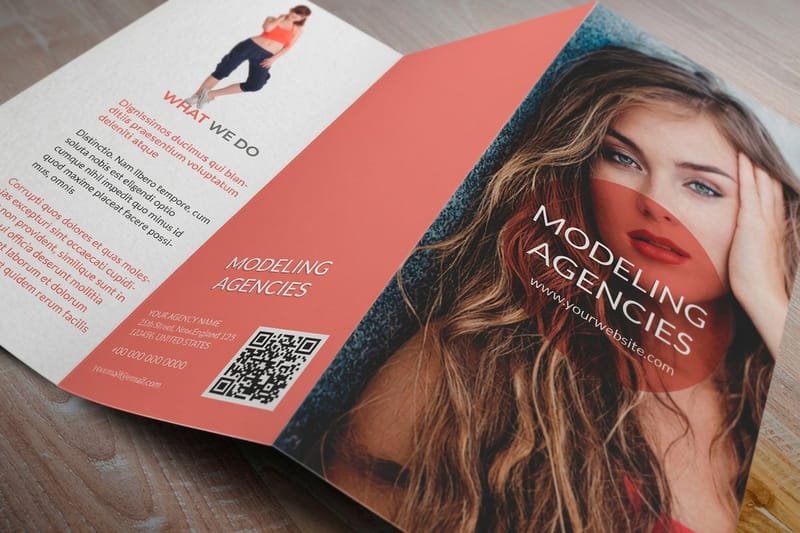
The make-or-break factor is brand consistency. A franchisee two states away has to look, feel, and read exactly like the original, or the whole thing dilutes. That starts with a locked visual identity, so nail the fundamentals in the logo design best practices guide, then build a print kit every partner uses without deviation. Professional brochures carry the story to prospective franchisees, and you can see how to fold a brochure so the reveal lands the way you intend.
Equip every new operator with the same on-brand collateral you use, from signage to counter pieces, and consider a run of branded merchandise so the identity travels beyond the walls. At scale, that consistency is what the partner is paying for.
Strategy four: sell more to the customers you already have

One move gets skipped because it is unglamorous, and it has the fastest payback. Winning a brand-new customer costs far more than getting an existing one to spend a little more. Before you build anything new, mine the audience already walking through your door with 4 by 6 inch folded table tents on every seat and a counter card at the register.
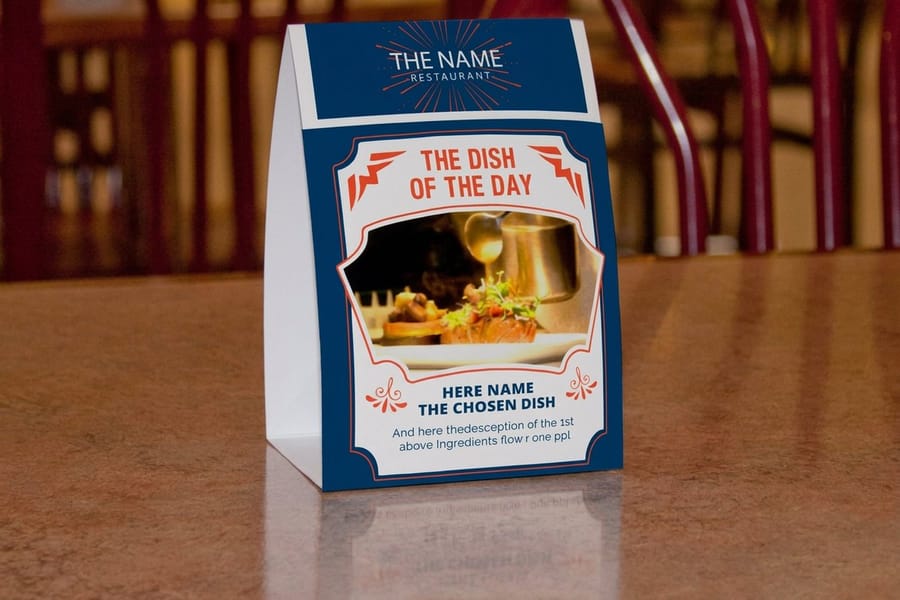
This is where small, in-store print quietly earns its keep. Table tents sit on every table and counter, promoting the add-on, the upgrade, or the loyalty signup at the exact moment a customer is deciding. They cost little, they stay on the table all day, and they lift the average order without a single conversation. If the format is new to you, the what are table tents guide explains where they work best.
Pair them with counter cards at the register for the impulse ask, and every customer sees the offer twice before paying. See real setups in the table tent display showcase. A fitness studio grew its memberships almost entirely on in-house promo like this, as the fitness studio case study lays out step by step.
What expansion costs and how to fund the marketing
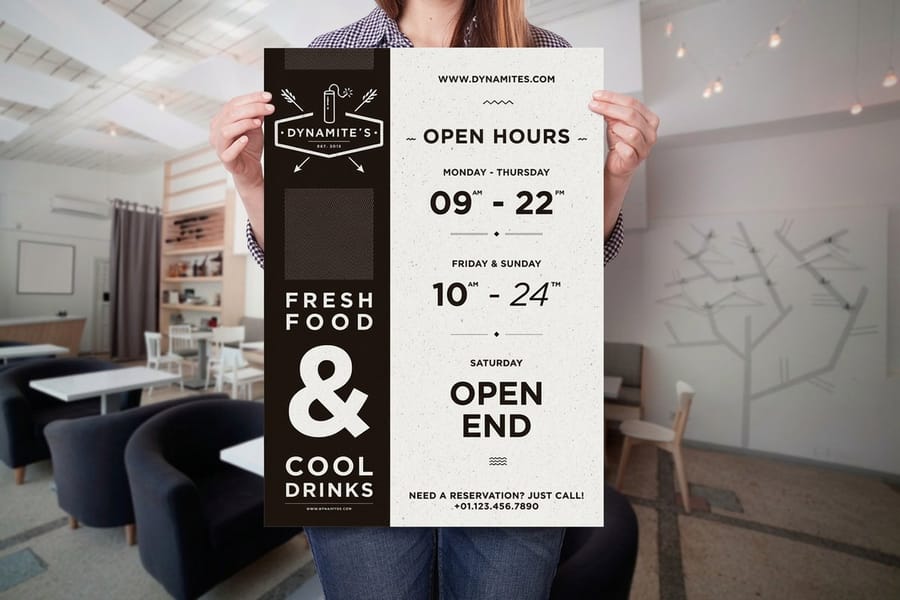
The lease and the payroll are the big numbers in expansion. The launch print is the small one you can price today, from around $25 for a yard sign to about $108 for a poster run. Print scales with the job, so you decide the spend, test small, and only pour money into what already worked.
Every price at 4OVER4.COM is driven by five things you control: quantity, size, paper or material, finish, and turnaround. All of them show live in the configurator before you pay, with no minimum contract to sign. That means a real local test can start for very little, then drop to a lower per-unit cost the moment you reorder a winner.
- Yard signs from around $25 to claim a new neighborhood.
- Posters from about $108 to make a launch impossible to miss.
- Table tents in the low hundreds to lift revenue at every existing seat.
Set the budget against reality by checking the small business marketing budget benchmarks, then weight your spend toward the channels the promotional products ROI data shows actually return. Keep an eye on daily deals to stretch the first test even further.
How to promote your expansion

Expanding is only half the job. The other half is telling an area that did not know you existed that you are now on their street, and you get one window to do it: roughly the two weeks before you open and the month after. Announce it in the physical world first, because that is where the people who will actually walk in are standing, then keep the message running long enough for the slow movers to act on it.
Five tactics carry most of a launch, and each one has a piece of print attached to it:
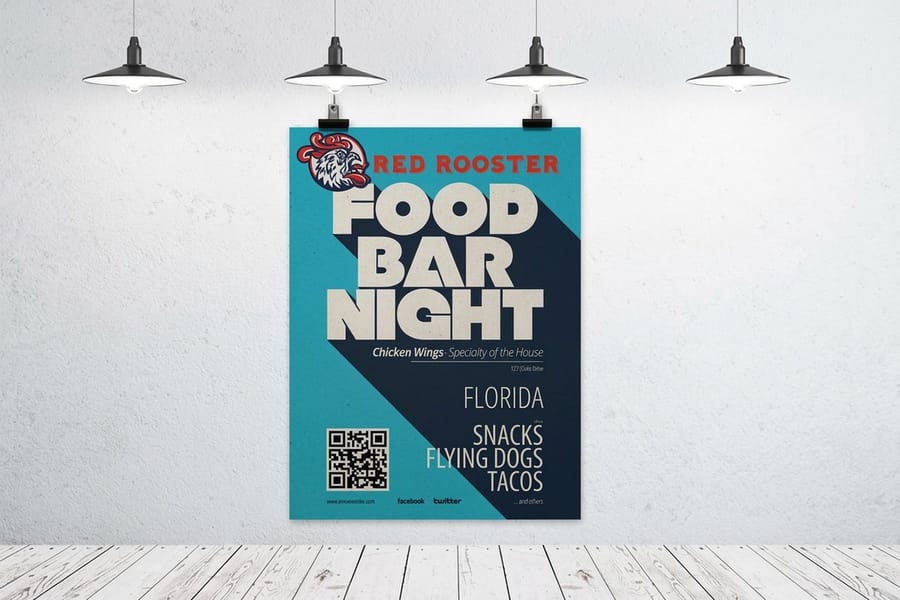
- Grand opening signage. Claim the block before the doors open. Yard signs at 18x24 on 4mm coroplast, from around $25, go at the two nearest intersections; a 3ft x 6ft 13oz vinyl banner with hemmed edges and grommets goes across the storefront; a 24x36 poster from about $108 sits in the window. Put them up two weeks early so opening day is not a surprise to anyone who drives past.
- A route based postcard rewrite. Take the postcard that already pulls for your first location, refocus the front on the new address and the opening date instead of the old one, and mail it to the carrier routes around it. Direct mail postcards at 6x9 on 14pt cardstock give you room for a map, the date and one offer; 4x6 costs less per piece when you are mailing wide. Give every route its own offer code so you can see which streets answered.
- Flyer handouts. Flyers at 8.5x11 on 100lb gloss text, half folded when you need two panels, handed out at the offices, gyms and events inside walking distance during opening week. They are cheap enough to rewrite with a better headline on day three if the first version falls flat.
- In store counter cards and table tents. The customers you already have are the cheapest audience for the news. Counter cards at the register and 4x6 folded table tents on every seat announce the new location to people already spending money with you, and table tents in the low hundreds keep lifting the ticket long after the ribbon is cut. The table tent display options show how they sit on a real table.
- A launch week checklist. Signage up two weeks out, postcards in the mail ten days out, flyers on the street through opening week, counter cards and table tents in place on day one, and a second postcard wave one week after opening for everyone who meant to come and forgot. Every piece carries its own offer code, QR code or phone extension, so a week later you know which one earned the traffic.
| Promotion tactic | What it does | When to run it | What to print |
|---|---|---|---|
| Grand opening signage | Tells the street you exist and pulls walk-in traffic from people who never searched for you | Two weeks before the doors open, leave it up through the first month | 18x24 yard signs on 4mm coroplast from around $25, a 3ft x 6ft 13oz vinyl banner, a 24x36 window poster from about $108 |
| Route based postcard drop | Puts the new address, the opening date and one offer in mailboxes your storefront cannot reach | First wave ten days before opening, second wave one week after | 6x9 postcards on 14pt cardstock, 4x6 when you are mailing wide, one offer code per carrier route |
| Flyer handouts | Reaches the offices, gyms and events inside walking distance, cheap enough to rewrite mid-week | Opening week, every day you have someone to hand them out | 8.5x11 flyers on 100lb gloss text, half folded when you need two panels |
| Counter cards and table tents | Sells the expansion to the customers you already have and lifts the ticket at every existing seat | Live on day one, refresh the offer monthly | Counter cards at the register, 4x6 folded table tents in the low hundreds on every table |
| Launch week checklist | Keeps the five pieces from landing out of order and leaves every one of them trackable | Run it as a single schedule from two weeks out to one week after opening | Each piece with its own offer code, QR code or phone extension |
Order the launch as one job so the stock, the color and the turnaround line up across every piece, and check the turnaround selector before you commit to an opening date. The full range of expansion marketing materials sits in one place, and daily deals can cover the reprint you will want in week two.
Measure what you print, and dodge the classic mistakes
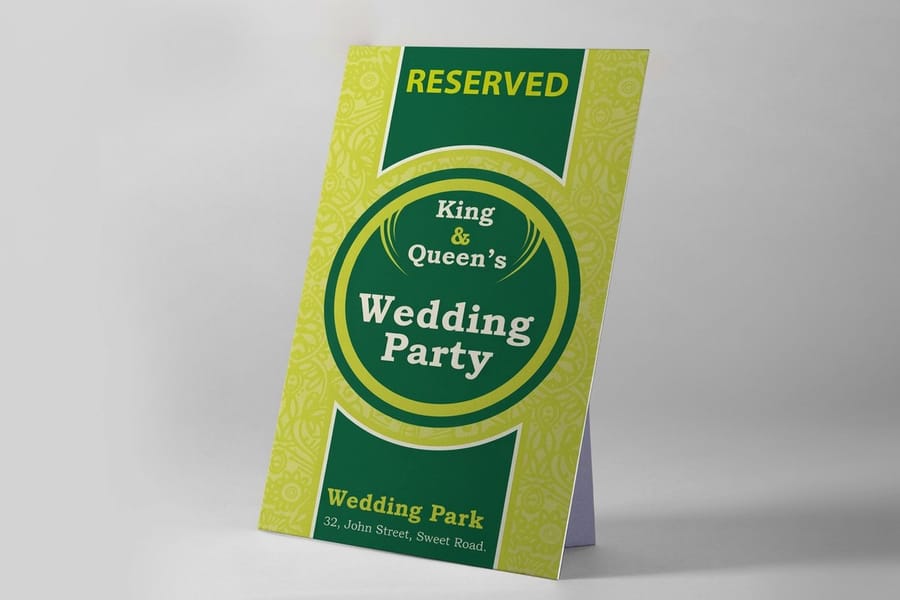
Measure every piece you print for the expansion, and build the measurement into the print itself. Put a unique offer code, a QR code, or a dedicated phone extension on every piece, so when a customer responds you know exactly which move earned it. That single habit turns a marketing budget into a set of experiments you can score.
Then sidestep the traps that stall growing businesses:
- Expanding to escape a slow patch. You are adding cost before you have proven demand. Fix the core first.
- Chasing every strategy at once. Splitting attention across four moves means none of them gets the resources to work. Commit to one.
- Letting the brand drift. New location, same look. Inconsistency quietly erodes the trust you built.
- Skipping the test. Printing 10,000 of something you have never tried. Run 500 first, read the result, then scale.
Need a jolt of ideas before you commit? The self-promotion ideas piece and the flyer design showcase are good places to steal from. When you are ready to build a display for a show or event, the trade show and event range and the startup trade show case study show how to make a first impression count.
Wally explains business growth
Grow one lever at a time, and print your way there
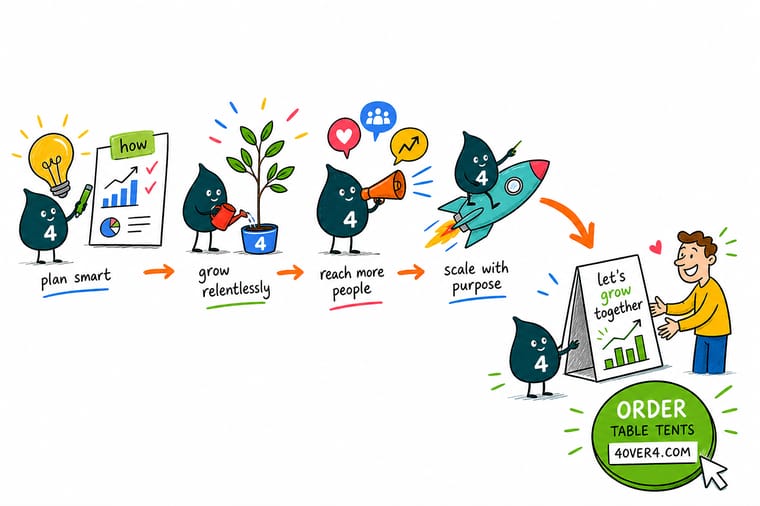
Wally treats expansion like stacking blocks: one steady move at a time beats a shaky tower of all four at once. Prove the customers you already have will spend a little more, claim a new area with signs and mail, then add a location or a line once the core holds. The trick is to test small and read the result, and print is the perfect testing ground because you can start a run for the cost of a lunch and reorder the winner cheap. Build your growth kit at 4OVER4.
Explore marketing materials →
Specs and pricing
Start small: table tent specs and pricing
One of the cheapest growth levers is the in-store card that upsells on autopilot. Table tents run 250 for $554.39, which is $2.22 each, with live specs and price-per-unit below.

| Quantity | Price Per Unit | Total |
|---|---|---|
| 250 | $2.22 | $554.39 |
| 500 | $1.19 | $596.08 |
| 1,000 | 69.3¢ | $693.34 |
| 2,500 | 33.3¢ | $832.28 |
| 5,000 | 25.0¢ | $1,249.11 |
| 10,000 | 18.0¢ | $1,804.90 |
| 15,000 | 17.6¢ | $2,638.57 |
| 20,000 | 17.4¢ | $3,472.23 |
Print the plan
The print tools that fund your growth



See it in use
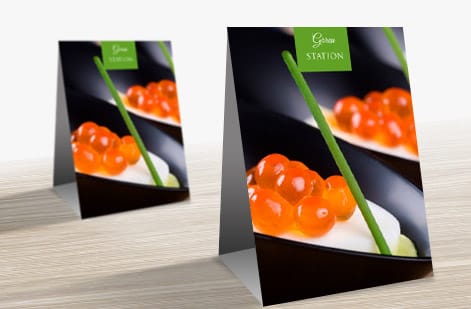
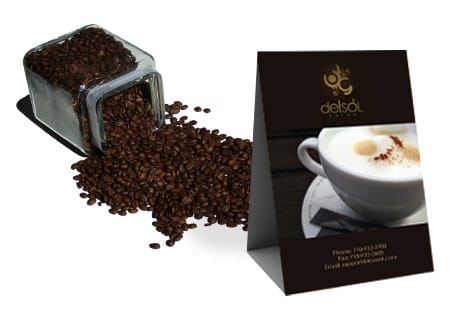
Counter pieces we printed for growing shops







Explore more
Where to go next




By the numbers
Trusted by the businesses doing the growing
Common Questions
Common questions about expanding a business
What does it actually mean to expand my business?
Expanding means adding a new dimension to what you already run, rather than simply doing more of the same. The four classic moves are selling more to your current customers, opening a new location, entering a new market or region, and adding a new product or service line. Each one carries a different cost, timeline, and risk. Deciding which of those four you are pursuing is the first real step, because it changes everything from your budget to the marketing you print.
When is the right time to expand a business?
The signal to watch is demand that consistently exceeds your capacity: waitlists, products that sell out, a schedule that stays full weeks ahead, and repeat orders that keep climbing. If you can also point to healthy margins and a few months of operating cash in reserve, the timing is on your side. Expanding to escape a slow month or to match a competitor almost always backfires, because you are adding cost before you have proven demand.
How do I promote a business expansion?
Run the launch as one campaign with five pieces on a schedule. Signage goes up about two weeks before the doors open: 18x24 yard signs on 4mm coroplast from around $25 at the two nearest intersections, a 3ft x 6ft 13oz vinyl banner with hemmed edges and grommets across the storefront, and a 24x36 poster from about $108 in the window. Direct mail postcards go out roughly ten days ahead to the carrier routes around the new address, rewritten so the front leads with the new location and the opening date rather than your original one, at 6x9 on 14pt cardstock when you want a map and an offer, or 4x6 when you are mailing wide. Flyers at 8.5x11 on 100lb gloss text get handed out through opening week to the offices, gyms and events within walking distance. Counter cards at the register and 4x6 folded table tents, in the low hundreds, carry the news to the customers you already have and keep lifting the ticket after the opening. Then send a second postcard wave one week after you open for everyone who meant to come and forgot. Put a separate offer code, QR code or phone extension on each piece, so a week later you know which street, which route and which table actually sent people through the door.
What is the difference between expanding and growing a business?
Growing is scaling the engine you already have, more customers, more orders, more revenue from the same model. Expanding changes the model itself by adding a location, a market, or a line. The distinction matters because it decides how you spend. Growth is usually funded with marketing that drives volume, while expansion needs capital, planning, and a longer runway before it pays back. Many owners think they need to expand when they only need to grow.
Do I grow the model I have or open somewhere new?
Start from where the demand actually is. If existing customers keep asking for more, deepen the relationship before you build anything new. If people outside your area are finding you, a new location or a direct mail push into that region makes sense. If your audience is asking for something you do not yet sell, a new line may be the move. Score each option on cost, risk, and how fast it can pay back, then commit to one and give it a full quarter before you judge it.
How much does business expansion marketing cost, and how is the price set?
Print marketing scales with the job, so you control the spend. At 4OVER4.COM the price of any piece is driven by quantity, size, paper or material, finish, and turnaround, and every one of those shows live in the product configurator before you pay. That means you can start a local test for a modest amount, yard signs from around $25, posters from about $108, and table tents in the low hundreds, then reorder at a lower per-unit cost once you see which piece pulls. There is no minimum contract, so you can size each move to the budget you have.
Which print marketing helps most when expanding into a new area?
For a new physical location, signage does the heavy lifting: yard signs, posters, and banners announce that you have arrived and pull walk-in traffic. For a new neighborhood or region, direct mail postcards and flyers land your offer in mailboxes your storefront cannot reach. To lift revenue at every location you already run, table tents and counter cards quietly upsell at the point of sale. Mix the ones that fit your growth path, and put a trackable offer on each so you can see the return.
Get Started
Order a counter card at $21.97 and test one offer
Pick the pieces that match your next move, drop in your art, and we ship crisp, on-brand marketing you can test this week and scale next quarter.
Legal Disclaimer
Gold Standard guarantees apply to all standard orders placed through 4over4.com. Price match requires verifiable proof of a competitor's published price for an equivalent product with matching specifications and turnaround time. Satisfaction guarantee covers manufacturing defects and print quality issues. Contact support with order number and documentation.
