
How To Design Custom Tags That Sell Your Brand


A tag is a tiny piece of branding that touches every product you sell. Here is how to choose the tag type, material, shape, and string for your goods, plus how wholesale tiers bring the per-tag cost down.
Designing custom tags means matching the tag type, material, shape, and string to your product, then printing your brand on both sides. Choose a hang tag, clothing tag, or price tag for the job, pick a stock like premium or kraft, decide the shape and string or hole, keep your logo and details clear on both faces, and order in wholesale tiers to lower the per-tag price.
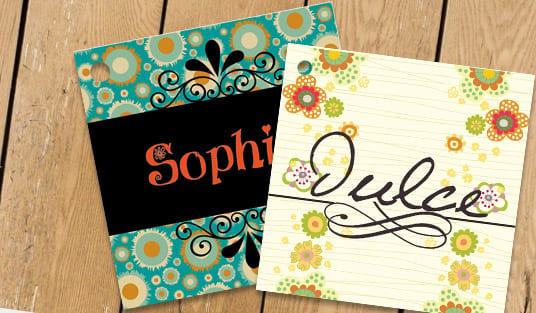
Start by choosing the tag type
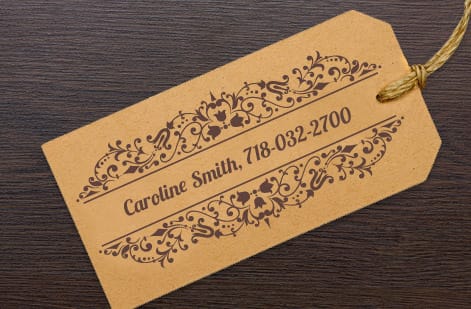
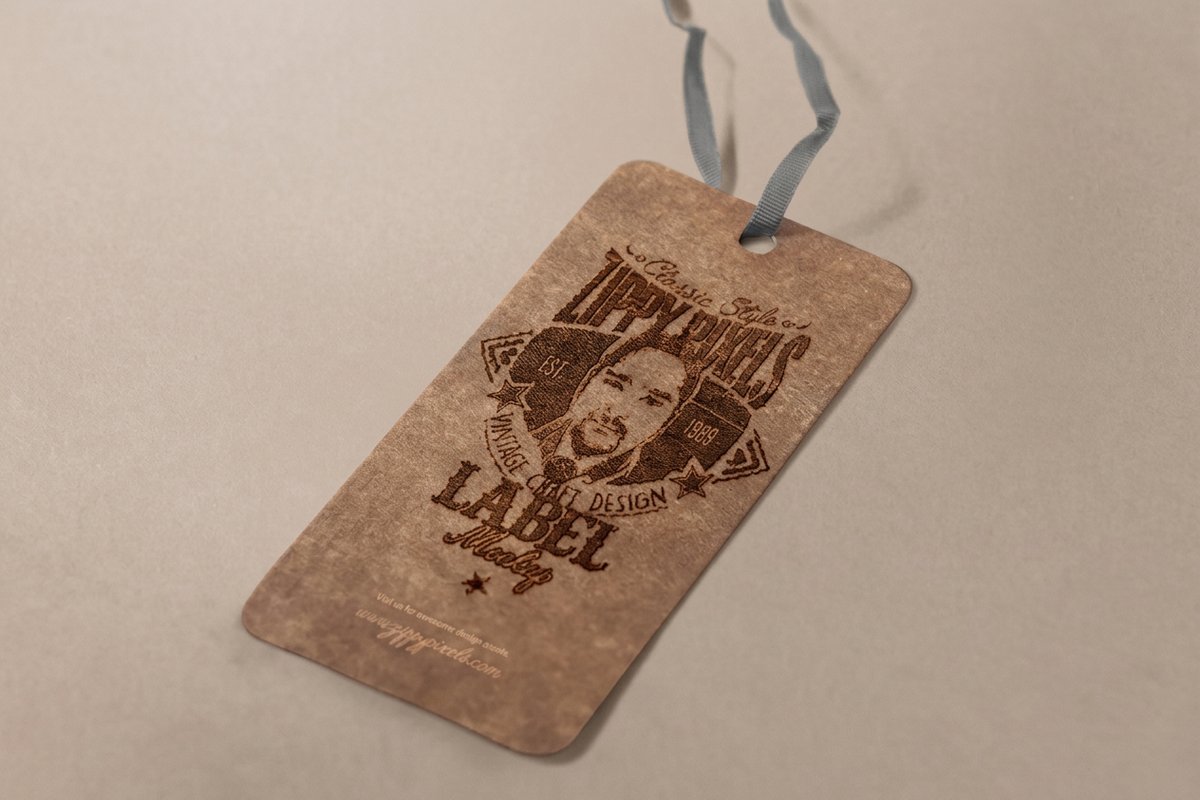
The word tag covers a few different tools, and naming the right one is the first design decision. A hang tag hangs from a product on a string or a hole and is mostly about branding and a first impression on the shelf. A clothing tag carries the practical load of size, fabric, and care instructions, usually printed on both faces. A price tag handles the point of sale and needs to be clear, quick to read, and easy to attach. Pick the type by the job, because it drives the material, the shape, and the attachment that follow.
Many products use more than one tag at once, a branded hang tag paired with a small care tag, for example. If that is you, design them as a set so they share a look. Our custom hang tags and clothing hang tags cover the common jobs, and you can coordinate them with the rest of your retail print from the custom collection.
Material and shape carry your brand story
Before a customer reads your tag, they feel it, and the material tells them what kind of brand you are. A premium coated stock reads as polished and high-end, a natural kraft stock reads as handmade, sustainable, and warm, and a thick uncoated stock lands somewhere considered in between. Choose the stock that matches the story you want the product to tell, because the paper does that work instantly and silently.
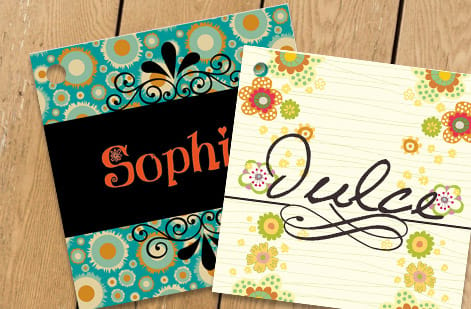
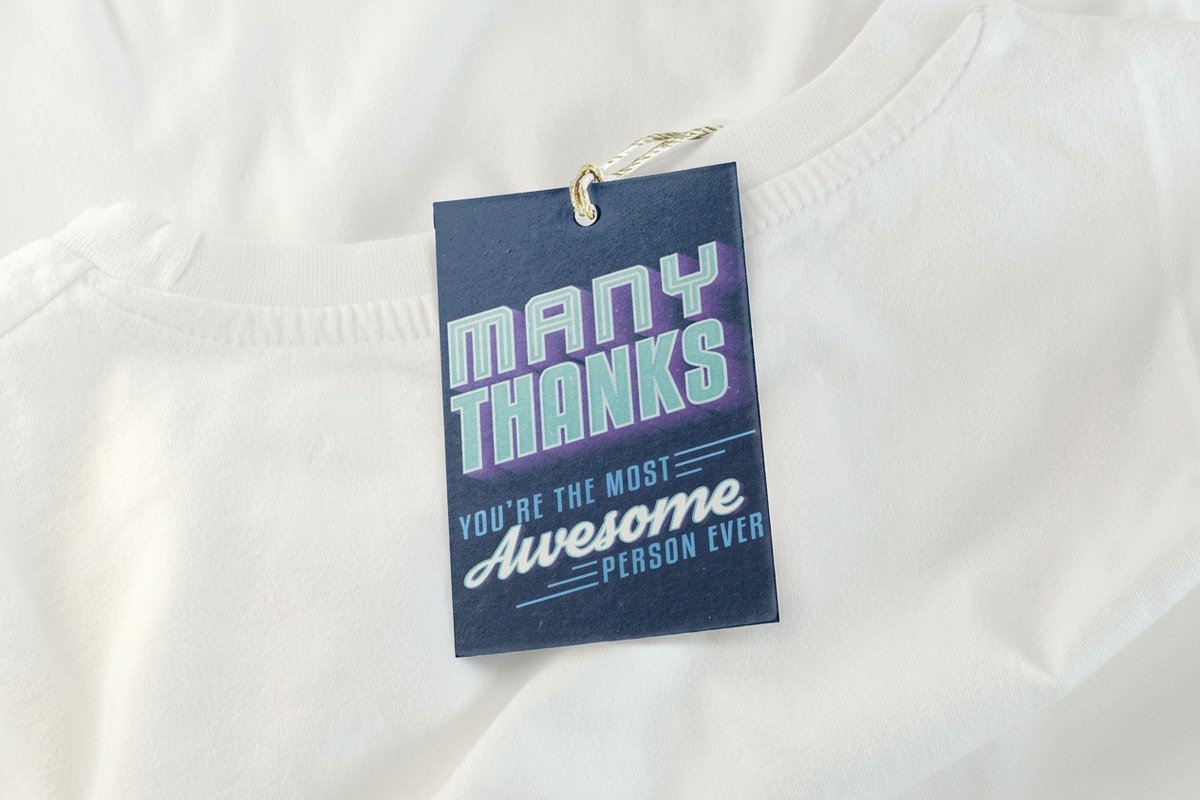
Shape is the next layer of character. A standard rectangle is clean and economical, rounded corners feel softer and more finished, and a custom die-cut outline that echoes your product or logo makes the tag genuinely memorable on a crowded rack. Even the attachment plays a part: a cotton string, a ribbon, or a simple punched hole each set a different tone. Whatever you choose, place the hole clear of your artwork so it never clips your logo or text. Our kraft hang tags are a natural fit when your brand leans handmade or eco.
Design both sides so the tag works twice
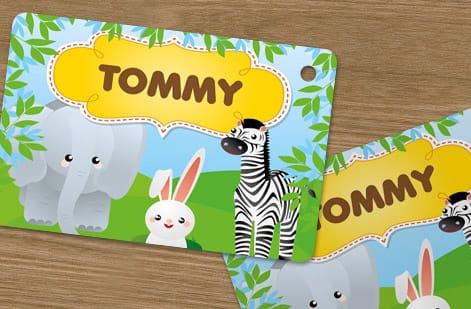
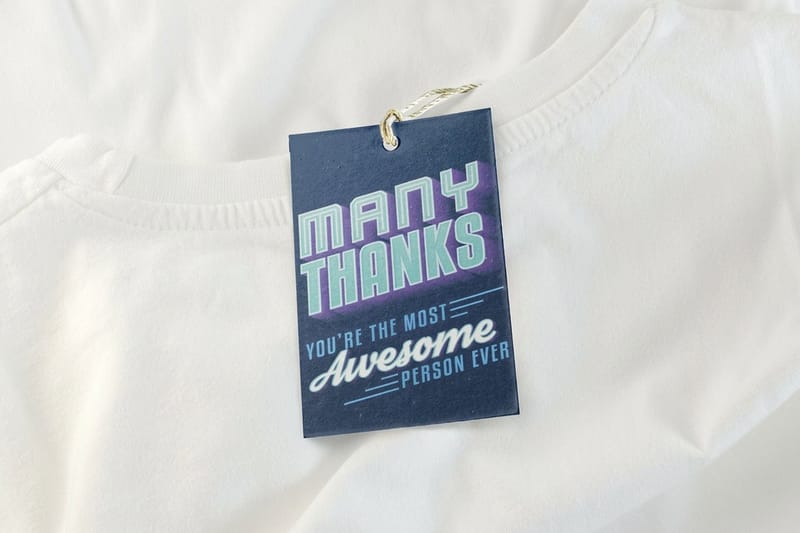
A tag has two faces, and the strongest designs use both. The front is your brand moment: a clean logo, your color, and maybe a short tagline, kept simple so it reads at a glance. The back is where the practical information lives, whether that is size and care instructions for apparel, a price and SKU for retail, or a short story about the product for a gift. Splitting the work this way keeps each face uncluttered and lets the tag do two jobs without feeling busy.
Treat both faces to the same file discipline as any print job. Build the artwork in CMYK so color matches your identity on paper, run any edge-to-edge color out to the bleed, and hold text inside the safe margin so a slight cut never trims a word. Keep small type a true black rather than a four-color mix so fine print stays crisp. Proof both faces before you export, since a typo on a wholesale run of tags multiplies fast.
Order in wholesale tiers to drop the cost
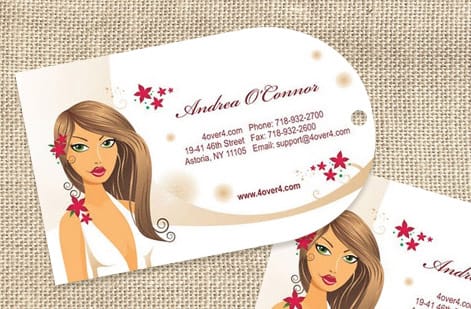
Tags are a pure per-unit item, which means quantity is your biggest lever on cost. Wholesale tiers exist for exactly this: the more tags you print in one run, the lower the price on every single one. If you tag every product you sell, you go through tags constantly, so buying in bulk for a season rather than in small batches keeps your per-tag cost low and your stock topped up.
Plan the quantity around your real volume plus a comfortable buffer, since running out of branded tags mid-season means either a rush reorder or shipping products untagged. When the design is set, use the live specs and pricing panel below to choose your stock, shape, string, and quantity, and watch the per-tag price fall as the tier grows. Order free samples first to confirm the stock and shape in hand, then run the full wholesale order with confidence.
Wally tags a product the right way
Right type, right stock, both sides, bulk price
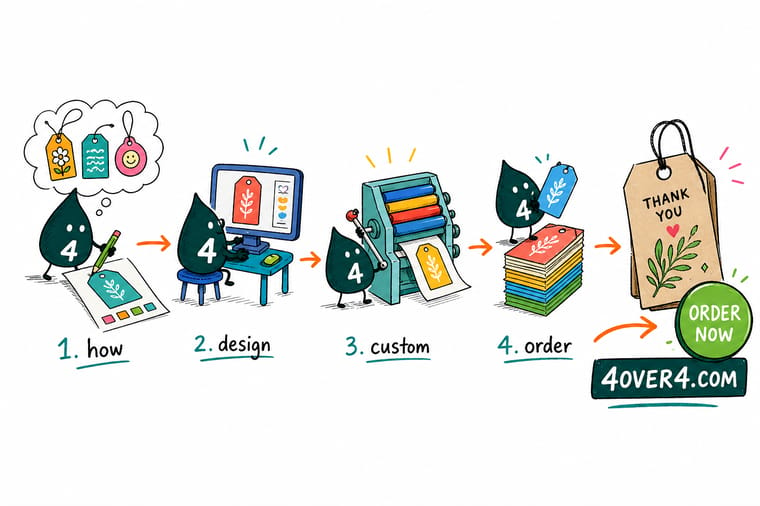
Wally names the job first, a hang tag, a clothing tag, or a price tag, then picks a stock that matches the brand, from polished premium to natural kraft. Logo on the front, the useful details on the back, and a punch hole placed clear of the art. Then a wholesale tier drops the price on every tag. Proof it, print it, and 4OVER4 sends the whole run.
Design your custom tags →Quick reference
The key details, at a glance
| Detail | What to know | Why it matters |
|---|---|---|
| Tag type | Hang, clothing, or price | Match the tag to the product and the job it does. |
| Material | Premium or kraft stock | Stock sets the tone, from high-end to natural and handmade. |
| Shape | Standard or custom die-cut | A custom shape or rounded corner makes the tag feel considered. |
| String or hole | String, ribbon, or hole | Decide how the tag attaches and how it should feel in hand. |
| Sides | Design front and back | Logo on front, details like size or price on the back. |
| Bleed and safe | 0.125 in each | Bleed for edge color, safe margin so the hole never clips text. |
| Quantity | Wholesale tiers | Bulk tiers lower the price on every tag you print. |
Step by step
How to do it in 7 steps
- Name the job the tag doesDecide whether you need a hang tag for retail, a clothing tag with size and care, or a price tag, since the type drives every other choice.
- Choose the materialPick a premium stock for a high-end feel or a kraft stock for a natural, handmade look that matches your brand story.
- Set the shape and cornersChoose a standard rectangle, rounded corners, or a custom die-cut shape that reflects your product and stands out on the rack.
- Pick the string or holeDecide how the tag attaches, whether a simple hole, a cotton string, or a ribbon, and place the hole clear of your artwork.
- Design both facesPut your logo on the front and the practical details like size, price, or care instructions on the back so the tag works twice.
- Set color, bleed, and marginsBuild the file in CMYK, run edge color to the bleed, and keep text and the punch hole inside the safe margin.
- Order in wholesale tiersChoose a bulk quantity so the per-tag price drops, run the free file check, and place the order.
Specs and pricing
Live specs and pricing
Once your design is ready, the print decisions come down to size, stock, and finish. Here are the live specs and price per unit at 4OVER4.COM, straight from the configurator.
| Quantity | Price Per Unit | Total |
|---|---|---|
| 50 | 50.5¢ | $25.27 |
| 100 | 28.6¢ | $28.56 |
| 200 | 15.9¢ | $31.86 |
| 300 | 12.4¢ | $37.35 |
| 400 | 10.2¢ | $40.64 |
| 500 | 8.79¢ | $43.94 |
| 600 | 8.24¢ | $49.43 |
| 700 | 7.53¢ | $52.73 |
Order it
Bring your project to 4OVER4
Explore more
Where to go next


By the numbers
Printing you can count on at 4OVER4
Common Questions
Common questions
What are custom tags?
Custom tags are small printed tags that carry your brand on a product, from hang tags on retail goods to clothing tags with size and care details to price tags at the point of sale. Designing one means matching the tag type, the material, the shape, and the attachment string or hole to your product, then printing your logo and details on both faces. A well-made tag is a quiet but constant piece of branding that touches every item you sell.
How do I choose the right custom tags?
Start by naming the job. A hang tag suits retail branding, a clothing tag carries size and care information, and a price tag handles the point of sale. Then choose a material that matches your brand, premium stock for a high-end feel or kraft for a natural look, and a shape and string that add character. Design the front for the logo and the back for practical details, and pick a quantity tier that fits your volume so the per-tag cost lands where you need it.
What do custom tags cost and how are prices set?
Price is driven by material, shape, finish, and quantity, and tags reward volume. A custom die-cut shape or a premium stock costs more per tag than a standard rectangle on basic stock, while wholesale quantity tiers lower the price on every unit. You set the options in the 4OVER4 configurator and the total updates live, so you can see how a larger run or a different stock changes the per-tag cost before committing.
What sizes, stocks, and shapes are available for custom tags?
Tags come in a range of sizes suited to clothing, retail goods, and gifts, on stocks that run from premium coated to natural kraft. Shapes include standard rectangles, rounded corners, and fully custom die-cut outlines, and attachment options include a punched hole, cotton string, or ribbon. The right combination depends on your product and brand tone, so order free samples to feel the stock and see the shape before printing a full run.
How long do custom tags take to print and ship?
Turnaround depends on the stock, the shape, the finish, and the quantity, and the product page shows the current production time for your configuration. Standard shapes and stocks print quickly, while custom die-cuts may add a little time. You can add expedited shipping to hit a product launch, and proofing your artwork carefully first avoids the most common delay, a reprint to fix a detail on a large wholesale run.
Get Started
Ready to get it printed right the first time?
Set your options below and watch the price update live as you choose size, stock, and quantity, then place your order with 4OVER4.COM.
Legal Disclaimer
Gold Standard guarantees apply to all standard orders placed through 4over4.com. Price match requires verifiable proof of a competitor's published price for an equivalent product with matching specifications and turnaround time. Satisfaction guarantee covers manufacturing defects and print quality issues. Contact support with order number and documentation. On-time delivery rate based on tracked orders 1999 to 2026. Individual results may vary based on shipping carrier performance.
