
How to Address Wedding Invitation Envelopes


A clear, US-friendly walkthrough of addressing the outer and inner envelope: titles, name formats, return address and postage, etiquette for every guest, and the timing that keeps your headcount on track.
Address the outer envelope formally with each guest’s title, full name, and complete mailing address, then use the inner envelope for a warmer, first-name greeting that names exactly who is invited. Spell out everything except social titles like Mr., Mrs., Ms., and Dr., keep the writing legible for the post office, put your return address on the back flap, and mail the finished suite six to eight weeks before the wedding.
Start with the stationery
Everything you need to address and mail your invitations
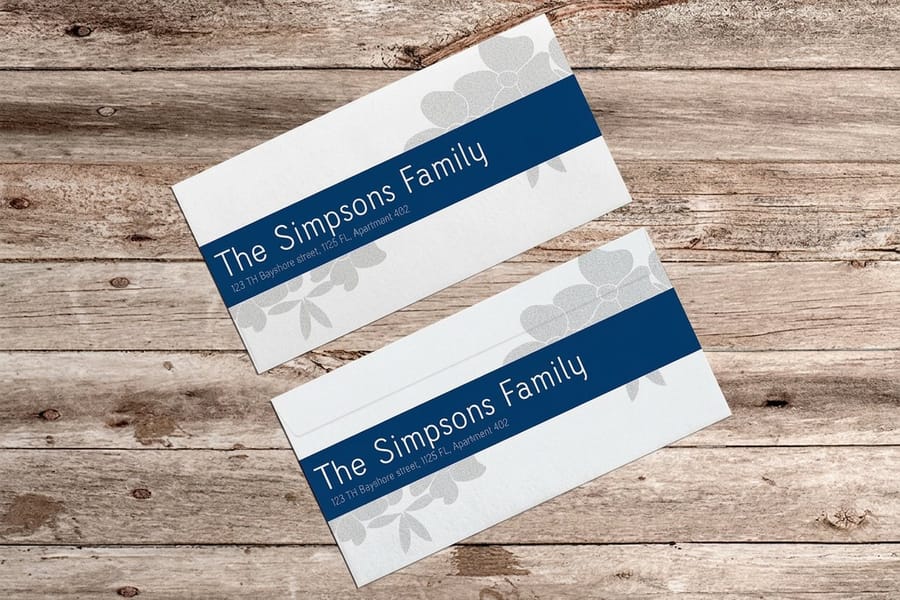
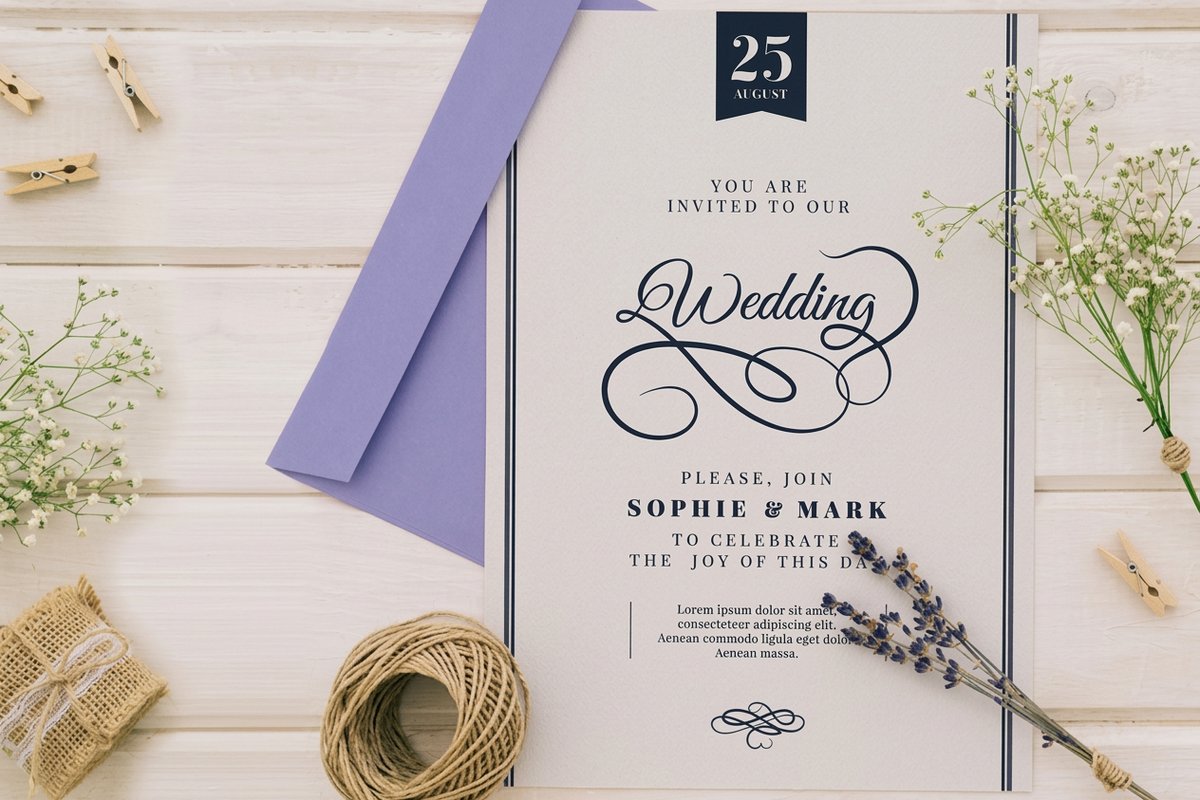
Great addressing starts with the right paper. Pick envelopes and invitations that belong together, add printed address labels for a long guest list, and lay the whole address block out once with our design templates. Order free samples first if you want to feel the stock before you commit.
Start here
How to address wedding invitation envelopes, in one paragraph
In the US, address the outer envelope formally and the inner envelope warmly. The outer envelope carries each guest’s title, full name, and complete mailing address, spelled out in full. The inner envelope drops the address and greets your guests by name, which is where you make the guest list explicit down to the children. Keep everything legible, add your return address, weigh a full suite for postage, and mail it six to eight weeks before the day. The diagram further down shows exactly where each element sits.
The envelope is the first thing your guests actually touch
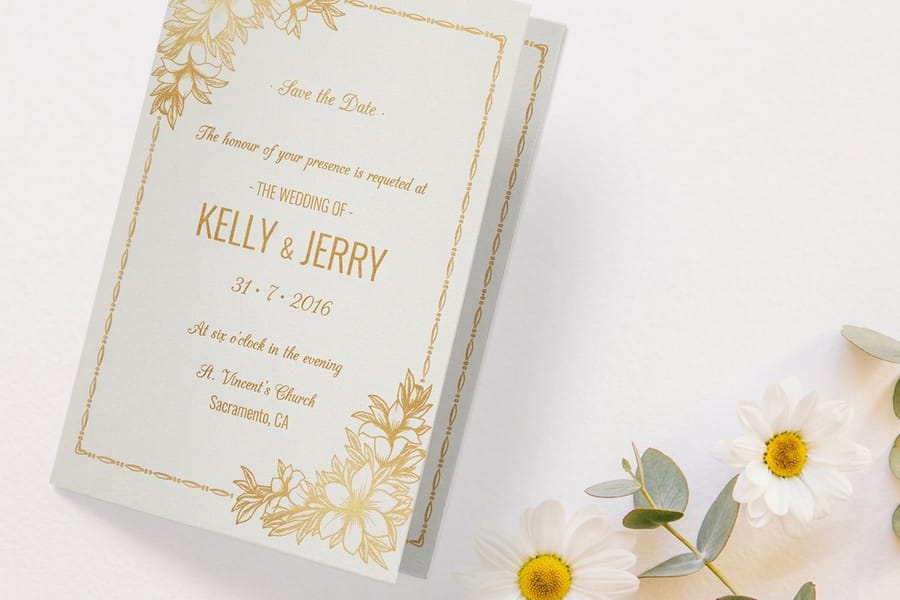
Your invitation suite might be a work of art, but nobody sees it first. The envelope does. It rides through the mail, lands on a kitchen counter, and gets picked up before a single detail inside is revealed. A crisp, correctly addressed envelope tells a guest, before they even lift the flap, that this event was planned with care.
Getting it right is not complicated once you know the pattern. In the US, the tradition is a two-part system: a formal outer envelope that carries the address through the mail, and a softer inner envelope that greets your guests by name. This guide walks through both, from titles and name formats to postage and timing, and it pairs naturally with our companion piece on how to address wedding invitations.
If you have not chosen your stationery yet, start with a set of invitation envelopes that match your suite, or browse the full wedding printing collection so the envelope and the invitation read as one piece.
Handwriting versus printing your addresses
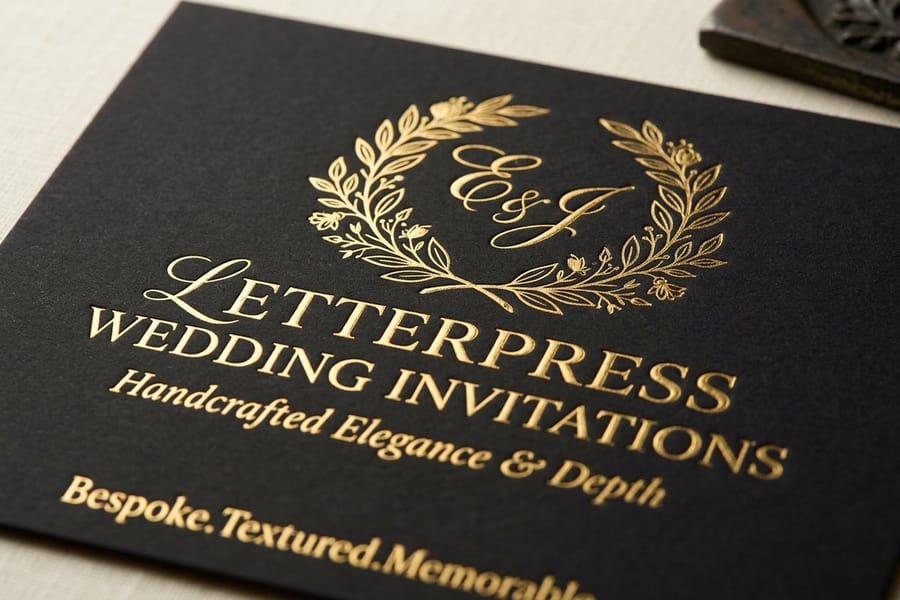
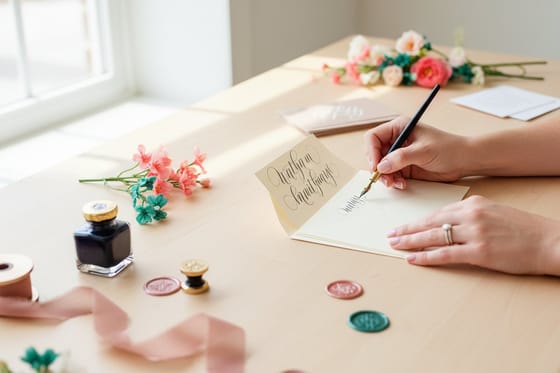
The first decision is how the address gets onto the paper, and there is no wrong answer. Hand calligraphy is the traditional choice and it is genuinely lovely, but it takes real time and a steady hand once your list climbs past a few dozen. Printed addressing, applied straight to the envelope or to a matching label, stays perfectly consistent and lets you finish a hundred envelopes in a single sitting.
Plenty of couples take the middle path: choose an elegant script or serif, then print it. It reads like calligraphy without the cramps, and every envelope comes out identical. If you are weighing typefaces, our roundup of the best wedding fonts is a good place to start, and our design templates let you lay out the address block once and reuse it for the whole list.
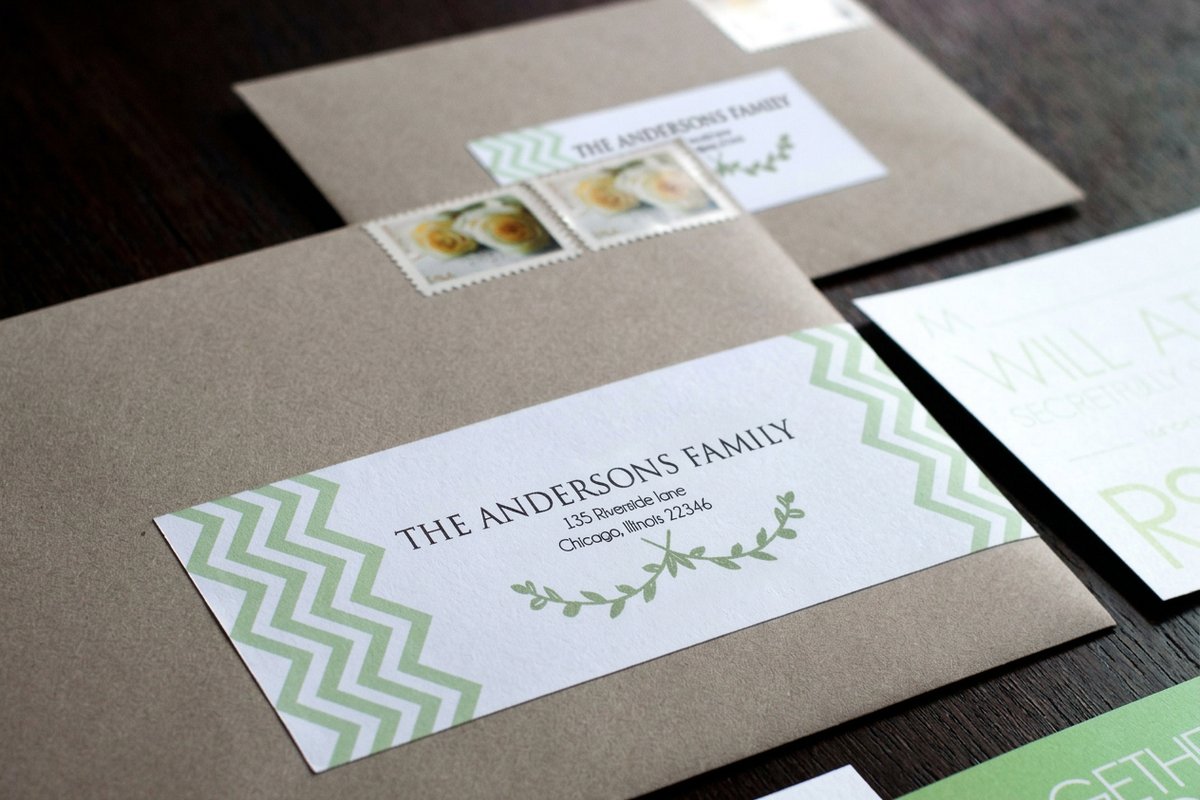
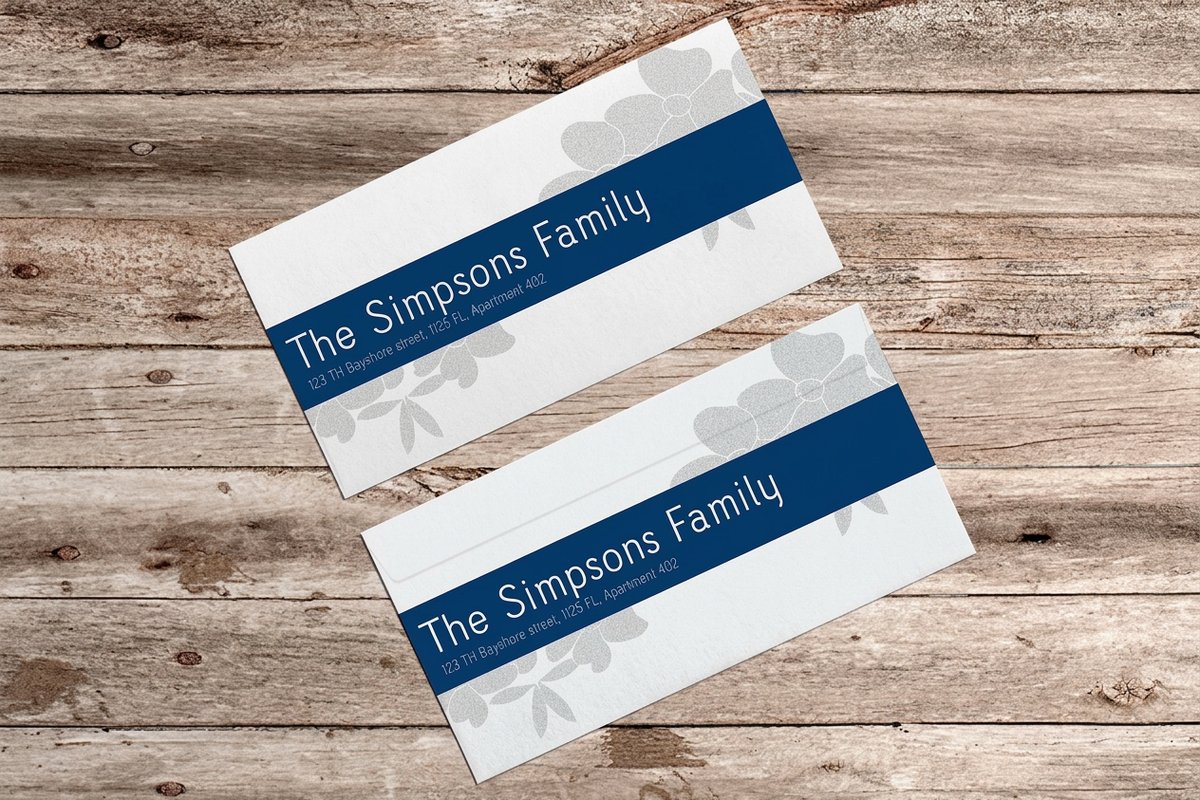
Prefer to keep the envelope untouched? Printed address labels and premium address labels carry the same script and peel on in seconds, which is the fastest way to address a long guest list cleanly.
The correct format for names and titles
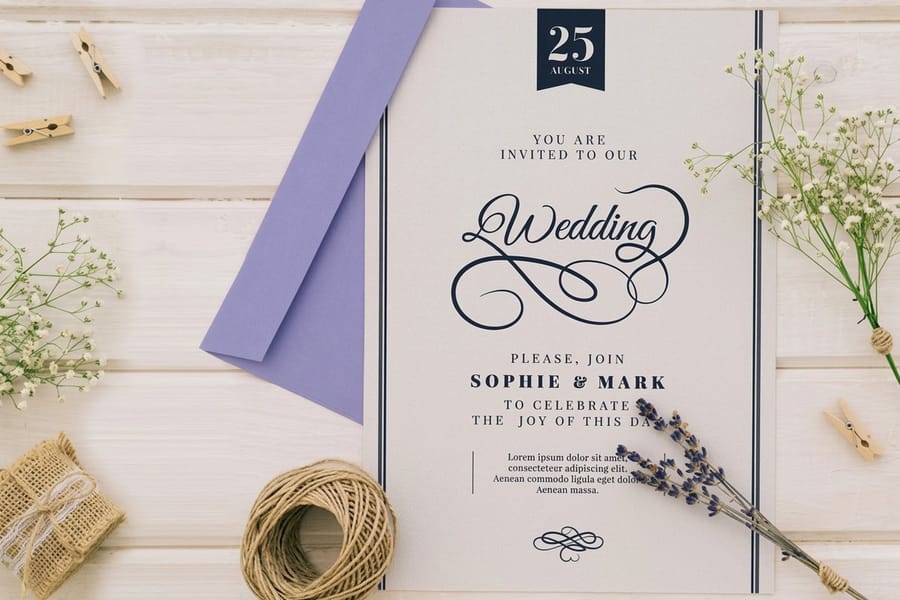
Formal addressing has one guiding habit: spell things out. Write full first and last names, full street names, and full state names, so “St.” becomes “Street” and “NY” becomes “New York.” The only words you keep short are the social titles in front of a name, such as Mr., Mrs., Ms., and Dr.
Use the title each guest actually uses. A married couple who share a surname are written together, for example “Mr. and Mrs. James Whitfield.” A guest with a professional or honorific title keeps it, so a physician is “Dr.” and a judge is “The Honorable.” When you are unsure, ask. Guests notice when their name is written the way they introduce themselves. For the wording that goes inside the envelope, our guide on what to put on wedding invitations covers the rest of the suite.
Skip nicknames and initials on the outer envelope. Middle names are optional, but including them adds a formal, timeless feel that suits a wedding.
Outer and inner envelopes, and what goes on each
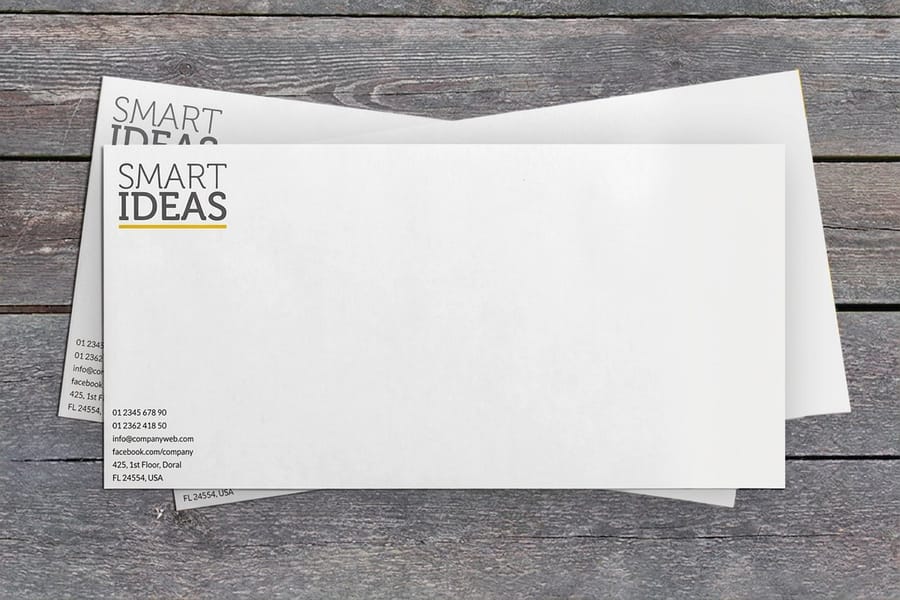
The double envelope is where wedding addressing differs from ordinary mail. The outer envelope is the workhorse: it takes the beating of the postal system and carries the complete, formal mailing address plus your return address. Because it does the traveling, a little wear is expected and fine.
The inner envelope stays protected and pristine, and it carries no address at all. Instead you write only the guests’ names, in a warmer form, and this is where you make the guest list explicit. “James and Laura” tells a couple they are both invited. Adding “and Family” or naming the children on the next line tells them the kids are welcome too. Leaving the children off is the gracious way to signal an adults-only celebration.
Not using two envelopes? That is perfectly modern. With a single envelope you simply combine the two jobs: the full address and the specific invited names go on the same face. See exactly where each element sits in the envelope anatomy diagram below.
Return addresses, RSVP envelopes, and postage
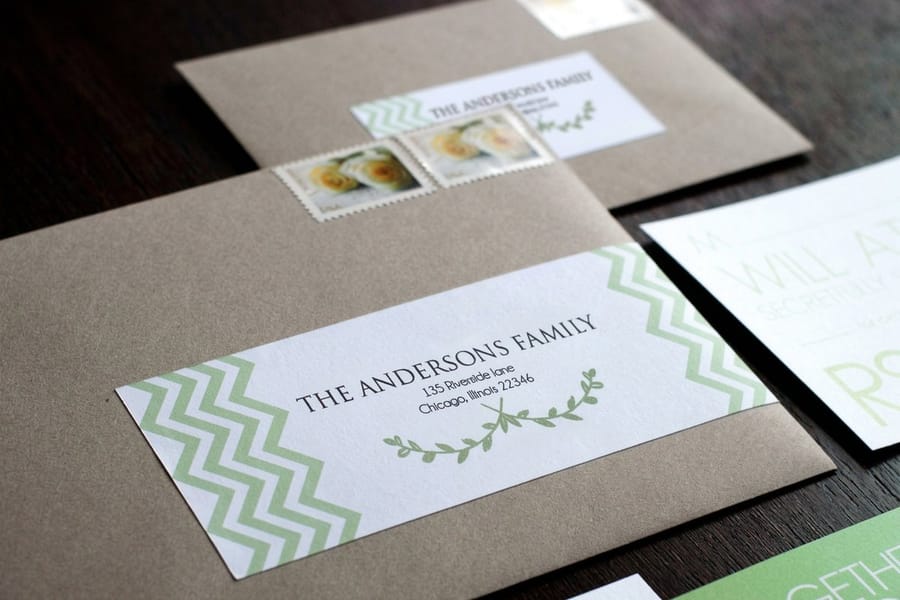
Your return address belongs on the back flap for a clean front, or in the upper-left corner of the front if you prefer the traditional placement. Whose address goes there is a small etiquette point: historically it is the hosts, often the couple’s parents, but today it is commonly the couple themselves, since that is where undeliverable invitations and early gifts should return.
Most suites also include a pre-addressed, pre-stamped reply envelope so guests can RSVP without hunting for a stamp. Printing the return and reply addresses at the same time keeps the whole set consistent, and a run of printed envelopes or premium address labels handles both in one order.
One thing couples forget until the post office reminds them: weigh a fully assembled suite before you buy stamps. Invitations that are square, thick, or wax-sealed usually need extra postage, and taking one complete envelope to be weighed saves you from a whole batch coming back. You can order matching stock from our envelopes printing range so the weight is predictable.
Addressing etiquette for every kind of guest
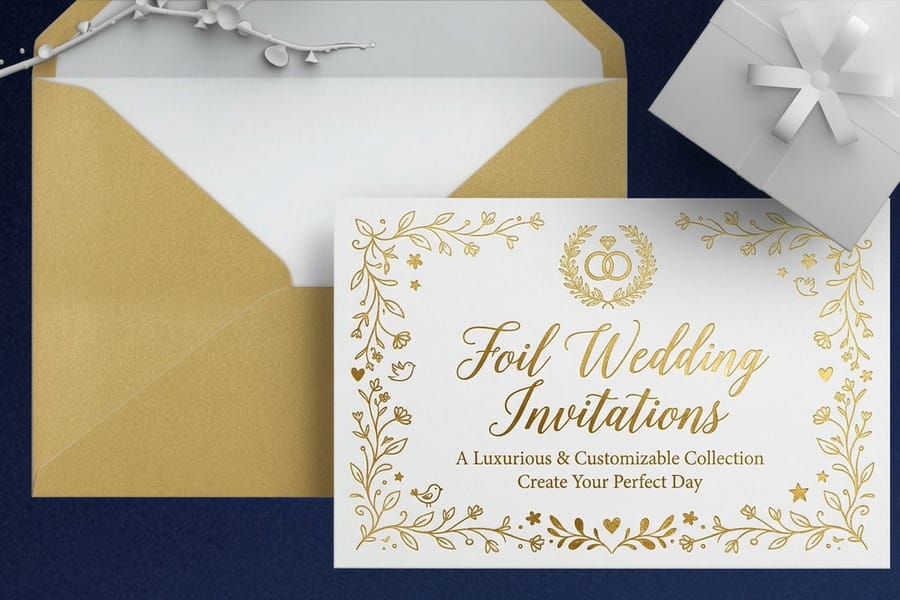
Real guest lists are wonderfully varied, and the etiquette flexes to fit. A married couple who share a name are addressed together on one line. A couple with different surnames each get their full name, either on separate lines with the closer guest first, or alphabetically by last name. An unmarried couple who live together are addressed on separate lines of the same envelope. If they live apart, each gets their own invitation.
Distinguished titles are honored, not dropped. If both partners are physicians you can write “The Doctors Whitfield,” and military or judicial titles take precedence in the same way. A single guest who may bring a companion is addressed by name on the outer envelope, with “and Guest” added on the inner envelope so the plus-one is clear without being anonymous on the mailing address.
Whenever a case feels tricky, default to the names and titles your guests use for themselves. Our full wedding invitation addressing guide works through the edge cases line by line if you want a deeper reference.
Copy-and-paste addressing examples
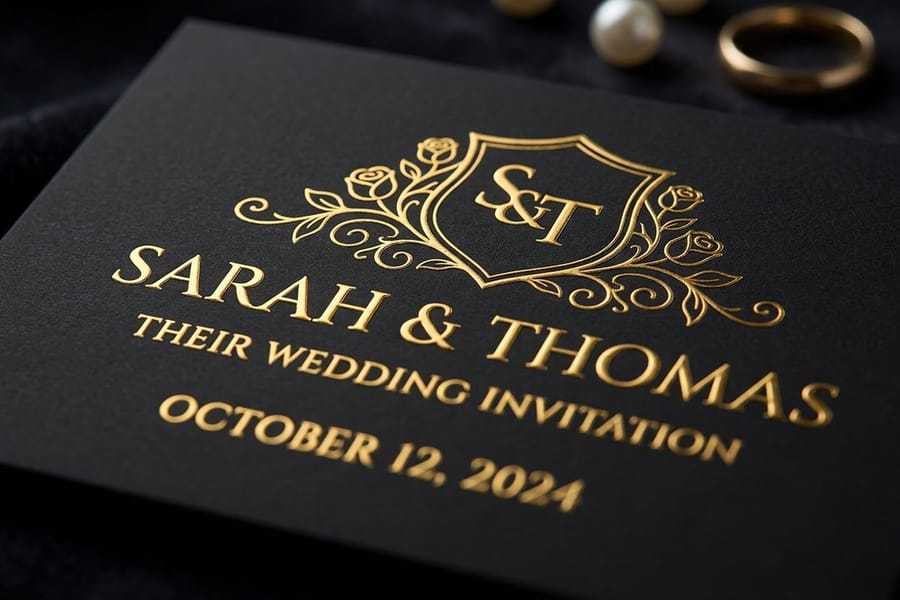
Here is how the rules above look in practice. Adapt the names to your list and keep the format consistent across every envelope.
- Married couple, shared surname: Mr. and Mrs. James Whitfield
- Married couple, different surnames: Ms. Laura Bennett and Mr. James Whitfield (each full name on its own line)
- Married couple, both doctors: The Doctors Whitfield
- Family with children (inner envelope): Mr. and Mrs. Whitfield, then “Emma, Noah, and Olivia” on the line below
- Unmarried couple living together: Ms. Laura Bennett and Mr. James Whitfield
- Single guest with a plus-one: outer envelope “Ms. Laura Bennett,” inner envelope “Laura and Guest”
Notice that every line spells out full names and titles, and the address that follows would spell out the street and state too. Consistency is what makes a stack of envelopes look intentional rather than improvised.
How to address save the dates, and how it differs from invitations
Save the dates follow the same address rules with the formality turned down. There is one envelope instead of two, so everything you would normally split between an outer and an inner envelope has to fit on a single line of names. Guest names on the front, your return address on the back flap or the top left corner, and that is the whole job.
- One envelope, no inner envelope. Nothing is missing if you skip it. The inner envelope exists to name exactly who is invited, and that conversation belongs to the invitation that arrives months later.
- First names are fine. “Laura Bennett and James Whitfield” works, and so does “Laura and James Whitfield” for people you know well. Titles are optional here, though keep “Dr.” if you would use it in person.
- Families get one line. “The Whitfield Family” is enough. You are reserving a date, not confirming a headcount, so children do not need to be listed by name yet.
- Skip “and Guest.” Plus-ones get settled on the invitation. Address the person you know and leave the rest for later.
- Return address, always. Anything undeliverable comes straight back to you, which is the cheapest way there is to clean your list six months before the invitations go out.
A postcard save the date changes the layout, because there is no envelope to hide behind. The address block moves to the right half of the back, set square to the edge, with your message and artwork on the left. Leave the bottom strip of that panel clear so postal barcodes have somewhere to land, keep the type upright rather than angled, and remember that anything you write there is public, which most couples decide they are fine with. Our guide to addressing save the date postcards walks through that layout panel by panel.
One decision worth making early: whatever you choose here, handwritten or printed, sets the expectation for the envelopes that follow six to eight months later. Matching the two makes the suite read as one piece. Print your save the date cards and your invitations on the same stock and guests feel the connection before they read a word.
When to mail your wedding invitations
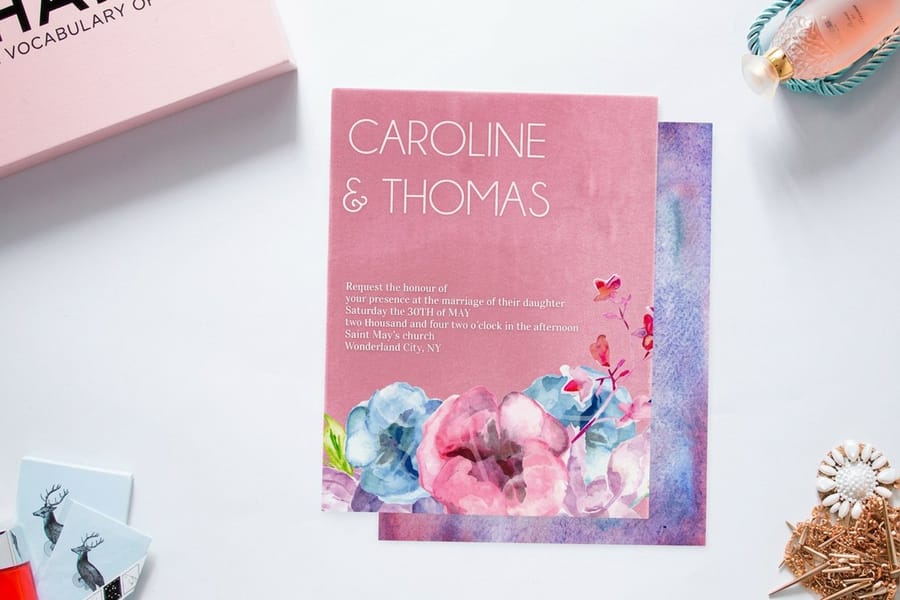
Timing matters as much as wording. For a local wedding, mail your invitations six to eight weeks before the date. That window is long enough for guests to plan, but close enough that the details feel current. For a destination wedding, give people closer to three months so they can book flights and request time off.
Everything else keys off that. Send save-the-dates six to eight months out to reserve the date on busy calendars, and set your RSVP deadline about three to four weeks before the wedding so you can lock the headcount with your venue and caterer. For ideas on the earlier announcements, browse creative save-the-date ideas and our guide to adding a QR code to a save-the-date.
Want a full calendar? Our timeline on when to send wedding invitations maps every milestone from engagement to the last thank-you note.
Printing and ordering your envelopes at 4OVER4
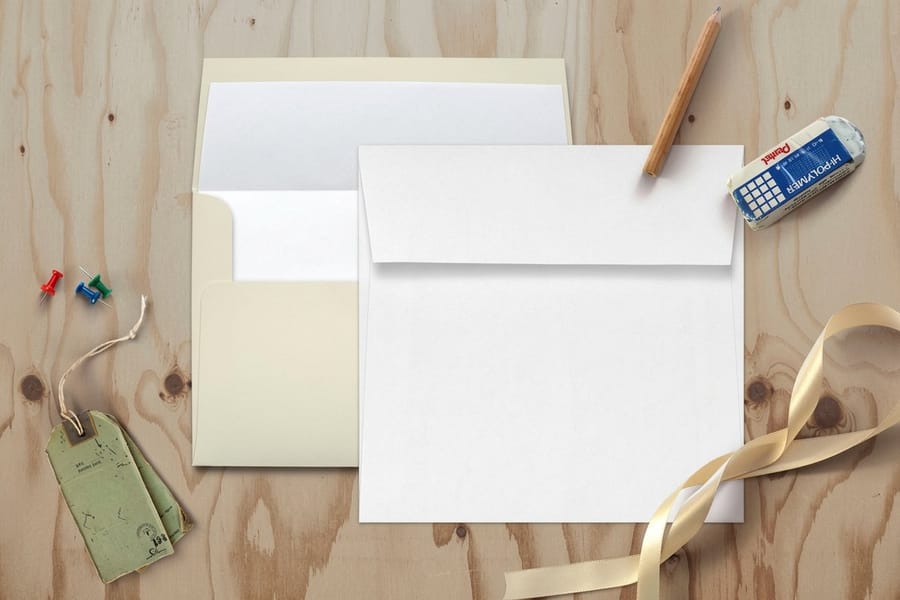
Once the wording and format are settled, the envelope itself is a quick decision. Match the stock and color to your invitation so the set feels intentional, then choose whether you want the addresses printed for you or blank envelopes you will address by hand. Blank envelopes keep costs low and are ready for calligraphy, while printed envelopes arrive finished and consistent.
Pricing is easy to reason about because it scales with a few levers: quantity, size, stock, and any printing or finish you add. Blank envelopes are the budget-friendly option and start under fifteen dollars for a small run, while printed invitation envelopes cost more for the custom ink and heavier paper. You watch the number update live in the configurator as you adjust each choice.
Use the specs and pricing panel below to see the exact combinations, or order free paper samples first so you can feel the stock in hand before you commit the whole guest list to it.
Wally explains addressing envelopes
The outer envelope mails it, the inner envelope welcomes them
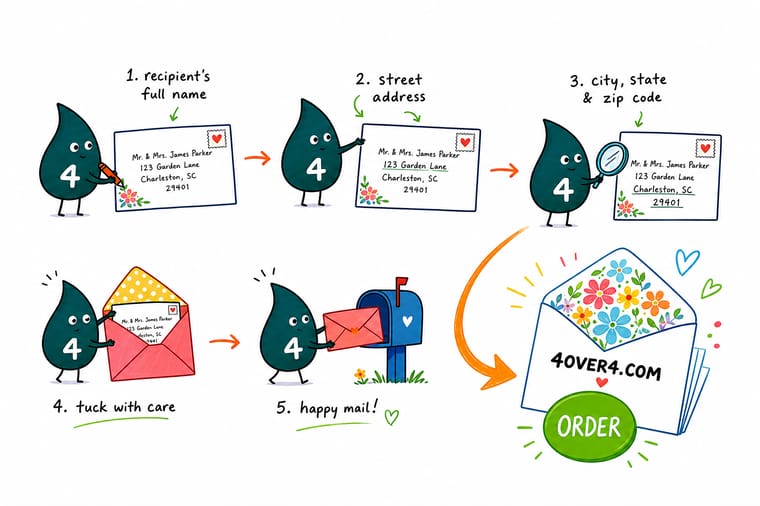
Wally keeps it simple: the outer envelope is formal and carries the full address so the post office can do its job, and the inner envelope is warm and names your guests so they know exactly who is invited. Spell everything out, keep it legible, and let 4OVER4 print the envelopes and labels to match your suite.
Order invitation envelopes →Diagram
Anatomy of a properly addressed wedding envelope
One outer envelope for the mail, one inner envelope for the welcome. Here is what goes where, so nothing important lands in the wrong spot.
The outer envelope does the traveling and carries the formal address. The inner envelope stays pristine and names your guests. Skip the inner layer if you prefer a single-envelope suite and simply combine both jobs on one face.
Specs and pricing
Invitation envelope specs and live pricing
When the wording is settled, the envelope is a quick decision. Here are the live specs and price-per-unit for invitation envelopes at 4OVER4.COM, straight from the configurator.
| Quantity | Price Per Unit | Total |
|---|---|---|
| 250 | 68.2¢ | $170.42 |
| 500 | 35.0¢ | $175.12 |
| 1,000 | 19.4¢ | $193.91 |
| 2,500 | 15.5¢ | $386.66 |
| 5,000 | 10.3¢ | $515.94 |
| 10,000 | 9.04¢ | $903.78 |
| 15,000 | 8.61¢ | $1,291.61 |
| 20,000 | 8.34¢ | $1,667.70 |
Explore more
Where to go next
By the numbers
Wedding printing you can count on at 4OVER4
Common Questions
Common questions about addressing wedding envelopes
How do I address wedding invitation envelopes?
Address the outer envelope formally with each guest’s title, full name, and complete mailing address, spelling out street and state names in full. If you are using an inner envelope, write only the guests’ names on it, in a warmer form such as first names or family surnames, and name every person who is invited so there is no confusion about the guest count. Keep the writing legible for the post office and place your return address on the back flap or the front upper-left corner.
What is the etiquette for addressing wedding invitations?
Traditional US etiquette spells out full names and avoids abbreviations except for social titles like Mr., Mrs., Ms., and Dr. Married couples who share a surname are listed together, couples with different surnames each get their full name on separate lines, and children who are invited are named on the inner envelope. The goal is respect and clarity: every guest should feel personally addressed and know exactly who the invitation includes.
Do I need both an inner and an outer envelope?
No, a double envelope is a tradition, not a rule. The outer envelope protects the suite in the mail and carries the address, while the inner envelope stays pristine and names the guests. If you prefer a single envelope, you simply put the full address and the specific guest names on that one envelope, and you skip the inner layer to save on cost and postage.
Should I handwrite or print the addresses?
Both are correct. Hand calligraphy is beautiful and traditional but slow for a large list, while printed addressing, whether directly on the envelope or on a matching label, stays consistent and lets you produce a hundred envelopes in an afternoon. Many couples split the difference by choosing an elegant script font and printing it, which reads like calligraphy without the hand cramps.
How do I address a wedding invitation to a family?
On the outer envelope, address the parents formally, for example “Mr. and Mrs. James Whitfield.” On the inner envelope, list the parents on the first line and the invited children by first name on the line below, oldest to youngest. Naming the children is how you signal that they are included, and leaving them off is the polite way to indicate an adults-only celebration.
How do I address a couple with different last names or titles?
When a couple does not share a surname, write each full name on its own line with the person you are closer to first, or use alphabetical order by last name. For distinguished titles, honor them: a doctor is written as “Dr.,” and if both partners are doctors you can address them as “The Doctors” followed by the surname. The rule of thumb is to use the names and titles your guests use for themselves.
Do save the dates need inner envelopes?
No. A save the date uses a single outer envelope, and that is the main way addressing one differs from addressing an invitation. The inner envelope exists to spell out exactly who is invited, children included or excluded, and that detail belongs to the invitation months later. So the guest names go on the front of the one envelope, warmer and shorter than you would write on an invitation, for example “Laura and James Whitfield” or “The Whitfield Family.” Skip “and Guest” entirely, since plus-ones get settled at the invitation stage, and always add a return address so anything undeliverable comes back while you still have months to correct the list. A postcard save the date has no envelope at all: the address block sits on the right half of the back with the bottom strip left clear for postal barcodes.
When should I mail my wedding invitations?
Mail invitations six to eight weeks before the wedding for local guests, and about three months ahead for a destination wedding so people can arrange travel and time off. Send save-the-dates earlier, usually six to eight months out, and set your RSVP deadline about three to four weeks before the date so you can finalize the headcount with your venue and caterer.
When do you send save the dates?
Six to eight months before the wedding. That is early enough to hold the date on busy calendars and late enough that your venue and date are locked, so nothing has to be corrected later. Go closer to eight months, or further out, for a destination wedding or a holiday weekend, when guests are booking flights and requesting time off. The invitation follows at six to eight weeks out for a local wedding, or about three months out for a destination one, with the RSVP deadline three to four weeks before the date. Send save-the-dates only to people who will definitely receive an invitation, because a save the date is a promise you cannot take back.
How much do invitation envelopes cost at 4OVER4?
Envelope pricing scales with quantity, size, stock, and any printing you add. Blank envelopes are the budget-friendly choice and start under fifteen dollars for a small run, while printed and premium invitation envelopes cost more because you are paying for custom ink, heavier paper, and finishes. You set every option in the configurator and the price updates live as you go, so you can dial in the exact look and quantity for your budget.
Get Started
Ready to print and mail your invitations?
Choose the envelope stock and finish that matches your suite at 4OVER4.COM, add printed labels for a long guest list, and watch your price update live as you go.
Legal Disclaimer
Gold Standard guarantees apply to all standard orders placed through 4over4.com. Price match requires verifiable proof of a competitor's published price for an equivalent product with matching specifications and turnaround time. Satisfaction guarantee covers manufacturing defects and print quality issues. Contact support with order number and documentation. On-time delivery rate based on tracked orders 1999 to 2026. Individual results may vary based on shipping carrier performance.
