
What BOPP Labels Are and When to Choose Film Over Paper or Vinyl


BOPP is the film behind most bottle, jar and cold-storage labels. Here is what the name means, how it stacks up against paper and vinyl, and the two jobs it is genuinely wrong for.
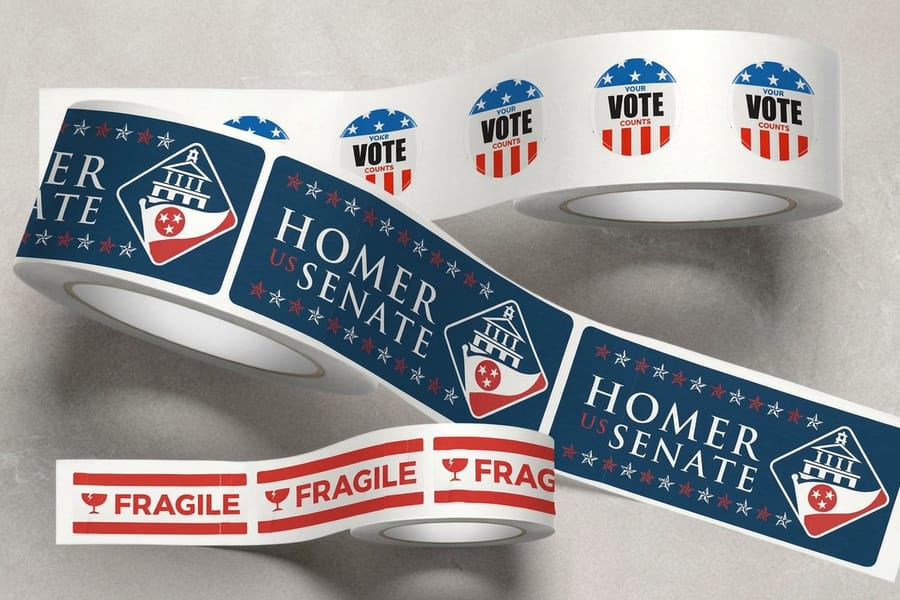
BOPP labels are printed on biaxially oriented polypropylene, a thin plastic film stretched hot in two directions so it resists water, oil and tearing in a way paper cannot. Choose it when the label lives on a chilled bottle, a soap dispenser, a food jar or a warehouse bin. Skip it when someone has to handwrite on the label, when the container is a tight-diameter tube, or when the sheet has to go through a laser printer.
Quick answer
A plastic film stretched two ways, then printed and die cut
BOPP stands for biaxially oriented polypropylene, and the name is a description of how the film was made. Molten polypropylene is stretched along the web and across it while hot, which aligns the polymer chains on both axes and gives the finished film its tear resistance and dimensional stability. There are no paper fibres, so water does nothing to it. Heat does: polypropylene melts near 320F, which puts laser printers and steam sterilizers out of reach. It comes white or clear, runs about two thousandths of an inch thick, and lives on a roll because that is what product lines need.
What BOPP Actually Is, and Why the Stretch Matters
Polypropylene starts as a hot sheet of resin. To become BOPP it gets pulled in two directions at once, along the direction it travels through the machine and across the width of the web, then cooled while it is still held taut. Stretching a polymer while it is soft drags the long chains into alignment, and doing it on both axes means the chains line up two ways instead of one.
That is the whole trick, and it explains every property people credit to the material. The film resists tearing from any angle because there is no single weak grain to split along. It holds its printed dimensions because the chains were already pulled to length before the ink went on, so it does not creep on press or shrink on the shelf. It is clear when nothing is added to it, because oriented polypropylene scatters very little light.
Label film usually lands around two thousandths of an inch thick. Put a BOPP label next to a business card and the label looks like nothing at all, which is the point: on a bottle you want the printed image, not a visible slab of plastic. The trade is that thin and stiff do not conform. On a small-diameter tube, a BOPP label can lift at the leading corner where a softer face would have followed the curve.
White BOPP and Clear BOPP are the same base film with different treatments. White is pigmented and opaque, so your artwork sits on a clean ground regardless of what is behind it. Clear vanishes against glass and gives what the trade calls the no-label look, and it comes with one condition covered further down this page. Both appear as material choices on Roll Labels, alongside White Gloss, a metallic foil and a 70lb eggshell felt.
Why Product Brands Keep Landing on BOPP
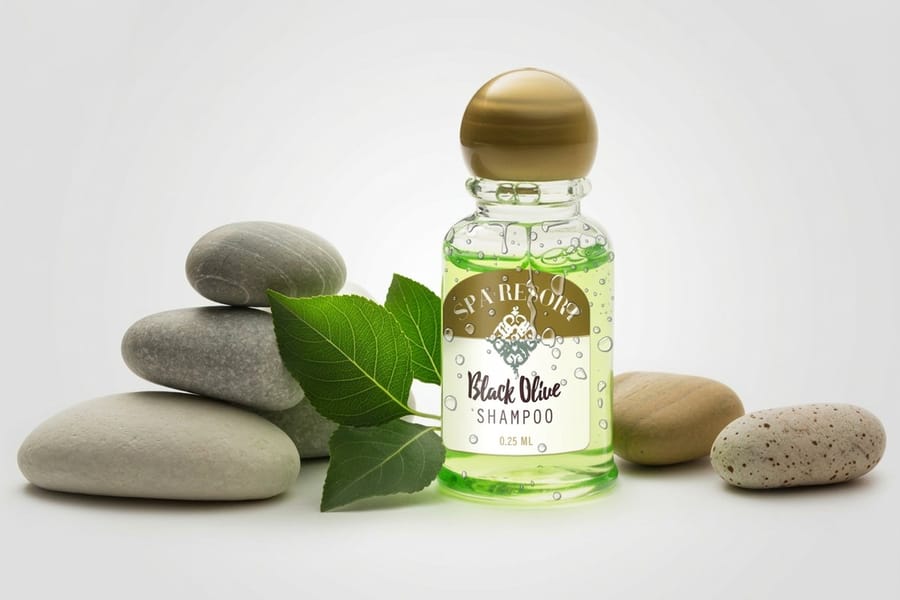
Ask a beverage brand why the label is film and the answer is always the cooler. A paper label on a chilled bottle absorbs the condensation that forms the second it comes out of the fridge, and within a day the edges are wavy and the print has gone soft. Film has nothing to absorb with, so the bottle looks the same on the shelf, in the ice and in a customer photo.
- Wet and oily surfaces. Kitchens, bathrooms, workshops. Olive oil, soap and hand cream all sit on the same shelf as their own residue, and film wipes clean where paper stains.
- Cold storage. Freezer and refrigerated goods, provided the label goes on before the product is chilled and the adhesive is rated for it.
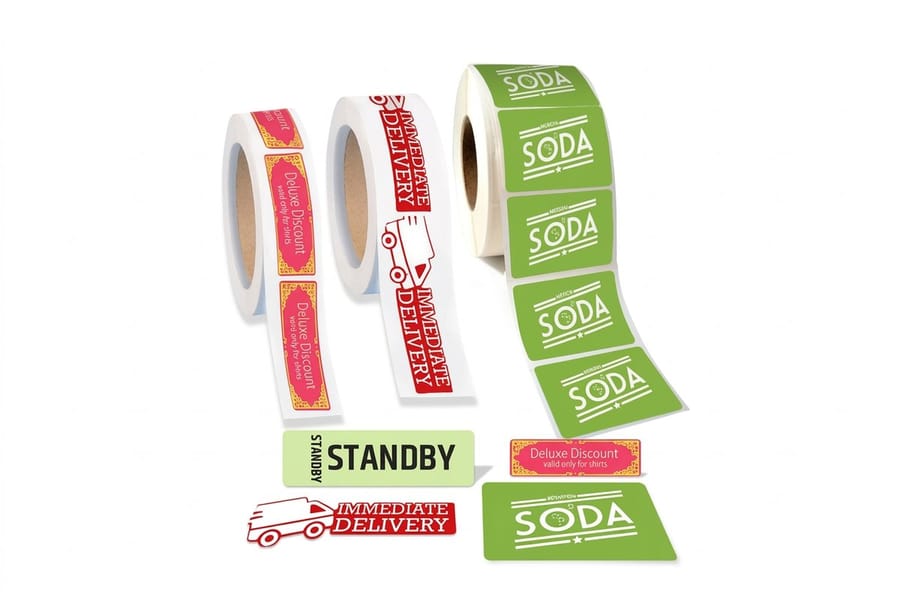
- Any die-cut shape without a plate charge. Rotary die cutting on a roll means a hexagon, an oval or a rounded square costs the same to run as a rectangle. Our Roll Labels list 102 stock sizes across squares, rectangles, rounds and ovals, plus custom sizing up to 7 by 12 inches.
- Matte or gloss, decided at lamination. The film face is finished with an optional gloss or matte laminate, so the same artwork can read as a supermarket product or a small-batch one without changing the stock underneath.
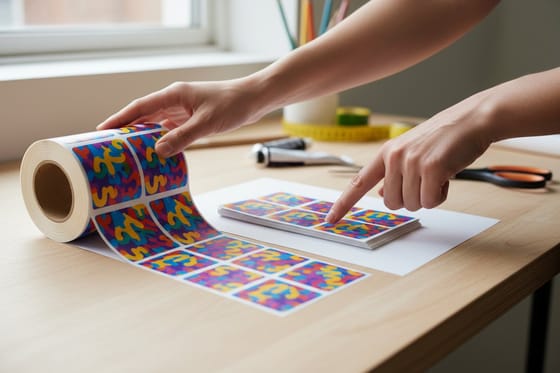
- Hand application or an applicator. Labels arrive die cut and wound on a 3 inch core with the unwind direction you specify, which matters the moment you stop peeling by hand and put a machine on the line.
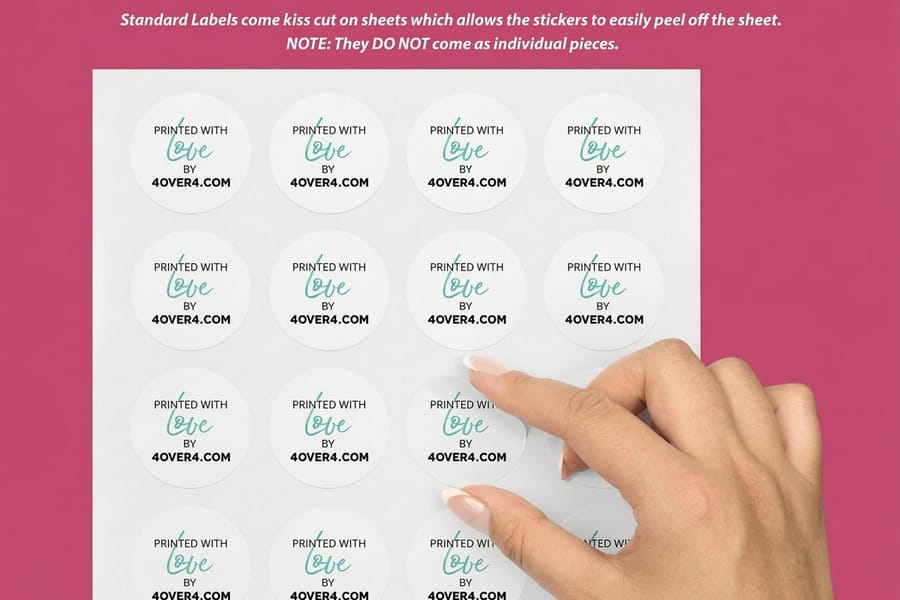
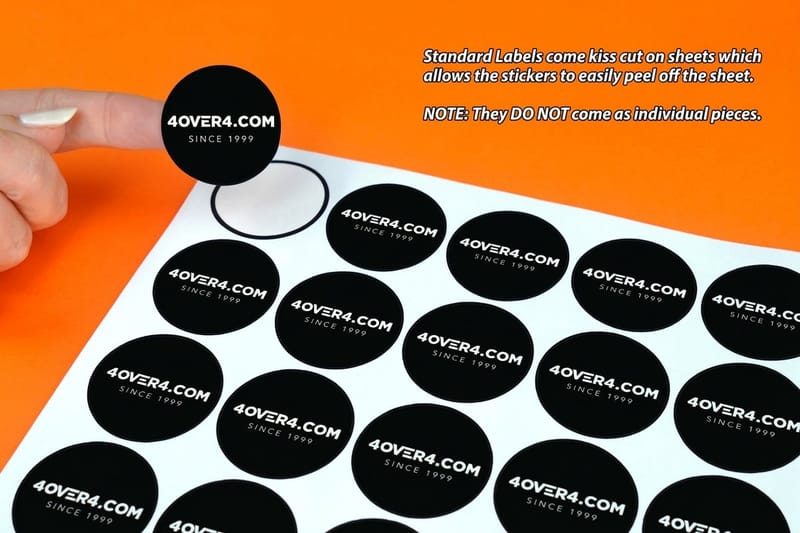
The cost story is the part most comparisons skip. Roll Labels start at $322.98 for 100, which reads high until you notice that 500 labels cost the same total. Per label that is $3.23 falling to about $0.65, and around $0.07 at 25,000. Film is a volume stock. If you need 40 labels for a market stall this weekend, film on a roll is the wrong answer and Standard Labels at $23.88 per set of 25 are the right one.
BOPP vs Paper vs Vinyl, Compared Honestly
These three cover almost every label decision, and the marketing around them blurs together because all three can be called durable. They are not interchangeable. The fastest way to separate them is to ask what the label has to survive and whether anyone has to write on it.
| Attribute | BOPP film | Coated paper | Vinyl |
|---|---|---|---|
| Material | Biaxially oriented polypropylene, resin code 5. | Wood pulp with a clay or gloss coating. | PVC, usually with a plasticizer for flexibility. |
| Typical caliper | Around 0.002 in. Thin and stiff. | Varies by stock, generally thicker than film. | Thicker than BOPP, and noticeably softer. |
| In water | Unaffected. No fibres to swell. | Softens, wrinkles, then delaminates. | Unaffected. |
| On a tight curve | Can flag at the corners on small tubes. | Conforms well, then fails to moisture instead. | Best of the three. Follows the curve. |
| Outdoors | Rated indoor or outdoor, fine for seasons. | Not an outdoor stock. | The long-haul choice for years of sun. |
| Write on it by hand | No. Pen skates, marker smears. | Yes, and it is the only easy yes here. | Only with a matte topcoat. |
| Heat tolerance | Melts near 320F. No laser, no steam. | Handles a laser fuser without complaint. | Softens and can shrink under sustained heat. |
| Relative cost | Middle. Cheaper than vinyl per square inch. | Lowest. | Highest. |
Read the write-on-it row before the water row. It disqualifies BOPP faster than anything else on the list, and it catches people who ordered beautiful film labels for a product that needs a handwritten batch number. It also explains why plenty of production lines run two labels: printed film for the brand face, a small coated paper label for the data that changes.
Our own range splits along the same lines and it is worth being precise about it. The BOPP options live on Roll Labels. Premium Waterproof Labels at $84.68 are white waterproof vinyl on a permanent adhesive, sheet supplied, which is the better answer for a short run or a curved container. Premium Product Labels at $29.16 open up 23 materials including uncoated, semi-gloss, Hi-Gloss UV, white and clear vinyl, kraft and cling. If you want the three faces set side by side in more depth, the paper vs vinyl vs clear labels guide goes deeper on how each one prints.
Which Container Gets Which Label
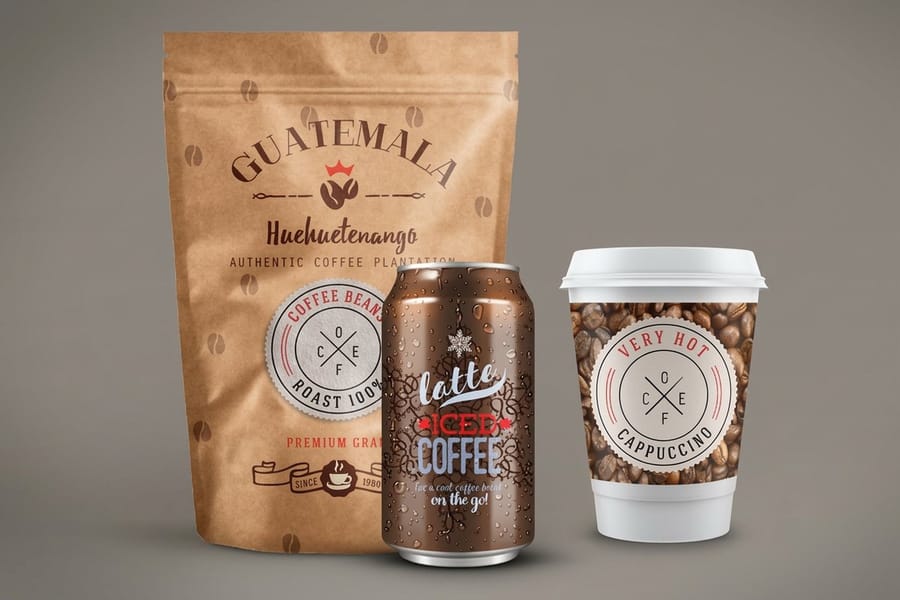
Material arguments get abstract fast. Here is the same decision made against the containers people actually bring us, with the reason attached rather than a preference.
| The job | Pick | Why that one |
|---|---|---|
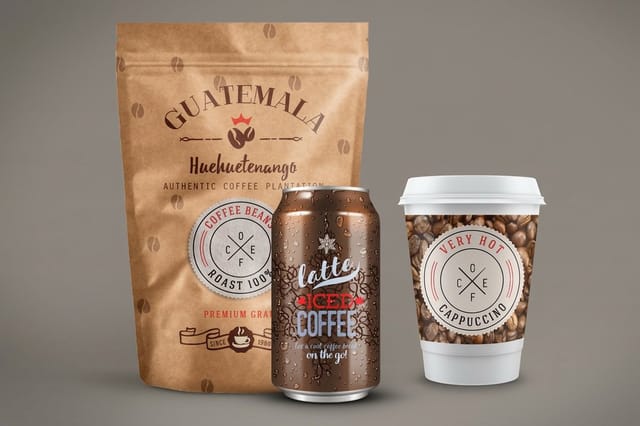
| Beer, kombucha, cold brew | White or Clear BOPP on a roll | Condensation is constant and the bottle gets handled wet. Clear BOPP on brown glass reads as printed straight onto the bottle. |
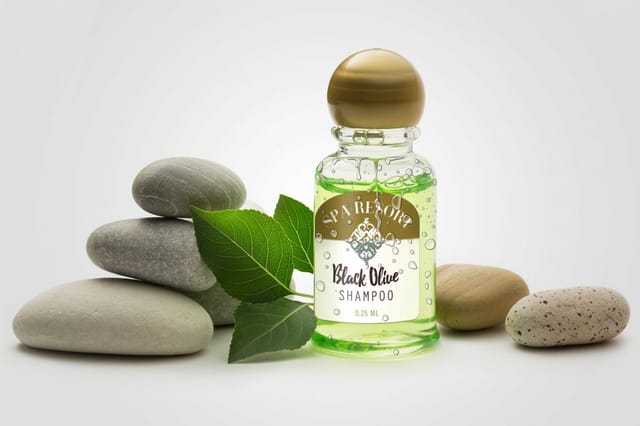
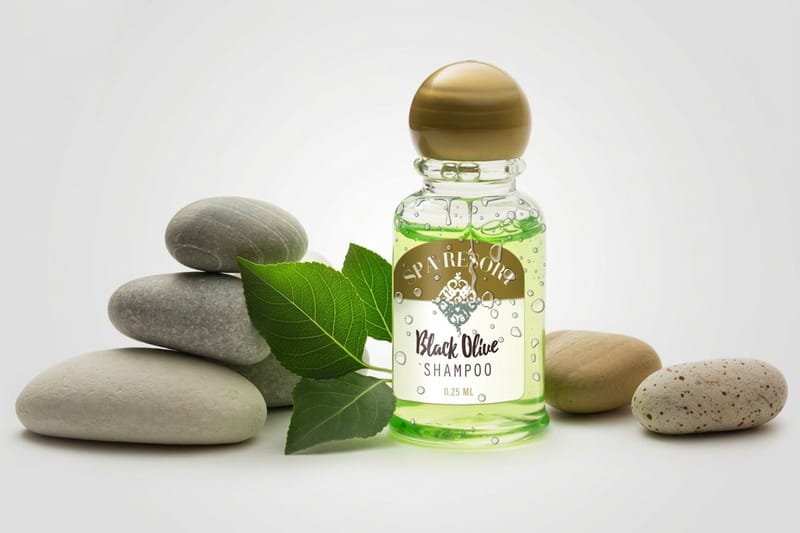
| Soap, shampoo, hand cream | BOPP film | Splash, steam and residue every day. A paper label goes soft in a fortnight in a bathroom. |
| Jam, honey, hot sauce | BOPP or a coated paper | If the jar is wiped and refrigerated, film. If the brand wants a matte craft texture and the jar stays dry, paper wins on look. |
| Lip balm tubes, small vials | Vinyl, not BOPP | The diameter is too tight for a stiff film. Stiffness that reads as premium on a bottle becomes a lifted corner here. |
| Warehouse bins and shelf edges | BOPP film | Scuffed, wiped and touched constantly. Film shrugs off the abrasion that shreds a paper label. |
| Batch codes and best-before dates | Coated paper | Somebody has to write on it. This is the one row where film is simply wrong. |
| Outdoor equipment, vehicles, signage | Vinyl | Years of UV rather than months. Vinyl is built for that exposure, BOPP is not. |
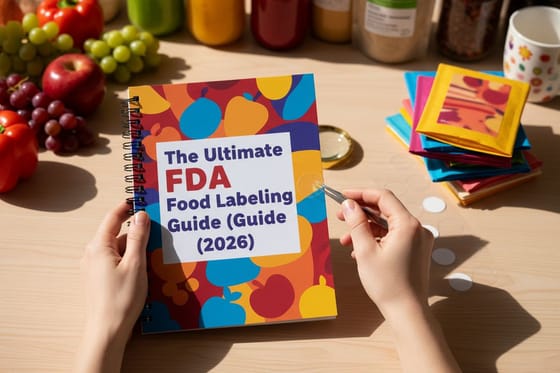
Two practical notes before you commit. Measure the label panel on the actual container rather than the container itself, because the usable flat area on a bottle is smaller than it looks and a wrap that meets itself needs an overlap allowance. Our guide to choosing the correct label size covers how to do that with a strip of paper and a ruler. And if you are labelling anything edible, the required copy comes first and the design fits around it, which is what the FDA food labeling guide lays out.
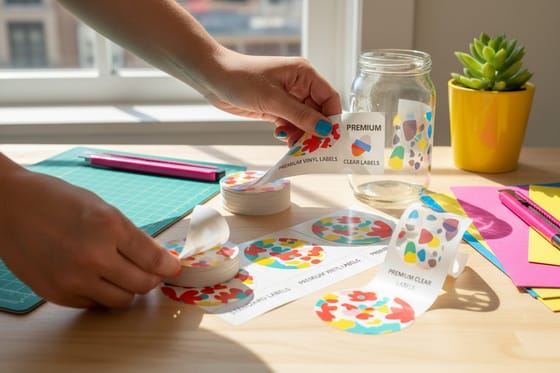
Clear BOPP carries the one condition worth repeating. Transparent film has nothing behind your ink, so a red on clear film against a green bottle turns muddy. The fix is a white ink base printed under the colors, the same technique our Premium Clear Labels at $86.17 use on clear permanent film. Ask for it, budget for it, and check it appears on the proof.
The Eco Question, Answered Without the Marketing
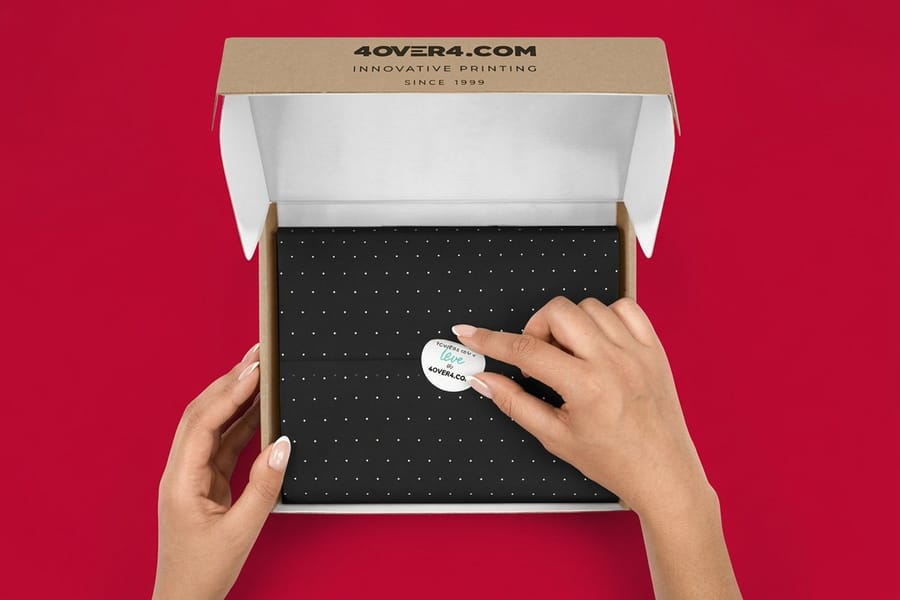
BOPP is a plastic, and no amount of framing changes that. What it has going for it is that it is a single-polymer plastic rather than a laminate of several, and single-polymer materials are the ones recycling streams can actually handle. Polypropylene is resin code 5 and it is accepted wherever number 5 plastics are collected.
The more useful point concerns the container underneath. Bottle recycling often uses a sink-float wash: the flake goes into water, and materials separate by density. Polypropylene is lighter than water and floats. PET bottle flake is heavier and sinks. A BOPP label therefore lifts away from PET flake cleanly, while a paper label breaks down into pulp that has to be screened out and a foil-laminated label is a genuine contaminant. That is a real property, and it is also a property of the recycling plant rather than of your label, so it belongs in a conversation with a materials buyer and not in a claim printed on the artwork.
The honest hierarchy for a brand that cares: use the smallest label that does the job, keep the face stock and the adhesive to one material family, skip metallic laminates on anything meant for a recycling stream, and pick paper when the container is dry and the label will never need to survive water. Kraft and uncoated faces are available on Premium Product Labels if that is the direction you want, and the wider product label range shows what each stock looks like printed.
How to Order BOPP Labels From 4OVER4.COM
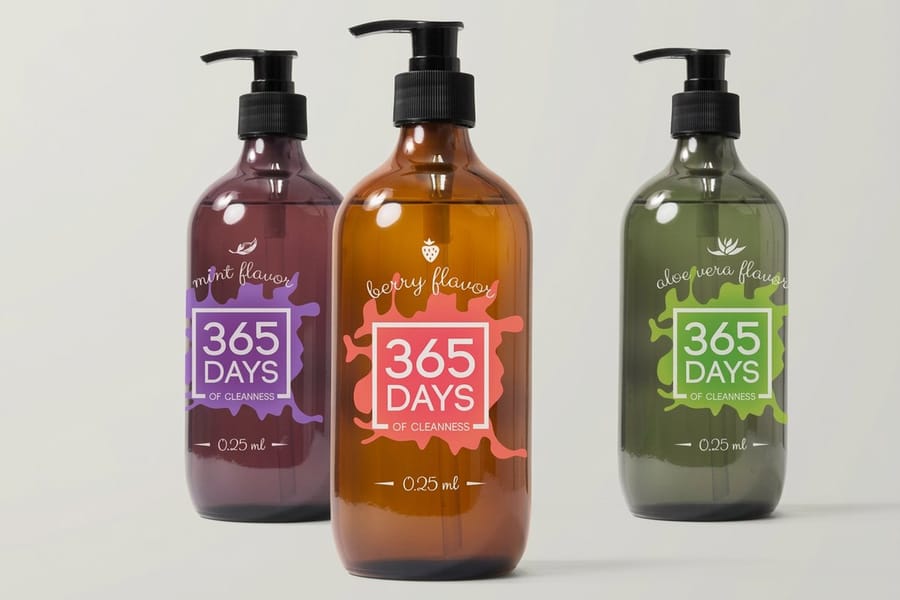
Start on Roll Labels and work through the configurator in the order it asks, because each choice narrows the next one.
- Size and shape first. 102 stock sizes run from a 1 by 1 inch square to a 5 by 7 inch oval, with custom sizing to 7 by 12 inches. Measure the container panel before you pick.
- Then material. White BOPP for an opaque ground, Clear BOPP for the no-label look, White Gloss for a dry indoor product, Bright Shiny Silver Metallic Foil for a decorative face, or 70lb Eggshell Felt for a craft texture.
- Corners and lamination. One eighth inch rounded corners or straight cut, then optional gloss or matte laminate over the print.
- Winding. Every roll is wound on a 3 inch core, and you choose the unwind direction. If an applicator is involved, confirm the direction with whoever runs it before you order.
- Quantity, deliberately. The price ladder rewards a bigger run hard. Compare 100 against 500 in the configurator before you decide, because the total is frequently identical.
- Proof, then turnaround. Standard is 6 business days on roll labels with a free online proof. Check the white ink base on the proof if you chose Clear BOPP.
If the run is small, or the label needs a curved surface, or you need it faster, take a different door. Premium Waterproof Labels print on white waterproof vinyl in three sizes with a 3 business day standard turnaround and Same-Day rush available, from $84.68. Standard Labels cover 55 sizes and 5 materials from $23.88 per 25 when the job is a jar in a dry cupboard. The full label printing range lists every format side by side, and waterproof labels narrows it to the stocks that handle moisture. For a view on how the artwork itself should be built, our art director covers it in this label design Q and A.
Wally explains BOPP
Stretch it both ways, and water stops mattering
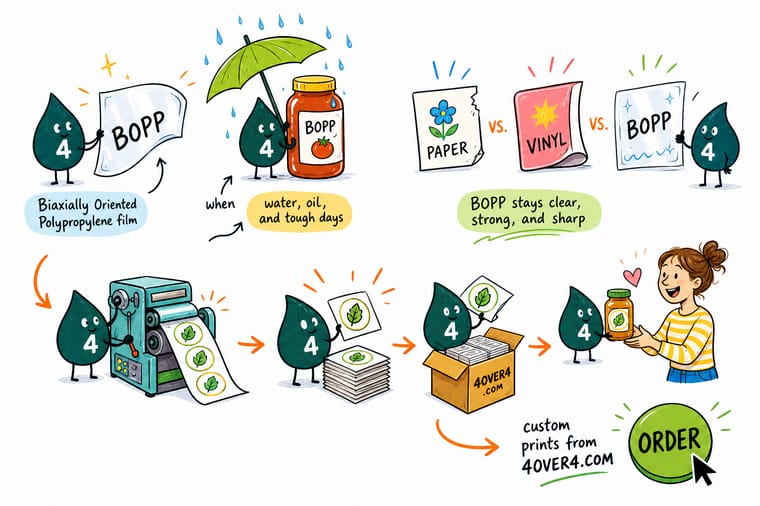
Wally takes a hot sheet of polypropylene and pulls it two ways at once, up the web and across it. The chains line up in both directions, so the film will not tear and will not swell. He prints it, laminates it, die cuts it on a roll and sticks it on a bottle straight out of the ice. Then he tries to write a batch number on it with a pen, and nothing happens. That is the one job film cannot do.
Order BOPP roll labels →Specs and pricing
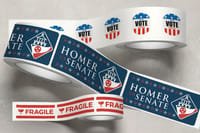
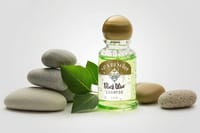
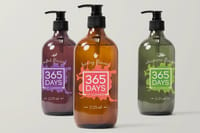
Label stocks, sizes, and starting prices
Compare the film and vinyl options side by side, with live configuration choices and starting prices straight from the 4OVER4.COM configurator.
Print it
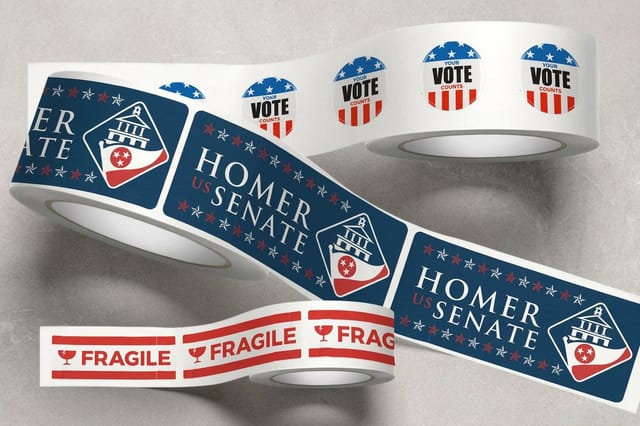
Order labels that survive the wet
Explore more
Where to go next

By the numbers
Label printing you can count on at 4OVER4
Common Questions
Your BOPP label questions, answered
What does BOPP stand for?
Biaxially oriented polypropylene. Polypropylene is the plastic. Biaxially oriented means the film was stretched in two directions while hot, once along the direction it travels through the machine and once across it, then cooled in that stretched state. The stretching lines up the polymer chains in both axes, which is why a BOPP label resists tearing from any angle rather than splitting cleanly along one grain the way paper does.
Are BOPP labels genuinely waterproof, or only water resistant?
The film itself is waterproof. It has no fibres to absorb moisture, so a submerged BOPP label does not soften, pucker or go translucent. What can still fail is the adhesive and the edges. A label applied to a damp or cold surface, or one that sits in an ice bucket for hours, can creep at the corners even though the film is untouched. If the container will be iced or handwashed, say so when you order so the run goes out on a permanent adhesive rather than a general-purpose one.
Is BOPP the same thing as vinyl?
No. Both are plastic films and both survive water, but they behave differently in the hand. BOPP is polypropylene, thin at roughly two thousandths of an inch, stiff, and cheaper per square inch. Vinyl is PVC, usually thicker, softer and more conformable, and it holds up longer under direct sun. Use BOPP for product labels on bottles, jars and boxes. Use vinyl when the label has to bend around a tight curve or live outdoors for years, which is why our Premium Waterproof Labels are printed on white waterproof vinyl rather than film.
Can you write on a BOPP label with a pen?
Not reliably. Ballpoint skates on the surface and the ink from a marker sits on top and smears until it dries, if it dries at all. This is the most common reason a BOPP label is the wrong call. Batch codes, best-before dates, weights and any field a person fills in by hand belong on a coated paper or matte face stock. Plenty of production lines run both: a printed BOPP label for the branding and a small paper label for the handwritten data.
Are BOPP labels recyclable?
The film is polypropylene, resin code 5, and it is recyclable where a stream accepts number 5 plastics. The more useful fact is what happens to the container it is stuck to. In a sink-float recycling wash, polypropylene has a density below water and floats, while PET bottle flake sinks, so a BOPP label separates from PET cleanly rather than contaminating the flake. A paper label in the same wash turns to pulp and has to be screened out. That is a genuine advantage, but it is a property of the recycling process, not a claim you can print on the label.
Can I print BOPP labels on my office printer?
A laser printer will destroy them. The fuser runs hot enough to soften polypropylene, which distorts the label and can transfer melted film onto the fuser roller, an expensive repair. Inkjet is safer for the printer but the ink beads on an uncoated film and never sets properly. BOPP is a press stock: it is printed and cured before it reaches you, which is exactly why Roll Labels arrive die cut, wound and ready to peel.
Get Started
Ready to put a label on something wet?
Pick your size, choose White or Clear BOPP, and we die cut the run and wind it on a 3 inch core so it is ready to peel or feed straight into an applicator.
Legal Disclaimer
Gold Standard guarantees apply to all standard orders placed through 4over4.com. Price match requires verifiable proof of a competitor's published price for an equivalent product with matching specifications and turnaround time. Satisfaction guarantee covers manufacturing defects and print quality issues. Contact support with order number and documentation. On-time delivery rate based on tracked orders 1999 to 2026. Individual results may vary based on shipping carrier performance.
