
Standard Labels vs Premium Vinyl Labels vs Premium Clear Labels


Jordan is our labels, packaging and sustainability voice, built from the knowledge of our production team, with over 20 years in printing.
Same shelf in the label aisle, three very different materials. One is cheap and perfect indoors, one survives water and weather, and one all but disappears on glass. Here is how paper, vinyl, and clear stack up on durability, look, and cost, so you print the right one.
Choose paper for dry indoor jobs, vinyl for anything that gets wet, and clear when the container is the design. Standard paper labels are the value pick and start around $23.88, but they are not waterproof. Premium vinyl labels start around $29.16 and shrug off water, oil, and weather. Premium clear labels start around $86.17 and give glass and clear plastic the no-label look. All three print sharp at 4OVER4.COM from the same file.
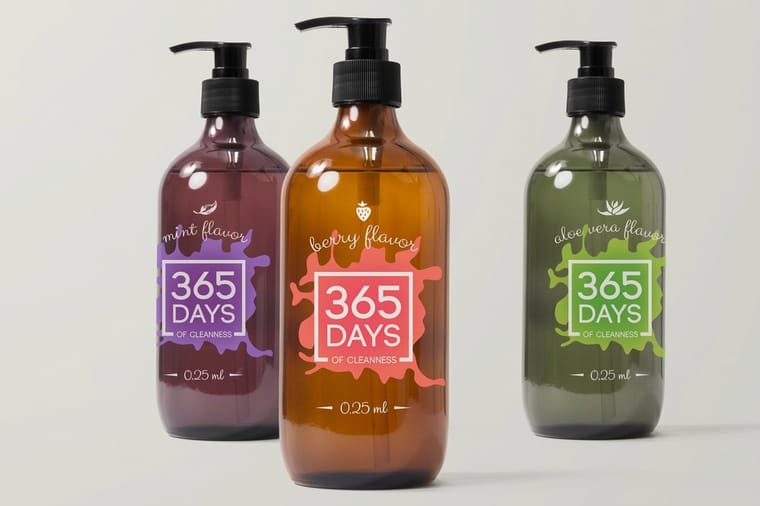
Head to head
Paper vs vinyl vs clear at a glance
The fastest way to choose is to find the column that matches where your label will live. Dry and indoor points you left, wet or outdoor points you to the middle, and a clear container that should be the hero points you right. Starting prices are live from the 4OVER4.COM configurator: 25 standard labels for $23.88, 25 premium vinyl labels for $29.16 and 25 premium clear labels for $86.17.
| Standard labelsvalue | Premium vinyldurable | Premium clearno-label | |
|---|---|---|---|
| Best for | Indoor products, shipping, and high-volume runs | Bottles, outdoor gear, and anything that gets wet | Glass, cosmetics, and the clean no-label look |
| Material | Coated paper stock, printed opaque | Waterproof synthetic vinyl film | Transparent film you can see straight through |
| Water and weather | Fine indoors, wilts once it gets wet | Fully waterproof and weatherproof | Fully waterproof, built for damp surfaces |
| Durability | Great for short-life indoor jobs | Tear, oil, and UV resistant for the long haul | Tear and moisture resistant, lasts on the shelf |
| The look | Solid white base with your printed color | Solid white base, bold and high contrast | See-through, so the container becomes the design |
| Adhesive | Permanent paper adhesive | Aggressive permanent adhesive | Strong clear adhesive that stays invisible |
| Typical uses | Address, shipping, barcodes, dry-goods packaging | Cleaning products, drinks, coolers, outdoor kit | Craft beverages, candles, and beauty on clear packaging |
| Starts at | $23.88 | $29.16 | $86.17 |
| Order online | Customize paper | Customize vinyl | Customize clear |
Standard paper is not waterproof on its own. If the label will meet moisture, choose vinyl or clear. Material is a durability decision as much as a design one.
Our picks
Three ways to print this at 4OVER4
The waterproof workhorse, the see-through premium finish, and the indoor value pick. Each one is live with real specs and pricing. Premium vinyl labels print at any size on permanent or repositionable white vinyl, premium clear labels at six sizes from 3 x 5 to 5 x 7 inches or any size, and standard labels in rectangles and circles from 0.375 x 1 inch up, all from 25 labels in 3 business days.
Three materials, three completely different jobs
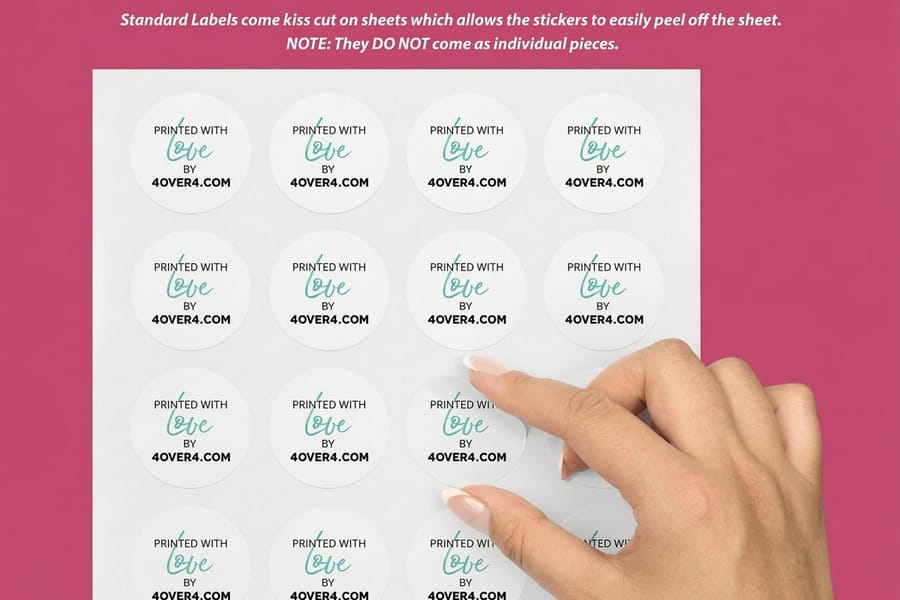
Peel the artwork away and the choice comes down to what the label is made of: paper, white vinyl film or clear film. A standard paper label is coated paper stock, printed opaque, and it does exactly what a shipping label, an address block, or a dry-goods sticker needs to do. It is crisp, it is cheap, and indoors it lasts as long as the package does. Ask it to survive a wet bottle and it gives up fast. Our standard labels come on uncoated, semi-gloss or hi-gloss paper, from 25 for $23.88.
A vinyl label is a synthetic film instead of paper, which is the whole point. It shrugs off water, oil, and the weather, so it stays legible on a drink bottle that sweats in a cooler or a bin that lives on the loading dock. A clear label takes it one step further and drops the white background entirely, so a transparent film carries your ink and the container behind it does the rest of the work.
If any of the vocabulary here is new, keep our printing terms glossary open in another tab. And if you are choosing more by shape and format than by material, the breakdown of stickers vs labels vs decals picks up right where this one leaves off.
What vinyl means on a label, and what regular means
When a label is called vinyl, the face stock is a thin sheet of polyvinyl chloride, a plastic film, coated on top so ink holds and on the back with a permanent acrylic adhesive. Nothing in that stack absorbs water, which is the whole reason it survives a bottle in an ice bucket. The film is also slightly stretchy, so it wraps a curved jar or a bottle shoulder without creasing and stays down when the container flexes.
A regular label, the one most quotes call standard or paper, is coated paper stock with the same kind of adhesive underneath. The coating gives it a bright white face and sharp ink, but paper fibers wick moisture from the edge inward, which is why a regular label curls and blurs the first time it gets wet and why it cannot go in a freezer.
Clear labels are the same film idea with no white layer, so the ink sits on a transparent sheet. Between vinyl and clear, the material choice is only about whether you want an opaque white base or the container showing through. Between vinyl and regular, it is about water. Premium Vinyl Labels start at $29.16 and Standard Labels at $23.88, so the film costs a little more per run and saves a reprint of every label that peeled. The premium vinyl labels and vinyl labels videos show both films finished.
Water, weather, and wear: which one survives what
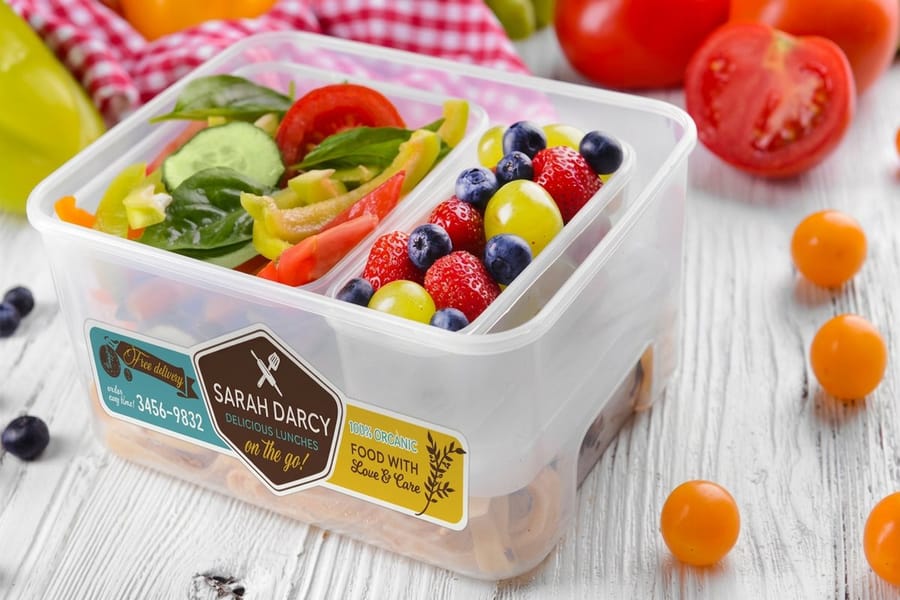
This is the line that decides most orders. Standard paper, the $23.88 option, is happy in a dry, indoor life: a box in a warehouse, an envelope on a desk, a bag of coffee on a shelf. Introduce moisture and it wicks it up, curls at the corners, and smears. That is not a flaw, it is just what paper is, and it is why paper stays the value pick for jobs that never get wet.
Vinyl is engineered for the opposite world. It is fully waterproof and weatherproof, resists oils and cleaning chemicals, and holds its adhesion through condensation and temperature swings. Clear film behaves the same way on the durability front, so both survive the fridge, the ice bucket, and the shower shelf without a fight. When you need a label that outlives the product it is stuck to, one of these two is the answer. The Cleaning Labels video shows labels made for household cleaning products.
Here is the same decision laid out condition by condition, so you can match regular paper, vinyl, or clear to the life your label will actually have.
| Condition | Standard paper | Premium vinyl | Premium clear |
|---|---|---|---|
| Water and condensation | Wicks it up, curls at the corners, ink smears | Waterproof film, wipe it dry and the print stays sharp | Waterproof film, behaves the same as vinyl |
| Oil and grease | Stains and darkens wherever it is handled | Resists oils and cleaning chemicals | Resists oils and cleaning chemicals |
| Freezer and cold storage | Frost lifts the edges and blurs the ink | Adhesion holds through cold and condensation | Adhesion holds through cold and condensation |
| Dishwasher and repeated washing | Not a candidate, one cycle finishes it | Takes repeated hand washing and wipe downs | Takes repeated hand washing and wipe downs |
| Outdoor sun and weather | Indoor life only | Weatherproof, the pick for outdoor signage stickers | Weatherproof, though a see-through label shows a lifted edge sooner |
| Scuffing and abrasion | Ink rubs off under heavy handling | Film shrugs off shipping and shelf scuffs | Film shrugs off shipping and shelf scuffs |
Read the table one way and the rule is short: if the label never meets water, oil, cold, or weather, regular paper is the cheaper, perfectly good answer. Cross any one of those lines and you want vinyl for an opaque label or clear for a see-through one.
Not sure how a material will feel or hold up in the real world? Order free paper samples and put them through your own test before you commit a run, or lay your design out first in our design templates so the artwork is ready the moment you pick a stock.
Vinyl or polyester, when the label has to be plastic
Once you have ruled paper out, there is a second plastic in most label catalogs: polyester, sometimes listed as PET or BOPP film. Both are waterproof. They differ in stiffness, heat and how they sit on a surface.
Vinyl is the softer film. It conforms to a curve, a rivet or a slightly textured surface, and it is the usual pick for bottles, jars, coolers, equipment that gets hosed down and outdoor stickers. Its limits are heat and solvents: it starts to soften above roughly 150 degrees Fahrenheit, and strong solvents can attack the face.
Polyester is stiffer and tougher. It holds up to higher temperatures, resists chemicals and abrasion better, and stays flat, which is why it goes on asset tags, electrical panels, barcode plates and anything that meets harsh cleaning. The cost of that stiffness is that it does not wrap a tight curve without lifting at the edge, and it feels harder in the hand.
A simple rule covers most orders: curved or flexible surface, or anything a customer handles, choose vinyl. Flat, hot or chemical surface, choose polyester. Nylon labels are a third case, a woven or coated fabric for garments rather than packaging, and the sewn-in care label is their home. For the label jobs on this page, the vinyl and clear films are the ones that matter, and the stickers vs labels vs decals guide sorts the formats they come in.
The look: solid color, or a design that floats on glass
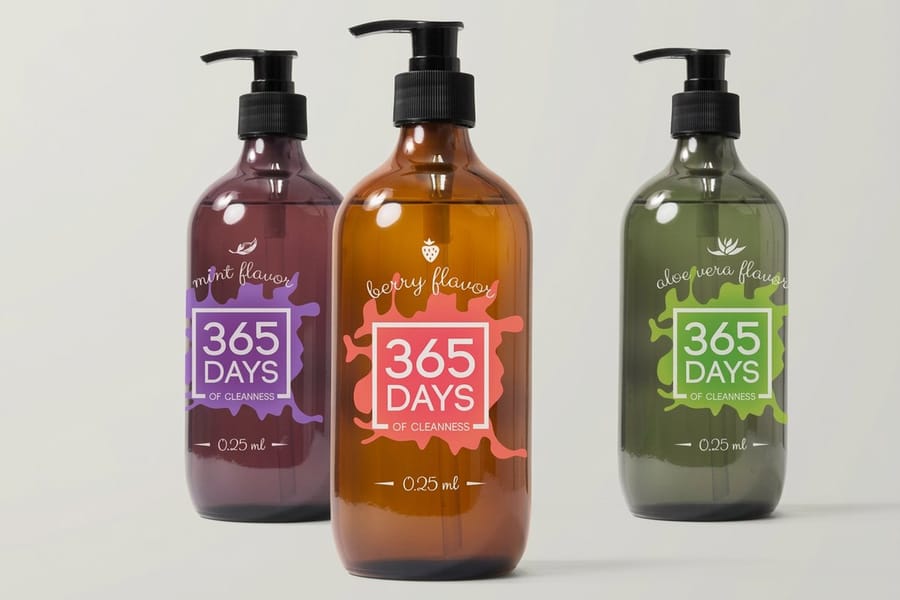
Paper and vinyl both start from an opaque white base, which is exactly what you want when the label needs to be read at a glance. Your color sits bold and high contrast against that white, barcodes scan cleanly, and small type stays sharp. For information-first labels, opacity is a feature, not a limitation. Clear labels can borrow the same effect: an optional white ink base prints under the artwork as a fifth color.
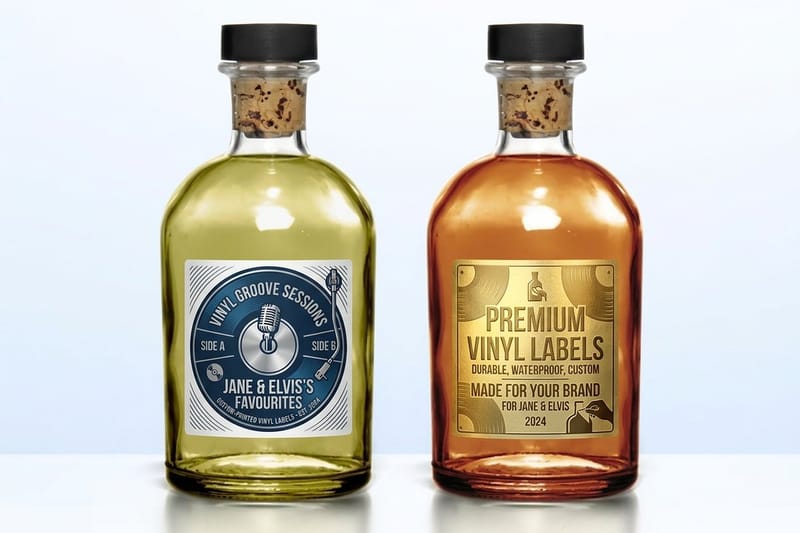
Clear labels play a different game. Applied to a clear bottle or jar, a clear label reads as if your ink was printed straight onto the glass, the no-label look that makes a product feel premium and minimal. The trade is that light colors and fine white detail can get lost against a busy background, so clear rewards bold artwork and confident negative space. It is the reason craft breweries, candle makers, and beauty brands lean on it while a shipping department never would. The Premium Candle Labels video shows labels made for candles.
Whichever look fits, the ordering path is the same. Our design templates give you layouts with the bleed and safe margins already set, and free samples let you see how your palette behaves on an opaque stock versus a see-through one before you print at scale.
Cost and quantity: what each one does to your budget
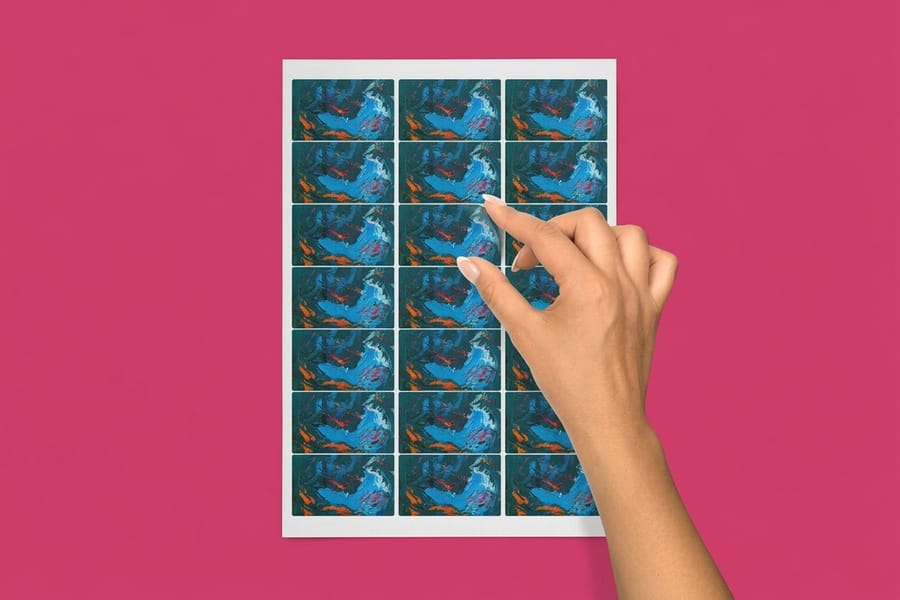
On raw price, paper wins and it is not close. A run of standard labels starts around $23.88, and because it is ordinary coated stock, the per-label cost keeps falling as the quantity climbs. For anything indoor and high volume, that efficiency is hard to argue with.
Vinyl starts around $29.16, a modest step up that buys you the waterproof, tear-resistant film. Clear labels start around $86.17, and that gap is materials, not markup: the transparent film and its finishing simply cost more to produce, and you are paying for a look no other stock delivers. When the container is the hero of your branding, that premium is usually easy to justify.
None of these numbers are guesses. Set your quantity, size, and material in the configurators below and watch the price move in real time. If you are weighing how the run itself ships and applies, the roll labels vs sheet labels comparison is the next lever on your total cost.
Where each material earns its place
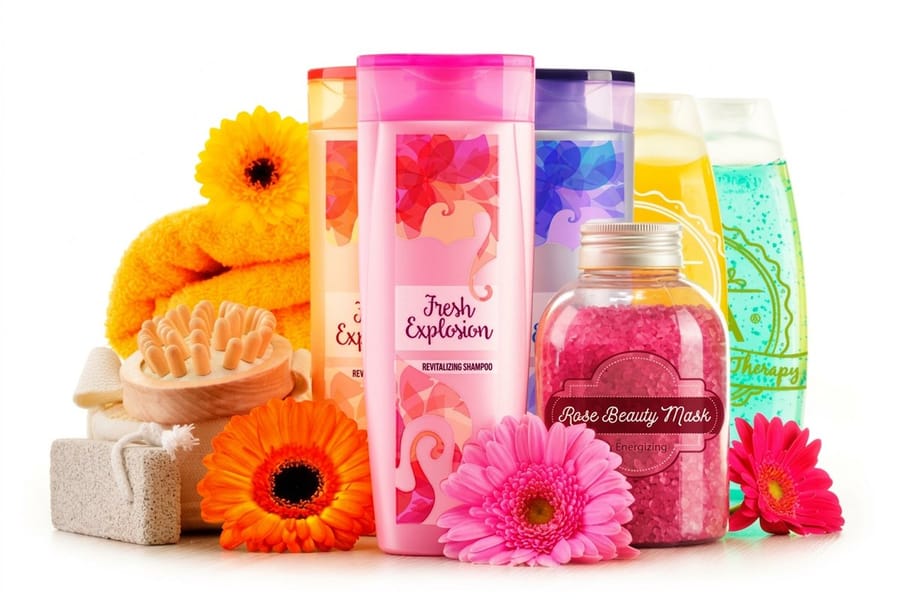
Reach for standard paper when the label lives indoors and price and volume matter most. Shipping and address labels, including the 1 x 2.625 inch address size, barcodes, box and carton marking, and dry-goods packaging are all paper territory. Browse the full range in label printing.
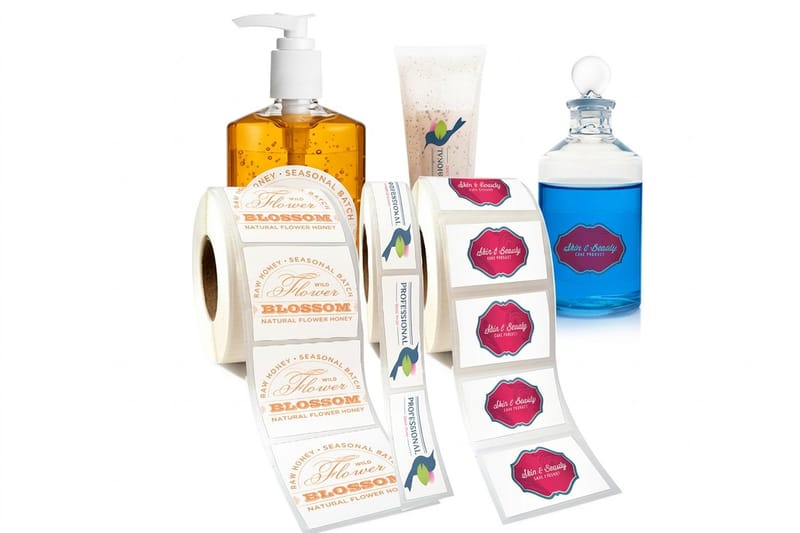
Reach for vinyl when the label will meet water, oil, cold, or the outdoors. Cleaning and household products, sports and sauce bottles, cooler labels, and outdoor equipment all need a film that will not quit. See the options in vinyl label printing.
Reach for clear when the packaging is part of the pitch. Craft beverages, candles, cosmetics, and premium home goods on glass or clear plastic all benefit from the no-label look. Explore it in clear label printing, and if you want the deeper case for a see-through stock, our guide on vinyl vs paper stickers covers the same durability logic from the sticker side.
Vinyl label or vinyl sticker, and why the words differ
Order vinyl and you will be asked whether you want labels or stickers. Same film, different job. A label is made for a surface you already know: a bottle, a jar, a carton, applied once by you or on a filling line, sized to that container and usually supplied on a roll or sheet so it can be applied in sequence. Vinyl labels and vinyl stickers both start at 25 for $25, in 13 fixed sizes from 2 x 3.5 to 5 x 7 inches or any size.
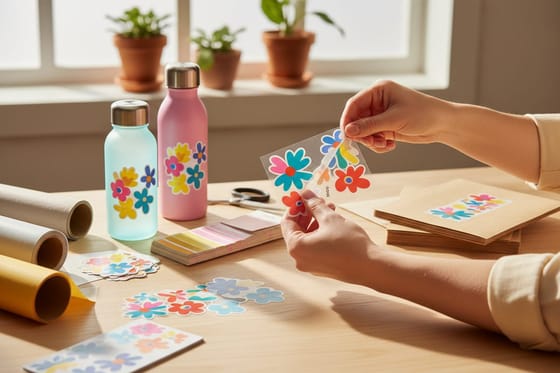
A sticker is made to travel. You hand it out, and it ends up on a laptop lid, a water bottle or a bumper, on a surface you cannot predict, so it is cut to a shape and sold loose rather than sized to anything. The material choice from the rest of this page still applies to both. The question only changes what you order, so if the vinyl is going on your product order vinyl labels, and if it is going out into the world order vinyl stickers. The stickers against labels and decals guide takes the format question further.
How to choose in one minute
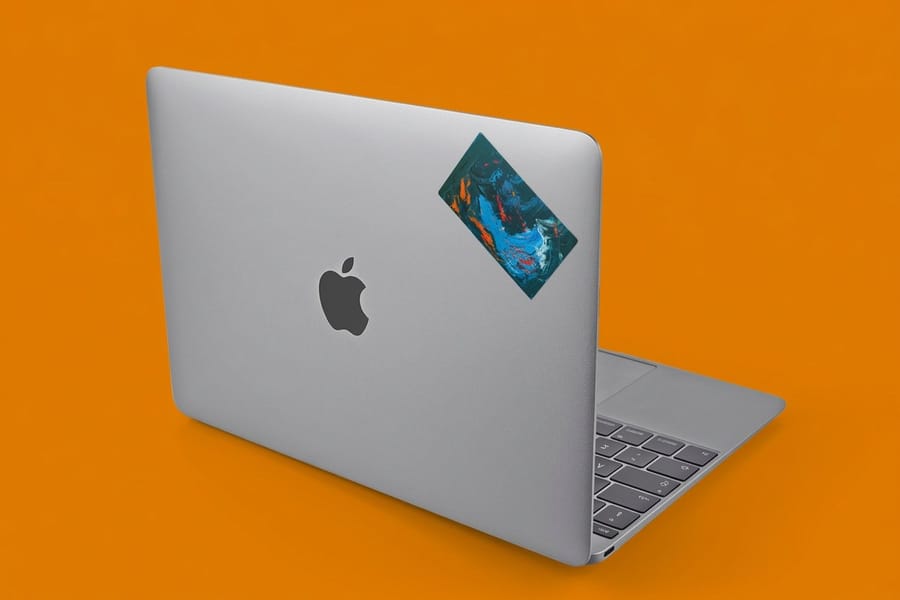
Start with the environment. If the label never gets wet and lives indoors, standard paper is the cheapest way to get a sharp, reliable result, at 25 for $23.88. If it will meet moisture, oil, cold, or weather, skip paper and go straight to a waterproof film, from 25 premium vinyl labels for $29.16.
Then choose the look. Between the two waterproof options, pick vinyl when you want a bold opaque label that reads instantly, and clear when the container is glass or clear plastic and you want your design to look like it floats. Vinyl is the durable communicator, clear is the premium finish.
When in doubt, print samples. A material that looks perfect on screen can behave differently in hand, so order free paper samples and settle it with your own eyes. Once you know the answer, the size, quantity, and finish are all a few clicks away in the configurator.
Wally sorts the three labels
It is not which material is best, it is where your label has to live
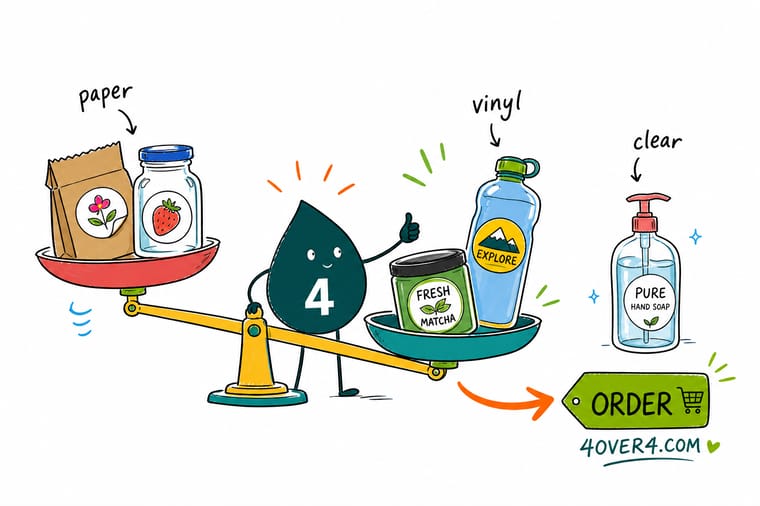
Wally lines up a paper label, a vinyl label, and a clear label and points at each in turn. Dry and indoors? Paper is the cheapest sharp result you can print. Getting wet or heading outside? Vinyl is waterproof and refuses to quit. On clear glass where the packaging is the pitch? Clear film disappears for the no-label look. Pick the environment first, then let 4OVER4 print your design on the right material.
Shop label printing →
The trade-offs
What each material gives you, and what it asks in return
Each material trades something away: paper gives up water resistance for the lowest price, vinyl costs a little more for durability, and clear gives up legibility on a busy background for the no-label look. Weigh the upside against the trade-off for the product your label actually has to survive.
Standard paper
Where paper wins
- Lowest cost per label, especially at volume
- Crisp, high-contrast print for barcodes and small type
- Perfect for shipping, address, and dry-goods labels
- Fast, familiar, and easy to apply by hand or machine
Where it falls short
- Not waterproof, so moisture makes it curl and smear
- Struggles outdoors or in the fridge and freezer
- Shorter usable life than a synthetic film
Premium vinyl
Where vinyl wins
- Fully waterproof, oil resistant, and weatherproof
- Tough adhesive that stays put through condensation
- Bold opaque print that reads instantly
- Ideal for bottles, coolers, and outdoor products
Where it falls short
- Costs a little more than standard paper
- Opaque, so it cannot deliver the no-label look
- Overbuilt for a simple indoor shipping label
Premium clear
Where clear wins
- The no-label look that makes glass and plastic premium
- Waterproof film that holds up on drinks and cosmetics
- Your ink appears to float directly on the container
- The go-to for craft beverages, candles, and beauty
Where it falls short
- Highest starting price of the three materials
- Light colors and white detail can get lost
- Needs a clear container to deliver the full effect
Live options
Compare real paper, vinyl, and clear options
Pulled straight from the catalog, so you can see how price, size, and turnaround shift across each material family.
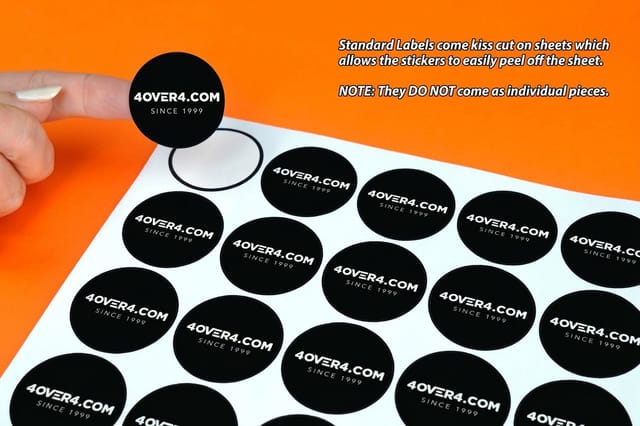 Standard Labels | 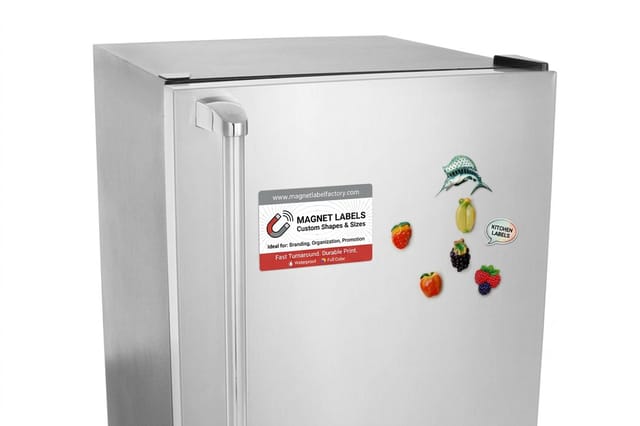 Magnet Labels | 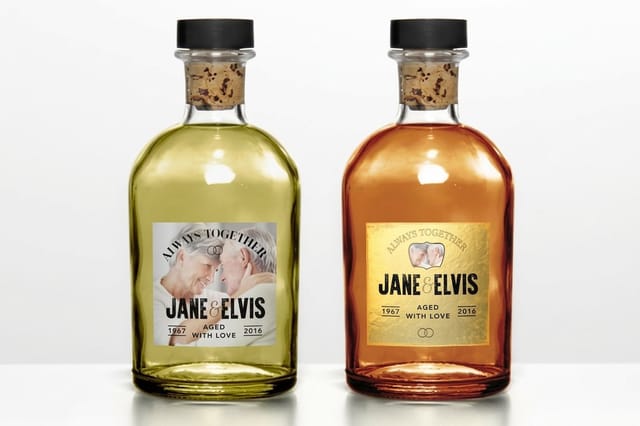 Custom Labels | 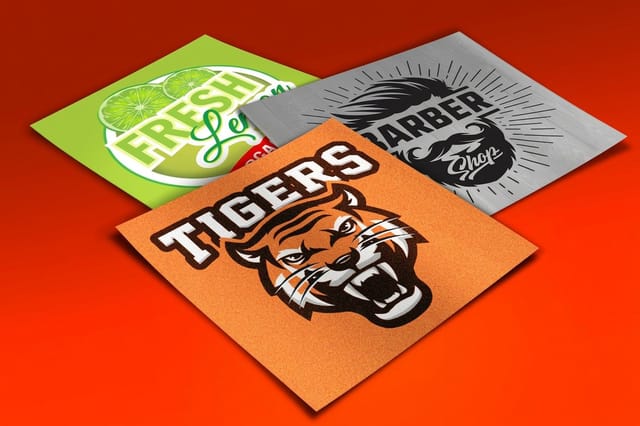 Premium Custom Labels | 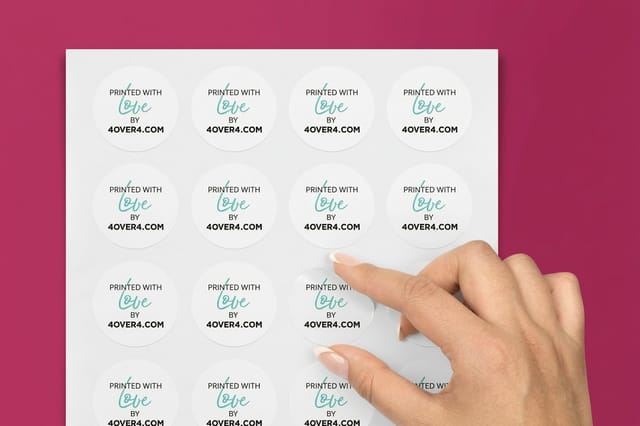 Custom Die Cut Labels | |
|---|---|---|---|---|---|
| Min price | $23.88 | $19.68 | $25.00 | $29.16 | $93.37 |
| Paper / stock | Standard Uncoated Label | 17pt Indoor Magnet | Uncoated Label | Uncoated Label | Uncoated Label |
| Finish | - | UV Coating | - | - | Standard Finish |
| Size | .375" x 1" | 2" x 3.5" | 2" x 3.5" | 3" x 5" | 2" x 2" |
| Default qty | 25 | 25 | 25 | 25 | 25 |
| Turnaround | 3 business days | 5 business days | 3 business days | 3 business days | 5 business days |
| Rating | |||||
| View & customize | View & customize | View & customize | View & customize | View & customize |
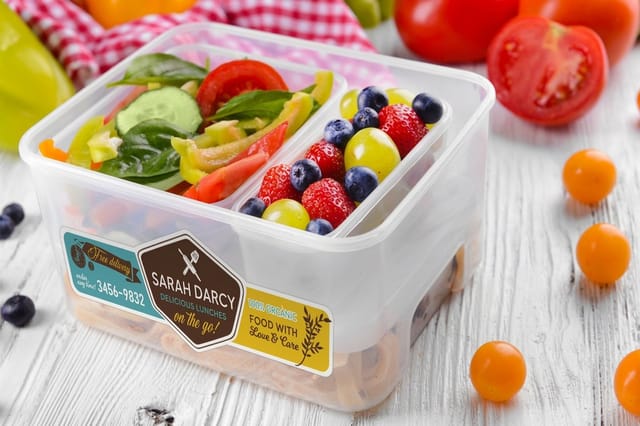 Premium Vinyl Labels | 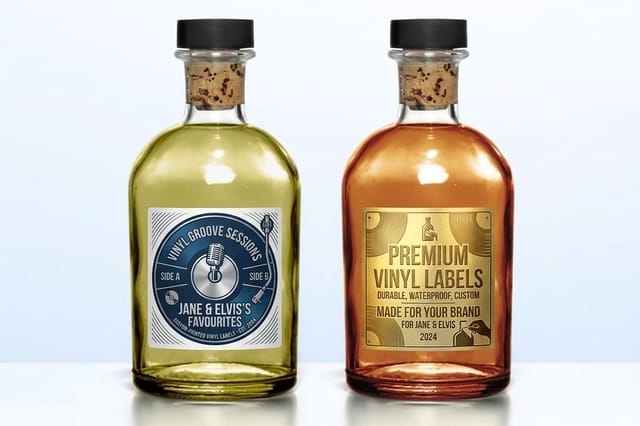 Vinyl Labels | 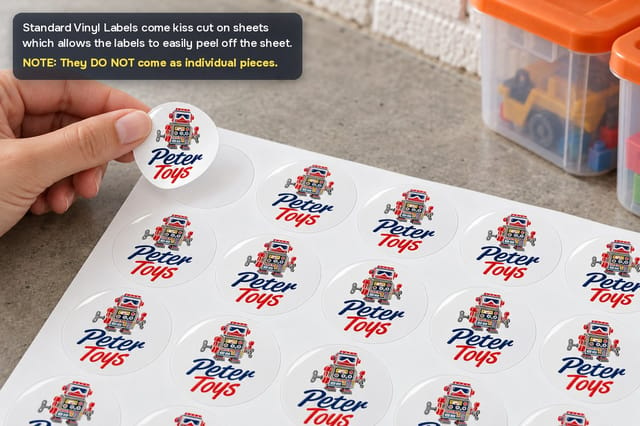 Standard Vinyl Labels | 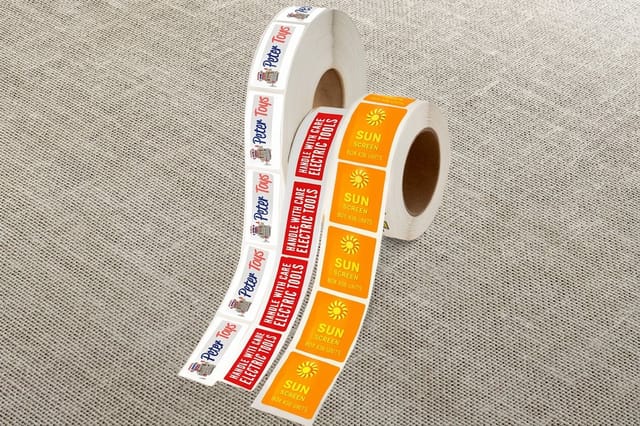 Roll Vinyl Labels | |
|---|---|---|---|---|
| Min price | $26.27 | $25.00 | $40.11 | $322.98 |
| Paper / stock | White Vinyl Permanent | Uncoated Label | Standard White Vinyl Label | White Gloss (Indoor) |
| Size | Any Size | 2" x 3.5" | .5" Circle | 1" x 1" |
| Default qty | 25 | 25 | 25 | 100 |
| Turnaround | 3 business days | 3 business days | 3 business days | 6 business days |
| Rating | ||||
| View & customize | View & customize | View & customize | View & customize |
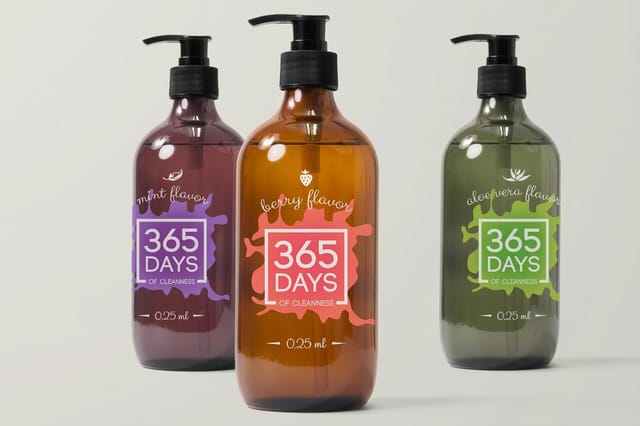 Premium Clear Labels | 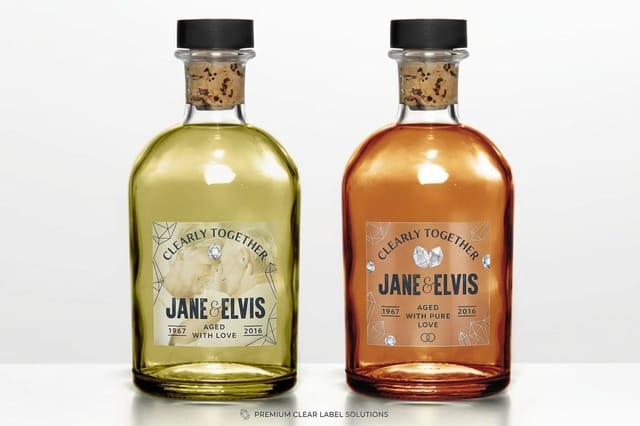 Clear Labels | 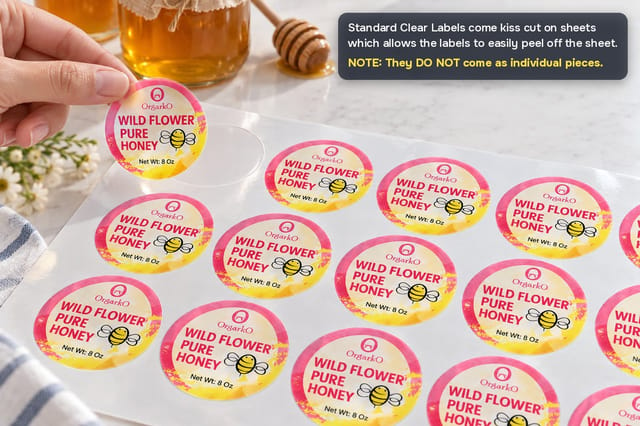 Standard Clear Labels |  Roll Clear Labels | |
|---|---|---|---|---|
| Min price | $86.17 | $25.00 | $40.11 | $322.98 |
| Paper / stock | Clear Label Permanent | Uncoated Label | Standard Clear Label | White Gloss (Indoor) |
| Size | 3" x 5" | 2" x 3.5" | .5" Circle | 1" x 1" |
| Default qty | 25 | 25 | 25 | 100 |
| Turnaround | 3 business days | 3 business days | 3 business days | 6 business days |
| Rating | ||||
| View & customize | View & customize | View & customize | View & customize |
Specs and pricing
Live specs and pricing, side by side
Once you have narrowed the material, the rest is size, quantity, and finish. Here are the live specs and price-per-unit for standard, vinyl, and clear labels at 4OVER4.COM.
| Quantity | Price Per Unit | Total |
|---|---|---|
| 25 | 95.5¢ | $23.88 |
| 50 | 72.9¢ | $36.44 |
| 100 | 42.7¢ | $42.72 |
| 150 | 32.7¢ | $49.01 |
| 200 | 27.6¢ | $55.29 |
| 250 | 24.6¢ | $61.57 |
| 300 | 22.0¢ | $65.97 |
| 400 | 17.6¢ | $70.36 |
| Quantity | Price Per Unit | Total |
|---|---|---|
| 25 | $1.05 | $26.27 |
| Quantity | Price Per Unit | Total |
|---|---|---|
| 25 | $3.45 | $86.17 |
The verdict
So which material wins?
Paper, vinyl and clear each win a different job. Standard labels at $23.88 for 25 are the indoor value pick, premium vinyl labels at $29.16 survive water and cold, and premium clear labels at $86.17 buy the no-label look on glass. Here is how each rates for its own job.
Standard paper, for value and volume
The right call when the label lives indoors and price matters most. Crisp, affordable, and unbeatable per unit at scale, as long as it stays dry.
Premium vinyl, for durability
The right call when the label meets water, oil, cold, or weather. Waterproof, tough, and bold, it stays legible where paper would peel.
Premium clear, for the no-label look
The right call when the container is the design. A transparent film that makes glass and clear plastic look premium and minimal.
Still deciding between the two waterproof options? A quick way to settle it is to order free paper samples and see how your artwork behaves opaque on vinyl versus floating on a clear film before you print the full run.

Explore more
Where to go next
By the numbers
Print any of the three with a shop you can count on
Common Questions
Common questions about label materials
Is vinyl just a sticker?
Vinyl is the material, not the format. A sticker or a label made from vinyl film is waterproof and stretchy, while the same shape cut from paper is not. Most stickers sold for outdoor or bottle use are vinyl, which is why the two words get mixed up, but you can have a paper sticker and a vinyl label just as easily. The label versus sticker split is about how it is used, and the vinyl question is only about what it is made of.
How can I tell if a sticker is vinyl?
Try to tear a corner: paper tears with a fibrous edge and vinyl stretches before it gives. Put a drop of water on the face for a minute, and paper darkens and softens while vinyl beads it up and wipes dry. Vinyl also feels slightly rubbery and flexes without creasing, and if you peel it partly off it comes away in one piece rather than delaminating. A clear or frosted face is almost always film.
What's the difference between vinyl and regular sticker paper?
Regular sticker paper is coated paper with adhesive on the back, so it prints bright and sharp but absorbs water from the edges, curls and smears. Vinyl sticker stock is a plastic film with the same adhesive, so it stays flat and legible through water, oil, cold and sun. Paper is the cheaper indoor choice, with Standard Labels from $23.88, and vinyl is the outdoor and bottle choice, with Premium Vinyl Labels from $29.16.
What is a vinyl label?
A vinyl label is a label whose face is polyvinyl chloride film rather than paper, printed and then backed with a permanent adhesive. It is waterproof, resists oil and cleaning chemicals, holds its grip through condensation and freezer cold, and wraps curved containers without creasing. It is the standard choice for drink bottles, cleaning products, cosmetics and any label that lives outdoors, and the opaque white version reads as boldly as paper does.
What is the difference between paper, vinyl, and clear labels?
Standard paper labels are coated paper stock printed opaque, the cheapest option and ideal for indoor jobs like shipping, address, and dry-goods labels. Vinyl labels are a waterproof synthetic film that resists water, oil, and weather, so they hold up on bottles, coolers, and anything outdoors. Clear labels are a transparent film that lets the container show through for a no-label look, popular on glass and cosmetics. Paper is about value, vinyl is about durability, and clear is about a premium, see-through finish.
Are vinyl and clear labels actually waterproof?
Yes. Both premium vinyl and premium clear labels at 4OVER4.COM are printed on waterproof film with an adhesive built to stay put on damp, oily, and refrigerated surfaces. That is why they are the right pick for drink bottles, bath and beauty products, and cleaning supplies. Standard paper labels are not waterproof on their own, so if the product will meet moisture, choose vinyl or clear instead.
Is a vinyl label waterproof?
Yes. A premium vinyl label is printed on waterproof, weatherproof film rather than paper stock, so water does not soak into it. Splashes and condensation wipe off, the ink stays sharp, and the adhesive keeps its grip on a cold bottle pulled out of a fridge or an ice bucket. Vinyl also resists oils and cleaning chemicals, which is why it goes on sauces, sports drinks, cleaning supplies, and outdoor signage stickers. It handles repeated hand washing and wipe downs, though no label is built for a hot dishwasher cycle. A regular paper label does none of this: it wicks up moisture, curls at the corners, and smears. Vinyl starts around $29.16 at 4OVER4.COM against about $23.88 for standard paper, so the durability costs a little more per run and saves you reprinting labels that peeled.
When is a paper label good enough?
Paper wins whenever the label lives a dry, indoor life: a carton in a warehouse, an address label on an envelope, a bag of coffee on a shelf, event and organizing labels, anything applied and read within days. In those jobs the extra film on vinyl buys you nothing, and standard paper labels are the cheapest of the three at 4OVER4.COM, starting around $23.88 against about $29.16 for premium vinyl and about $86.17 for premium clear, with the gap widening in your favor at higher quantities. Paper also gives you an opaque white base, so bold color, small type, and barcodes all read cleanly. Step away from paper the moment moisture, grease, freezer frost, rain, or long outdoor exposure enters the picture, and step away from it if you want the see-through no-label look on glass. Order free samples first if you are on the fence, then run the same artwork on whichever stock you land on.
Which label material is the cheapest?
Standard paper labels are the most affordable, starting around $23.88 at 4OVER4.COM. Premium vinyl labels start around $29.16, and premium clear labels start around $86.17 because the transparent film and its finishing cost more to produce. If your labels live indoors and do not need to survive water, paper gives you the lowest cost per label, especially at higher quantities. Every price updates live in the configurator as you set quantity, size, and material.
What label material is best for bottles and jars?
For anything that gets wet, refrigerated, or handled with damp hands, vinyl or clear labels are the right call. Vinyl gives you a bold opaque label that survives condensation and ice buckets, which suits cleaning products, sauces, and sports drinks. Clear labels give glass bottles and jars the premium no-label look, where your printed design appears to float on the surface, which is why craft breweries, candle makers, and beauty brands reach for them.
What is the no-label look?
The no-label look is what you get when a clear label is applied to a clear container. The transparent film all but disappears, so only your printed ink shows and the product looks like the design was applied straight to the glass or bottle. It reads as high-end and minimal, which is why it dominates cosmetics, craft beverages, and premium home goods. You cannot get the same effect from paper or opaque vinyl, both of which leave a visible white background.
Can I use paper labels outdoors or in the freezer?
It is not recommended. Standard paper labels absorb moisture, so condensation, rain, or freezer frost will make them curl, smear, or peel. For outdoor signage stickers, cooler bottles, or anything stored cold and damp, choose vinyl for a durable opaque label or clear for a see-through one. Both are waterproof and hold their adhesion in temperature swings that would ruin a paper label.
Can I print the same design on all three materials?
Yes. Your artwork is not tied to one material, so the same file can run on standard paper, premium vinyl, or premium clear at 4OVER4.COM. The smart move is to order free paper samples first and feel each option in hand, since a design that looks great opaque on paper can look completely different floating on a clear film. Once you pick, set your size, quantity, and material in the configurator and the price updates live.
Get Started
Ready to print the right label?
Bring your design to 4OVER4.COM and print it on standard paper, waterproof vinyl, or see-through clear film. Adjust size, quantity, and finish, and watch your price update live.
Legal Disclaimer
Gold Standard guarantees apply to all standard orders placed through 4over4.com. Price match requires verifiable proof of a competitor's published price for an equivalent product with matching specifications and turnaround time. Satisfaction guarantee covers manufacturing defects and print quality issues. Contact support with order number and documentation.
