
The Ultimate FDA Food Labeling Guide (2026)


Jordan is our labels, packaging and sustainability voice, built from the knowledge of our production team, with over 20 years in printing.
Every packaged food the FDA regulates carries the same core information in the same places. The principal display panel and the information panel each have their own required content, and swapping them is the common failure. Plan both panels on the exact label size you will order, then pick a stock that survives the shelf or the fridge.
An FDA-compliant food label needs five elements: a statement of identity (the product name), the net quantity of contents (net weight in US and metric units, placed in the bottom 30 percent of the front panel), a Nutrition Facts panel, an ingredient list in descending order by weight, and the maker or distributor's name and address. Major allergens, the Big 9 including sesame, must be declared, and no required type may print smaller than one sixteenth of an inch. Dairy makers follow the same rules for claims: "low fat" or "high protein" is regulated language, it has to match the numbers in your Nutrition Facts panel, and making one cancels the small business exemption from that panel.
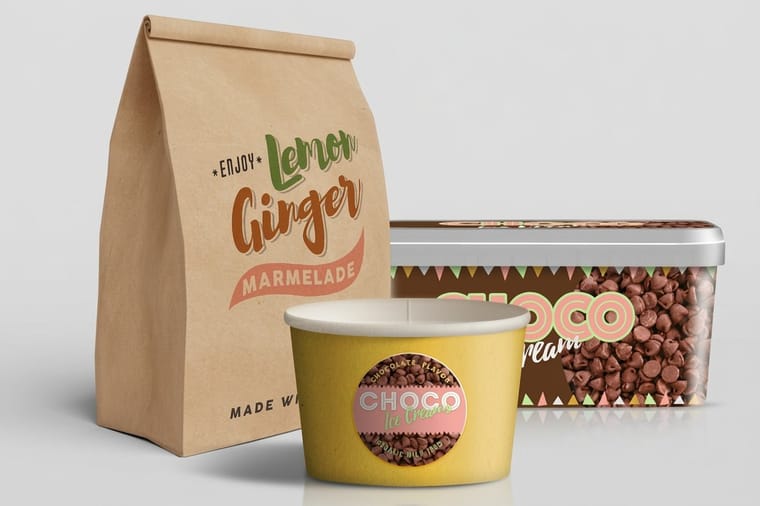
Quick tips
The short version of a compliant food label
Put the product name and net weight on the front panel, with the net quantity in the bottom 30 percent in both ounces and grams. Keep the Nutrition Facts panel, ingredient list, allergen statement, and your business address together on the information panel. Declare the Big 9 allergens in plain language, hold every required line at one sixteenth of an inch or larger, and print on a material that survives the product's real environment. 4OVER4.COM brands that plan the label around these rules ship faster and reprint less.
| Required element | Panel it belongs on | Minimum type size |
|---|---|---|
| Statement of identity, the common name of the food | Principal display panel, the face the shopper sees | Bold type, in scale with the largest print on the panel and never below one sixteenth of an inch |
| Net quantity of contents, in ounces and grams | Bottom 30 percent of the principal display panel, parallel to the base | One sixteenth of an inch on panels of five square inches or smaller, scaling up to half an inch above 400 square inches |
| Nutrition Facts panel | Information panel, immediately right of the front panel | One sixteenth of an inch or larger on every required line |
| Ingredient list, descending order by weight, with the Big 9 allergens named in plain language | Information panel, next to the Nutrition Facts | One sixteenth of an inch or larger |
| Name and place of business of the manufacturer, packer, or distributor | Information panel | One sixteenth of an inch or larger |
What the FDA actually requires on a food label
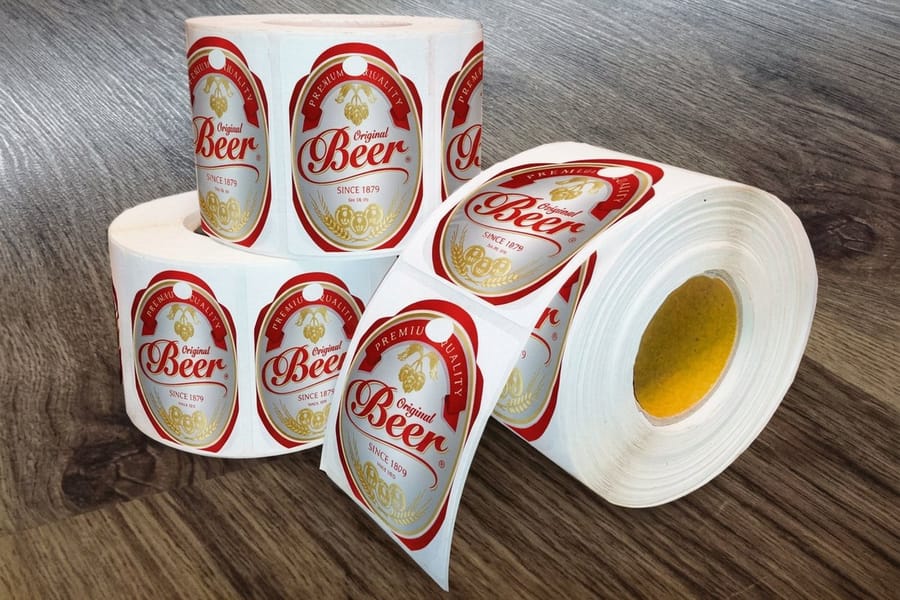
Food labeling in the United States runs on two pieces of law: the Federal Food, Drug, and Cosmetic Act, and the Nutrition Labeling and Education Act that layered the Nutrition Facts panel on top of it. Together they turn the front and back of a package into a small, regulated document. On a 3" x 5" premium food label, the smallest set size, that whole document has 15 square inches to live in. Get it right and your product moves onto the shelf. Get it wrong and the FDA can call the product misbranded, which stops sales fast.
Strip away the jargon and almost every packaged food needs five things: a statement of identity that names the food, a net quantity of contents, a Nutrition Facts panel, an ingredient list, and the name and address of the company behind it. Major allergens get called out on top of that. The rest of this guide walks each one, then hands you a clean path from a compliant layout to a printed label. If you already know your specs, you can jump straight to custom label printing and start building.
Choose the label before you set type, because the panel area decides your net weight type size. A jar or box usually takes a premium food label at 3" x 5", 4" x 4" or 4" x 6"; a spice tin or sample cup takes a standard food label from a 1" circle up; a glass bottle that should show the product takes a clear label. Pick white vinyl for anything that goes in a fridge or cooler, semi-gloss or uncoated paper for dry pantry goods, then build the file at that exact size.
This page is a practical walkthrough, not legal advice. Rules shift, product categories carry their own quirks, and the official text lives in Title 21 of the Code of Federal Regulations. When a launch is on the line, read the current regulation or talk to a labeling specialist. For definitions of the print terms below, keep our printing terms glossary open in a second tab.
Label anatomy: the display panel and the information panel
Before a single word is set, the FDA divides your package into zones. The principal display panel, or PDP, is the surface most likely to face a shopper at the point of sale. The information panel is the panel immediately to the right of it. Each zone has a job, and putting the right element in the wrong place is one of the most common review failures we see.
The PDP carries the two elements a buyer scans first: the statement of identity and the net quantity. The information panel carries the denser material, the Nutrition Facts, the full ingredient list, the allergen statement, and your business name and address, stacked without other printing squeezed between them. On a round jar or bottle where there is no natural right-hand panel, the whole back becomes fair game, which is why jar labels and bottle labels are usually laid out as one continuous wrap.
Mapping these zones first saves rework later. Sketch the container, mark the PDP, and only then start pouring content in. If you are designing several package shapes at once, the free Online Designer lets you lay out each panel against a real dieline.
Statement of identity and net quantity of contents

The statement of identity is simply the honest name of the food, printed prominently on the PDP in bold type, generally parallel to the base of the package and among the largest type on the front. Use the common or usual name people would actually say, not a brand fantasy name standing in for it. If a standard of identity exists for the food, such as mayonnaise or maple syrup, that legal name is the one to use.
The net quantity of contents, what most people call the net weight, tells buyers how much food is inside, not counting the jar, wrapper, or box. It lives in the bottom 30 percent of the PDP and has to appear in both US customary and metric units, for example 12 oz (340 g). Its type size is not a free choice: it scales with the size of the panel, starting at one sixteenth of an inch on packages of five square inches or less and rising to half an inch on panels over 400 square inches, with a required margin of clear space so the numbers never crowd the artwork.
Two habits keep this section clean. Weigh the actual filled product rather than trusting a recipe target, and round according to the FDA rules for your unit. If you sell the same recipe in several sizes, our label dimensions guide shows how panel area changes the required type size from one SKU to the next.
The Nutrition Facts panel, refreshed for the modern shelf
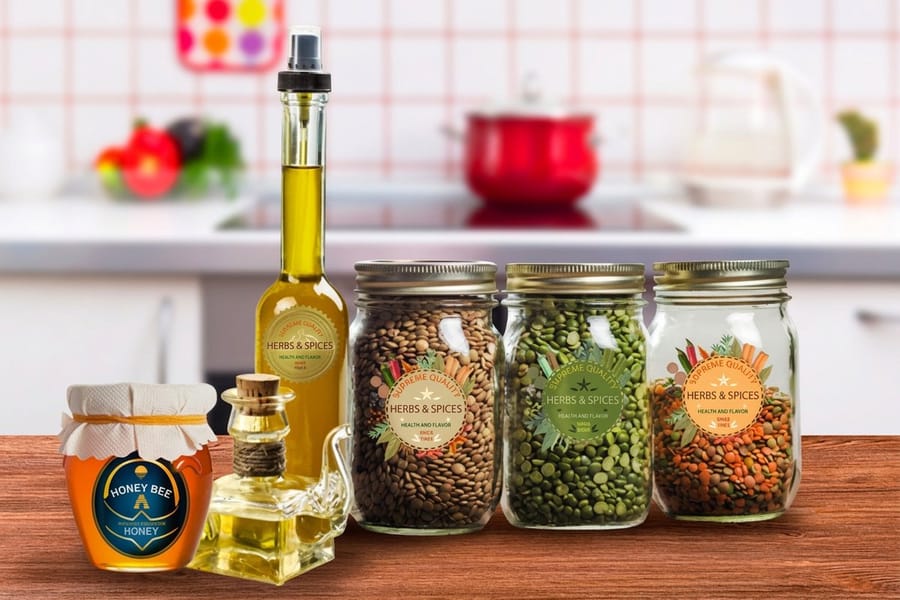
The Nutrition Facts panel is the most format-locked part of the whole label. The FDA specifies the order of lines, the bold weights, the hairlines, and the type sizes, so it is less a design element and more a form you fill in. The big refresh from the 2016 final rule, phased in through 2020 and 2021, changed what shoppers see today.
- Calories set large and bold, so the number is the first thing the eye lands on.
- An Added Sugars line under Total Sugars, with its own percent Daily Value.
- Serving sizes updated to reflect what people realistically eat in one sitting.
- Vitamin D and potassium now required, while vitamins A and C became optional.
- Refreshed Daily Values and a plainer footnote explaining what percent DV means.
Small packages can use the tabular or linear versions of the panel to fit tight space, but the content stays the same. Because the panel is math as much as design, build it from a lab analysis or a validated database rather than eyeballing it, then drop the finished panel into your artwork as a locked block so no one nudges the type out of spec.
Ingredients and the Big 9 allergens
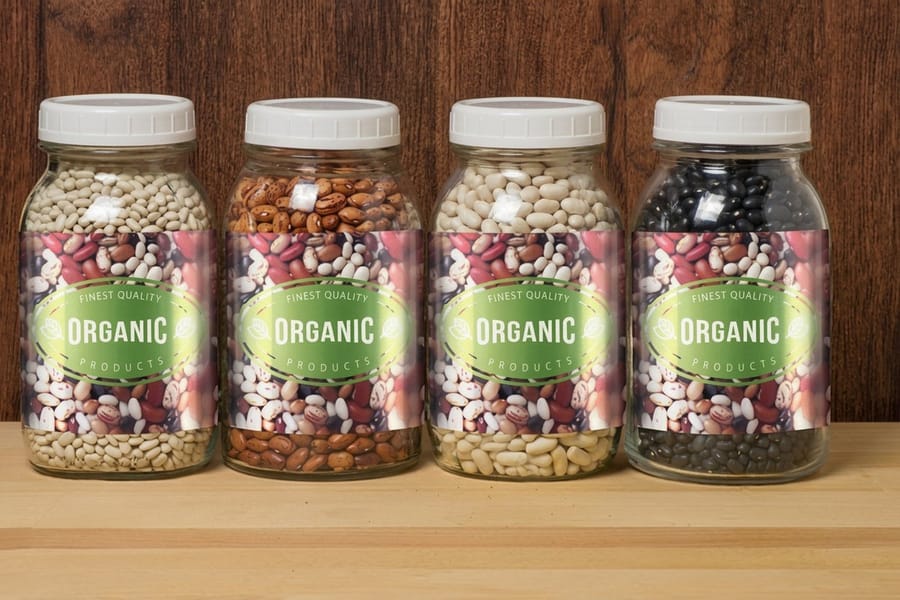
The ingredient list names everything in the food in descending order by weight, so whatever there is most of leads and the trace ingredients trail. Use common names people recognize, spell out the components of sub-ingredients where the rules require it, and declare color additives and certain preservatives by name. Water counts, and it often ranks higher than makers expect once you weigh it honestly.
Allergen disclosure sits right beside the ingredients and carries real weight. Under the FALCPA law, and now the FASTER Act that added sesame as of January 1, 2023, the FDA recognizes nine major allergens: milk, eggs, fish, crustacean shellfish, tree nuts, peanuts, wheat, soybeans, and sesame. You can flag them inside the ingredient list in parentheses, for example "lecithin (soy)," or gather them into a Contains statement placed immediately after the list. Whichever style you pick, use it consistently and name the specific food, such as almonds rather than just tree nuts where the rule calls for specificity.
Legibility is not optional here. If a customer with an allergy cannot read the line, the label has failed its most important job, which is why we walk through minimum type sizes next. For brands that print a family of SKUs, keeping allergen wording identical across every product label avoids the small inconsistencies that trigger recalls.
Name and address, dates, and other required statements
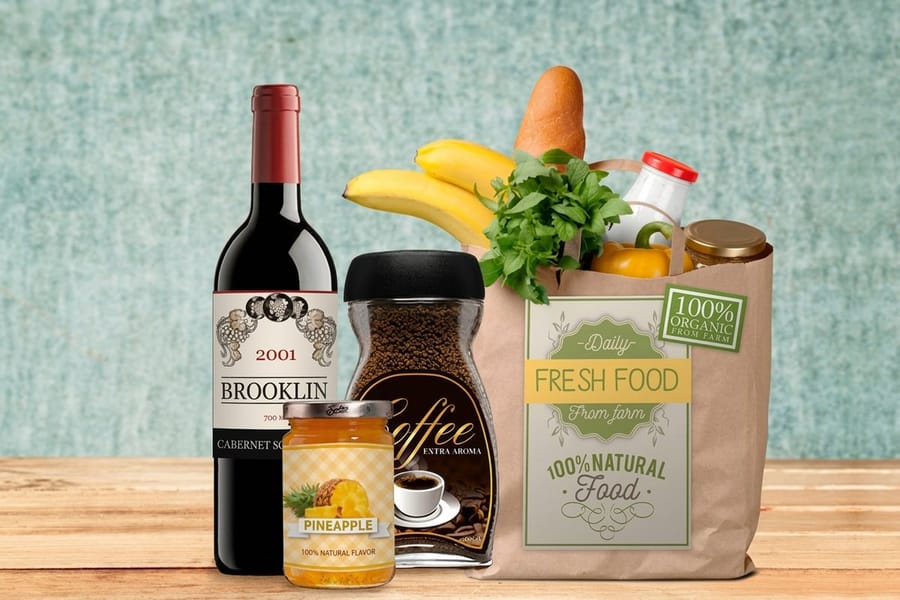
Every label has to name a responsible business. The name and place of business of the manufacturer, packer, or distributor goes on the information panel, and if the company listed did not actually make the food, the name is qualified with a phrase such as "manufactured for" or "distributed by." A full street address is required unless the firm is listed in a current phone or online directory, in which case city, state, and ZIP can stand in. Set that line at one sixteenth of an inch or larger, the same floor as every other required statement on the information panel.
Depending on the product, a handful of other statements come into play. Juices carry a percent-juice declaration. Anything with an artificial flavor or color, or a chemical preservative, says so. Imported foods note the country of origin. And any marketing claim, from "low sodium" to "good source of fiber" to "natural," is regulated language with a specific definition behind it, not a free adjective. If a claim cannot be backed by the numbers in your Nutrition Facts panel, leave it off.
These lines are easy to treat as an afterthought and easy to get wrong. Lock your business address and any claims early, verify them against the current regulation, and reuse the exact wording across your packaging labels so a rebrand or address change only has to be fixed in one master file.
Type size, legibility, and the rules people miss
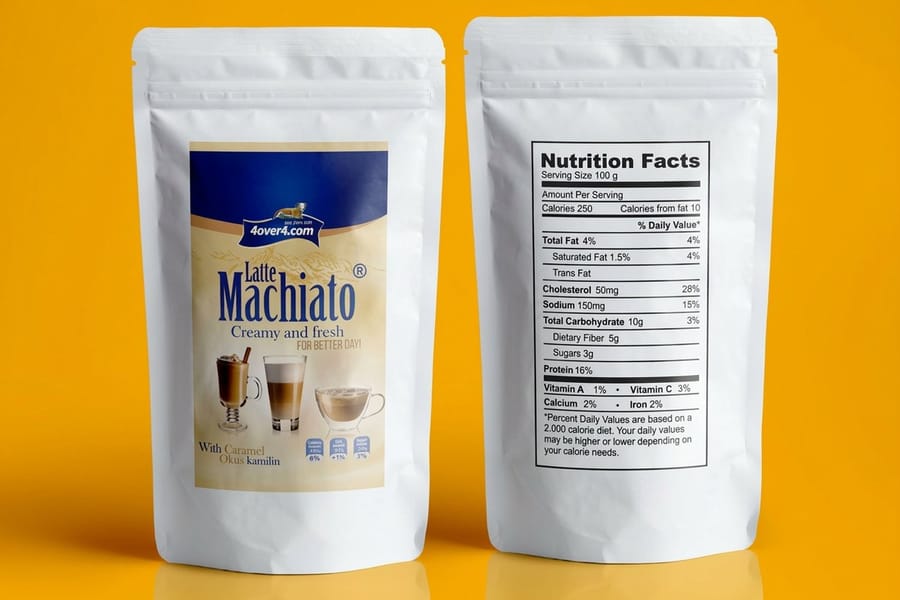
Content can be perfect and still fail on legibility. As a baseline, no required statement should print smaller than one sixteenth of an inch, measured by the height of a lowercase letter o, and the Nutrition Facts panel sets its own floors, roughly 6 point for the footnote and 8 point for most lines, with calories much larger and bold. The net quantity follows the panel-area scale covered earlier, so a big box owes a bigger net-weight number than a small pouch.
Beyond raw size, the FDA expects type that a normal shopper can read: strong contrast against the background, no busy artwork running under critical lines, and enough clear space that letters do not collide. Reverse type, white on a dark field, is fine as long as it stays sharp at your print resolution. If any part of the label appears in a language other than English, all the required information has to appear in that language too, which quietly doubles the space some brands need.
This is where design and manufacturing meet. Fine reversed type at 6 point only survives if the file is built at the right resolution and the press holds detail, so it pays to read our print resolution guide and CMYK color guide before you finalize art. Small type that looks crisp on screen can fill in on press if the setup is off.
Small businesses and label exemptions
Not every maker has to print a full Nutrition Facts panel, and the exemptions matter most to the people starting out. A genuinely small operation, generally one with fewer than 100 full-time-equivalent employees that sells fewer than 100,000 units of a given product per year, can file a short notice with the FDA and skip the panel (FDA, Small Business Nutrition Labeling Exemption, 21 CFR 101.9(j)(18)). That notice is filed per product and per 12 month period, before the period begins, so a second flavor or a second pack size is a second filing, and the employee count is measured across the whole company rather than the single product line. There are separate carve-outs for very low-volume products sold by low gross sales firms (21 CFR 101.9(j)(1)) and for ready-to-eat food prepared primarily on site and sold straight to the shopper (21 CFR 101.9(j)(3)).
The exemptions come with fences. The moment you make any nutrient content or health claim, "high protein," "low fat," anything of the sort, the exemption evaporates and the panel is back (21 CFR 101.9(j)(18)(iv)). And even an exempt product still owes the rest of the label: statement of identity (21 CFR 101.3), net quantity (21 CFR 101.7), ingredient list in descending order by weight (21 CFR 101.4), allergen declaration under section 403(w) of the FD&C Act, and your name and address (21 CFR 101.5). The exemption is narrow, not a free pass, and it covers the Nutrition Facts panel only.
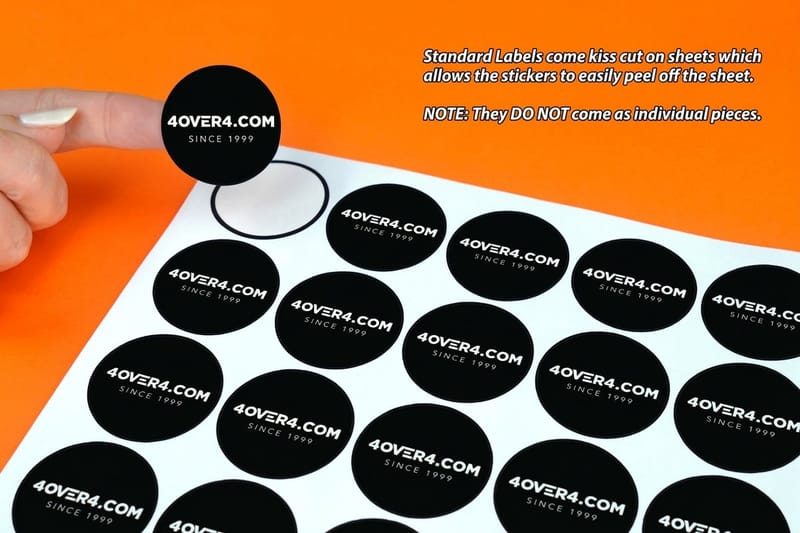
If you expect to grow past the thresholds, design the full panel now and print in short runs, so scaling up is a reorder rather than a redesign. Leaving the panel space in the layout from day one also means the year you cross 100,000 units you drop in real numbers instead of rebuilding the back panel mid-season. Short-run standard food labels make that kind of staged rollout easy. The standard food labels video shows the sizes and stocks before you order the first run.
From compliant design to a print-ready food label
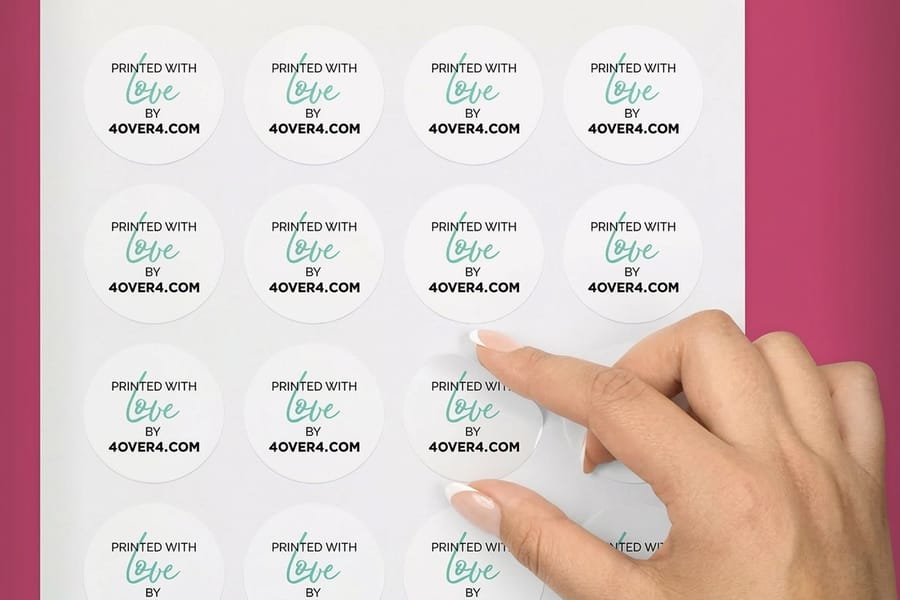
A label that reads perfectly in a design file still has to survive the real world. Food packaging gets handled, chilled, condensation-soaked, and sometimes dunked in ice, so material choice is part of compliance in practice: an ingredient list that smears off in a cooler is an ingredient list the shopper never gets. Dry pantry goods are happy on coated paper, but anything bound for a fridge, freezer, or cooler needs a waterproof film label with a permanent adhesive so the required information never lifts or blurs. A laminate adds scuff and moisture resistance on top. For matte pantry runs, standard food labels carry the panel cleanly; for jars, bottles, and anything heading into a cold case or a gift set, premium food labels hold ink density and stay put through condensation.
File setup is the last gate. Build artwork to the exact trim with proper bleed, keep critical type away from the cut, convert color to CMYK, and export at print resolution so 6 point reversed allergen text stays crisp. Two habits prevent most reprints: keep the Nutrition Facts panel and the ingredient list as live vector text rather than a flattened image, so nothing softens on the press, and give the allergen line real contrast, dark type on a light field, because a screened tint that looks fine on screen closes up at small sizes. Our guides on bleed and trim and preparing packaging files cover the details, and the Online Designer flags common setup problems before they reach the press.
When the layout is compliant and the file is clean, the last step is choosing a product and printing it. 4OVER4.COM prints sheet, roll, and die-cut food labels on paper and film, in matte, gloss, and specialty finishes, from short launch runs to full production. Configure your premium food labels or browse the full range of custom label printing to get your compliant design onto the shelf.
Wally explains food labels
Five elements, two panels, and a print that lasts
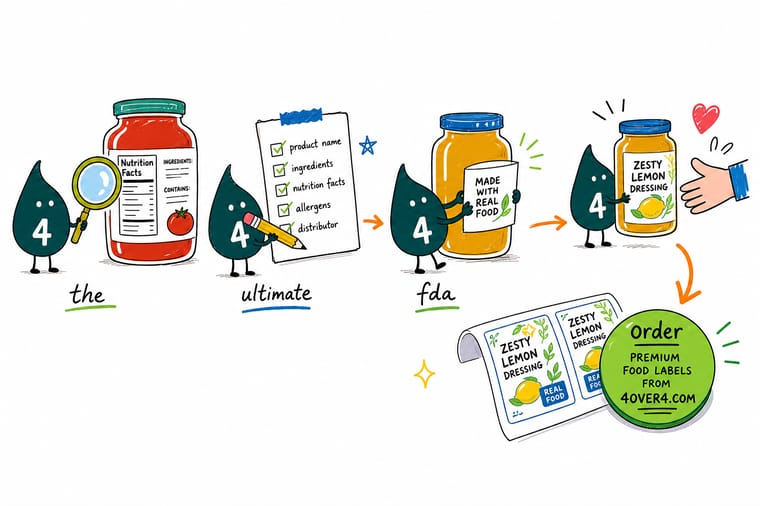
Wally treats a food label like a tiny rulebook: the front panel names the food and its net weight, the back panel stacks the Nutrition Facts, ingredients, allergens, and your address. Get the wording right, keep every required line at one sixteenth of an inch or bigger, then print it on a stock that shrugs off the fridge. When the layout is ready, Wally hands it to the press at 4OVER4 and it comes back shelf-ready.
Order food labels →
Specs and pricing
Custom food label specs and pricing
Premium food labels come in six set sizes from 3" x 5" to 5" x 7", or any size up to 7" x 6". You pick from 23 stocks, from uncoated and semi-gloss paper to white vinyl for the fridge, clear film for glass jars and brown kraft for a pantry look, in black only or full color, with square corners or a 1/8" or 3/8" radius. Runs start at 25 labels, and the widgets below show the live specs and the price at each quantity.

| Quantity | Price Per Unit | Total |
|---|---|---|
| 25 | $1.17 | $29.16 |
Print it
Order food and product labels at 4OVER4
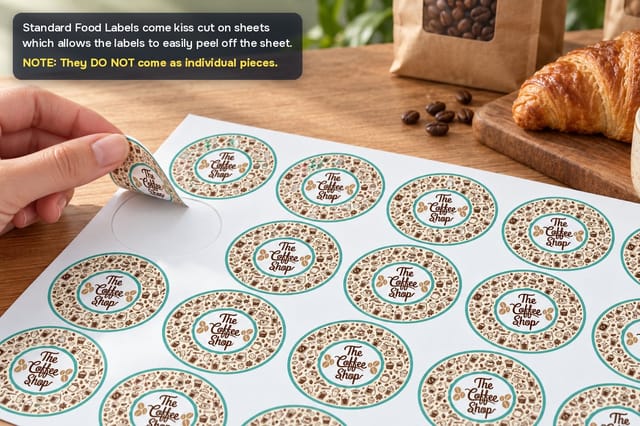
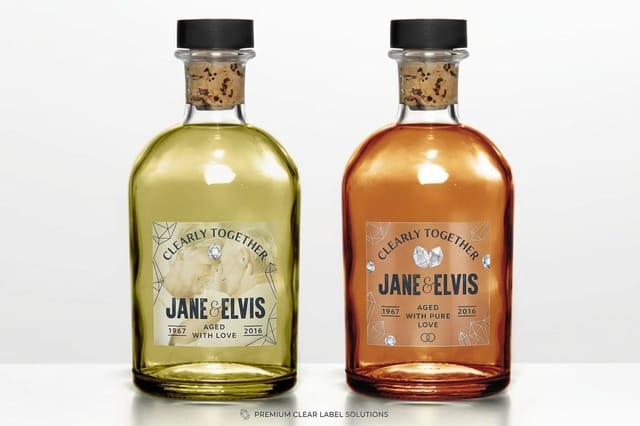
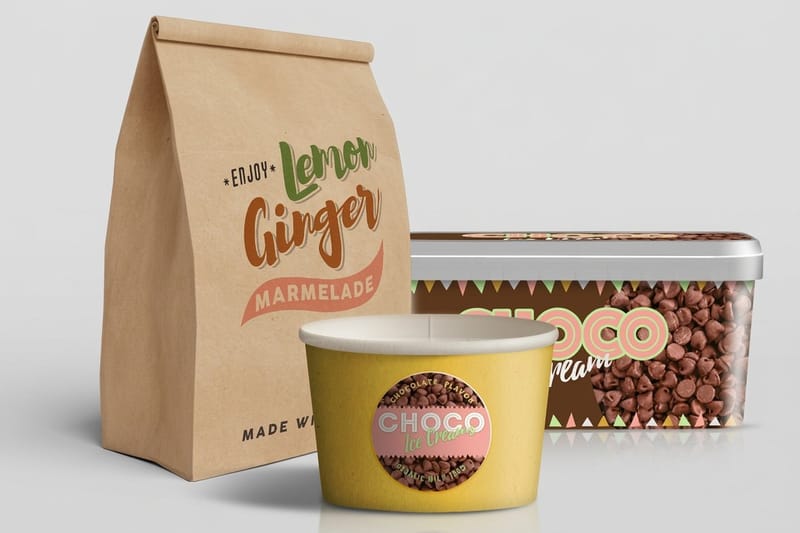
Three labels cover most food lines. Standard food labels come in 50 set sizes, from a .5" circle for a spice tin to a 4" x 6" oval for a large jar, on five label stocks including white vinyl and clear. Clear labels run from 2" x 3.5" to 5" x 7" for a no-label look on glass. Custom metallic labels add a foil accent under high gloss UV, in 20 sizes and runs from 500.

See it in use
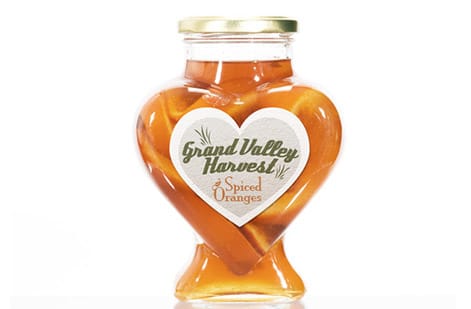
Food labels we printed to spec
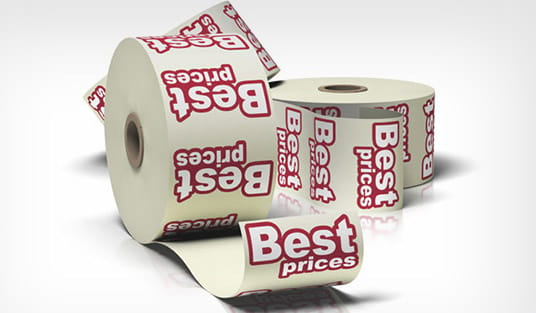

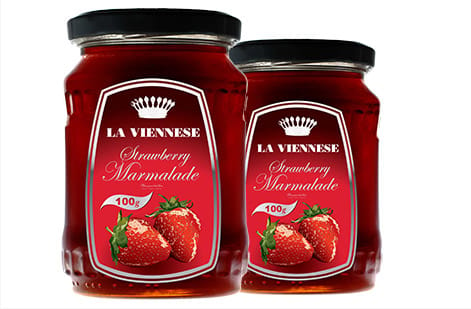
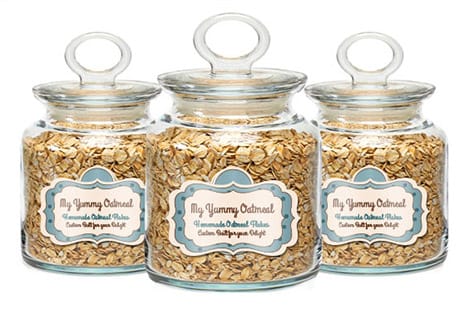



Explore more
Where to go next






By the numbers
Compliant food labels print on our label stocks
Common Questions
Common questions about FDA food labeling
What is required on an FDA food label?
Five elements, plus an allergen declaration. The statement of identity and the net quantity of contents go on the principal display panel, the face of the package, with the net quantity in the bottom 30 percent and shown in both ounces and grams. The Nutrition Facts panel, the ingredient list in descending order by weight, and the name and place of business of the manufacturer, packer, or distributor go on the information panel immediately to the right. Hold every required line at one sixteenth of an inch or larger, name the Big 9 allergens in plain language, and print on a material that survives the product environment. Anything missing makes the food misbranded, no matter how good the artwork looks.
What are the Big 9 allergens?
Milk, eggs, fish, crustacean shellfish, tree nuts, peanuts, wheat, soybeans, and sesame, which joined the list in 2023. Each one has to be named in plain language, either inside the ingredient list in parentheses, for example lecithin (soy), or in a separate Contains statement placed immediately after or below the ingredient list, for example Contains: milk, wheat, sesame. Fish, crustacean shellfish, and tree nuts need the specific species or nut named, so tuna, shrimp, almonds, not just the category. A voluntary may contain advisory never substitutes for a required declaration, and the Contains line needs the same legibility as the ingredient list it follows.
What information does the FDA require on a food label?
Five elements are mandatory on almost every packaged food: a statement of identity (the common name of the product), the net quantity of contents (net weight or volume), a Nutrition Facts panel, an ingredient list in descending order by weight, and the name and place of business of the manufacturer, packer, or distributor. Major food allergens also have to be declared. Miss any one of these and the product is considered misbranded.
Where does the net weight go, and how large does it have to be?
The net quantity of contents belongs in the bottom 30 percent of the principal display panel, printed parallel to the base of the package. It has to appear in both US customary units and metric, for example 8 oz (227 g). The minimum type size scales with the panel area, from one sixteenth of an inch on packages five square inches or smaller up to half an inch on panels larger than 400 square inches, with clear space required around the numbers.
Which allergens must a food label call out?
The FDA recognizes nine major food allergens, often called the Big 9: milk, eggs, fish, crustacean shellfish, tree nuts, peanuts, wheat, soybeans, and sesame. Sesame joined the list under the FASTER Act starting January 1, 2023. You can declare them inside the ingredient list in parentheses or in a separate Contains statement placed right after it, using the plain everyday name of the food.
What is the smallest font the FDA allows on a food label?
As a general rule, no required statement may print smaller than one sixteenth of an inch, measured by the height of a lowercase letter o. The Nutrition Facts panel has its own minimums, with calories set large and bold and most other lines at roughly 6 to 8 point. Small packages get some relief, but readability and good contrast against the background are always expected.
Does every food need a Nutrition Facts panel?
Most do, but there are exemptions. Very small businesses, generally those with fewer than 100 full-time-equivalent employees selling fewer than 100,000 units of a product per year, can file a notice with the FDA to skip the panel. Low-volume products and some small retailers qualify too. The catch: the exemption disappears the moment you make a nutrient or health claim, and you still owe the statement of identity, net weight, ingredients, allergens, and your address.
What label material and finish hold up on food packaging?
It depends on the environment. Dry pantry goods print beautifully on coated paper labels, while anything headed for a fridge, freezer, or ice bath needs a waterproof film with a strong permanent adhesive so the label does not lift or wrinkle. A matte finish reads as clean and natural, a gloss finish makes color pop on shelf, and a laminate adds scuff and moisture resistance. 4OVER4.COM offers all of these so the label matches the product.
How long does it take to print custom food labels at 4OVER4.COM?
Turnaround depends on the product, quantity, and finish you choose, and the live estimate updates in the configurator as you build your order. Sheet and roll food labels move quickly through our Queens, New York facility, and expedited options are available when a launch date is close. You can lock in your specs, upload artwork, and see the exact production and shipping window before you check out.
Get Started
Order 25 standard food labels from $23.88
Pick your size and material, drop in your compliant artwork, and we print sharp, durable food labels that read clearly and hold up on the shelf.
Legal Disclaimer
Gold Standard guarantees apply to all standard orders placed through 4over4.com. Price match requires verifiable proof of a competitor's published price for an equivalent product with matching specifications and turnaround time. Satisfaction guarantee covers manufacturing defects and print quality issues. Contact support with order number and documentation.
