
DVD and CD Packaging, From Jewel Cases to Printed Sleeves


Four packaging formats, the trim sizes each one demands, what a disc face can and cannot carry, and the run size where each option stops making sense.
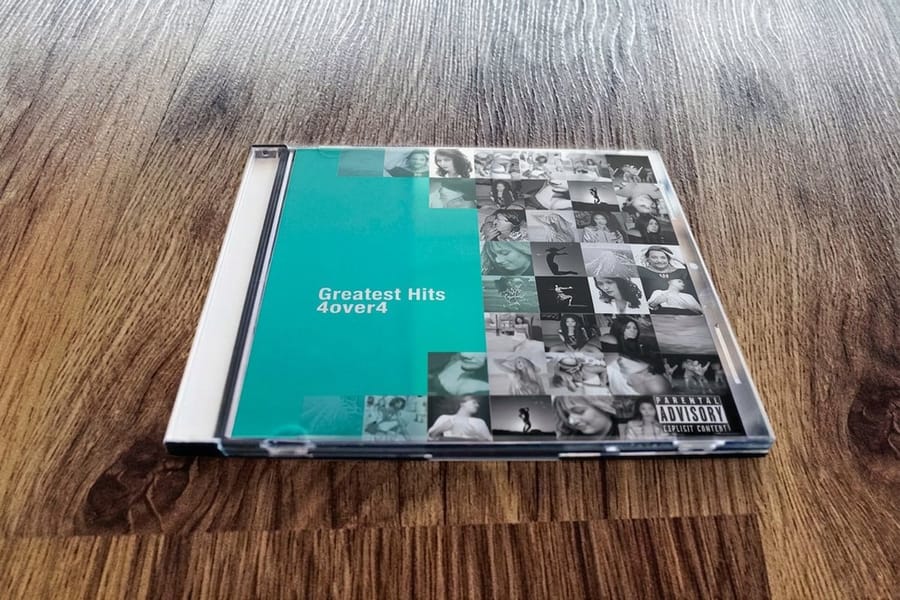
DVD and CD packaging comes down to four formats: a jewel case that takes a 4.75 inch square front panel plus a folded tray card, a DVD case that takes one wrap of about 10.75 by 7.2 inches, a paperboard digipak or wallet scored into panels, and a flat 5 by 5 inch diecut sleeve. Pick the case first, because the trim sizes and fold positions on the print job all follow from it. Panel sizes barely vary between suppliers, but spine width tracks case thickness, so a wrap drawn for a 14mm case will not sit right in a 7mm slim one.
Quick answer
Pick the case, then draw the artwork
The case sets every measurement on the print job. A jewel case wants a 4.75 by 4.75 inch front panel and a tray card of roughly 5.9 by 4.6 inches with two spine folds. A standard 14mm DVD case wants one flat wrap of about 10.75 by 7.2 inches. A digipak is printed board scored into panels with a tray glued in, and a sleeve is a 5 by 5 inch diecut pocket. Panel sizes hold steady across suppliers, spine widths do not, and the spine is where most reprints come from.
The Four Ways a Disc Gets Packaged

Every disc package on a shelf is one of four things, and the choice is usually settled by budget and by how the disc reaches the person who plays it.
A jewel case is the rigid plastic clamshell with a tray inside. It takes a printed front panel and a separate tray card that folds around to form the two spines. A DVD case is the taller soft plastic case with a clear film sleeve on the outside, and it takes one printed wrap covering back, spine and front in a single sheet. A digipak or paperboard wallet is printed board scored into panels, usually with a plastic tray glued to one panel. A paper sleeve is a flat diecut pocket the disc slides into.
| Format | What gets printed | Protection | Best for |
|---|---|---|---|
| Jewel case | 4.75" square front panel plus a folded tray card. | Rigid, but the hinge teeth snap. | Music and software runs where the disc will be handled and stored. |
| DVD case | One wrap of about 10.75" by 7.2" for a 14mm case. | Flexible shell, no hinge to break. | Video, training sets, anything that needs a readable spine on a shelf. |
| Digipak or wallet | Printed board, scored between panels. | Board creases and the tray glue lets go in heat. | Limited editions and merch tables where the package is part of the buy. |
| Paper sleeve | 5" by 5" diecut, printed front, blank back. | Dust only, no drop protection. | Demos, masters handed to a client, favours and inserts inside a bigger box. |
Read the protection column before the price column. A sleeve is the cheapest per unit at volume and the worst thing you can put in a padded mailer on its own, because a disc that flexes inside a paper pocket picks up scratches from its own packaging. If the disc has to survive a courier, put the sleeve inside a rigid mailer or move up to a case. CD sleeves print in seven stocks, and the 16pt gloss cover is noticeably stiffer than the 80# gloss cover for exactly this reason.
The Sizes That Actually Have To Be Right

Panel sizes are close to universal across the trade. Spine widths are not, and that is where jobs go wrong.
For a jewel case, the front panel trims at 4.75 by 4.75 inches. The tray card underneath the disc runs about 5.9 by 4.6 inches, with two narrow folds near the ends that stand up as the spines when the card is dropped into the tray. Those folds are where the album title or the version number goes, and they are only a few millimetres wide, so a spine set in 10 point type will not read.
For a DVD case, everything is one sheet. A standard 14mm case takes roughly 10.75 by 7.2 inches flat. Drop to a 7mm slim case and the panels stay the same height while the spine narrows, which shortens the whole sheet. Get that wrong and the fold lands inside the front cover art. Measure the case, or ask the replicator for its wrap spec, before the designer starts.
Our sleeves are diecut at 5 by 5 inches, sized for a CD or a DVD, and print full color on the front with a blank back. CD covers run from a single 4.75 inch square up to a 4.75 by 19 inch four panel layout on 100# gloss text, with a high gloss UV coating available if the package will be handled a lot and you want fingerprints to wipe off.
Whichever format you pick, build the file with bleed past every trim edge and keep live text well inside the fold lines. The bleed and trim rules apply to a tray card exactly as they do to a flyer, the packaging file preparation guide covers dielines and score marks, and correctly sized layouts are waiting in the blank template library.
Printing the Disc Face, and the Label Trap
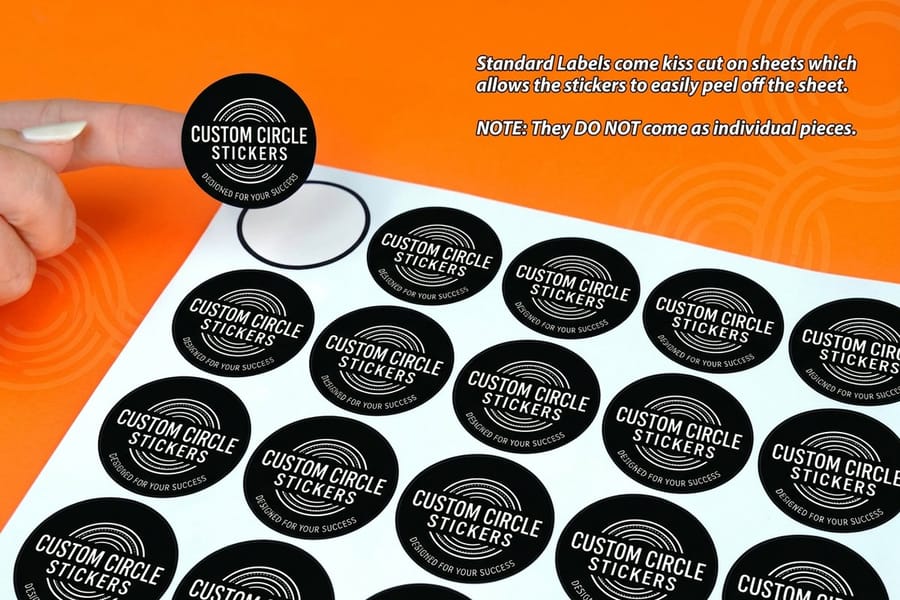
The disc itself is a print job with rules of its own. A replicator screen prints or offset prints straight onto the lacquer, usually leaving the clear inner hub bare, and that printed layer weighs nothing and cannot lift.
An adhesive label is the tempting alternative and it carries real risk. Paper and glue add mass to one side of a disc spinning at speed, and an off center label makes that imbalance worse. Slot loading drives, the kind in a car dashboard or a laptop, grip the disc by its edge, and a label edge is exactly what they catch. The failure mode nobody plans for is a label peeling inside a closed drive.
Short runs are the exception. Twenty archive copies or a set of client masters, labelled with a proper applicator so the sticker lands dead center, will behave. Our circle stickers include a 4.625 inch CD label size among 55 sizes and start at $23.88 for 25 with a 3 business day turnaround, which is faster than any replication run. For anything you sell or mail in quantity, print the disc at the replicator and spend the sticker budget on a seal for the sleeve instead.
Choosing By Run Size, Not By Taste

Cost per unit moves in steps, not in a straight line, and the step you land on decides which format makes sense.
Under about a hundred discs, a printed front panel in a case you buy off the shelf is almost always the cheapest honest package. CD covers start at $75.80 for 25, around $3.03 each, and the price per cover keeps dropping through quantity tiers all the way to 100,000. Sleeves start higher, at $438.25 for 100, because a diecut and a heavier stock carry a real floor cost, and they only turn cheap at scale, reaching roughly $0.20 each at 10,000.
Once the release needs lyrics, credits or install instructions, you have left insert territory. A four panel fold handles a track list. Anything longer becomes a saddle stitched booklet, which starts at 8 pages and grows 4 pages at a time, from $240.55 for 25 and down to about 62 cents each at 1,000. Page counts move in fours because a folded sheet makes four pages, which is the single fact that ends most booklet arguments. The binding methods guide covers what changes above 60 pages.
Plan the schedule too. Covers and sleeves ship in 5 business days as standard, booklets in 7, and rush speeds exist on all three. Replicating and printing discs runs on its own clock, so order the packaging as soon as the artwork is approved rather than waiting for the discs to land. Browse the full range in CD cover printing, CD sleeve printing, or the wider packaging collection if the discs are going inside a branded box.
Wally packs a disc
Measure the case, then cut the sheet
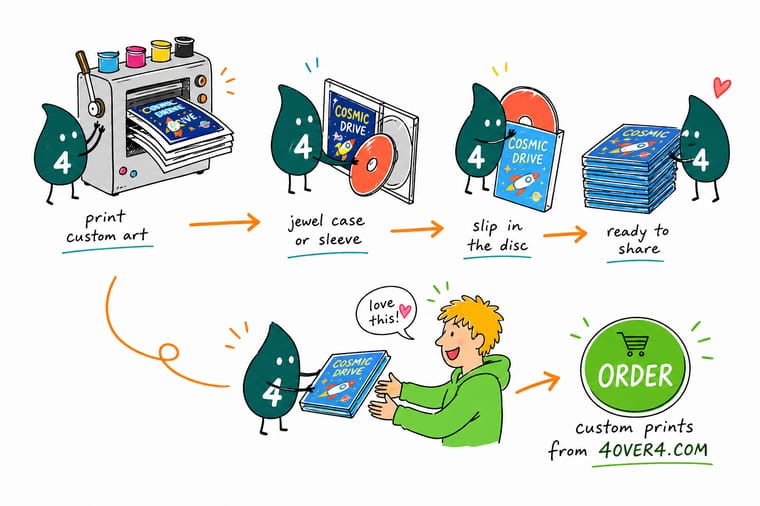
Wally starts with the case, not the artwork. A jewel case gets a 4.75 inch square for the front and a tray card that folds up into two skinny spines. A DVD case gets one long wrap, and the spine on that wrap is only right for the thickness he measured. A digipak is board he scores and folds, and a sleeve is a 5 by 5 inch pocket the disc slides into. He keeps stickers off the disc face for anything that ships, because a slot loading drive finds the label edge every time.
Order CD covers →Specs and pricing
Disc packaging options, sizes and starting prices
Covers, sleeves and disc labels side by side, with live configuration choices and starting prices straight from the 4OVER4.COM configurator.



Print it
Package the disc properly


Explore more
Where to go next


By the numbers
Disc packaging printed in house at 4OVER4
Common Questions
Your DVD and CD packaging questions, answered
What size is a CD jewel case insert?
The front panel is 4.75 by 4.75 inches, and the tray card that sits under the disc is roughly 5.9 by 4.6 inches with two narrow folds that wrap around to make the spines. Those two pieces cover a standard jewel case completely. If your artwork only has to sit in the front of the case, the 4.75 inch square is the whole job, which is how CD covers at 4OVER4.COM start. Multi panel layouts run to 4.75 by 19 inches, which folds down into a four panel booklet for lyrics, credits or software license text.
What size is a DVD case wrap?
A standard 14mm DVD case takes one flat sheet of about 10.75 by 7.2 inches, which carries the back cover, the spine and the front cover in a single piece that slides under the clear film. Slim cases at 7mm and 9mm use the same panel heights but a narrower spine, so the sheet gets shorter. Measure the case you actually own before the artwork is drawn, because a wrap built for the wrong thickness pushes the spine text onto the front panel.
Digipak or jewel case, which should I choose?
Choose a jewel case when the disc gets shipped and handled hard, and a digipak when the package is part of the product. Jewel cases protect better and cost less per unit, but the hinge teeth snap and buyers know it. A digipak is printed board with a tray glued inside, so it takes ink beautifully and feels considered, and the glue line under the tray is what fails first in a hot warehouse or a hot car. Board also scuffs at the fold once it has been opened and closed a few dozen times.
Can I put a printed sticker on the disc itself?
You can, and for a handful of discs it is fine, but it is not what we would put in a shipment. A paper label adds weight to one face of a disc that spins fast, and a slot loading drive can catch the label edge and lift it. Our circle stickers do include a 4.625 inch CD label size for short runs and archive copies, applied dead center with an applicator. For anything sold or mailed in quantity, have the disc face screen printed or offset printed at the replication stage and keep the paper for the packaging.
Do I need a booklet or is a single panel enough?
Count the words first. A single 4.75 inch panel holds a title, an artist or product name, and a short credit line before it looks crowded. Track listings, lyrics, install instructions and legal text need panels, and a four panel fold covers most of them. Once you are past roughly a dozen pages you have left insert territory and you are printing a saddle stitched booklet, which starts at 8 pages and goes up 4 at a time.
What does CD packaging cost for a small run?
CD covers start at $75.80 for 25, about $3.03 each, and the per cover price keeps falling across quantity tiers up to 100,000. CD sleeves start at $438.25 for 100 because the diecut and the heavier stock carry a higher floor, dropping to around $0.20 each at 10,000. Both print in 5 business days as standard. A saddle stitched booklet is the bigger commitment at $240.55 for 25, falling to roughly 62 cents each at 1,000, so it earns its place on a release rather than a demo.
Get Started
Ready to wrap the disc?
Send the panel sizes your case needs, pick a stock and a finish, and we print covers, sleeves and booklets that fit the case the first time.
Legal Disclaimer
Gold Standard guarantees apply to all standard orders placed through 4over4.com. Price match requires verifiable proof of a competitor's published price for an equivalent product with matching specifications and turnaround time. Satisfaction guarantee covers manufacturing defects and print quality issues. Contact support with order number and documentation. On-time delivery rate based on tracked orders 1999 to 2026. Individual results may vary based on shipping carrier performance.
