
Custom Wall Flags and House Flags That Hold Up Indoors and Out


Wall Flag or House Flag, and Why the Difference Decides Everything

People search for wall flags and house flags as if they were the same product, and then wonder why one warps and the other fades. A wall flag lives flat against a surface. It never catches wind, so it can be thin, soft, and mounted with adhesive. A house flag hangs from a bracket or pole and spends its whole life moving, which changes the fabric, the stitching, and the ink.
That single distinction drives every other decision on this page. Get it right and your flag looks the same in year three as it did on day one. Get it wrong and you are reordering in four months, usually because an indoor material went outside or a windy install used a stock that was never meant to flex.
4OVER4.COM has been printing custom signage, fabric, and flag products since 1999, and the pattern is consistent. The customers who describe the mounting surface and the weather before they describe the artwork end up with the product that lasts. So start with where it hangs, not what it says.
Wall flags: flat, quiet, and mostly indoor
Wall flags read like a printed banner pressed to a wall. Offices, gyms, dorm rooms, showrooms, and trade booths use them because they cover a large area for very little money and come down without a repaint. Fabric versions have almost no glare under overhead lighting, which is why they photograph better than vinyl.
House flags: outdoor, double sided, and always moving
A personalized house flag hangs from a porch bracket or a garden pole, so it is read from both sides and beaten by weather from every angle. That means double sided printing, reinforced edges, and pigment ink built for sunlight. Anything less becomes a pale rectangle by the second season.
The hybrid case: rigid panels on exterior walls
When you want the flat look of a wall flag but the wall is outside, fabric is the wrong answer. Rigid aluminum takes the same artwork and survives rain and UV without a stitch or a wrinkle. It is the quiet workhorse behind most storefront wall graphics.
Shop the range
Custom printing collection
Wall graphics, flags, and made to order formats cut to the size your space needs.
How to Choose the Right Wall Flag for Your Space
Choosing well takes about two minutes if you answer four questions in order: where does it mount, does it get weather, how long does it need to live there, and does it have to come down cleanly. Everything else, including size and finish, follows from those answers.
Interior drywall that has been painted in the last month is the one trap worth naming. Fresh paint has not fully cured, and any adhesive product can lift it. Wait three to four weeks after painting before applying adhesive fabric, or mount to glass, laminate, or metal instead.
- Painted interior wall, temporary display. Adhesive fabric wins. It repositions during install and peels off later without residue.
- Exterior wall, permanent branding. Rigid aluminum wins. No sag, no fade, and it cleans with a hose.
- Porch, garden, or pole mount. A true flag product wins, because it needs to move and be legible from both sides.
- Vehicle, boat, or anywhere with airflow. Automotive flag stock wins. Wind is a material problem, not a design problem.
- Textured brick, stucco, or cinder block. Skip adhesives entirely and mount a rigid panel on standoffs or screws.
If you are still weighing a flag against a wide format banner for the same space, the tradeoffs in custom flags versus banners cover grommets, hem strength, and which one holds a logo better at distance.
Print picks
Three formats that cover almost every wall flag job
Live starting prices, ready to configure with your own artwork.
Adhesive Wall Fabric From $25 Repositionable fabric that behaves like an indoor wall flag with zero hardware. 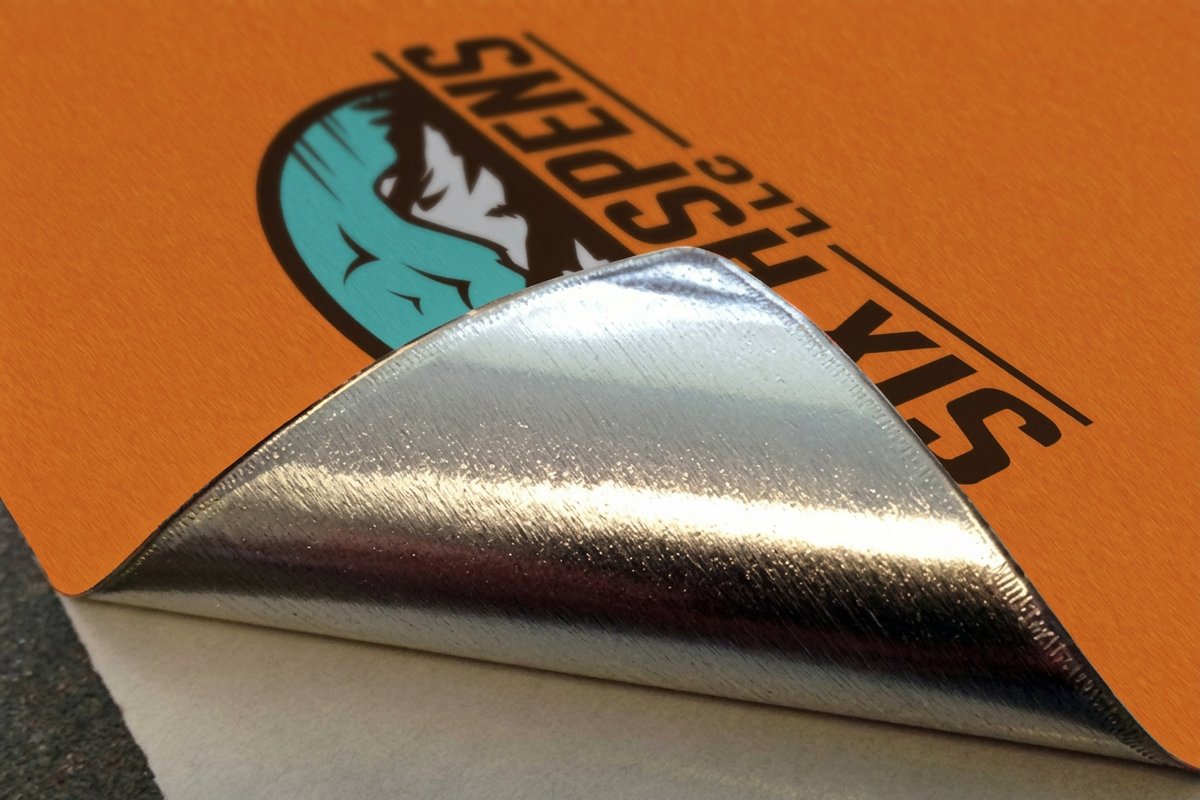 Aluminum Wall Graphics From $29 Rigid metal panels for exterior walls, entryways, and anything weather touches.
 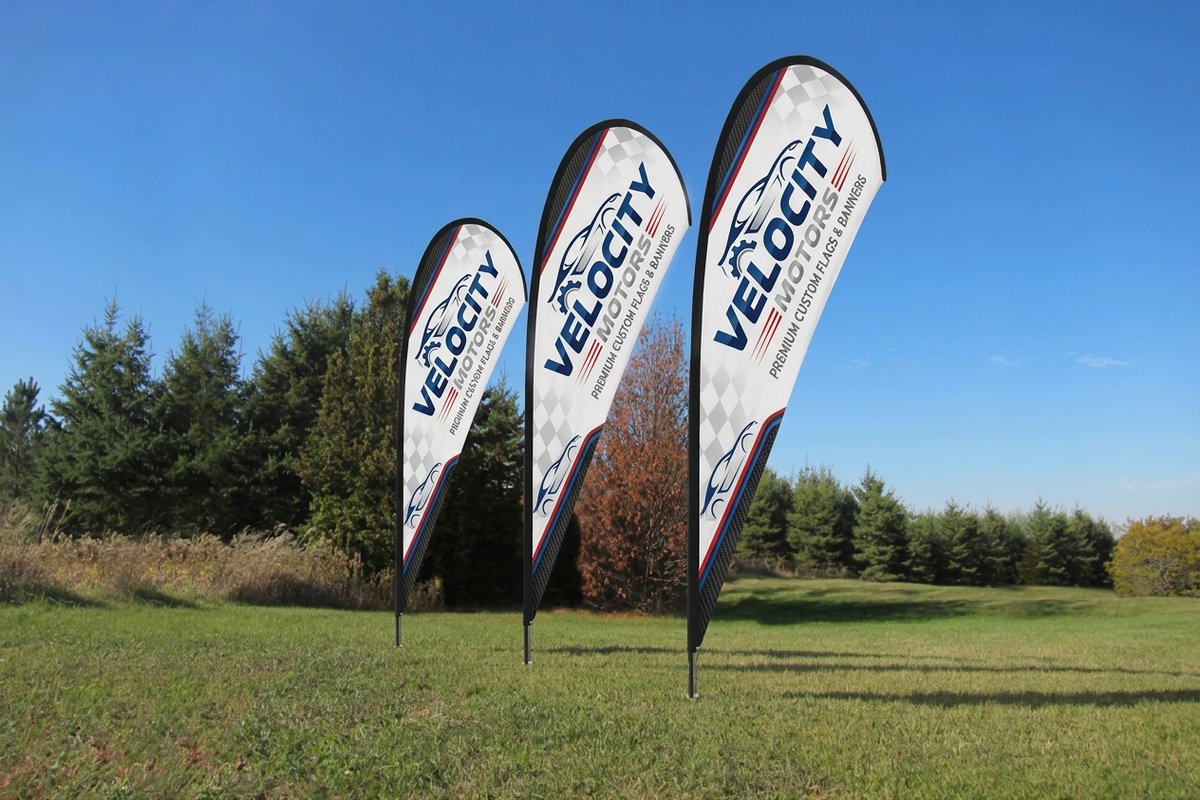 Automotive Flags From $108.75 Double sided flag stock engineered for wind, motion, and constant flexing.
 Weatherproofing a Personalized House Flag So It Survives the Season
Outdoor failure has three causes and they are all preventable. Sunlight breaks down pigment, water finds unsealed edges, and wind tears any hem that was not reinforced. A flag that handles all three is not exotic, it is just specified correctly at order time.
UV is the slow one. Fading rarely announces itself, and by the time you notice, the reds and purples have already gone first because those pigments are the least stable. Solid, saturated colors and heavier ink coverage buy you visible months. Pale gradients and thin pastel tints show wear fastest, so keep them out of the main logo area.
Edges and stitching do the heavy lifting
Wind damage almost always begins at the fly end, the edge furthest from the pole, because that corner whips hardest. Reinforced hems and a double stitched fly end are the difference between a flag that frays in one storm and one that rides out a full winter. On rigid wall panels, the equivalent detail is rounded corners, which stop lift and stop the panel from catching a gust like a sail.
Salt, freeze, and the maintenance nobody does
Coastal air and road salt leave a film that grinds fibers every time the flag moves. A rinse with plain water every few weeks doubles usable life and costs nothing. In freezing climates, bring a flag in before an ice storm. Frozen fabric snapping in wind is the single fastest way to lose one.
When rigid beats fabric outdoors
If the design must stay perfectly legible and perfectly flat, do not fight physics with fabric. Aluminum wall graphics carry the same artwork on an exterior wall and simply do not care about rain, humidity, or a bad week of wind.
Quantity and price
Adhesive wall fabric pricing and specs
Real configurator numbers. Square footage and quantity move the per unit price most.
| Quantity | Price Per Unit | Total |
|---|---|---|
| 1 | $25.00 | $25.00 |

Mounting Wall Flags Without Damaging the Wall
Most bad installs are rushed installs. Clean the surface with isopropyl alcohol, let it dry fully, then mark your top edge with a level and a pencil. Adhesive fabric forgives repositioning, but it will not forgive dust, and it will not forgive a crooked first pass that you then try to correct under tension.
Work from the top center outward. Peel back a few inches of liner, set the top edge against your pencil line, then press down and out with a soft squeegee or a clean cloth so air escapes ahead of the material instead of getting trapped behind it. Large pieces are a two person job, and pretending otherwise is how creases happen.
Surface by surface
- Painted drywall. Fine once paint has cured for three to four weeks. Peels off clean at removal.
- Glass and acrylic. Excellent adhesion, and the flattest possible result. Clean both sides first so reflections do not reveal dust.
- Bare or sealed wood. Works if sealed and smooth. Raw grain absorbs adhesive and can tear on removal.
- Brick, stucco, concrete. Too porous for adhesive. Use rigid panels with anchors or standoffs.
- Rented space. Adhesive fabric is the tenant friendly option, since nothing gets drilled and nothing stays behind.
For pole and bracket mounting, keep the flag at least a foot clear of gutters, downspouts, and shrubs. Constant contact with a hard edge wears a hole faster than weather ever will. If your project is really wall art rather than signage, the material and framing comparisons in custom wall art from photos will get you closer to the finish you want.
Built for weather
Aluminum wall graphics
A rigid panel that keeps the flat wall flag look outdoors, with no sag and no fraying.
Sizes, Stocks, and Finishes Available for Custom Wall Flags
Wall flags and wall graphics are cut to your dimensions rather than sold in fixed sizes, which is why the size question is really a viewing distance question. A logo read from across a warehouse needs different proportions than one read from six feet away in a reception area.
The rule that has never failed on a press check: for every ten feet of viewing distance, give your primary text roughly one inch of cap height. A wall flag seen from thirty feet needs three inch letters minimum, which usually means the flag itself lands somewhere between four and eight feet wide.
- Adhesive wall fabric. Matte, low glare, repositionable. The default for interior wall flags and pop up displays.
- Aluminum panels. Rigid, weather rated, available with rounded corners and pre drilled holes for anchors.
- Flag stock. Double sided, reinforced hems, engineered to move without fraying.
- Finishes. Matte for photographed spaces and bright lighting, gloss for saturation and outdoor punch.
Bleed matters more here than on small format work. Build at least a quarter inch of image beyond every trim edge, and keep logos and text a half inch inside the trim so nothing sits uncomfortably close to a cut or a stitch line.
Made to move
Automotive flags
Double sided flag stock with reinforced construction, for anywhere wind and motion would destroy a flat print.
What Custom Wall Flags Cost and How the Price Is Set
Three variables set the number: square footage, material, and quantity. Square footage is the biggest lever, because you are literally buying area. Material is second, since rigid substrates cost more per square foot than fabric. Quantity is third, and it moves the per unit price far more than people expect.
Current entry pricing at 4OVER4.COM starts at $25 for Adhesive Wall Fabric and $29 for Aluminum Wall Graphics, with Automotive Flags from $108.75 because flag stock, double sided printing, and reinforced construction cost more to produce than a flat single sided print.
- Order the full run at once. Setup is amortized across the quantity, so two orders of ten always cost more than one order of twenty.
- Round the size down, not up. Trimming four inches off a width can drop you into a cheaper material yield with no visible change.
- Match material to lifespan. Paying for aluminum on a two week event is waste. Paying for fabric on a five year storefront is a reorder.
- Send print ready files. Correct bleed and outlined fonts keep the job moving without a prepress round trip.
If you are comparing quotes across shops, the breakdowns in the Printmoz alternative for custom signs and the Kinkos printing alternative show where the real differences sit, which is usually turnaround and file handling rather than the headline price.
Compare formats
Popular large format products, side by side
Stock, size, quantity, turnaround, and starting price in one view.
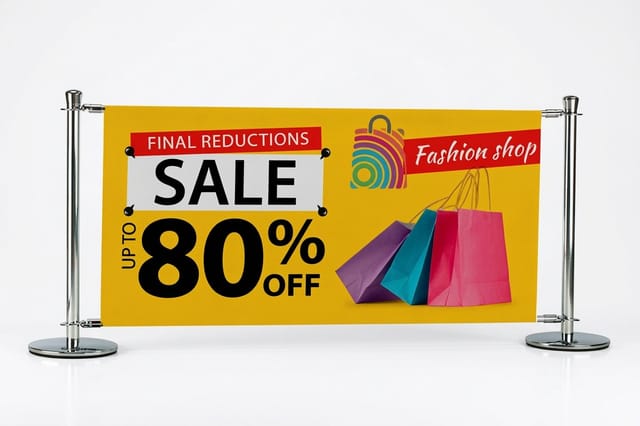 Indoor Banners |  Outdoor Banners |  Business Banners |  Fabric Banners | |
|---|---|---|---|---|
| Min price | $25.00 | $79.00 | $43.92 | $57.20 |
| Paper / stock | 13oz. Smooth Blockout Vinyl | 13oz. Outdoor Vinyl | 13oz. Scrim Vinyl | 5oz Economy Polyester |
| Size | 12" x 24" | 2' x 4' | 2' x 6' | 24" x 72" |
| Default qty | 1 | 1 | 1 | 1 |
| Turnaround | 2 business days | 3 business days | 2 business days | 4 business days |
| Rating | ||||
| View & customize | View & customize | View & customize | View & customize |
Designing Artwork That Reads From Across the Room
Large format design punishes detail. Everything that looks refined on a laptop, the thin serif, the subtle gradient, the four line tagline, collapses at ten feet. A wall flag has one job and roughly two seconds to do it, so the design has to survive being glanced at rather than read.
Pick one dominant element and let it own at least a third of the visible area. One logo, one short line, one image. Contrast does the rest. Dark on light or light on dark both work, and mid tone on mid tone never does, which is the single most common reason a flag looks weak on the wall after looking fine on screen.
Files that print correctly the first time
- Build at 100 percent scale where possible, or at 25 percent with resolution multiplied to match.
- Use vector logos. A raster logo enlarged to four feet shows every soft edge.
- Convert to CMYK before export so bright RGB blues and greens do not shift on press.
- Outline fonts or embed them, and flatten transparency to avoid surprise reflows.
- Keep the fly end of a house flag simple, since that edge moves most and is read least.
For double sided house flags, remember the reverse side is mirrored. Asymmetric layouts and any text you care about should be checked on both faces before approval, and a mirrored proof takes thirty seconds to review.
Start fast
Templates and print-ready blanks
Free layouts plus exact-size blanks so your bleed, trim, and safe area are right the first time.
Ordering, Turnaround, and Getting Flags on the Wall in Time
Production for wall graphics and flag products typically runs a few business days once artwork is approved, with transit added on top. The delay that actually hurts deadlines is almost never the press. It is a file that needed a fix and sat in an inbox for a day and a half waiting on a reply.
Upload artwork, approve the proof the same day it arrives, and confirm the mounting hardware you need before the flag lands. For event work, order at least two weeks out and have your install surface cleaned and cured before the box shows up.
Planning a full year of printed touchpoints rather than one flag? The scheduling approach in the custom photo calendar printing guide works the same way for seasonal house flags, and the branded stationery comparisons in the MOO notebook alternative and the Staples stickers alternative round out the rest of the kit. Start anywhere from the 4OVER4.COM home page.
By the numbers
Why customers print large format with 4OVER4.COM
Wally sorts out wall flags and house flags
Pick the mounting first, and the material picks itself
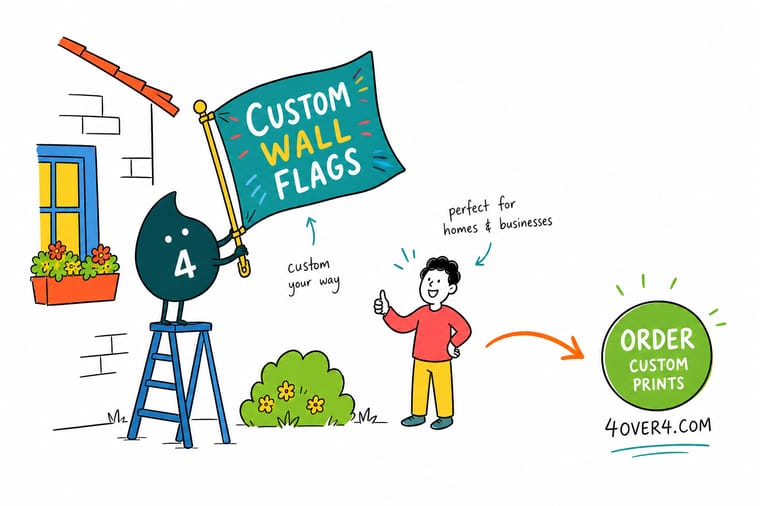
Start with one question: does it hang flat or does it hang free? Flat against an interior wall means adhesive fabric that peels off clean. Flat against an exterior wall means rigid aluminum. Hanging from a pole or bracket means true flag stock, printed double sided with a reinforced fly end so wind cannot chew the edge. Answer that first and the size, finish, and price all fall into place without a reorder six months later.
Design your custom wall flags →Guides worth reading before you order
Guide Custom Wall Art From Photos Materials, sizing, and framing for photo based wall pieces. Guide Custom Photo Calendar Printing Plan a year of printed touchpoints, season by season. Explore more
More ways to put your brand on a wall
Related pages across 4OVER4.COM, one card for every format worth comparing.
 Collection Custom Printing Collection Every made to order format, printed to your exact spec.
  Article Custom Flags vs Banners Which format actually fits your space and your wind.
 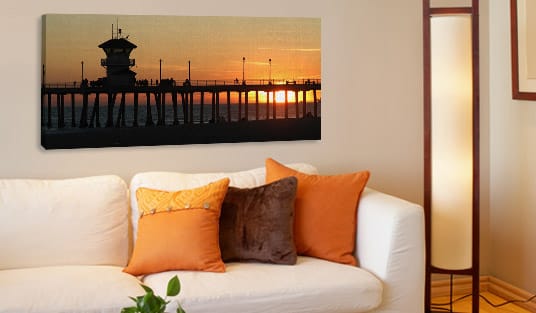 Guide Custom Wall Art From Photos Turn a photo into a wall piece that holds up close.
 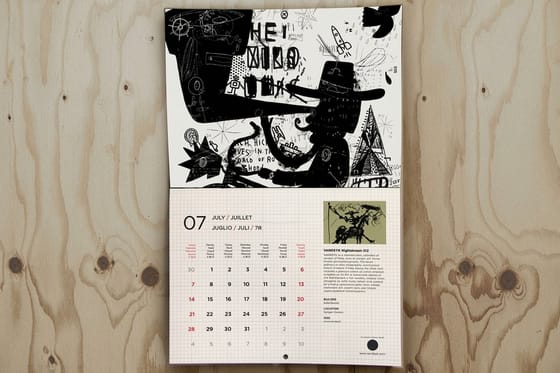 Guide Photo Calendar Printing Guide Design and print a calendar people keep all year.
  Product Adhesive Wall Fabric Repositionable indoor wall flags with no hardware.
 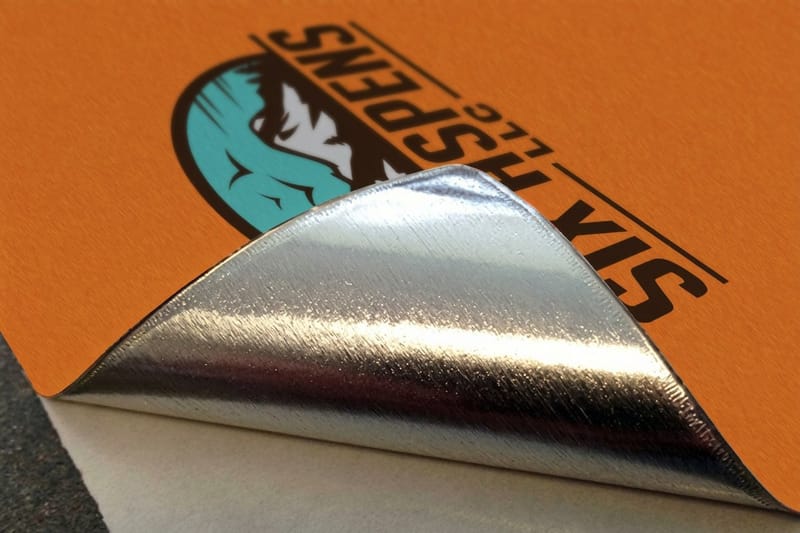 Product Aluminum Wall Graphics Rigid panels built for exterior walls and weather.
 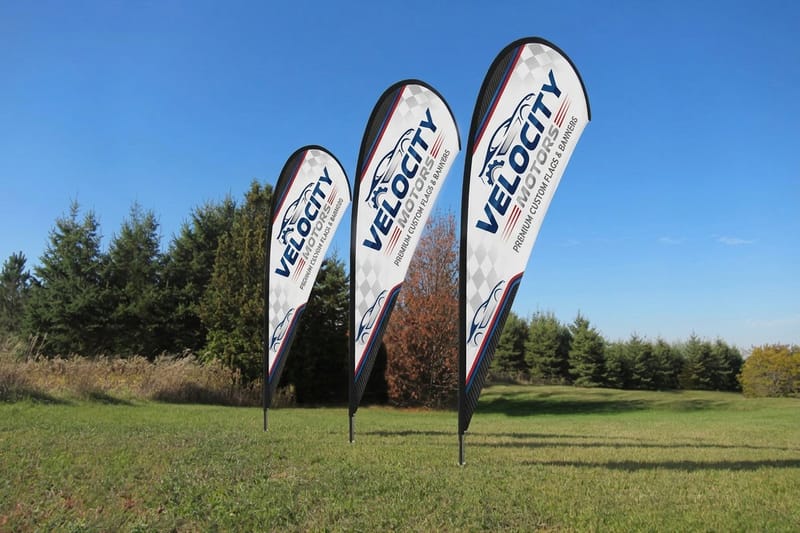 Product Automotive Flags Double sided flag stock engineered for constant wind.
  Alternative 4OVER4 vs Printmoz Custom signs and wall graphics compared head to head.
  Alternative 4OVER4 vs Staples Stickers Where custom sticker printing actually differs.
 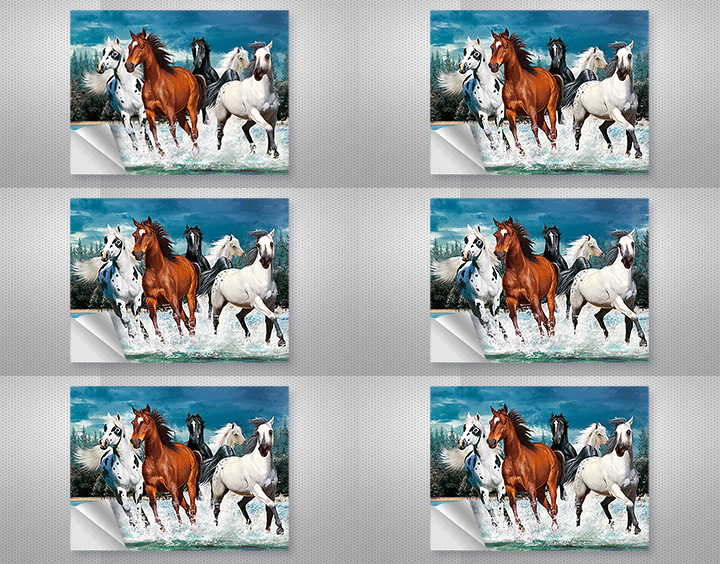 Alternative 4OVER4 vs Kinkos Turnaround, file handling, and finish options compared.
  Alternative 4OVER4 vs MOO Notebooks Branded stationery to round out your print kit.
  Home 4OVER4.COM Printing Start a custom print order from the front door.
 Ready to get your flag on the wall or in the wind?
Pick the mounting, pick the material, upload your artwork, and let our team review the file before it goes to press so the first print is the right one.
Custom wall flag and house flag questions, answered
What is a wall flag and how is it different from a house flag?
A wall flag is a printed panel that mounts flat against a surface, so it never catches wind and can be produced on soft adhesive fabric or rigid aluminum. A house flag hangs from a porch bracket or garden pole, moves constantly, and is read from both sides, which requires double sided printing and reinforced stitching. Decide which one you actually need before you pick a material, because indoor wall flag stock will not survive a windy porch and flag stock cannot lie flat on a wall.
How do I choose the right wall flags for my space?
Answer four questions in order. Where does it mount, does it face weather, how long does it need to last, and does it have to come off cleanly. Painted interior drywall with a temporary display points to adhesive fabric. An exterior wall with permanent branding points to rigid aluminum. Textured brick or stucco rules out adhesives entirely and needs a panel on anchors or standoffs. Anywhere with real airflow needs a purpose built flag rather than a flat print.
What do custom wall flags cost and how is the price calculated?
Price is driven by square footage first, material second, and quantity third. At 4OVER4.COM, Adhesive Wall Fabric starts at $25 and Aluminum Wall Graphics start at $29, while Automotive Flags start at $108.75 because double sided flag construction costs more to produce. Setup is spread across the run, so ordering twenty pieces at once is always cheaper per unit than two orders of ten. Trimming a few inches off the width can also drop you into a better material yield with no visible change.
What sizes, stocks, and finishes are available for wall flags?
Wall flags and wall graphics are cut to your dimensions rather than sold in fixed sizes. Adhesive wall fabric gives a matte, low glare, repositionable surface for interiors. Aluminum panels give a rigid, weather rated surface with rounded corners and pre drilled mounting holes. Flag stock is double sided with reinforced hems for pole mounting. Choose matte for bright or photographed spaces and gloss for outdoor saturation, and size the artwork using one inch of cap height for every ten feet of viewing distance.
How long does it take to print and ship custom wall flags?
Production usually runs a few business days after artwork approval, with shipping transit added on top. The real risk to a deadline is rarely the press, it is a file that needed a correction and waited a day for a reply. Upload print ready artwork with proper bleed and outlined fonts, approve your proof the same day it arrives, and order at least two weeks ahead for event work. Have the mounting surface cleaned and fully cured before the shipment lands so you can install immediately.
