
Portable Counters That Give Any Booth a Front Desk


What a Portable Trade Show Podium Actually Is
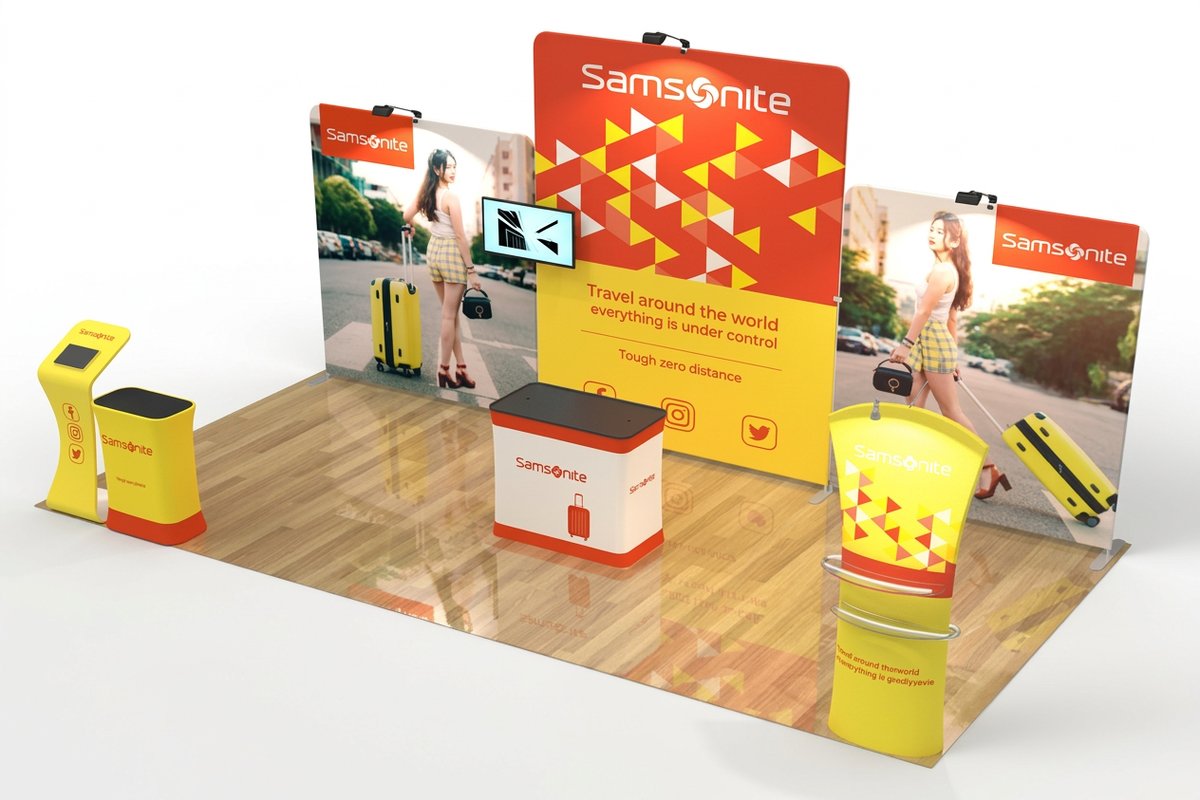
A portable trade show podium is a lightweight counter that ships flat, assembles by hand on the show floor, and gives your booth a front desk. Exhibitors call the same piece a counter, a podium, a pedestal or a kiosk depending on who sold it to them, but the hardware is close to identical underneath. A frame, a printed wrap, a work surface on top, and enclosed storage below.
The distinction that actually matters is portable versus built. A built counter is custom millwork that arrives on a pallet and needs drayage, union labor and a crate you pay to store between shows. A portable counter arrives in a case one person can wheel off the loading dock and stand up before the coffee gets cold.
That difference shows up on the invoice twice. Convention centers bill material handling by weight, so a heavy counter costs money before anyone has seen it, and renting one from the official show services catalog costs money again at every single event while leaving you with nothing afterward. A portable counter is a one time purchase you own and carry. 4OVER4.COM builds one into Trade Show Booth Kits starting at $2,599.00, so the counter, the backwall and the graphics arrive as one matched set instead of three orders that never quite line up.
Counter, podium, pedestal, kiosk
The words get used loosely. In practice a podium is narrower and taller, sized for one person to stand behind and scan badges. A counter is wider, sized for two people plus a stack of literature. A kiosk usually just means a counter with a monitor or tablet mounted on the deck.
What the frame is made of
Most portable counters use an aluminum tube or extruded aluminum frame with a locking internal shelf and a laminate or rigid PVC top. The graphic is either a tension fabric wrap that slides over the frame like a pillowcase, or rigid panels that clip to the extrusion.
Why exhibitors buy instead of rent
Rental counters come in whatever finish the show contractor stocks, which is almost always gray. You cannot brand them beyond a vinyl cling, and you get a different unit in every city. Owning the counter means your booth looks the same in Las Vegas, Orlando and Chicago.
The one job it has to do
A counter marks the line between aisle and booth without walling anybody out. It gives a visitor somewhere to set a badge and a coffee, and it gives your team a place to stand that is not the middle of the carpet looking unsure.
Shop the booth
Trade show booth kits
Counter, backwall and graphics built as one system and packed into travel cases.
Sizes and Footprints That Fit a Convention Center Aisle
Convention center booths come in fixed increments, most often 10 by 10, 10 by 20, and then island configurations. Every square foot the counter takes is a square foot your team cannot stand in, so the size question is really a staffing question. How many people are working the booth at the same time, and what has to sit on the deck while they do it.
The three sizes worth considering
- Narrow podium, roughly 20 to 24 inches wide. One attendant, a badge scanner and a short stack of cards. It fits a 10 by 10 without pushing anyone into the aisle.
- Standard counter, roughly 36 to 40 inches wide. Two people can work it side by side, with room for a tablet, a bowl of giveaways and literature that is not falling over.
- Reception counter, 60 inches and wider. Straight or curved, this reads as a real front desk and belongs in a 10 by 20 or an island where you have depth to give up.
Height is the spec people forget until the show. Aim for standard bar height rather than desk height. A counter that is too low forces your team to stoop toward every visitor, and a counter that is too tall turns into a barricade that hides the person behind it.
Depth matters for a different reason. Anything under about 16 inches deep will not hold a laptop and a coffee at the same time, and anything over 24 inches starts stealing aisle presence. If you are still mapping out the whole footprint, work through the trade show booth ideas and materials checklist before you commit to a counter size.
Print picks
Three pieces that build out a working booth
Live prices, ready to customize with your artwork before the show date.
Trade Show Booth Kits From $2599.00 Backwall, counter and graphics as one matched set that packs into travel cases. 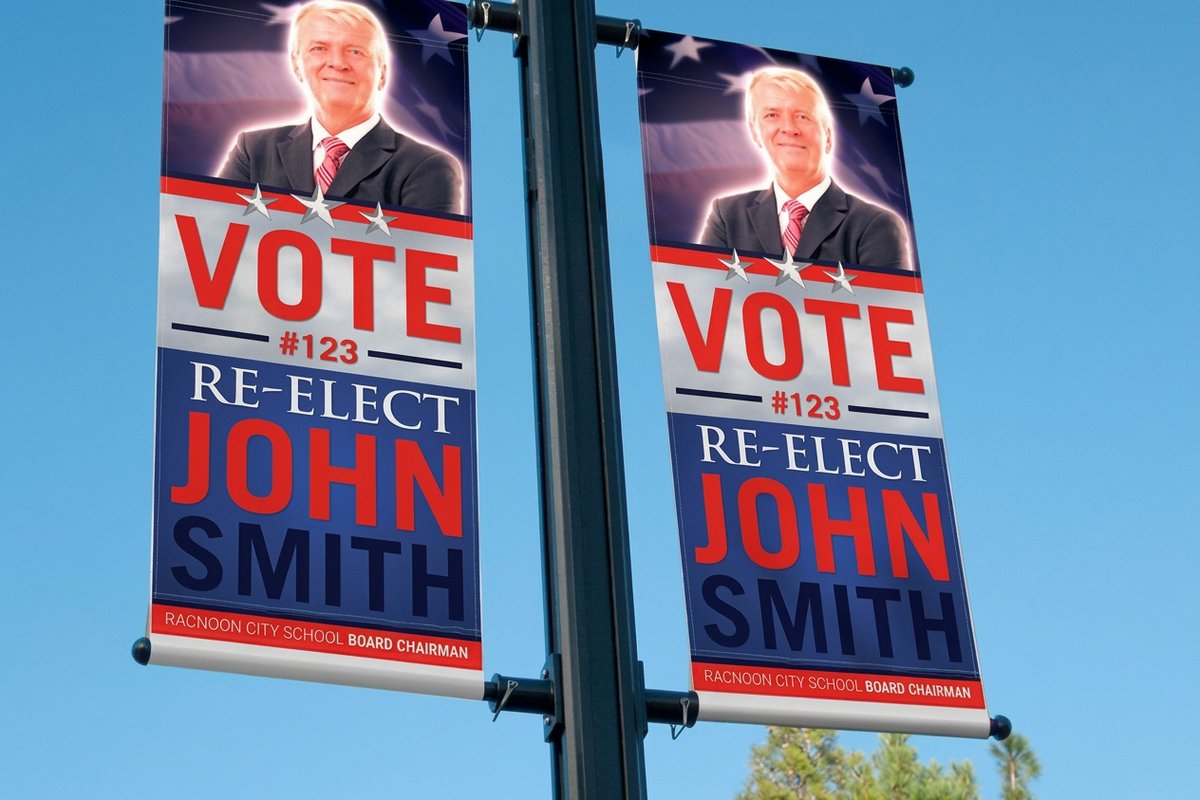 2 Sided Blockout Banners From $108.75 Print both faces and hang it above the counter so the aisle reads you from either direction.
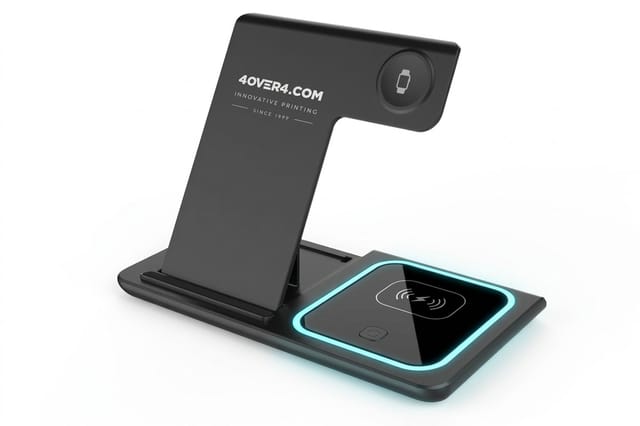
 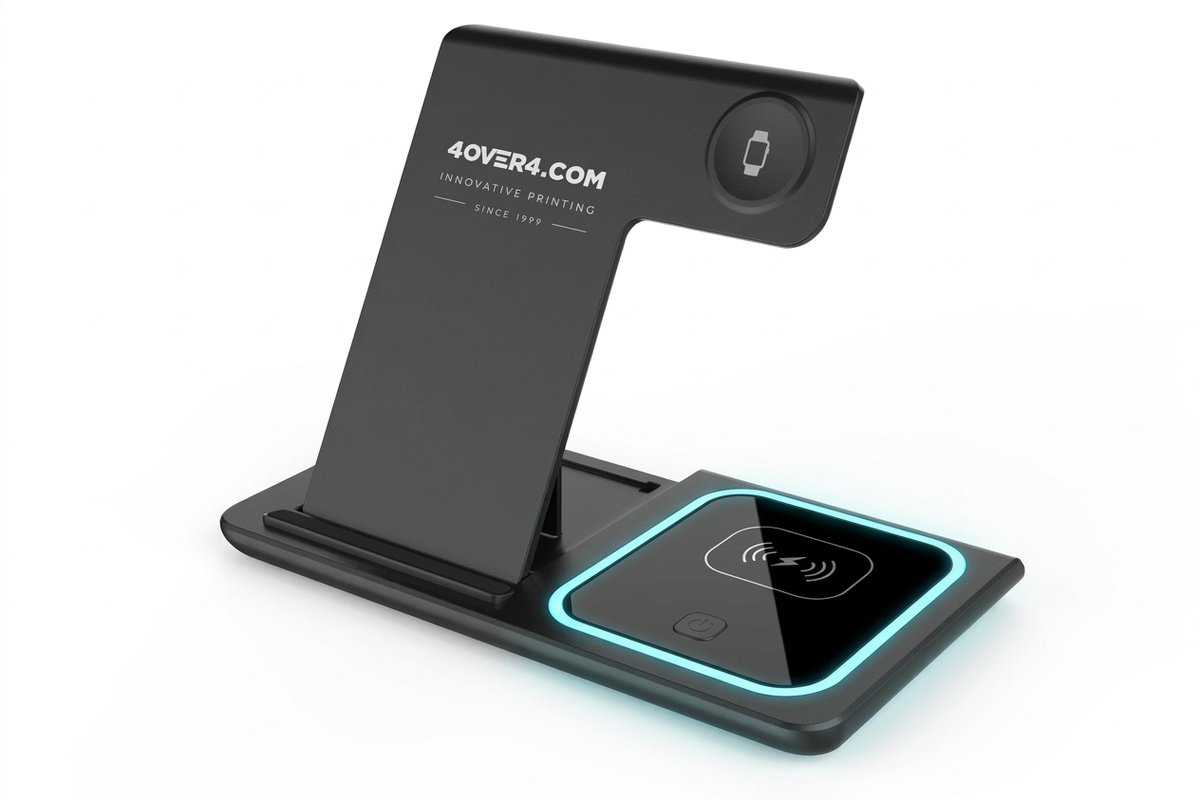 3 in 1 Foldable Wireless Charger From $15.00 A branded giveaway worth carrying home, sized to sit in a bowl on the counter top.
 Graphics That Read From Three Aisles Away
The counter is the lowest branded surface in your booth, which means it is the one attendees see last and remember first. Treat the front panel as a billboard with a two second read, not as a place to explain your product. One logo, one line, one visual. Anything more disappears into the noise of a show floor.
Vertical space above the counter does the long distance work. A hanging or standing display carries your name over the heads of the crowd, and that is where a double sided piece earns its keep. Our 2 Sided Blockout Banners start at $108.75 and use a blockout core so the print on one face never ghosts through to the other. If you want a taller, retractable option instead, compare the formats in our guide to retractable backdrops and portable event displays.
Rules that hold up on a real show floor
- Keep the bottom eight inches quiet. That strip is blocked by bags, chairs and the person standing in front of it for most of the day.
- Set your logo above the deck line. Anything printed on the top third of the wrap stays visible when the counter is covered in literature.
- Use one dominant color. Convention halls are visually loud, and a single saturated field beats a busy pattern every time.
- Design at scale, then walk away. Print the artwork small, tape it to a wall and step back fifteen feet. If you cannot read it, neither can the aisle.
- Leave the fine print for the handout. URLs, phone numbers and feature lists belong on paper the visitor takes with them.
Tension fabric wraps are dye sublimated, so the color goes into the fibers rather than sitting on top. They fold into a pouch, wash if a drink goes over them, and pull tight without a visible seam. Rigid panels look crisper up close and resist scuffing better, but they need a hard case and they add weight to the shipment.
Setup, Teardown and Reuse Across a Season
A portable counter should go from case to standing without a toolbox. The frame snaps or twist locks together, the shelf drops in, the wrap slides on, the top clips down. Two people who have done it once will beat the badge desk opening on setup day, and one person alone can still manage it with a little patience.
The teardown habits that make a counter last
- Photograph the packed case once. Everything fits in exactly one arrangement, and next show the photo saves you twenty minutes of geometry.
- Fold the fabric wrap, never roll it. Rolled tension fabric creases along the roll line and those creases show under hall lighting.
- Bag the hardware separately. Losing two shelf pins is how a counter quietly becomes unusable between events.
- Wipe the deck before it goes in the case. Adhesive residue from badge tape hardens and lifts the laminate over a season.
- Log the wrap size in your files. When a campaign changes you reprint the graphic and keep the frame you already own.
Reuse is the whole economic argument. The aluminum frame outlives several rebrandings, and a replacement wrap costs a fraction of a new counter. A team that exhibits four or five times a year can run the same hardware for years and still show up looking new at every event. For a first hand account of how that plays out for a young company, read how a startup made an impact at their first trade show.
Quantity and price
Trade show booth kit pricing and specs
Real configurator numbers straight from the product page, with the full spec sheet beside them.
| Quantity | Price Per Unit | Total |
|---|---|---|
| 1 | $2,599.00 | $2,599.00 |
| 2 | $2,599.00 | $5,198.00 |
| 3 | $2,499.00 | $7,497.00 |
| 4 | $2,499.00 | $9,996.00 |
| 5 | $2,499.00 | $12,495.00 |
Pairing the Counter With Banners and a Full Booth Kit
A counter on its own is a piece of furniture. A counter in front of a matched backwall, under a hanging banner, next to a fitted table, is a booth. The pieces have to share a color system and a type treatment or the whole thing reads as assembled from spare parts, which is exactly how most under prepared booths look.
That is the argument for buying the set together. Our Trade Show Booth Kits start at $2,599.00 and ship the backwall, the counter and the printed graphics as a single coordinated order with travel cases included. If you are dressing a demo table alongside the counter, our guide on how to make a custom tablecloth covers the sizing and the print options that match.
What a complete portable booth usually includes
- A backwall. Straight or curved tension fabric, eight to ten feet wide, carrying the headline message.
- The counter or podium. Your front desk, your storage and your badge scanning station in one footprint.
- A hanging or standing banner. Height that clears the crowd and works from both directions in a busy aisle.
- A fitted table cover. It hides the road cases and the water bottles under the demo table.
- Print to hand out. Something the visitor still has in their bag on the flight home.
Height above the counter
2 sided blockout banners
A light blocking core keeps both printed faces crisp, so a busy aisle reads you coming and going.

What Belongs On the Counter and What Belongs Under It
The enclosed storage is half the reason to buy a counter, and most exhibitors waste it. Everything ugly goes underneath. Coats, backup literature, chargers, the shipping paperwork, the emergency roll of gaffer tape. Everything on top has to earn its place, because a cluttered deck signals that nobody is minding the booth.
Keep the surface to three things at most. A badge scanner or tablet, one short stack of your best printed piece, and one giveaway worth reaching for. A branded 3 in 1 Foldable Wireless Charger at $15.00 does that job well because it goes home, gets unpacked, and sits on a desk with your name on it. For more options in that direction, work through our list of trade show giveaway ideas.
A counter top that converts
- One printed piece, face up. Fanning four different brochures makes the visitor choose, and choosing is friction.
- A giveaway in a shallow bowl. Deep containers hide the contents and nobody digs at a trade show.
- Nothing personal on the deck. Water bottles, phones and half eaten lunches undo an expensive graphic instantly.
- A charging cable run inside the frame. Cords across the deck look temporary and catch on bags.
- Clear line of sight over the top. Stack anything above eye level and you have hidden your own staff.
On the counter top
A giveaway that goes home
Branded hardware beats another pen. Put one useful item in a shallow bowl where visitors can reach it without digging.
What Podiums for Convention Centers Cost and How Prices Are Set
Pricing for portable counters is driven by four things: the size of the frame, the material of the graphic, whether the top and shelving are included, and whether you buy the counter alone or inside a kit. A narrow single podium sits at the bottom of the range. A wide curved reception counter with rigid panels and a locking cabinet sits at the top.
Buying inside a kit is almost always the cheaper path per piece, because the graphics are produced in one run on one press setup rather than three. Trade Show Booth Kits from 4OVER4.COM start at $2,599.00 for the coordinated set, which puts the counter component well below what most show contractors charge to rent a plain gray one for a single week.
What moves the number up or down
- Frame width and shape. Curved and oversized reception counters need more extrusion and a bigger case.
- Graphic material. Tension fabric is lighter and cheaper to ship. Rigid panels cost more and travel heavier.
- Single sided versus wrapped. A full wrap that covers the sides and returns costs more than a single printed face.
- Hardware included. Locking doors, internal shelving and a hard rolling case are real line items, not accessories.
- Turnaround. Standard production is the lowest price. A rush before a show date always carries a premium.
If you buy display hardware for clients rather than for yourself, the pricing works differently again. Agencies, event producers and print brokers should look at our reseller and trade program before ordering at list.
Compare formats
Popular display banners, side by side
Material, size, quantity, turnaround and price lined up so the trade offs are obvious.
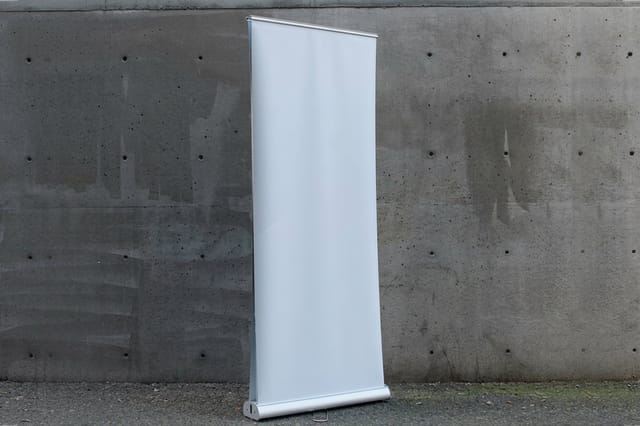 Double Retractable Stands | 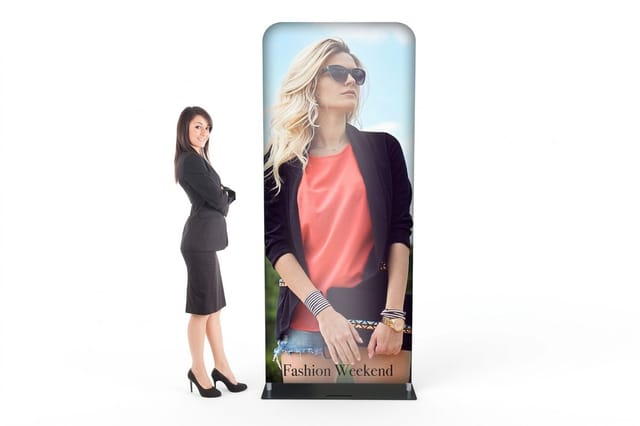 Fabric Tube Displays | 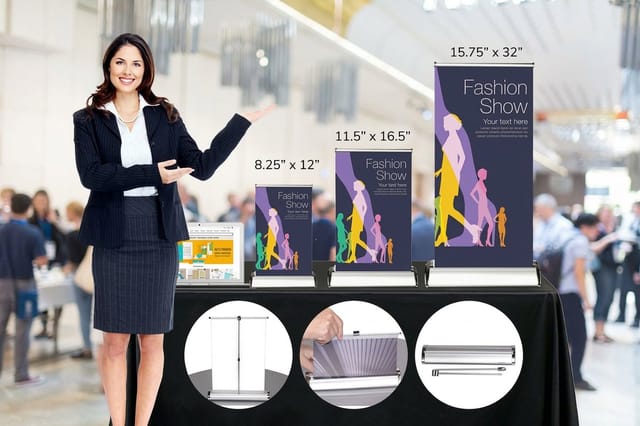 Mini Retractable Banner Stands | 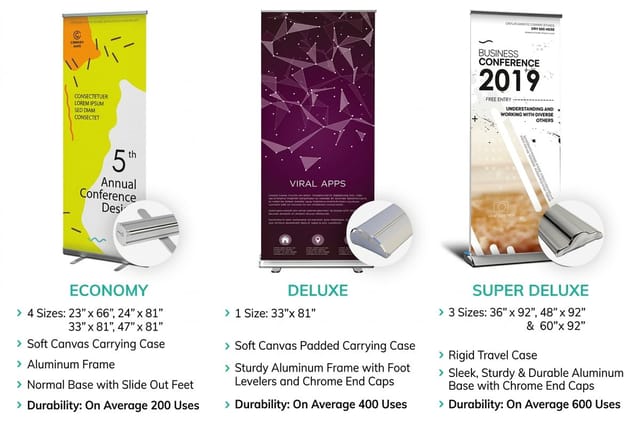 Retractable Fabric Banner Stands | |
|---|---|---|---|---|
| Min price | $393.75 | $163.67 | $49.41 | $159.85 |
| Paper / stock | 13oz. Smooth Blockout Vinyl | 8.8oz. Tension Fabric | 10 mil Premium Vinyl | 9oz UV Printed Coated Polyester Fabric |
| Size | 33" x 81" | 36" x 90" | 8.25" x 12" | 23" x 66" (Economy) |
| Default qty | 1 | 1 | 1 | 1 |
| Turnaround | 3 business days | 4 business days | 3 business days | 3 business days |
| Rating | ||||
| View & customize | View & customize | View & customize | View & customize |
How to Choose the Right Podium for Your Next Show
Start from the booth you have actually booked, not the one you hope to book next year. Measure the space, subtract the backwall depth, subtract the walking room your team needs behind the counter, and see what width is genuinely left. Most exhibitors buy a counter one size too large and then spend the show squeezing past it.
Then decide what the counter is for. If it is a badge scanning and conversation station, narrow and tall wins. If it is a demo surface, go wider and check the deck depth. If it is a literature hub, make sure you have print worth handing out, and our piece on trade show flyers and displays for events covers what actually gets kept. If you are still deciding whether the show is worth the spend at all, start with the benefits of exhibiting at trade shows.
A short checklist before you order
- Confirm the booth dimensions in writing. Show contractors change floor plans more often than exhibitors expect.
- Check the ceiling and hanging rules. Some halls restrict overhead signage, which changes what the counter has to carry.
- Ask for the graphic template first. Design to the exact bleed and safe area, not to a guessed rectangle.
- Order early enough to proof. Seeing the wrap before travel day is worth more than any rush option.
- Plan the second campaign now. Choosing a frame with replaceable graphics is what makes the purchase pay off.
Start fast
Display templates and print ready blanks
Free layouts plus exact size blanks so your wrap artwork lands on the bleed line the first time.
Wally sizes up your counter
The right footprint first, then the graphic that carries across the hall
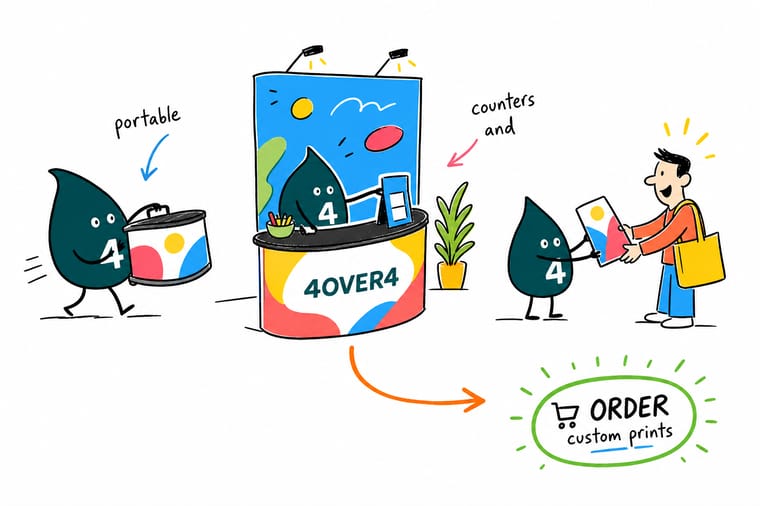
Measure the booth you actually booked, take out the backwall depth and the walking room behind the counter, and whatever width is left decides the size. Narrow podium for one attendant, standard counter for two, reception counter only when you have a 10 by 20 or an island. Then design the front panel for a two second read and let the storage underneath hide everything else.
Build your trade show booth kit →The short version before you order
Keep reading
Guides and checklists for your next show
Four pages that cover the rest of the booth, from table covers to what to hand out.
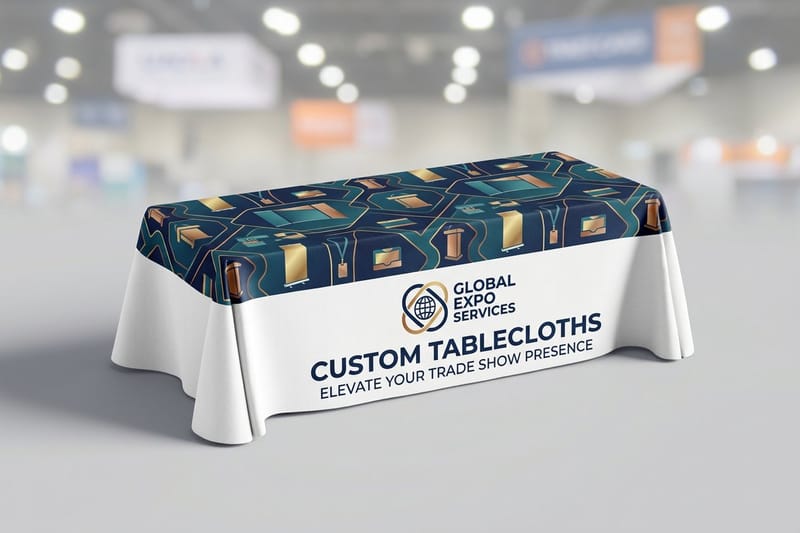 Guide How to Make a Custom Tablecloth Size and print a fitted cover that matches the counter graphics.
 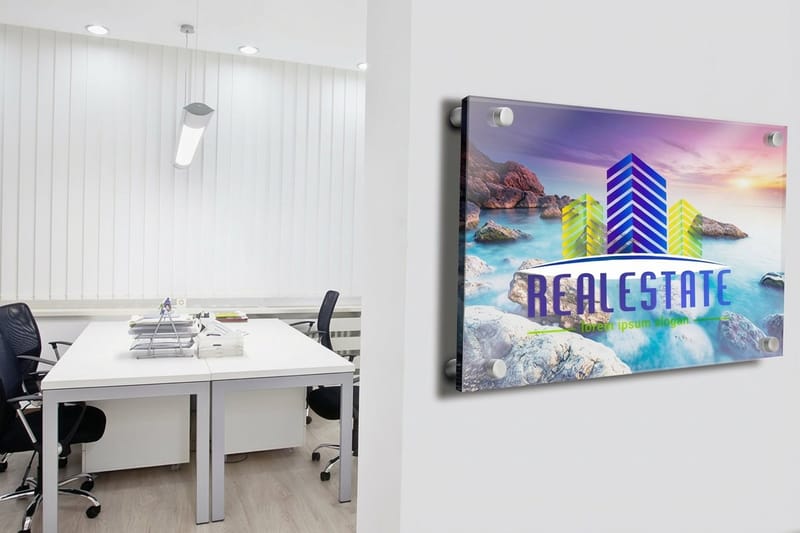 Checklist Booth Ideas and Materials Checklist Everything to pack and print before you map the footprint.
  Article Retractable Backdrops and Displays The vertical formats that work above and behind a counter.
  Case study A Startup at Its First Trade Show What one small team bought, printed and learned on the floor.
 Explore more
More ways to show up well on a show floor
Related pages across 4OVER4.COM, one card for every part of the booth you still have to print.
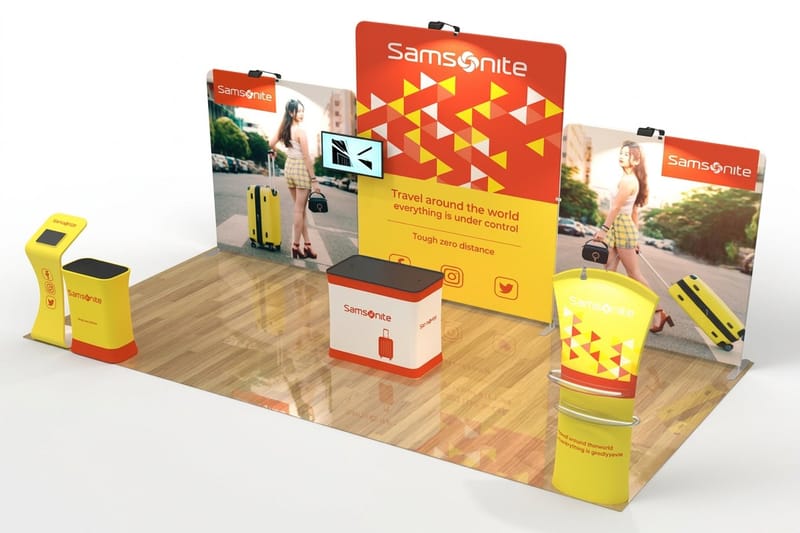 Product Trade Show Booth Kits Backwall, counter and graphics in one coordinated set.
  Product 2 Sided Blockout Banners Print both faces so the aisle reads you from either side.
 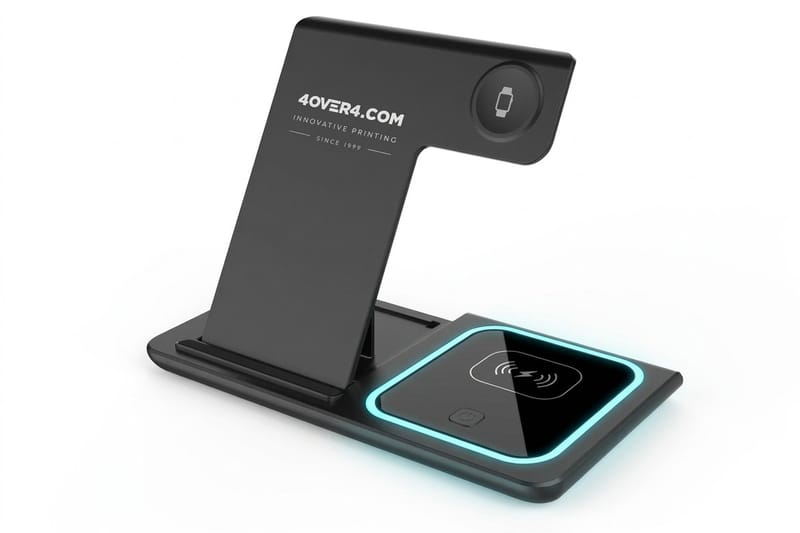 Product 3 in 1 Foldable Wireless Charger A branded giveaway that actually gets carried home. Article Booth Ideas and Materials Checklist Plan the footprint before you buy the hardware.
  Article 7 Benefits of Exhibiting What a show floor returns when the booth is done right. Article Retractable Backdrops and Displays Portable vertical formats for events and photo walls. Article Trade Show Flyers and Displays The printed pieces that survive the flight home.
  Article Trade Show Giveaway Ideas What to put in the bowl on top of the counter. Guide How to Make a Custom Tablecloth Fit and print a cover that matches the booth system. Benefit Reseller and Trade Program Trade pricing for agencies and event producers. Case study A Startup at Its First Show A small team, a portable booth and a real result.
 Ready to stop renting a gray counter at every show?
Pick the footprint that fits your booth, send the artwork, and own hardware that shows up looking the same in every city you exhibit in.
Portable counter and podium questions, answered
What is a portable trade show podium?
It is a lightweight counter built from an aluminum frame, a printed wrap, a work surface and enclosed storage underneath, designed to ship flat in a case and assemble by hand on the show floor. Vendors also call it a counter, a pedestal or a kiosk. The point of the format is that one person can move it, set it up without tools, and pack it back down at the end of the show without a crate or a forklift.
How do I choose the right podium for a convention center booth?
Start from the booth dimensions you have actually booked, subtract the depth of your backwall, then subtract the walking room your staff needs behind the counter. Whatever width is genuinely left decides the size. A narrow 20 to 24 inch podium fits a 10 by 10 with one attendant, a 36 to 40 inch counter handles two people and a tablet, and a 60 inch reception counter belongs in a 10 by 20 or an island. Then confirm the hall rules on hanging signage, because that changes what the counter itself has to carry.
What do portable trade show counters and podiums cost?
Price is driven by frame size and shape, the graphic material, whether locking storage and a rolling case are included, and whether you buy the counter alone or inside a booth system. Tension fabric wraps cost less and ship lighter than rigid panels, and curved reception counters cost more than straight podiums. Trade Show Booth Kits from 4OVER4.COM start at $2,599.00 and include the backwall, the counter and the printed graphics on one order, which is usually cheaper per piece than sourcing each element separately.
What makes the best trade show booth people actually remember?
The booths that stick are the ones with a single clear message readable from three aisles away, a staffed counter at the front instead of a table people hide behind, and something worth taking home. Coordination beats budget. A modest kit where the backwall, counter, banner and table cover share one color system reads as more professional than an expensive booth assembled from mismatched pieces. Our booth ideas and materials checklist walks through the whole setup.
How long does a portable counter take to set up and pack down?
A tool free portable counter goes from case to standing in minutes rather than hours. The frame twist locks or snaps together, the internal shelf drops in, the fabric wrap slides over the frame, and the top clips down. Two people who have assembled it once will be finished well before the hall opens, and one person alone can manage it with a little patience. Teardown is the same steps in reverse, and folding the fabric rather than rolling it keeps the wrap crease free for the next show.
