
6 Print Pieces That Keep Your SEO-Driven Story Working Offline
The ranking page already did the finding. These six printed pieces do the remembering, each one carrying a different slice of the same story, from $16.48 for 50 postcards, and each with the situation where it is the wrong choice.
The advantage of SEO-driven storytelling is that search demand picks the story for you, and the printed version of that story keeps working after the tab closes. Six products carry it: brochures for the proof, booklets for the long version, postcards and flyers for the single question, business cards and stickers for the route back. Print the story that already ranks, give every piece its own tagged URL, and you can tell which one brought the reader.
The picks
Six pieces, from $16.48 postcards to a $240.55 booklet
Start with the slice of the story you need carried, not with the piece that has the biggest page count. Every product below is priced straight from the configurator and the price falls as the quantity climbs. Lay one out from scratch in the free online designer, or start from a design template and drop your own layout in.
Piece by piece
What each pick carries, and where it stops working
Read the row before the section. Every piece here carries one part of a story that already earns its traffic, and the fastest way to waste a print budget is to buy the piece with the most pages when what you needed was the piece with the shortest message. Tap any pick to jump to its write-up.
| Pick | The job it does | Starts at | Where it fails |
|---|---|---|---|
| 1. Standard brochures | The whole ranked page, folded. Cover asks the question, panels carry the answer and the proof. | $57.11 | It freezes the story. If your page changes price or spec every month, the brochure is out of date before the box is empty. |
| 2. Standard booklets | The pillar in print. A year of posts edited into one stitched piece a buyer keeps on a desk. | $240.55 | The starting price makes it a leave-behind for a shortlist, not a handout, and saddle stitch only binds in multiples of four pages. |
| 3. Standard postcards | One question on the front, one answer and one tagged URL on the back. The cheapest live test of a headline. | $16.48 | The address side is half spoken for by the post office, so the story has to fit the front and a third of the back. |
| 4. Standard flyers | One page, one query, handed over. Two versions with two URLs tell you which hook travels off the screen. | $39.54 | It gets read once and thrown away, so anything you want kept belongs on a card or a booklet instead. |
| 5. Standard business cards | The story needs an author. A card puts a name and a scannable route back to the page in a pocket. | $17.57 | A long URL behind a small QR code makes a dense pattern that misreads under bad light, and gloss adds glare on top of that. |
| 6. Die-cut stickers | The hook on its own, cut to its outline, living on a laptop lid where people repeat it out loud. | $93.37 | Nobody scans a sticker on a laptop, so the address has to be short enough to type from memory or it does nothing. |
The method
How one ranked page becomes six printed pieces
Pick the page by its search performance, not by how proud you are of it. Then split it: the plain answer goes on the postcard and the flyer, the proof and the numbers go on the brochure, the full narrative with the failed first attempt goes in the booklet, and the address goes on the card and the sticker. Each piece gets its own short URL so the traffic it sends can be told apart from everything else. The reasoning behind that split is set out in the SEO-driven storytelling guide, and the editing work is covered in content repurposing.
1. Standard brochures: the ranked page, folded into panels
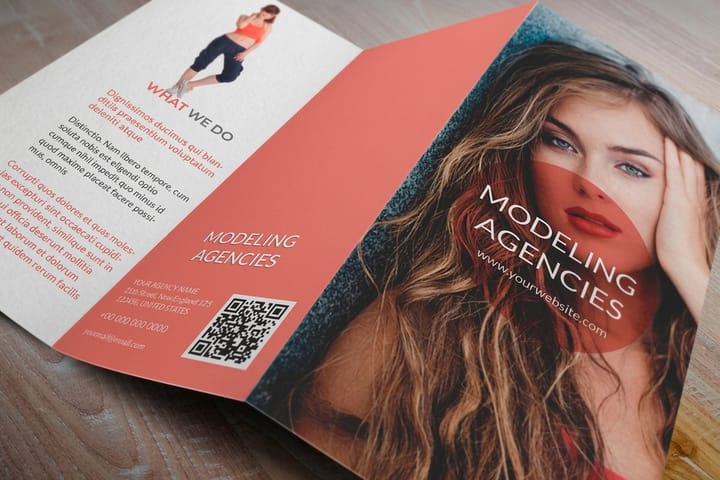
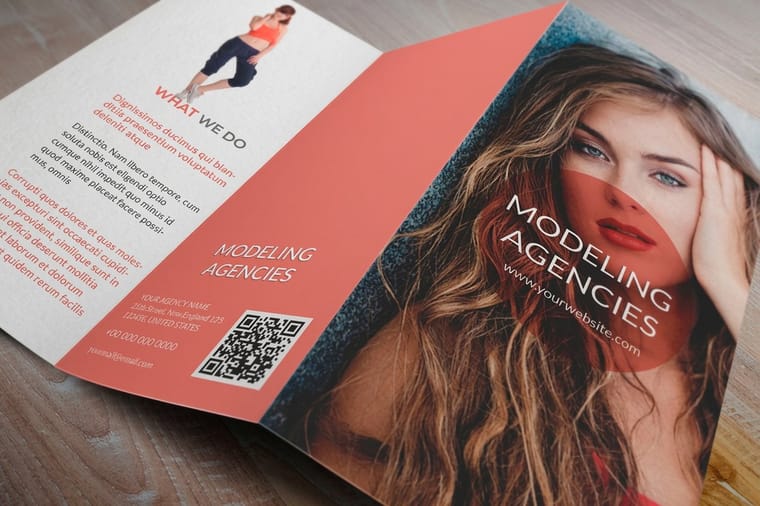
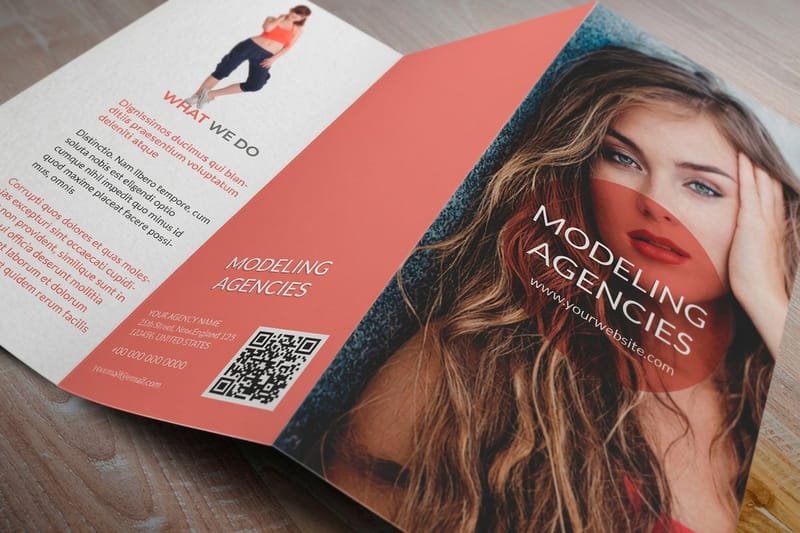
A standard brochure is the closest print gets to the page itself, because a fold gives you the same thing a scroll does: a sequence. Put the question the searcher typed on the cover, the plain answer on the first panel they open, the proof on the inside spread, and the address on the back. That order is not decoration. It is the same order that makes the page rank, moved onto paper.
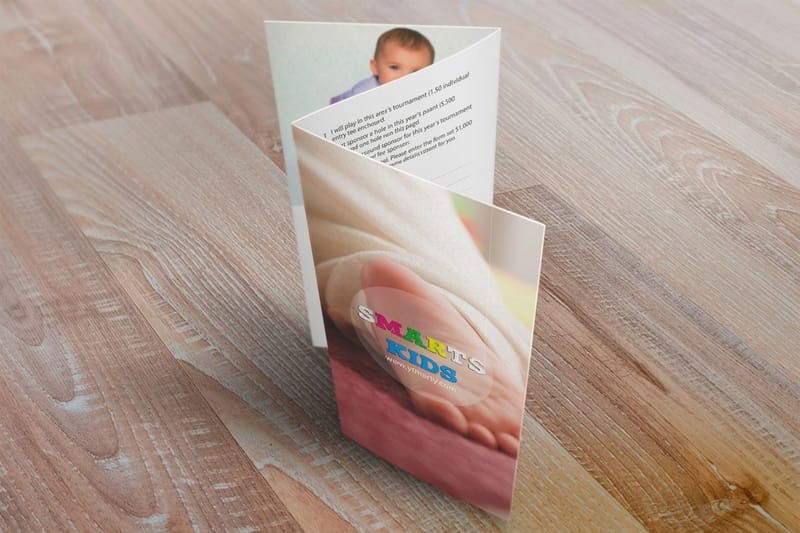
The fold is also where brochures go wrong. Panel widths on a trifold are not equal: the panel that tucks inside has to be about 1/16 in narrower or it buckles at the crease, and text that runs across a fold gets a soft break down the middle of a word. Our bifold setup guide has the measurements, and what to put in each panel covers the running order.
Stock decides whether the piece survives a bag. A 100lb gloss text folds cleanly and stays flexible; a 14pt cover feels better in the hand but cracks along the fold unless it is scored first, and a cracked fold through a dark solid shows a white line you cannot fix afterwards. Ask for scoring on anything above 100lb cover, and read the brochure paper comparison before you commit a run.
The honest limit: a brochure freezes the story on the day it prints. If the page it came from carries live pricing or a spec that changes each quarter, print the evergreen half and let the URL on the back panel carry the part that moves.
2. Standard booklets: a year of posts, edited down to one object
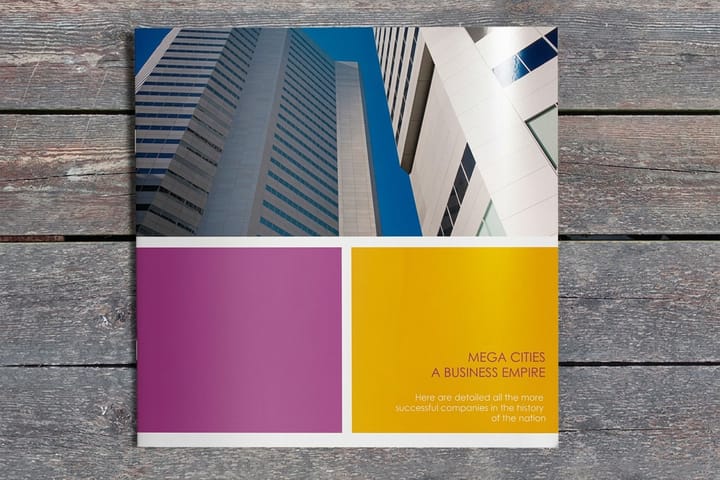
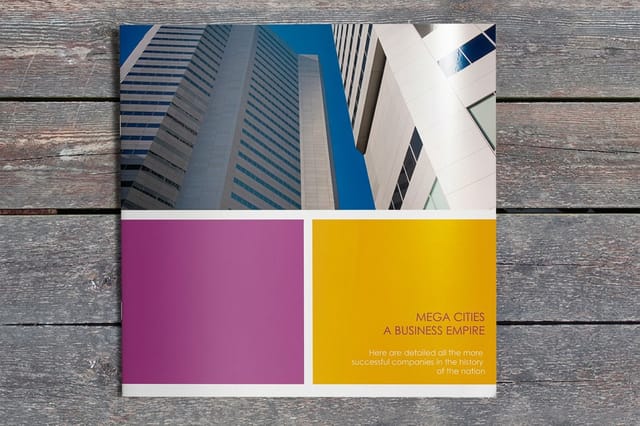
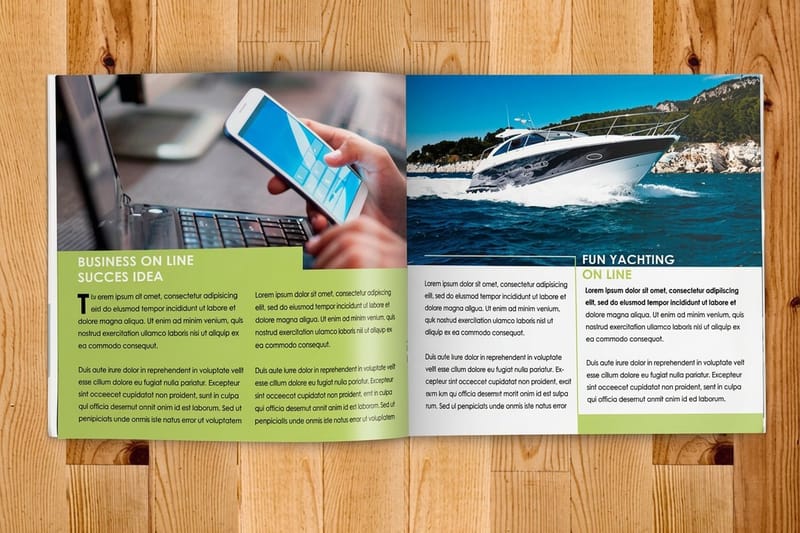
If the brochure is one page, a standard booklet is the whole cluster. Twelve or sixteen pages hold a real narrative: the situation, the numbers, what went wrong on the first attempt, and the version that finally worked. It is the piece a buyer leaves on a desk instead of in a bin, which is exactly why the story inside has to be a story and not a stack of product spreads.
Two constraints shape it before you write a word. Saddle stitching binds in multiples of four, so a 14-page manuscript becomes 16 pages, and the two extra sides are better spent on an FAQ or a checklist than left blank. And the starting price of $240.55 tells you what this piece is for. It is a leave-behind for a shortlist of buyers you can name, not something you fan out at a trade show. The mechanics of page counts and binding are in our booklet printing guide, and low-cost booklet options covers what to cut when the run has to get cheaper.
Sourcing the content is the easy part if the blog already exists. Pull the four posts that earn the most search traffic, keep the parts that answer a question, delete every transition sentence that only existed to fill a scroll, and you usually have twelve tight pages. Our content repurposing guide walks that edit, and the content marketing basics guide covers the publishing rhythm that produces enough material to draw from.
3. Standard postcards: one question, one answer, one tracked URL
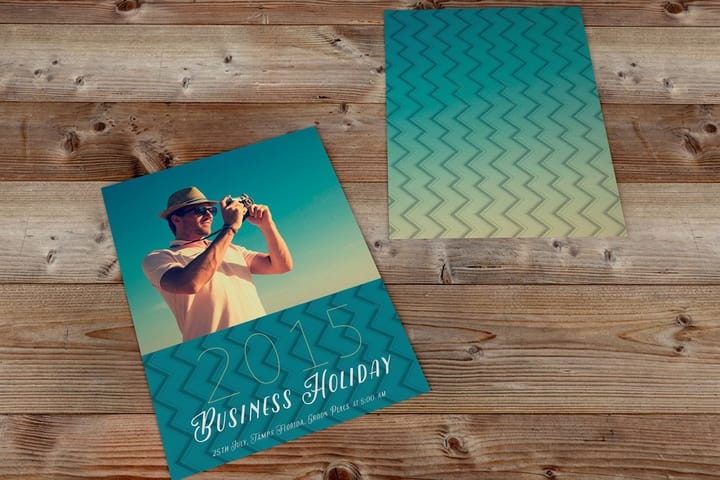
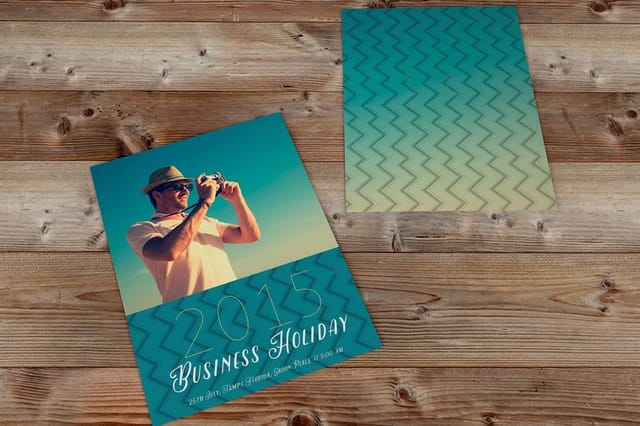
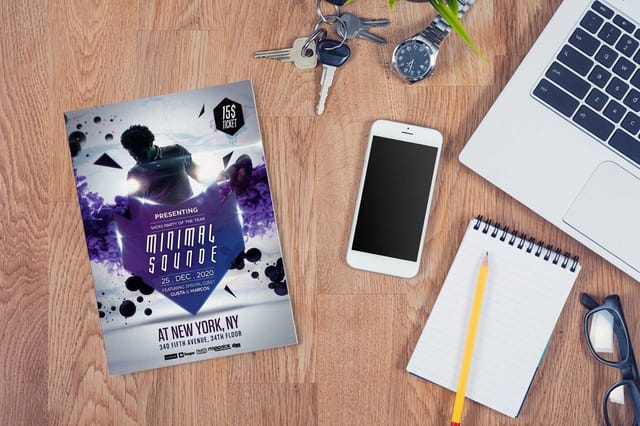
A standard postcard starting at $16.48 is the cheapest way to find out whether a headline that wins in the search results also wins in a hand. There is no envelope to open, so the whole message is read during the sort, in roughly a second, which forces the discipline the story needed anyway: one question on the front, the answer and the route back on the reverse.
Size is a postage decision, not a design one. To mail at the postcard rate a piece has to be rectangular, at least 3.5 in by 5 in, no larger than 4.25 in by 6 in, and at least 0.007 in thick. Go up to 6 in by 9 in and it is still perfectly good mail, it simply travels at the letter rate instead. Decide the rate first, then lay the story into the size it bought. The anatomy of a postcard shows what the address side gives up, and how to send direct mail postcards covers the list and the drop.
The postcard is also the only pick here that gives you a clean experiment. Split one list in half, change a single element between the two versions, print a different short URL on each, and you have your own result instead of somebody else's benchmark. There are angles worth testing in 12 postcard marketing ideas, and the content funnel guide explains which stage a card like this actually belongs to.
4. Standard flyers: the cheapest way to test a hook on paper
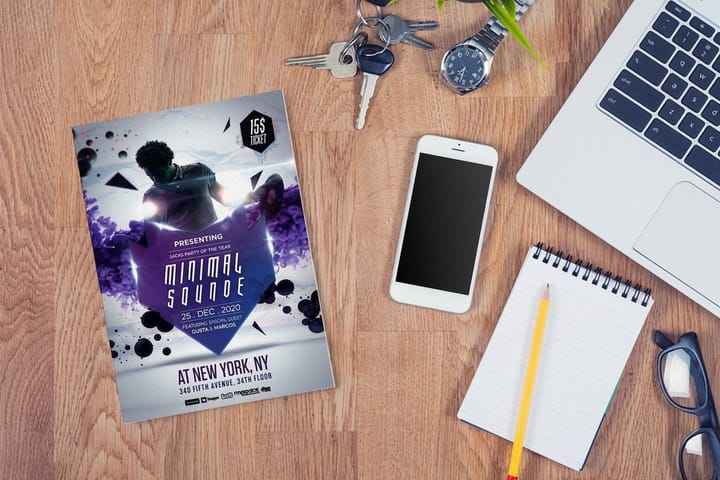
A standard flyer is one page for one query, handed over rather than mailed. Because the per-piece cost is the lowest in this kit at scale, it is the piece you use to try two openings of the same story: same layout, same offer, two different short URLs, and whichever URL fills up is the opening you then print on the brochure.
Write it the way the ranking page is written. The answer sits at the top, in the first two lines, because a flyer is read standing up and half the readers never get past the fold line of a folded half sheet. The proof goes underneath, and the call sits at the bottom where a thumb already is. Our guide to writing content that sells without sounding salesy applies here almost word for word, since a flyer has even less patience than a landing page.
The limit is obvious and worth saying out loud: a flyer gets read once. It is a test instrument and a doorway, not a keepsake. When a decision takes weeks rather than minutes, the same budget does more work as a booklet. When the decision is happening this weekend, same-day printing is what turns a Friday result into a Saturday hand-out.
5. Standard business cards: the shortest route back to the page
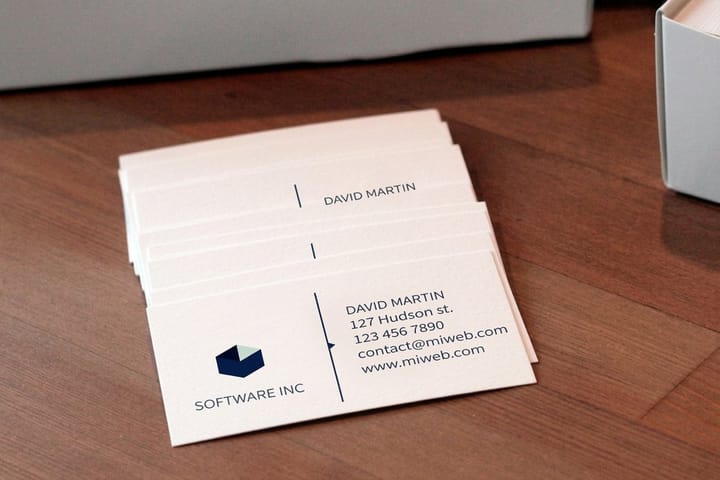
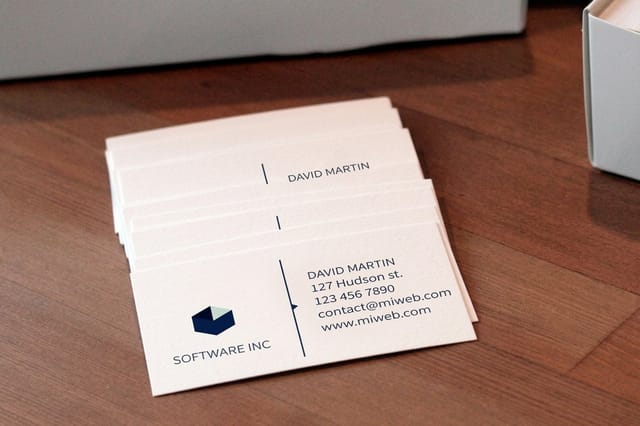
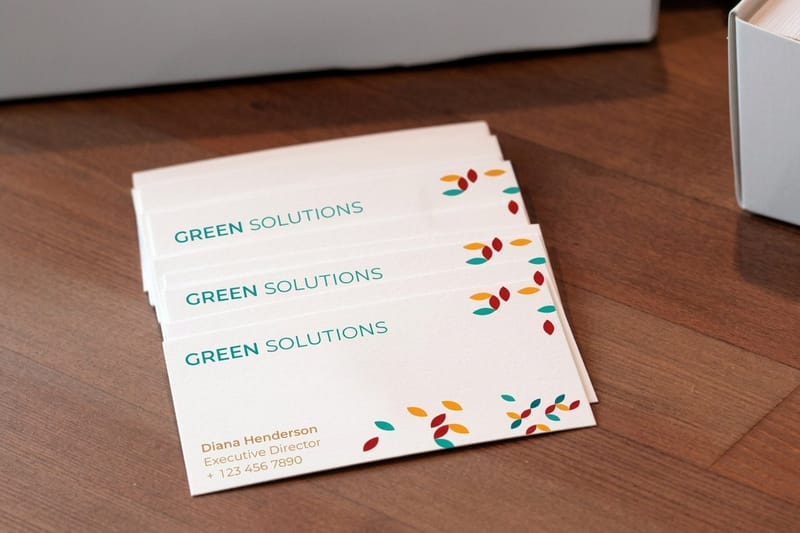
Every story has an author, and a standard business card is where that author becomes a person with a phone number. Put the name and the role on the front and give the back a job: a QR code pointing at the piece of writing that earned the conversation, on a short URL you tagged, so the visit shows up as that card rather than as direct traffic.
QR codes fail in predictable ways. A long tracking URL builds a dense pattern with tiny modules, so keep the destination short and print the code at roughly 0.8 in square or larger with clear space around it. Print it on a matte or uncoated back rather than high gloss, because a ceiling light bouncing off a glossy card is enough to stop a scan. The generation steps are in how to generate QR codes in InDesign.
Then read the result honestly. Scans and tagged visits tell you which conversation converted, not which page ranks, and the two numbers answer different questions. Our content analytics and ROI guide separates the metrics that prove a story worked from the ones that only look busy. If a card should carry more weight than 14pt stock does, the finishes are compared in the neuromarketing print picks.
6. Die-cut stickers: the one line people repeat for you
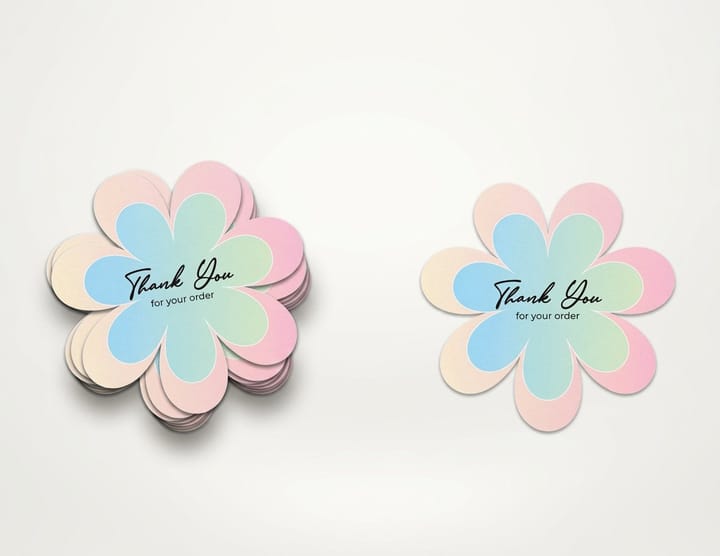
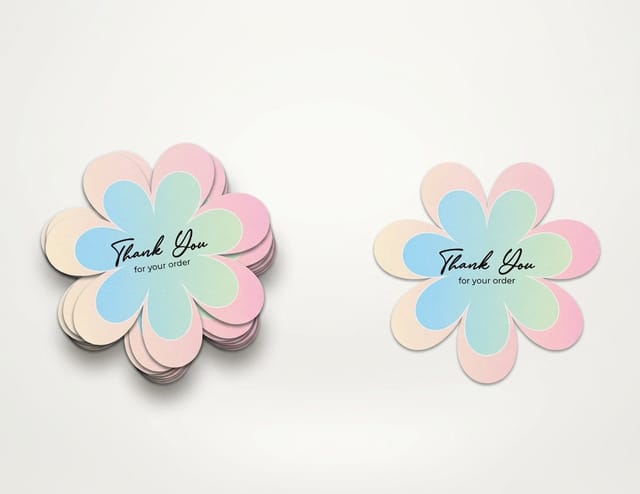
Die-cut stickers carry the smallest slice of the story: the phrase. If your content has a line people quote back at you in emails, that line on a sticker keeps circulating on laptop lids, water bottles and toolboxes long after the post that produced it has slipped down the results page. It is the cheapest form of the branded search that print is actually good at creating.
Two production facts change the artwork. A cut has tolerance, so any type or logo edge that runs right up to the outline loses a sliver on some pieces; hold your important elements about 0.125 in inside the cut. And a shape with thin necks or long spikes tears when someone peels it, which is why a simplified silhouette outlasts a faithful trace of your logo.
The honest limit is measurement. Nobody scans a sticker stuck to a laptop, so the URL on it has to be short enough to type from memory or it may as well be absent. Treat stickers as an awareness piece and judge them by branded searches, not by clicks. There are more pieces that work the same way in print brand awareness ideas, and the content hero guide covers building the body of writing worth quoting in the first place.
Specs and pricing
The test piece and the hand-off piece, side by side
Postcards are what you test the story with and brochures are what you commit to once the test comes back. Postcards start at $16.48 for 50 on 14pt gloss cover, brochures at $57.11 for 50 on 100# gloss text, and both leave in 3 business days.

| Quantity | Price Per Unit | Total |
|---|---|---|
| 50 | 33.0¢ | $16.48 |
| 100 | 24.2¢ | $24.16 |
| 200 | 15.9¢ | $31.86 |
| 300 | 12.8¢ | $38.45 |
| 400 | 11.3¢ | $45.04 |
| 500 | 10.3¢ | $51.62 |
| 600 | 9.89¢ | $59.31 |
| 700 | 9.57¢ | $67.00 |
| Quantity | Price Per Unit | Total |
|---|---|---|
| 50 | $1.14 | $57.11 |
| 100 | 82.4¢ | $82.38 |
| 200 | 53.3¢ | $106.55 |
| 300 | 41.0¢ | $123.02 |
| 400 | 34.9¢ | $139.49 |
| 500 | 31.2¢ | $155.97 |
| 600 | 26.7¢ | $160.36 |
| 700 | 23.5¢ | $164.75 |
Wally explains the six carriers
One story, split by how much of it each piece can hold
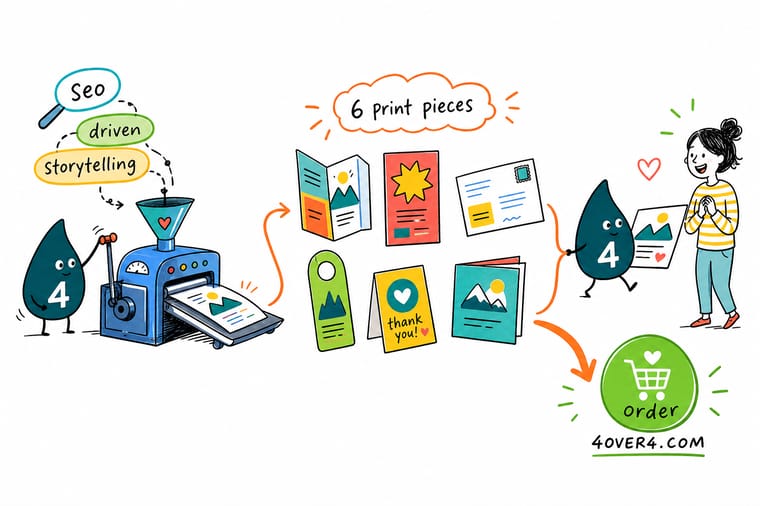
Wally starts at the page that already ranks, then cuts it up. The single question goes on the postcard and the flyer, because both are read in about a second. The proof goes on the brochure, where a fold gives him a sequence to put it in. The long version, including the attempt that failed, goes in the booklet a buyer keeps. The address goes on the card and the sticker. Each piece leaves with its own short URL, so when the traffic comes back Wally knows which one sent it.
Read the storytelling guide →See it in use
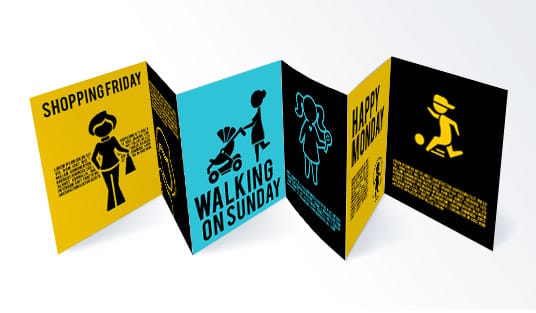
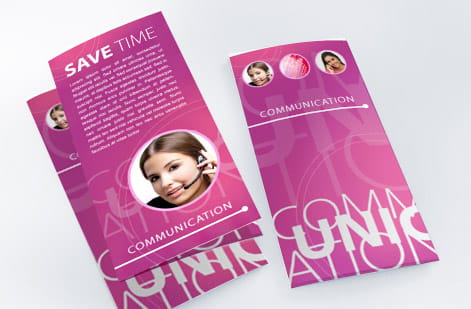
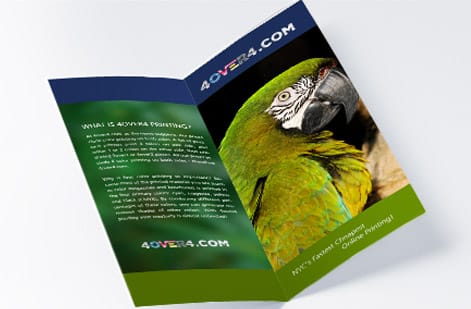
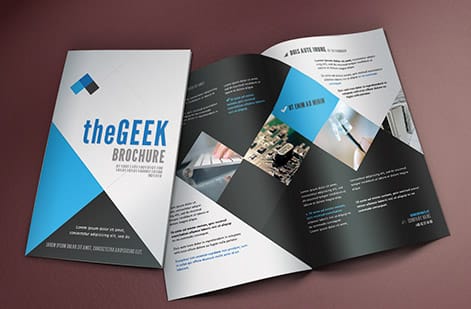
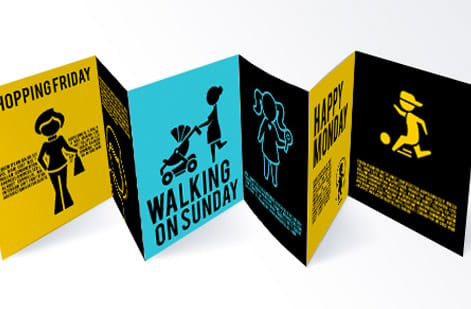
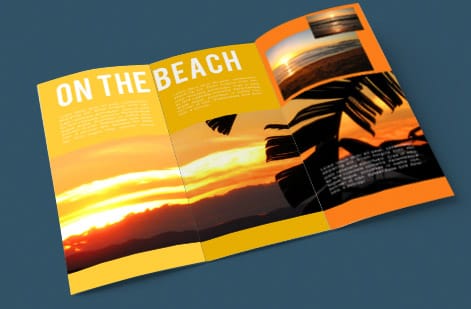
Brochures printed from a ranking page


Explore more
Where to go next
By the numbers
What a ranking page can be printed as
Common Questions
Common questions about printing a content story
What does SEO-driven storytelling actually mean?
It means the keyword chooses the subject and the story supplies the proof. You start from a question people demonstrably type, answer it plainly in the first two sentences so a snippet or an AI summary has something to lift, then use a specific story underneath with real quantities and a real outcome so a human remembers it. The order matters more than the writing: a page that opens with narrative gives search engines nothing to quote.
Which of these six pieces should I print first?
Postcards, at $16.48 to start. They are the cheapest way to find out whether the headline that wins in search also wins in a hand, and the result tells you what to commit to when you print the brochure at $57.11 or the booklet at $240.55. Printing the expensive piece first means guessing at the exact moment you could have measured instead.
How do I tell whether a printed piece brought the traffic?
Give each piece its own short URL or its own campaign tag and never reuse one across two pieces. Without that, the visit arrives as direct traffic and there is no way to separate the brochure from the postcard from a person who simply remembered your name. A QR code that points at an untagged homepage is the most common version of this mistake.
Can I just print my blog post as it is?
No, and the reason is structure rather than length. Web copy carries transition sentences, subheads written for scanning, and internal links that mean nothing on paper. Cut every sentence that only existed to move a scroll along, replace each link with the thing it was pointing at, and a 1,800 word post usually collapses to about six printed pages that read better than the original.
Why does a booklet have to be a multiple of four pages?
Saddle stitching folds sheets in half and staples through the spine, and each folded sheet contributes four printed sides. That is why a 14-page story prints as a 16-page booklet. Plan the two extra sides on purpose, as a checklist, an FAQ or a page of contact details, rather than discovering them at the proof stage.
Does printing my content improve my search rankings?
Not directly. A scan or a typed URL is a visit, not a ranking signal. What print buys is the branded search a week later, the return visit from someone whose browser tab is long closed, and the conversation a leave-behind starts inside a company you never got to email. Judge it on those, not on positions.
What size postcard mails at the cheapest rate?
To qualify for the postcard rate a piece must be rectangular, at least 3.5 in by 5 in, no bigger than 4.25 in by 6 in, and at least 0.007 in thick. Anything larger, including the common 6 in by 9 in size, mails as a letter. Choose the rate before you design, because a card built at 4.5 in by 6 in has quietly bought a more expensive stamp for no extra room.
How many pieces do I need before this is worth doing?
One story is enough, as long as it is a story that already ranks. Print that single page as a postcard for the test, a brochure for the hand-off, and a business card carrying the route back, and you have a working set for three products. Adding the booklet and the stickers makes sense once you have a year of posts to draw from and a phrase people already quote at you.
Get Started
Print the story that already ranks
Take the page that earns your search traffic and put it on paper at 4OVER4.COM. Pick the sizes, stocks and folds, and watch every price update live as you build the order.
Legal Disclaimer
Gold Standard guarantees apply to all standard orders placed through 4over4.com. Price match requires verifiable proof of a competitor's published price for an equivalent product with matching specifications and turnaround time. Satisfaction guarantee covers manufacturing defects and print quality issues. Contact support with order number and documentation. On-time delivery rate based on tracked orders 1999 to 2026. Individual results may vary based on shipping carrier performance.
