
What Type of Paper Are Brochures Printed On?


Our brochure order form offers four stocks. Here is what each one does to color, glare and the fold, and which to pick for your piece.
At 4OVER4.COM, brochures print on one of four stocks: 100 lb gloss text, 100 lb silk/matte text, 70 lb uncoated text or 14pt gloss cover. Gloss suits photos, silk/matte suits long copy with no glare, uncoated gives a natural feel, and the 14pt cover is the stiff one.
Short answer
The best paper for brochures
For a standard half-fold brochure, print on 100 lb gloss text. It takes the fold without a score and keeps photo color saturated. It is also the lowest priced of the four: on the order form, silk/matte adds 10 percent, uncoated 16 percent and the 14pt cover 60 percent.
Quick answer
Brochure paper types at a glance
The diagram sorts the choice into three steps: the coating, the weight, and the options on the brochure form.
Why brochure paper choice shapes first impressions
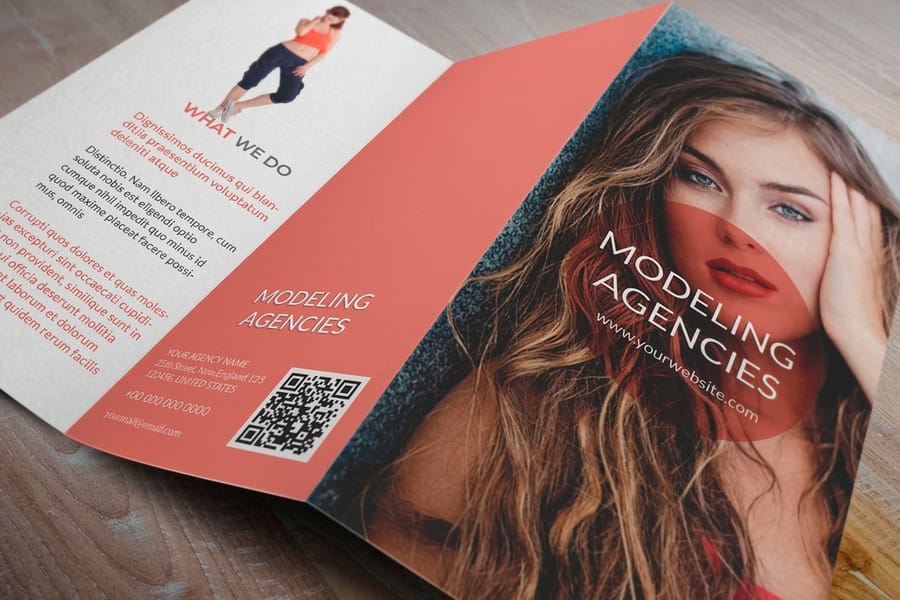
Paper is the first thing someone feels when they pick up your brochure. A flimsy sheet reads as budget work. A heavier, smoother one tells the reader you care about details before they read a single word.
The paper you choose affects color accuracy, fold quality, durability, and perceived value all at once. A restaurant menu brochure needs different stock than a real estate listing. A trade show handout has different demands than a direct mail piece. A commercial real estate brochure full of floor plans and figures reads best on the silk/matte sheet, where glare does not fight the numbers.
Our guide on how to fold a brochure shows what each fold does to a layout, and the brochure paper terms guide explains words like text weight, cover weight and coating.
Coated gloss paper, when color is everything
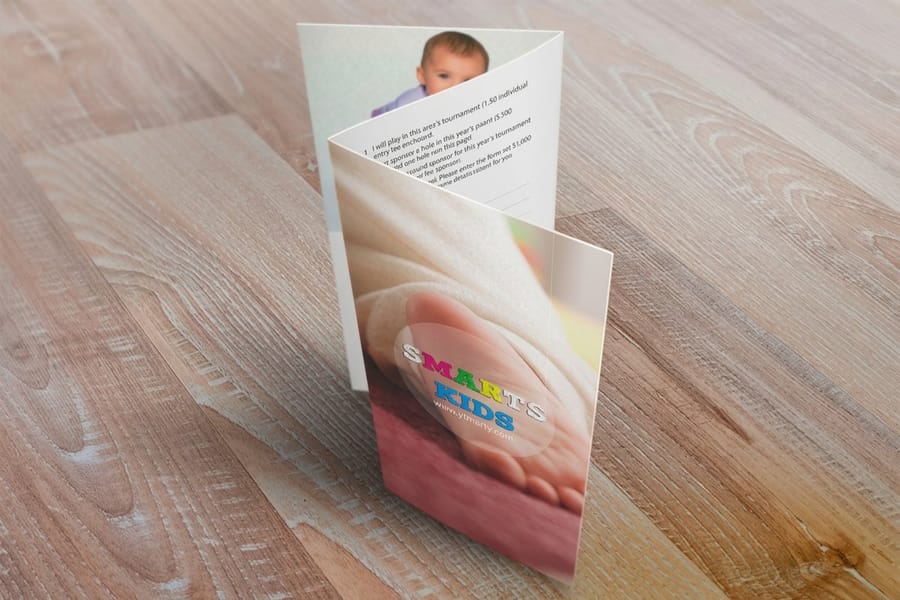
On the order form this stock is 100 lb Gloss Text, or 14 pt Gloss Cover when the piece has to stand stiff. The shiny surface reflects light, which makes colors appear more vivid and saturated. Photos look sharp. Gradients stay smooth. If your brochure leans heavily on images, think product catalogs, travel brochures, or event programs, gloss is your go-to.
The coating also creates a slight barrier against fingerprints and moisture, so a gloss brochure stays clean longer in a rack or a bag.
The trade-off is glare. Under bright lighting, gloss can bounce light back at the reader and make large blocks of text harder to follow. If your brochure is text-heavy, matte is the better call, which is exactly what the next section covers.
Gloss, matte and uncoated side by side. Here is how the three coatings compare, and which brochure stock carries each.
| Stock | Color pop | Readability | Writability | On our form | Best for |
|---|---|---|---|---|---|
| Coated gloss | Highest. The surface reflects light, so photos and gradients stay vivid and saturated. | Weakest on long copy. Bright or overhead lighting bounces glare back at the reader. | Poor. Pen and pencil skid on the coating instead of biting into it. | 100 lb Gloss Text or 14pt Gloss Cover. | Product catalogs, travel brochures, event programs, anything image-led. |
| Coated matte | Rich and accurate, a shade quieter than gloss because the surface absorbs light rather than reflecting it. | Best. Zero glare, even under fluorescent office lights, so long paragraphs stay comfortable. | Good. Takes a pen cleanly for fill-in fields and handwritten notes. | 100 lb Silk/Matte Text. | Service menus, educational materials, nonprofit appeals, real estate, financial and healthcare pieces. |
| Uncoated | Softest. Ink settles into the fiber, so color reads muted and matte rather than punchy. | Very good. No shine at all, though heavy photo areas lose some snap. | Best. The natural surface takes pen, pencil and stamps without smearing. | 70 lb Uncoated Text. | Eco and artisan brands, letterpress-style looks, forms and anything meant to feel handcrafted. |
Coated matte paper, professional and easy to read
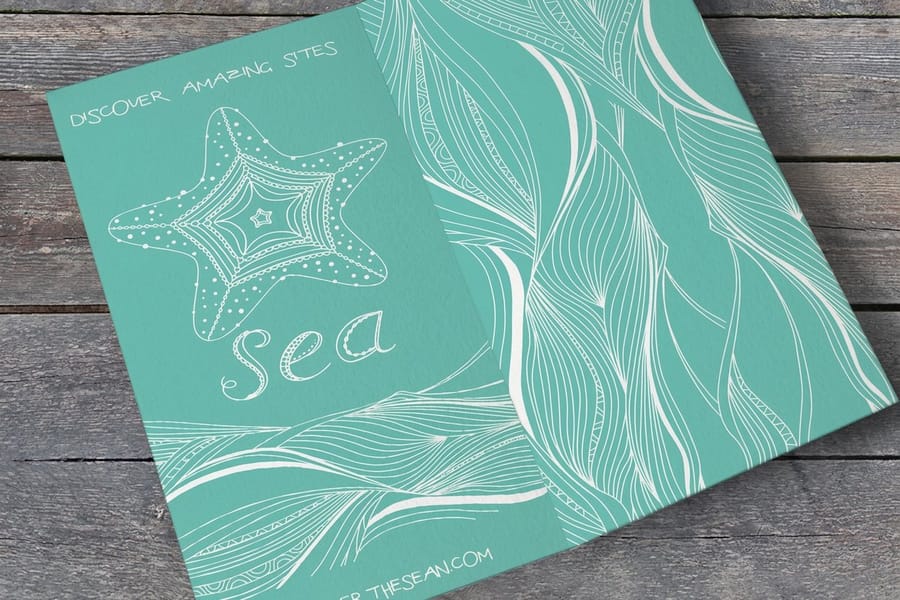
Order 100 lb Silk/Matte Text and you get the color benefits of a coating without the shine, at the same weight as the gloss text sheet. Colors still look rich, but the surface absorbs light instead of reflecting it, so long paragraphs stay comfortable to read.
That suits brochures with a lot of body copy, like service menus, educational materials and nonprofit appeals. Real estate, financial and healthcare pieces carry figures and fine print, which is where low glare helps most, and the smooth surface feels more upscale in hand.
Uncoated paper, natural texture and organic feel
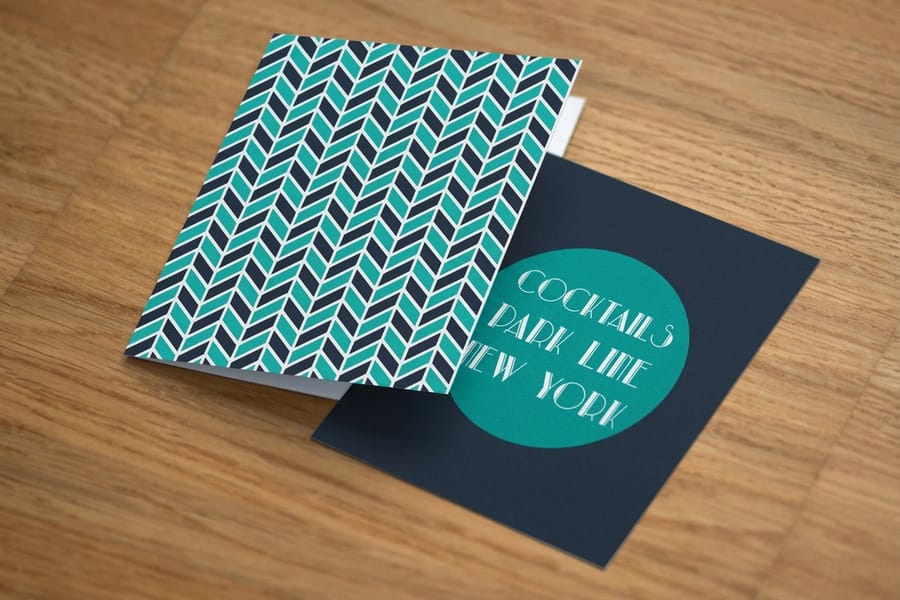
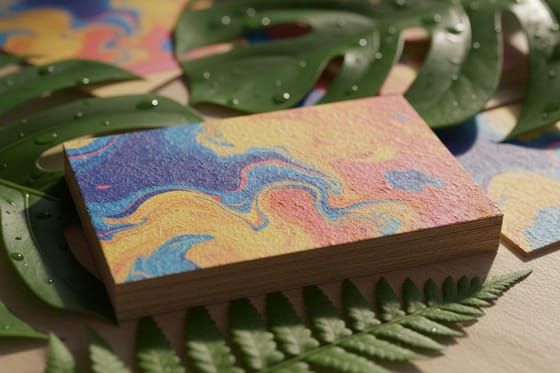
The uncoated brochure stock is 70 lb Uncoated Text, lighter than the two 100 lb coated sheets and the only one of the four with no coating at all. You feel the paper fibers when you run your fingers across it. That gives brochures a warm, natural, handcrafted quality that coated stocks cannot replicate.
Brands built on sustainability, craft or organic products suit uncoated stock. Think farm-to-table restaurants, eco-conscious skincare lines, or boutique wedding planners. On these pieces the paper itself becomes part of the brand story rather than just a carrier for the ink.
Earthy color palettes and minimalist layouts hold up well on uncoated paper, while bright neon designs and photo-heavy pages lose their punch.
Understanding paper weight for brochures

Paper weight sets thickness and stiffness. The brochure form carries two kinds: text weight, the 70 lb uncoated and the 100 lb gloss or silk/matte sheets, and one cover weight, 14pt Gloss Cover.
Text weight is thinner and more flexible. The 100 lb sheets are the heavier text stocks and still take a half fold without a score, while 70 lb uncoated feels lighter and thinner in the hand.
If you are planning a direct mail campaign, a lighter sheet also weighs less in the mail, which matters when you are sending thousands of pieces. Our guide on how to make flyers has more tips on designing lightweight pieces that ship for less.
Cover weight is thicker and stiffer, closer to card than paper. The 14pt Gloss Cover suits a flat sheet that has to stand on a counter or survive a lot of handling, such as a price list or a one-page sales sheet.
Weight by brochure type. Start here, then adjust for how the piece gets delivered: racked, mailed, or handed over in person.
| Brochure type | Stock to order | Finish that suits it | Why that pairing |
|---|---|---|---|
| Half-fold rack brochure | 100 lb Gloss Text | Standard, or High Gloss UV for more shine | Enough body to feel substantial, still flexible enough to fold once and sit in a rack without curling. |
| Menu, program or service sheet | 100 lb Silk/Matte Text | Standard finish | The low-glare surface keeps long blocks of copy easy to read. |
| Natural or handmade look | 70 lb Uncoated Text | Standard finish | No coating at all, so it feels like paper and takes a pen. |
| Flat sales sheet or price list | 14pt Gloss Cover | Standard, or High Gloss UV for more shine | Stiff enough to stand on a counter or hand across a desk, left unfolded. |
Finish options on the brochure form
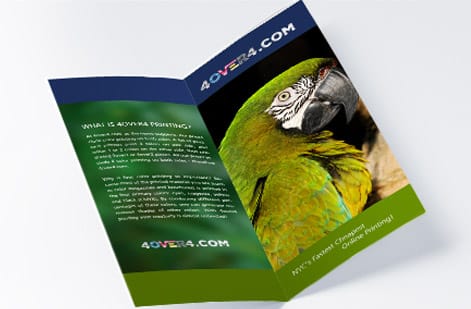
Beyond the base paper, the brochure form offers a short list of extras, and each one changes how the piece works in hand.
- High Gloss UV coating. A liquid coating cured with ultraviolet light. It adds a high shine and a tougher surface, good for brochures that get handled a lot.
- Perforation. A line of small cuts that lets one panel tear away cleanly.
- Color on one side or both. 4/0 prints the front only; 4/4 prints both sides in full color.
Soft-touch lamination, aqueous coating and spot UV are not offered on brochures, so plan the look around the stock and, if you want shine, the UV coating.
Request samples before you commit

Reading about paper types helps. Touching them is better. 4OVER4.COM sends free samples, with no shipping charge, before you order a run that starts at 50 brochures. The sample box holds 18 finishes. Hold them up to the light. Fold them. Run your thumb across the surface. That tells you more than any product description ever could.
If you mail brochures in envelopes, our guide on how to make envelopes covers that side of a direct mail push.
To lay out your file, start from a brochure blank template. The guide on how a brochure blank template works explains what each file includes before you open one.
Wally explains brochure paper
The stock is felt before a word is read
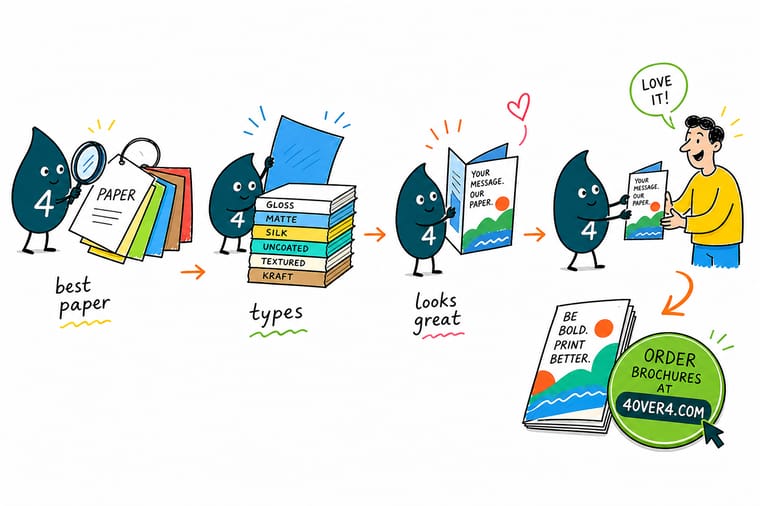
Wally treats brochure paper like a handshake: gloss for photos that need to pop, matte for copy people actually read, and uncoated for the warm, tactile brands. Then he picks weight by the fold, 80 lb text for a clean tri-fold, heavier cover for pieces that stand on their own. His one rule before any big run is to fold and feel a real sample. Order free samples, then print your brochure on the exact stock you touched at 4OVER4.
Order brochures →
Specs and pricing
Custom brochure specs and pricing
Standard brochures start at 50 for $57.11. The panels below list every stock and the price per unit at each quantity, straight from the configurator.
| Quantity | Price Per Unit | Total |
|---|---|---|
| 50 | $1.14 | $57.11 |
| 100 | 82.4¢ | $82.38 |
| 200 | 53.3¢ | $106.55 |
| 300 | 41.0¢ | $123.02 |
| 400 | 34.9¢ | $139.49 |
| 500 | 31.2¢ | $155.97 |
| 600 | 26.7¢ | $160.36 |
| 700 | 23.5¢ | $164.75 |
Fold, weight and glare traps
Paper mistakes that ruin brochures
Three errors that waste a brochure run, each tied to how the brochure form works.
Folding the 14pt cover.
The brochure form has no scoring option, and an unscored fold in cover stock can crack along the spine. Fold the 100 lb text stocks and keep the cover flat.
Adding UV to a matte brochure.
High Gloss UV puts shine on any stock. If you chose silk/matte for low glare, leave the coating off.
Running photos across the fold.
A half fold creases through the middle of the sheet, so keep faces and headlines away from the center line.
4OVER4.COM includes a free digital proof with every brochure order so you can catch issues before they hit the press.
Print it
Best brochure printing options at 4OVER4
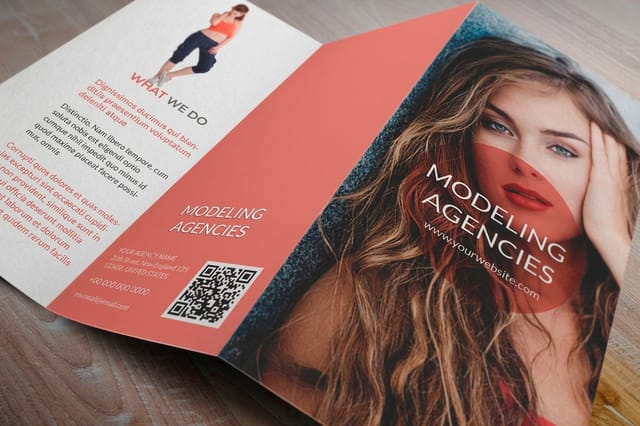
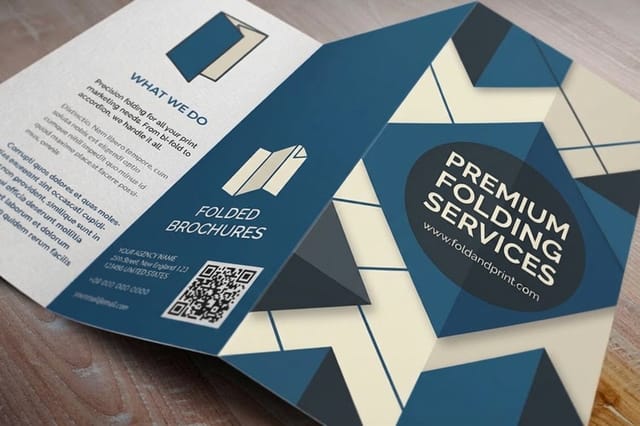
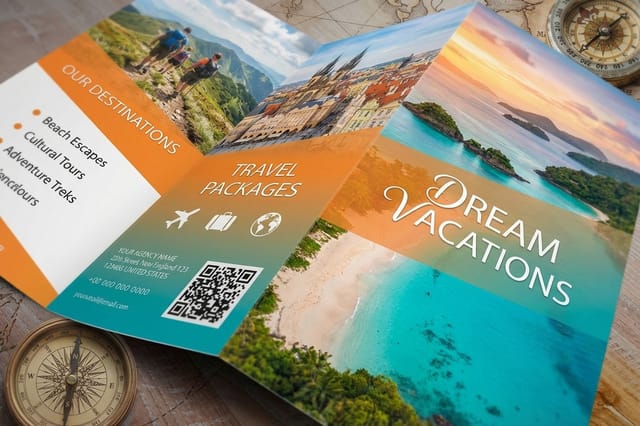
For sustainable stock, our green printing program includes recycled and FSC-certified paper, under certificate C013635, that looks just as sharp as conventional options. To judge the press before a large brochure run, new customers can order 200 free business cards and see our paper stocks, ink accuracy, and finishing up close.
See it in use
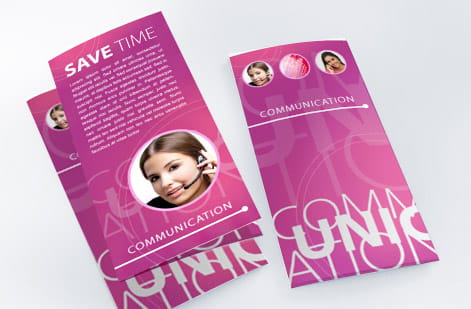
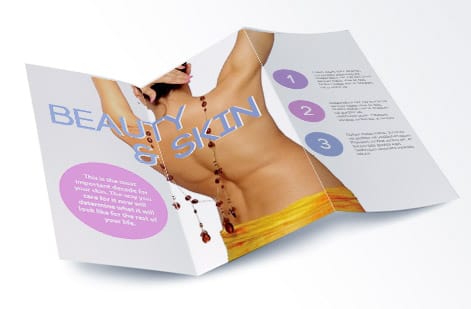
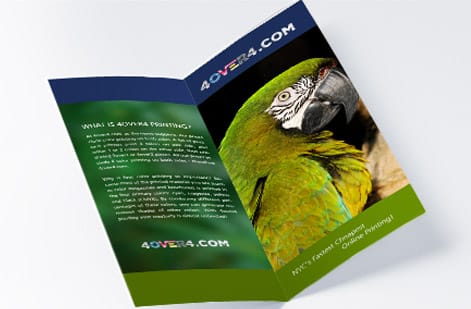
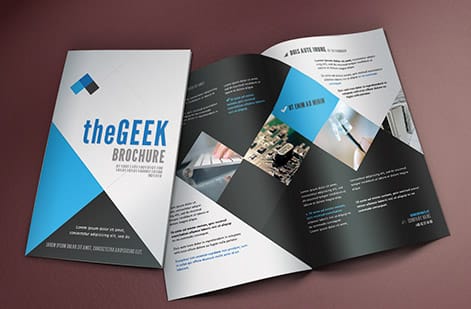
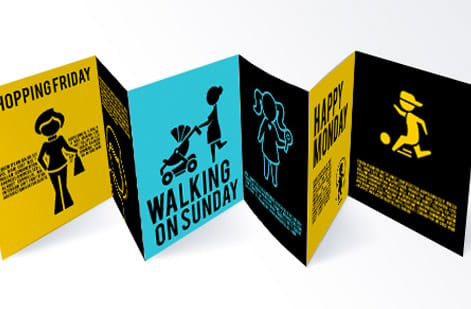
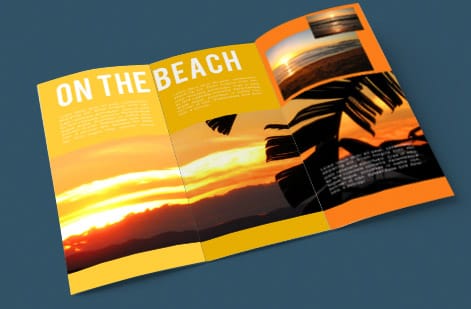
Brochures from our Queens plant
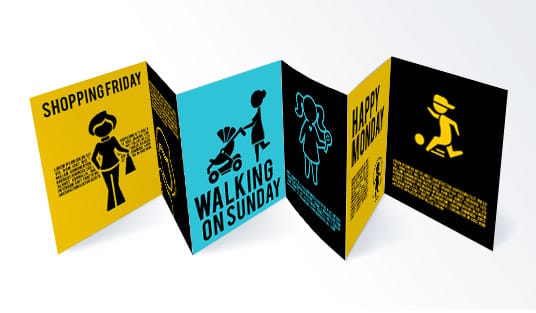

%22%2F%3E%3Ccircle%20cx%3D%2244%22%20cy%3D%221%22%20r%3D%2219%22%20fill%3D%22%23a78bfa%22%20opacity%3D%220.15%22%2F%3E%3Ccircle%20cx%3D%2240%22%20cy%3D%2250%22%20r%3D%225%22%20fill%3D%22%23a78bfa%22%20opacity%3D%220.1%22%2F%3E%3Crect%20x%3D%2274%22%20y%3D%22-7%22%20width%3D%2229%22%20height%3D%2210%22%20rx%3D%224%22%20fill%3D%22%23a78bfa%22%20opacity%3D%220.08%22%20transform%3D%22rotate(9%2080%2030)%22%2F%3E%3C%2Fsvg%3E)
Explore more
Where to go next

By the numbers
The press behind these stocks
Common Questions
Your brochure paper questions, answered
Can I get a tri-fold brochure?
Not on the brochure form, which folds in half only. For a trifold, order direct mail flyers: they come on 100 lb gloss or silk/matte text, 70 lb uncoated text or 100 lb gloss cover, with nine fold styles, from 500 pieces.
Can I print brochures on recycled paper?
Not on the brochure form: none of its four stocks lists recycled content. If recycled paper matters more than the format, ask support which products carry post-consumer waste stocks before you design.
Can a brochure have a tear-off coupon or reply card?
Yes. Perforation is an option on the brochure form, so one panel can tear away cleanly as a coupon, a reply card or an appointment slip.
Can I print on both sides of a brochure?
Yes. Choose 4/4 for full color on both sides, or 4/0 for color on the front and a blank back, which suits a flat sheet that sits face up on a counter.
How fast can brochures be printed?
Turnaround options on the brochure form run from same day to 3 business days, chosen when you order. Shipping transit comes on top of the production time.
Get Started
Print your brochure on the stock that fits
Pick one of the four stocks, add your design, and choose flat or half fold.
Legal Disclaimer
Gold Standard guarantees apply to all standard orders placed through 4over4.com. Price match requires verifiable proof of a competitor's published price for an equivalent product with matching specifications and turnaround time. Satisfaction guarantee covers manufacturing defects and print quality issues. Contact support with order number and documentation.
