
7 Print Products That Monetize Attention Without Selling Your Soul
You do not need a sponsor to make money from an audience. You need something of your own to sell them, priced by you, made by you. These are the seven printed products that do that job, in the order a small audience is actually ready to buy them, with live pricing on every one.
Sell an object you made instead of renting your credibility to an advertiser. Stickers buy the first yes, booklets and posters carry a real price, totes and mugs reward the people who already like you, thank you cards earn the second order, and mailed postcards reach a list no platform can throttle. Print them in that sequence and the revenue never depends on saying something you do not mean.
The picks
Seven pieces, from a $5.00 tote to a $240.55 booklet run
Buy in the order your audience is ready for, not in the order that looks impressive. The first two items exist to turn a follower into a buyer. The middle three are what a buyer comes back for. The last two keep the relationship alive without a platform in between. Every price below comes straight from the configurator and falls as the quantity climbs.
Sizes and jobs
What each pick costs and what it is actually for
Seven products, seven different jobs. One buys the first transaction, one holds a price a free post never could, two reward people who already like you, one earns the reorder, and one reaches a mailbox instead of a feed. Read the row, tap a piece to jump to its section, then start with whichever job your audience is at.
| Pick | Format and starting price | The job it does |
|---|---|---|
| 1. Die-cut stickers | Vinyl, cut on the outline of the artwork, 1.5 in to 3 in typical. From $93.37 | The first paid thing, or the free thing you slip in a package. Cheap enough that a stranger says yes without thinking about it. |
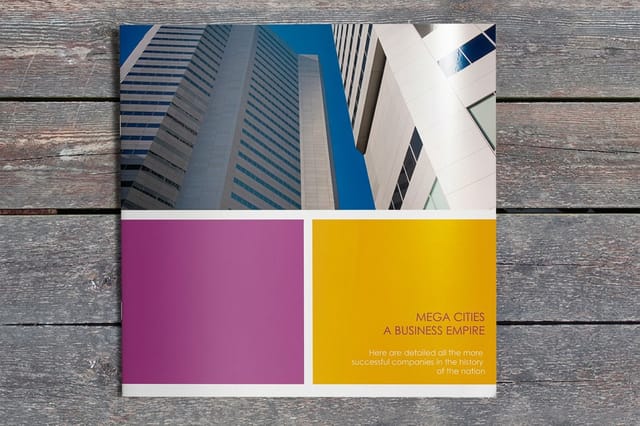
| 2. Booklets | Saddle stitched, page count in multiples of four, 8 to 32 pages typical. From $240.55 | The zine, the field guide, the annual. This is the piece that carries actual work, so it is the piece that can carry an actual price. |
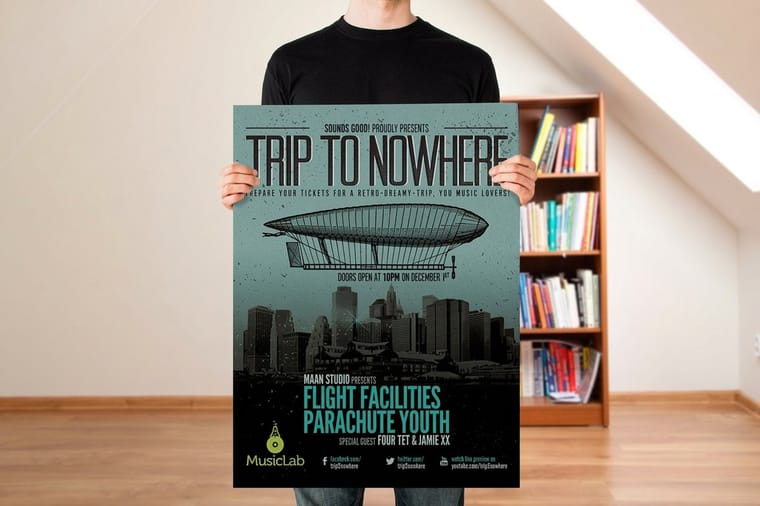
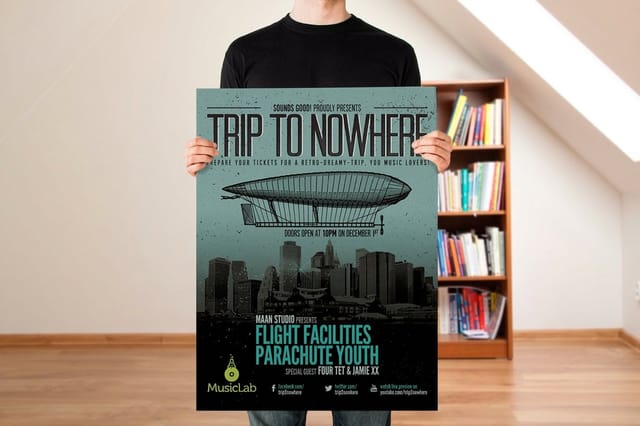
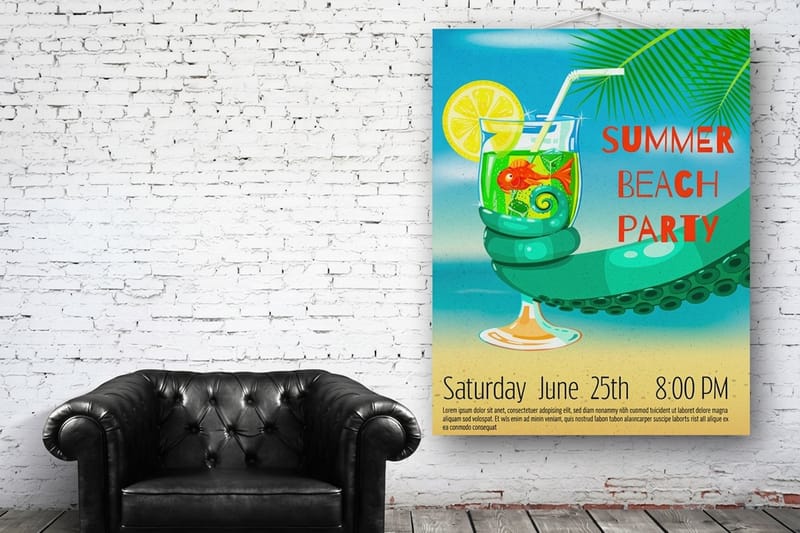
| 3. Posters | 18 in x 24 in and 24 in x 36 in are the two sizes people already own frames for. From $108.75 | On a wall, for years. The highest margin per hour of design in the whole kit. |
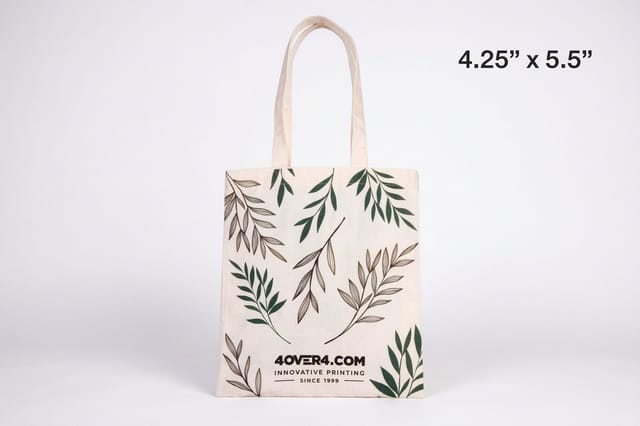
| 4. Cotton totes | Cotton, one or two ink colors reads best on woven fabric. From $5.00 | A grocery run, a commute, a conference floor. The buyer advertises you on purpose, which is the only kind that works. |
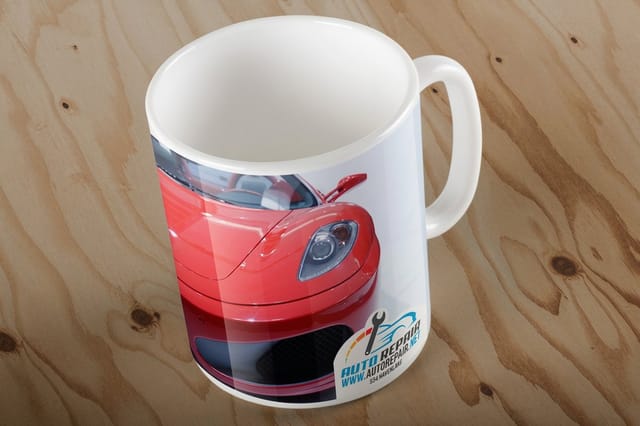
| 5. Mugs | Ceramic, artwork wraps the cylinder and breaks at the handle. From $20.86 | A desk, every morning. Small reach, enormous repetition, and the single most common gift request from an audience. |
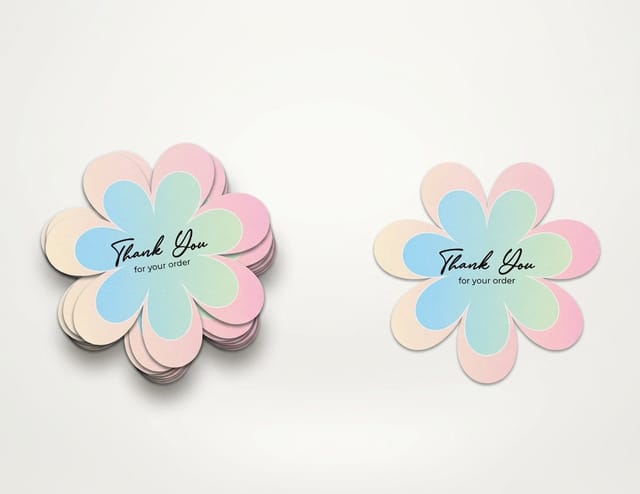
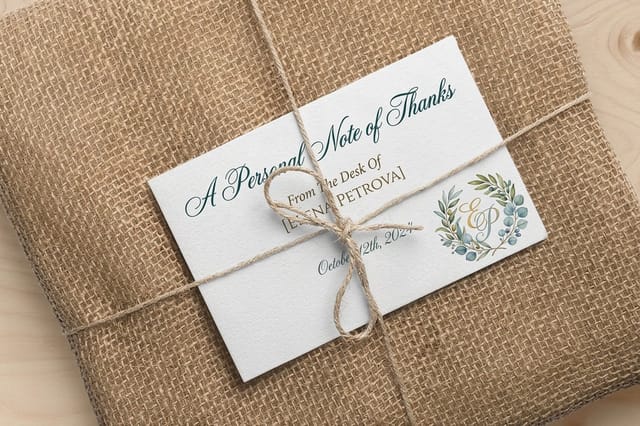
| 6. Thank you cards | Folded or flat card stock, printed both sides, room for a handwritten line. From $19.77 | Inside the box, on top of the product. The cheapest piece in the kit and the one most responsible for a second order. |
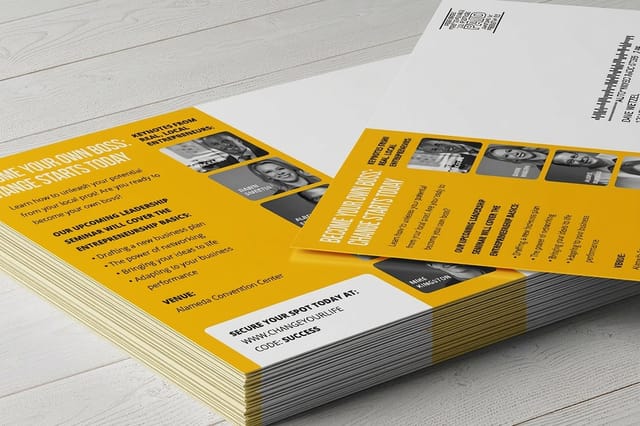
| 7. Direct mail postcards | 4 in x 6 in stays inside the USPS postcard rate; bigger sizes mail at letter rates. From $89.68 | A mailbox you reached without a platform in between. Slow, expensive per contact, and impossible for anyone to throttle. |
Start here
Why the order matters more than the list
An audience does not go from following you to a full price order in one step. It goes from watching, to paying a few dollars once, to trusting you enough to buy something that takes up space in their home and costs a night out. Each pick below sits at a different point on that curve, and printing the expensive one first is the most common way a creator concludes that merch does not work. The strategy behind the sequence is unpacked in our guide to monetizing attention without selling your soul, and the case for doing it with a small following is in monetize your micro audience.
1. Die-cut stickers: the smallest thing someone will pay for
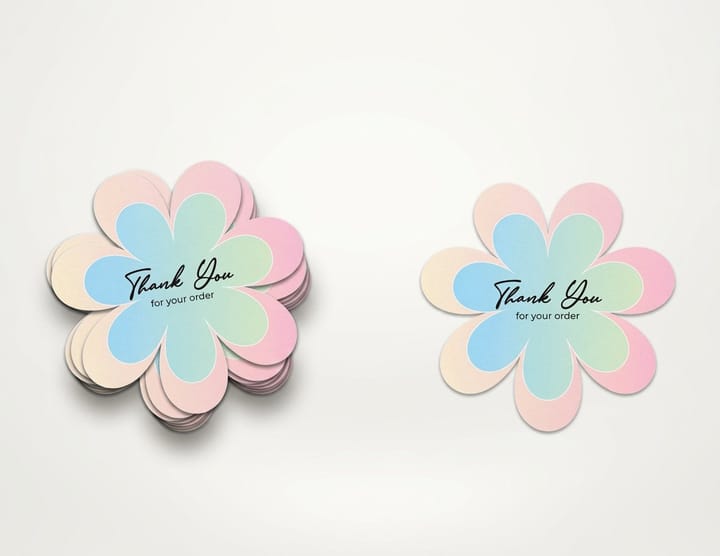
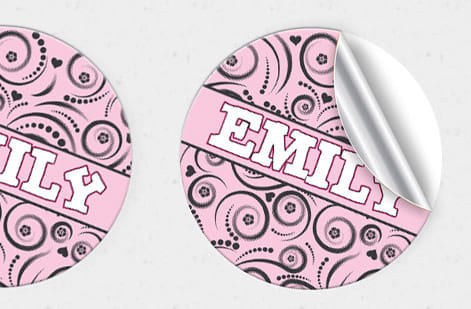
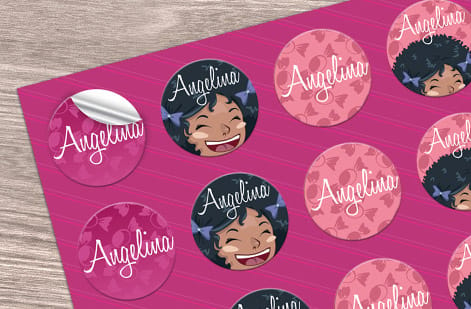
The hardest sale you will ever make is the first one, and it has almost nothing to do with price. Someone who has never given you a card number has to decide you are real. A sticker makes that decision cheap. Die-cut stickers start at $93.37 for a run, which puts the retail price low enough that a follower buys on impulse and high enough that the run pays for itself, and once that person has bought once the second purchase is a different conversation entirely.
Die-cut means the vinyl is cut on the outline of your artwork rather than left as a rectangle, so a mark, a mascot, or a line of hand lettering keeps its silhouette instead of sitting inside a white box. That matters more than it sounds. A shaped sticker reads as a designed object; a square one reads as a printout. Keep the shape simple, though. Deep interior notches and hairline points are fragile on peel and the first thing to lift at the edge.
The trade-off is honest: stickers are the worst margin per unit in this kit. You are not building revenue here, you are building a customer list and putting your mark on laptops where other people will see it. Choosing the right sticker material covers the outdoor versus indoor call, and why sticker marketing works explains the part where the buyer does the distribution for you.
2. Booklets: the piece that can carry a real price
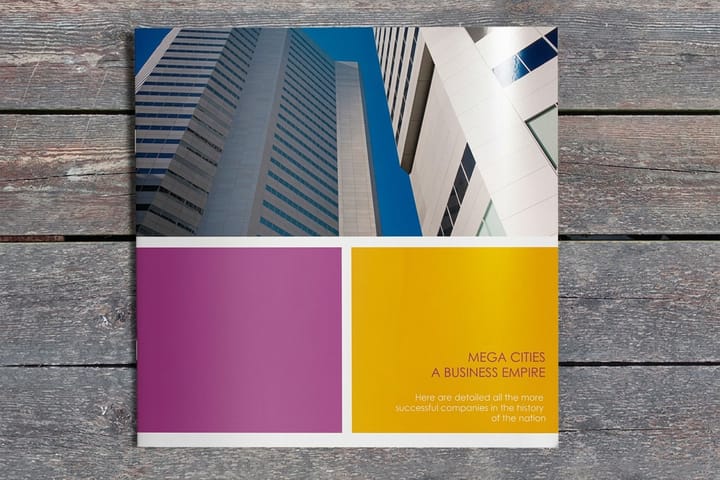
If one item in this kit is going to pay a bill, it is this one. A booklet is a zine, a field guide, a year of collected work, a playbook. It starts at $240.55 for a run, and it sells at a price nothing else in the kit can hold, because a reader is paying for the contents rather than for the object. That is also why it does not feel like selling out. You are charging for work, not for a slot in someone else's ad budget.
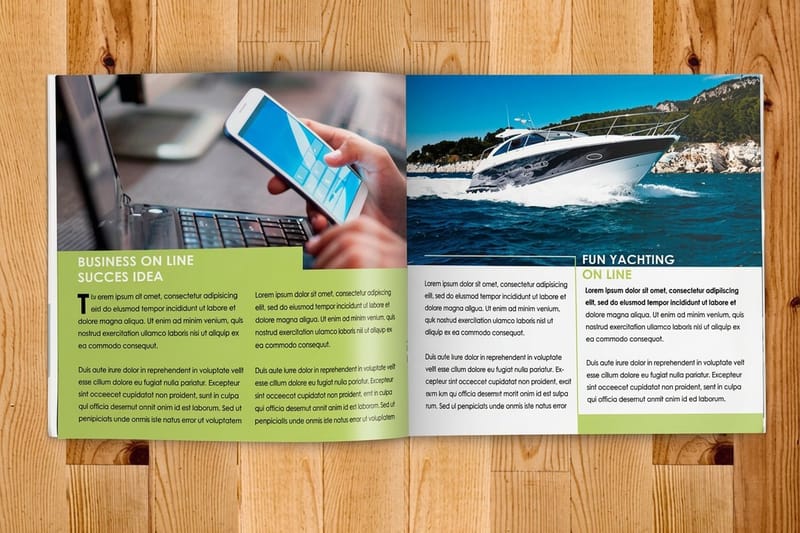
Two production facts decide your layout before you write a word. Saddle stitched booklets are folded and stapled through the spine, so the total page count is always a multiple of four, and there is no way to add a single page to fix a spread that ran long. Second, the inner sheets sit further around the fold than the outer ones, which pushes their content slightly toward the trim edge. That is creep, and it is why a 32 page booklet with content running close to the edge comes back with the inner pages cropped tighter than the outer ones. Keep anything you care about well inside the margin. Our guides on page counts and creep and binding methods lay out both.
Where it fails: a booklet is the slowest piece here. You have to actually make forty pages of something worth reading, and no finish saves thin material. If you do not have the work yet, print posters and wait. For a sense of what people have made at this size, see zine and journal project ideas.
3. Posters: one design, framed on a wall for years
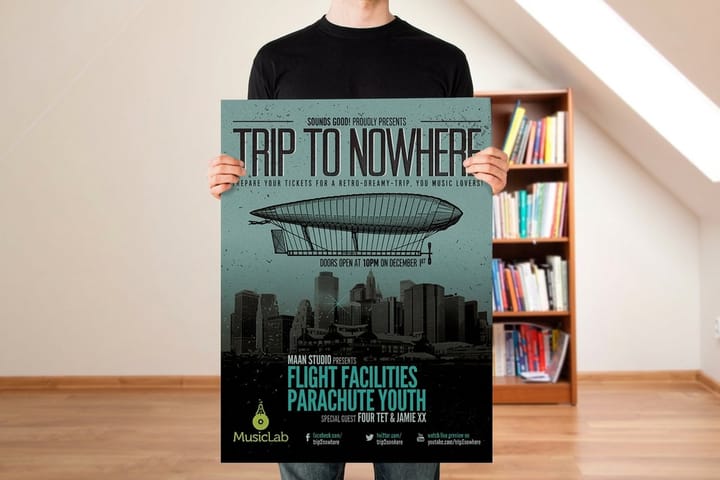
A poster is the best return on a single afternoon of design in this whole list. One file, printed on demand, sold at a real price, hung somewhere a person sees it every day. Standard posters start at $108.75 for a run, and unlike apparel there are no sizes to stock, no colorway to guess, and no returns because it fits differently than expected.
Print at the two sizes people already own frames for, 18 in x 24 in and 24 in x 36 in, and a buyer can hang it the same day instead of paying a framer more than the poster cost. That one decision does more for conversion than any discount. Our poster sizes guide covers the rest of the standard set.
The catch is resolution. A graphic that looks perfect on a screen is often a fraction of the pixels a 24 in x 36 in print needs, and upscaling shows as soft type and mushy edges at arm's length. Build the artwork at print size from the start, or build it as vector. Poster sizes and resolution gives the numbers, and if you are starting from nothing, our design templates are already set up at the right dimensions.
4. Cotton totes: an ad someone carries because they want to

A cotton tote starts at $5.00, which makes it the cheapest per unit item here and the easiest one to get wrong. The failure mode is predictable. A bag plastered with a logo is a request for free advertising, and it goes in the closet. A bag with a line, a joke, or a drawing your audience genuinely likes, with your mark small in a corner, gets carried to the grocery store every week by choice.
Woven cotton is a rough surface compared to paper, so it does not hold fine detail the way a card does. One or two solid ink colors and chunky shapes print clean; a photographic gradient or 6pt type does not. Design for the fabric and the bag looks intentional. Design for a screen and it looks blurry in person.
Shipping is the other honest limit. Totes are light but bulky, so a fulfilled order of one bag can cost more to post than the bag itself, which is why they work best as a bundle add-on or at an in-person table. Cotton, canvas, or recycled compares the three fabrics, and branded tote bag benefits covers the reach side.
5. Mugs: small reach, enormous repetition
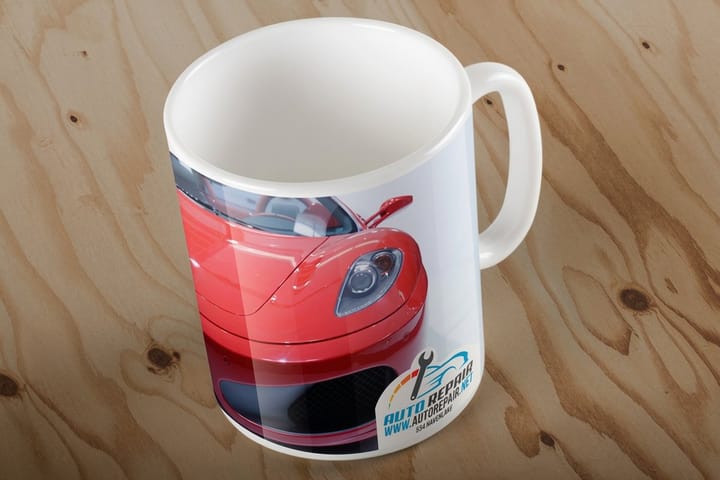
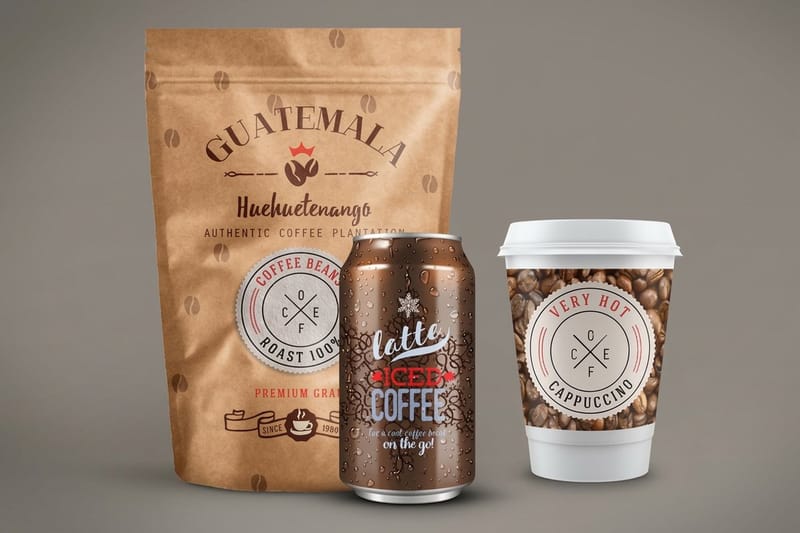
Nobody sees the mug except the person holding it, and that is exactly the point. A custom mug starts at $20.86 and gets used every single morning, which no other object in this kit can claim. For an audience that already likes you, it is the most requested item there is, and it is a genuinely useful thing rather than a piece of branded landfill.
One layout constraint decides whether your design survives the format. The artwork wraps the cylinder but stops short of the handle on both sides, so a pattern meant to run continuously all the way around gets interrupted. Design it as two readable panels, one facing each way, and it works for a right handed and a left handed drinker both. Text that crosses the break is the most common mistake.
Where it costs you: mugs are the heaviest thing here to ship and the only one that arrives broken if it is packed badly. Sell them in person or bundled, and price the postage honestly rather than eating it. If you want design starting points, mug design ideas is a useful place to begin, and no minimum order lets you print six of a new design before you commit to a hundred.
6. Thank you cards: the cheapest piece, the biggest effect
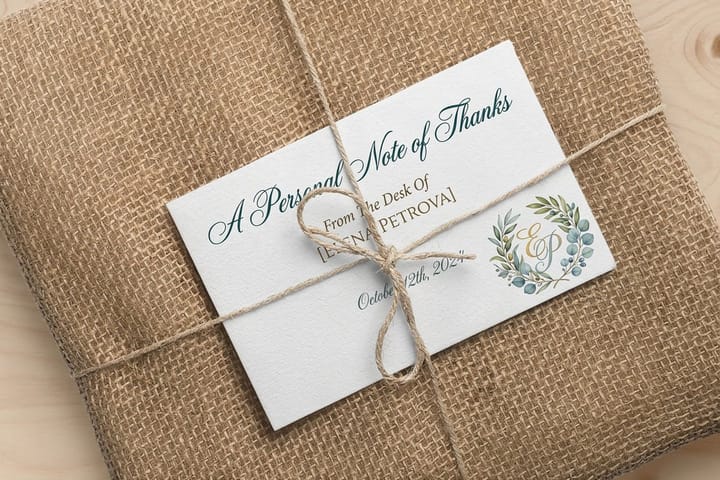
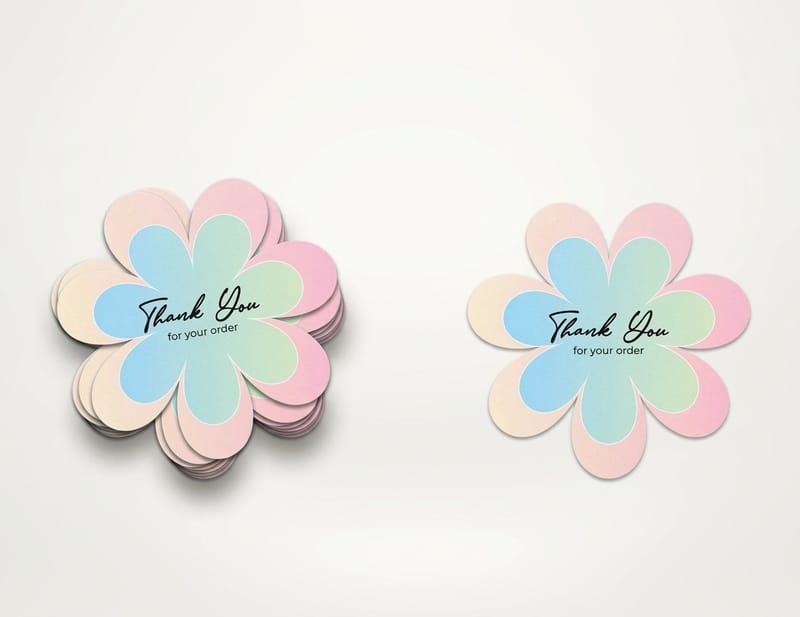
This is the item people skip, and it is the one most responsible for a second order. A thank you card starts at $19.77, riding along in a box you were shipping anyway at essentially no added postage. What it buys you is the difference between a transaction and a relationship, which is the entire subject of this page.
Print the card so that it leaves room for a handwritten line. A printed message alone reads as automation and gets thrown away with the packing slip; six words in actual ink does not, because the buyer knows a person held it. Put the reorder detail on the back if you like, but keep the front for the sentence.
Be realistic about the ceiling. Handwriting scales to maybe fifty orders a week before it eats an evening, so past that point either shorten the note or accept a printed one. For examples that avoid sounding like a receipt, see small business thank you card ideas and thank you card design ideas.
7. Direct mail postcards: the audience nobody can throttle
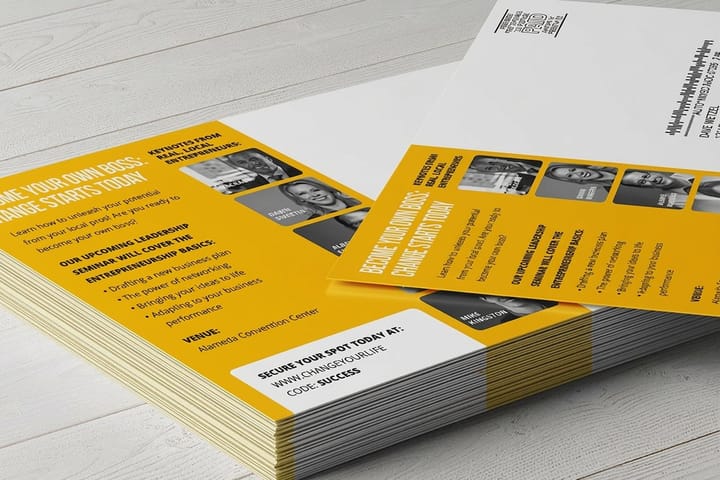
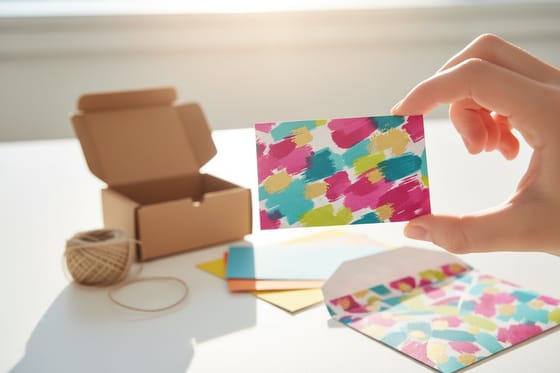
Every platform you built an audience on can change what it shows them tomorrow, and you will not be consulted. A postal address cannot be deranked. Direct mail postcards start at $89.68 and reach the people who gave you their address without a feed, an inbox filter, or an algorithm sitting in the middle of the relationship.
Size decides your postage before design does. A card at 4 in x 6 in stays within the USPS postcard rate; go larger and the same piece mails at letter rates, which changes the economics of a few hundred sends considerably. Check the rate against the size before you fall in love with a layout. Five steps to send direct mail postcards walks the whole process, and printed newsletters for direct mail covers the longer format if a card is too small for what you want to say.
The limit is cost per contact, and it is not close. Postage plus print makes mail the most expensive contact in this kit by a wide margin, so it only earns its place with a list of people who have already bought something. Send it to buyers, not to followers. Bulk discounts bring the per piece cost down once the list is worth mailing twice a year, and free paper samples let you feel the stock before you commit a whole run to it.
Specs and pricing
Compare the two you will reorder most
Stickers get reordered because they sell out, and posters get reordered because one file keeps earning. Die-cut stickers start at $93.37 for 25 on uncoated label stock in 5 business days, and both pieces drop hard per unit once the run grows.

| Quantity | Price Per Unit | Total |
|---|---|---|
| 25 | $3.73 | $93.37 |
| 50 | $1.91 | $95.56 |
| 100 | 100.0¢ | $99.95 |
| 200 | 56.3¢ | $112.59 |
| 300 | 41.4¢ | $124.13 |
| 400 | 33.9¢ | $135.65 |
| 500 | 29.2¢ | $146.10 |
| 600 | 26.4¢ | $158.17 |
| Quantity | Price Per Unit | Total |
|---|---|---|
| 1 | $5.00 | $5.00 |
| 2 | $5.00 | $10.00 |
| 3 | $5.00 | $15.00 |
| 4 | $5.00 | $20.00 |
| 5 | $5.00 | $25.00 |
| 6 | $5.00 | $30.00 |
| 7 | $5.00 | $35.00 |
| 8 | $5.00 | $40.00 |
Wally explains the honest ladder
Cheap first yes, real price second
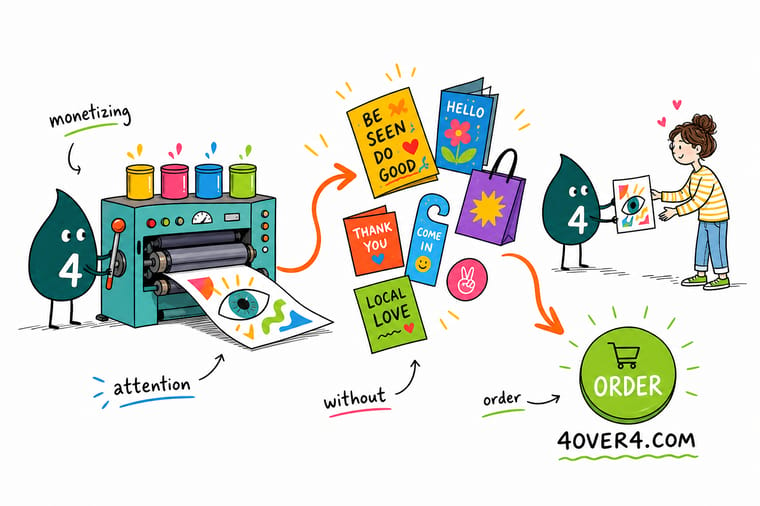
Wally sets the table the way a small audience actually buys it. A sticker gets the first transaction for a couple of dollars, a zine or a poster carries a price because it carries real work, a tote and a mug go home with the people who already like you, and a thank you card brings them back. Nothing on this table required you to read a sponsor's script. Print short runs of two or three designs, see what sells, then put the volume behind the winner.
Shop creative professionals printing →See it in use
Die-cut stickers people paid for





Explore more
Where to go next
By the numbers
What an audience can be sold without a pitch
Common Questions
Common questions about selling to your own audience
What should a creator print first with a small budget?
Die-cut stickers and thank you cards. Stickers start at $93.37 and cards at $19.77, and between them they cover the two moments that decide whether an audience becomes a customer base: the first cheap yes, and the reason to come back. Posters are the next step because one file sells at a real price with nothing to stock. Leave booklets and mugs until you know which of your designs people actually buy.
How is selling merch different from taking sponsorships?
A sponsorship pays you to say something in front of your audience, and the sponsor decides what that something is. A printed product you designed is priced by you, made by you, and says exactly what you meant. The revenue is usually smaller per month at the start and it does not carry the slow cost of spending your credibility on someone else's product.
How many units should I order for a first merch run?
The smallest quantity the configurator will let you order, across two or three designs rather than one. Testing tells you which design sells, and per unit prices fall as quantity climbs, so the second order is where you put real volume behind the winner. Ordering 500 of an untested design is the most common way creators end up storing their own inventory for a year.
Do I have to put my logo on everything I sell?
No, and on wearable items you usually should not. A tote or a shirt covered in a logo asks the buyer to advertise for free, and it sits unused. Put the idea people actually like on the front and your mark small in a corner. Stickers, posters and packaging inserts are where the logo belongs, because there the mark is the point.
Is a zine really worth printing when I could publish it free online?
It is if the contents are worth paying for. A saddle stitched booklet holds a price a free post never will, because the reader is buying collected work in a form they can keep, not a graphic they already scrolled past. Page count runs in multiples of four, so plan the contents at 8, 12, 16, 24 or 32 pages rather than trying to add one page at the end.
Why mail postcards when email is free?
Because postal addresses cannot be deranked, filtered or throttled by a platform you do not control. Mail costs far more per contact than email, so it earns its place only with people who have already bought something. Send it to buyers twice a year rather than to your whole follower list once.
What size poster should I sell?
18 in x 24 in and 24 in x 36 in, because those are the sizes buyers already own frames for. A nonstandard size means a custom frame that costs more than the print, and that is where an interested buyer quietly abandons the order. Build the artwork at full print size or as vector, since a file made for a screen goes soft when it is enlarged to three feet.
Can I print merch without holding inventory?
Partly. Posters, stickers and cards are flat, light and easy to hold in small quantity, so a short run in a drawer covers weeks. Mugs and totes are bulky and heavy, which makes them better suited to in-person tables and bundles than to one-off shipping. Print short runs, watch what sells, and reorder rather than guessing at volume up front.
Get Started
Print the thing you own
Stickers, zines, posters, totes, mugs, cards and mailers, all configured at 4OVER4.COM from $5.00 for a cotton tote. Start with a short run, find out what your audience actually buys, then reorder the winner at volume.
Legal Disclaimer
Gold Standard guarantees apply to all standard orders placed through 4over4.com. Price match requires verifiable proof of a competitor's published price for an equivalent product with matching specifications and turnaround time. Satisfaction guarantee covers manufacturing defects and print quality issues. Contact support with order number and documentation. On-time delivery rate based on tracked orders 1999 to 2026. Individual results may vary based on shipping carrier performance.
