
How to Write Content That Sells Without Sounding Salesy


Salesy is not a tone problem. It is what a reader hears when a sentence sounds certain and gives them nothing to check, so the repair is proof, not politeness.
Content stops sounding salesy the moment specifics do the persuading instead of adjectives. Replace every claim a stranger cannot verify with the number, spec, price or limit sitting behind it, then ask for the next step the reader is actually ready to take. Three habits carry most of the work: write to one person with one problem, explain the mechanism rather than asserting the benefit, and name the case where your product is the wrong choice.
Quick answer
Proof is what separates persuasion from pressure
A reader calls writing salesy when its confidence outruns its evidence. Every adjective doing persuasive work is standing where a number belongs, so the fastest repair is mechanical: find the fact behind the adjective, keep the fact, delete the adjective. Then add the sentence almost nobody writes, the one naming who should not buy this, and finish with an ask that matches how far the reader has actually travelled.
Why Copy Sounds Salesy, and What Readers Are Reacting To
Readers are not offended by selling. They are offended by being asked to believe something they have no way to test. That is the whole mechanism. A sentence reads as salesy when its confidence runs ahead of its evidence, and a reader who cannot check anything defends themselves by discounting everything, including the parts that were true.
Watch what happens with two versions of the same claim. We use only the finest materials gives a reader nothing to hold. Trifolds print on 100lb gloss text, and we move to 14pt cover when the piece has to stand on a counter gives them a fact, an alternative, and a reason for the switch. The second version never says the word quality, and it is far more persuasive about quality.
| What you wrote | What the reader hears | What they can check | Write this instead |
|---|---|---|---|
| Premium quality | You have nothing specific to say. | Nothing. | 100lb gloss text, or 14pt cover on counter pieces. |
| Fast turnaround | Fast compared with what? | Nothing. | Ships in 4 business days once the proof is approved. |
| Affordable pricing | You are about to be expensive. | Nothing. | 500 standard brochures start at $57.11. |
| Trusted by businesses everywhere | Filler where a name should be. | Nothing. | Name the industry, the job, and the quantity you actually print. |
| Perfect for every business | You do not know who I am. | Nothing. | Best on counter handouts. A poor choice for bulk mail. |
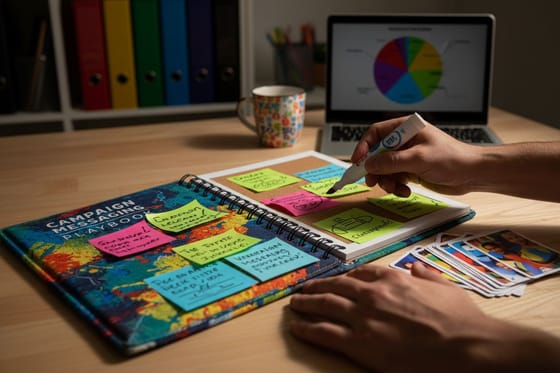
Every row in the right hand column is shorter or the same length as the row it replaces. That matters, because most people assume writing honestly means writing more. It usually means writing less, since a specific fact does the work that three adjectives were failing to do. The same discipline shows up in campaign messaging that has to survive a hostile audience, where a vague promise gets picked apart within a day.
The Rewrite: Take Out the Adjectives, Put In the Numbers
One editing pass fixes most drafts. Go through the page and highlight every adjective doing persuasive work: best, leading, premium, expert, cutting edge, world class. For each one, write the fact it is standing in for. Then delete the adjective and keep the fact.
An example from our own catalog, because it is the kind of sentence every printer writes badly. Weak version: our sales sheets are a premium way to present your offer. The rewrite: a sales sheet is one 8.5 by 11 page, printed both sides, that a rep can leave behind after a meeting. They start at $75.80, and the usual mistake is filling both sides with features when the back only needs pricing and the next step. That version sells harder and never raises its voice.
Two rules keep the pass honest. First, if you hunt for the number behind an adjective and there is no number, the claim goes rather than gets softened. Second, a number you cannot source is worse than no number, so never round a guess up into a statistic. Real specifics you almost certainly have on hand: prices, quantities, dimensions, stock weights, turnarounds, how many revisions are included, and what your refund actually covers.
This is also where products belong in a piece of content, at the point where they are the answer to a problem you just described rather than an announcement. If you are explaining that a counter handout has to survive being picked up fifty times a day, naming standard brochures and the stock you would choose is useful information. Opening the page with it is an advert. Our guide to choosing paper for printed marketing materials is the detail behind that stock decision.
A Four Part Shape That Sells Without Pushing
Persuasion has a shape, and it is not attention, interest, desire, action. That formula was built for interruption advertising. Content that sells to a reader who came looking for an answer runs in a different order, because they have already given you their attention and now want to know whether you understand their problem.
- The problem, in their words. Describe the situation precisely enough that a reader thinks you have seen it before. Not businesses need marketing materials, but the box of brochures printed for a trade show three months ago is now wrong because the pricing changed.
- The mechanism. Explain how the fix actually works. Mechanism is what separates a claim from an explanation, and it is the part competitors skip because it takes real knowledge to write.
- The limit. Say where this is the wrong choice. One sentence. It is the highest return sentence on the page.
- The small ask. Offer the next step the reader is ready for, and say what it costs and what happens after.
The third step is the one people fight. Naming the limit feels like handing away the sale, and it does the opposite, because a reader who has just seen you rule yourself out of one situation now believes you when you say you fit theirs. Concretely: postcards are the cheapest way to reach a mailing list, starting at $16.48, and they are the wrong format for anything that needs more than one specific and one instruction. Writing that sentence costs a few postcard sales and wins the brochure job.
The shape scales down as well as up. A postcard has room for one problem, one mechanism and one ask, so it forces the same discipline in fifty words that a landing page gets a thousand for.
The Proof You Already Have and Are Not Publishing
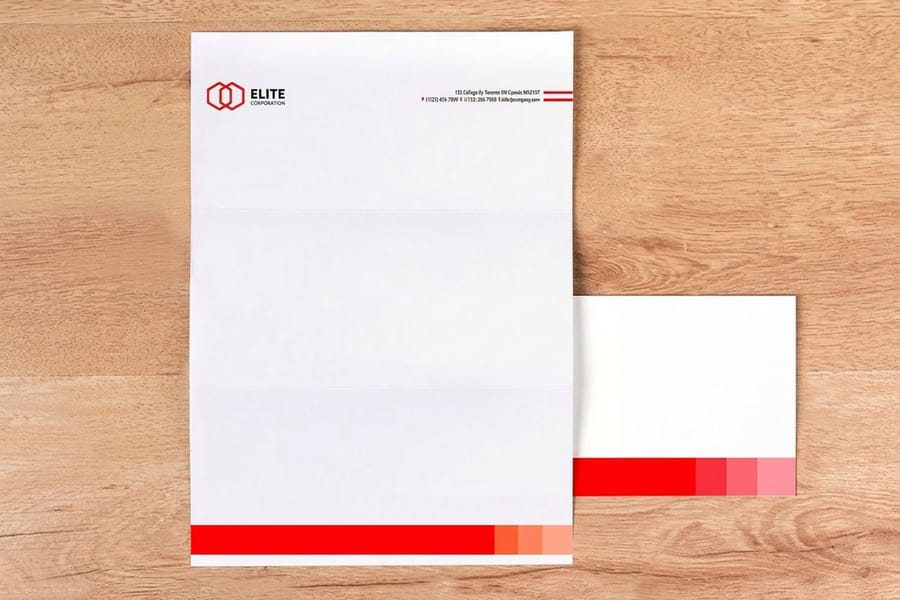
Most businesses believe they lack proof, then sit on plenty of it. Proof is more than testimonials and case studies. It is any detail a reader can check, or that only somebody who has actually done the work would know.
- Process detail. What happens between the order and the box. A proof stage, a preflight check, what you do when a file arrives at 72dpi. Nobody who has not run the job can write this.
- Numbers with units. Stock weights, finished sizes, fold types, quantities, turnaround in business days, price at a stated quantity.
- Named failure modes. Text that sits inside the trim line gets cut. A gloss aqueous coating resists pen ink, so an appointment card that gets written on should be uncoated on that side. Warnings are proof of experience.
- Boundaries. What you do not do, what you will not promise, and where a competitor is the better answer.
- The tools you hand over. A layout template, a checklist, a sample. Anything a reader can use before they buy is proof that survives contact.
Publishing the tools is the least used and most convincing of the five. When somebody downloads a blank layout template with the bleed and safe zone already marked, they learn more about whether you know your trade than a page of claims could tell them. The same goes for putting real starting prices in the copy rather than hiding them behind a form. A price a reader can see is proof. A price they have to ask for is a warning.
Where the Words Land: Page, Handout, and Mailbox

The same argument has to survive three very different reading conditions, and copy that ignores this is where good writing turns into a pushy handout. A web page is read sitting down, at the reader's pace, with the option to scroll past anything. A handout is read standing up in about seven seconds. A mailer is read over a bin.
Print is the better editor of the two. When you cut a page down to a flyer at $39.54 or a postcard at $16.48, you find out which sentence you actually believe in, because only one survives. Take that sentence back to the web page and use it as the headline. Writers who work in the other direction, padding a short piece out to fill a landing page, end up with the repetition that reads as sales pressure.
Format also sets the honest length of the ask. A direct mail piece arriving unrequested has not earned the right to ask for a signature, so it asks for a sample or a visit. A brochure handed over after a conversation is further along and can carry pricing, because the reader asked. Getting this wrong is what people usually mean when they say a piece felt salesy: the ask did not match the relationship.
If you are building a set of pieces rather than one, keep a single message and let each format carry the part it can hold. Our guide to building a print marketing kit works through that split, and the full wording and messaging guides cover the phrasing questions that come up piece by piece.
Wally rewrites the pitch
Cross out the adjective, write the fact
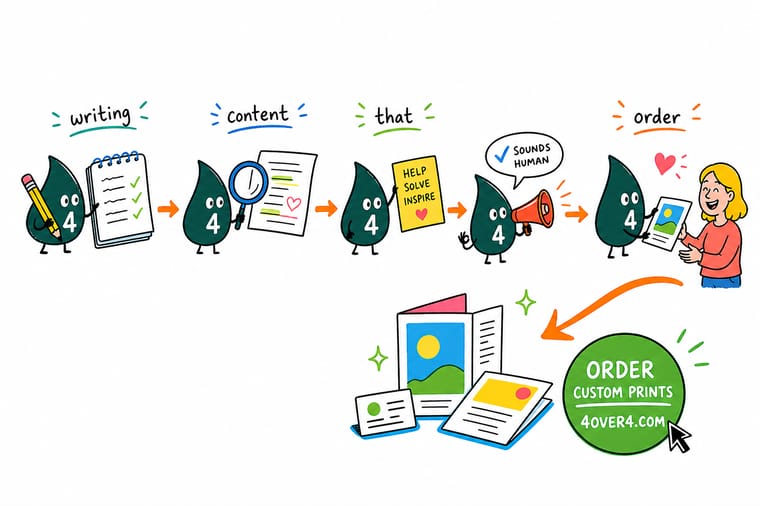
Wally reads a draft with a pen in hand. Best in the business gets crossed out and 100lb gloss text goes in above it. Affordable becomes 500 brochures from $57.11. Perfect for everyone becomes wrong for bulk mail, right for the counter. The page gets shorter, the claims get smaller, and it sells more, because now there is something in it a stranger can check.
Print a sales sheet that says something →Specs and pricing
The formats that carry the argument, with real starting prices
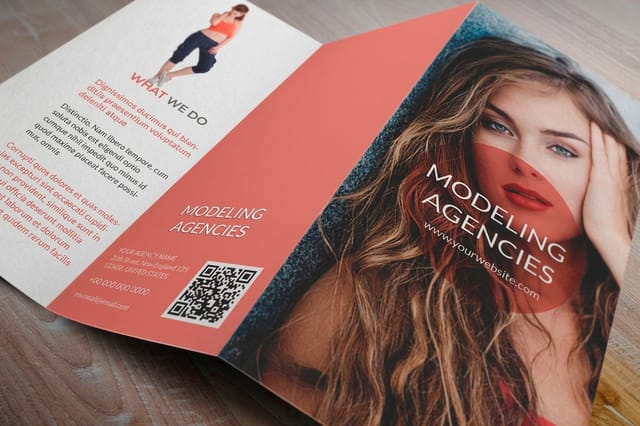
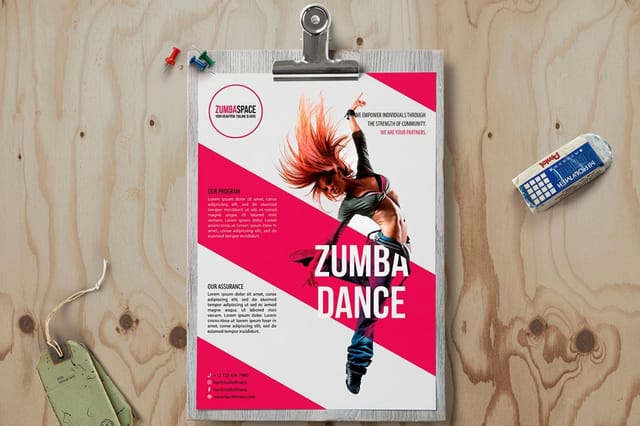
Brochures hold the long version, sales sheets hold the leave behind, postcards hold the single specific. Sizes, stocks and starting prices come straight from the 4OVER4.COM configurator.



Print it
Put the rewritten copy on paper
Explore more
Where to go next




By the numbers
The specifics behind our own claims
Common Questions
Questions writers ask about selling without the sales voice
What actually makes writing sound salesy?
A gap between how confident the sentence sounds and how much of it the reader can verify. Two things widen that gap fast: adjectives with no fact behind them, and pressure words borrowed from someone else's discount campaign. Read your draft and mark every sentence a stranger could not check. Those marks are the salesy ones, and no amount of softening the tone fixes them. Replacing one of them with a real number usually fixes three sentences around it at the same time.
How do I write a call to action that is not pushy?
Ask for the thing the reader is ready to do. Early in the relationship that is a sample, a template, a price, or a five minute call with a stated agenda. Say exactly what happens next and what it costs, including zero. Order now with no context is pushy because it skips three decisions the reader has not made yet. Download the trifold layout and check your folds before you commit is not pushy, because it is genuinely useful whether or not they buy.
Should I use urgency and deadlines at all?
Only when the deadline is real and you can say why it exists. A press date, a shipping cutoff before a trade show, or a paper stock being discontinued are all honest reasons, and stating the reason is what stops the sentence reading as manufactured. Invented countdowns work once on a stranger and never again on a customer who comes back and sees the same offer ending for the third time. If the deadline exists, name it plainly and move on.
How long should the copy be?
As long as the number of real objections, and no longer. Count them first: price, timing, quality risk, switching cost, and internal approval are the usual five. One tight paragraph each is roughly 400 words, which is why most product pages that work land between 400 and 800. Length only becomes a problem when the extra words repeat a claim instead of answering a new question. If a paragraph could be deleted and nothing unanswered appears, delete it.
Does the same copy work on a web page and a printed piece?
The argument carries. The word count does not. A web page can hold the objection handling and the fine print because the reader scrolls at their own pace. A printed piece is read standing up, often in seconds, so it carries the single strongest specific and one clear next step. A good rule is to write the long version first, then cut it to the one sentence you would keep if you only had a postcard, because that sentence is usually your real headline on both.
How do I know whether the copy is working?
Track the action, not the compliment. On a page, watch the rate at which readers take the next step you asked for, and read the questions that still arrive by email and phone, because each repeated question is a paragraph your copy has not written yet. On print, give each piece its own landing URL, phone extension or discount code so the response is attributable. Nice writing that produces the same three questions every week is not working.
Can I write this way about a commodity product?
That is where it works best. When the product is close to identical everywhere, the specifics are the only real differentiator left, so the page that publishes the stock weight, the turnaround, the proof process and the actual starting price wins against four pages of adjectives. Standard brochures start at $57.11 and sales sheets at $75.80 at 4OVER4.COM, and naming both, along with what changes at higher quantities, is more persuasive than any sentence about quality.
Get Started
A 50 sheet sales sheet run costs $75.80
Pick a format, choose the stock, and print the version of your pitch that had every unprovable adjective taken out of it.
Legal Disclaimer
Gold Standard guarantees apply to all standard orders placed through 4over4.com. Price match requires verifiable proof of a competitor's published price for an equivalent product with matching specifications and turnaround time. Satisfaction guarantee covers manufacturing defects and print quality issues. Contact support with order number and documentation. On-time delivery rate based on tracked orders 1999 to 2026. Individual results may vary based on shipping carrier performance.
