
4 Page Booklet Printing on a Single Folded Sheet


Emma is our prepress and print production voice, built from the knowledge of our production team, with over 20 years in printing.
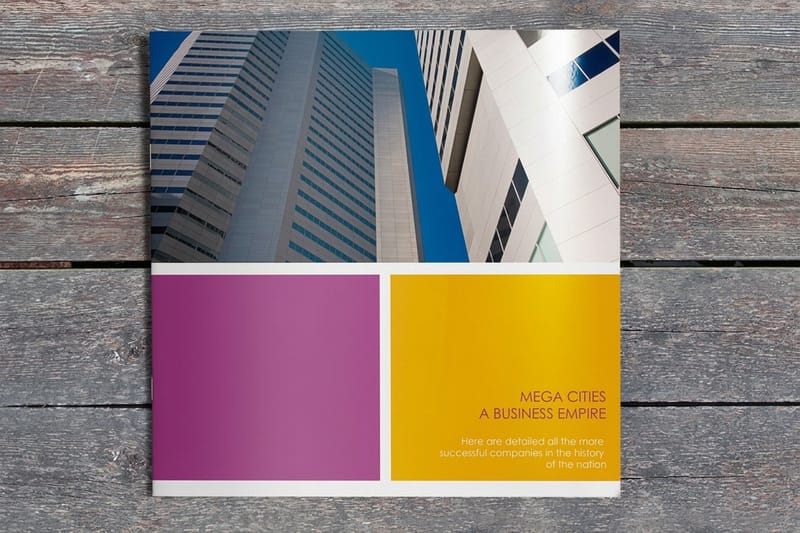
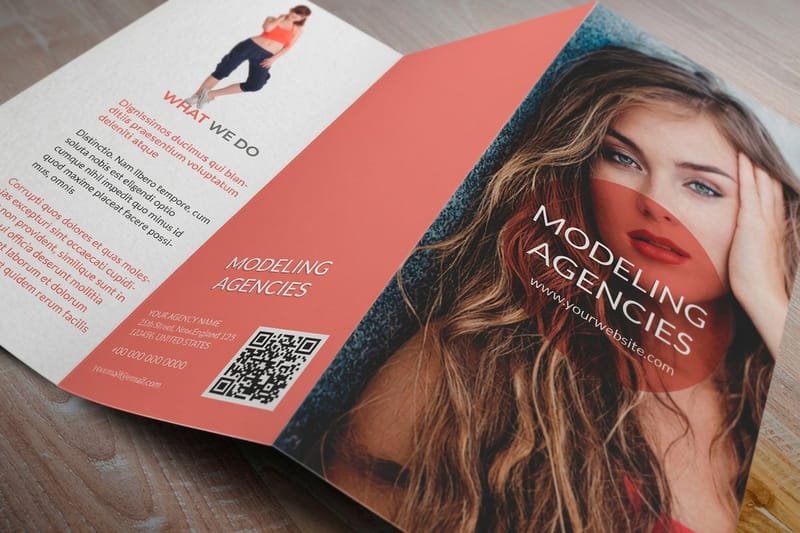
A 5.5 x 8.5 booklet of four pages starts life as an 8.5 x 11 sheet. That produces a fixed set of sizes, a coated stock that can crack on the fold, and a file setup that folds where you meant it to.
A 4 page booklet is one sheet of paper printed on both sides and folded once, so it is produced as a half fold brochure rather than a saddle stitched booklet. There is nothing for a staple to hold at four pages, which is why stitching starts at 8 and page counts move in fours after that. As Standard Brochures it starts at $57.11 for 50 flat sheets plus $15 for the fold, against $240.55 for 25 stitched booklets, and the only real setup traps are supplying spreads instead of single pages and folding coated cover stock with a dark solid across the spine.
Quick answer
One sheet, one fold, four pages
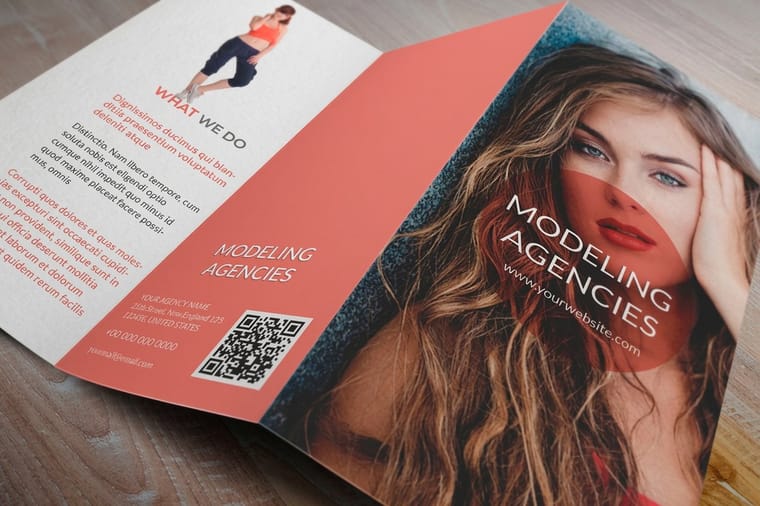
Four pages is the smallest booklet that exists, and it needs no binding at all. The sheet prints on both sides, folds down the middle, and reads front cover, spread, back cover. You supply single pages in reading order and the pairing onto the sheet happens here. Everything above four pages moves in steps of four, because every extra folded sheet adds four more.
The common size
5.5 x 8.5 booklet printing
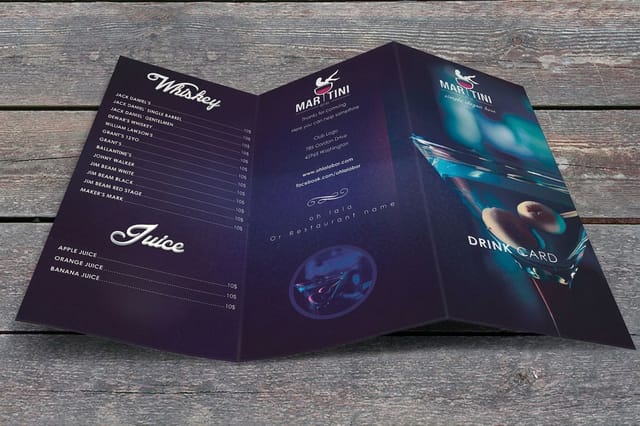
A 5.5 x 8.5 booklet of four pages prints on an 8.5 x 11 sheet and folds once on the long edge. Order it as Standard Brochures: choose 8.5 x 11, a half fold and color on both sides (4/4), then pick 100# Gloss Text, 100# Silk/Matte Text, 70# Uncoated Text or 14pt Gloss Cover. Runs start at 50 copies, and the standard turnaround is 3 business days. Build the file as four single pages at 5.5 x 8.5 with an eighth of an inch of bleed. Once the content passes four pages, Standard Booklets print the same 5.5 x 8.5 size saddle stitched, from 8 pages up.
Turnaround
Same day print options
The folded 4 page formats can print the same day, and a stitched booklet cannot. Order by 12pm ET and a same day job ships that day from our Queens facility. The configurator shows each speed with its price, so you see what a faster day costs on your quantity before you check out.
| Product | Turnaround choices | Starts at |
|---|---|---|
| Standard Brochures, half fold | Same day, 1, 2 or 3 business days | $57.11 for 50 flat, plus $15 fold |
| Standard Newsletters | Same day, 1, 2 or 3 business days | $75.80 for 50 |
| Standard Flyers, no fold | Same day, 1, 2 or 3 business days | $39.54 for 50 |
| Standard Booklets, 8 pages and up | 1 to 7 business days | $240.55 for 25 |
What a 4 Page Booklet Actually Is
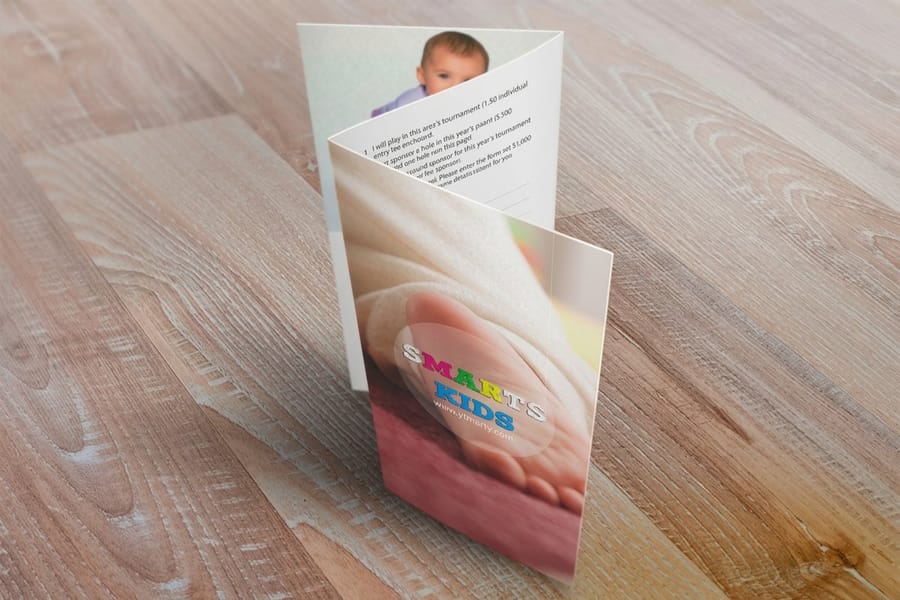
The confusion starts with the word page. In a layout file a page is one side of the paper, so a sheet printed on both sides holds two pages. Fold that sheet once and you have four: front cover, inside left, inside right, back cover. One sheet of paper, four pages, no binding of any kind.
That is why the quote you get back says brochure. The piece runs on a folder, not on a stitcher, and the machine that makes it is the same one that makes a half fold brochure. Ordering it as Standard Brochures with a half fold gets you the piece your file describes, at $57.11 for 50 flat sheets plus $15 for the fold, instead of a booklet quote built around a minimum you do not need.
Imposition is the part designers rarely see. Pages 4 and 1 print together on the outside of the flat sheet, back cover on the left of the fold and front cover on the right. Pages 2 and 3 print together on the inside as a facing spread. When it folds, it reads in order. You do not arrange any of that yourself, which is exactly why the file should be supplied as four single pages in reading order rather than as spreads you have already paired up.
The order screen settles the rest. Set Folding to Half Fold and Ink Color to 4/4 so all four pages print, then choose the flat sheet: 5.5 x 8.5, 8.5 x 11, 8.5 x 14, 9 x 12, 11 x 17, 11 x 25.5 or a custom size. Four stocks cover the job, 100# Gloss Text, 100# Silk/Matte Text, 70# Uncoated Text and 14pt Gloss Cover, with a High Gloss UV coating as an option. Quantities run from 50 to 25,000, and a free online proof is one of the proof choices.
One consequence is worth planning around: pages 2 and 3 are physically continuous, with no cut between them. That is the only place in the whole piece where an image can run across the fold, and it is the strongest layout move a 4 page format offers.
Sizes, and How the Flat Sheet Sets Them
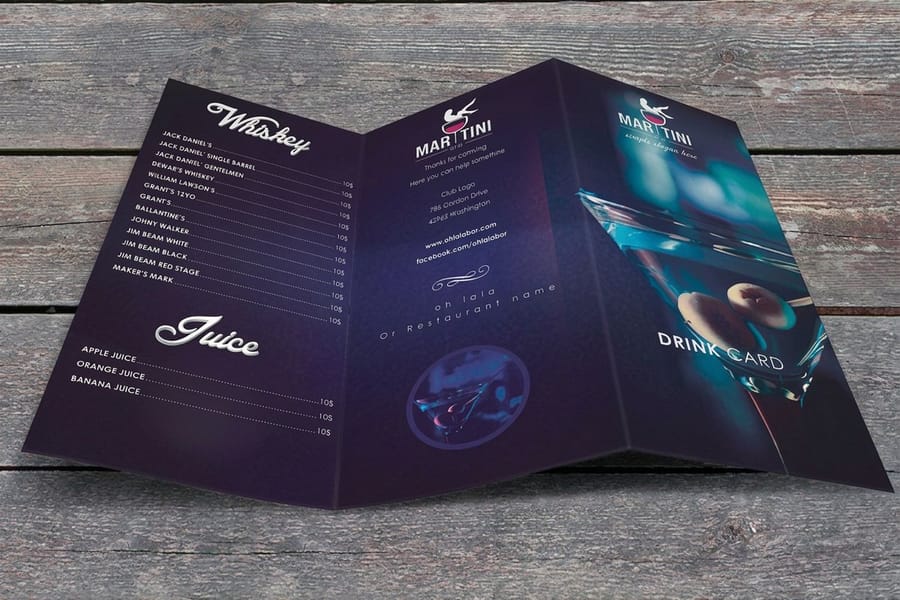
Pick the finished size first, then double the dimension the fold runs through. That is the whole calculation. An 8.5 x 11 sheet folded on its long edge finishes at 5.5 x 8.5, and an 11 x 17 folded the same way finishes at 8.5 x 11.
| Flat sheet | Finished size | What it suits | Watch for |
|---|---|---|---|
| 8.5 x 11 | 5.5 x 8.5 | Event programs, service menus, product one-sheets handed over in person. | Fits a #10 envelope only if you fold it again, which adds a pass. |
| 11 x 17 | 8.5 x 11 | Newsletters, dealer sheets, anything with a table or a floor plan inside. | Heavy at cover weight. Text stock keeps postage sane. |
| 8.5 x 14 | 7 x 8.5 | Wine and dessert lists, short takeout menus. | Odd width, so check it against your rack or menu holder first. |
| 12 x 9 | 6 x 9 | Rack distribution and self-mailers. | The 6 x 9 face is the standard rack opening, so do not trim it down. |
| 8.5 x 5.5 | 4.25 x 5.5 | Instruction inserts, thank you cards with a message inside. | Small type crowds fast once you allow safety margins. |
A half fold behaves differently from a tri-fold in one respect. On a tri-fold, the panel that tucks inside has to be built about a sixteenth of an inch narrower or it buckles. On a half fold, both panels are exactly the same width, so a symmetrical layout stays symmetrical. If you are weighing formats, the folding options guide lays out what each fold does to the panel math.
Stock Weight, and the Fold That Cracks
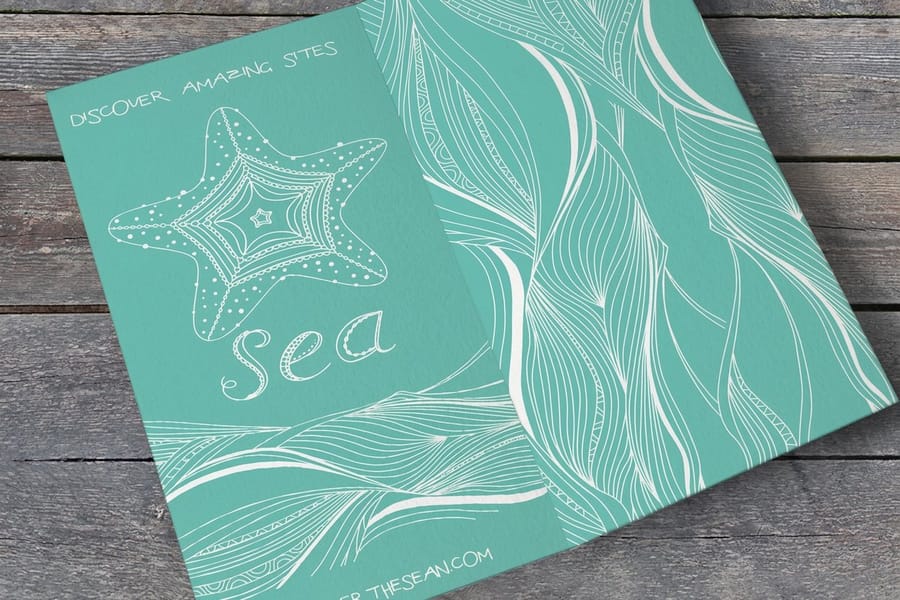
Two families cover the brochure menu. Text weight, meaning 100# Gloss Text, 100# Silk/Matte Text or 70# Uncoated Text, folds cleanly and drapes in the hand. Cover weight, meaning 14pt Gloss Cover, holds its shape upright and survives being handled every day for a month.
The trade-off is the fold. Coated cover stock can crack along it, because the coating is brittle and the fold puts the outside of the bend in tension. A score, a shallow crease pressed in before folding, gives the fibers somewhere to go, and the brochure menu does not list one, so plan the 14pt layout with that in mind. A dark solid printed across the spine shows a crack worst of all, since the white paper core is what you see. Text weight folds without the risk.
Choose by what happens to the piece after it leaves your hands. A mailed newsletter is read once, so 100 lb gloss book is enough and it keeps postage down: Newsletters start at $75.80 for 50. A menu is opened dozens of times a day by people with wet hands, so Menus pair 100# Gloss Text or 70# Uncoated Text with an optional High Gloss UV coating. For a piece that stands in a rack, cover weight is not optional, because text weight simply flops forward.
If you want the full breakdown of how coatings behave on a folded piece, the brochure paper guide goes stock by stock, and the booklet paper and finish guide covers what changes once you go past four pages.
Four Pages Against Eight, and When to Step Up
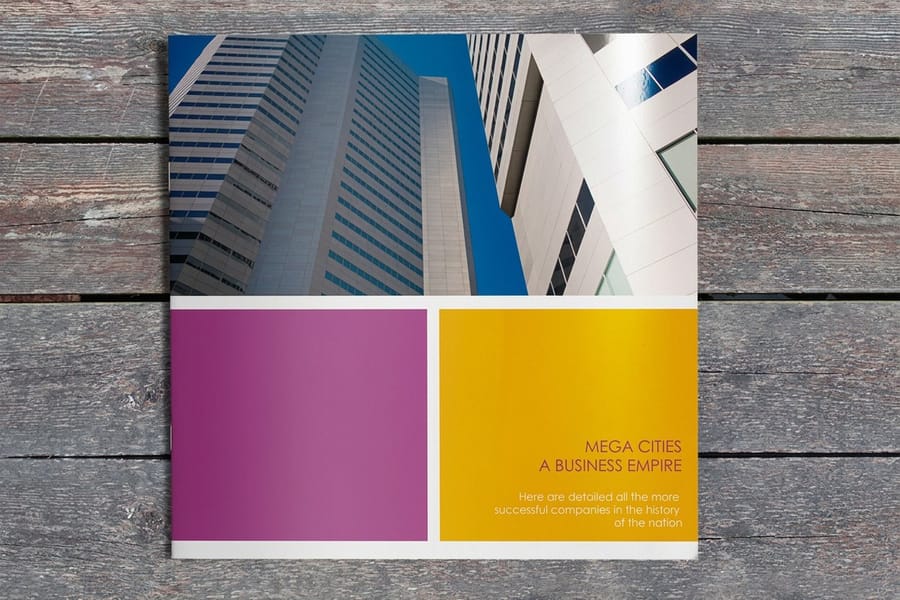
Saddle stitching needs two folded sheets nested inside each other before a staple has anything to hold. That is the real reason 8 pages is the floor for a stitched booklet, and why a 4 page piece is folded and nothing else. Every sheet you add after that brings four more pages, so the ladder runs 4, 8, 12, 16, and never lands on 5 or 10. The page count guide shows what that does to a layout when the content refuses to cooperate.
| Format | Sheets | Binding | Starts at | Best for |
|---|---|---|---|---|
| 4 page, half fold | 1 | Fold only | $57.11 for 50, plus $15 fold | One message with supporting detail. Menus, programs, product sheets. |
| 4 page newsletter | 1 | Fold only | $75.80 for 50 | 11 x 17 folded to letter size, mailed on a schedule. |
| 8 page and up | 2 or more | Saddle stitch | $240.55 for 25 | Catalogs, lookbooks, anything needing sections and a contents page. |
| 1 page, flat | 1 | None | $39.54 for 50 | A single offer that does not need a cover at all. |
The honest test is whether your content has sections. Four pages gives you a cover, one spread, and a back panel, which is enough for one argument with evidence. The moment you need a contents page, chapter headings, or more than one product family, you are already an 8 page job and squeezing it into four will just produce small type. The Standard Booklets price reflects stitching and face trimming on every copy.
Going the other way works too. If the inside spread is only carrying a paragraph, drop the fold entirely and print Standard Flyers at $39.54 for 50, or read the booklet, brochure and flyer comparison before you commit. A half empty inside spread reads as filler.
Setting Up the File and Ordering It
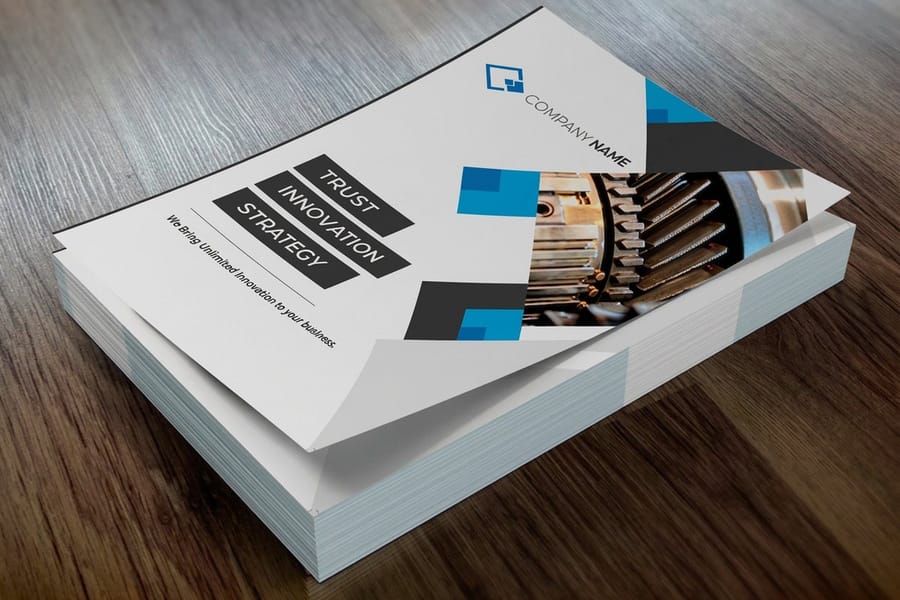
Build the document at the finished size, not the flat size. For a 5.5 x 8.5 piece that means a four page document at 5.5 x 8.5, with an eighth of an inch of bleed on every side of every page and an eighth of an inch of safety margin inside the trim. Export a single PDF with the pages in reading order and let us handle the imposition. Bleed and trim explained covers the measurements if you are setting them for the first time.
Three habits prevent most fold problems. Keep type and faces at least an eighth of an inch clear of the fold, because folding equipment holds a tolerance of about a sixteenth of an inch and a headline sitting on the spine will look off center on part of the run. Second, do not put a thin white line or a hairline rule along the fold, since any drift makes it read as a mistake. Third, if the inside spread carries an image across the middle, extend it fully to both outer trims so a small shift has nowhere to show.
Start from a correctly sized layout rather than a blank canvas. Our blank template library has the trim, bleed and fold marks already placed, and the booklet template walkthrough shows how to work inside one. When the file is ready, configure size, stock, quantity and turnaround on brochure printing, or step through how to order booklet printing if the job has grown past four pages. For that 8 page job, open a sized booklet template with the stitched spine already marked.
One last check before uploading: fold a printed proof by hand. A piece that reads perfectly on screen sometimes puts the call to action on the back panel where nobody looks. Folding a brochure by hand takes a minute and catches the mistake while it is still free to fix.
Wally counts the pages
One sheet, one fold, and suddenly there are four
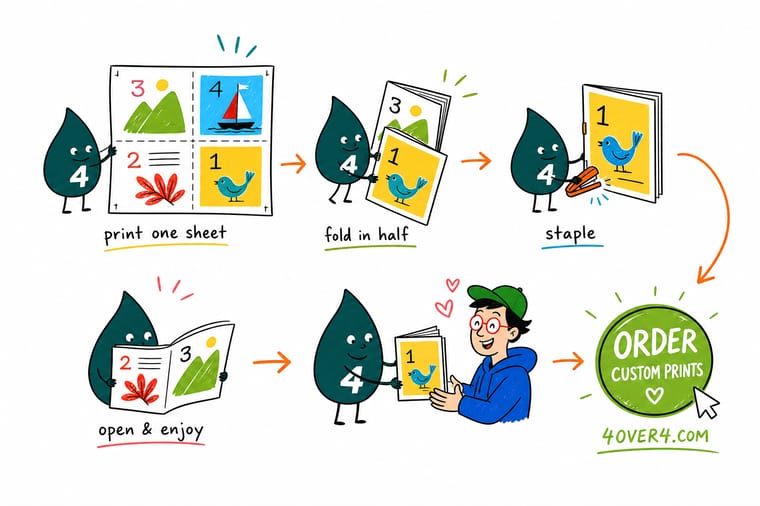
Wally prints a sheet on both sides, folds it once, and counts: cover, left inside, right inside, back. Four pages from one piece of paper, no staple anywhere. When he tries to staple it, the spine has nothing to bite into, so he waits until there are two sheets and eight pages before reaching for the stitcher. His rule for the file is short. Send four single pages in reading order, keep the headline an eighth of an inch off the fold, and ask for a score if the stock is cover weight.
Configure a 4 page brochure →
Specs and pricing
Folded and stitched formats, sizes and starting prices
Standard Brochures fold one sheet into four pages on a 3 business day standard turnaround, Standard Newsletters fold an 11 x 17 sheet to letter size, and Standard Booklets start at 8 pages, saddle stitched, with 1 to 7 business day options. Compare their sizes, stocks and live starting prices from the 4OVER4.COM configurator below.
Print it
Order your 4 page piece
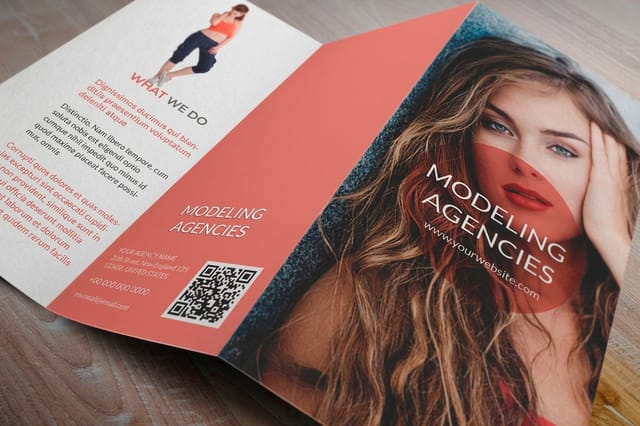
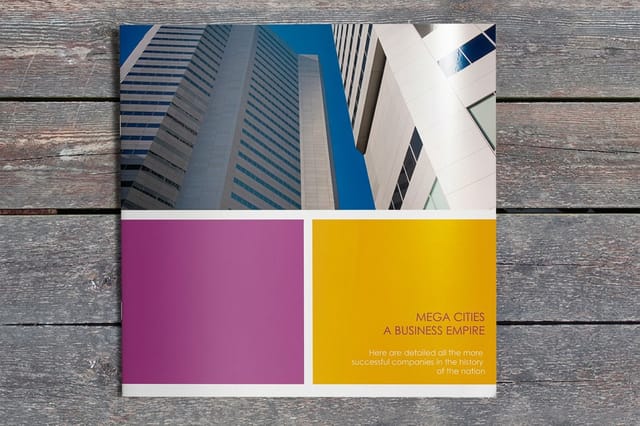
Brochures for the half fold 4 page piece, booklets once the job reaches 8 pages, and menus on 100# Gloss Text or 70# Uncoated Text with a half fold or a trifold.

Explore more
Where to go next
Six next reads: why page counts move in fours, how a saddle stitch holds, half fold panel sizes, brochure paper weights, the full brochure range and the printing FAQs.

By the numbers
The press that folds a four page booklet, in numbers
Common Questions
Your 4 page booklet questions, answered
Is a 4 page booklet the same thing as a bi-fold brochure?
Yes. One sheet, printed both sides, folded once down the middle gives four printed pages: front cover, inside left, inside right, back cover. Designers call it a 4 page booklet because they count pages in the layout file. Printers call it a half fold or bi-fold brochure because that is the machine it runs on. Order it as Standard Brochures with a half fold and you will get exactly what the design shows.
Can you saddle stitch a 4 page booklet?
Not in any way worth paying for. A saddle stitcher drives a staple through the spine of a nested set of sheets, and with one sheet there is nothing for the second half of the staple to grip. The staple ends up visible on both the front and back cover of a piece that already stays shut on its own. If you want a stapled spine, the job needs 8 pages, which means two sheets.
What sizes does a 4 page booklet come in?
The finished size is always half the flat sheet on the folding edge. The common ones are 8.5 x 11 flat folding to 5.5 x 8.5, 11 x 17 flat folding to 8.5 x 11, and 8.5 x 14 flat folding to 7 x 8.5. Smaller runs use 8.5 x 5.5 flat down to 4.25 x 5.5 for a pocket piece, and 12 x 9 flat gives the 6 x 9 that fits a standard rack.
What paper should a 4 page booklet be printed on?
It depends on whether it has to stand up. For a handout or a mailer, 100# Gloss Text or 100# Silk/Matte Text folds cleanly and feels substantial without adding postage. For a piece that sits in a rack or gets handled at a counter for weeks, move to 14pt Gloss Cover and keep heavy ink off the fold, because coated cover stock can crack there.
Should I supply the file as spreads or as single pages?
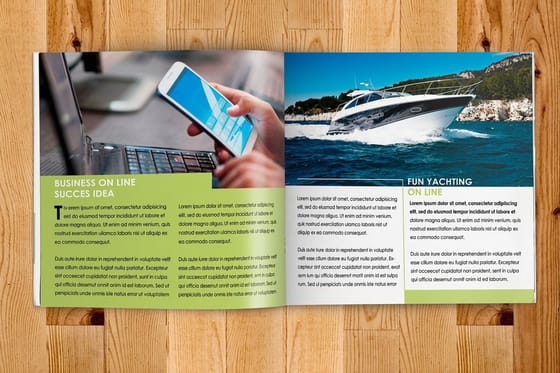
Single pages, in reading order, one page per PDF page: 1, 2, 3, 4. We impose them onto the sheet, which means placing 4 and 1 together on the outside and 2 and 3 together on the inside. If you build reader spreads yourself, a 4 page file becomes two spreads and the imposition step has to be undone before it can run. Add an eighth of an inch of bleed on all four sides of every page.
What does 4 page booklet printing cost compared with a real booklet?
The gap is wide because the work is different. Standard Brochures start at $57.11 for 50 flat 5.5 x 8.5 sheets, plus $15 for the half fold that makes them 4 page pieces, while Standard Booklets start at $240.55 for 25 because that price covers 25 saddle stitched copies of at least 8 pages. If your content genuinely fits on four pages, running it as a brochure is the cheaper and faster route every time.
Get Started
50 brochures start at $57.11, plus $15 to fold them
Pick the finished size, choose text or cover weight, and we fold and ship it. Send four single pages in reading order and we handle the imposition.
Legal Disclaimer
Gold Standard guarantees apply to all standard orders placed through 4over4.com. Price match requires verifiable proof of a competitor's published price for an equivalent product with matching specifications and turnaround time. Satisfaction guarantee covers manufacturing defects and print quality issues. Contact support with order number and documentation.
