
5 Print Pieces That Feed a Google Performance Max Campaign
Performance Max is very good at collecting demand and poor at inventing it. These five pieces make the demand it collects, and each one carries a code you can count separately from the dashboard.
The print that pays for itself beside a Performance Max campaign is print that manufactures branded search, and print that carries its own trackable path back. Five pieces cover both jobs: standard postcards from $16.48 to reach a list that is not searching yet, standard business cards from $17.57 for the handoff that becomes a visit, circle stickers from $23.88 for the reorder code on the box, standard flyers from $39.54 for local footfall without postage, and standard brochures from $57.11 for the second order and the printed price list. All five start at $154.58 together. Switch on brand exclusions before the first run, or the campaign books your mailing as its own win.
The picks
Five pieces, from $16.48 postcards to $57.11 brochures
Buy them in this order rather than all at once. Cards and postcards are cheap enough to be wrong about, and they teach you whether the offer works before the brochure locks a price list into circulation. Prices come straight from the configurator and drop per piece as the quantity climbs.
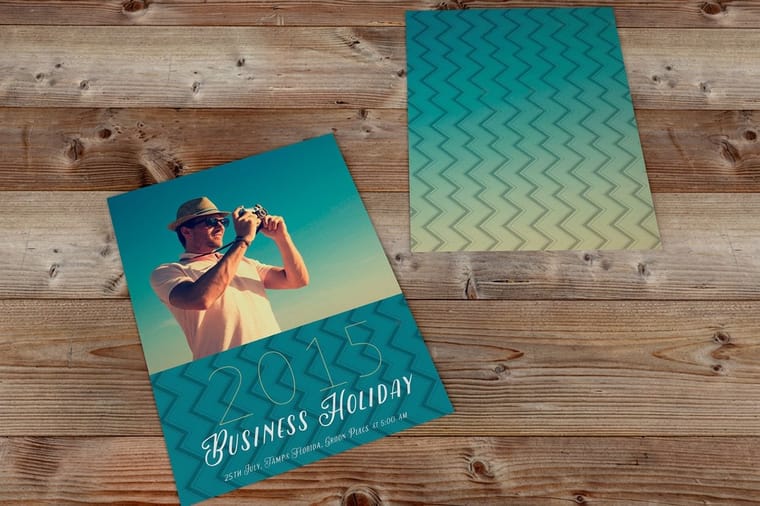
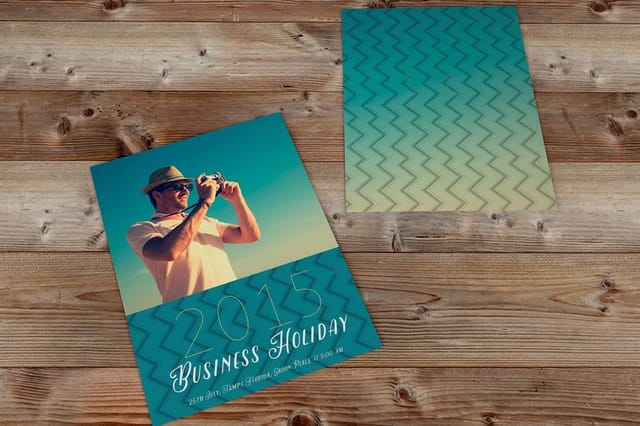
Standard postcards from $16.48
The cheapest way to put your name in front of somebody who is not searching yet. A mailed offer today is a branded query next week, and branded queries are the cheapest clicks the campaign will ever buy.
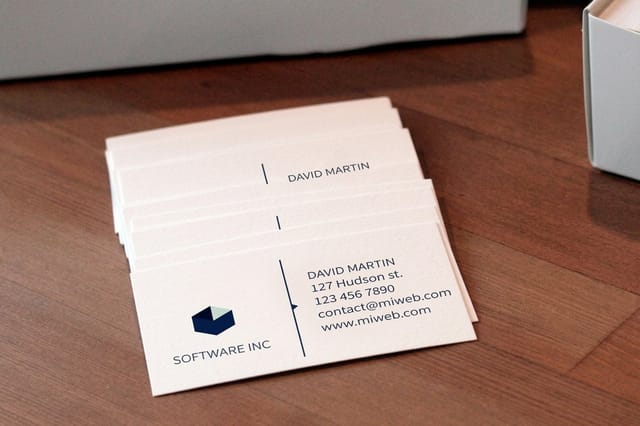
Standard business cards from $17.57
A conversation ends and the search begins. Give the back of the card to one code and one line, and the person who took it arrives on your site instead of on a competitor result page.
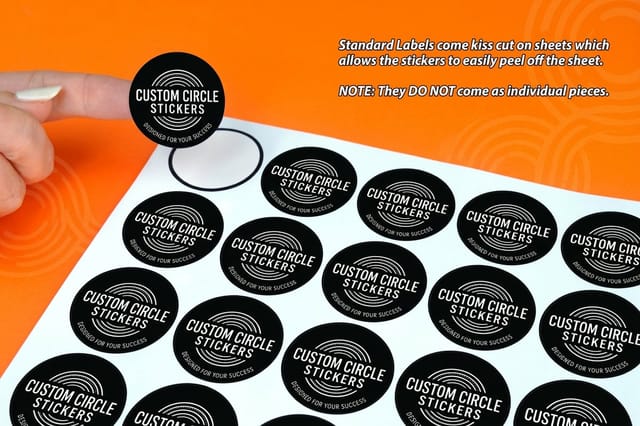
Circle stickers from $23.88
Seal the box with it. The reorder code gets scanned in the one minute the customer is actually holding your product, and a repeat purchase costs the campaign nothing.
Standard flyers from $39.54
Local footfall without postage. If your Performance Max campaign is chasing store visits, a flyer in the right three streets moves the same needle for far less per household.
Standard brochures from $57.11
The in-box piece that earns the second order without paying for a second click. It also puts your prices in writing, which stops the follow-up call starting from the customer guess.
Where print enters
The loop the campaign reports on, and the part it cannot see
One budget buys Search, Shopping, YouTube, Display, Discover, Gmail and Maps, and Google decides the split. Print sits outside that budget entirely, which is exactly why it is worth printing, and exactly why the report will never show it.
Start with the honest version of what the campaign does. Performance Max bids toward the conversion values you feed it, and it finds the cheapest route to those values across every surface at once. Branded searches, direct visits and map lookups are the cheapest routes available, so a campaign left unrestricted will lean on them hard. That is not fraud. It is the machine doing its job with the inputs it was given, and it means a rising conversion count can sit on top of demand you generated somewhere else and paid for separately.
Print is the somewhere else. A postcard on a kitchen counter, a card in a wallet, a sticker on a box in a hallway. None of them appear in an asset group report, and none of them ever will. What you can do is give each piece its own short URL on your own domain, all landing where you want them, and read the hit counts as a channel of their own. Add a printed phone line for the people who dial instead of scanning, because a caller leaves no digital trail at all. The whole tracking setup is walked through in QR codes for a small business and in the complete guide to QR codes.
Then close the credit loophole. Turn on the account brand exclusion list so Performance Max cannot buy your own name, keep branded traffic in a separate Search campaign where you can see its cost, and compare account totals across the weeks a print run is in market rather than reading the campaign row. Do the two things together and the print half stops being an act of faith. Leave them off and every mail drop you run makes the campaign look better than it is, which is a pleasant way to waste a budget for two quarters. The campaign side of that argument sits in the Performance Max guide.
What each piece does
The five pieces and the job each one holds
Each piece answers a different question and costs a different amount to be wrong about. Read the row, tap the piece to jump to its section, and start with whichever job your account is currently paying a competitor to do.
| Piece | The job it does | When it makes sense | Starts at |
|---|---|---|---|
| Standard postcards | Creates the branded demand the campaign later harvests | You own a customer list, or a carrier route is worth buying | $16.48 |
| Standard business cards | Turns a face to face conversation into a tracked visit | You quote in person, at a counter or on a site | $17.57 |
| Circle stickers | Carries a reorder code into the unboxing moment | You ship product, or you seal a bag at a counter | $23.88 |
| Standard flyers | Buys local reach with no postage attached | The campaign goal is store visits inside a few miles | $39.54 |
| Standard brochures | Holds the tiers and the prices for a slower sale | The sale needs a quote and more than one conversation | $57.11 |
1. Standard postcards: manufacture the branded search
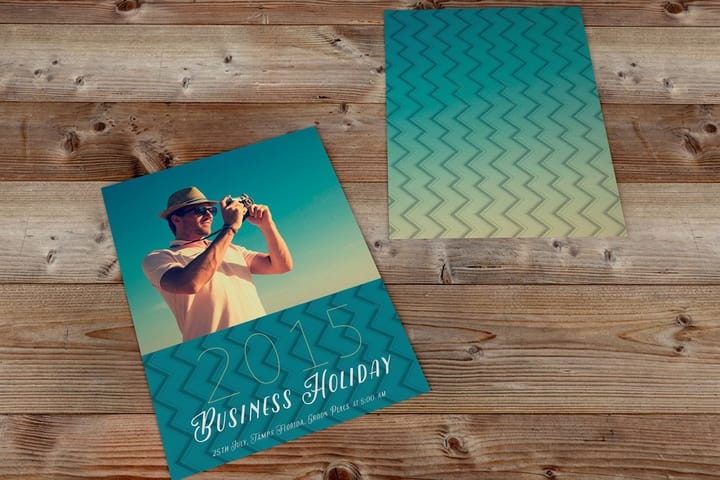
Standard postcards from $16.48 are the cheapest piece in this kit and the only one that reaches somebody who has never typed your name. That matters more next to Performance Max than next to any other campaign type, because the campaign is at its best when it is picking up demand that already exists and at its weakest when it has to invent it.
Mail an offer on Monday and the response arrives as a branded search, a direct visit or a map lookup. Those are the cheapest clicks in the account. What you must not do is let the campaign quietly bill you for them: switch on the account brand list, keep branded traffic in its own Search campaign, and the postcard stops paying twice. The mechanics of that split are in the Performance Max campaign guide, and the wider attribution argument is laid out in direct mail against digital marketing.
The print rules are worth knowing before the file is built. Postcards run at 4 by 6 in, 5 by 7 in, 6 by 9 in and 6 by 11 in, and the larger sizes are the ones that survive a stack of envelopes on a kitchen counter. The address panel and the barcode clear zone stay empty on the mailing side. A sorting machine sprays ink across whatever is sitting there, and a code with a postal barcode through it scans for nobody. Our walkthrough on adding a QR code to postcards shows where the code can safely sit, and postcard marketing ideas has offers worth testing.
Here is the limit. Mail is slow feedback next to a dashboard that refreshes every hour, and a cold rented list can lose money for two or three runs before it teaches you anything. Start with addresses you already own, past customers and quotes that never closed, and drop one route at a time so you can still read the account total against the calendar. Browse postcard printing for the full size and stock list.
2. Standard business cards: the handoff that becomes a tracked visit
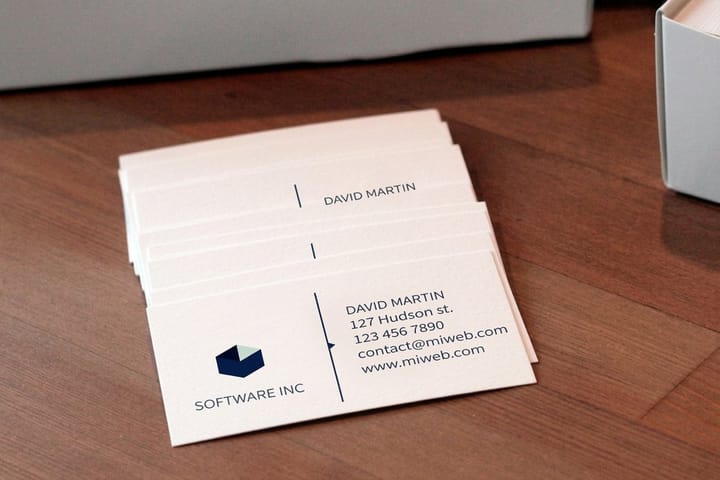
Somebody asks what you charge while you are standing in their driveway. Standard business cards from $17.57 exist for that moment, and next to a paid campaign they do one specific job: they stop the follow-up from starting in a search box where four advertisers are waiting.
Front carries the name, the trade and the number. Give the whole back to one code and one sentence explaining what the scan does, whether that is see prices, book a slot or get a quote. Two codes on one card means neither gets scanned, because the reader has to choose and choosing is work. There are layouts that survive being handed over rather than photographed in QR code business card ideas and using codes on business cards.
The code has real dimensions on a 3.5 by 2 in card. Hold it near 0.8 in square as a working floor for a first-try scan at arm's length, leave a quiet border of about four modules on every side, and keep it 0.125 in inside the trim so a shift on the cutter never clips a corner. Dark code on a light ground, never reversed out, never sitting on a photograph. Start from a design template if you would rather not build the file, since the templates already respect the trim and the quiet zone.
Point that code at its own path on your own domain rather than at the same landing page as everything else. It is the only attribution print gives you, and it answers a question with money attached: which counter, which trade show, which salesperson actually produced bookings. Full setup is in QR codes for a small business, and business card printing lists the stocks.
3. Circle stickers: the reorder code in the unboxing minute

Circle stickers from $23.88 seal a box, close a bag or badge a jar, and they do it during the sixty seconds the customer is holding your product and paying attention. A repeat order that starts there costs the campaign nothing, which quietly improves the conversion value it is bidding against.
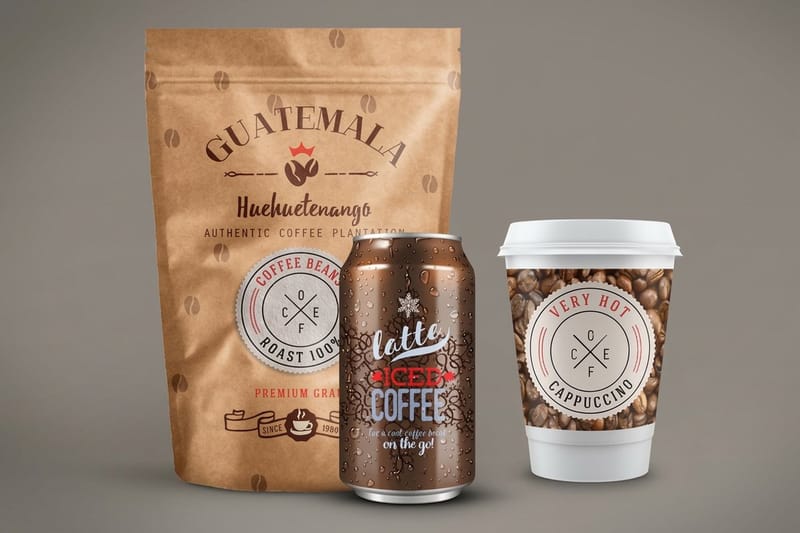
Give the sticker one message. A reorder code, a review code or a discount for the next purchase, not all three. If you want reviews, send them somewhere specific rather than to a homepage, and our note on a QR code for Google reviews covers the link format. Reviews feed the profile the campaign leans on for Maps inventory, which is the one place print and Performance Max touch the same asset. The Google Business Profile guide goes further on that.
Size follows the code, not the design. A scannable code near 0.8 in square plus its quiet zone needs roughly 1.2 in of clear space, so a 2 in circle is the smallest that holds a code and a short line without crowding. Below that you are printing a logo, which is fine, but it will not be scanned. Vinyl handles a fridge door and a cold shipping box better than paper does. There is a full walkthrough in printing QR code stickers, plus the format list at sticker printing.
The catch is that a sticker only reaches somebody who has already bought from you. It builds nothing new at the top of the funnel, so treat it as retention spend rather than acquisition, and judge it on second orders instead of first ones.
4. Standard flyers: local reach with no postage attached
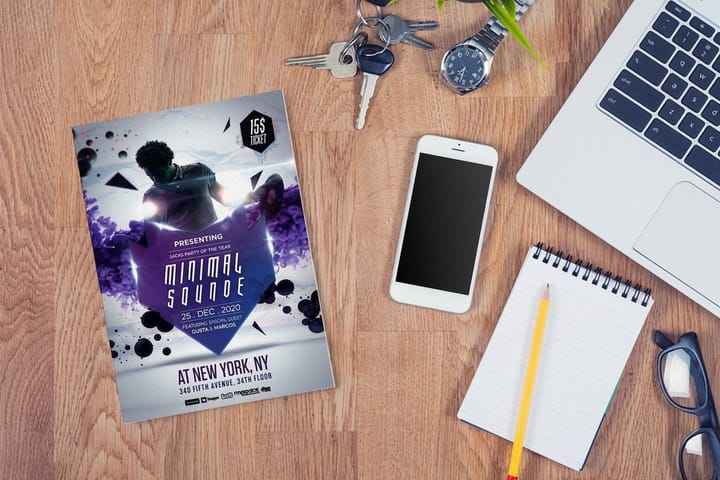
If the campaign goal is store visits, the geography is already small. Standard flyers from $39.54 cover the same few streets for a fraction of a mailed piece, because there is no postage on them, and 8.5 by 11 in leaves room for an offer, a photo and a map without crowding.
That saving moves the cost somewhere else. Somebody has to carry them: to the counter, the noticeboard, the windshields at the far end of the plaza. Two hours of your own Saturday is not free. Count it before you decide flyers beat a mailing, because printing is the smaller half of the bill.
Write the flyer for a reader who is walking. One offer, one number, one deadline, and the business name small at the bottom. The paper choice does more than people expect for a few dollars: 100 lb gloss text photographs well and holds saturated color for a food or retail promotion, while uncoated stock takes a pen, so a service checklist meant to be written on at a job site should be ordered uncoated with the flatter photo accepted. Placement and trim are covered in the codes on flyers and brochures guide.
Give the flyer run its own short URL as well, and stagger the drops by area. Two streets this week and two next week is the only way to read a lift when the paid dashboard is moving at the same time. If the digital and physical halves of the plan need reconciling, traditional against digital marketing and the paid marketing metrics guide both take that apart. More sizes at flyer printing.
5. Standard brochures: the second order without a second click
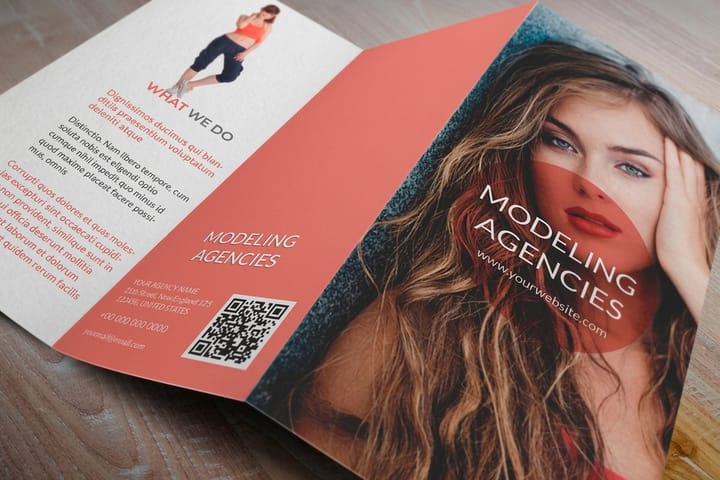
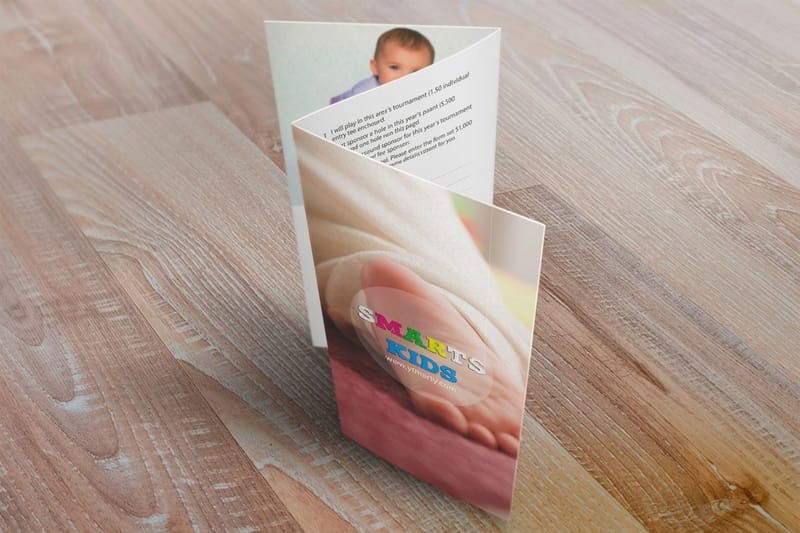
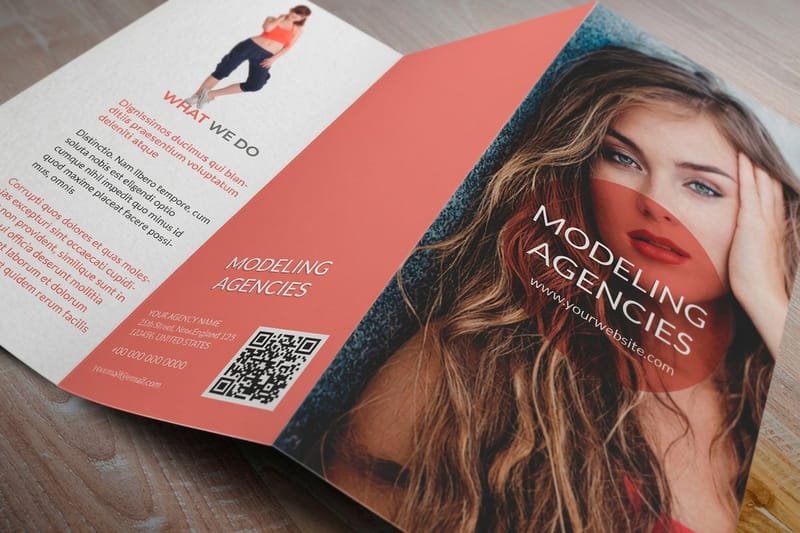
A standard brochure from $57.11 is the most expensive piece here and the only one that carries a full price list. Two places earn it back. In the box after a first order, it turns one purchase into a second without paying for another click. In a slower sale, it puts three named tiers and what each one excludes in front of the customer before the negotiation starts from their guess.
The fold has geometry you cannot ignore. On a tri-fold, the panel that tucks inside is trimmed about 1/16 in narrower than the other two so the piece closes flat, which means a full-bleed photograph laid out as if all three panels were equal sits off-center once it is folded. Set the panels at their real widths from the start, and keep any code off a crease.
Reusing the campaign creative is where most of these files go wrong. The landscape asset Performance Max asks for is 1200 by 628 pixels, and at the 300 pixels per inch a press wants, that file covers 4 by 2.1 inches at full size. It is a business card, not a brochure panel. Rebuild the layout at print size with live type and a proper photo, then convert to CMYK yourself rather than shipping RGB and being surprised by a duller result. The arithmetic is in image resolution for printing, the conversion in converting RGB files for print, and the margins in bleed and trim explained.
Be honest about when this piece is wasted. If somebody buys from you in ninety seconds at a counter, they will not read three panels, and the money belongs on a postcard instead. If the landing page still has to do the persuading, the landing page frameworks guide is the better place to spend the afternoon. See the fold options at brochure printing.
Specs and pricing
The two pieces you will reorder, side by side
Postcards and flyers are the two that go back on the press month after month, and they are the two where quantity changes the per-piece price most. Here are the live specs and price ladders straight from the configurator.

| Quantity | Price Per Unit | Total |
|---|---|---|
| 50 | 33.0¢ | $16.48 |
| 100 | 24.2¢ | $24.16 |
| 200 | 15.9¢ | $31.86 |
| 300 | 12.8¢ | $38.45 |
| 400 | 11.3¢ | $45.04 |
| 500 | 10.3¢ | $51.62 |
| 600 | 9.89¢ | $59.31 |
| 700 | 9.57¢ | $67.00 |
| Quantity | Price Per Unit | Total |
|---|---|---|
| 50 | 79.1¢ | $39.54 |
| 100 | 57.1¢ | $57.11 |
| 200 | 37.3¢ | $74.69 |
| 300 | 28.6¢ | $85.68 |
| 400 | 24.4¢ | $97.76 |
| 500 | 21.8¢ | $108.75 |
| 600 | 18.7¢ | $112.03 |
| 700 | 16.5¢ | $115.33 |
Wally reads the report twice
The campaign did not make that demand. The mailbox did.
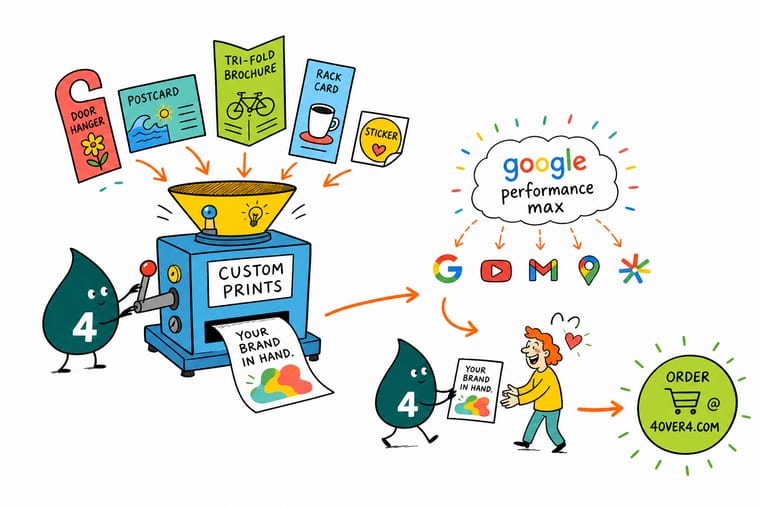
Wally mailed a thousand postcards on a Monday and watched his Performance Max conversions jump on the Thursday. Very good week, said the dashboard. Then he switched on brand exclusions and the campaign stopped buying his own name, and the same jump appeared in the account total instead of the campaign row. Same customers, honest arithmetic. Now every piece he prints carries its own short URL, so he knows which box, which counter and which street actually paid for itself.
Shop the marketing materials collection →See it in use
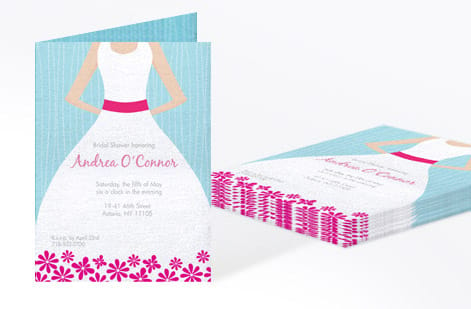
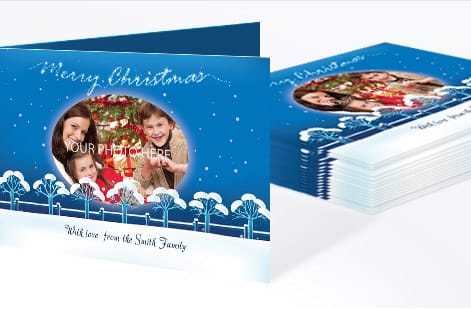
Postcards other advertisers have mailed






Explore more
Where to go next

By the numbers
The catalog a print and search pairing draws on
Common Questions
Common questions about printing beside a Performance Max campaign
Does printing anything actually help a Google Performance Max campaign?
Yes, in one specific way: it creates demand the campaign can then collect. Performance Max is strongest on branded searches, direct visits and map lookups, which are the cheapest conversions in the account, and print is one of the few line items that produces more of them instead of bidding against the same pool. A mailed postcard, a card handed over at a counter or a sticker on a shipped box all put your name in front of somebody who was not searching yet.
Will Performance Max take credit for my direct mail response?
It will, unless you stop it. If the campaign is allowed to buy branded queries, the person who searches your name after reading your postcard clicks a Performance Max ad and lands in that campaign report as a conversion you paid twice for. Switch on the account brand exclusion list, keep a separate brand Search campaign, and judge a print run on the account total across the weeks it is out rather than on the campaign row.
Can I import a QR code scan as an offline conversion in Google Ads?
Not through the standard offline conversion import, because that method matches a conversion back to the GCLID captured when somebody clicked an ad, and a print scan never had one. A scan arrives as an ordinary session. The workable answer is to give every printed piece its own short URL or landing path on your own domain, then read those paths as a separate channel next to the paid numbers.
Can I reuse my Performance Max asset group images on a postcard?
Use the layout, not the file. The landscape asset Google asks for is 1200 by 628 pixels, and print wants 300 pixels per inch at final size, so that file covers 4 by 2.1 inches on paper before it starts being enlarged. A 6 by 9 in mailer with a full-bleed image needs roughly 1875 by 2775 pixels with the bleed counted in. Rebuild it at print size with live type, then convert to CMYK yourself.
Which piece should I print first?
Standard business cards at $17.57 and standard postcards at $16.48, in that order, because they are the cheapest to be wrong about and the fastest to correct. Get the code, the landing path and the offer working on those two before you commit to a brochure run at $57.11, since a printed price stays in circulation for as long as the piece does.
How do I tell whether the print run worked when the paid numbers move at the same time?
Stagger it. Drop one route or one set of streets at a time and leave a comparable area untouched, then compare account level branded search, direct traffic and the short URL for that piece across both areas. Running everything at once on the same week gives you one number and no way to attribute it, which is how most print budgets end up unprovable.
What does the five-piece kit cost to start?
The five starting prices add up to $154.58 at 4OVER4.COM: standard postcards from $16.48, standard business cards from $17.57, circle stickers from $23.88, standard flyers from $39.54 and standard brochures from $57.11. Every price falls per piece as the quantity climbs, and the configurator updates live as you change size, stock and finish.
Where does the QR code go so it still scans after printing?
Keep it near 0.8 in square as a working floor, leave a quiet border of about four modules on every side, and hold it at least 0.125 in inside the trim so a shift on the cutter cannot clip a corner. Dark code on a light background, never reversed out and never on top of a photograph. On a mailed postcard it also has to stay clear of the address panel and the barcode zone, since the sorting machine prints straight across that area.
Get Started
Give the campaign something to harvest
Print the five-piece kit as one branded set at 4OVER4.COM. Standard postcards start at $16.48 for 50 on 14pt gloss cover and leave in 3 business days, and every other piece is configured for size, stock and finish the same way.
Legal Disclaimer
Gold Standard guarantees apply to all standard orders placed through 4over4.com. Price match requires verifiable proof of a competitor's published price for an equivalent product with matching specifications and turnaround time. Satisfaction guarantee covers manufacturing defects and print quality issues. Contact support with order number and documentation. On-time delivery rate based on tracked orders 1999 to 2026. Individual results may vary based on shipping carrier performance.
