
How to Build a High-Performing Paid Marketing Strategy That Pays Its Own Way


Set the ceiling, rank the channels by intent, split the budget in three, and measure lift instead of last click. The plan below works at 500 dollars a month and at 50,000.
A high-performing paid marketing strategy starts with one number: the most you can pay for a customer and still make money. Work it out from gross margin and the payback window your cash can survive, then spend first on channels that capture demand already there, second on channels that have to create it. Split the budget into proven, scaling and experimental spend, size every test by conversions rather than by calendar, and confirm results with a holdout group before you scale anything.
Quick answer
Set the ceiling first, then buy the cheapest demand under it
Paid marketing is the business of buying customers below a price you set in advance. That price is your allowable cost per acquired customer: gross margin per order, multiplied by the orders your cash can wait for, minus the profit you keep. Rank channels by how much buying intent already exists, because capturing demand costs less than creating it. Fund the proven work, scale in steps, cap the experiments, and prove any big decision with a holdout rather than a platform report.
Start With the Number Every Channel Has to Fit Under

Allowable cost per acquired customer is the ceiling, and it comes from four inputs you already have. Take the average value of a first order, multiply by gross margin rather than revenue, multiply by the number of repeat orders your cash can genuinely wait for, then subtract the profit you refuse to hand to a platform. What is left is the most a customer may cost.
Say a first order averages 180 dollars at 45 percent gross margin. That is 81 dollars of gross profit per order. If a typical customer buys twice inside the twelve months your bank balance can cover, the pool is 162 dollars, and if you insist on keeping 40 dollars of it, your allowable cost per acquired customer is 122 dollars. Every channel now has a pass mark.
The payback window is where most plans quietly break. Lifetime value models are seductive because they let you justify almost any bid, but lifetime value does not pay this month's invoice. A business with thirty days of runway should budget against first-order margin alone and treat repeat purchases as upside. A business that can float a customer for a year can bid on the twelve-month number and will out-buy the first one in the same auction, legitimately.
Write the ceiling down and hang the rest of the plan off it. If you have not built the surrounding plan yet, start with our small business marketing plan guide, then come back and set the number.
Buy Demand That Already Exists Before You Try to Create It
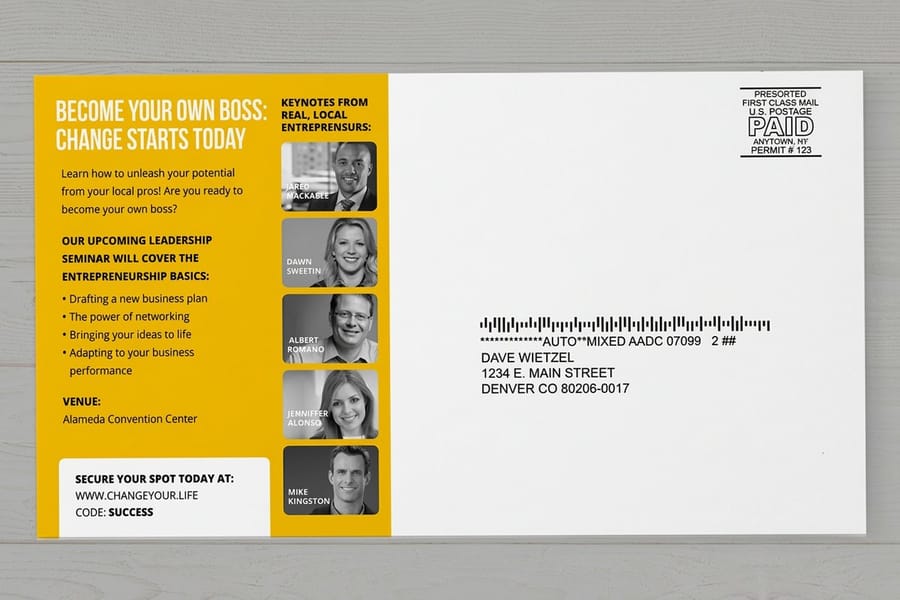
Paid channels split into two jobs. Some of them find people who already want what you sell and put you in front of them. The rest interrupt people who were not thinking about you and try to start the want from scratch. The first job is nearly always cheaper, so spend there until it runs out of volume.
| Channel | What the money buys | How fast it reads | Where it breaks |
|---|---|---|---|
| Paid search | People already typing the problem you solve. | Days, because click and purchase sit close together. | Volume is capped by how many people search. You cannot bid your way to more demand. |
| Retargeting | A second look from people who already visited. | Days, with the caveat that it takes credit for buyers who were returning anyway. | Tiny audiences burn out fast. Frequency climbs, results flatter, actual lift falls. |
| Paid social | Interruption plus targeting, aimed at demand you have to build. | Weeks, since delivery needs conversion volume before it settles. | Creative fatigue. The same ad that worked in week one gets ignored by week four. |
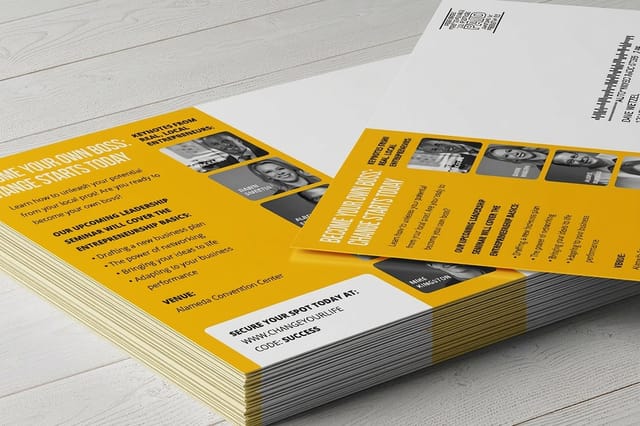
| Direct mail | A physical piece in a defined household or list, with no auction. | Weeks, tracked by coupon code, QR scan or a dedicated phone number. | List quality decides everything. A great postcard to a stale list loses to a plain one to a good list. |
| Local print handout | Coverage of a street, event or storefront radius. | Days, but only if the piece carries its own tracking. | Distribution is manual, so results depend on who hands it out and where. |
Read the last column before the first. Every channel has a wall, and the strategy is really a plan for which wall you hit next. Search runs out of searchers. Retargeting runs out of visitors. Social runs out of patience with your creative.
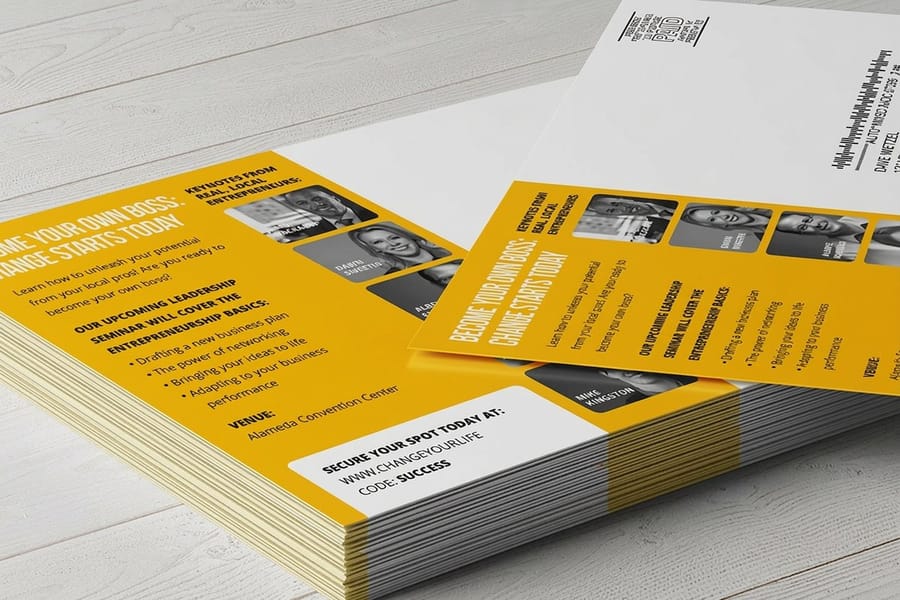
Mail earns its slot in a paid plan because it is priced per piece rather than won in an auction, so nobody can outbid you into a worse result mid-campaign. Direct Mail Postcards start at $89.68 with printing and mailing handled together, which is the version to use for a list or an address-level drop. If you already have a distribution route, Standard Postcards start at $16.48 and Standard Flyers start at $39.54, which is cheap enough to test a neighborhood without touching the digital budget. The list is the hard part, so read how to build or rent a mailing list before you print anything.
For the wider argument about where each side is strongest, our comparison of digital and traditional marketing lays out the trade-offs channel by channel, and the marketing materials range shows what the print side of the mix costs.
Split the Budget So a Failed Test Cannot Take the Quarter Down

One pot of money produces one bad habit: whatever is performing today eats everything, and nothing new ever gets funded. Three tiers fix it, and the split matters less than the discipline of keeping them separate.
- Proven spend. The channels already under the ceiling. This tier is defended, not debated, and it only shrinks when performance drops.
- Scaling spend. The things that work but have not been pushed. Raise budgets in steps of roughly 20 to 30 percent and wait for the numbers to settle before the next step, because large jumps reset how a platform delivers and you lose the reading.
- Experimental spend. New channels, new offers, new formats. Cap it at a figure you could lose twice in a row without changing any other plan, and expect most of it to fail.
Size each test by conversions, not by calendar. A campaign that produces four sales in a month has told you nothing, whatever the dashboard says about trend. As a working rule, a variant needs somewhere around 30 to 50 conversions before you should trust its cost per acquired customer, so multiply your target cost by that count and you have the minimum test budget. If the number is bigger than your experimental tier, the test is out of reach this quarter and pretending otherwise wastes the money slowly.
Test one thing at a time and start with the biggest lever. Offer beats creative, creative beats targeting, targeting beats bid strategy, and bid strategy beats the button color by a distance. If you are not sure what you are offering, our guide to building a marketing offer is a better first read than any platform tutorial.
Print tests deserve the same rule. Split a mailing list in half, change exactly one element, and use a different code on each version. Because a postcard costs the same whether it is version A or version B, mail is one of the few paid channels where a clean split test costs nothing extra to run.
Measure the Lift, Not the Last Thing Clicked
Every ad platform reports on itself, and each one counts a conversion it touched as a conversion it caused. Add the dashboards together and you will find you sold more units than you shipped. That gap is not fraud, it is overlapping credit, and it is why paid budgets drift toward whichever channel is best at claiming the assist.
The fix is an experiment rather than a better report. Hold out a slice of the audience or a matched set of zip codes, run the campaign everywhere else, and compare the two groups. The difference is what the spend actually added. Holdouts feel expensive because you are deliberately not advertising to someone, and they are still the cheapest thing you can do before scaling a channel.
Offline needs its own credit trail, built into the artwork before it prints. Give each version a unique code, a dedicated landing page, a separate phone number, or a QR code that carries its own tracking parameter. Our guide to QR codes on flyers, brochures and postcards covers placement, size and the mistakes that make a code unscannable, which is the single most common way a mail test loses its own data.
Then judge the result against something real rather than against hope. Direct mail response rates by industry gives you a benchmark to set expectations before the drop, and postcard marketing tactics covers what moves response once the campaign is live.
What to Do When the Ceiling Stops Being Reachable

Paid channels get more expensive as you scale, always. The cheapest customers are bought first, competitors bid against the same keywords, and the audience that was easy to convert is used up. A cost per acquired customer that creeps up month after month is normal physics, not a broken account.
When the ceiling gets hard to hit, there are only three honest moves. Raise the ceiling by increasing order value or margin. Lower the cost by improving the offer, the landing page or the creative. Or accept the channel is full and move budget somewhere with room. What does not work is spending more at the same conversion rate and hoping the average pulls back.
One signal is worth watching closely. If three unrelated channels all miss the ceiling at once, stop tuning campaigns, because the problem is upstream. Price, offer, page or product are doing the damage and no amount of bid tuning reaches them. Our guide to how marketing funnels work is the right place to find out which stage is leaking.
Raising order value is often the fastest of the three moves, and it usually happens after the click rather than before it. A printed brochure from $57.11 sent with a quote gives a prospect something to show the person who signs, and standard business cards from $17.57 keep a follow-up route open long after the ad budget for that lead is spent. Neither is glamorous. Both raise the value of traffic you have already paid for, which is the one lever that makes every channel cheaper at once.
Wally explains paid marketing
One ceiling, three tiers, and a holdout that tells the truth
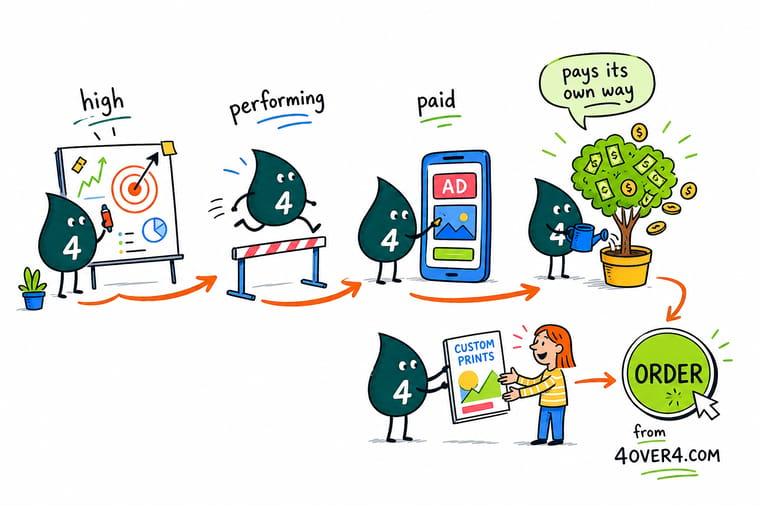
Wally works out the most a customer may cost him, draws that line across the wall, then measures every channel against it instead of against the others. Search fits under the line, so it gets more money. The mailer fits, so it gets a bigger list. Display sits above the line, so it gets fixed or cut before it eats the quarter. He never trusts a dashboard that grades its own homework, and he keeps a slice of the audience unadvertised to prove the spend did something.
Price direct mail postcards →Specs and pricing
The print channels, with live options and starting prices
Paid print is priced per piece, so you can model it before you commit. These are the live configuration choices and starting prices from the 4OVER4.COM configurator.



Print it
Put a paid print test in the mix this quarter


Explore more
Where to go next






By the numbers
The print side of your paid mix, handled at 4OVER4
Common Questions
Your paid marketing questions, answered
What is a paid marketing strategy?
A paid marketing strategy is a written plan for buying attention: which channels you pay, how much a customer is allowed to cost, what you are testing this quarter, and how you will know it worked. Without the cost ceiling it is not a strategy, it is a media buy. The useful version fits on one page and names the allowable cost per acquired customer, the channels ranked by buyer intent, the split between proven and experimental spend, and the measurement method for each channel.
How much should a small business spend on paid marketing?
Work backwards instead of copying a percentage of revenue. Decide how many new customers you need this quarter, multiply by your allowable cost per acquired customer, and check whether your cash can float that spend for the length of your payback window. If the answer is no, cut the customer target rather than the ceiling, because lowering the ceiling just means bidding too little to win any auction. Starting spend also has a floor: a channel that cannot produce enough conversions to read in a month is not being tested, it is being sampled.
How long before I know whether a paid channel works?
It depends on how the channel is measured, not on how impatient you are. Paid search and retargeting usually give a readable signal within days because the click and the purchase sit close together. Paid social takes longer because the platform needs conversion volume before its delivery settles. Direct mail is slower again: the piece has to print, enter the mail stream, get read, and then get acted on, so most campaigns are judged over several weeks with a tracked phone number, QR code or coupon carrying the credit.
Should I run online ads or direct mail first?
Run whichever one matches demand that already exists. If people are searching for what you sell, paid search is the cheapest first dollar because you are buying intent rather than building it. If your product is local, discovered rather than searched, or aimed at a defined neighborhood or list, mail competes well because the inbox is crowded and the mailbox is not. Many small businesses end up running both, using search to catch the people already looking and mail to reach the ones who are not.
How do I stop wasting budget on ads that never convert?
Put a kill rule in writing before the campaign starts, so the decision is not made emotionally at the end of the month. A workable rule: give the campaign enough spend to produce a meaningful number of conversions, commonly 30 to 50 for a variant you intend to trust, then compare its cost per acquired customer to the ceiling. Over the ceiling with no clear fix means pause it. Also separate the questions: if the click cost is fine and the landing page converts badly, the ads are innocent and the page is guilty.
Does printed material still belong in a paid strategy?
Yes, as a channel with its own math rather than as decoration. Print is priced per piece and delivered without an auction, so cost per impression is predictable in a way that bidding never is. Direct Mail Postcards at 4OVER4.COM start at $89.68 for a mailed run, Standard Postcards start at $16.48 when you handle distribution, and Standard Flyers start at $39.54, which makes a small geographic test cheap enough to run alongside a digital campaign and compare against the same ceiling.
Get Started
Order 500 direct mail postcards from $89.68
Pick a size, choose your stock, and we print and mail the campaign from New York so you can measure it against the same ceiling as your ad accounts.
Legal Disclaimer
Gold Standard guarantees apply to all standard orders placed through 4over4.com. Price match requires verifiable proof of a competitor's published price for an equivalent product with matching specifications and turnaround time. Satisfaction guarantee covers manufacturing defects and print quality issues. Contact support with order number and documentation. On-time delivery rate based on tracked orders 1999 to 2026. Individual results may vary based on shipping carrier performance.
