
Logo Checklist for Each Stage of the Design Process


Sofia is our design and templates voice, built from the knowledge of our production team, with over 20 years in printing.
Run every logo through the same gates, from brief to handover. This checklist catches weak concepts early, stress-tests the finalists, and makes sure the files you ship print clean on the pieces you order first: a 2 x 3.5 inch business card, a car magnet from 9 x 9 to 24 x 36 inches, and a fridge magnet.
A logo design checklist is a set of gates tied to the stages of the process: nail the brief before you sketch, run first-look checks for appropriate, simple, distinctive, and memorable, refine for scalability and color, then hand over a vector master with print-ready formats. Work the gates in order and a weak mark gets caught early, while the strong one lands clean on cards, signs, and car magnets alike. If the first gate is still open, start with how to write a logo design brief.
Quick tips
The logo checklist at a glance
Work the logo stage by stage and let each gate do its job. Write the brief before you sketch, run the first-look checks for appropriate, simple, distinctive, and memorable, then refine for scale and color. Stress-test with small-size, one-color, and reversed versions, and hand over a vector master plus print-ready formats. Do that and 4OVER4.COM can carry the same clean mark from a business card to a car magnet without a hiccup.
One page, five gates
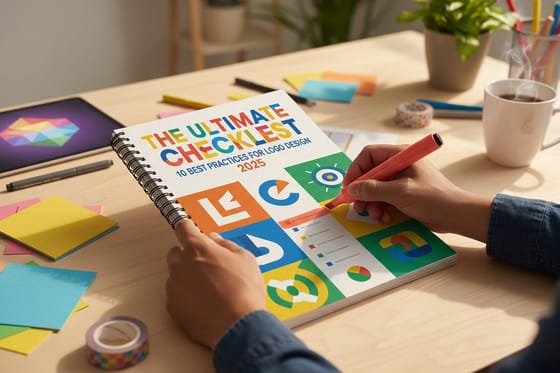
Download the logo design checklist as a PDF
The whole checklist on one printable page. Press the button, choose Save as PDF in the print dialog, and you have the five gates to tick off next to your sketchbook, or to send a client before round one so both sides agree on what finished means. It is the same list our prepress team runs a mark through before it goes on a business card or a car magnet.
- Stage 1, the brief. Audience named, the place the logo will appear most named, competitor marks pulled up side by side, and three or four adjectives for the personality written down. If you cannot describe the target in one sentence, you are still guessing, so do not sketch yet.
- Stage 2, concepts. Sketch wide and cheap, black on white, no color and no gradients. Keep only the marks you can redraw from memory the next morning.
- Stage 3, first look. Four fast checks before you zoom in on kerning: appropriate for the industry, simple enough to redraw from memory, distinctive next to the competitors you pulled up in stage 1, and memorable after a two-second glance. Anything that fails here dies here, so you never waste polish on it.
- Stage 4, refinement. Shrink it to favicon size, print it at business-card size, strip it to one color, drop it reversed or knocked out on a dark background, then settle the spacing and build the color in both RGB and CMYK. A mark that survives all four holds up on anything we print.
- Stage 5, handover. Vector master in SVG or EPS first, then high-resolution PNGs on transparent backgrounds, the one-color version, the reversed version, and both the RGB and the CMYK build, all in one folder so nobody has to ask for a file later.
| Stage | Gate | Key checks that stage covers |
|---|---|---|
| Stage 1 | Brief | Who the audience is, where the logo will appear most, what the competition already looks like, and three or four adjectives for the personality. Written down before a single concept is drawn. |
| Stage 2 | Concepts | Sketch wide, black on white, no color and no gradients. Keep only the marks you can redraw from memory. |
| Stage 3 | First look | Appropriate for the industry, simple enough to redraw from memory, distinctive next to competitors, memorable after a two-second glance. Happens before you touch kerning or gradients, so weak concepts die cheap. |
| Stage 4 | Refinement | Scale and color: small-size legibility, one-color version, reversed or knockout version on dark, spacing settled, color built in both RGB and CMYK. |
| Stage 5 | Handover | Vector master in SVG or EPS, high-resolution PNGs with transparent backgrounds, the one-color version, the reversed version, and both RGB and CMYK builds so the color holds from web to print. |
Why a stage-by-stage logo checklist beats winging it

Most bad logos are not bad because the designer lacked talent. They are bad because nobody stopped at the right moment to ask a simple question. A checklist is how you build those stops into the work on purpose, so a shaky concept gets caught in the first minute instead of surviving all the way to the sign shop.
Think of the checklist as a set of gates rather than a grade at the end. Each stage of the process has its own gate, and a mark only moves forward if it clears the one in front of it. That is the difference between a designer who reworks the same logo five times and one who ships something confident on the first real round. If you want the full arc of the craft behind these gates, our ultimate guide to designing a logo walks the whole path, and the checklist below is the fast, repeatable version of it.
This page is organized the way real projects run: brief, concepts, first look, refinement, and handover. Under each stage sits the exact thing to check before you keep going. A logo is the anchor of a wider identity, so it helps to hold the whole picture in view as you go, which is what a practical guide to branding for small business is for.
Stage 1: Before you start, do the groundwork
The first stage happens before you open any design tool. Skip it and every later check has nothing to measure against, because you never decided what the logo was supposed to do. Run these three before a single sketch:
- Refresh the whole process. Remind yourself that a logo is one part of a system, not the entire brand. Knowing the six key principles of logo design up front keeps you from chasing decoration that will not hold up.
- Pin down the purpose. Who is this for, where will people see it most, and what should it make them feel in the first second? A mark meant for a delivery van reads differently than one built for an app icon.
- Write a one-paragraph brief. Name the personality in three or four adjectives, list two or three competitors to avoid looking like, and note the non-negotiables. A logo is the front door of your brand identity, so the brief is really a promise about the whole house.
If you cannot describe the target audience in a single clear sentence, you are not ready to design. You are still guessing, and guesses are expensive to unwind later.
Stage 2: First look, the sixty-second gut check
Once concepts exist, resist the urge to zoom straight into kerning and gradients. First look is a fast pass whose only job is to kill weak ideas before you fall in love with them. For each candidate, ask four quick questions:
- Is it appropriate? Does the mark fit the industry and the audience? A playful mascot rarely suits a law firm, and a stiff monogram rarely suits a taco truck.
- Is it simple? Could someone redraw the rough shape from memory? Simple marks are easier to recognize, cheaper to print, and far more durable, which is the core idea behind minimalist brand identity.
- Is it distinctive? Line it up next to the competitors from your brief. If it disappears into the crowd, it is not doing its job.
- Is it memorable? Glance for two seconds, look away, and try to picture it. If it slips your mind that fast, customers will forget it too.
Concepts that clear all four earn refinement. The rest go back to the sketch pile. Working this way is exactly what the best practices for logo design boil down to: protect your polish for the ideas that already passed the basics.
Stage 3: The detailed design checklist
A concept that survives first look now goes under the microscope. This is where craft lives. Walk each surviving mark through the fundamentals:
- Scalability. It has to read at a favicon and on a billboard. Shrink it to sixteen pixels and blow it up to a storefront. Details that vanish at small sizes are dead weight.
- Versatility. Build a full lockup, a compact version, and an icon-only mark. Different placements need different shapes of the same idea.
- Color discipline. Keep the palette tight, usually one or two core colors. Fewer colors are easier to reproduce and cheaper to print, and they tend to age better, one reason so many enduring marks are nearly monochrome. There is more on this in these facts about famous logos.
- Type and spacing. If there is a wordmark, the letterforms should feel intentional, with clean spacing and clear negative space. Wonky kerning is the fastest way to look amateur.
None of this is decoration for its own sake. Consistent, well-built marks are what drive recognition over time, and the brand loyalty and awareness data shows how much that consistency compounds. A logo that behaves the same everywhere is a logo people learn to trust.
Stage 4: Final checks before you commit
Before you lock the design, put it through the stress tests that reveal problems a clean artboard hides. A mark that passes all of these is ready:
- The small-size test. Shrink it until it is barely a thumbnail. If it turns to mush, simplify.
- The one-color test. Flatten it to solid black. A logo that only works in full color is fragile, because plenty of print jobs use a single ink.
- The reversed test. Knock it out white on a dark background. If it falls apart, you have a spacing or weight problem to fix now, not after launch.
- Real mockups, not artboards. Drop it onto the things it will actually become. Print prep matters here, and preparing a logo for business card printing is a good rehearsal for every other surface.
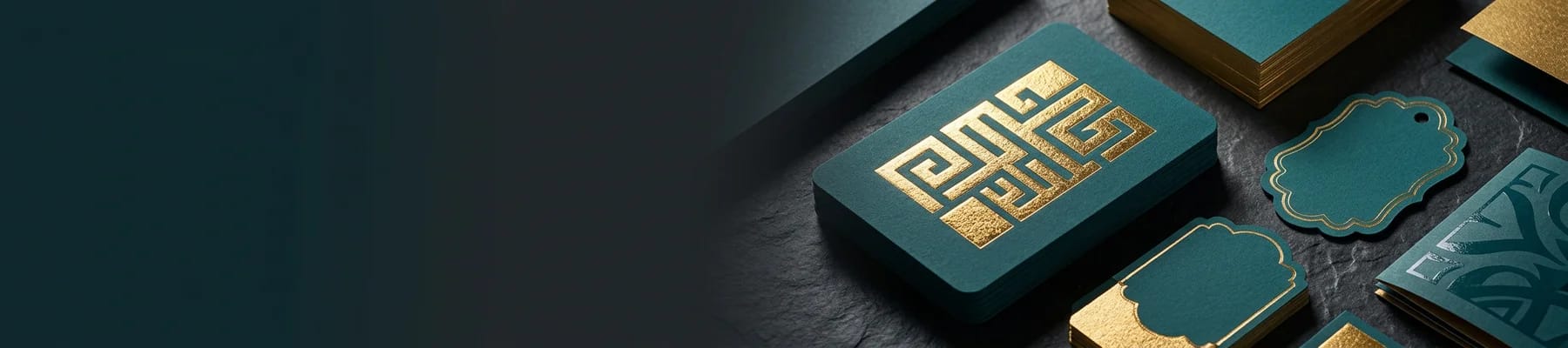
One more habit that saves projects: get outside eyes before you commit. Staring at a mark for days makes you a bad judge of it. Show it cold to a few people in the target audience and watch their first reaction. For a sense of what a resolved, print-ready mark looks like in the wild, browse the business card design and finishes gallery.
Stage 5: Handover, files and formats
A logo is only finished when the files are right. Handover is the stage most rushed and most regretted, because a beautiful mark trapped in the wrong format cannot print clean. Deliver a proper package:
- A vector master. SVG or EPS is the source of truth, because it scales to any size with no blur. Everything else is exported from it.
- Raster exports. High-resolution PNGs with transparent backgrounds for screens and documents.
- Color modes that match the job. RGB for anything on a screen and CMYK for print, so the color holds from a website to a signboard. Add spot or Pantone builds when exact brand color matters.
- The full variant set. Primary lockup, compact version, icon, one-color, and reversed, each named clearly so nobody grabs the wrong file at deadline.
Bundle a short one-page brand sheet with the palette, fonts, and clear-space rules, and the logo will survive contact with every person who touches it next. When it is time to roll the mark across a full set of pieces, our guide to building a professional branded stationery set and the browser-based online designer make it a fast job rather than a fresh project.
Put the finished logo to work in print
A checklist is only worth the time if the logo gets used. The moment your files are locked, the fastest way to see the mark earn its keep is to put it somewhere people already look. Magnets are a strong first move: they are removable, reusable, and turn ordinary surfaces into branded ones without any commitment.
- Business card, 2 x 3.5 inches. The small-size test. A run of 100 standard cards is $17.57 and prints in 3 business days.
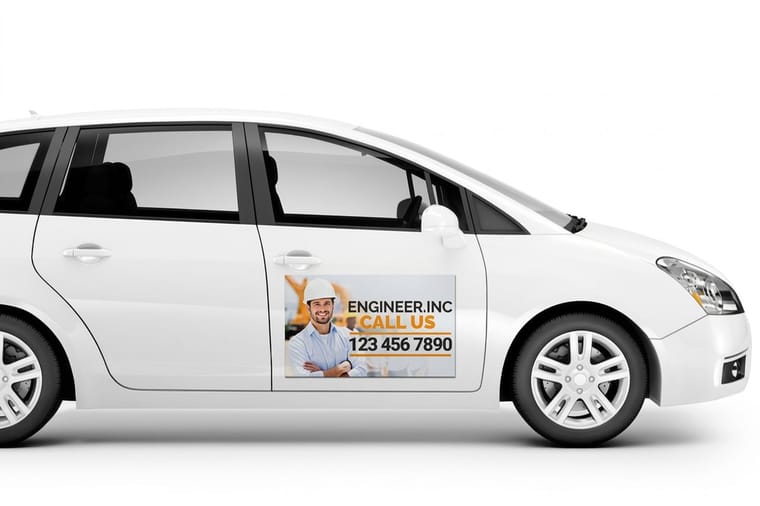
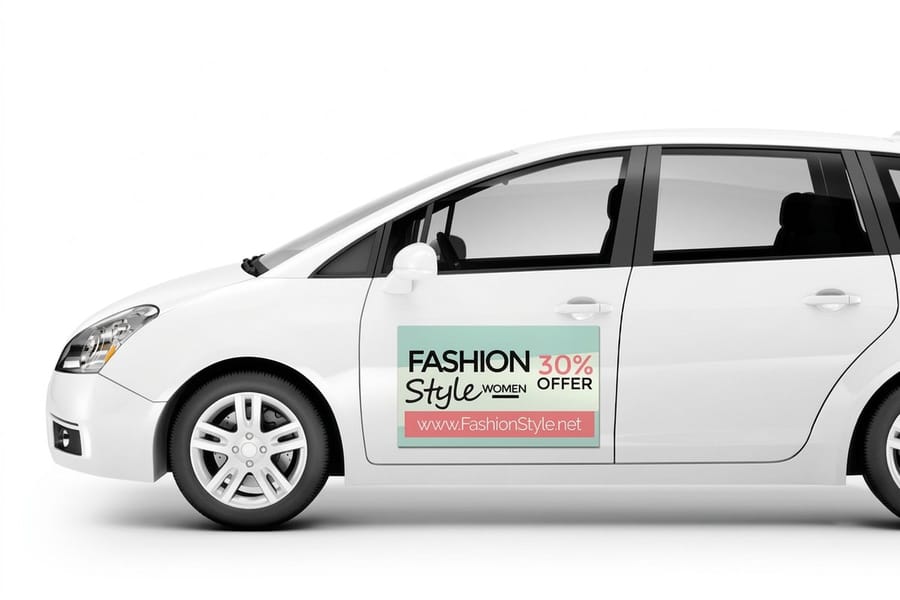
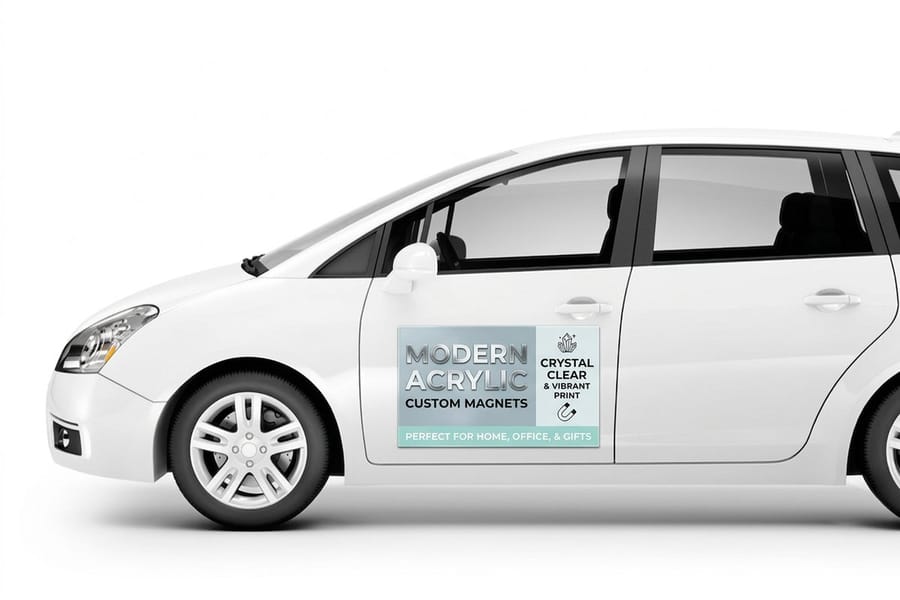
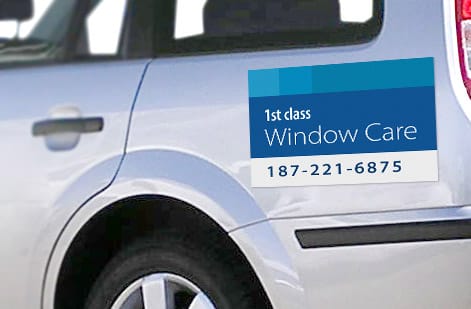
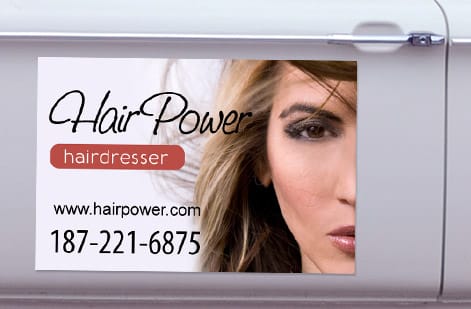
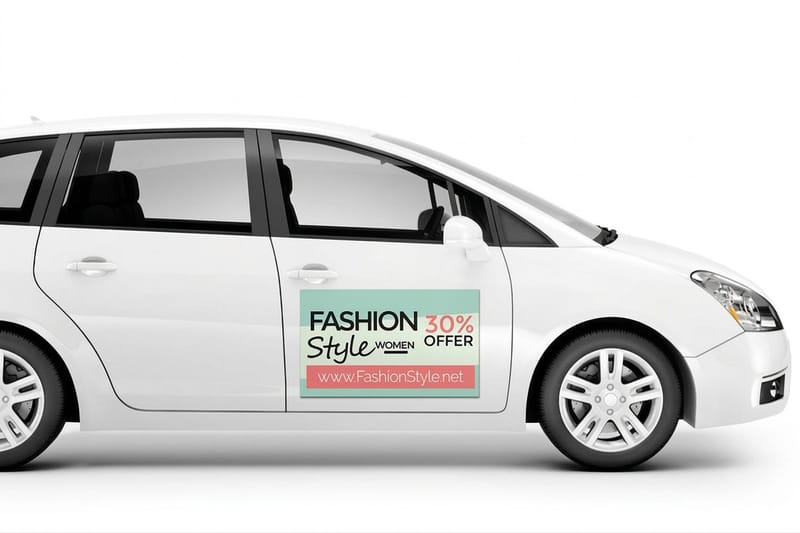
- Car magnet, 9 x 9 to 24 x 36 inches. The read-it-from-the-lot test, on 30mil magnet with a hi gloss UV coat and optional 1 inch rounded corners, in 4 business days.
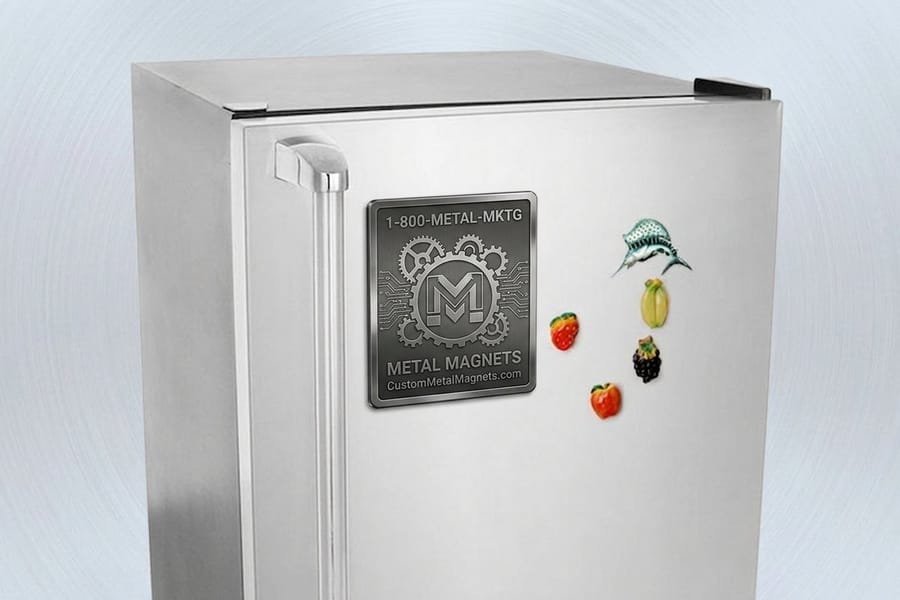
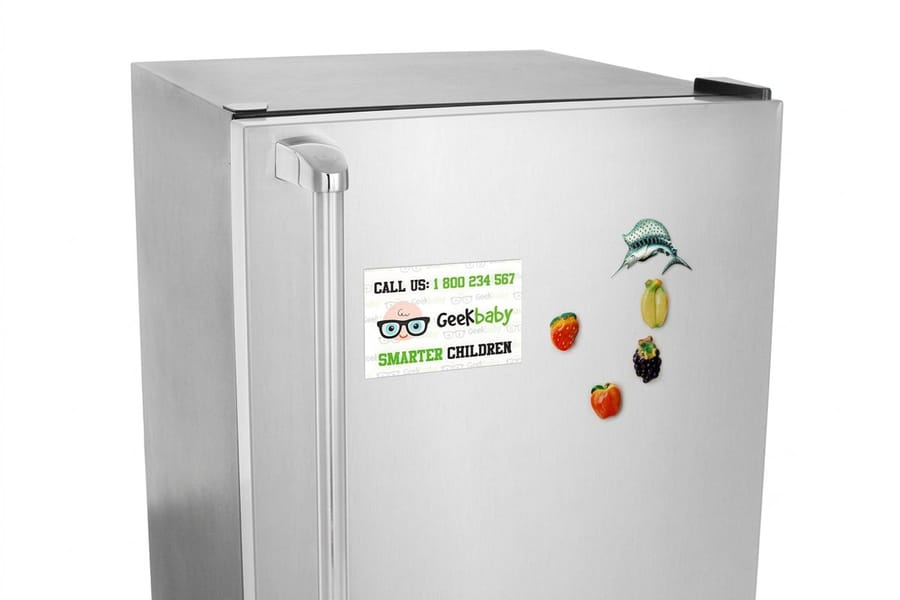
- Fridge magnet, 2 x 3.5 inches and up. The one-color and at-home test, on 17pt or 35pt indoor magnet, in 5 business days.
- The file. Send the vector master in CMYK with the one-color version beside it, and take the free online proof on the first piece.
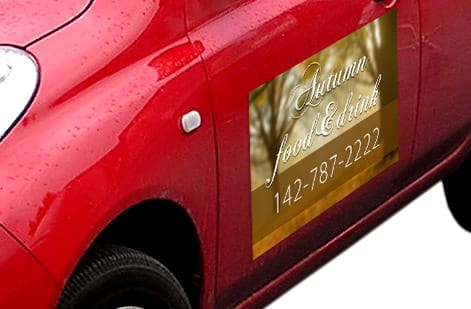
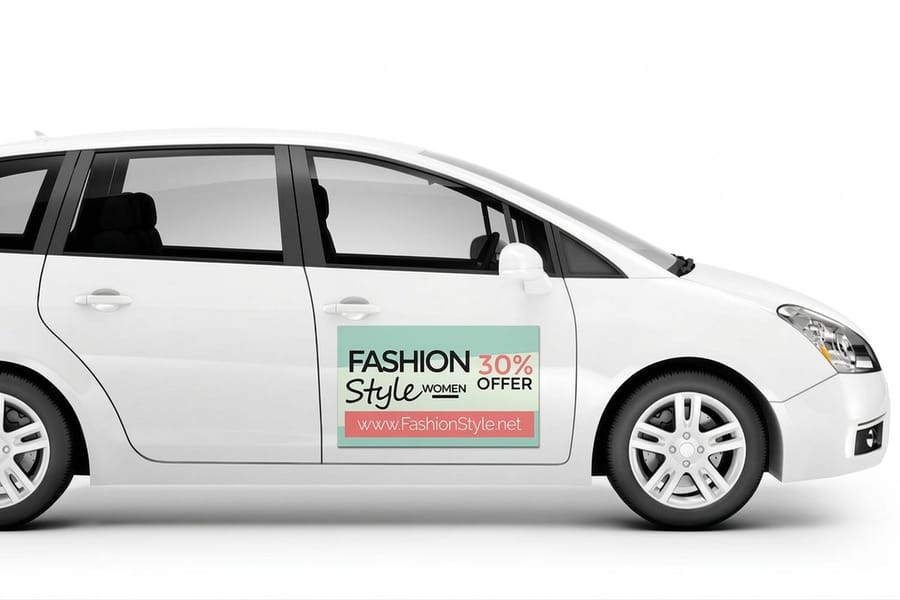
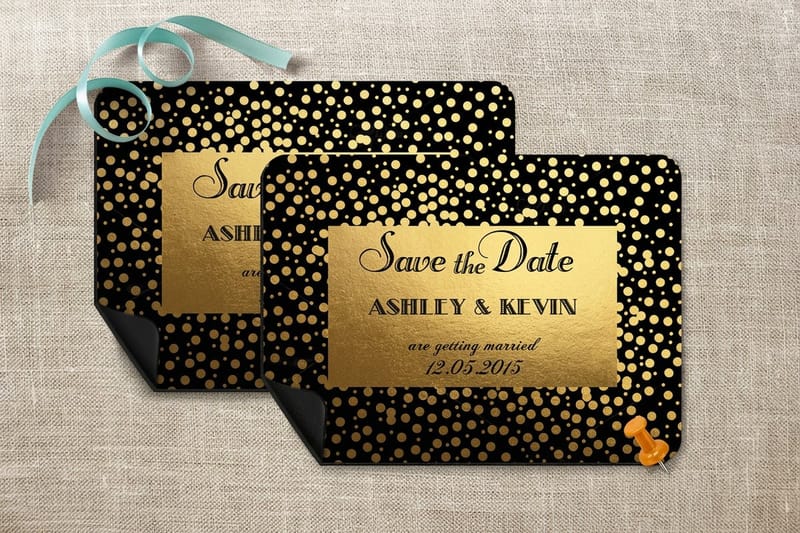
Custom car magnets are the standout here. Slap a clean logo on both doors of a work vehicle and you have a moving billboard that markets while you drive, park, and deliver. Because the mark passed the small-size and one-color tests, it stays legible from across a parking lot. Fridge and promotional magnets keep the same logo in front of customers at home, and the whole family lives in the custom magnet printing lineup.
From there the mark spreads across everything else your brand prints. The same files that feed a magnet feed your cards, folders, and signage, which is why it helps to think in kits rather than one-offs. Explore the wider marketing materials range, and if presentation is part of the pitch, pocket folders put the finished logo on the first thing a client holds.
How to choose the right checklist for your project

Not every project needs the same weight of process. The stages stay fixed, but how long you spend inside each gate should track how much the logo has to carry. Match the depth to the stakes:
- Solo founder or side project. Run a light version in an afternoon. One brief, three concepts, a quick first look, and a basic handover is enough to launch and learn.
- Growing small business. Add real mockups and the full test suite. This is the mark that will appear on hundreds of pieces, so it earns a careful refinement stage.
- Full rebrand. Bring the heavy version, with stakeholder sign-off, multiple rounds, and a complete file package. A structured rebranding process keeps a high-stakes change from turning into chaos.
Whatever the size, the goal is the same: never skip a stage, just scale the effort inside it. If you are testing a direction quickly, the free business card design tool is a low-cost way to see a mark on a real product before you commit the full budget.
What a logo costs and how pricing is set
Logo pricing makes sense once you see what the fee pays for: a designer's time and judgment, which is why the same request can cost nothing or tens of thousands. Printing the finished mark is the small line after it: 100 standard business cards run $17.57. In broad strokes, three routes cover most projects:
- DIY and templates. Free to a few dollars. Fast, fine for testing an idea, but the mark is rarely one of a kind. A solid starting point when you use a design template or a set of free templates to move quickly.
- Freelance designer. Often low hundreds to low thousands, depending on experience, number of concepts, and rounds of revision. This is the sweet spot for most small businesses that want something original.
- Agency identity system. Well into five figures, because you are buying a full brand system, not just a mark. Worth it when the logo has to anchor a large, long-running operation.
Whichever route you pick, price tracks scope: concepts, revisions, file formats, and whether you get the whole identity or only the mark. For a deeper breakdown, see how much a logo costs, and if you are the one setting rates, how much to charge for design work lays out the math from the other side of the table.
Wally explains the checklist
Gates, not guesswork, at every stage
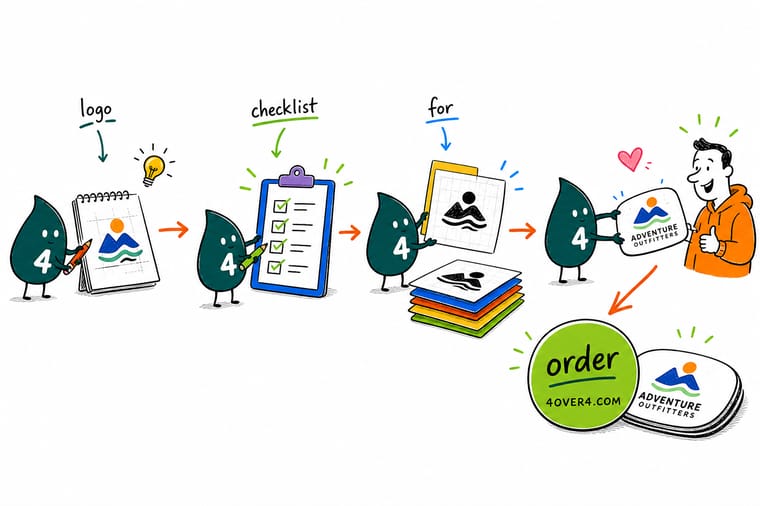
Wally treats a logo like a print run in miniature: check it at each gate and every version lands crisp, skip a gate and the flaw shows up later where it is expensive to fix. Brief before sketch, four fast checks at first look, a vector master at handover. Once your mark clears the list, the fastest way to see it work is to put it on a car magnet and let it market while you drive.
Order car magnets →
Specs and pricing
Car magnet specs and pricing
Once the checklist is done and your files are locked, here is what a made-to-order car magnet gives you at 4OVER4.COM: 18 sizes from 9 x 9 to 24 x 36 inches on 30mil magnet with a hi gloss UV coat, optional 1 inch rounded corners and 4 business days of production, with live specs and price-per-unit straight from the configurator.

| Quantity | Price Per Unit | Total |
|---|---|---|
| 2 | $23.75 | $47.50 |
Car and fridge magnets
Put the finished logo on custom magnets
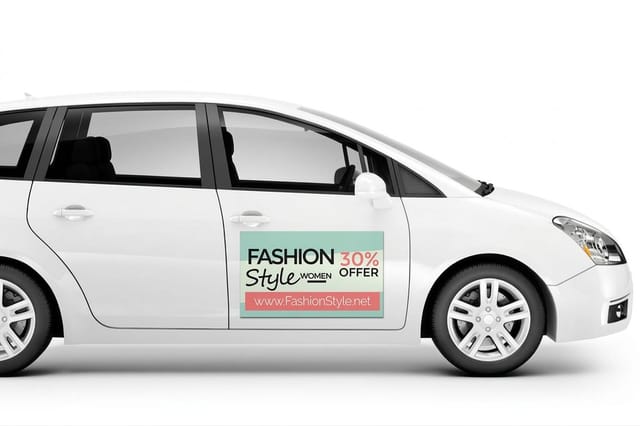
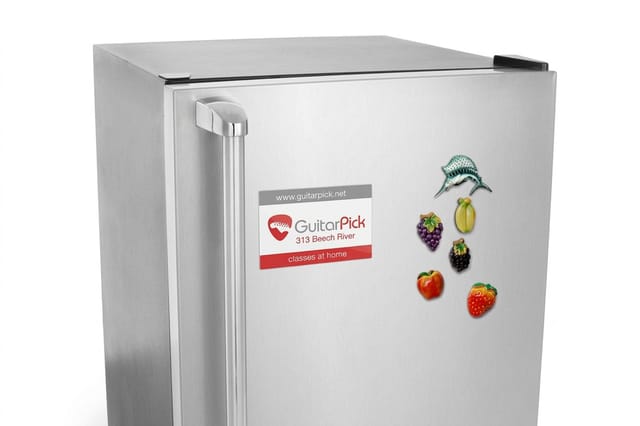

See it in use
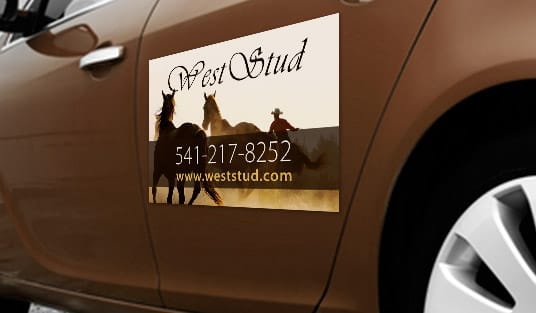
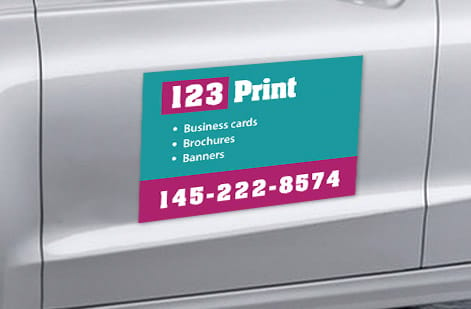
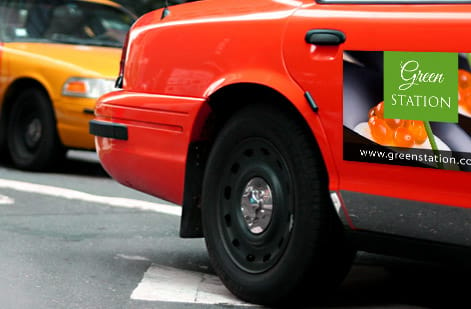
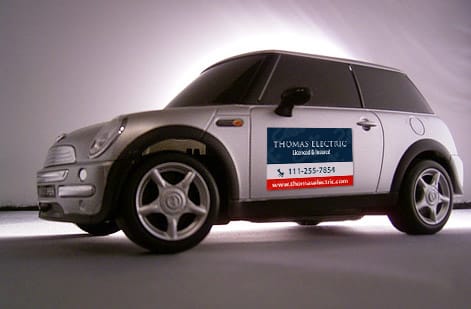
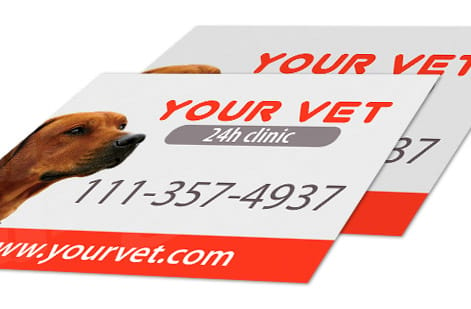
Real logos, printed on car magnets in-house

Explore more
Where to go next
By the numbers
Where your finished logo can live at 4OVER4
Common Questions
Common questions about logo design checklists
What should a logo checklist cover before you start?
The pre-work, not the drawing. Before a single concept, confirm who the audience is, where the logo will appear most, what the competition already looks like, and which words the mark needs to feel like. Write a short brief that names the personality in three or four adjectives. If you cannot describe the target in a sentence, you are not ready to design yet, you are still guessing.
What do you look at during the first-look stage?
A fast gut check on four things: is it appropriate for the industry, is it simple enough to redraw from memory, is it distinctive next to competitors, and is it memorable after a two-second glance. First look happens before you zoom in on kerning or gradients. Its whole job is to kill concepts that fail the basics so you never waste polish on them.
What exactly is a logo design checklist?
It is a repeatable list of checks tied to the stages of the design process: brief, concepts, first look, refinement, and handover. Instead of trusting a single moment of taste, you run every candidate mark through the same gates. The point is consistency. The same checklist that stops a weak concept also makes sure the final files are built to print, not just to look good on a screen.
What has to be signed off before the next stage starts?
Match the depth of the checklist to the stakes. A solo founder testing a side project can run a light version in an afternoon. A full rebrand for an established company needs the heavier version, with real mockups, one-color tests, and stakeholder sign-off. The stages stay the same, you just spend more time inside each gate when the logo has to carry more weight.
What am I actually paying for in a logo quote?
You are buying time and judgment, which is why the range is so wide. A DIY or template route can be free to a few dollars, a capable freelancer often lands in the low hundreds to low thousands, and a full agency identity system runs well into five figures. Price tracks scope: number of concepts, rounds of revision, file formats delivered, and whether you get a full brand system or just the mark.
Which files should a finished logo be handed over in?
A vector master first, usually SVG or EPS, because it scales to any size without blurring. Add high-resolution PNGs with transparent backgrounds for screens, a one-color version, a reversed or knockout version for dark backgrounds, and both RGB and CMYK builds so the color holds from web to print. Good handover is what lets the same logo print clean on a card, a sign, and a car magnet.
Get Started
Logo done? Put it to work on custom magnets.
Upload your finished mark, pick a size, and we print a clean, weatherproof magnet that turns any vehicle or surface into a branded one.
Legal Disclaimer
Gold Standard guarantees apply to all standard orders placed through 4over4.com. Price match requires verifiable proof of a competitor's published price for an equivalent product with matching specifications and turnaround time. Satisfaction guarantee covers manufacturing defects and print quality issues. Contact support with order number and documentation.
