
The Modern Estate Manager Print Kit, 7 Pieces That Keep a Private Property Running
An estate runs on documentation, and documentation only helps if it is where the problem is. These seven pieces put the manual in the mechanical room, the filter size on the grille, and the day the housekeeper had onto one sheet the next shift can read.
An estate manager needs seven printed pieces: a bound household manual, equipment labels, a handover notepad, letterhead, envelopes in two sizes, short run folders and business cards. The manual is the only one that has to exist on paper, because the night a pump fails is often the night the router is down. The seven starting prices add up to $728.18 at 4OVER4.COM, or $487.63 before the bound manual.

The picks
Seven picks, from $93.37 notepads to $844.54 pocket folders
They are in the order a new estate manager should buy them. The manual and the labels are the pair that let the property run without you; the correspondence set and the folders are what make the office look like one. Prices come straight from the configurator and drop per piece as the quantity climbs.
Standard booklets from $240.55
The household manual, bound and dated. Shutoffs, panel maps, equipment serials, filter sizes and the emergency tree, on paper in the mechanical room where a dead router cannot reach them.
Custom labels from $25
What turns the manual into something a stranger can follow. Valve tags, breaker legends, filter sizes on the return grille, bin fronts in the storage room.
Standard notepads from $93.37
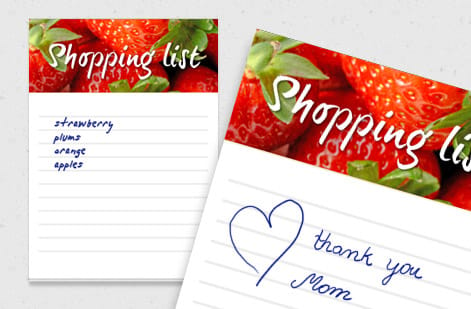
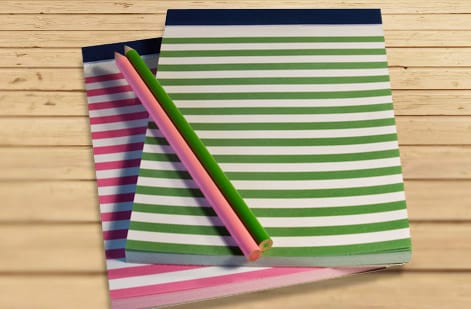
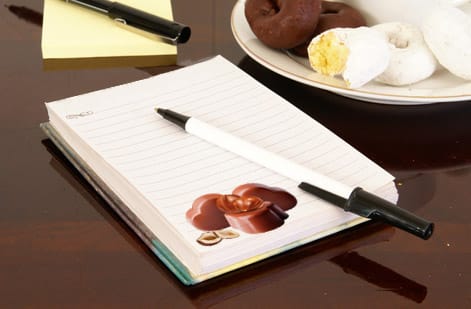
The handover pad. One sheet per day carries what the housekeeper found, what the gardener needs and what the next shift has to chase, then goes in the file.
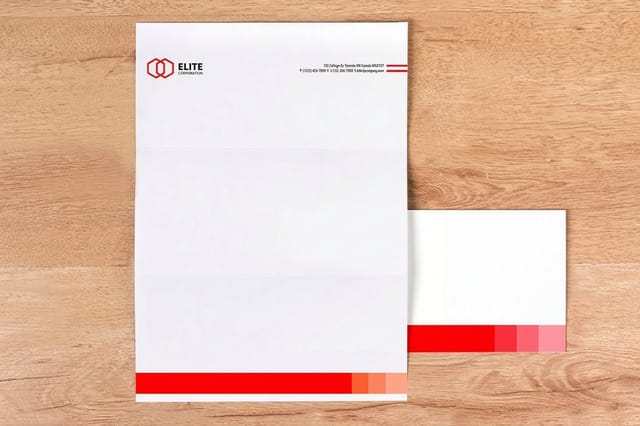
Standard letterheads from $99.95
For the letters that have to hold up later. Insurance claims, warranty escalations, a contractor put on notice, and the signed spending authority you keep in the safe.
Printed envelopes from $142.99
A number 10 for correspondence and a 9 by 12 for contracts that should never be folded. The return address is the estate office, never the principal by name.
Short run presentation folders from $108.75
The vendor packet and the new hire packet. Scope, insurance certificate, site rules and a card in the slit, handed over as one object instead of five loose sheets.
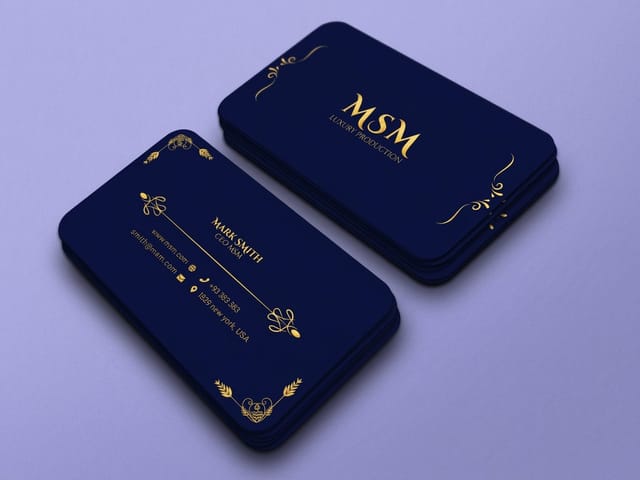
Premium business cards from $17.57
The card you hand a contractor at the gate. Estate office name, your mobile, no street address and no mention of who owns the house.




Before you send a file
Pick the binding before you write another page
The manual is the expensive piece and the one people reprint least often, so this is the decision worth making first.
Count the pages you already have, then add the equipment register you have not written yet, because that section always doubles. If the total sits under 64 and lands on a multiple of four, saddle stitch is available and it is the cheapest bound format we make. If it does not, or if the manual is going to live at the equipment rather than on a shelf, go straight to coil and stop pricing staples.
The reason is mechanical rather than aesthetic. Staples hold a folded block at the spine, so the book is under tension and closes itself. Coil passes through punched holes, which lets the pages rotate a full turn and lie flat, and flat is what you need when one hand is holding a torch and the other is on a valve. That difference is worth more than the price gap on a document you consult in awkward positions.
Then split the content. The emergency pages, shutoffs, panels, alarm zones and the call tree, get their own short coil bound booklet on a hook in the mechanical room. The full manual, with the standards and the vendor directory, stays in the office. Reprinting the short one twice a year keeps it honest, and the estate manager guide lists the six blocks that belong in the long one.
What each piece does
The seven pieces and where each one lives
Each piece answers a different question in a different room. Read the row, tap the piece to jump to its section, and start with whichever part of the property currently only exists in your head.
| Piece | What it holds | Where it lives | Starts at |
|---|---|---|---|
| Standard booklets | The household manual, printed as a dated revision | Mechanical room, kitchen drawer, principal office shelf | $240.55 |
| Custom labels | Valve tags, breaker legends, filter sizes, bin fronts | On the equipment itself, at eye height, in the storage room | $25 |
| Standard notepads | One day of handover notes per sheet | Uniform pocket, back hall desk, then the daily file | $93.37 |
| Standard letterheads | Claims, notices, authority letters, formal records | The office printer and the estate file cabinet | $99.95 |
| Printed envelopes | Anything mailed out under the estate name | Outgoing tray, with contracts flat in the 9 by 12 | $142.99 |
| Short run presentation folders | Vendor packets and staff onboarding sets | Handed across the kitchen table at a walkthrough | $108.75 |
| Premium business cards | Estate office name, your mobile, nothing else | Your pocket, the gate, the vendor van dashboard | $17.57 |
1. Standard booklets: the household manual, bound and dated
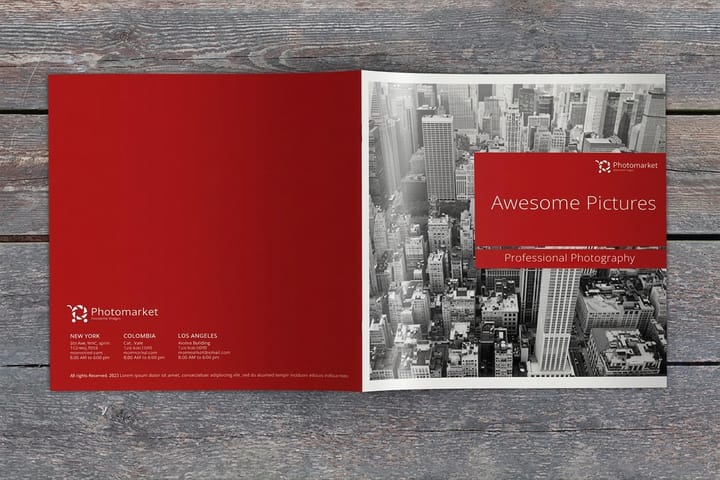
The household manual is the deliverable of the whole role, and a bound copy is the version that still works when the network does not. Standard booklets from $240.55 turn the file you have been keeping into a numbered, dated document that another competent person could run the property from tomorrow morning. The estate manager guide covers what goes in it; this is how to get it printed.
Page count picks the binding, and the binding decides whether the manual is usable at a panel. Saddle stitch folds sheets and staples through the spine, so the total has to land on a multiple of four, and past roughly 64 pages the staples buckle and the fold stops sitting flat. That covers a single residence comfortably. It also springs shut the moment you let go, which is the wrong behaviour for a book you read while holding a torch. A spiral coil book from $423.28 opens flat, takes any page count, and is what belongs on the plant room shelf. Our booklet binding methods guide and the full binding types comparison lay the formats side by side, and page counts and creep explains why a thick booklet needs the inner pages nudged before trimming.
Print two editions, not one. The mechanical room copy is the emergency subset: shutoffs, panel locations, meter numbers, alarm zones, the vendor after hours list and the call tree. Twelve to sixteen pages, coil bound, hung on a hook by the boiler. The full manual, with the equipment register and the principal standards, sits in the office. Reprinting sixteen pages twice a year is an ordinary expense. Reprinting a hundred and forty is a project nobody schedules, which is how manuals go stale.
Put the revision date on the cover in type large enough to read across a room, and destroy the copies it replaces the same afternoon. A household running from two different revisions of the same manual is worse off than one running from none, because everybody believes they are correct. Sizes and trim options are in the standard booklet sizes guide, and how to order booklet printing walks the file setup.
2. Custom labels: what makes the manual usable by a stranger

A manual that says "the main water shutoff is in the north mechanical room" is only as good as the person hunting for it at 2am. Custom labels from $25 close that gap by putting the answer on the object. Valve tags, a breaker legend beside the panel, the filter size on the return grille, the pool pump prime sequence on the pump housing, and bin fronts in the storage room.
Three labels earn their cost immediately. The first is every shutoff, water, gas and electrical, tagged with what it isolates rather than just its own name. The second is the filter size printed at the grille, because that single number is the reason a filter change becomes a two minute job for anyone on staff instead of a call to you. The third is the equipment tag: make, model, serial and install date, so a warranty claim starts with a photograph rather than a trip to the office.
Now the material trade-off, and it is the one people get wrong. Paper labels are fine on a linen shelf and a pantry bin. They curl, yellow and lift within a season on a boiler jacket, a pump housing, an irrigation manifold or anything outdoors, because those surfaces are hot, damp or both. Order premium vinyl labels from $29.16 for the mechanical room and outside, and keep the paper stock for the interior. Wipe the surface with alcohol and let it dry first; a label applied over dust lifts at a corner within weeks. The wider method is in our inventory labeling guide, and ordering custom labels online covers sizes and shapes.
3. Standard notepads: the handover sheet that becomes the record

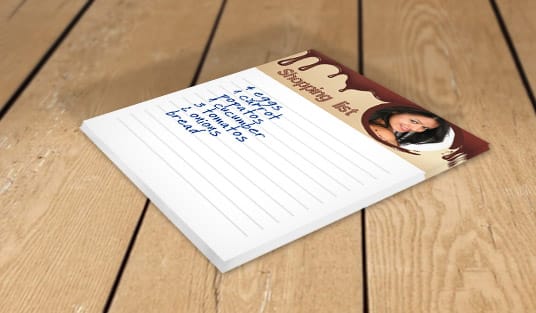
Estate work is a relay between people who rarely overlap. The housekeeper leaves before the gardener arrives, the night security shift hands to nobody, and the principal texts at odd hours. A printed notepad from $93.37 with a fixed layout is what stops all of that living in three separate phones.
Design the sheet, not the logo. Date and shift at the top, then four blocks: found, done, needs a vendor, needs a decision from the principal. The last block is the one that matters, because it is the list you take into your weekly sit down and the reason that meeting takes twenty minutes instead of an hour. Sheet count is the other decision people skip: pads come in 25, 50 and 100 sheet counts, and a 50 sheet pad at 4 by 6 in survives a uniform pocket where an 8.5 by 11 in pad never leaves the desk. Standard notepad sizes lists the trims, and sheet counts and branding uses covers the rest.
Where a notepad falls short is anything with money or liability attached. A single sheet leaves you with no copy once it is handed over, so a work authorisation, a damage report or a petty cash record wants carbonless forms from $120.82 instead: the vendor keeps the top sheet, you keep the second, and neither version can be edited afterwards. Use the notepad for the day, the duplicate form for anything you might have to prove.
4. Standard letterheads: the letters that have to hold up later

Most estate correspondence is email, and that is fine until it is not. Insurance claims, warranty escalations, a contractor formally put on notice, a confidentiality agreement, the signed spending authority and the decision path you agreed with the principal all read differently on a printed sheet with a header. Standard letterheads from $99.95 are the cheapest piece of the kit that changes how seriously a letter gets treated.
Order it uncoated, and treat that as a specification rather than a preference. Estate letters get signed, initialled, dated and annotated at the desk, and a gloss coated sheet repels ballpoint ink and can smear under a laser fuser. An uncoated text weight sheet takes a pen instantly, feeds through an office printer without curling, and photocopies without glare. Letterhead paper explained goes through the weights, and how to create a letterhead covers the layout.
Leave the print out of the printer path. Keep the header inside the top 1.5 in, keep the footer inside the bottom 0.5 in, and leave the middle of the sheet clear, because that is where your office printer will lay text over anything you put there. Print the estate entity name, a mobile, a general email and a mailing address that is not the residence. Nothing about who lives there. There is more on the file setup in how to print professional letterhead, and matching letterheads and business cards keeps the set consistent.
5. Printed envelopes: two sizes, and one of them is not the number 10

A letterhead without a matching envelope arrives looking borrowed. Printed envelopes from $142.99 finish the correspondence set, and an estate office needs two sizes rather than one.
The number 10 at 4.125 by 9.5 in is the everyday envelope: a letter folded in three, a cheque, a notice. The 9 by 12 in catalog envelope is the one people forget to order and then need constantly, because a signed contract, an insurance schedule, an appraisal or a certificate of insurance should arrive flat. A fold across a signature block is the kind of small thing an adjuster remembers. Our complete envelope sizes guide lists the standards, and catalog envelopes explained covers the larger format.
Two production details save a reprint. If you order a window envelope, the address block on the letterhead has to be positioned to sit inside the window with the sheet folded, and that alignment is measured, not eyeballed; the window envelope setup guide has the figures. And if the estate mails at any volume, printing the return address is faster and cheaper than a sheet of stickers, though envelope labels are the right answer for a one off run. Address them properly while you are at it, since a returned insurance letter costs a week, and addressing professional mail covers the conventions.
6. Short run presentation folders: the vendor packet and the new hire packet
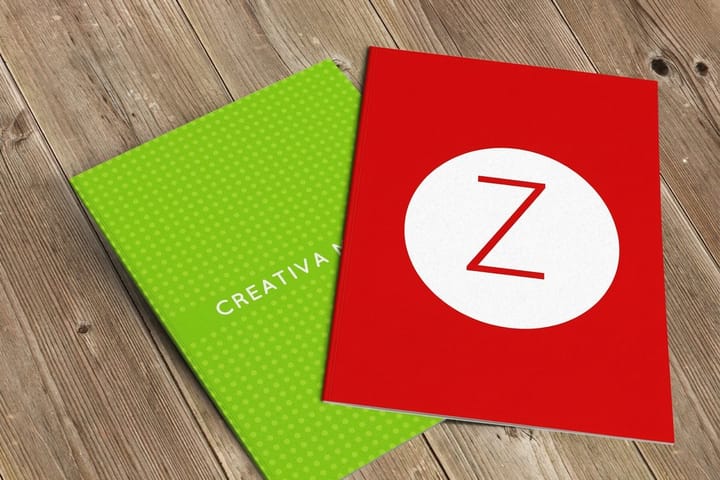
Every new vendor and every new staff member gets the same set of paper, and handing it over as five loose sheets is how half of it goes missing before the first day. Short run presentation folders from $108.75 hold a 9 by 12 in packet together and make the estate look like an organization rather than a household with opinions.
This is the price difference worth knowing. Standard pocket folders start at $844.54 because that product is priced for a run of a thousand, which is the right buy for a company handing out folders at trade shows. An estate uses perhaps forty a year, and short run folders put the identical 9 by 12 in format in your hand at $108.75 to start. Ordering the wrong one is the single most expensive mistake on this page. Formats and capacities are in the presentation folder sizes guide and what pocket folders are.
Fill the vendor packet with the scope, the site rules, the access and parking instructions, the invoicing details and a blank certificate of insurance request, then put your card in the slit. Fill the staff packet with the schedule, the confidentiality agreement, the house standards extract from the manual, and the emergency call tree. Same folder, two inserts, and both of them stop the conversation where somebody says nobody told them. Print quality notes are in how to get high quality folders printed, and customising printed file folders covers the interior filing side.
7. Premium business cards: the one piece with a security rule attached
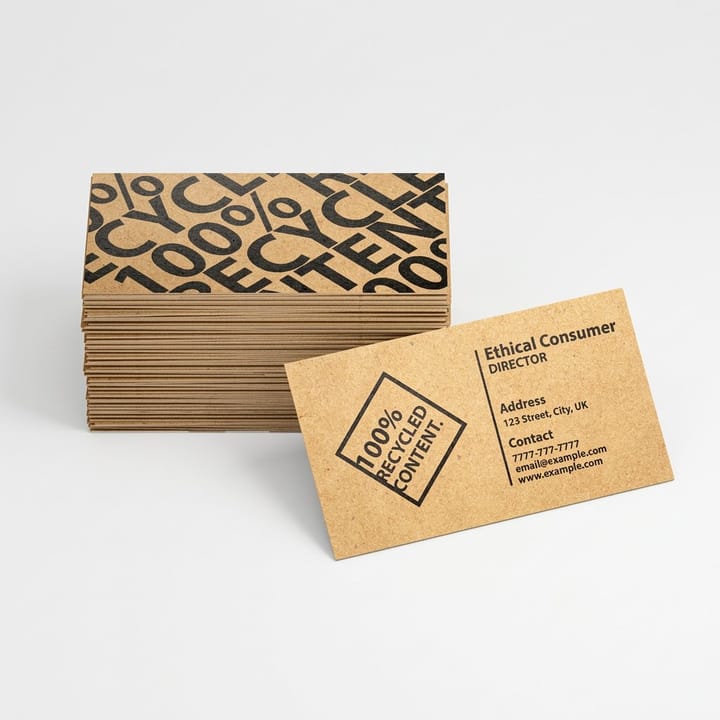
You hand a card to a contractor at the gate, a delivery driver, an inspector, a caterer running a walkthrough. Premium business cards from $17.57 are the cheapest thing here and the one with a rule attached that the rest of the kit does not carry.
Print the estate entity name, your title, a mobile number and a general email. Do not print the street address, do not print the principal family name, and do not print a photograph of the house. That card ends up on a van dashboard, in a supplier file and occasionally on a jobsite floor, and every one of those is a place where the address of a private residence with a known owner is worth something to somebody. This is the ordinary discretion the role runs on, applied to the one printed piece that travels furthest from the property.
On stock, a heavier card is doing a job rather than showing off. Premium stock resists the bend that turns a card in a work jacket into something a contractor throws away, and it signals the same thing a labelled mechanical room does. Keep the layout plain, leave the back for a second phone number or the after hours line, and match the type and color to the letterhead so the set reads as one office. Our notes on matching letterheads and business cards cover it, and the print essentials list in what goes in a brand kit is a useful cross check. If you would rather not build the layout from scratch, our design templates already respect the trim and safe margins.
Specs and pricing
The manual and the letterhead, side by side
The booklet is the biggest single line on the order and the letterhead is the one you will reorder most often. Here are the live specs and price ladders straight from the configurator.


| Quantity | Price Per Unit | Total |
|---|---|---|
| 25 | $9.62 | $240.55 |
| 50 | $6.04 | $302.06 |
| 100 | $3.61 | $361.37 |
| 200 | $2.22 | $444.85 |
| 300 | $1.65 | $495.38 |
| 400 | $1.29 | $515.14 |
| 500 | $1.06 | $531.61 |
| 600 | 91.5¢ | $549.19 |
| Quantity | Price Per Unit | Total |
|---|---|---|
| 50 | $2.00 | $99.95 |
| 100 | $1.05 | $105.44 |
| 200 | 58.2¢ | $116.43 |
| 300 | 43.6¢ | $130.72 |
| 400 | 34.9¢ | $139.49 |
| 500 | 29.4¢ | $147.18 |
| 600 | 25.4¢ | $152.68 |
| 700 | 22.6¢ | $158.17 |
Wally labels the shutoff
The manual is only as good as the tag on the valve
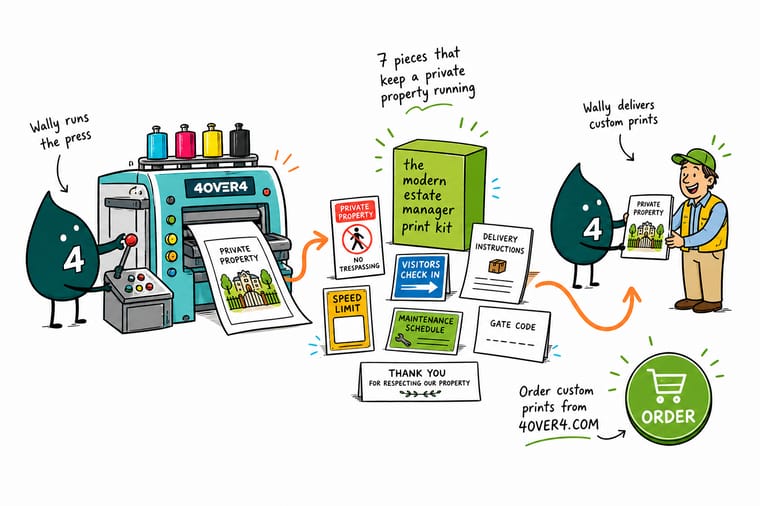
Wally wrote a beautiful manual. Then a pipe let go at midnight and the relief housekeeper stood in front of four identical valves with the right page open in her hand. Now every shutoff carries a vinyl tag that names what it isolates, every return grille carries its filter size, and the emergency pages are coil bound on a hook by the boiler so they lie flat under a torch. Print the manual, then print the labels that make it followable by someone who has never been in the room.
Shop the business basics collection →See it in use
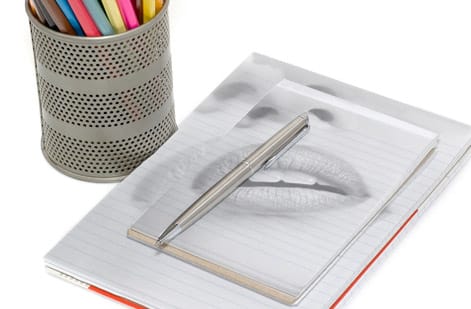
Notepads estate offices have printed


Explore more
Where to go next





By the numbers
What a private estate office can be printed for
Common Questions
Common questions about printing for an estate office
What printed materials does an estate manager actually need?
Seven pieces cover the job. A bound household manual so the property can be run without you, custom labels on the shutoffs and equipment so the manual can be followed by anyone, a handover notepad that keeps the daily relay in one place, letterhead for the letters that have to hold up later, matching envelopes in two sizes, folders for vendor and staff packets, and business cards for the gate. At 4OVER4.COM the seven starting prices add up to $728.18, or $487.63 if you leave the bound manual until the content has settled.
Should the household manual be printed or kept digital?
Both, doing different jobs. The full manual belongs in a shared digital file because it is searchable and you can correct one vendor number without reprinting anything. The emergency subset belongs on paper in the mechanical room, because the night you need the water shutoff is often the night the power and the router are down. Print twelve to sixteen pages of shutoffs, panel locations, alarm zones and the call tree, date the cover, and reprint it when it drifts.
Which binding works best for a household manual?
Spiral coil if it gets used, saddle stitch if it gets filed. A saddle stitched booklet is folded and stapled through the spine, needs a page count in multiples of four, tops out near 64 pages, and springs shut the moment you let go of it. A spiral coil book from $423.28 takes any page count and lies fully flat, which matters when you are reading a serial number off a pump with one hand. Many estates print both: coil for the working copy at the equipment, stapled for the office and the principal.
Why order uncoated letterhead instead of a coated sheet?
Because estate letters get written on. Signatures, initials, dates and margin notes all go onto the sheet after it comes out of the printer, and gloss coated stock repels ballpoint ink and can smear under a laser fuser. An uncoated text weight sheet takes a pen straight away, runs through an office printer without curling, and photocopies without glare. Coated stock photographs better and performs worse for this specific use.
What is the difference between pocket folders and short run presentation folders?
Quantity and price, not format. Both are the standard 9 by 12 in folder that holds letter size sheets. Standard pocket folders start at $844.54 because they are priced for a print run in the thousands, which suits a company handing them out at events. Short run presentation folders start at $108.75 and are made for the forty or so an estate office uses in a year. Order the short run version unless you genuinely need a pallet.
What should and should not go on an estate manager business card?
Print the estate entity name, your title, a mobile number and a general email. Leave off the street address, the principal family name and any photograph of the property. The card travels further than anything else you print, ending up on van dashboards, in supplier files and on jobsites, and the address of a private residence with a named owner has value to people you will never meet. The same rule applies to the return address on your envelopes.
Paper or vinyl labels for equipment in a mechanical room?
Vinyl for anything hot, damp or outdoors, paper for the interior. Paper labels from $25 are fine on linen shelves, pantry bins and office files, but on a boiler jacket, a pump housing or an irrigation manifold they curl, yellow and lift within a season. Premium vinyl labels from $29.16 hold through heat and condensation. Whichever you order, wipe the surface with alcohol and let it dry before applying, because a label put over dust starts lifting at a corner within weeks.
When should an estate use a duplicate form instead of a notepad?
Any time money or liability is attached. A notepad sheet handed to a vendor leaves you with nothing, so work authorisations, damage reports, petty cash records and anything a principal might question later belong on carbonless forms from $120.82. The vendor keeps the top sheet, you keep the copy, and neither version can be quietly amended afterwards. Keep the notepad for the daily handover, where the point is speed rather than proof.
Get Started
Print the manual, then print the labels
Order the seven-piece estate office set at 4OVER4.COM. Pick your sizes, stocks and bindings, and watch every price update live as you build the order. Same-day turnaround is available on the flat pieces when a walkthrough moves up.
Legal Disclaimer
Gold Standard guarantees apply to all standard orders placed through 4over4.com. Price match requires verifiable proof of a competitor's published price for an equivalent product with matching specifications and turnaround time. Satisfaction guarantee covers manufacturing defects and print quality issues. Contact support with order number and documentation. On-time delivery rate based on tracked orders 1999 to 2026. Individual results may vary based on shipping carrier performance.
