
How to Address an Envelope Properly for Professional Mail


Where each block sits, how the sorting equipment reads it, the etiquette that applies to business and personal mail, and the shape rules that decide what the postage costs.
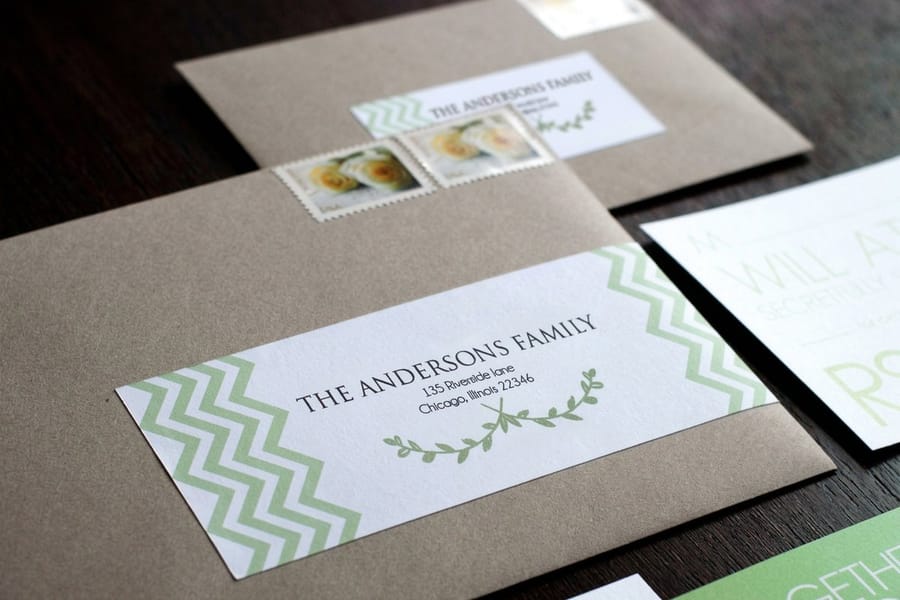
Put the delivery address in the middle of the envelope, parallel to the long edge, with the return address in the top left corner and the postage top right. Write the delivery block left justified in three or four lines ending with CITY, the two letter state and the ZIP, in uppercase without punctuation, and keep the bottom 5/8 inch of the envelope clear so USPS can print its barcode there.
Quick answer
Return address top left, postage top right, delivery block in the middle
The delivery address sits roughly in the center of the envelope, parallel to the longest edge, left justified, with nothing printed beneath the last line. Build that block from the bottom up, because that is how the equipment reads it: CITY STATE ZIP on the final line, the street or box directly above it with the suite or apartment number at the end of the same line, the recipient above that, and an ATTN line at the very top when the mail is going to a company. Set it in uppercase with no punctuation other than the ZIP+4 hyphen, keep it at least half an inch from the left and right edges, and leave the bottom 5/8 inch empty for the postal barcode.
The Three Zones on the Face of an Envelope
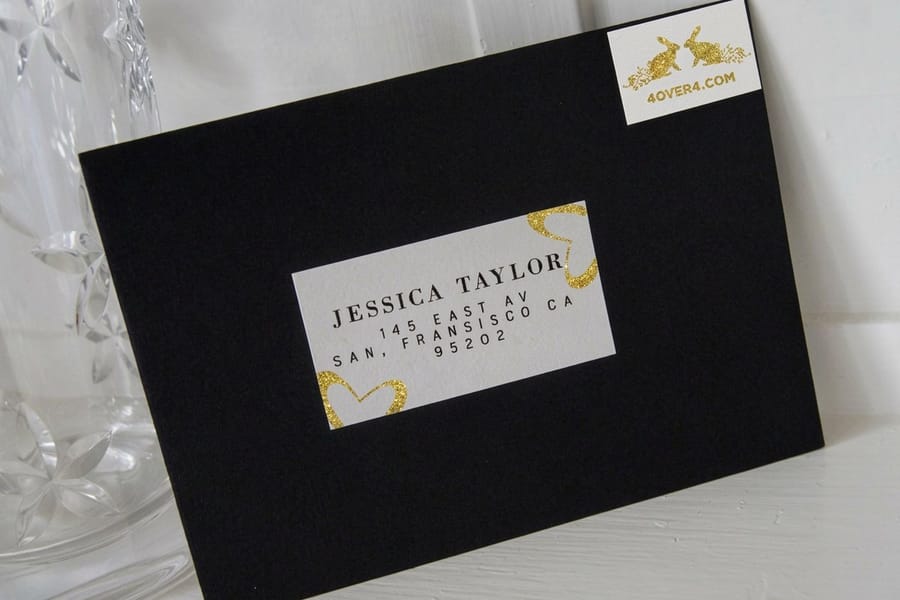
Turn any correctly addressed envelope over in your hand and you are looking at three zones and a lot of empty paper. The empty paper is not wasted, it is the part the sorting equipment needs.
Top left, the return address. Roughly a quarter inch in from the left edge and a quarter inch down from the top, in the same line order as the delivery address. It tells the carrier where to send the piece if it cannot be delivered, and on business mail it is the first thing a recipient reads.
Top right, the postage. A stamp, a meter imprint, or an indicia for a permit mailing. Keep this corner clear of artwork so the stamp sits flat and the facing equipment can find the cancellation area.
Center, the delivery address. Parallel to the longest edge of the envelope, left justified, roughly centered horizontally and sitting a little below the vertical middle. USPS calls the band it must fall inside the OCR read area: no closer than half an inch to the left or right edge, and clear of the bottom 5/8 inch.
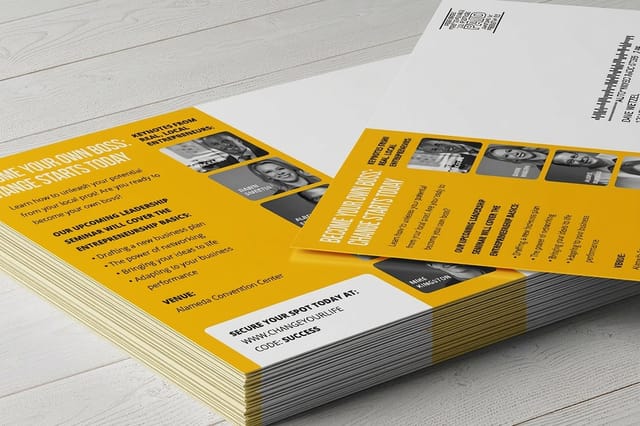
That bottom 5/8 inch is the one people design straight through. It is reserved for the delivery point barcode that USPS sprays on during processing, and a tagline, a decorative rule or a logo sitting in it can push the piece into a manual queue. If your envelope artwork has a footer, move it up. The same clearance applies to a self mailer, which is why direct mail postcards keep the lower right corner of the address side empty.
Building the Delivery Address Block, Line by Line
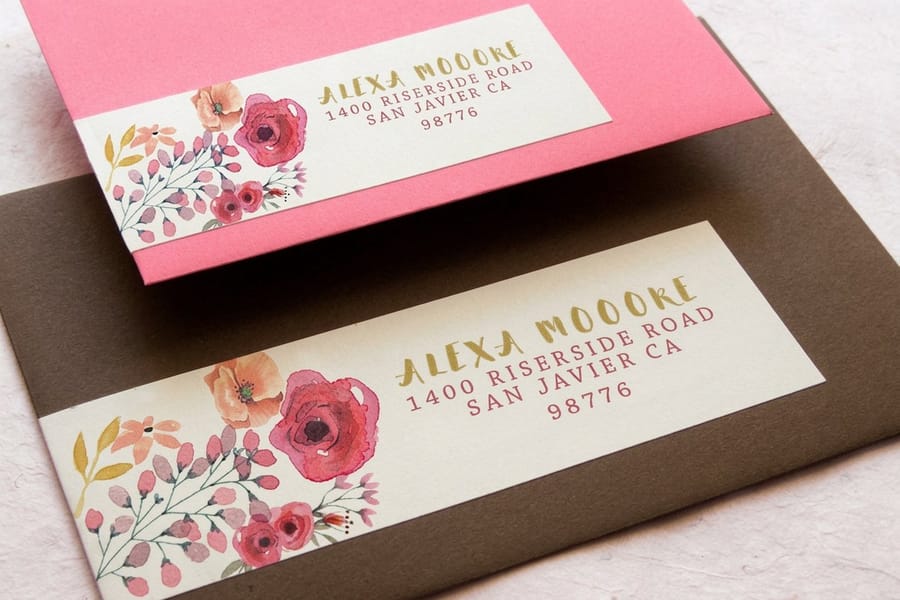
Sorting equipment reads an address block from the bottom up. It finds the last line, decodes the city, state and ZIP, then treats the line directly above it as the delivery address. Everything above that pair is treated as routing information for a human. Once you know the read order, the rules stop feeling arbitrary.
| Line | What belongs there | The mistake that breaks it |
|---|---|---|
| Attention line | ATTN followed by the individual, when the mail is going to a company rather than a person. | Burying it at the bottom of the block. It belongs on the first line, above the company name. |
| Recipient | The person or the company that should receive the piece. | Adding a job title on the same line until the line runs long and wraps unpredictably. |
| Delivery address | Street number, street name, and the unit designator at the end: STE, APT, FL, UNIT. | Putting the unit on its own line below the street, where it becomes the delivery line. |
| Last line | CITY, two letter state abbreviation, ZIP or ZIP+4 with a hyphen. | Spelling out the state, or dropping anything at all beneath this line. |
Format the block in uppercase, left justified, with no punctuation apart from the hyphen in a ZIP+4, in a plain sans serif around 10 to 12 point. That is the specification in USPS Publication 28, and it exists because capital letters without commas give the character reader fewer ambiguous shapes to resolve. Mixed case delivers perfectly well on a single card. On a run of two thousand, the uppercase version is the one that sorts deeper before a carrier ever sees it.
One rule catches people out constantly: if you print both a street address and a PO Box, the piece goes to whichever one sits directly above the city line. Pick one and delete the other. And if the recipient is at a company, resist the urge to stack a department, a title and a mail stop into four lines; a long address block is more likely to be misread than a short one.
Addressing Mail That Leaves the United States
An international address follows the same bottom up logic with one addition. The destination country is the last line, on its own, in capitals, and written in English. Everything above it belongs to that country rather than to USPS, so leave it in the local format and do not translate the street type.
- Recipient name.
- Street address in the local order, which across much of Europe puts the number after the street name.
- Postal code and town on one line, in the order that country uses. Many put the code first.
- COUNTRY, alone on the final line, in English capitals.
Two habits keep the piece moving. Never abbreviate the country, because the sorting center that reads that line is on this side of the ocean and works from the full English name. And leave out a state or province unless that country actually uses one, since an invented line above the country is the most common reason an overseas piece comes back.
Titles, Attention Lines and Business Etiquette
The postal rules get the envelope to the right building. Etiquette decides whether the person opening it feels respected. They are separate problems and they occasionally pull in opposite directions.
For business mail, write the person first and the company second: JANE OKONKWO on line one, OKONKWO DESIGN CO on line two. If you only know the role and not the name, use the attention line at the top of the block with the function spelled out, as in ATTN ACCOUNTS PAYABLE. Professional titles that are earned rather than held by job description belong with the name: Dr. for physicians and academics, Rev., Hon. for judges and elected officials. A job title like Marketing Director is not a courtesy title and should sit on its own line under the name, not in front of it.
For personal and social mail the conventions run older and stricter. A couple sharing a surname goes on one line. A couple with different surnames gets a line each, alphabetical by last name. Children under about eighteen are traditionally included on a second line rather than getting their own envelope. If you are working through a holiday list, our guide to addressing Christmas cards covers the family and title cases in more depth than a business mailing ever needs.
- Never abbreviate a name the recipient spells out. Jonathan is not Jon on an envelope unless he signs it that way.
- Use the honorific the person uses. Mx. and no honorific at all are both correct choices, and defaulting to Ms. is safer than guessing marital status.
- Skip the title on a bulk mailing rather than guess it. A wrong title reads worse than no title.
- Match the return address to the sender. A personal note from the founder with the accounting department in the corner undoes the effect.
Printed Labels, Handwriting, and Which One to Use
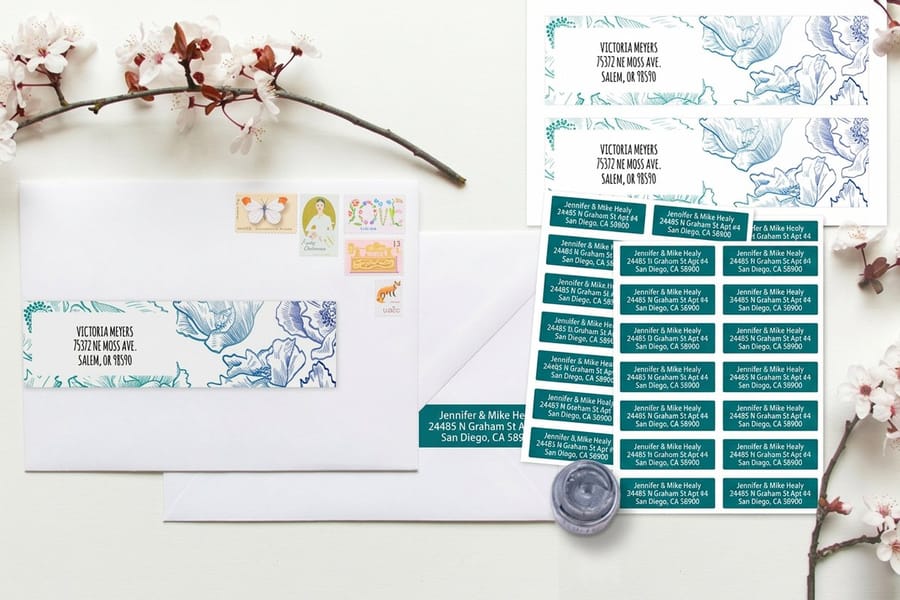
Handwriting an envelope is the right answer maybe twice a year. For everything else, print it, because a printed block is legible, identical across the run, and can be fed from a list that has already been standardized against the postal database.
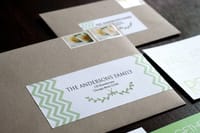
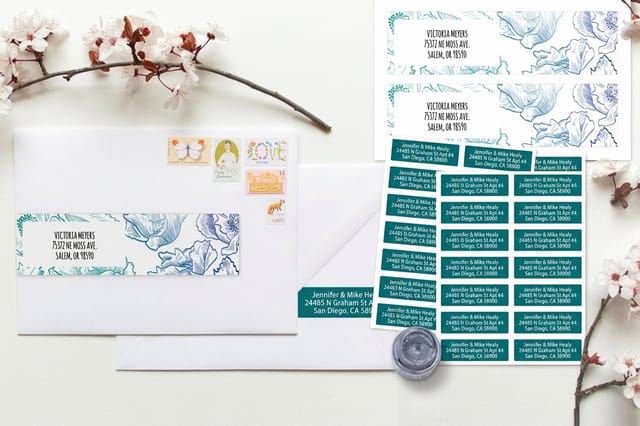
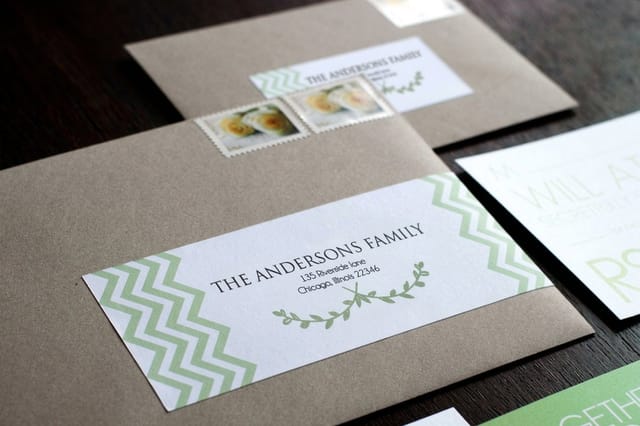
Standard address labels start at $23.88 and handle the ordinary case: a clean white face, full color if your logo needs it, and enough adhesive to hold on a coated envelope. Premium address labels start at $29.16 on a heavier stock with a better face for crisp small type, which matters when a long company name has to fit inside the read area without shrinking below about 10 point. If you only ever need the corner block, the return address labels range prints just that, and you can order it in the same run as the delivery labels.
Three habits keep printed addressing out of trouble. Apply the label straight, because a skew of more than about five degrees is enough to drop a piece out of automated sorting and into a manual pass. Keep the label fully on the face with no part wrapping an edge. And print dark on light, never light type reversed out of a dark panel, because the reader is looking for dark characters on a pale background and a reversed block reads as an empty area.
Handwriting still earns its place where the point is that a person did it: condolence notes, thank you cards, and a small run of high value prospects where the envelope has to survive the two second decision at the recycling bin. That is a real effect and it is the reason handwritten outer envelopes persist in fundraising. It is also why it collapses at volume, so browse the address label printing options before committing anyone to writing four hundred envelopes by hand.
Size, Shape and the Surcharge Nobody Budgets For
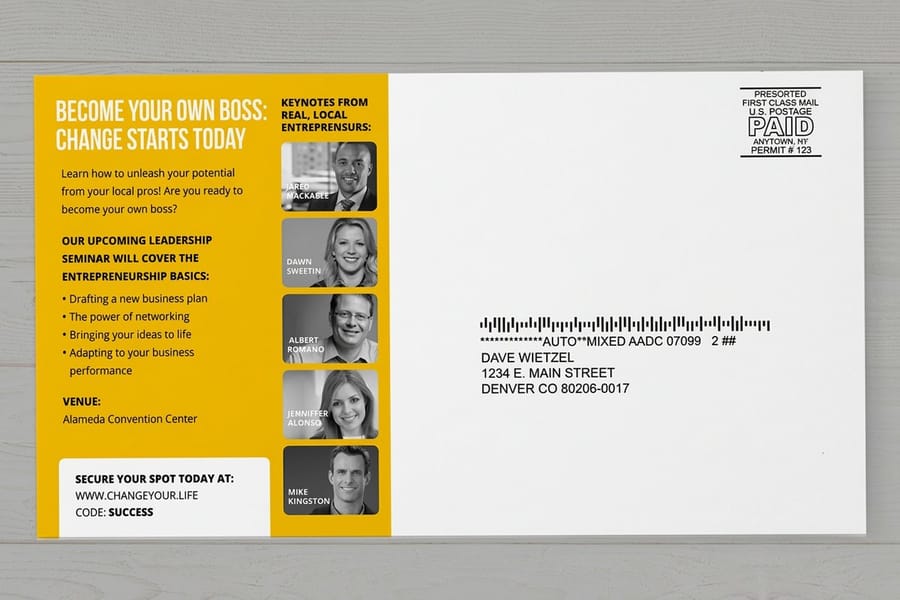
An envelope that is addressed perfectly can still cost more than it should, because postage is priced on shape before it is priced on weight. The letter rate is only available to a piece that machines can handle, and the tests are physical.
| Test | What qualifies as a letter | What happens when it fails |
|---|---|---|
| Size | At least 3.5 by 5 inches, no more than 6.125 by 11.5 inches, at least 0.007 inch thick. | Under the minimum it is nonmailable; over it, the piece prices as a large envelope. |
| Shape | Rectangular, with length between 1.3 and 2.5 times the height. | Square invitations and near square envelopes take a nonmachinable surcharge per piece. |
| Flexibility | Uniform thickness, flexible enough to bend around a roller. | Clasps, string closures and rigid or lumpy inserts push the piece to manual handling. |
| Address area | Block inside the read area, bottom 5/8 inch clear for the barcode. | Artwork in the barcode zone slows the piece and can cost the automation rate on a mailing. |
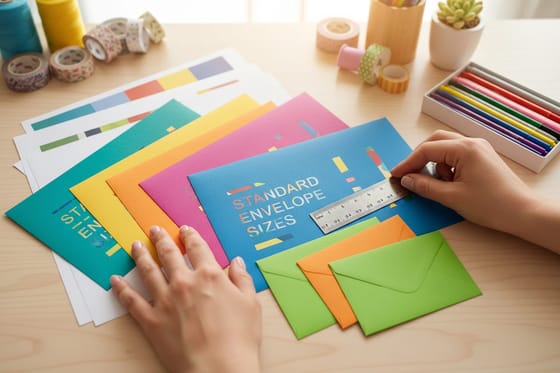
The number that surprises people is the aspect ratio. A #10 business envelope at 4.125 by 9.5 inches lands at about 2.3 and passes comfortably. A 5.5 inch square invitation envelope has a ratio of 1.0 and fails, so every single piece in that mailing carries a surcharge on top of the stamp. Neither the paper nor the printing changed. The shape did.
Weight matters after shape, and it is where the insert count bites. Once a stuffed envelope crosses the first ounce, each additional ounce adds postage, so a mailing that grew from a letter and a reply card to a letter, a brochure and two reply cards can quietly double its postage line. If the piece is heading that way, compare it honestly against a postcard format before you print. Our five step direct mail postcard walkthrough covers the trade, and the direct mail statistics roundup is a useful sanity check on what formats are actually being sent. When you would rather not touch any of it, our direct mail services print, address and mail the run in one pass, and the business envelope sizes guide will tell you which envelope your insert should have been in from the start.
Addressing a Package Rather Than an Envelope
A parcel takes the same three blocks, but the geometry changes. Put the delivery address on the largest flat face, running with the longest edge, and put the return address in the top left corner of that same face. Never split the two across different sides, because the carrier reading one face has to find both.
Four habits cover the rest. Remove or fully cover every old label and barcode, since a scanner will happily read a previous trip and route the box to it. Keep the block clear of seams, tape and the corners a machine grips. Use one printed label rather than a taped sheet of paper. And put a duplicate of the address inside the box, because a label lost in transit is the difference between a delivery and a claim.
The read area thinking still applies, just without the barcode strip. A printed block from a standardized list beats a marker every time, and our standard address labels handle a run of them in one pass.
Wally addresses an envelope
Three zones, and one strip you leave alone
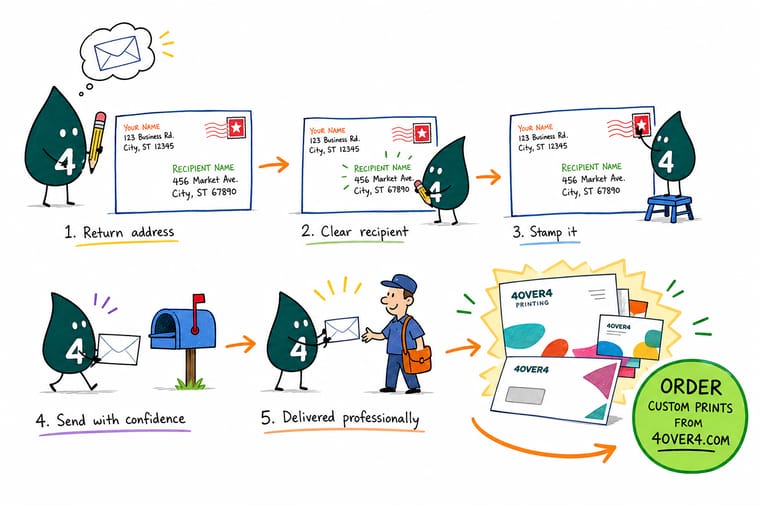
Wally puts his return address in the top left corner, the stamp in the top right, and the delivery block in the middle running the long way. He writes the last line first in his head: city, two letter state, ZIP. Street goes directly above it with the suite number on the end of that same line. Then he keeps his pen out of the bottom 5/8 inch, because that strip belongs to the postal barcode, and anything he prints there sends his envelope to the slow queue.
Order premium address labels →Specs and pricing
Address labels and mailers, sizes and starting prices
Compare the addressing options side by side, with live configuration choices and starting prices straight from the 4OVER4.COM configurator.
Print it
Print the address instead of writing it four hundred times
Explore more
Where to go next
By the numbers
Mail that gets printed, addressed and sent on time
Common Questions
Your envelope addressing questions, answered
How do I address an envelope to a PO Box?
Put the box on the delivery line, directly above the city, state and ZIP, written as PO BOX and the number with no punctuation. Never print both a street address and a PO Box, because the equipment treats whichever line sits directly above the city as the delivery point and will send the piece there. If the recipient gave you both, use the one they asked for and delete the other.
How do I address an envelope in care of someone?
Put the intended reader on the first line, then c/o and the name of the person or business whose address it is on the second line, then the street address below that. The care of line is routing information for a human, so it belongs above the delivery line and never below it. Use it when the recipient is staying somewhere temporarily or receives mail through an office that is not their own.
Can I print the address on the letter and use a window envelope?
Yes, and it removes a step, because the block printed on the letter inside shows through the window and nothing has to be matched up. The rules do not change. The address has to sit fully inside the window with margin on every side when the letter shifts, the window has to fall inside the read area, and the bottom 5/8 inch of the envelope still has to be clear. Fold the letter so the block cannot slide out of view when the piece is handled.
Where exactly does the return address go on an envelope?
Top left corner of the face, on the same side as the delivery address, starting about a quarter inch in from the left edge and a quarter inch down from the top. It uses the same line order as the delivery address: name, then street or box, then city, state and ZIP. On a printed envelope the return address is usually part of the artwork; on a plain stock envelope a return address label does the same job in one pass. Putting the return address on the back flap is a social convention on invitations and it still works, but the front left corner is what USPS asks for and what machines expect.
Should I write the address in all capital letters?
For business and bulk mail, yes. USPS Publication 28 asks for uppercase, left justified, no punctuation except the hyphen in a ZIP+4, and a plain sans serif face at roughly 10 to 12 point. That format gives the optical character reader the cleanest shapes to work with. For a wedding invitation or a handwritten condolence note, normal mixed case with punctuation is correct and the mail still gets delivered; the machine simply works a little harder or hands the piece to a clerk.
Do I need the ZIP+4, or is the five digit ZIP enough?
Five digits will deliver. The extra four narrow the destination to a block face, a floor of a building, or a single large recipient, which is what lets the piece sort deeper into the network before a carrier touches it. If you are mailing one card, do not lose sleep over it. If you are mailing a list, run the list through address standardization before you print, because ZIP+4 plus a correct delivery point is what qualifies presorted rates in the first place.
How do I address an envelope to a couple or to a whole family?
A married couple sharing a surname goes on one line as Mr. and Mrs. James Whitfield in the most formal style, or Mr. James Whitfield and Mrs. Anna Whitfield when you want both first names. A couple with different surnames gets one name per line, alphabetical by last name, or the person you actually know first. A family is The Whitfield Family, or the parents on line one and Miss Ella and Master Owen Whitfield on line two if you are being properly traditional. For a same sex couple the same rules apply with no change: two names, alphabetical, on one line if they share a surname.
Is a printed label as acceptable as handwriting?
For business mail a printed label is better, not just acceptable. It is legible, it is consistent across a whole run, and it can carry a standardized address that a person copying from a spreadsheet would get slightly wrong. Handwriting still wins on anything meant to feel personal, which is why holiday cards and thank you notes stay handwritten. The one thing to avoid is a label applied crooked or wrapped around an edge, because a skewed address block is one of the most common reasons a piece drops out of automated sorting.
What is a nonmachinable surcharge and how do I avoid it?
It is the extra postage USPS charges when a letter sized piece cannot run through the automated equipment, and it is charged per piece, so it hurts most on a mailing. The usual triggers are a square envelope, an aspect ratio outside about 1.3 to 2.5, a clasp or a string closure, a rigid or lumpy insert, and paper too flimsy to hold its shape. Avoid it by staying rectangular, keeping the address block in the read area, leaving the bottom 5/8 inch clear, and using a stock with enough body to feed. If your piece is genuinely square, price it as a postcard or a flat before you commit to the size.
Where do APT, STE and unit numbers belong?
On the same line as the street address, at the end, after the street name: 1420 CLARENDON BLVD STE 700. Only when that line will not fit in the space available should the secondary unit move to its own line, and then it goes above the street line, never below it. The reason is the bottom up read: the line immediately above the city, state and ZIP is treated as the delivery address, so a unit number parked on that line can send the piece to the wrong place inside a building.
Get Started
Ready to stop hand writing envelopes?
Print the delivery block and the return corner on labels that sit straight, read clean, and match the rest of your stationery.
Legal Disclaimer
Gold Standard guarantees apply to all standard orders placed through 4over4.com. Price match requires verifiable proof of a competitor's published price for an equivalent product with matching specifications and turnaround time. Satisfaction guarantee covers manufacturing defects and print quality issues. Contact support with order number and documentation. On-time delivery rate based on tracked orders 1999 to 2026. Individual results may vary based on shipping carrier performance.
