
12 Grand Opening Essentials That Launch a Property Management Firm
A new property management company sells to two audiences at once: owners who need to trust you with their asset, and residents who need to find your vacancies. These twelve print pieces work both doorsteps from day one, from the $16.48 postcard run in the owner's mailbox to the 2 by 6 ft now-leasing banner on the railing.
The property management grand-opening essentials are twelve print pieces that launch a management company on both fronts: door hangers canvass rental-heavy streets for owners and carry notices to residents, postcards run the owner-outreach campaign, brochures explain services and fees calmly, business cards work every introduction, and leasing flyers with now-leasing banners, for-rent yard signs, and showing-day A-frames fill the vacancies that prove you can, while letterheads, printed envelopes, car magnets, and branded key tags make the whole operation read as an institution.

The picks
Twelve products, from the owner brochure to the key tag
Start here. These are the twelve products in the essentials, numbered in the order a management company actually grows: win the owner, fill the unit, look established doing both. Each pick is priced live from the configurator, so set one brand on each and it reads identically at the owner's desk and the resident's door.








Design and print help
One professional look, owner-side and resident-side
Owners hand properties to companies that look like they run tight systems. Set the logo, colors and office line once in the online designer and carry them from the 8.5 by 11 in letterhead on an owner statement to the #10 envelope it mails in and the 30mil plastic key tag on the office board, then check each piece on its free proof. These 4OVER4.COM services keep your logo, colors, and office line identical across all twelve pieces.
How they work together
Win owners, fill units, look established
Five pieces win owners, four fill units and three make a young company look established. Print the whole sequence and winning owners, filling units, and looking established happen in parallel instead of in turns.
Owner-outreach postcards work the landlord lists, door hangers canvass the rental-heavy streets no list captures, the services brochure closes the sit-down with fees and process in calm writing, and the proposal plus every monthly statement after it arrives on letterhead in a matched envelope.
The now-leasing banner works the street, for-rent yard signs flag each vacancy, leasing flyers carry unit details to every counter, corkboard, and showing, and the A-frame turns showing day into a small open house. Fast leasing is the loudest possible ad for your management.
Cards travel through owner meetings, vendor accounts, and resident move-ins, the magnetted maintenance truck advertises from every driveway it parks in, and branded key tags keep the growing key board tidy. Every handshake in this business is a potential door under management, and these are what survive it.
1. Door hangers: one piece, both audiences

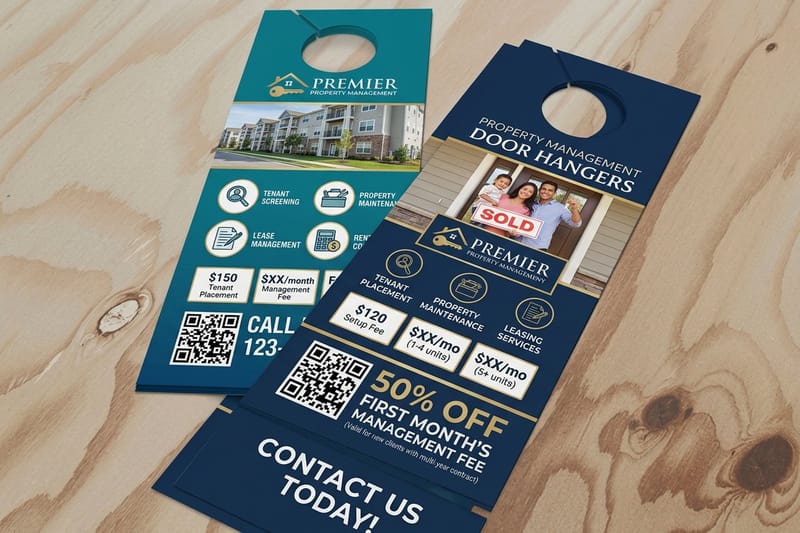
No other piece in this set works both sides of the business. On the acquisition side, door hangers canvass the streets where rentals cluster: is this property professionally managed, here is what hands-off ownership feels like, here is the number. Many small landlords own the house next to their own; the doorstep reaches them when no purchased list can.
On the operations side, the same product carries resident communication at your buildings, inspection notices, maintenance schedules, renewal reminders, each one a branded touch that makes the building feel managed. Formats and sizing live in door hanger dimensions; print the acquisition and notice versions in one run and the unit cost drops.
A visibly well-communicated building is itself owner marketing: prospective clients drive past your addresses before they call.
2. Postcards: the owner-outreach campaign

Owners of rental property are a mailable audience: county records make absentee and multi-property owners findable, and a steady postcard campaign puts your company in front of them at the exact frequency their patience with self-managing wears out. The message that works is empathy plus arithmetic: the 2 a.m. calls, the vacancy months, the eviction paperwork, versus one predictable fee.
Mail the same owner list on a steady cadence rather than blasting once; the decision to hand over a property ripens slowly and lands on whoever is present that month. The list-and-cadence math is in the direct mail response benchmarks, and how to make postcards covers formats. One design, rotating pain points, reordered quarterly.
Every card should offer one concrete next step: a free rent analysis of their property. Owners answer math before they answer marketing.
3. Brochures: services and fees, in calm writing

The owner sit-down always reaches the same fork: what exactly do you do, and what exactly does it cost. The brochure answers in writing, which is precisely what a nervous owner needs, tenant screening, rent collection, maintenance coordination, inspections, statements, and the fee structure laid out without asterisks. Verbal answers reassure for an hour; printed ones reassure at the kitchen table that night.
Structure it as the life of a managed property: finding the tenant, the monthly rhythm, the emergency at midnight, the turn between leases. Owners are buying the absence of those headaches, so name each one. The fold-and-file fundamentals in how to make brochures keep the piece rack-ready for your office and every closing attorney's counter.
Leave one with every rent analysis you deliver. The brochure keeps selling after the meeting ends, especially to the co-owning spouse.
4. Business cards: every handshake is a future door
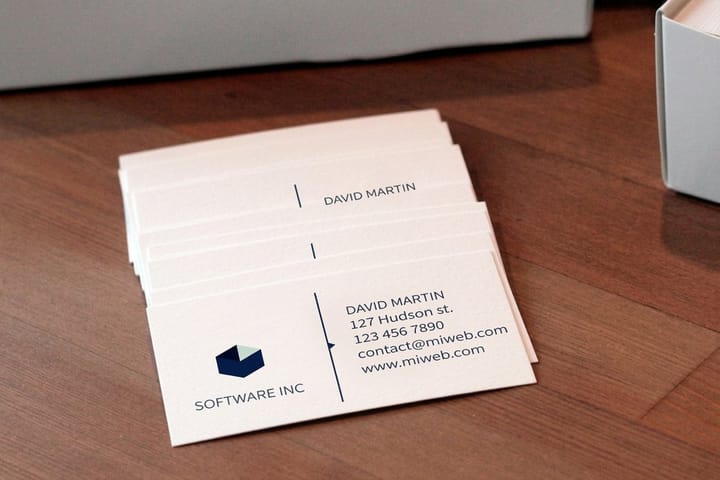
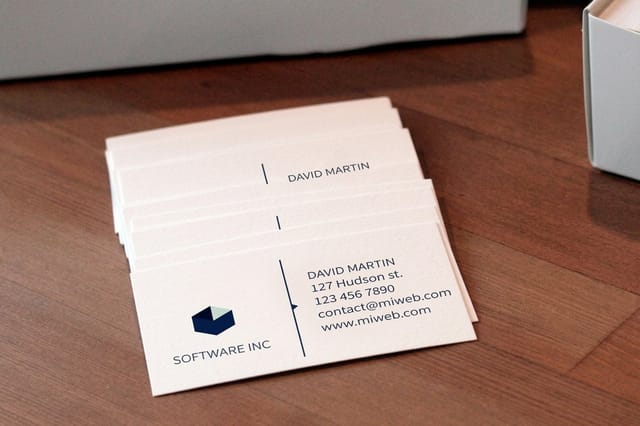
Property management grows through an unusually wide circle: owners, obviously, but also real estate agents who need somewhere to send investor clients, contractors who see badly-managed buildings weekly, attorneys settling estates with rentals in them, and residents whose parents own a duplex. The card is the cheap, permanent way to be reachable from every one of those directions.
Front: name, company, direct line, and the phrase that routes referrals, residential property management. Back: the free rent analysis offer, so the card carries its own reason to call. Layout basics live in how to make business cards, and the business cards range has stocks that survive a contractor's truck cab.
Give agents and vendors stacks of ten. In this business the card is inventory for other people's recommendations.
5. Flyers: the leasing sheet that fills units

Every vacancy is a race against the mortgage date, and the leasing flyer runs it everywhere at once: the unit's window, the laundromat corkboard, the university housing office, the coffee shop by the bus line, and the hand of every walk-in and showing no-show's friend. One page: the hero photo, beds and baths, rent, available date, showing line.
Make the rent and phone number the biggest text after the headline; applicants filter by exactly those two facts. The single-message discipline in how to design flyers applies, and fair-housing rules apply to wording everywhere, so describe the property, never the preferred tenant. Print per-building batches with the address pre-filled and the template does the rest.
Fast leasing is the metric owners ask about. The humble flyer is part of how you make that number brag-worthy.
6. Business banners: now leasing, from the street

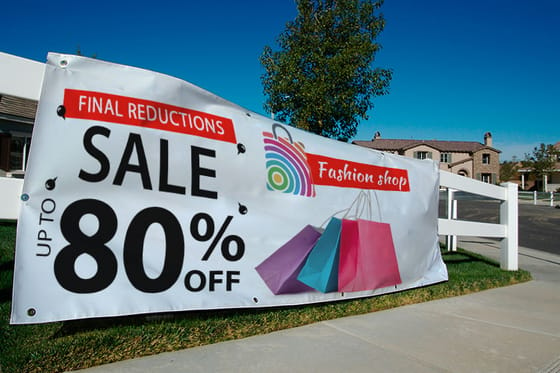
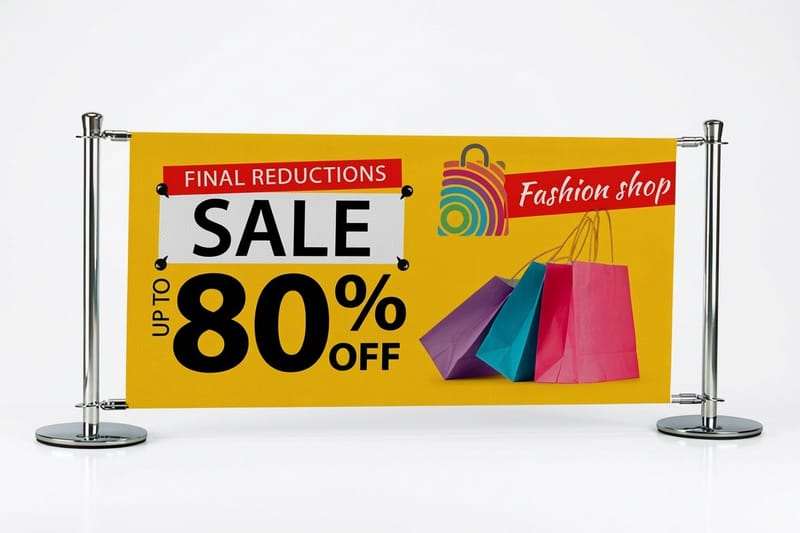
The now-leasing banner on a railing or fence line is the highest-traffic ad a vacancy will ever get: every car and pedestrian on the street reads it daily, and renters overwhelmingly search the neighborhoods they already want. It costs less than a single listing-site upsell and works until the building is full, then rolls up for the next one.
Design for distance: NOW LEASING, the bedroom counts, the phone number, your logo, nothing else. The one-message rule in how to make banners is the difference between a banner and wallpaper. For long outdoor runs, the heavier materials in the vinyl banners range shrug off sun and wind season after season.
Hang your company name on every banner, because the banner is also owner marketing: the whole street learns who fills buildings fast.
7. Yard signs: flag every vacancy, brand every property

For single-family rentals and small multifamily, the for-rent yard sign is still the fastest phone-ringer there is: it stands where the product stands, and it catches the renter who is driving their target streets, which is exactly the renter who moves fastest. A sign with a rider for beds and baths pre-answers the first question.
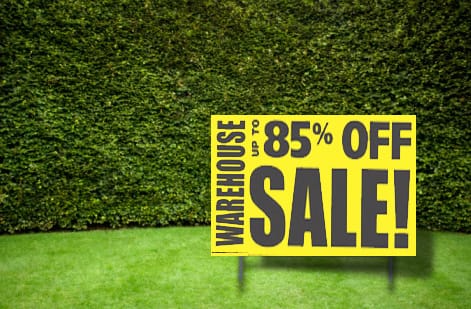
Signs also brand the portfolio between vacancies. A managed-by sign at each property tells the street who runs things, which is the quiet drip that makes neighboring owners call. Materials and stake choices are covered in how to make yard signs, with every size in the yard signs range.
Order a set that covers your expected vacancies plus canvassing spares; the sign in the truck is the one that goes up the day a notice arrives.
8. Letterheads: the paper trail that reads as an institution
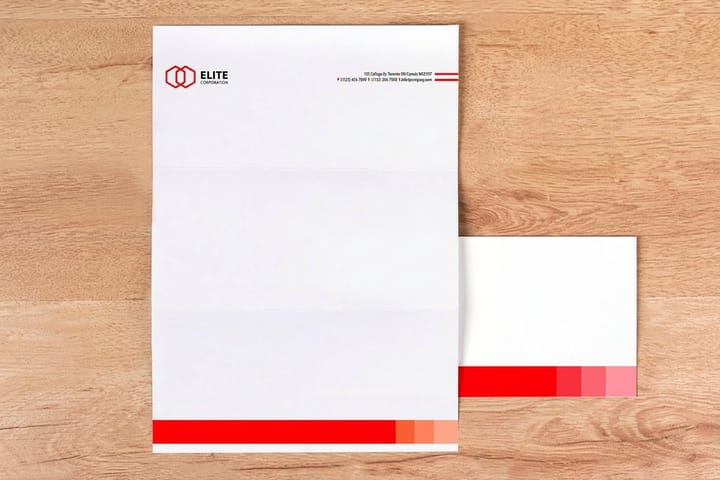
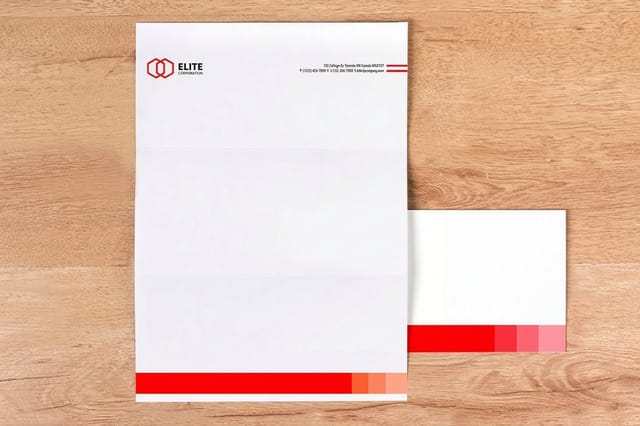
A management company is judged monthly, in writing. The owner statement, the management proposal, the renewal recommendation, the resident notice that ends up forwarded to the owner anyway: every one of them either looks like it came from an institution or like it came from a laptop in a kitchen. Real letterhead settles that question before the first line is read.
Owners are handing over what is usually their largest asset, and they compare you to banks and attorneys, not to other startups. Print the logo, license number, office line, and address in one clean header and let the layout rules in what is a letterhead and letterhead design tips keep the page quiet and credible.
Order office volumes once and every proposal, statement, and notice for the year arrives pre-branded. It is the cheapest institutional costume a new company can wear.
9. Printed envelopes: owner mail they recognize at a glance

The monthly statement is the one guaranteed touchpoint with every owner, and the envelope decides whether it lands as their manager reporting in or as one more anonymous window envelope headed for the maybe pile. A matched, printed envelope makes your mail recognizable at a glance, month after month, which is exactly how a young company starts to feel permanent.
Print the return corner with the logo and office address and keep the face clean for the address block. The formats in standard envelope sizes for printing cover statements and lease paperwork, and full-color envelope sizes for business mail shows where a stronger printed face earns attention for owner-outreach campaigns.
Give them the same design as the letterhead so the stationery system matches. Owners notice tidy paperwork the way inspectors notice tidy buildings.
10. Car magnets: the maintenance truck becomes proof of management

Your maintenance vehicle already spends its days parked in front of rental properties, in exactly the neighborhoods where the next owner client lives. A pair of car magnets turns that parked truck into the most credible ad in this set: visible proof that someone shows up when a managed property needs work. Neighbors notice who arrives, and small landlords fixing their own units at 7 p.m. notice hardest.
Design for a moving reader: company name, residential property management, phone number, done. The sizing and layout advice in what are car magnets covers legibility at distance, and car decals vs car magnets vs bumper stickers settles why magnets fit a company whose vehicles change or double as personal cars.
Magnets move between trucks in seconds and come off for the weekend. Brand every vehicle that visits your buildings and the portfolio advertises itself.
11. A-frame signs: showing day becomes a small open house
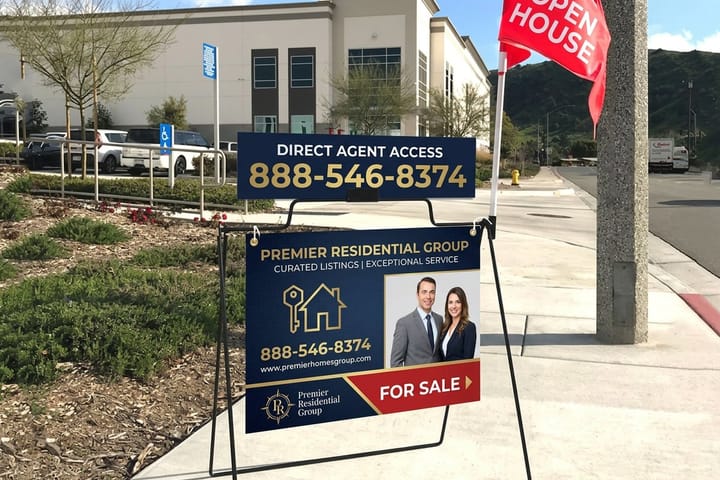
Every scheduled showing draws a small crowd of accidental prospects: the drive-by renter, the neighbor's visiting cousin, the couple who saw the listing but could not find the entrance. A showing-today A-frame at the sidewalk converts them, pointing the way in and inviting the walk-up who never booked. One extra applicant per showing is the difference between a vacancy month and a signed lease.
An A-frame sets up in seconds, needs no permission from a wall or fence, and folds into the same truck as the yard signs. The comparison in Signicade vs aluminum vs plastic A-frames picks the right body for weather and weight, and yard signs vs A-frames vs banners maps which sign owns which job on leasing day.
Print one generic showing-today face and reuse it across the whole portfolio. It earns its price back the first weekend it catches a walk-up.
12. Key tags: a tidy key board is tidy management, made visible
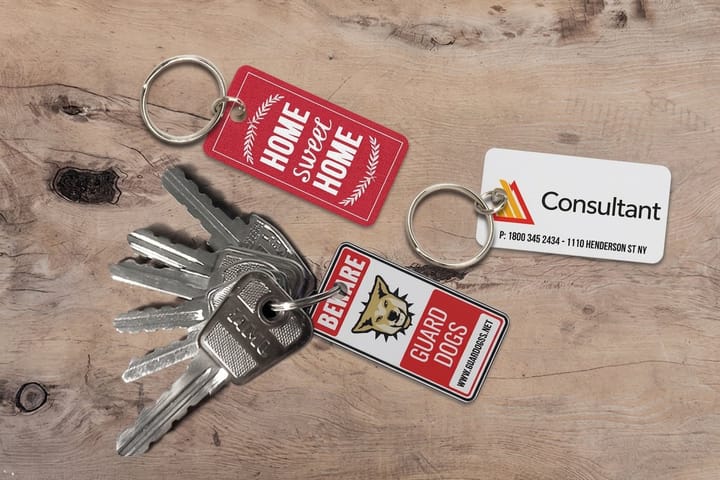
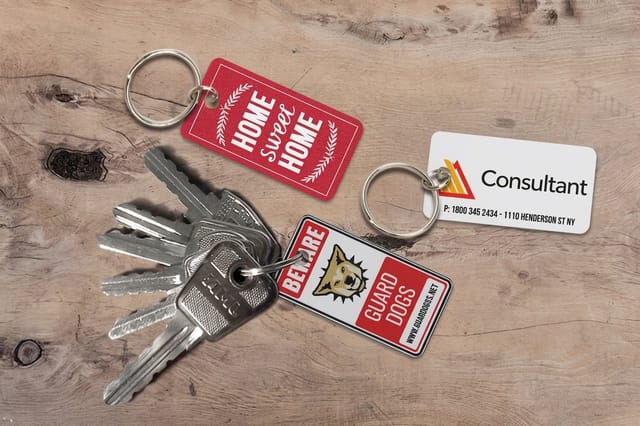
The key board is the portfolio in physical form, and it grows with every signed building: unit keys, common doors, mailrooms, mechanical rooms, vendor copies. Branded key tags keep that board legible on the day a plumber needs unit 4B at 6 a.m., and they keep it professional on the day a prospective owner tours your office and sees fifty tidy, labeled hooks instead of a drawer of mystery keys.
Tags also travel: every key handed to a vendor, an agent, or a new resident carries the company mark. Keep the imprint to the logo and office line, and let the six key principles of logo design keep the mark readable at tag size. The stationery thinking in building a professional branded set applies here too: operational items are branding surfaces.
Order once at portfolio scale and label everything the same week. Owners never see most of your systems, but everyone who touches a key sees this one.

Specs and pricing
Door hanger specs: 250 for $290.41 on 14pt or 16pt gloss
The door hanger is the piece that works both audiences from day one, so it anchors the set: 4.25 by 11 in on 14pt or 16pt gloss cover, 250 for $290.41 or 1,000 for $332.08, in 7 business days. The table shows the live price per hanger at each quantity.

| Quantity | Price Per Unit | Total |
|---|---|---|
| 250 | $1.16 | $290.41 |
| 500 | 62.2¢ | $311.24 |
| 1,000 | 33.2¢ | $332.08 |
| 2,500 | 22.2¢ | $554.39 |
| 5,000 | 17.8¢ | $887.86 |
| 10,000 | 12.5¢ | $1,249.11 |
| 15,000 | 10.7¢ | $1,610.37 |
| 20,000 | 9.86¢ | $1,971.64 |
Wally explains the essentials
Twelve pieces that win owners while filling their units
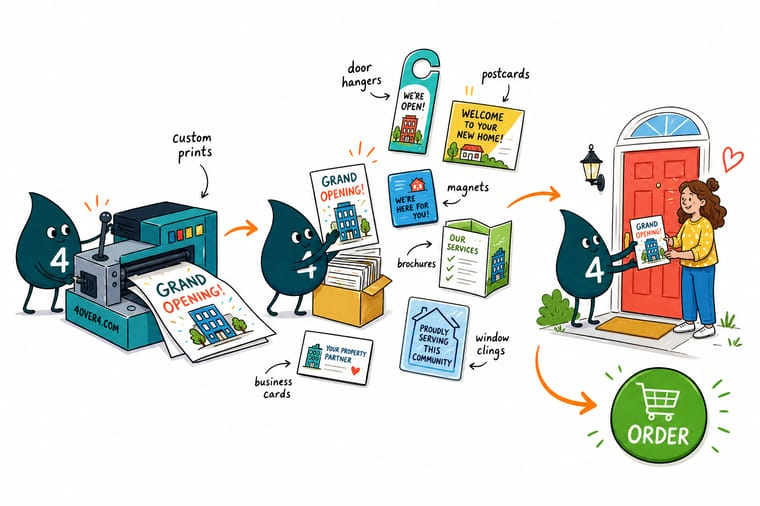
Wally runs a management launch on both doorsteps at once. Postcards and door hangers ask the rental streets one question, who manages this, while the banner, yard sign, A-frame, and leasing flyer fill vacancies fast enough to answer it. The brochure puts fees and process in calm writing, the statements arrive on letterhead in matched envelopes, the magnetted truck and labeled key board prove the systems, and the card survives every handshake in between. Keep all twelve on one brand and owners see one tidy operation everywhere they look.
Shop property management printing →See it in use
Yard signs from customer orders








Explore more
Where to go next


By the numbers
One set, printed to grow a portfolio
Common Questions
Common questions about the property management essentials
What is in the property management grand-opening essentials?
Twelve pieces covering both sides of the business: door hangers for owner canvassing and resident notices, owner-outreach postcards, a services-and-fees brochure, business cards, leasing flyers, now-leasing banners, for-rent yard signs, letterheads and printed envelopes for the owner paper trail, car magnets for the maintenance vehicles, showing-day A-frame signs, and branded key tags for the portfolio key board. The owner-facing pieces win management contracts; the leasing pieces fill units fast enough to prove the pitch; the operational pieces make the whole company read as an institution.
What should a new management company print first?
The owner-facing trio: postcards, the services brochure, and cards, because doors under management are the business. The leasing pieces join the first time you sign a building, and from then on they double as marketing, since visibly fast leasing is the strongest argument in every owner conversation that follows.
How do you find rental owners to mail?
County assessor and recorder data reveal absentee owners, multi-property owners, and out-of-state landlords, and list brokers package the same signals. The complement is physical: door hangers on rental-heavy streets reach the small landlords who own the duplex next door and appear on no list. Mail the list steadily and canvass the streets quarterly.
What belongs in the owner brochure?
The service list in plain terms, tenant screening, rent collection, maintenance, inspections, statements, the fee structure without asterisks, and the life of a managed property told as a calm story. Owners are buying relief from specific headaches, so name the 2 a.m. call and the vacancy month explicitly. In writing, those answers survive the kitchen-table rereading that decides the signature.
Do banners and yard signs really fill units faster than listing sites?
They fill a different pipeline at near-zero cost: renters who already want the specific street and learn of the vacancy by standing on it. Most managers run both channels, but the banner and sign work around the clock with no per-lead fee, and they advertise the management company to the neighborhood even after the unit fills.
What compliance issues touch these pieces?
Fair-housing law governs every leasing piece: describe the property and terms, never the preferred tenant, and include any locally required license or brokerage identifiers on owner-facing marketing. Rules vary by state and city, so proof each template once with your attorney or broker, then reorder freely.
How much does the full set cost to print?
At each piece's starting quantity the twelve add up to $1,173.63, and two lines make up more than half of it: 500 plastic key tags at $309.69 and 250 door hangers at $290.41. Each piece is priced live on its own product page and scales with quantity and material. Cards and postcards start under twenty dollars, banners under fifty, yard signs around twenty-five, and brochures, flyers, and door hangers price by volume. Set your quantities in each configurator and the totals update as you go.
Get Started
Key tags are 500 for $309.69 and take 13 business days
Order the grand-opening essentials from 4OVER4.COM piece by piece. Adjust size, quantity, and finish on any product and watch the price update live.
Legal Disclaimer
Gold Standard guarantees apply to all standard orders placed through 4over4.com. Price match requires verifiable proof of a competitor's published price for an equivalent product with matching specifications and turnaround time. Satisfaction guarantee covers manufacturing defects and print quality issues. Contact support with order number and documentation.
