
Standard Booklet Sizes and the Page Counts Each One Holds


Emma is our prepress and print production voice, built from the knowledge of our production team, with over 20 years in printing.
Every standard booklet trim we print, the flat sheet each one comes from, and the page count that decides whether it gets stapled or glued.
The standard booklet sizes are pocket 5.5 by 8.5 inches, letter 8.5 by 11 inches, and square 11 by 11 inches, with perfect bound books adding 6 by 9 inches and 6 by 6 inches. Saddle stitched booklets run 8 to 60 pages in multiples of four at any of those trims. For the catalog side, see standard catalog sizes and booklet formats. Perfect binding needs at least 40 pages to form a spine and goes to 300 in steps of two. Custom trims print anywhere between 5.5 by 8.5 inches and 11 by 11 inches.
Quick answer
Pick the trim from the content, then check it against the page count
Three stock trims cover most booklet work: 5.5 by 8.5 inches for anything carried, 8.5 by 11 inches for anything with tables, and 11 by 11 inches for anything photographic. The page count then decides the binding. Under 40 pages you are saddle stitching in multiples of four. Over 60 pages you are perfect binding, which also opens up the 6 by 9 inch and 6 by 6 inch trims. Between 40 and 60 pages both are open, and the deciding question is whether you need a printed spine or a spread that opens dead flat.
What Size Should Your Booklet Be?
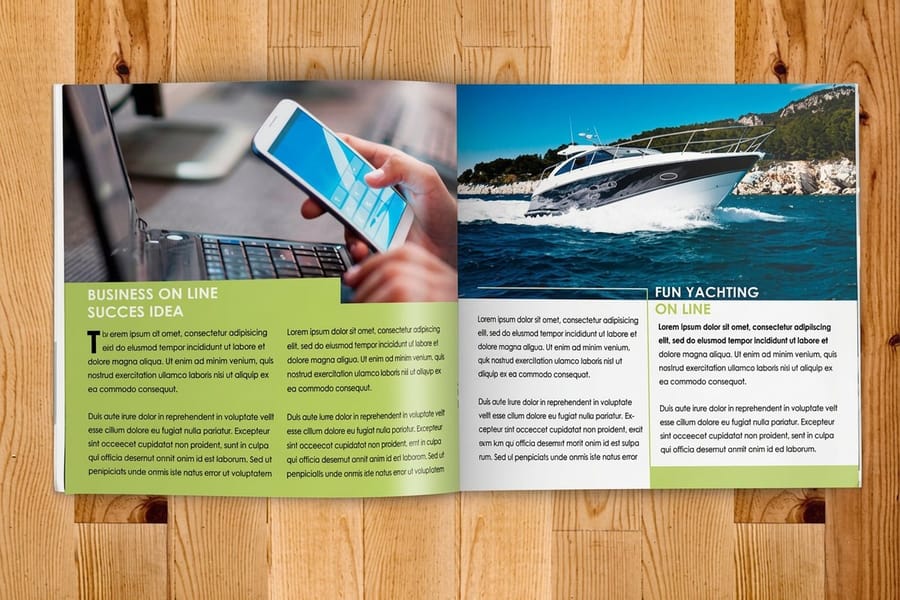
Start from what the reader does with it. A booklet that gets carried in a jacket pocket or handed out at a door wants the pocket trim, 5.5 by 8.5 inches. A booklet that has to hold a product table, a floor plan or a full column of body copy wants letter, 8.5 by 11 inches. A booklet that is mostly photography wants the square, 11 by 11 inches, because a square spread lets a landscape image and a portrait image sit on the same page without one of them being cropped to death.
Those three are the stock trims on standard booklets, and any custom size between them is available too. The reason to stay on a stock trim is money rather than taste. Each of them folds out of a sheet the press already runs, so nothing is trimmed away and thrown out.
The size question also has a second half that most guides skip: how many pages you have. Size and page count are not independent choices. A 96 page booklet cannot be saddle stitched at any trim, and a 16 page booklet cannot be perfect bound at any trim. Decide the trim from the content, then check the page count against the binding table further down before you build the file.
The Standard Booklet Sizes Chart
Every standard trim we print comes from a flat spread, and each spread supports a page range. The flat sheet column is the one worth reading twice, because it explains most of the price difference between sizes.
| Trim size | Flat spread | Binding | Page range | Best for |
|---|---|---|---|---|
| 5.5 x 8.5 in | 11 x 8.5 in | Saddle stitch or perfect bound | 8 to 60 stitched, 40 to 300 bound | Event programs, pocket guides, menus, handbooks that get carried. |
| 8.5 x 11 in | 17 x 11 in | Saddle stitch or perfect bound | 8 to 60 stitched, 40 to 300 bound | Catalogs, annual reports, training manuals, anything with tables. |
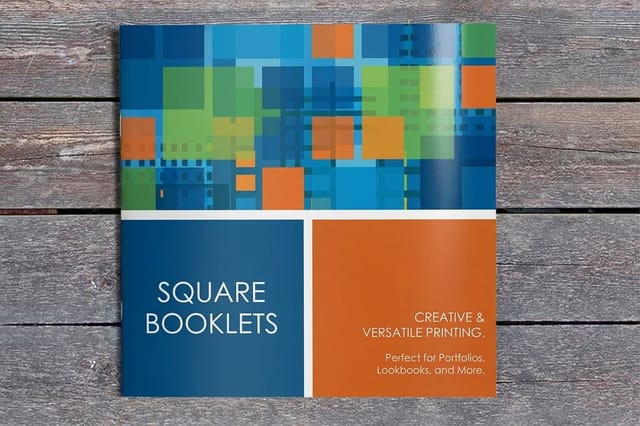
| 11 x 11 in | 22 x 11 in | Saddle stitch | 8 to 60 pages | Lookbooks, photo-led work, portfolios where the spread is the design. |
| 6 x 9 in | 12 x 9 in | Perfect bound | 40 to 300 pages | Reports and long-form documents that want a trade book proportion. |
| 6 x 6 in | 12 x 6 in | Perfect bound | 40 to 300 pages | Small square photo books and gift-shelf titles. |
| Custom | Twice the page width | Saddle stitch to 11 x 11 in, perfect bound to 9 x 11 in | Same limits as the stock trims | Layouts that genuinely cannot flex onto a standard size. |
Notice that a 5.5 by 8.5 inch booklet is built from a plain letter sheet folded once. That is why the pocket trim is the cheapest bound format we print, and why it stays cheap as the page count climbs. The letter trim needs an 11 by 17 inch sheet, and the square needs a 22 by 11 inch sheet, which is a larger press sheet at every stage. Our guides cover how to get cheap booklet printing without cheap results and how to order bulk booklet printing and cut the cost per copy, and if the square appeals, read standard booklets vs square booklets and how to pick the right format first.
Two sizes people ask for that are not on the list: A4 and 5 by 7 inches. A4 is 8.27 by 11.69 inches, so it falls inside the custom range and prints fine, but it costs more than letter for a page that is narrower and taller. A 5 by 7 inch booklet sits below the 5.5 by 8.5 inch minimum for stitching, so the usual answer there is to print it as a folded piece instead. Our comparison of booklets, brochures and flyers covers where that line falls.
What each bound product takes on the order form:
| Product | Trims | Pages | Stocks | Smallest run |
|---|---|---|---|---|
| Standard and square booklets | 5.5 x 8.5, 8.5 x 11, 11 x 11 in | 8 to 60, saddle stitched | Inside on 100# gloss or silk/matte text, 70# uncoated, or a cover weight; cover on 100# gloss text, 80# gloss or 14pt gloss cover | 25 books |
| Perfect bound books | 5.5 x 8.5, 6 x 6, 6 x 9, 8.5 x 11 in | 40 to 300, in steps of two | Inside on 100# gloss or silk/matte text or 70# uncoated; 14pt or 80# gloss cover, with gloss, silk or velvet laminate as an option | 10 books |
Upload one PDF of single pages in reading order, each with 0.125 inch of bleed.
A4 Booklet Size and When a US Printer Uses It
An A4 booklet page is 8.27 by 11.69 inches. Against US letter at 8.5 by 11, it runs 0.23 inch narrower and 0.69 inch taller, so a letter layout does not drop onto A4 without reflowing. A4 is not one of our stock trims. It prints as a custom size, and it costs more than letter for a page that holds less width.
Use it when the content already exists at A4 and a reflow would break the layout, such as a manual or a report built for a partner who works in A4. The content that suits it is the same as letter: catalogs, reports, training manuals and anything with tables. Page counts follow the binding, 8 to 60 in multiples of four for saddle stitch. If the file can move to letter, move it, and the book costs less.
A5 Booklet Size and What It Holds
An A5 page is 5.83 by 8.27 inches, half of an A4 sheet. The nearest US size is our pocket trim, 5.5 by 8.5 inches, which is 0.33 inch narrower and 0.23 inch taller. Standard books here are neither A4 nor A5: the stock trims are 5.5 by 8.5, 8.5 by 11 and 11 by 11 inches, with 6 by 9 and 6 by 6 added on perfect bound books.
An A5 design moves to 5.5 by 8.5 with a small reflow, and that trim holds the same work A5 does: event programs, pocket guides, menus and handbooks that get carried. At that size you can saddle stitch 8 to 60 pages or perfect bind 40 to 300, so a 24 page program and a 200 page handbook both fit.
How Page Count Decides the Size and the Binding
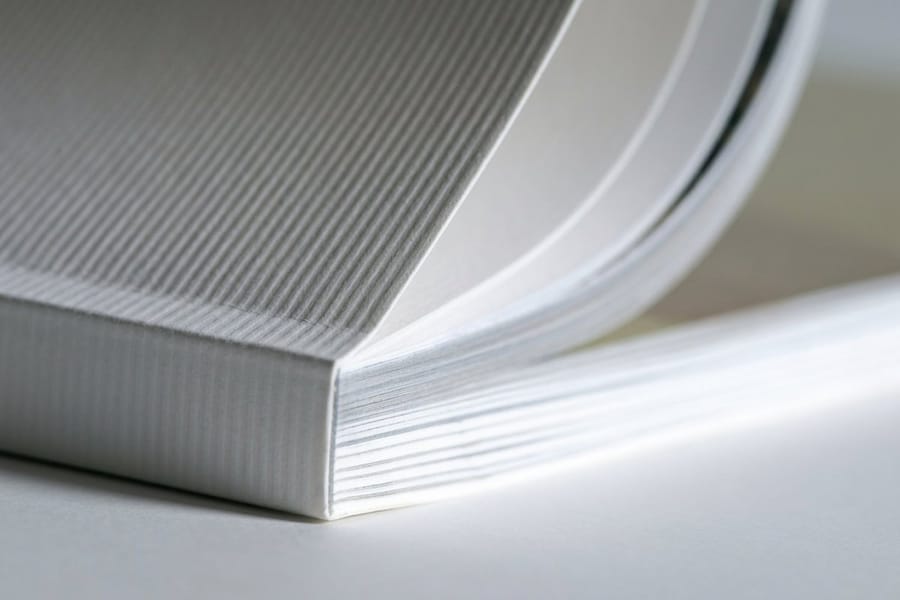
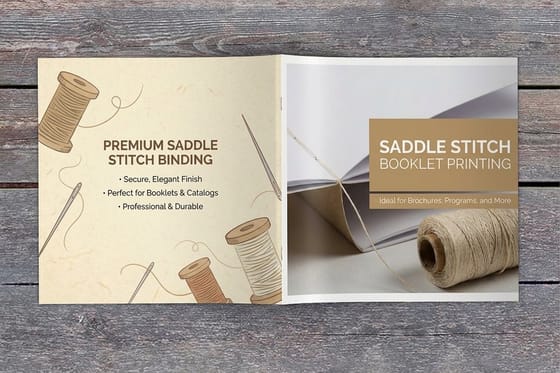
A booklet page count is not a free number. Saddle stitch builds the book from sheets folded down the middle, and each folded sheet yields four pages, so the total is always a multiple of four: 8, 12, 16, and on up to 60. Perfect binding glues single leaves to a spine, which frees the count to move in steps of two, from 40 pages to 300.
That gives three bands, and knowing which band you are in settles most of the argument before it starts.
- 8 to 36 pages. Saddle stitch, no debate. There is not enough paper for a spine.
- 40 to 60 pages. Either binding works, and this is the only band where the choice is genuinely yours.
- 62 pages and up. Perfect bound. Saddle stitch tops out at 60 pages here, and anything above that goes through a custom quote.
When your content lands between multiples of four, do not shrink the type to fit. Print the next multiple up and use the spare pages for something real: a contents page, a notes page, a specification appendix, or a back cover with contact details. A 14 page draft becomes a 16 page booklet, and nobody reading it will know that was not the plan. The page count and creep guide works through the arithmetic in more detail.
Saddle Stitch and Perfect Bound Sizing Compared
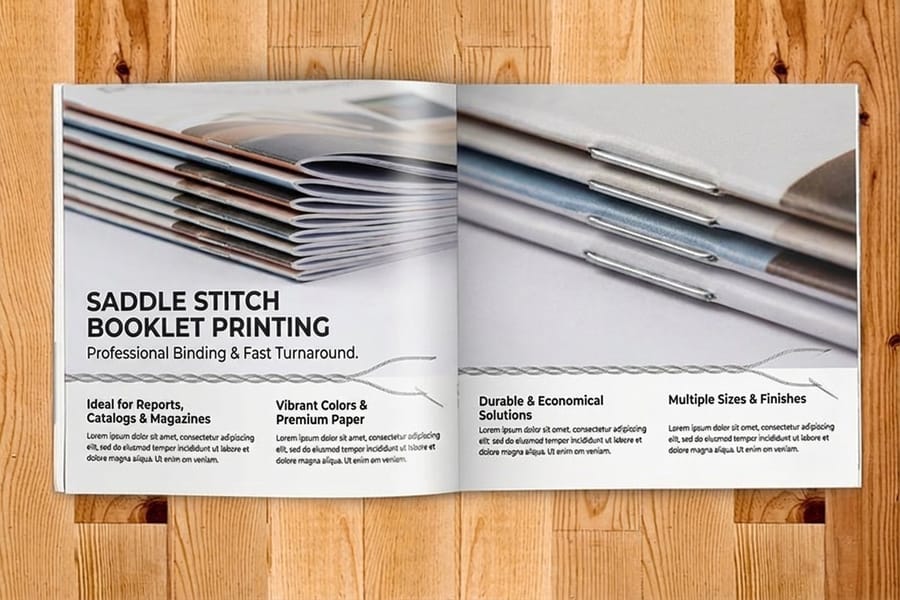
The two bindings do not offer the same sizes, and they do not fail in the same way. Compare them on the four things that actually change your file.
| Factor | Saddle stitch | Perfect bound |
|---|---|---|
| Sizes available | 5.5 x 8.5, 8.5 x 11, 11 x 11 in, plus custom inside that range. | 5.5 x 8.5, 6 x 6, 6 x 9, 8.5 x 11 in, plus custom to 9 x 11 in. |
| Page count | 8 to 60, multiples of four only. | 40 to 300, in steps of two, 131 counts in all. |
| How it opens | Lies flat, so an image can cross the gutter without breaking. | Curves at the spine, so anything crossing the gutter loses a few millimeters. |
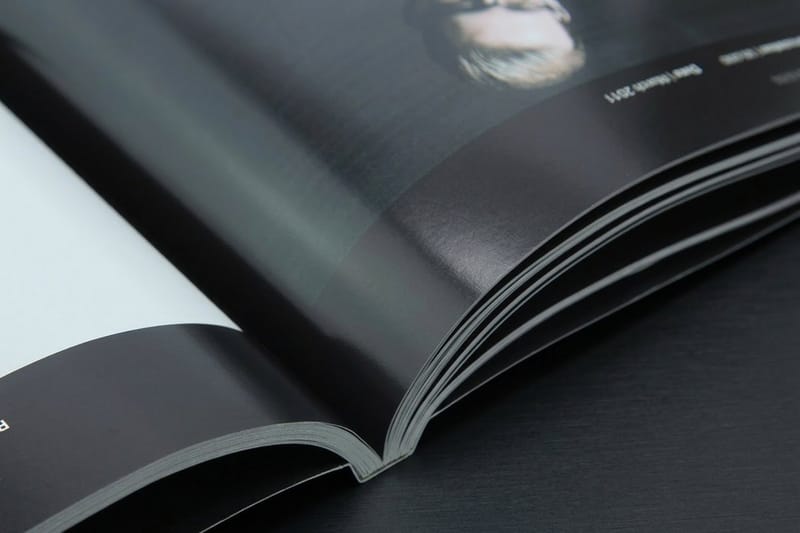
| Spine | None. Two staples on the fold, nothing to print on. | A square printable spine, which is what puts it on a shelf and keeps it findable. |
Read the gutter row before you commit a design. A double page photograph is the strongest argument for saddle stitch, because a stitched booklet opens completely flat and the image survives the crossing. If your lookbook depends on full bleed spreads, the 11 by 11 inch square booklet at 8 to 60 pages is the format built for it.
The spine row is the strongest argument for the other side. A catalog that will sit in a rack, a manual that lives on a shelf, or anything a customer keeps for a year needs a printed spine to be found again. Perfect bound books start at $375.05 and give you that spine plus the 6 by 9 inch trim that saddle stitch does not offer. If you want the two set side by side in more depth, read the booklet binding methods guide.
Bleed, Safety, and Why Spreads Are Not What You Send
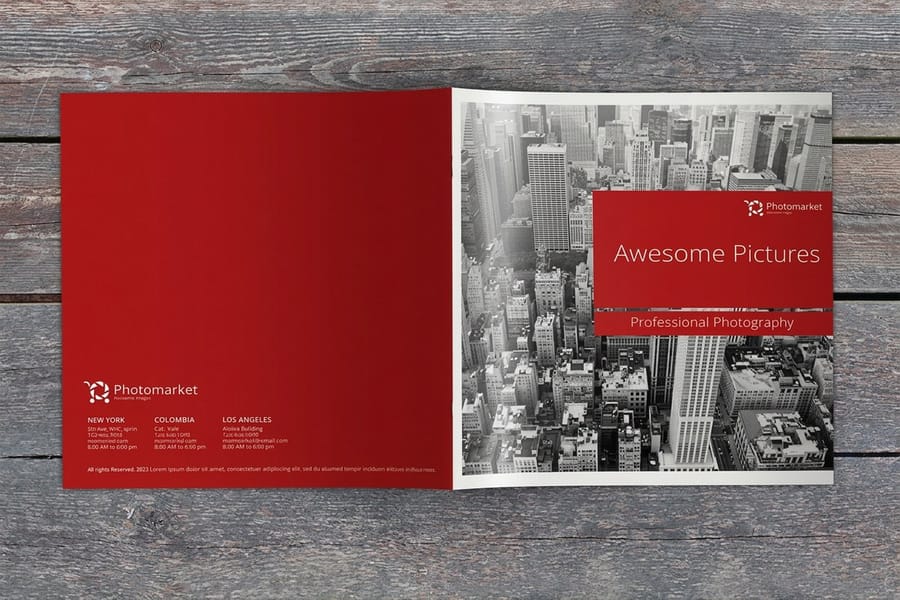
Three numbers cover file setup for any booklet size. Build each page at the finished trim, add 0.125 inch of bleed on every outside edge, and keep live text and logos at least 0.25 inch inside the trim line. A 5.5 by 8.5 inch page is therefore drawn on a 5.75 by 8.75 inch artboard, with the safe area running 5 by 8 inches.
The word spread causes more file problems than any other term in booklet work. A reader spread, pages 6 and 7 side by side, is how the finished booklet looks. It is not how the press prints. On a 16 page saddle stitched booklet, page 6 shares a sheet with page 11, and page 7 shares one with page 10. That rearrangement is called imposition and the bindery does it. Send single pages in reading order, cover first, and it happens automatically. Send reader spreads and every one has to be split before anything can start.
Creep is the last thing to plan for and it only bites on thicker stitched books. As pages nest inside each other, the innermost sheet sticks out further than the outer one, and the face trim removes more from those inner pages. Past about 32 pages the effect is visible, so keep folios, rules and thin outer borders back from the outside edge rather than tight to it. Our bleed and trim guide shows what the trimmed edge does to artwork that sits too close, and the blank template library has correctly sized layouts you can build on instead of drawing the boxes yourself.
How to Make an A4 Booklet File for Print
The rules in the section above apply at A4 too. In order:
- Set the page count to a multiple of four if the booklet will be saddle stitched, and add a notes or contents page rather than shrinking type to land on it.
- Build single pages, not spreads. Draw each page at 8.27 by 11.69 inches and send them in reading order, cover first.
- Add 0.125 inch of bleed on every outside edge, which makes each artboard 8.52 by 11.94 inches.
- Keep live text 0.25 inch inside the trim, a safe area of 7.77 by 11.19 inches.
- Choose the binding against the page count, saddle stitch or perfect bound, using the bands further up the page.
Then export one PDF with every page at the same size.
Choosing a Size by What the Booklet Has to Do
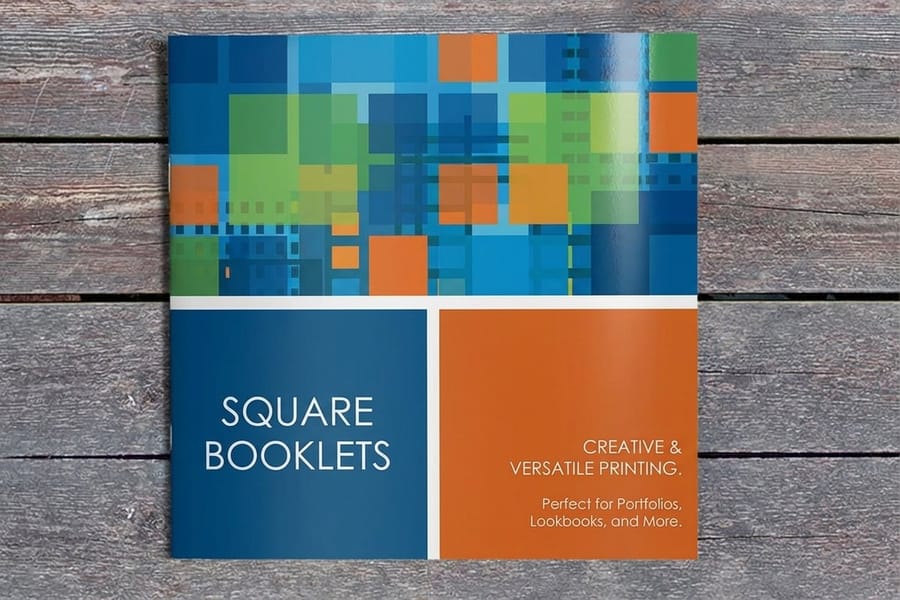
The trim follows the job. Four cases cover most of what comes through the plant.
Catalogs and price lists. Letter, 8.5 by 11 inches. Product tables need column width, and a specification row that wraps twice on a pocket page reads cleanly on letter. Above 60 pages this moves to a perfect bound book. Standard catalogs start at $240.55 and use the same bindery as booklets, with runs over 60 pages quoted individually.
Event programs and menus. Pocket, 5.5 by 8.5 inches. It is held in one hand while the other hand is doing something else, it fits an inside jacket pocket, and it is the cheapest trim per page we print. Most programs land between 8 and 20 pages, which is comfortably inside the stitched range.
Lookbooks and portfolios. Square, 11 by 11 inches. The square spread treats a portrait and a landscape image equally, and saddle stitch lets an image cross the gutter without a break. It is the most expensive trim per page, so keep the page count tight and let the images carry it.
Reports, manuals and anything that gets kept. Perfect bound, 6 by 9 inches for text-led work or 8.5 by 11 inches when there are diagrams. The printed spine is the whole point: a document nobody can find on a shelf may as well not have been printed. If you are still deciding between a bound piece and a folded one, booklets versus catalogs sets out where each format earns its cost, and the booklets and catalogs range lists every bound format with live pricing by page count.
Wally explains booklet sizes
One folded sheet, four pages, and the trim follows from there
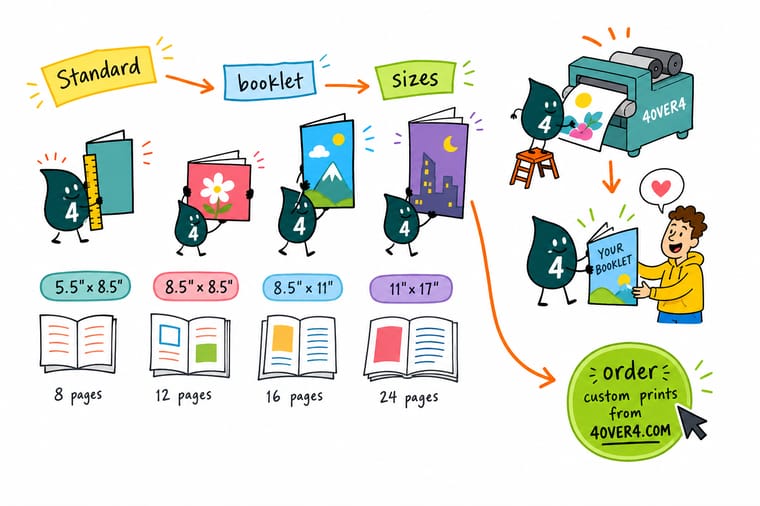
Wally takes a flat sheet, folds it once down the middle, and holds up four pages. Fold a letter sheet and you get a pocket 5.5 by 8.5 booklet. Fold an 11 by 17 sheet and you get a letter 8.5 by 11 one. That is why saddle stitched page counts always climb in fours, and why a trim nobody stocks leaves half the press sheet unused. When the stack gets past 60 pages the staples give up and Wally reaches for glue and a square spine instead.
Price a booklet by size and page count →
Specs and pricing
Booklet sizes, page counts and starting prices
Standard and saddle stitched booklets run 5.5 x 8.5, 8.5 x 11 and 11 x 11 inches at 8 to 60 pages, from 25 books. Perfect bound books add 6 x 6 and 6 x 9 inches at 40 to 300 pages, from 10 books. Set your trim and page count on each widget to see the price.

Print it
Order the trim your content actually fits
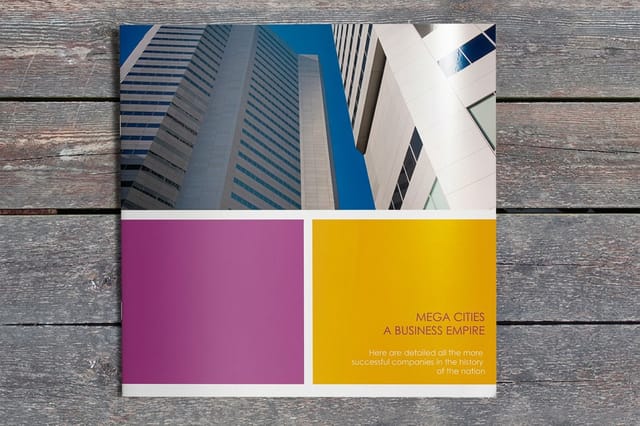
A standard booklet at 5.5 x 8.5 for the program or the pocket guide, a perfect bound book at 6 x 9 or 8.5 x 11 for anything kept on a shelf, and the 11 x 11 square booklet when the spread is the design.
Explore more
Where to go next
Weigh saddle stitch against perfect binding, work the page count and creep math, decide between a booklet and a catalog, and check what the trim does to artwork near the edge.

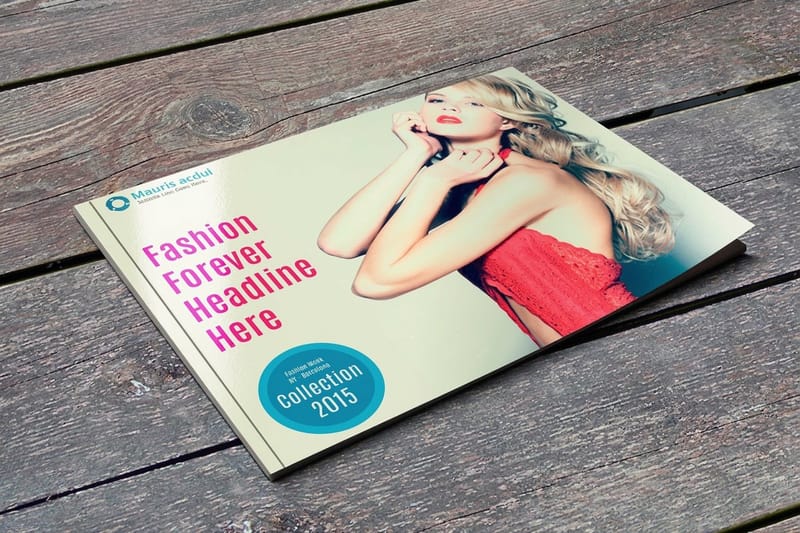
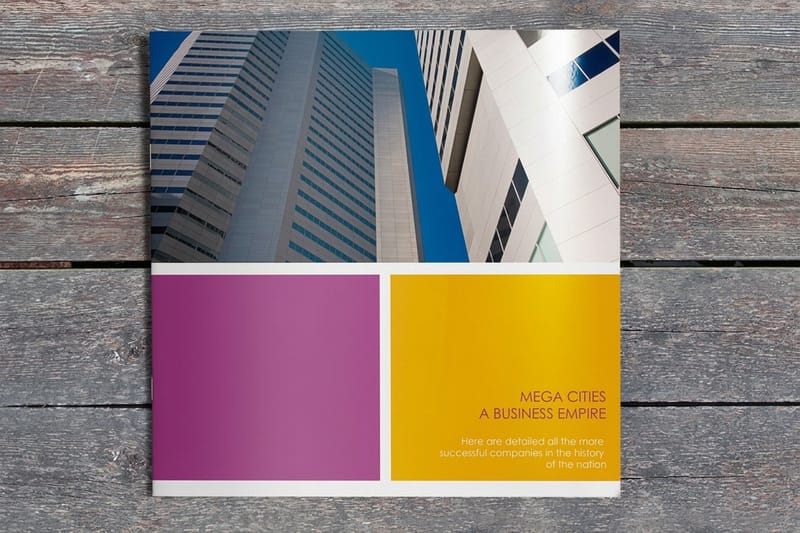
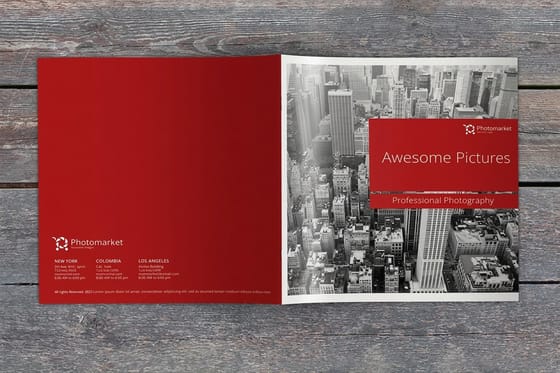
By the numbers
Every booklet trim we saddle stitch or bind
Common Questions
Your booklet size questions, answered
What is the most common booklet size?
Letter, 8.5 by 11 inches, is the size most people land on, because it holds a full column of body copy alongside an image and it folds out of an 11 by 17 inch press sheet with no waste. Pocket, 5.5 by 8.5 inches, is the next most ordered and it is the cheaper of the two to run because two pocket spreads image on a single letter sheet. Square, 11 by 11 inches, is the specialist choice for photography and lookbooks. All three are stock sizes at 4OVER4.COM, so none of them carry a custom trim charge.
Do booklet pages have to be in multiples of four?
For saddle stitch, yes. Each sheet folded down the middle produces four printable pages, two on the front and two on the back, so the total always lands on 8, 12, 16, 20 and upward to 60. If your content comes to 14 pages you print 16 and use the extra two for a contents page, a note page or a back cover message. Perfect binding is different: the pages are glued as single leaves, so page counts move in steps of two from 40 to 300.
What is the minimum page count for perfect binding?
Forty pages. The glue needs a block thick enough to form a square spine and hold it, and below roughly 40 pages of text stock there is not enough thickness for the spine to grip or to carry printed type. That is the practical dividing line between the two bindings: under 40 pages saddle stitch is the only sensible option, from 40 to 60 pages you can choose either, and above 60 pages perfect binding takes over.
Can I print a custom booklet size?
Yes, inside limits. Saddle stitched booklets can be trimmed to any size between 5.5 by 8.5 inches and 11 by 11 inches. Perfect bound books go up to 9 by 11 inches. Custom trims cost more than the stock sizes because they usually leave unused area on the press sheet, so if your layout can flex by half an inch, moving it onto a standard trim is the cheapest change you can make to a quote.
How much bleed does a booklet need?
Add 0.125 inch of bleed on every outside edge of every page, and keep anything you cannot afford to lose at least 0.25 inch inside the trim. On a saddle stitched booklet over about 32 pages, also keep folios and page furniture away from the outer edge, because creep pushes the inner pages outward and the face trim removes a little more from them than from the cover.
Should I send spreads or single pages?
Single pages, in reading order, each at the finished trim size. A reader spread of pages 6 and 7 is not what goes on the press: the imposition pairs page 6 with page 11 on one side of a sheet, and sending pre-built spreads forces us to cut them apart before that can happen. Export one PDF with each page separate, front cover first, and let the bindery handle the arrangement.
Get Started
Square booklets run 25 for $240.55, or $9.62 each
Pick a trim, set the page count in multiples of four, choose your stock, and see the price change as you go. Saddle stitch to 60 pages, perfect bound to 300.
Legal Disclaimer
Gold Standard guarantees apply to all standard orders placed through 4over4.com. Price match requires verifiable proof of a competitor's published price for an equivalent product with matching specifications and turnaround time. Satisfaction guarantee covers manufacturing defects and print quality issues. Contact support with order number and documentation.
