
How to Match Your Letterheads and Business Cards Into One Brand Set


Emma is our prepress and print production voice, built from the knowledge of our production team, with over 20 years in printing.
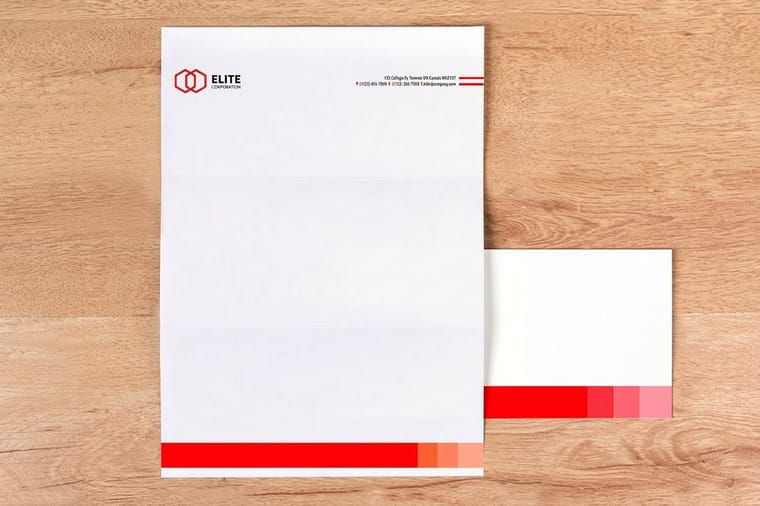
One logo lockup, one written color build, two fonts, one margin rule. Apply that kit across a letterhead and a card, and expect the paper to change some of it.
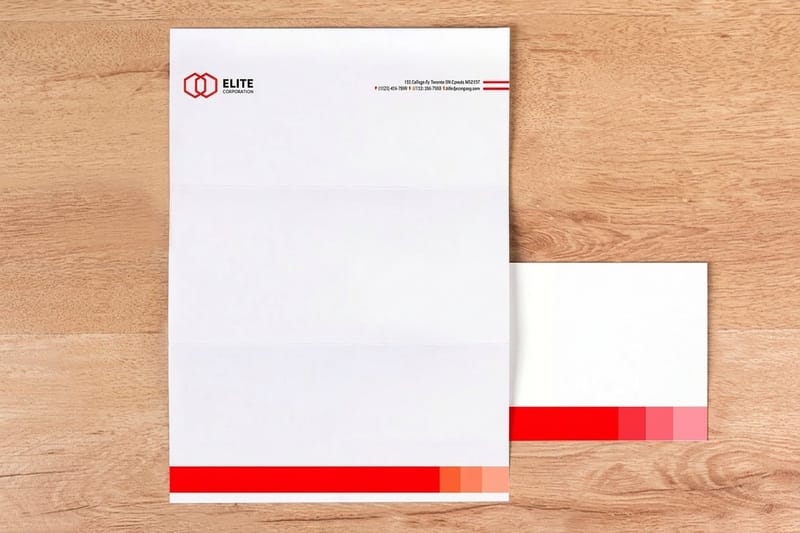
To match a letterhead and a business card, lock one brand kit first: a vector logo lockup, one CMYK build per color written as four numbers, two fonts, and one margin rule. Then apply it to both layouts in a single design pass and order the set together. The two pieces cannot share a paper, since a letterhead needs 70 lb to 80 lb text stock and a card needs 14 pt or 16 pt cover, so you match the surface and white point instead. Expect the same CMYK build to read softer on the uncoated letterhead than on the coated card, and keep letterhead artwork half an inch clear of the edge if staff reprint it on an office laser.
Quick answer
One kit, two canvases, two very different papers
Matching is a sequencing problem, not a design problem. Decide the logo lockup, the CMYK numbers, the two fonts and the margin rule once, then apply them to an 8.5 by 11 inch sheet and a 3.5 by 2 inch card in the same sitting. The card gets the tactile finish, the letterhead stays a flat working surface. Order both from one approved build so the color comes off the same run, and check the printed pair side by side rather than on a screen.
Build the Brand Kit First, Then Apply It Twice
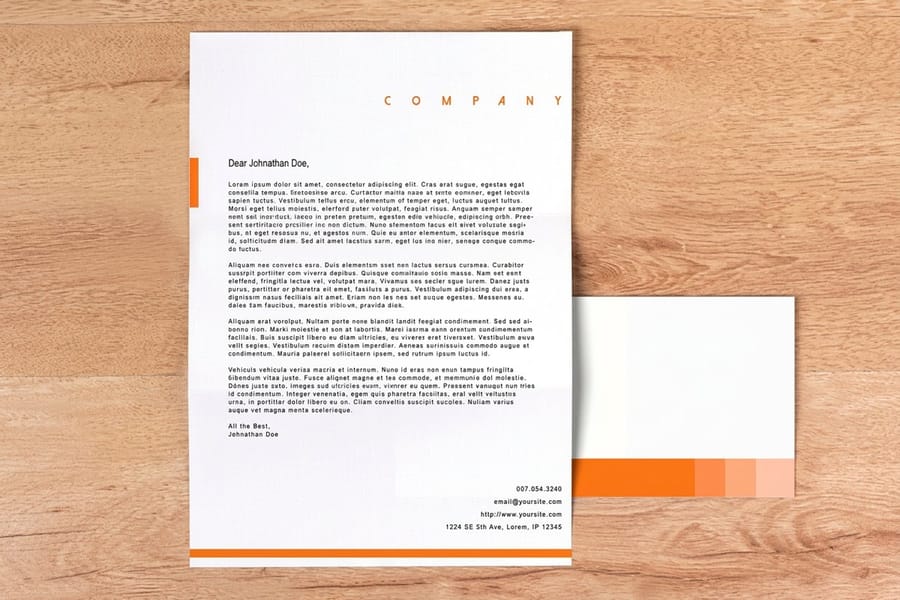
A matched set is not two designs that look alike. It is one small set of decisions applied to two different canvases, and the work of matching happens before either layout is opened.
Four things go in the kit. One logo lockup in vector, plus a simplified single color version for small use. One CMYK build for every brand color, written down as four numbers, not as a screen swatch or a hex code. Two fonts, a display face for the name and a text face that stays readable small. One margin rule, so the logo sits the same distance from its edge on both pieces.
Write those on a single page and pin it somewhere the whole team can see. The reason sets drift is almost never bad taste. It is that the person who ordered the cards in spring used a hex code off the website and the person who ordered the letterheads in autumn used a Pantone book, and neither of them knew the other existed. Our logo design best practices guide covers what makes a mark survive that second use.
Color: Match the Recipe, Expect the Shift
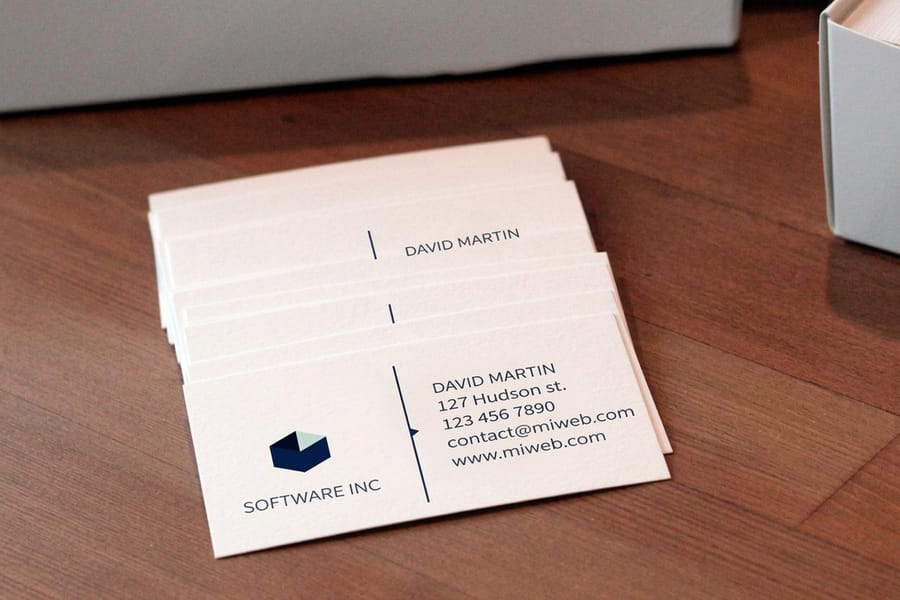
Here is the part nobody warns you about. You will send identical CMYK values for the letterhead and the card, and they will not look identical when they arrive. That is the paper, not a printing error.
Uncoated text stock, the kind a letterhead is printed on, has an open fiber surface. Ink soaks in and the color reads softer and slightly lighter. Coated cover stock, the kind a business card is printed on, holds the ink film on the surface, so the same build reads deeper and glossier. A brand teal that looks calm on the letterhead can look almost electric on the card.
Three practical moves. Build both files from the same written CMYK numbers so there is a single source of truth. Pick brand colors that are not sitting at the far edge of the CMYK range, because those are the ones that shift most between stocks. And if the difference still bothers you, lift the uncoated build slightly on the dominant channel rather than rebuilding the color from scratch. The CMYK and RGB guide explains why your monitor never showed you either version honestly, and free paper samples let you see the two surfaces before you commit.
Fonts That Hold at 11 Point and at 7 Point
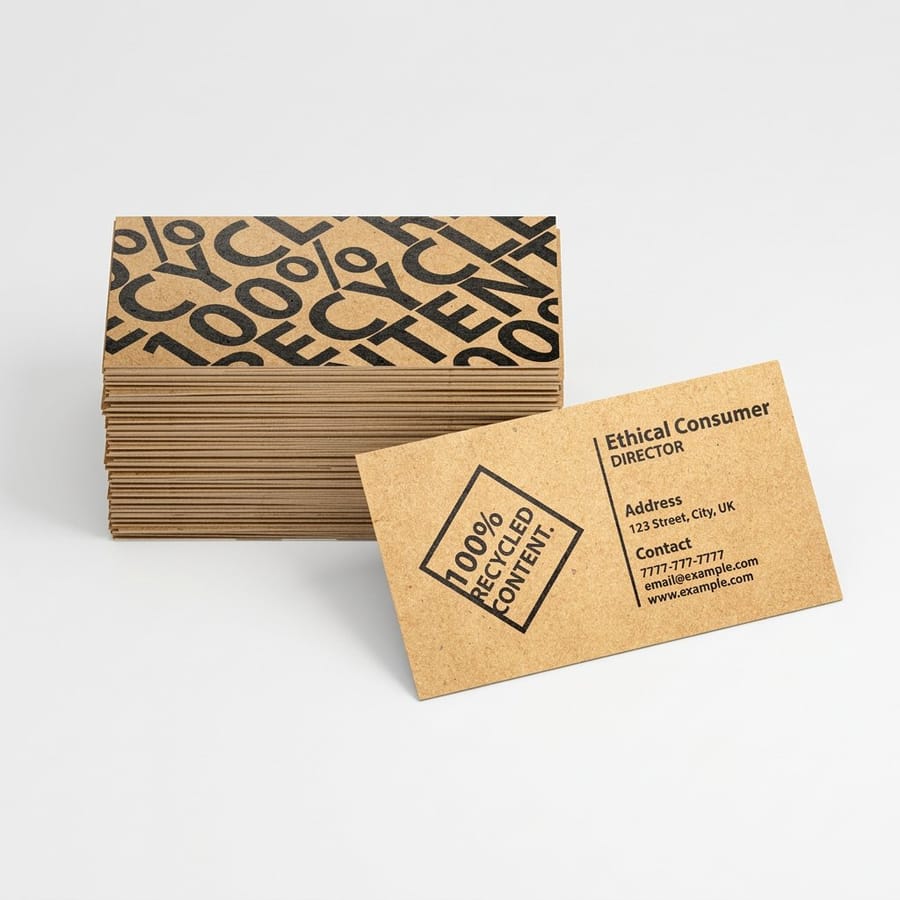
Letterhead body copy runs 10 to 12 point. Business card contact lines run 7 to 9 point. The same font has to survive both, and that single constraint eliminates most of the fonts people fall in love with.
Test the card first, always. If your phone number holds at 8 point in the text face, the letterhead is safe at any size. Do it the other way around and you will approve a font on the letterhead, drop it onto the card, and find the thin strokes breaking up. Fine hairline serifs and ultra light weights are the usual casualties, because at 7 point the thin stroke of a hairline face can drop below what the press reliably holds.
Two fonts is the working limit. A display face carries the company name on both pieces, at roughly 24 to 30 point on the letterhead header and 10 to 12 point on the card. A text face carries everything else. If you want a third voice, get it from weight and case rather than a third family. For file setup on the card side, start from a correctly sized layout in the blank template library, and see business letter format with letterhead for where the body text should begin on the sheet.
Paper and Finish: Pair Them, Do Not Copy Them
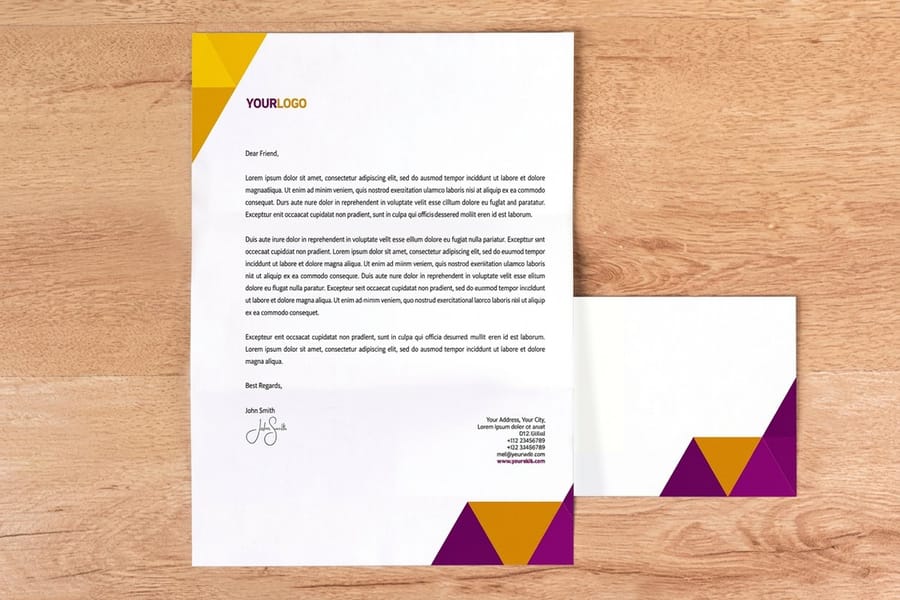
The two pieces cannot use the same stock, and trying to force it produces a letterhead that will not fold or a card that bends in a wallet. Match the family and the white point instead.
Letterhead sits on text weight, roughly 70 lb to 80 lb, so it folds into a number 10 envelope and takes a pen. A business card sits on 14 pt or 16 pt cover, and 16 pt is noticeably more rigid in the hand. What you match across them is surface and shade: uncoated warm white with uncoated warm white, bright white coated card with bright white letterhead. Hold the two sheets side by side before ordering, because two papers both described as white can sit a visible step apart.
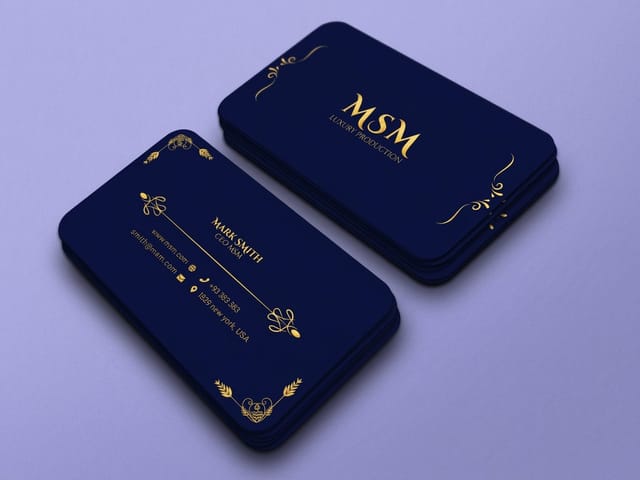
Finish is where you get to be deliberate. The card is the piece that gets handled, so it is the right place for soft touch, gloss, spot UV or foil. The letterhead is a working surface, so it stays flat. That split is not a compromise, it is how most well made sets are built. One warning worth repeating: if staff will run letterhead through an office laser printer, do not put a raised or foil finish on it, because the fuser softens raised resin and can lift foil onto the roller. Compare the card side options in matte versus glossy business cards and check weight in the right cardstock guide.
Geometry: One Margin Rule, Three Different Sheets
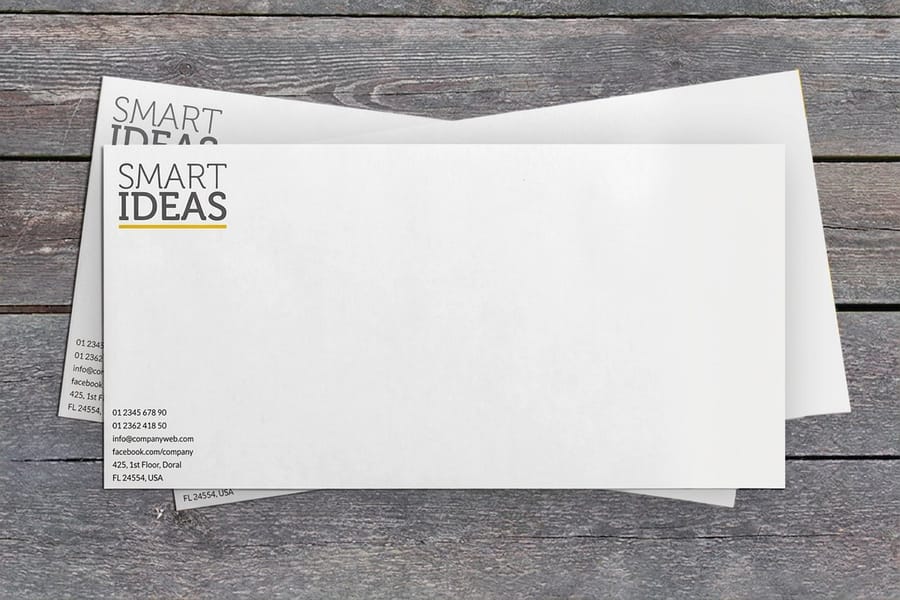
Consistency the eye can read comes from position, not from repetition. The logo does not need to be the same size on both pieces. It needs to sit in a corresponding place, at a corresponding distance from its edge, in the same optical weight relative to the sheet.
Pick one alignment for the whole set. If the letterhead logo is top left with the contact block bottom left, the card should not suddenly center everything. Then respect what each piece actually needs at its edges.
| Piece | Trim size | Bleed | Keep clear of the edge | Why |
|---|---|---|---|---|
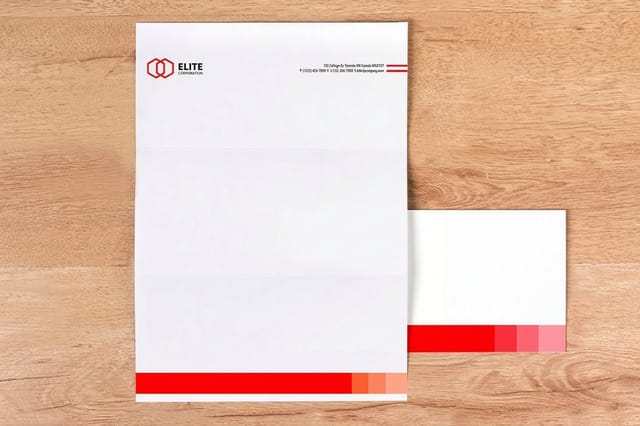
| Letterhead | 8.5 x 11 in | 0.125 in if the color runs off | 0.5 in if staff reprint it in house | Office laser printers cannot image the outer strip of the sheet. |
| Business card | 3.5 x 2 in | 0.125 in | 0.125 in safe area | Cutting a stack of cards moves slightly, so type near the trim gets clipped. |
| Number 10 envelope | 4.125 x 9.5 in | 0.125 in | 0.25 in, plus the USPS address zones | The barcode and address areas have to stay readable to the mail stream. |
The half inch on the letterhead is the rule people miss. A design with a full bleed color band across the bottom looks superb from the press and then prints with a white gap the moment someone reloads it into the office printer. Decide up front which way that sheet will be used. If you also want a notepad or a folder in the set, apply the same alignment there: branded notepads carry the header at the same corner and the set reads as one system.
Build It in One Pass and Proof the Pair Together
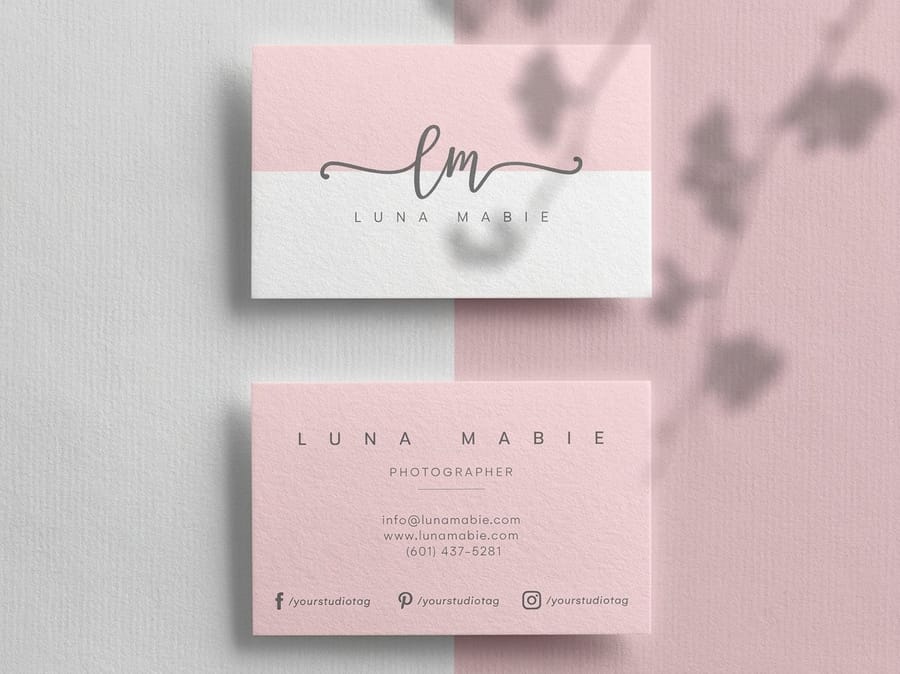
Do the whole set in one sitting, in one file with multiple artboards. Not because it is faster, though it is, but because every decision stays visible while you make the next one. The moment the card is designed in one session and the letterhead six weeks later, the two drift.
Proof them side by side and physically. A screen proof confirms nothing about how the color lands on two different surfaces, which is the exact thing you are trying to control. Order the set together so both pieces come off the same run of your approved build, then look at the printed card next to the printed sheet under normal office light before you reorder in quantity.
What that costs at 4OVER4.COM: standard business cards start at $17.57, letterheads at $99.95, and printed envelopes at $142.99. Browse the full range in business card printing and letterhead printing, and if you want the wider set built out step by step, follow how to build a business stationery set.
Wally matches the set
Same recipe, two papers, one proof
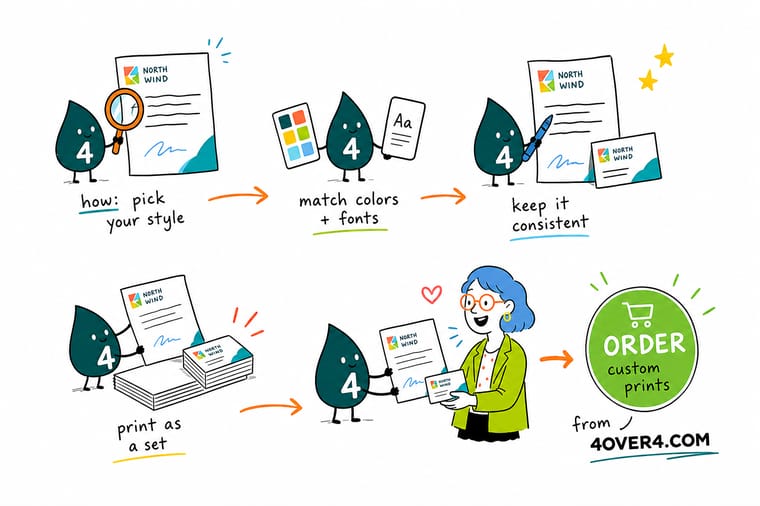
Wally writes the brand color down as four CMYK numbers, not as a hex code off the website, then builds the letterhead and the card from that same line. He knows the uncoated sheet will drink the ink and read softer than the coated card, so he holds the printed pair up together under office light instead of trusting a screen. Logo in the same corner, same distance from the edge, same two fonts. Then he orders both at once so they come off one approved build.
Order matching letterheads →
Specs and pricing
Sizes, stocks and starting prices for the set
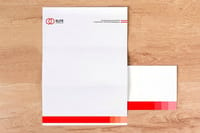
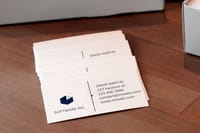
The three pieces of a working stationery set, with live configuration choices and starting prices straight from the 4OVER4.COM configurator. Letterheads print at 8.5 by 11 inches on 70# uncoated text or 24# Royal Laid in bright white, natural white or gray, and #10 envelopes come in the same three Royal Laid shades, so the sheet and its envelope can share one paper. Standard business cards run 3.5 by 2 inches on stocks from 14pt gloss to 80pt UltraWhite.
Print it
Order the pieces that carry your brand kit
Letterheads start at 50 sheets and print in 5 business days, premium business cards start at 100 and print in 3, and printed #10 envelopes start at 250 and print in 7. Order all three the same day and the envelopes set the delivery date for the set.
Explore more
Where to go next
Read the letterhead anatomy guide for what goes in the header and footer, the card size article for trim and safe area, and the CMYK guide for why a screen misjudges both papers. The two category cards carry live prices for sheets and cards.

By the numbers
One shop keeps the card and the letterhead matched
Common Questions
Your matched stationery questions, answered
Do the letterhead and the business card have to use the same paper?
No, and in practice they cannot. A letterhead has to fold, take a pen, and often feed through an office printer, so it lives on text weight stock around 70 lb to 80 lb. A business card has to survive a wallet, so it lives on 14 pt or 16 pt cover. Matching means matching the family and the surface feel, not the weight: an uncoated warm white letterhead pairs with an uncoated warm white card, and a bright white coated card pairs with a bright white letterhead. Put the two shades next to each other before you order, because two papers both sold as white can sit a full step apart in warmth.
Why does our logo look darker on the business card than on the letterhead?
Because the card is coated and the letterhead is not. On coated stock the ink film sits on the surface and reflects light, so the color reads deeper and more saturated. On uncoated stock the fibers absorb part of the ink, so the same CMYK build looks softer and slightly lighter. Nothing is wrong with the file. If the difference bothers you, the usual fix is to lift the uncoated build a few points on the dominant channel, or to pick a brand color that is not sitting at the edge of the CMYK range in the first place. Our guide on choosing between CMYK and RGB covers why the screen version never predicts either result.
What type sizes work across both pieces?
Letterhead body copy runs 10 to 12 point. Business card contact lines run 7 to 9 point, and 7 point is the practical floor for a light weight face. That is why the text font in your kit has to be a face with a usable regular and a usable medium, not a display face with hairline strokes. Test the card first: if the phone number holds at 8 point in your chosen font, the letterhead version will hold at any size you throw at it. The reverse test fails, which is the mistake most sets make.
Should the envelope match too, or is that overkill?
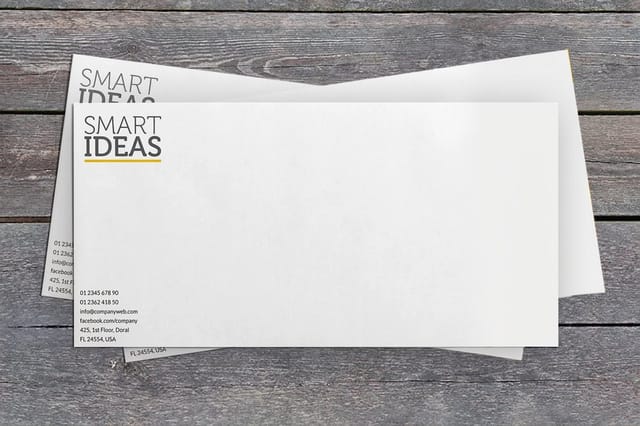
Match it if you mail anything a client opens by hand. The envelope is the first piece of the set anyone sees, and a stock white envelope next to a carefully matched letterhead reads as an afterthought. Keep it simple: the same logo lockup at the same size as the letterhead corner, the same brand color, and the return address in the text font. A number 10 envelope holds a folded 8.5 by 11 letterhead, so that is the size to order unless you are mailing something flat.
Can we still run the letterhead through our office printer if it has a raised or foil finish?
No. The fuser in a laser printer runs hot enough to soften a raised resin finish and can lift foil off the sheet, which then transfers onto the roller. If staff will print invoices and letters onto the sheet in house, keep the letterhead flat offset printing on uncoated stock, and put the raised or foil treatment on the business card instead. That split is common and it looks deliberate: the card carries the tactile finish, the letterhead carries the working surface.
Is it cheaper to order the whole stationery set at once?
The unit prices do not change, but the number of proof rounds and shipments does, and that is where sets usually lose money. At 4OVER4.COM standard business cards start at $17.57, letterheads at $99.95, and printed envelopes at $142.99, so a full set is one checkout rather than three. The real saving is avoiding the reprint that happens when the card is ordered in March off one color build and the letterhead in June off another.
Get Started
Print 100 cards from $17.57 and 50 letterheads to match
Pick the stock, hand us one approved color build, and we print the letterhead, the cards and the envelopes so the three pieces arrive matching.
Legal Disclaimer
Gold Standard guarantees apply to all standard orders placed through 4over4.com. Price match requires verifiable proof of a competitor's published price for an equivalent product with matching specifications and turnaround time. Satisfaction guarantee covers manufacturing defects and print quality issues. Contact support with order number and documentation.
