
Envelope Labels Explained and How to Size Them for Any Mailing


The label sizes that fit each envelope, when printing the envelope beats sticking a label on it, and the two USPS zones that decide whether your mail runs through automation.
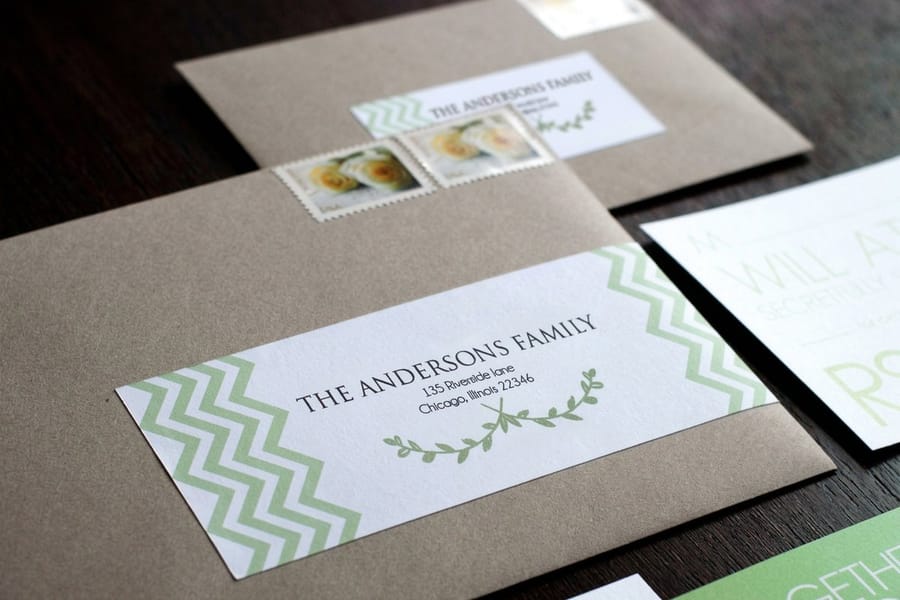
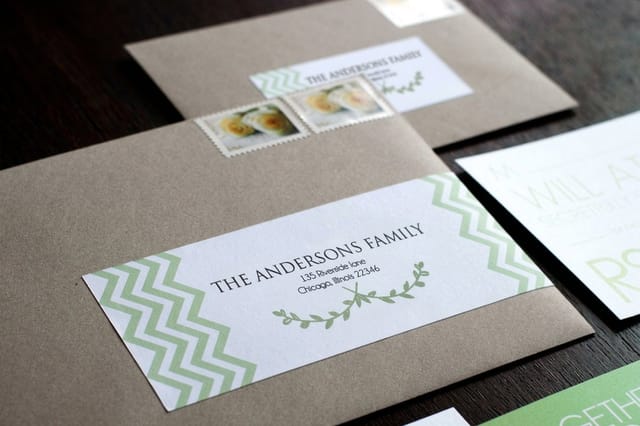
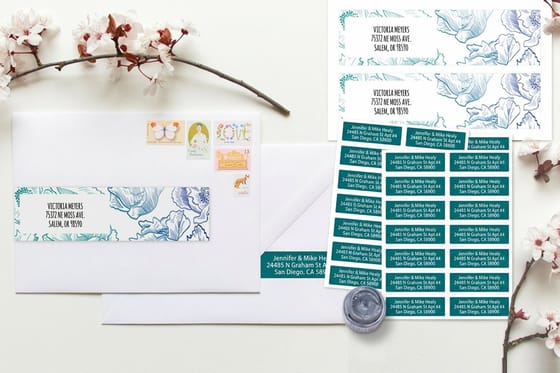
An envelope label is a pressure-sensitive sticker carrying the delivery or return address, printed on sheets for a desk laser printer or on rolls for a thermal unit, then applied to a blank envelope. It exists so you can address mail from stock envelopes without running them through a press. A 1 by 2-5/8 inch label holds a four-line address on a #10; five lines need 1-1/3 by 4 inches. Keep the whole block inside the OCR read area and leave the barcode clear zone along the bottom right empty.
Quick answer
A sticker that holds the address, sized to the envelope and placed where the scanner looks
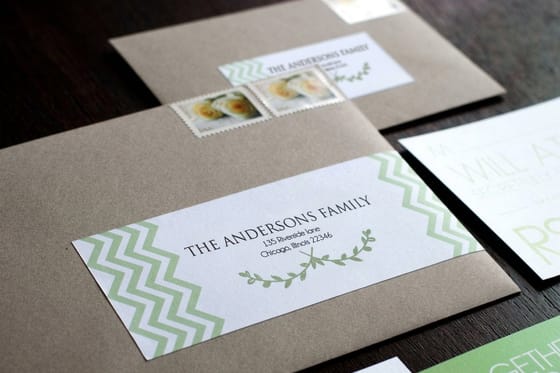
An envelope label separates the address from the envelope, so blank stock plus a sheet of labels covers a mailing where every address differs. Size follows the address rather than the envelope: four lines fit 1 by 2-5/8 inches, five need 1-1/3 by 4. Matte faces scan better than gloss. The address block belongs inside the OCR read area, from 5/8 inch to 2-3/4 inches above the bottom edge and half an inch in from each side, and the barcode clear zone along the bottom right stays empty. When the return address never changes, printing the envelope is the cleaner answer.
What an Envelope Label Is Made Of
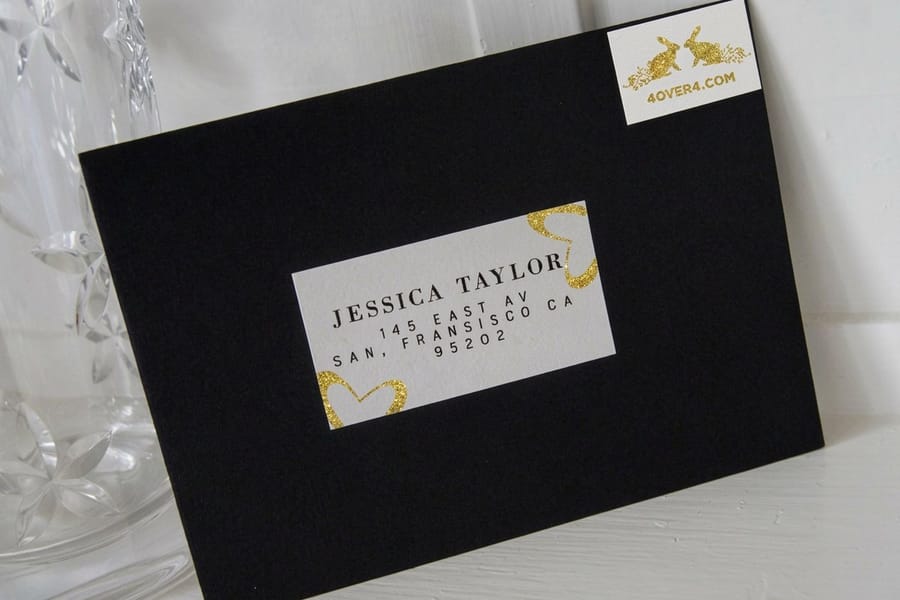
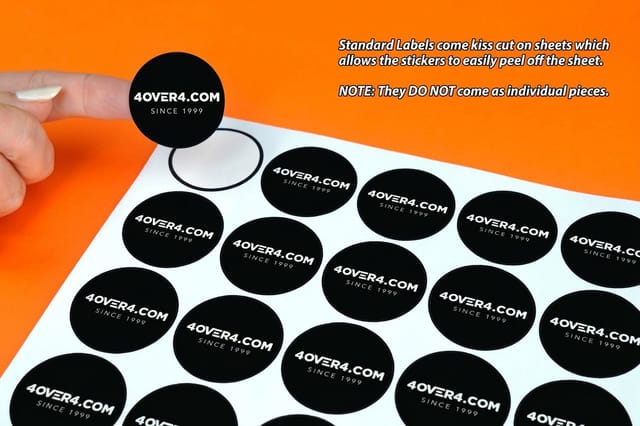
Three layers, no more than that. A face paper you print on, a pressure-sensitive adhesive underneath, and a silicone-coated liner that keeps the adhesive asleep until you peel it. Everything that makes one envelope label behave differently from another comes down to a choice inside one of those three layers.
The face decides how the address reads. Matte or uncoated white is the workhorse because sorting cameras handle it without glare, and toner or inkjet ink sits down on it cleanly. Gloss looks better in your hand and worse under a scanner. Clear film is a different animal: it disappears on a white envelope and looks deliberate on a colored one, but any ink you print on it stays fully visible, so it suits short black text and not a dense four-line block.
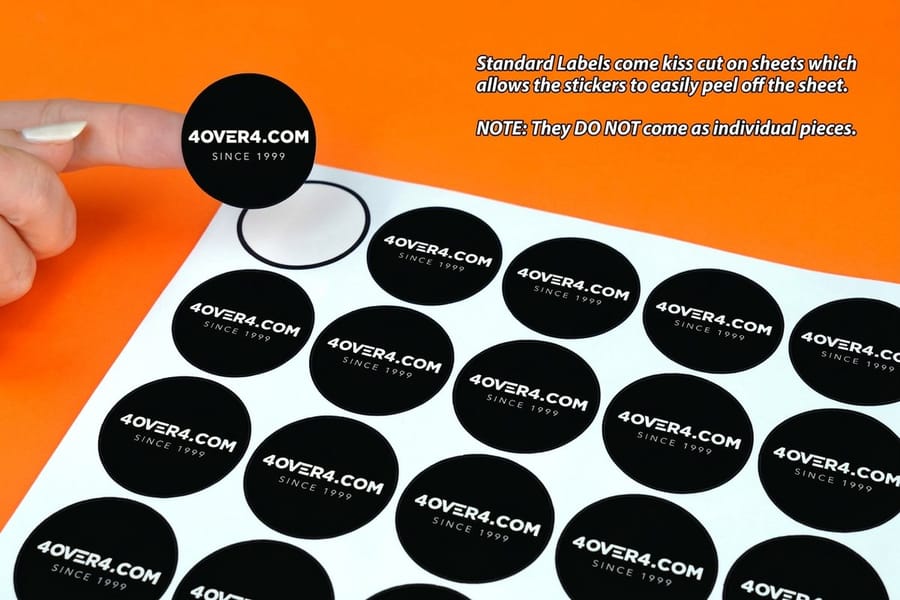
The adhesive decides whether it survives the trip. Permanent is the default for mail. Removable exists for asset tags and returns, and it is the wrong choice on an envelope that will slide through rollers and get stacked under a hundred other pieces. The liner only matters when you are feeding sheets: a curled sheet is a jammed sheet, so labels come flat-packed rather than rolled for that reason.
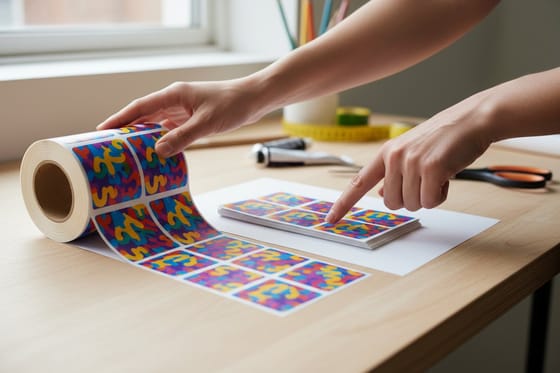
Format is the last fork. Sheets go through the laser printer already on your desk, which is why premium address labels start at $29.16 and cover most office mailings. Rolls feed an applicator or a thermal printer and start at $322.98 for roll address labels, which only makes sense at volume. Our roll labels vs sheet labels comparison walks through where each one stops being convenient.
Label the Envelope, or Print the Envelope
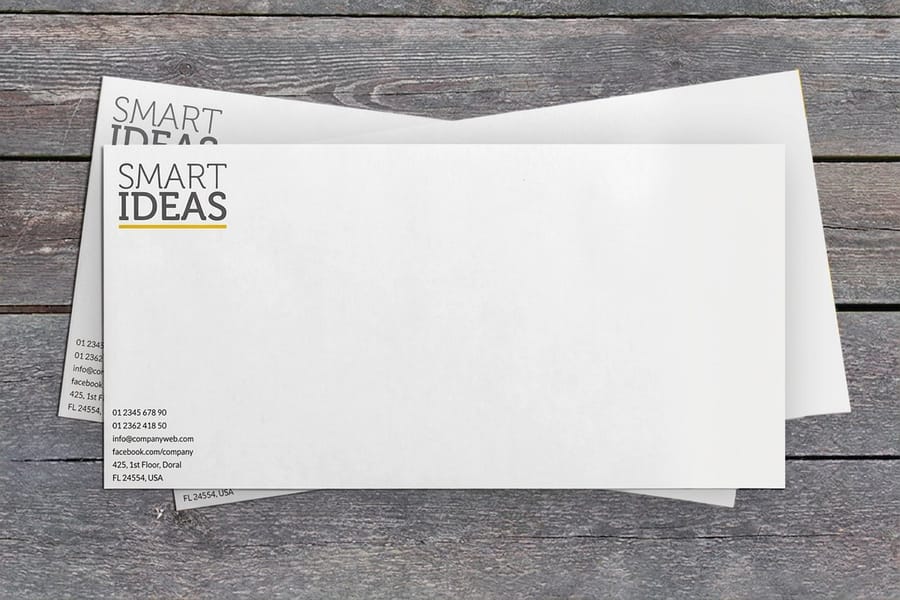
This is the real decision, and price alone will not settle it. What settles it is whether the envelope repeats.
| Approach | Starting price | Where it wins | Where it falls down |
|---|---|---|---|
| Blank envelope plus label | $13.17 plus $29.16 | Every address is different, quantities are small, and you need to mail this week. | Someone peels and applies each one, and a crooked label is visible from across a desk. |
| Printed envelope | $142.99 | The return address, logo, and color are identical on every piece and the run is worth ordering. | Nothing on it can change. A moved office turns the remaining box into scrap. |
| Window envelope | $13.17 blank | The address is already printed on the document inside, so it never gets applied twice. | The insert has to be folded to the exact position, or the address drifts out of the window. |
Read the third column before the second. A statement run of 400 pieces with 400 different addresses is a labeling job whatever the per-piece math says, and blank envelopes plus a sheet of labels handles it. A law firm sending the same corner card out for two years should print it, and printed envelopes carry the return address at press quality rather than as a sticker sitting on top.
The third route removes the address step entirely. If the letter inside already shows the address, a window does the work and nobody touches a label, though the fold tolerance is tighter than people expect. We cover the setup in the window envelope setup guide, and if you want the envelope printed instead, ordering custom printed envelopes covers the artwork side.
Sizing a Label to the Envelope It Sits On
Label size follows the address, and the envelope only sets the ceiling. Count the lines first: name, company, street, city with state and ZIP is four, and a suite or attention line makes five.
| Envelope | Dimensions | Address label | Return label |
|---|---|---|---|
| #10 business | 4-1/8 by 9-1/2 in | 1 by 2-5/8 in for up to four lines, 1-1/3 by 4 in for five | 1/2 by 1-3/4 in |
| A7 invitation | 5-1/4 by 7-1/4 in | 1 by 2-5/8 in, kept small so it does not dominate the face | 1/2 by 1-3/4 in |
| 6 by 9 catalog | 6 by 9 in | 1-1/3 by 4 in | 1/2 by 1-3/4 in |
| 9 by 12 flat | 9 by 12 in | 2 by 4 in, or 3-1/3 by 4 in with a carrier barcode | 1 by 2-5/8 in |
The failure people repeat is keeping the small label and shrinking the type to fit. Address type below about 10 point on a mailed piece gives the optical reader less to work with, and a five-line address squeezed into 2-5/8 inches of width ends up hyphenated or truncated. Going one size up costs a few cents and solves both.
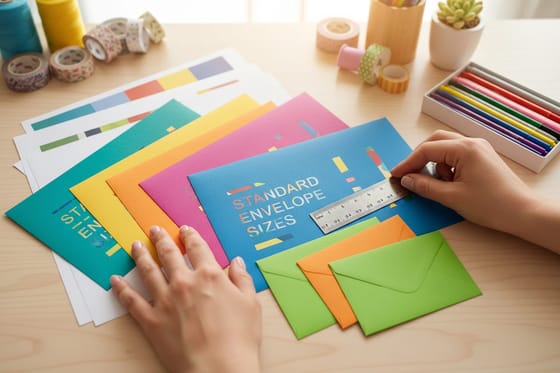
Scale matters as much as fit on social mail. A 4 inch label across the face of an A7 wedding envelope reads as a bill. Keep it at 1 by 2-5/8 inches, set the type properly, and it looks intentional. For the envelope side of that decision, common envelope sizes lists what each format holds, and choosing the correct label size plus the label sizes guide cover the label side in full.
Where the Label Goes, and the Two Zones to Respect
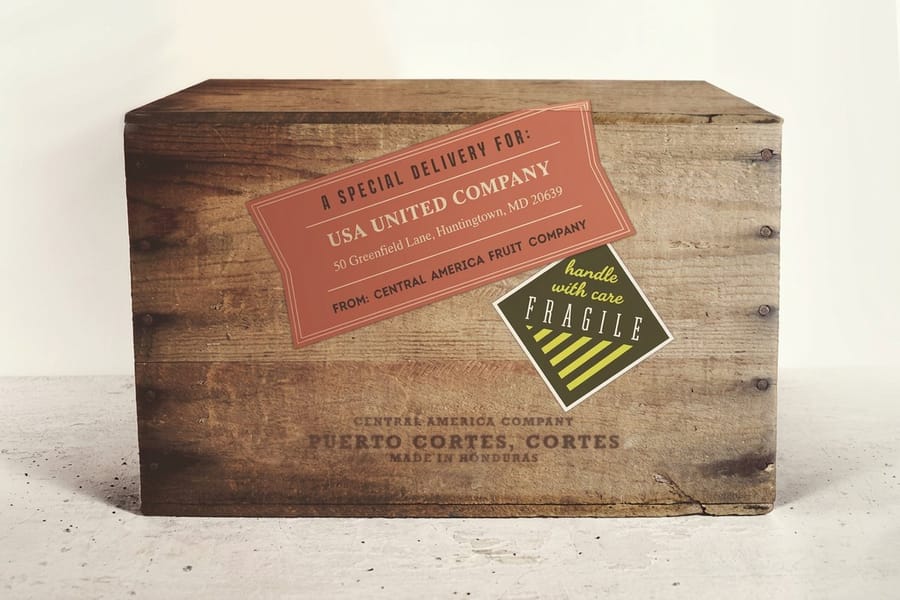
USPS equipment reads a letter in a fixed area of the face and prints a barcode in another. Land your label in the first, stay out of the second, and the piece runs. Miss either and it drops to manual handling, which is slower and, on presorted mail, more expensive.
The OCR read area is where the delivery address has to sit on letter mail. It starts 5/8 inch above the bottom edge, ends 2-3/4 inches above it, and stops 1/2 inch in from the left and right edges. The whole address block goes inside that band, parallel to the longest edge of the envelope. On a #10, centering the label vertically puts you comfortably inside it.
The barcode clear zone is the strip along the bottom right, 4-3/4 inches long and 5/8 inch high, reserved for the barcode the equipment sprays on. Nothing goes there: no label edge, no logo, no decorative rule. This is the one people break, usually by treating a #10 like a parcel and putting a big shipping label low and right.
Two habits handle the rest. Apply the label square, because the reader wants horizontal lines and a label tilted five degrees tilts every line with it. And keep the return address label in the top left corner where it belongs, well away from the delivery block, so nothing tries to read the two as one address. Addressing an envelope properly covers line order and formatting, formatting a return address covers the corner card, and the same barcode logic on card stock is in the postcard address side rules. For parcels rather than letters, premium shipping and mailing labels start at $29.16 in the larger formats.
Material and Adhesive for Mail That Travels
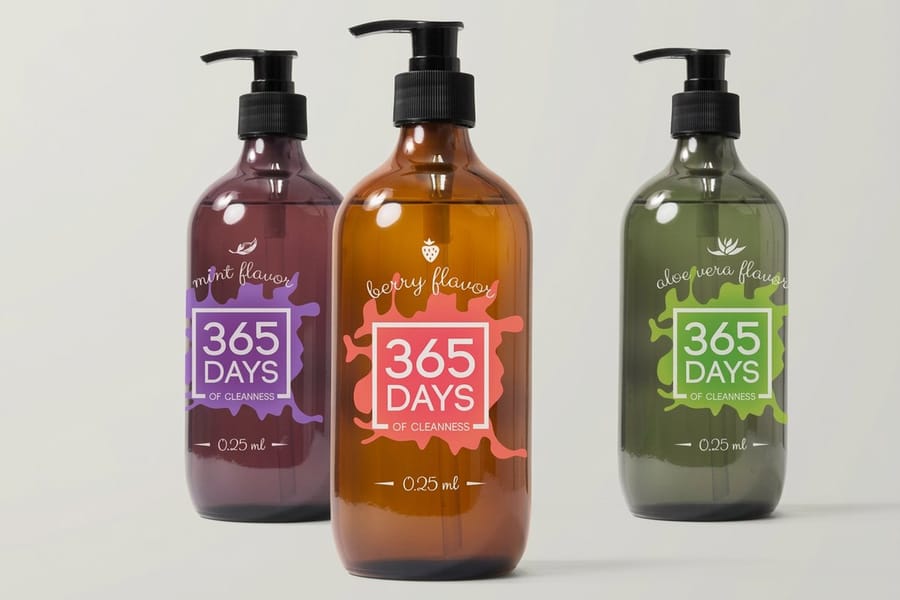
Most envelope labels never see weather, which is why plain matte paper is the honest default. The exceptions are worth knowing, because each one solves a specific failure rather than being a general upgrade.
- Matte white paper. Best scan, lowest cost, takes toner and inkjet ink without fuss. Use it unless something below applies.
- Clear film. Disappears against a white or kraft envelope and looks like direct printing from a step away. Print it in dark solid text only, since anything light or screened struggles against the envelope color underneath.
- Waterproof stock. Worth it when the piece is a parcel or when inkjet output is going out in a wet season. Inkjet ink on plain paper runs in rain, laser toner mostly does not, and that is the actual difference behind most smeared address complaints.
Printer type quietly limits your choice. Laser sheets take fuser heat and are the wrong thing to feed an inkjet, and inkjet-coated faces melt or lift if you push them through a laser. Buy the face that matches the machine on your desk, and if the mailing is large enough that neither machine is realistic, order the labels printed with the addresses on them.
One last check before a run. Test a single label on the exact envelope stock, especially anything kraft, recycled, or textured, then let it sit for an hour and try to lift a corner. A label that lifts on the desk will lift in a mail tray. Paper vs vinyl vs clear labels compares the faces in detail, and the full range sits in label printing, with standard labels starting at $23.88 for straightforward rectangular sheets.
Wally explains envelope labels
Right size, straight on, out of the bottom strip
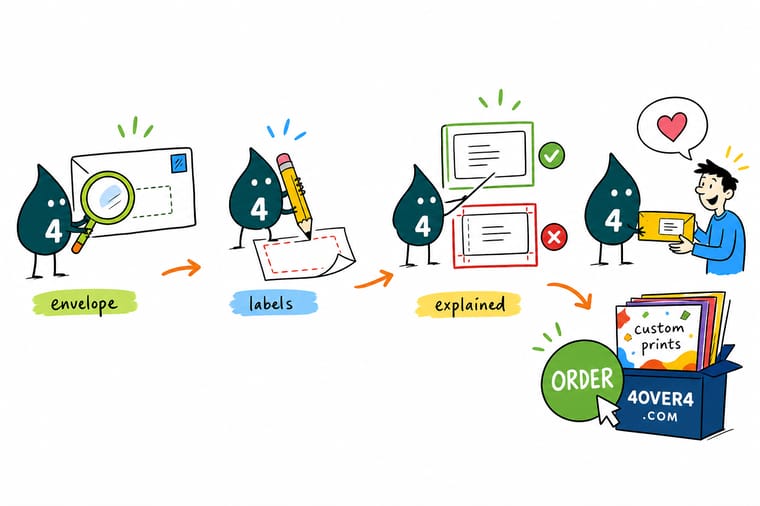
Wally counts the address lines first. Four lines go on a 1 by 2-5/8 inch label, five lines get the 1-1/3 by 4 inch one, and he never shrinks the type to make a small label work. He puts the label on square, centered in the band the sorting camera reads, with the return label alone in the top left corner. The bottom right strip stays bare, because that is where the post office sprays its barcode. Matte face, not gloss, so the scanner sees text instead of its own reflection.
Order premium address labels →Specs and pricing
Label sizes, envelope options, and starting prices
Compare labels against printed envelopes side by side, with live size choices and starting prices straight from the 4OVER4.COM configurator.
Print it
Order the labels or the envelopes
Explore more
Where to go next
By the numbers
Label and envelope printing you can count on at 4OVER4
Common Questions
Your envelope label questions, answered
What size label fits a #10 envelope?
The default is 1 by 2-5/8 inches, the size that comes 30 to a sheet. It holds four lines of address at 10 to 12 point with room to breathe on a 4-1/8 by 9-1/2 inch envelope. Once the address needs a company name plus a suite or attention line, that label starts forcing 8 point type, and small type is exactly what an optical reader struggles with. Step up to 1-1/3 by 4 inches at that point. Return address labels are much smaller, usually 1/2 by 1-3/4 inches, and sit alone in the top left corner.
Is it cheaper to use labels or print the envelopes?
It depends on whether the envelopes repeat. Blank envelopes start at $13.17 and premium address labels start at $29.16, so a short mailing with different addresses on every piece is cheapest as blanks plus labels. Printed envelopes start at $142.99 because the return address and artwork are printed into the envelope during production, which only pays off once you are ordering a quantity you will actually use. The break point is usually the moment you find yourself labeling a second box of envelopes by hand.
Will USPS reject an envelope with a label on it?
No, labels are normal on business mail. What gets a piece kicked out of automation is placement and legibility, not the label itself. Keep the whole address block inside the OCR read area, which runs from 5/8 inch above the bottom edge to 2-3/4 inches above it, and stops 1/2 inch in from each side. Leave the barcode clear zone along the bottom right empty. Apply the label square to the envelope, because a label set at an angle puts the address lines at an angle too.
Can I use glossy labels for mailing addresses?
You can, but it works against you. Sorting equipment reads the address with a camera, and a glossy face reflects light straight back into the lens, which is why matte or uncoated label faces are the standard for the address block. Save the gloss for the parts of a mailing that are meant to be looked at rather than scanned, like a seal on the flap or a product label inside the envelope.
Where does the return address label go?
Top left corner of the front, roughly a quarter inch in from the left edge and a quarter inch down from the top. It has to stay well clear of the delivery address block so the reader does not try to parse both as one address. Putting the return address on the back flap is acceptable for social mail and a bad idea for anything you want back quickly, because a flap address is not visible when the piece is face up on a sorting belt.
Do labels stick to kraft and textured envelopes?
Less reliably than to smooth white stock. A felt or laid finish gives the adhesive fewer contact points, and kraft fibers can lift when the label is pressed on cold. Press the label down firmly across its whole face rather than at the center, and let it sit before it goes in a mail tray. If a mailing is going out on heavily textured stock, printing the envelope directly avoids the problem instead of managing it.
Get Started
Ready to get the mailing out?
Pick the label size that fits your address block, or have the return address printed into the envelope so nobody peels anything. Both ship from the same plant.
Legal Disclaimer
Gold Standard guarantees apply to all standard orders placed through 4over4.com. Price match requires verifiable proof of a competitor's published price for an equivalent product with matching specifications and turnaround time. Satisfaction guarantee covers manufacturing defects and print quality issues. Contact support with order number and documentation. On-time delivery rate based on tracked orders 1999 to 2026. Individual results may vary based on shipping carrier performance.
