
Inventory Labeling Best Practices for Warehouses and Retail Floors


The numbering scheme, the label material, and the placement rules that keep stock scanning a year after you tagged it. Written from what actually comes back to us for reprinting.
Give every item one code, print it in the same place on every unit, and choose the label face and adhesive for the environment the item sits in rather than for the printer it comes out of. Almost every failure we are asked to reprint is one of three things: a paper label in a cold or wet location, a barcode with no clear quiet zone around it, or a numbering scheme that changed halfway through the year. Fix those three and the rest of the system takes care of itself.
Quick answer
Same code, same spot, and a material that suits the shelf
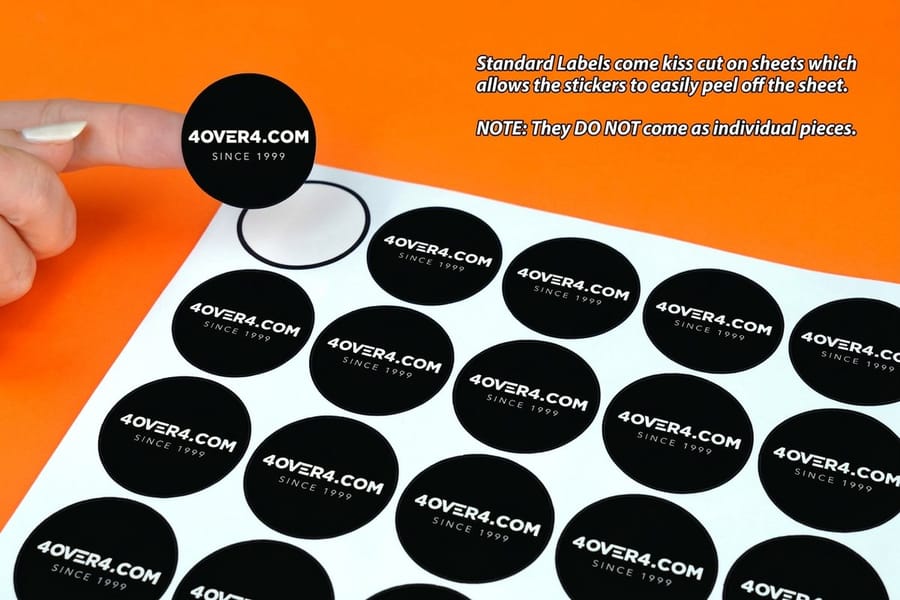
Inventory labeling works when the code never moves and the label never leaves. One SKU per item, one barcode symbology across the catalog, the same face of every carton, and a location scheme that runs aisle, bay, level, position in that fixed order. Then pick the build by environment: paper on dry bins, film with an all-temperature adhesive in the cold, laminated vinyl where it gets wet or sunlit, polyester for fixed assets. Leave ten narrow-bar widths of clear space around the code and the scanner stops being the problem.
Why Inventory Labeling Decides Your Count, Not Your Count Sheet
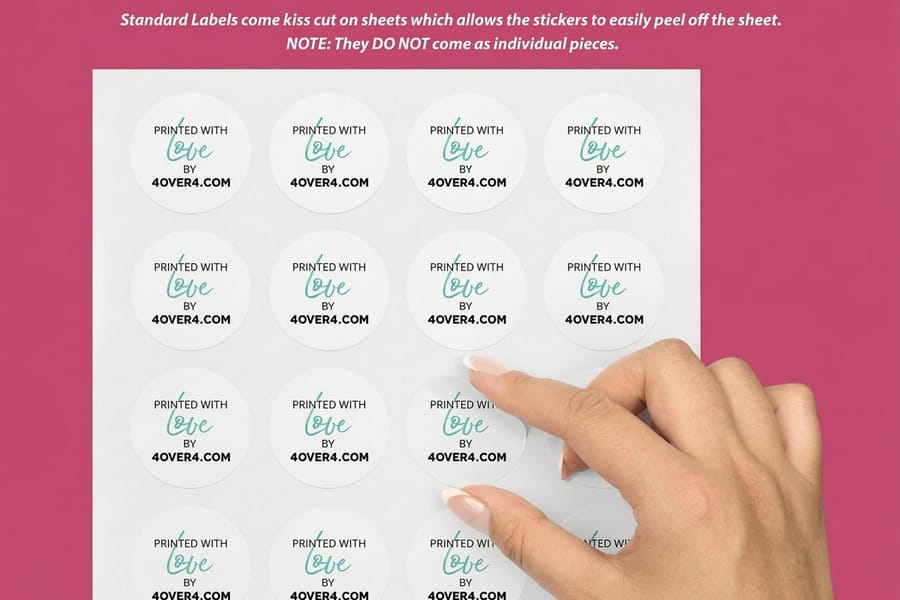
A stock system is only as accurate as the slowest, least motivated moment in it, which is somebody at the back of an aisle at the end of a shift deciding whether to walk to a terminal or write a number on a clipboard. Labeling removes that decision. If the code is on the box, facing out, at the height a scanner is already pointed, the correct action is also the fastest one.
That is the whole argument, and it explains where labeling pays and where it does not. It pays hardest on items that move through several pairs of hands: receiving, put-away, pick, pack, ship. Each handoff is a chance to record the wrong SKU, and each one is removed by a code that either reads or refuses. It pays much less on a small stockroom where one person touches everything and knows it by sight, though even there it earns its keep the day that person is on holiday.
Retail has a second reason. A shelf-edge label carries price and SKU together, so a price change is a reprint rather than a re-tagging exercise, and a cycle count becomes a walk down the aisle with a scanner rather than a morning with a clipboard. If you are setting a system up from scratch, our complete guide to how label printing works covers what happens between your file and the roll, and the label printing category lists the stocks and sizes we run.
Barcode and SKU Basics You Only Want to Decide Once
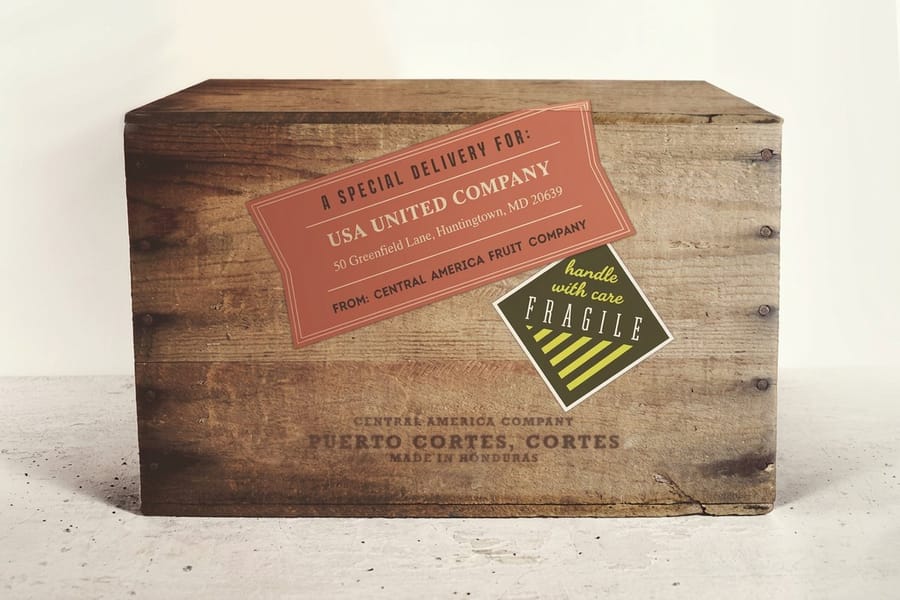
Two different numbers get confused constantly, so start there. A UPC or EAN is the code the outside world knows your product by, issued through GS1, and it is what a retail scanner at a till expects. A SKU is your own internal number, and you can build it however you like. Most operations need both: the UPC identifies the product, the SKU identifies the exact variant and location you hold.
For internal labels, Code 128 is the workhorse. It encodes letters as well as digits, holds a check character, and packs more information into less width than the older Code 39. If you are printing your own codes for internal use you almost never need anything else. QR codes have a place, but it is a narrow one: they are the right choice when the label has to carry a URL, a serial number and a lot code in a space too small for a linear bar, and the wrong choice on a case that a laser gun scans from six feet away.
- Keep the SKU short and never reuse one. Eight to twelve characters is plenty. A retired SKU that comes back on a different item will haunt your history reports for years.
- Do not encode meaning you might change. Building the supplier code into the SKU feels tidy until you change supplier and every label is wrong.
- Print the human-readable line. The digits under the bars are what a person reads when a scanner dies, and someone will have to.
- Avoid characters that get misread aloud. Letter O against digit zero, letter I against digit one. Pick one and drop the other from your alphabet.
Set the symbology and the numbering rule before you print a single roll. The guide to making barcode labels walks through generating the symbol itself, and barcode stickers explained covers the sticker formats that suit loose items rather than cases.
Choosing a Label Material for the Shelf It Actually Sits On
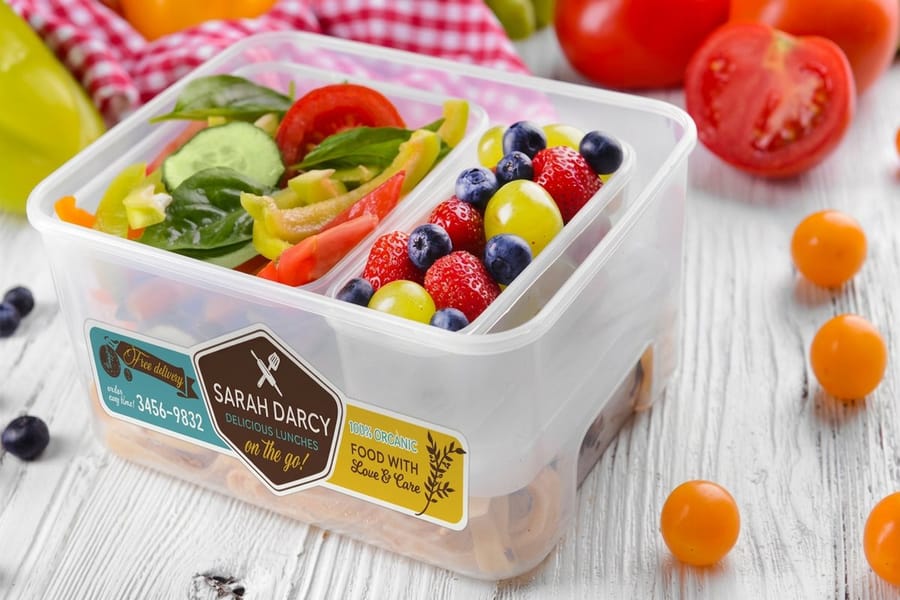
This is where most of the money gets wasted, in both directions. Paper labels get ordered for a chilled aisle and fall off. Fully laminated vinyl gets ordered for a dry stockroom that would have been happy with the cheapest stock we sell. Pick by environment and the decision takes a minute.
| Where it lives | Face material | Adhesive | What kills the wrong choice |
|---|---|---|---|
| Dry indoor bins and shelves | Semi-gloss or matte paper | General purpose permanent | Grease, scuffing from tote-to-tote handling, and repeated wiping. |
| Chilled and frozen stock | White film | All-temperature, applied warm | Applying to an already cold surface, so the adhesive never tacks and the label drops in the aisle. |
| Wash-down areas and yard bays | Vinyl or BOPP, laminated | Permanent acrylic | Water wicking into an unlaminated paper face, and UV bleaching the ink long before the face fails. |
| Racking, tools, fixed assets | Polyester | High-tack permanent | Powder-coated and textured steel, which needs a more aggressive adhesive than a smooth carton does. |
| Textiles and loose hardware | Card stock hang tag | None, it ties on | Nothing sticks reliably to fabric or to an oily part, so an adhesive label is the wrong tool entirely. |
Two limits are worth naming because nobody volunteers them. First, direct thermal labels, the kind a desktop shipping printer produces without a ribbon, darken and go unreadable when they sit near heat or in direct sun. They are correct for a shipping label that lives for three days and wrong for an asset tag meant to last three years, which wants thermal transfer with a resin ribbon on polyester. Second, corrugated is a difficult surface: it is porous, dusty, and low energy, so a label needs high initial tack and roughly a day at room temperature to reach full bond. Judging adhesion five minutes after application will tell you the wrong thing.
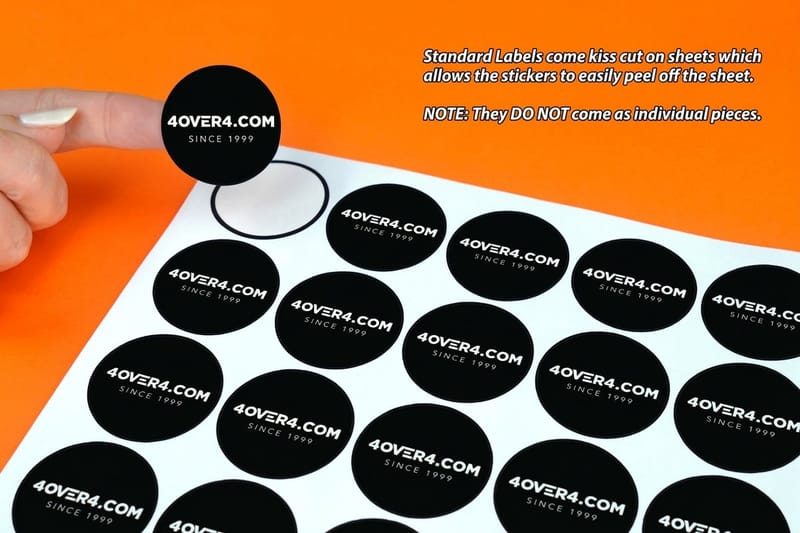
For anything that lives outdoors or gets hosed down, the material rules in our guide to outdoor sticker materials apply directly, and the industrial labels guide goes deeper on plant conditions. In the catalog, standard labels start at $23.88 and premium vinyl labels start at $29.16, which is the entire price gap between a label that survives a chiller and one that does not.
Placement, Height, and Whether the Scanner Can Actually Read It

A label that scans on a test bench and fails in the aisle is almost always a placement problem. The scanner is not moving; the box is. Fix the geometry once and the read rate stops being a topic.
Same face, every time. Pick one face of the carton, usually the long side, and put the label in the same corner of it across the whole catalog. Pickers stop searching. On pallets, label two adjacent sides so a forklift can read from either approach.
Leave the quiet zone alone. A linear barcode needs clear space either side of about ten times the width of its narrowest bar. Designers fill that space with a border because it looks unfinished, and the read rate drops for reasons nobody connects back to the artwork. Keep it empty.
Watch curvature. On bottles, cans and tubes under roughly three inches in diameter, turn the code so the bars wrap around the curve and the scan line runs along the straight axis of the container. Print it the other way and the outer bars compress until the decoder gives up.
Black on white, not brand colours. Scanners read contrast, most of them in the red end of the spectrum, which means red bars on a white background can be close to invisible to the gun. Bars go black. Save the brand colour for the rest of the label.
Size the code to the scan distance. A handheld pressed against the box tolerates a small symbol. A gun used from six feet across an aisle needs a wider one with taller bars. If you are unsure how much space the code needs before you fix the label size, work through how to choose the correct label size first, then lay the artwork out on the matching blank template so the trim never eats the quiet zone.
Labeling a Whole Warehouse, Zone by Zone
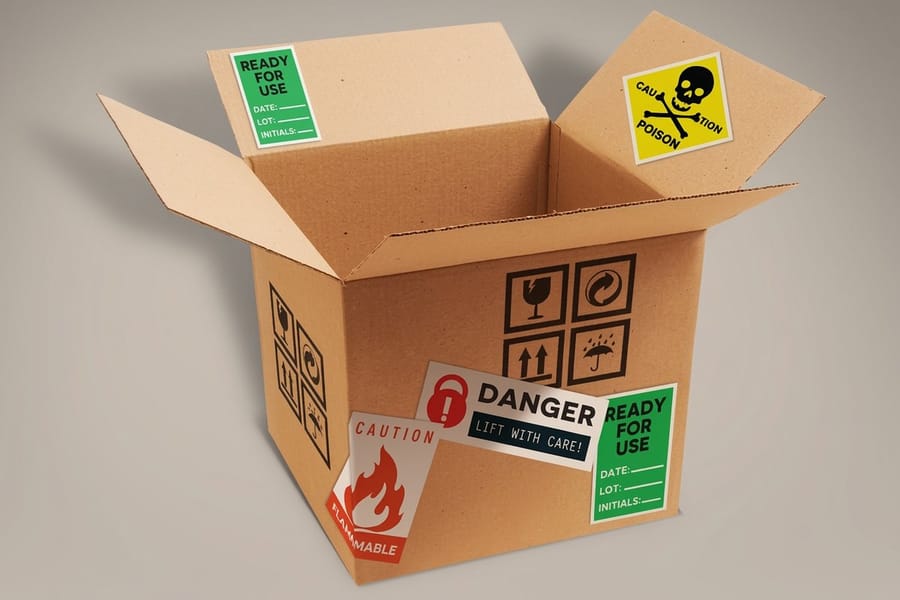
Item labels are half the system. The other half is location labels, and a warehouse that scans items but not locations still cannot tell you where anything is.
Use one fixed order for every location code and never vary it: aisle, bay, level, position. Something like A-12-C-04 reads the same to a person and to a scanner, and it sorts correctly in a report, which a scheme that puts the level first will not. Print aisle markers large enough to read from the end of the run, rack labels at eye height for anyone on foot, and a second set low on the upright for forklift operators who are looking down at the beam rather than up at it.
- Zone signage first. Receiving, put-away, pick faces, bulk, dispatch. If a zone has no sign, it will get called two different names within a month.
- Rack and beam labels next. Laminated film on powder-coated steel, at both heights, with the human-readable code as large as the space allows.
- Bin and tote labels after that. These change often, so plan for reprinting rather than for permanence, and keep the label pocket or the surface clean enough to take a new one.
- Item and case labels last. By this point the location scheme is settled, so the item labels never have to be redone to match it.
- Safety and handling marks alongside. Load limits, fragile and orientation marks, and hazard notices belong on the same pass. Our guide to designing caution labels covers the layout conventions people recognise at a glance.
Equipment and tooling sit outside the stock system but under the same numbering discipline, which is what company labels for products, packaging and asset tagging walks through. And when stock leaves the building, the carrier label has its own clear-space rules, covered in labeling a package for shipping.
Ordering Durable Inventory Labels and Custom Tags

Order by environment, in three or four buckets rather than one part number for the whole building. It costs less overall than standardising on the toughest material, and far less than standardising on the cheapest and relabelling a chiller twice a year.
For dry bins, shelf edges and cartons, standard labels start at $23.88 and handle the volume work. For chilled, damp or sunlit locations, premium vinyl labels start at $29.16 with a film face that survives moisture and handling. For racking notices, load limits and hazard marking, premium warning labels start at $29.16. For cases going out the door, premium shipping and mailing labels start at $29.16 in the larger formats a carrier label needs.
Anything that cannot take adhesive gets a tag instead. Standard hang tags start at $25.27 and are the right answer for textiles, loose hardware, oily parts, and returns processing where a label has to come off cleanly with the item intact. If a bin front or a shelf edge needs an unusual outline, die-cut labels start at $93.37 and cut to any shape you supply.
Two practical ordering notes. Order one size larger than the artwork strictly needs if the code will be scanned from a distance, because you cannot add quiet zone later without shrinking the bars. And proof a short run on the real surface before committing to the full quantity: a label that grips a test sheet on a desk can behave completely differently on dusty corrugated or powder-coated steel. Loose-item marking that suits custom stickers better than labels is worth checking too, and how to choose a label printing company lists what to ask before you place a standing order.
Wally labels the aisle
Same code, same corner, material that suits the shelf
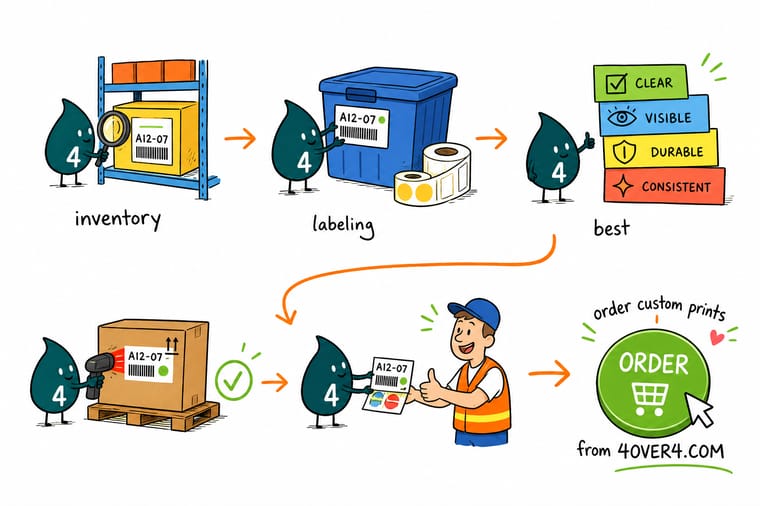
Wally puts one code on the box, in the same corner of the same face every time, so nobody has to spin a carton to find it. He keeps the space either side of the bars empty, because a decorative border in the quiet zone stops a scan that would otherwise be perfect. Then he picks the stock by where the box lives: paper on a dry bin, film with an all-temperature adhesive in the chiller, laminated vinyl in the wash-down bay. The rack labels get two heights, one for people and one for forklift drivers.
Order custom inventory labels →Specs and pricing
Label stocks, sizes and starting prices
Compare the three builds most inventory systems use side by side, with live configuration choices and starting prices straight from the 4OVER4.COM configurator.



Print it
Order labels and tags that survive the aisle

Explore more
Where to go next




By the numbers
Label printing you can count on at 4OVER4
Common Questions
Your inventory labeling questions, answered
What information should an inventory label actually carry?
Four things, in this order of importance: a scannable code, the human-readable version of that same code underneath it, a short plain-language description, and whatever your team needs to act without opening a screen. For retail stock that usually means SKU, description, size or variant, and price. For a warehouse it usually means SKU, description, quantity per case, and a lot or date code. Anything else you add competes for space with the barcode, and the barcode is the part that has to work at arm's length in bad light.
Do I need barcodes if we only carry a few hundred items?
Yes, and small catalogs benefit fastest because the whole switch takes a weekend. Typing a SKU by hand introduces a transposition error every few hundred entries, and a wrong digit in a receiving count is the error that costs the most because nobody catches it until a customer order comes up short. A scanner reading Code 128 with a check digit either reads it correctly or refuses. There is no quiet wrong answer.
Which label material survives a freezer?
A film face rather than paper, with an all-temperature or freezer-grade adhesive, and the label has to go on before the item is chilled. That last part is what trips people up. Most permanent adhesives will not tack at all on a surface that is already below their minimum application temperature, so the label looks fine leaving the printer and drops off in the aisle two days later. Apply at room temperature, let it bond, then freeze it.
Why does one of our barcodes fail to scan when the print looks fine?
Check the clear space around it before you blame the printer. A linear barcode needs a quiet zone of about ten narrow-bar widths on each side, and a design border, a neighbouring label, or a carton seam sitting in that space stops the read. The next two suspects are contrast, meaning the code is printed in a colour other than black on a light background, and curvature, meaning the code is wrapped around a container narrower than roughly three inches so the outer bars foreshorten. Turn the code so the bars wrap around the curve and the scan travels along the straight axis.
Should stock labels be permanent or removable?
Permanent for cases, cartons, racks and fixed assets. Removable for anything a customer will unwrap or resell, and for seasonal retail stock where the same unit gets repriced. The honest trade-off is that removable adhesive gives up cold and moisture performance, so a removable label in a chilled retail case is a label on the floor by the weekend. If you need both, use a permanent film label for the case and a removable one on the retail unit.
How much do inventory labels cost to print?
Standard sheet labels at 4OVER4.COM start at $23.88, which covers the majority of dry indoor bin, shelf and carton labelling. Premium vinyl labels start at $29.16 and are the ones to order for damp, cold or sunlit locations. Standard hang tags start at $25.27 for stock that cannot take an adhesive, such as textiles and loose hardware. The cost difference between paper and film is small enough that relabelling one bay twice will usually cost more than buying the durable version outright.
Get Started
Ready to tag the whole building once and be done?
Pick the face and adhesive that match each zone, send us your SKU list and artwork, and we print labels and tags that still scan after a year on the shelf.
Legal Disclaimer
Gold Standard guarantees apply to all standard orders placed through 4over4.com. Price match requires verifiable proof of a competitor's published price for an equivalent product with matching specifications and turnaround time. Satisfaction guarantee covers manufacturing defects and print quality issues. Contact support with order number and documentation. On-time delivery rate based on tracked orders 1999 to 2026. Individual results may vary based on shipping carrier performance.
