
Custom Business Notepads That Keep Your Brand on the Desk


A branded pad is one of the few printed pieces somebody touches every working day. Five sizes each carry their own sheet count, there is a magnetic version, and the branding has to sit to survive the pad being used.
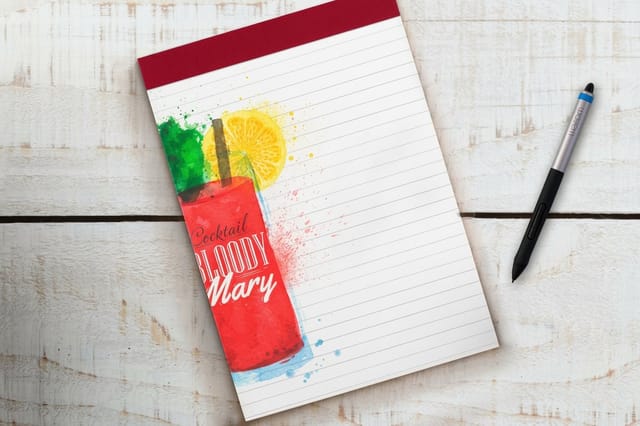
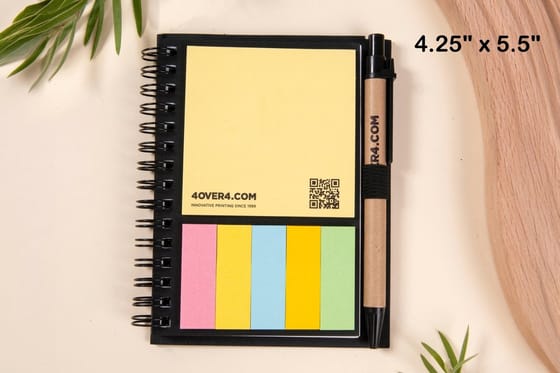
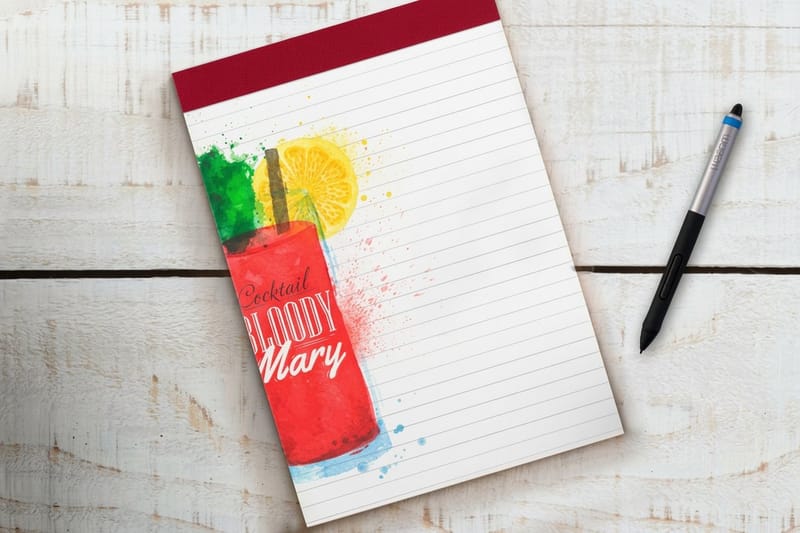
A custom business notepad is a stack of tear-off sheets glued along one edge, with your branding printed in the header band above the writing area. At 4OVER4.COM standard pads print on 70# uncoated text in five sizes from 4.25 by 5.5 inches up to 8.5 by 11 inches, with 50 or 100 sheets per pad, and start at $93.37 for 25 pads. Magnetic notepads use the same header idea with 25 sheets, three sizes up to 4 by 9 inches, and a magnet in place of the chipboard back.
Quick answer
One glued edge, one header, fifty to a hundred repeats
A branded notepad advertises through the header band, and that band is the same height on every size. Standard pads come in five sizes from 4.25 by 5.5 inches to 8.5 by 11 inches on 70# uncoated text, glued at the top, printed front only, in pads of 50 or 100 sheets. A set of 25 pads starts at $93.37, about $3.73 a pad, and the per-pad price falls to roughly $1.10 as the run approaches 5,000. Magnetic notepads run three sizes up to 4 by 9 inches at a fixed 25 sheets, and they trade desk time for fridge time.
Why the Header Band Does All the Marketing
A notepad is not an ad that someone reads. It is an ad that sits under somebody's hand while they do something else, and that difference explains every design rule that follows.
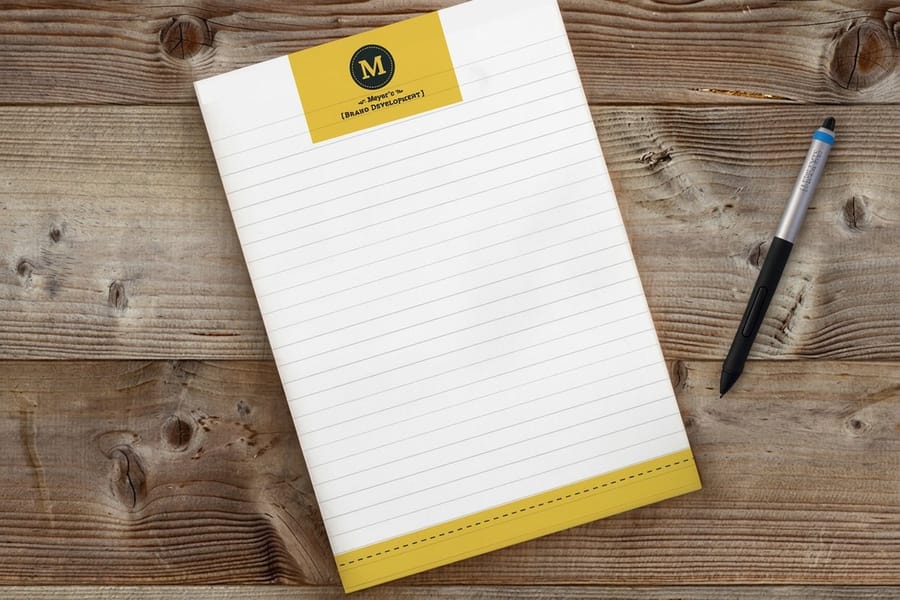
The pad is glued along one edge, so the printed strip at the top of the sheet is the only zone that repeats. Tear a sheet off and the identical header is waiting underneath. Order 100 sheets and the header appears 100 times on the same desk before the chipboard shows. That is the entire mechanism, and it is why a logo floated in the middle of the sheet is wasted: the middle is where the customer writes, and whatever you print there gets crossed through by a phone number in the first week.
Run the arithmetic before you decide whether it is worth it. At the smallest run, 25 pads for $93.37, a pad costs about $3.73. Split across 100 tear-off sheets, that is under four cents per sheet the header is seen on. Against a flyer that gets one glance, the numbers are not close. Against a business card at $17.57 a box it is a different story, because a card is cheap enough to hand to a stranger and a pad is not.
So the pad belongs where the relationship already exists. Leave one after a service call, put one in every reception area, ship one with an order, hand one across at a trade show to somebody who stopped and talked. Print your name, the thing you do, a phone number and a web address in that header band, and leave the rest of the sheet alone. If you are building a whole set at once, our business stationery set guide covers what to print alongside the pad.
The Five Notepad Sizes and What Each One Is Actually For
Standard notepads print in five stock sizes, with 4.25 by 5.5 inches as the default, plus a custom size up to 9 by 11 inches if a pad has to drop into a specific folder or binder. Pick by where the pad ends up, not by how the artwork looks on screen.
| Size | What it is | Where it earns its keep | The trade-off |
|---|---|---|---|
| 4.25 x 5.5 in | The classic memo pad, a quarter of a letter sheet. | Counters, reception desks, phone stations, giveaway bags. | Header room for a logo and one line. A busy mark crowds the safe margin fast. |
| 4 x 6 in | Slightly taller than the memo, close to a postcard footprint. | Kitchen counters, hotel rooms, anywhere a list runs vertical. | Not a standard sheet fraction, so it looks odd filed with letter paper. |
| 3.5 x 8.5 in | A narrow half-letter strip, tall and thin. | Shopping lists, order slips, till-side pads, delivery notes. | The narrowest header of the five. A wide logo lockup will not fit across it. |
| 5.5 x 8.5 in | Half a letter sheet, the everyday desk pad. | Offices, meeting rooms, anywhere real notes get taken. | Little to argue with, but it costs more to ship than the memo pads. |
| 8.5 x 11 in | Full letter, reads like a tear-off letterhead. | Order forms, printed fields, client-facing notes and quotes. | Heaviest to ship and the slowest to get used up on a single desk. |
Read the last column first. The header band stays roughly an inch tall whichever size you choose, so stepping up from a memo pad to a letter pad buys writing area, not branding area. If the goal is putting your name on the largest number of desks for a fixed budget, order small and order more of them. If the goal is a pad somebody keeps beside a keyboard and fills in during every meeting, go to 5.5 by 8.5 and accept the shipping. Templates for each size sit in the blank template library, and the notepad template and paper guide walks through setting artwork up around the glued edge.
Sheet Count Sets How Long the Pad Lives
Standard notepads are padded at either 50 or 100 sheets. It is the one option on the page that changes nothing about how the job prints and everything about what the job does after it ships.
Fifty sheets makes a lighter pad that a customer works through in weeks rather than months. A hundred sheets doubles the life of a single pad on a single desk. Since the run quantity and the sheet count are separate choices, the real decision is reach against duration: 500 pads at 50 sheets puts your header on 500 desks, and 250 pads at 100 sheets keeps it on half as many desks for twice as long. Neither is wrong. Sales teams handing pads out at events usually want the first. A dental practice stocking its own front desk and its referring offices usually wants the second.
Quantity is where the money moves. A set of 25 pads at $93.37 is about $3.73 a pad, and that per-pad figure slides to roughly $1.10 as the run climbs toward 5,000. A pad is one of the products where the difference between a cautious first order and a real one is dramatic, so if you already know you will reorder, ordering the larger run once is usually cheaper than ordering twice. The same curve shows up across padded and bound work, and our bulk notebook printing guide maps where the breaks land.
One limit to design around: printing is on the front only, in black or full color, and the back of every sheet is deliberately blank so it is ready to write on. There is no back-of-sheet offer, no map, no coupon. If a campaign needs two printed sides, the pad carries the header and something like printed envelopes at $142.99 or a postcard carries the message.
The Magnetic Pad, and Where It Beats a Desk Pad
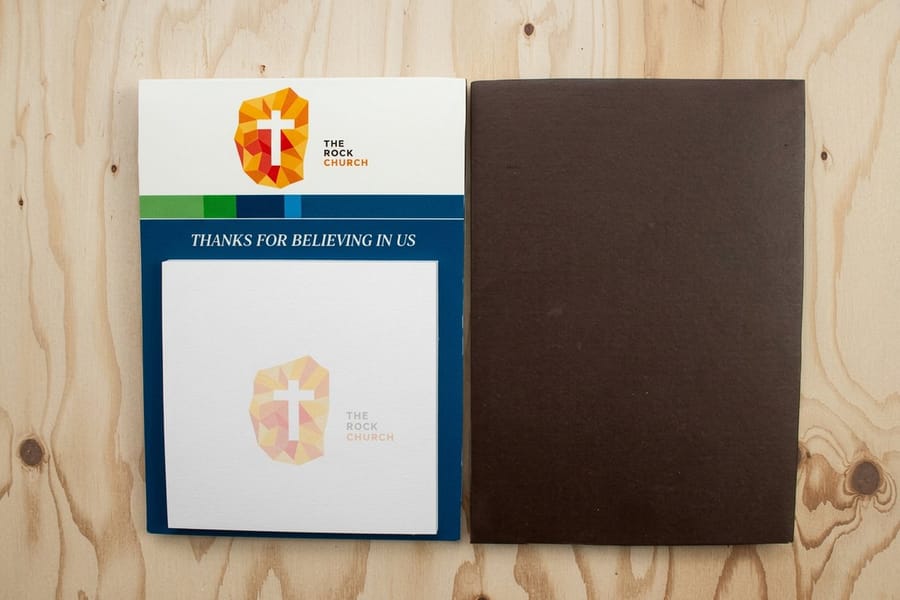
Magnetic notepads swap the chipboard backer for a thin magnet, which moves the pad off the desk and onto a fridge door, a filing cabinet or a steel service panel. They start at $93.37 for 25 pads, the same entry as the standard pad, and follow the same slide toward roughly $1.10 a pad at 5,000.
The format forces three differences worth knowing before you design. They come in three sizes only, 4 by 5, 4 by 8 and 3.5 by 8.5 inches, with a custom size up to 4 by 9. They are fixed at 25 sheets rather than 50 or 100. And there is no letter-size version at all, because a large sheet hanging vertically off a thin magnet pulls itself off the door.
Trade the specification for the placement and it is usually worth it. A fridge pad survives a kitchen clear-out that a business card does not, and it stays at eye level in the room where household decisions get made. That makes it the right pick for home services, veterinary practices, takeaways, real estate and anything a household calls rather than emails. For an office where the pad sits under a hand all day, the standard pad with 100 sheets is the better buy.
| Padded product | Sheets per pad | What is on the back | Best job |
|---|---|---|---|
| Standard notepads | 50 or 100 | Chipboard backer, so it holds firm in one hand. | Desk pads, meeting notes, everyday branded giveaways. |
| Magnetic notepads | 25 | A thin magnet that grips fridge, cabinet or steel door. | Households and any customer who calls from the kitchen. |
| Carbonless forms | Sets, not loose sheets | Padded the same way, but each set leaves a copy behind. | Work tickets, orders and anything a customer signs. |
Those three cover almost every reason a business orders something glued along one edge. If the piece has to be signed and copied, the pad is the wrong product and carbonless forms at $120.82 are the right one. Everything we pad sits together on the notepad printing category.
Ordering, Turnaround and What to Print Alongside
The order is short. Choose the size, set 50 or 100 sheets, pick black or full color on the front, enter the pad quantity, and upload artwork built on the template for that size. Standard production is 7 business days, and rush production runs down to 2 business days if a date is fixed.
Check two things on the proof before you approve. First, that the header sits clear of the glued edge, because padding compound soaks a short way into the paper and stiffens it. Second, that nothing live, no phone number, no legal line, sits tight to the trim, since a stack of hundreds of sheets does not cut to a hairline. Both are covered properly in the notepad template guide.
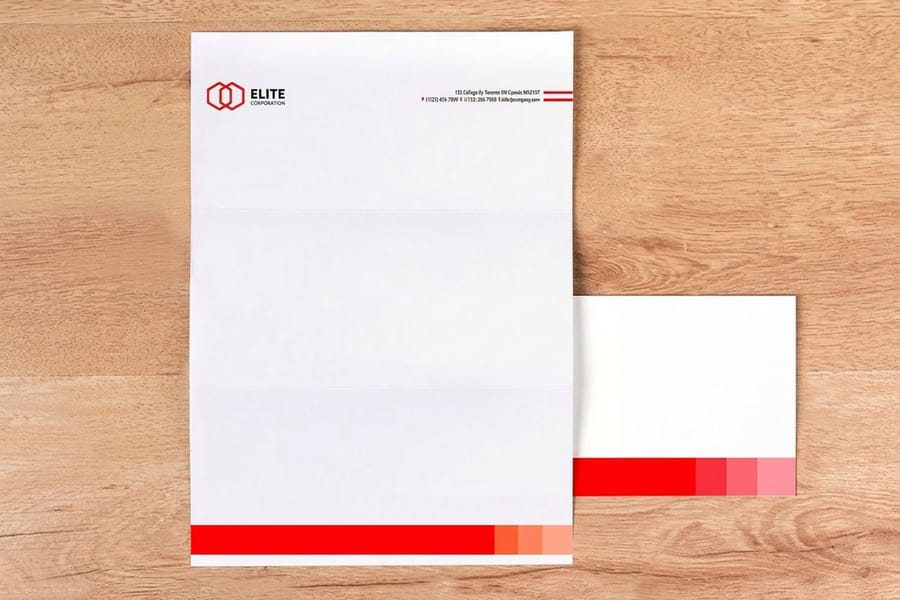
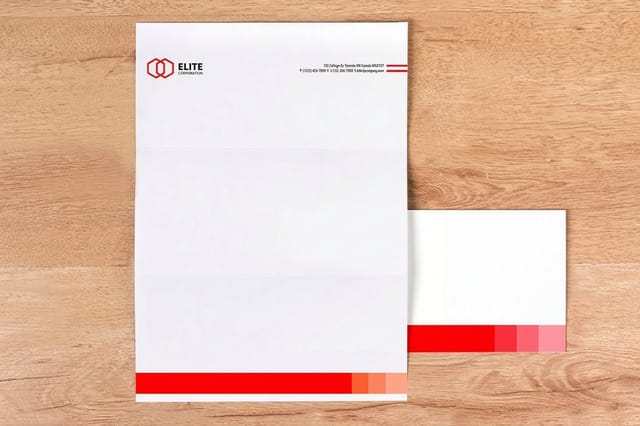
Pads work hardest as part of a set rather than on their own. Standard letterheads at $99.95 carry the same header into anything you post or attach, and printed envelopes finish the package. Print all three from one artwork file and a customer sees the same header on the quote, the envelope it arrived in, and the pad you left on the counter. The whole set sits under business stationery, and the wider list of what to keep in stock is in our business marketing supplies guide.
Wally explains branded notepads
Tear one off and the header is still there
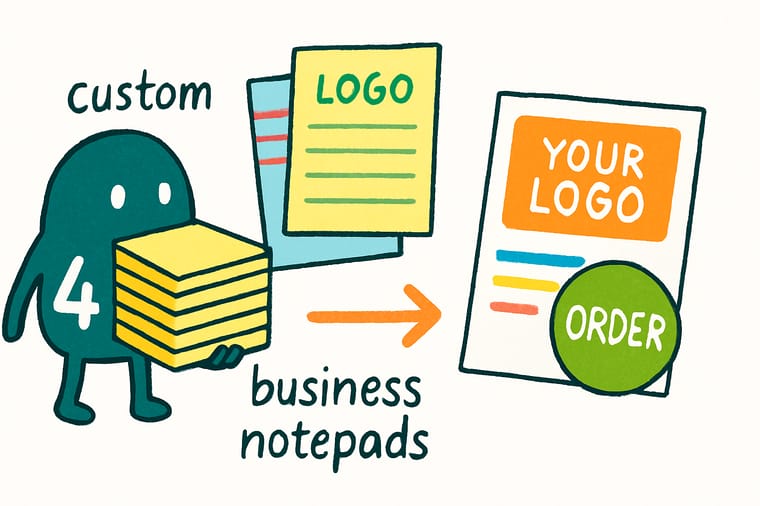
Wally prints your logo and phone number in the strip above the writing area, then glues the stack along the top edge. Every sheet carries the same header, so a 100 sheet pad puts your name on that desk 100 times before the chipboard shows. He keeps the middle of the sheet blank, because that is where your customer writes. Want the pad on a fridge instead of a desk? He swaps the chipboard for a magnet and drops to 25 sheets.
Order custom notepads →Specs and pricing
Pads, sizes, sheet counts and starting prices
Compare the padded products side by side, with live sizes, sheet counts and starting prices straight from the 4OVER4.COM configurator.


Print it
Order a pad your customers keep using
Explore more
Where to go next

By the numbers
Notepad orders against the same on-time record
Common Questions
Your custom notepad questions, answered
How many sheets are in a custom business notepad?
Standard notepads are built with either 50 or 100 sheets per pad, set in the Sheets/Pad option in the configurator. Magnetic notepads are fixed at 25 sheets, because the magnet has to stay thin enough to grip a vertical surface with the pad hanging off it. Sheet count changes how long one pad survives on a desk, not how it prints, so the choice is really about whether you want the same run to reach more people or last longer in fewer hands.
What size notepad should I order for a business giveaway?
For anything handed out at a counter, a show table or a service call, the 4.25 by 5.5 inch memo pad is the workhorse. It fits beside a phone, slides into a bag, and costs the least to ship in quantity. Move up to 5.5 by 8.5 inches when the pad lives on one desk and gets used for real notes, and to 8.5 by 11 inches only when the sheet carries printed fields, an order layout or client-facing notes. The header band stays about the same height on all of them, so a bigger pad buys writing room rather than brand room.
Can you print on the back of each notepad sheet?
No. Printing goes on the front only, in black or full color, and the back is left blank so every sheet is ready to write on the moment it is torn off. That rules out putting an offer or a map on the reverse, which is worth knowing before you design. If you want a second printed surface, the usual answer is to print the chipboard-backed pad plain and pair it with a piece that does carry two sides, such as a postcard or a folded leaflet.
Do magnetic notepads come in the same sizes as standard pads?
They do not. Magnetic notepads come in three sizes, 4 by 5, 4 by 8 and 3.5 by 8.5 inches, with a custom option up to 4 by 9 inches. There is no magnetic equivalent of the 8.5 by 11 inch pad. The size cap follows from the format: a large sheet hanging vertically off a thin magnet peels away from the door, so the product stays narrow and tall on purpose.
How much do custom business notepads cost?
Standard notepads start at $93.37 for a set of 25 pads, which works out to roughly $3.73 a pad, and the per-pad price slides down to about $1.10 as the run climbs toward 5,000. Magnetic notepads start at the same $93.37 for 25 pads and follow the same curve. That is several dollars a unit at the smallest run, so a notepad is a leave-behind for people you have already met rather than something you hand to everyone who walks past.
How long does custom notepad printing take?
Standard production is 7 business days, with rush speeds down to 2 business days on both standard and magnetic notepads. Padding is a physical step after printing: the sheets are cut, jogged into a stack, clamped, and the glue is brushed along one edge and left to cure. That cure is why a padded product runs a little longer than a flat printed sheet, and why the rush tiers on pads are priced the way they are.
Get Started
A 25 pad run works out at $3.73 a pad
Pick the pad size, set 50 or 100 sheets, print the header in full color, and we glue and ship pads that keep working long after the handshake.
Legal Disclaimer
Gold Standard guarantees apply to all standard orders placed through 4over4.com. Price match requires verifiable proof of a competitor's published price for an equivalent product with matching specifications and turnaround time. Satisfaction guarantee covers manufacturing defects and print quality issues. Contact support with order number and documentation. On-time delivery rate based on tracked orders 1999 to 2026. Individual results may vary based on shipping carrier performance.
