
5 Print Picks That Lower What a Meta Ads Customer Costs You
Meta ads get affordable in two places: inside the account, where better creative and a better landing page cut your cost per customer, and outside it, where a printed piece carries a sale the auction would have charged you for. These five picks work the second half, starting at $16.48 for 50 postcards.
You cannot outbid the auction, so lower the share of sales that has to go through it. Cost per customer is CPM times ten, divided by click rate and conversion rate as percentages, and bidding harder only moves CPM upward. Postcards to past buyers, a sticker in every box, flyers in the radius where CPM spikes and a brochure for the considered sale all take demand off the ad budget, which leaves paid spend to do the one thing only it does: find people who have never heard of you.
The picks
Five picks, from a $16.48 postcard run to $57.11 brochures
Each pick attaches to a sale your ad account is currently paying for twice. Prices below are the live starting price in the configurator and fall as quantity climbs. Lay any of them out in the free online designer, or start from a design template and drop in your offer.
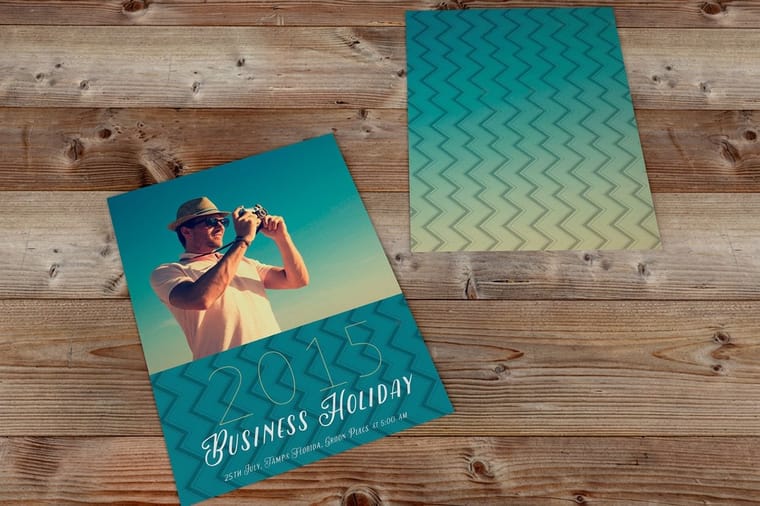
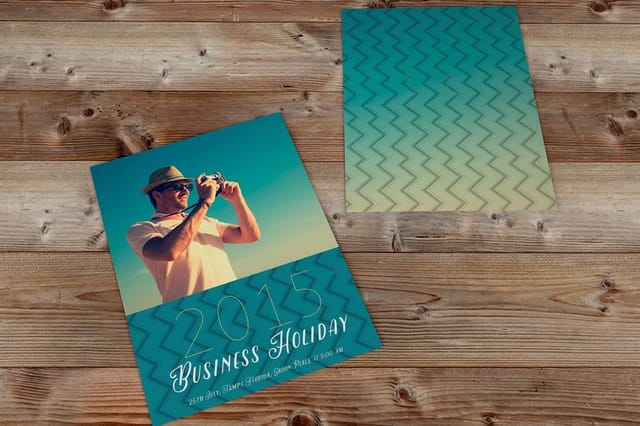
- Standard Postcards, from $16.48. Reaches a customer you already own for the cost of print and postage, with no second impression to buy. This is the piece that carries a repeat offer to the people your ad account keeps re-billing you to reach.
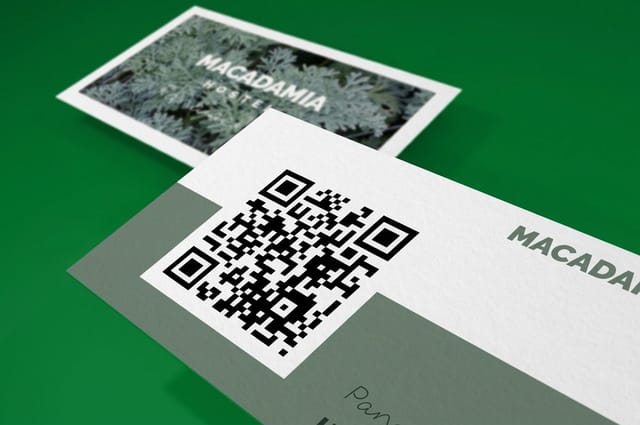
- QR Code Business Cards, from $17.57. Turns a handshake into tracked traffic. Give the code its own landing URL and the visit lands in the same dashboard as your paid clicks, and in the audience your pixel builds from.
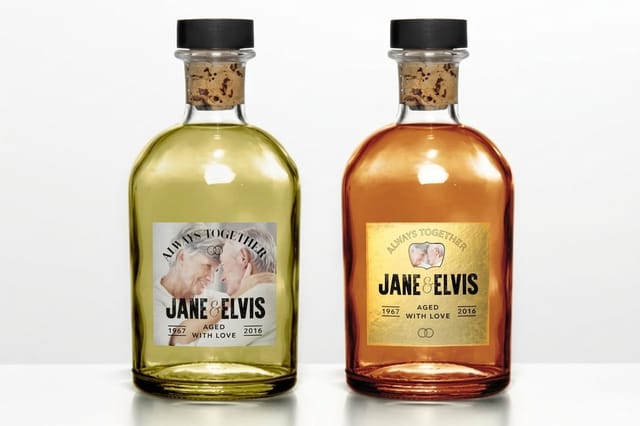
- Premium Stickers, from $29.16. The only impression in this kit you pay for once. Drop one in every order and it keeps showing up on a laptop lid long after the campaign that won the customer has been switched off.
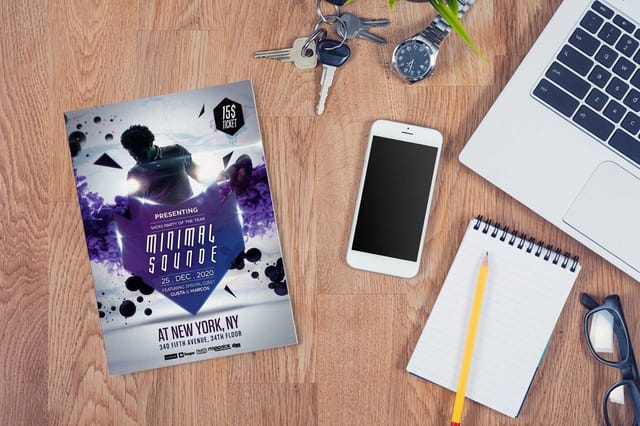
- Standard Flyers, from $39.54. Works the one place Meta gets expensive fast, a single neighborhood. Narrowing an ad set to one zip code shrinks the auction pool and pushes your CPM up. Paper does not bid.
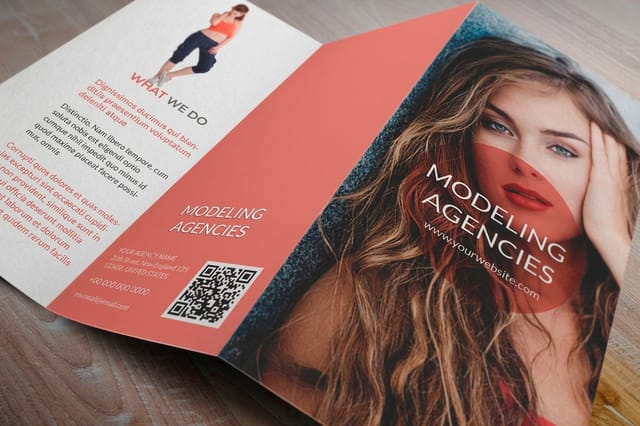
- Standard Brochures, from $57.11. For an offer nobody buys off a phone in nine seconds. Mail it to the leads the ad already caught, so the considered purchase gets the detail a feed placement has no room for.
The arithmetic
Where the money goes before it becomes a customer
Three numbers stand between your budget and a sale, and you only control two of them. The auction sets CPM. Your creative sets the click rate and your landing page sets the conversion rate, and doubling either one halves the cost per customer just as effectively as halving CPM would.
Match the piece to the job
What each pick is for, and the size it ships at
Five pieces, five different jobs. Two of them chase demand you already earned, two of them cover ground the auction charges a premium for, and one of them exists to be kept. Read the row, then jump to the piece.
| Pick | Usual spec | The job it does |
|---|---|---|
| 1. Postcards | 4 in x 6 in, 5 in x 7 in, 6 in x 9 in, 6 in x 11 in, on 14pt or 16pt cardstock | Repeat purchase and win-back to a list you already hold the addresses for. |
| 2. QR code business cards | 3.5 in x 2 in standard, code printed at 0.8 in square or larger | Attribution for offline traffic, and a warm audience seed for the pixel. |
| 3. Premium stickers | Kiss-cut or die-cut vinyl, 2 in to 4 in for a laptop or bottle | Impressions after the sale that never appear on an ad invoice again. |
| 4. Flyers | 8.5 in x 11 in, 100lb gloss text, half-fold for a counter rack | Local reach where a tight geo target makes the auction expensive. |
| 5. Brochures | Tri-fold 8.5 in x 11 in folded to 3.67 in x 8.5 in, or half-fold | Closing a considered purchase after the ad has done its job. |
1. Postcards: stop paying twice to reach the same buyer
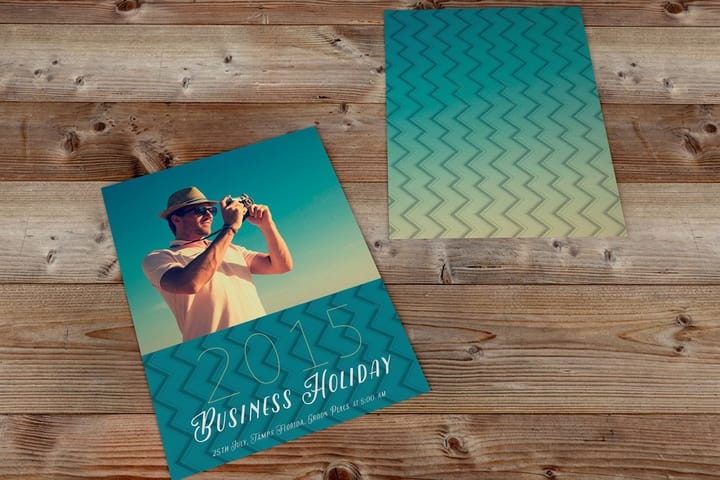
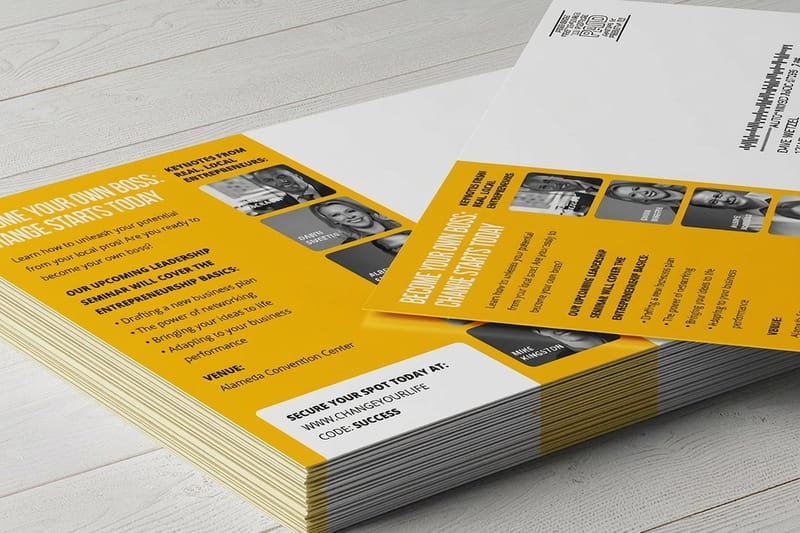
Your best audience is the one you already sold something to, and it is also the audience Meta charges you the most to talk to. Retargeting a small customer list drives frequency up, and frequency drives CPM up, so the fifth impression on the same person costs more than the first. A standard postcard reaches that same buyer for print plus postage, once, with no bid attached.
Size decides the postage, so pick it before you pick the artwork. The USPS postcard rate applies only to a piece no larger than 4.25 in x 6 in and no thicker than 0.016 in, which in practice means a 4 in x 6 in card on 14pt stock. Go to 5 in x 7 in, 6 in x 9 in or 6 in x 11 in and you are paying a letter or flat rate instead. The larger card usually earns that difference back because it does not disappear between two utility bills, but run the arithmetic rather than assuming it. Our breakdown of direct mail cost per piece puts print, postage and list against each other.
Here is the limit, stated plainly: mail costs more per contact than an impression will ever cost, so this only works on people who have already given you money or an address. Send it to a cold rented list and it loses to the ad account every time. Keep the offer specific and dated, put one thing on the front, and pull the layout ideas from postcard marketing ideas and the mailing steps from how to send direct mail postcards.
2. QR code business cards: make offline traffic show up in the same report
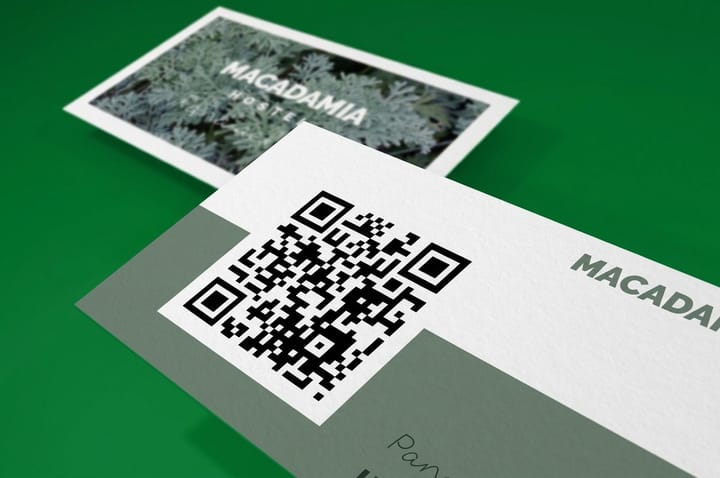
The complaint about print is always the same, that you cannot measure it. That stopped being true the day every phone camera started reading codes natively. A QR code business card that points at its own tagged URL puts the scan, the session and the purchase into the same analytics view as your paid traffic, so the card competes on the same terms as an ad set.
Two details decide whether it scans at all. Print the code at 0.8 in square or larger for a card someone holds in their hand, and leave a quiet zone of four modules of clear space around it, because a code that runs into a border or a photo edge fails on half the phones that try. High contrast, dark code on light ground, never light on dark. If you are building the code inside your layout file, the steps are in generating QR codes in InDesign.
The mistake that wastes the scan is pointing it at your homepage. Send it to the exact offer the card promises, and use a unique short link on every printed piece so you know which one earned the visit. There is a whole set of layouts worth stealing in QR code business card ideas that convert, and a warm visitor who scanned a card is also a much cheaper audience for your pixel to build a lookalike from than a cold interest stack.
3. Premium stickers: the impression you buy once
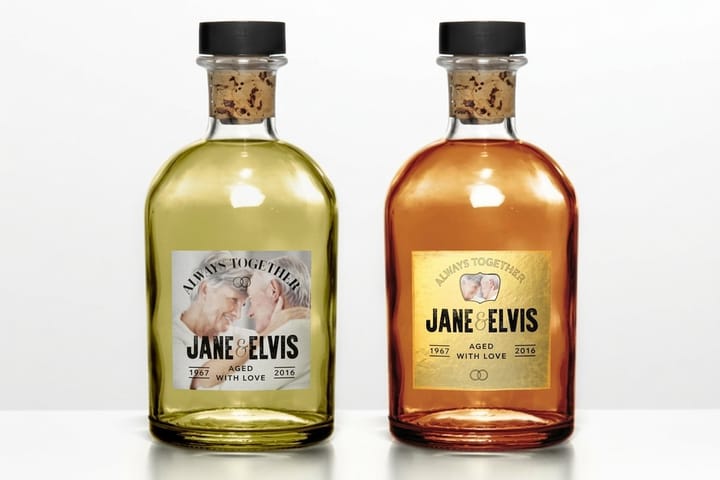
Every ad impression is rented. You pay, it shows, it is gone. A premium sticker on a water bottle or a laptop lid is bought one time and then keeps being seen by everyone sitting near that person, which is the only line in a marketing budget that gets cheaper the longer it runs.
The catch is real and worth saying out loud: nobody sticks your logo on anything because they like your company. They stick it because the sticker is good. A shape, a joke, a piece of art, a local landmark, something with a reason to exist beyond your brand mark. Kiss-cut on a backing sheet is the easier version to mail flat inside a box, die-cut through the material is the one people actually want on a laptop. Material choice changes how long it survives a dishwasher or a winter, and that is covered in choosing sticker material.
Put one in every outbound order, because the shipping box is already paid for and the marginal cost of the insert is the sticker itself. For the ways people actually use them once they are out in the world, read ways to use logo stickers. This is the slowest-acting piece in the kit and the only one with no reporting at all, so treat it as brand cost, not as a measured channel.
4. Flyers: cover the radius where CPM gets ugly
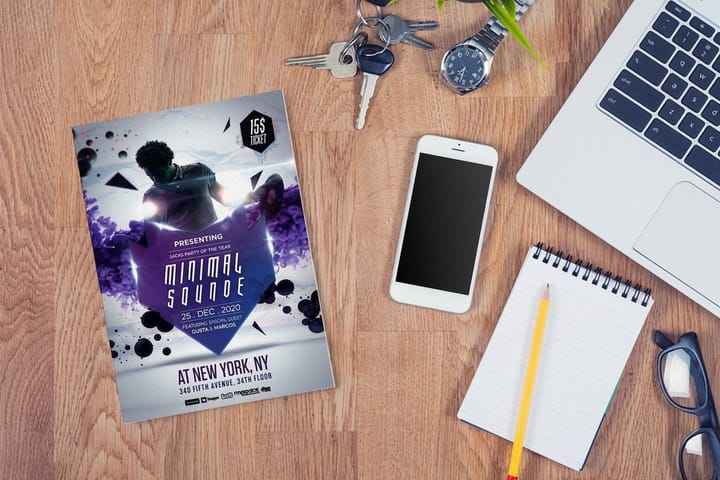
Small budgets go strange when the target gets small. Narrow an ad set to one town, one zip code or one interest and you have not made anything cheaper, you have made the pool of available impressions tiny and the competition for it fierce, which shows up as a rising CPM and a frequency number that climbs all week. A flyer covers that same radius at a price that does not move when a competitor raises a bid.
Spec it for the hand it lands in. An 8.5 in x 11 in sheet on 100lb gloss text is the standard, and folding it to a half sheet makes it fit a counter rack and a jacket pocket. Heavier stock reads as more serious and costs more to hand out in volume, which is the trade you are making. The weights and what each one feels like are laid out in best paper weight for flyers.
Distribution is the part that gets skipped and then blamed. Where the stack sits decides the response more than the design does, and there are rules about mailboxes and private property that are easier to learn before than after. Start with flyer distribution practices and the location list in places to leave flyers. The honest downside next to a Meta campaign is feedback speed: an ad tells you in a day, a flyer drop tells you in two weeks, so decide what you are measuring before you print, not after. If the copy is what you are unsure about, advertising copywriting works the same on paper as it does in a feed.
5. Brochures: close what the feed placement cannot
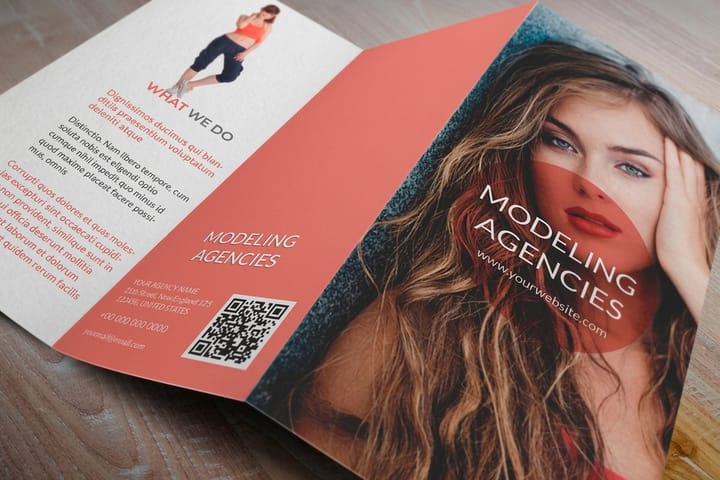
Some offers are never bought off a phone in nine seconds. A service package, a membership, a piece of equipment, anything where the buyer needs to compare options and show it to somebody else. Meta is good at finding that person and bad at explaining anything to them, so the ad catches the lead and a brochure does the explaining afterwards.
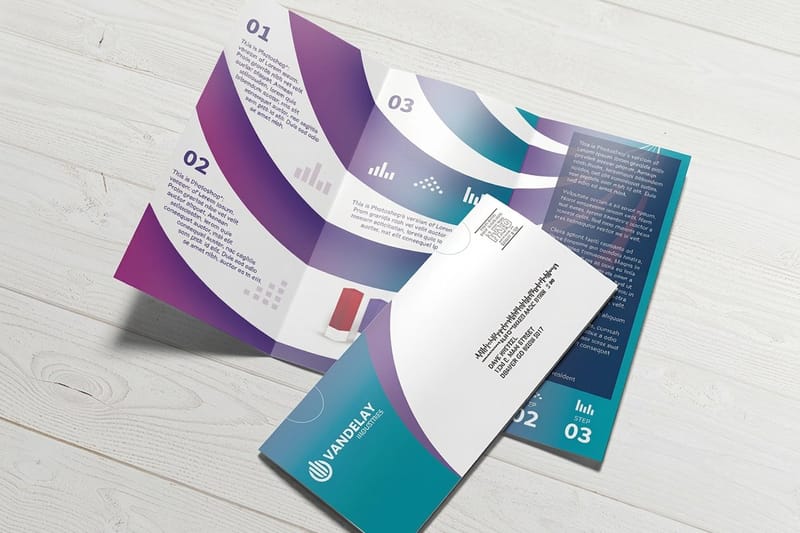
Tri-fold on 8.5 in x 11 in folds to a 3.67 in x 8.5 in panel that fits a standard envelope, which is why it is still the default for a mailed follow-up. Half-fold gives you four bigger panels and suits a price list or a photo-led piece. The choice between a brochure, a booklet and a flyer depends on how much has to be read in one sitting, and that comparison is in booklet vs brochure vs flyer.
Skip this pick entirely if you sell a twenty dollar impulse product, because the brochure will cost more than the margin on the order it chases. Where it earns its place is a mailed follow-up to leads the ad already paid for, which is also the cheapest mail you will ever send because the list is small and already interested. The layout rules for a mailed piece are stricter than for a handout, and they are set out in direct mail design best practices.
Specs and pricing
The two you will reorder most
Postcards and flyers are the pieces that go out again every campaign, so their specs and price ladders matter more than the rest. Both update live from the configurator as you change size, stock and quantity.


| Quantity | Price Per Unit | Total |
|---|---|---|
| 50 | 33.0¢ | $16.48 |
| 100 | 24.2¢ | $24.16 |
| 200 | 15.9¢ | $31.86 |
| 300 | 12.8¢ | $38.45 |
| 400 | 11.3¢ | $45.04 |
| 500 | 10.3¢ | $51.62 |
| 600 | 9.89¢ | $59.31 |
| 700 | 9.57¢ | $67.00 |
| Quantity | Price Per Unit | Total |
|---|---|---|
| 1 | $29.16 | $29.16 |
Wally on the bid you do not have to make
Rented impressions versus the ones you own
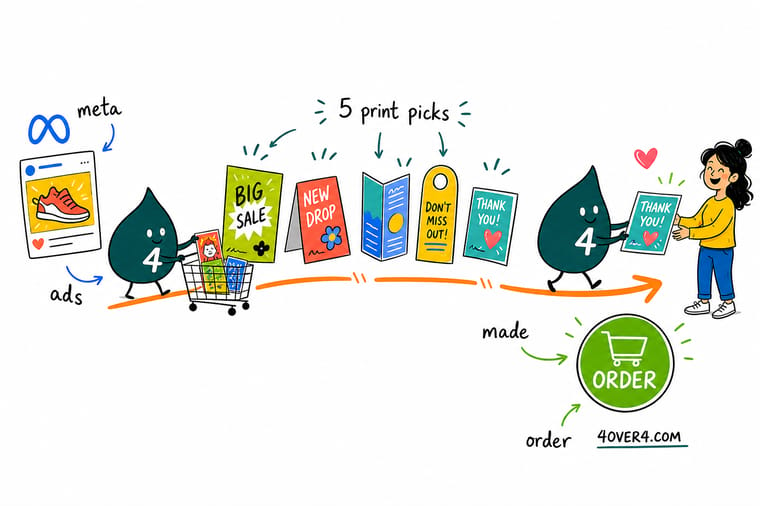
Wally watches the same customer twice. The first time, the ad account pays for the impression, and it pays again for the next one, and again the week after. The second time, a postcard lands in the mailbox, a sticker is already on the laptop, and a flyer is on the counter down the street, all bought once. Print does not beat the auction. It just means fewer of your sales have to go through it.
Shop the ecommerce printing collection →See it in use
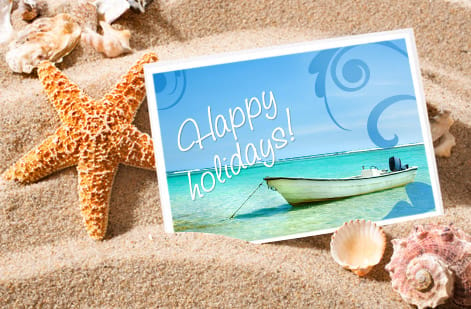
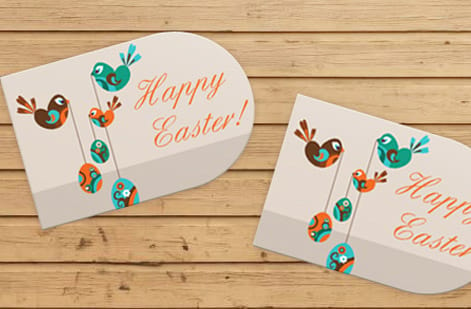
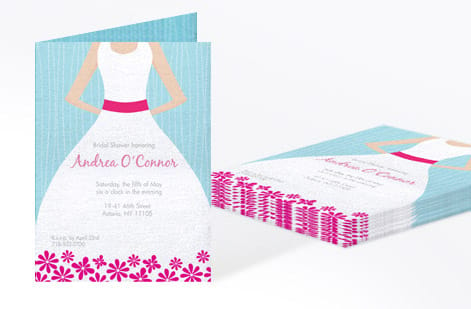
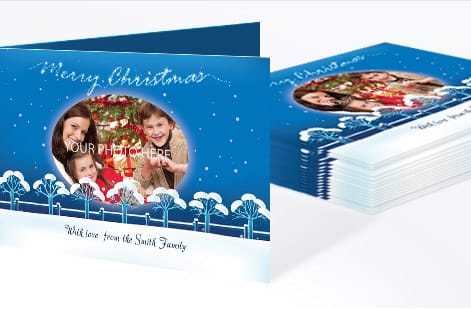
Postcards printed to cut a customer cost




Explore more
Where to go next

By the numbers
The material range behind a cheaper customer
Common Questions
Questions people ask about cheaper Meta ads
Why do my Meta ads keep getting more expensive?
Usually because the audience got smaller or the creative got old. CPM is what other advertisers are willing to pay for the same eyeballs, so a tight geo or interest target puts you in a small, contested pool. Creative fatigue does the rest: as frequency climbs on the same people, the click rate falls, and because cost per customer is CPM times ten divided by click rate and conversion rate, a falling click rate raises your cost even when CPM holds steady.
What weekly budget do Meta ads actually need?
Work backwards from the learning phase instead of picking a round number. Meta documents an ad set as exiting the learning phase at roughly 50 optimization events in seven days, so if a purchase currently costs you $40, that ad set wants about $2,000 a week to stabilize. If that number is out of reach, optimize for a cheaper event such as an add to cart or a lead, because 50 of those is affordable and the delivery system still gets the signal it needs.
Does printing anything actually lower ad costs?
Not directly. Print does not change what the auction charges. What it changes is how many of your sales have to come through the auction at all. A postcard to past buyers, a sticker in the box and a flyer in the neighborhood take repeat and local demand off the ad budget, which leaves the paid spend to do what only it can do, which is find people who have never heard of you.
Should the QR code on a printed piece link to my homepage?
No. Send it to the specific offer the piece promises, on its own URL with its own tracking parameters. A homepage scan makes the visitor start their search again and it tells you nothing about which printed piece worked. One unique short link per piece is the whole attribution system, and it costs nothing.
Is direct mail cheaper than retargeting the same people?
Per contact, no, mail is far more expensive than an impression. It wins in a narrower case: a small list you already own, where retargeting frequency has climbed and each extra impression is being sold to you at a premium. On a list of a few hundred past buyers, a 4 in x 6 in postcard at the USPS postcard rate is a defensible spend. On a list of fifty thousand cold names, it is not.
How many should I order to get a sensible price?
Every product in this kit prices in quantity breaks, and the per-piece cost drops as the run grows because setup is spread over more pieces. Postcards start at $16.48, QR code business cards at $17.57, premium stickers at $29.16, flyers at $39.54 and brochures at $57.11, and the configurator updates the price live as you change quantity, stock and finish. Order the quantity you will actually distribute inside a season, since an offer with a date on it does not survive in a cupboard.
Can I mail postcards to the customer list I built from Meta ads?
Only if you collected the addresses yourself. Meta does not hand you postal addresses, so the list has to come from your own checkout, booking form or point of sale. This is the practical reason to ask for an address at purchase even on a digital order: it turns a rented audience into one you can reach without bidding for it.
Which piece should a small budget start with?
Start with whichever one attaches to a sale you are already making. If you ship physical orders, the sticker goes in the box this week at no extra shipping cost. If you have a past-buyer list with addresses, the postcard is the fastest revenue. Flyers and brochures both need a distribution plan before they are worth printing, so they are the second wave, not the first.
Get Started
Take a few sales off the ad budget
Print the five pieces that carry repeat, local and considered demand without a bid attached. Pick your sizes, stocks and quantities at 4OVER4.COM and watch every price update live.
Legal Disclaimer
Gold Standard guarantees apply to all standard orders placed through 4over4.com. Price match requires verifiable proof of a competitor's published price for an equivalent product with matching specifications and turnaround time. Satisfaction guarantee covers manufacturing defects and print quality issues. Contact support with order number and documentation. On-time delivery rate based on tracked orders 1999 to 2026. Individual results may vary based on shipping carrier performance.
