
Flyers vs Brochures vs Booklets, Which Should You Print?


Sofia is our design and templates voice, built from the knowledge of our production team, with over 20 years in printing.
A flyer is one flat sheet for one message, a brochure folds one sheet into panels for several, and a booklet binds pages into a story people keep. Same ink, same audience, three very different shapes, and the trick is matching the format to how much you have to say and how long you need it to last.
Print a flyer for one message you want caught in passing, a brochure when a folded sheet can organize more of the story, and a booklet when the content runs past a few panels and deserves a bound, magazine-style piece. Flyers win on cost and speed, brochures on range in a pocket size, and booklets on depth and keepability. 4OVER4.COM prints all three on matching stocks, so a mixed kit stays on brand. The flyers and brochures range lists every fold and size, the head to head on flyer vs brochure goes deeper on those two, and mini booklet printing explained for pocket guides, menus and programs covers the small bound format.

Start here
The short answer
Match the format to the job before you compare prices. A flyer is the cheapest, fastest way to put one message in a lot of hands, from 50 sheets in 3 business days. A brochure folds a fuller story into a piece that still fits a rack or a pocket. A booklet binds eight or more pages into something people keep, saddle stitched in steps of four from 25 copies. None of them is better in the abstract, they are better at different jobs, and the comparison below lines them up so you can see exactly where each one wins.
Two formats
Flyers and Brochures, the Core Difference in One Table
A flyer is one flat sheet for one message, and a brochure is a folded sheet that organizes several. Both print from 50 pieces in 3 business days on 100# gloss or silk text, 70# uncoated text or cover stock. Flyers run nine sizes from 4.25 by 5.5 to 11 by 25.5 inches, and brochures six sizes from 5.5 by 8.5 to 11 by 25.5 inches.
| FlyersOne flat sheet | BrochuresFolded panels | |
|---|---|---|
| Sheets | 1 | 1 |
| Folds | None | Bi-fold or tri-fold |
| Panels | 1 to 2 sides | 2 to 4 folded panels |
| Typical use | Promos, events, handouts, mailers | Product lines, services, menus, welcome packs |
| Starts at | $57.11 | $57.11 |
Side by side
Flyers vs brochures vs booklets at a glance
Seven rows cover structure, page count, binding, reading style, best use, starting price and turnaround. Flyers and brochures both start at $57.11 on this table and booklets at $240.55, so read the page count row first: a booklet runs 8 to 100+ pages where a brochure stops at four panels.
| FlyersOne flat sheet | BrochuresFolded panels | BookletsBound pages | |
|---|---|---|---|
| What it is | One flat printed sheet | One sheet folded into panels | Several sheets bound like a mini magazine |
| Pages or panels | 1 sheet, 1 to 2 sides | 2 to 4 folded panels | 8 to 100+ bound pages |
| Binding | None | Folded, no binding | Saddle-stitched or perfect-bound |
| Reads like | A headline you catch on the way past | A short guided tour across a few panels | A story you settle in and read |
| Best for | Promos, events, handouts, mailers | Product lines, services, menus, welcome packs | Catalogs, programs, reports, portfolios |
| Starts at | $57.11 | $57.11 | $240.55 |
| Turnaround | Fast | Fast | Add time for binding |
| Print it | Flyers | Brochures | Booklets |
Starting prices are for standard sizes at 4OVER4.COM and drop as quantity climbs. See the live pricing further down to compare exact runs.
Print any of the three
The three formats, ready to order
Every format on this page is a real, in-stock product: flyers and brochures from 50 pieces in 3 business days, booklets from 25 copies in 7. Design it yourself in the free online designer, start from a layout in our design templates, or order free paper samples to feel the stock before you commit.
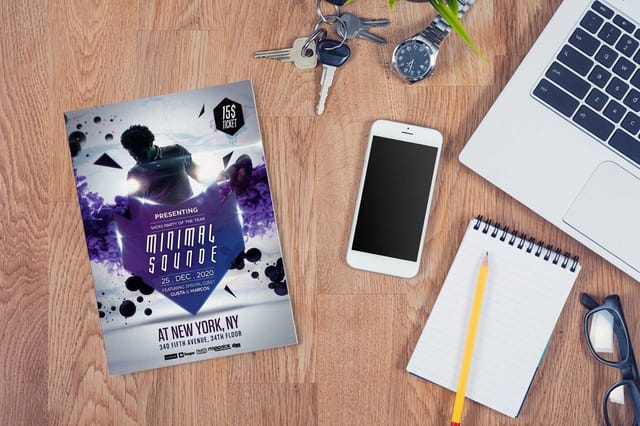
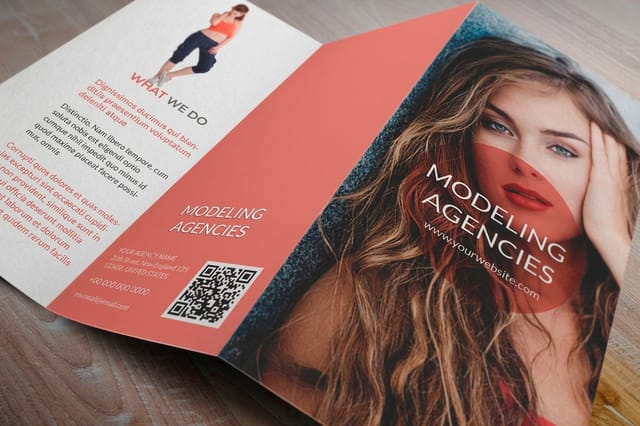
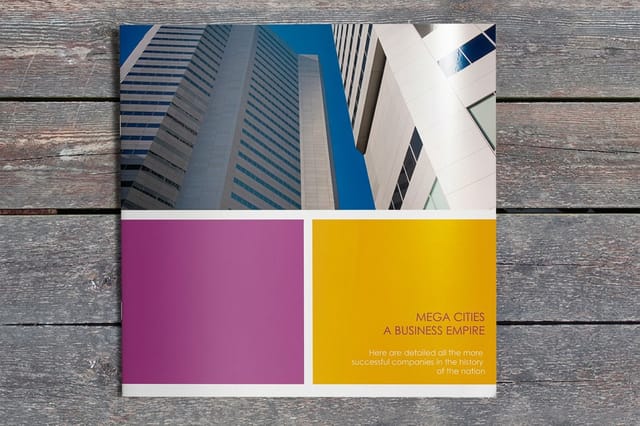
Flyers Put One Message in the Most Hands for the Least Money
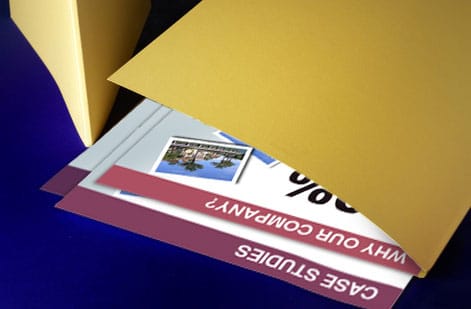
Flyers are the simplest print we run: one flat sheet, printed on one or both sides, with no folds and no binding. That simplicity is the whole point. Because there is nothing to fold or stitch, flyers are the cheapest piece per unit and the fastest to design and print, which is why they carry so much of the world's everyday promotion, from grand openings to gig posters to Saturday specials.
The constraint is also the discipline. With one side to work with, a flyer forces you to pick a single message and make it unmissable, then get out of the way. Say too much and the whole thing gets skimmed and dropped. Our guide on how to design flyers walks through the focal-point approach, and the flyer size and dimensions guide helps you pick a format that fits the hand, the mailbox, or the community board.
Flyers also flex further than most people expect. Beyond the standard rectangle you can order shaped and specialty cuts, and a standard flyer run starts around $57.11 with the per-unit price dropping fast as the quantity climbs. If the piece is going in the mail, look at direct mail formats before you set the size.
Where flyers win
- Cheapest piece per unit, especially at volume
- Fastest to design, print, and get out the door
- Easy to hand out, post on a board, or drop in the mail
- Forces one clear message people grasp at a glance
Where flyers fall short
- Only room for a single idea
- Short shelf life, often read once and recycled
- Less premium in the hand than a bound piece
- No structure for a longer story or a product line
Brochures Carry a Fuller Story That Still Fits a Pocket
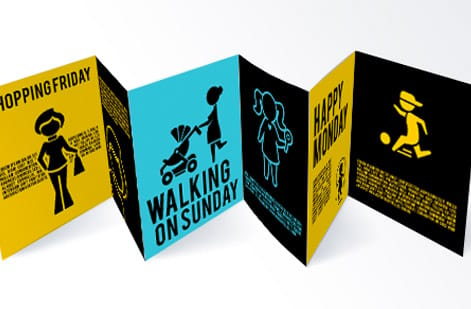
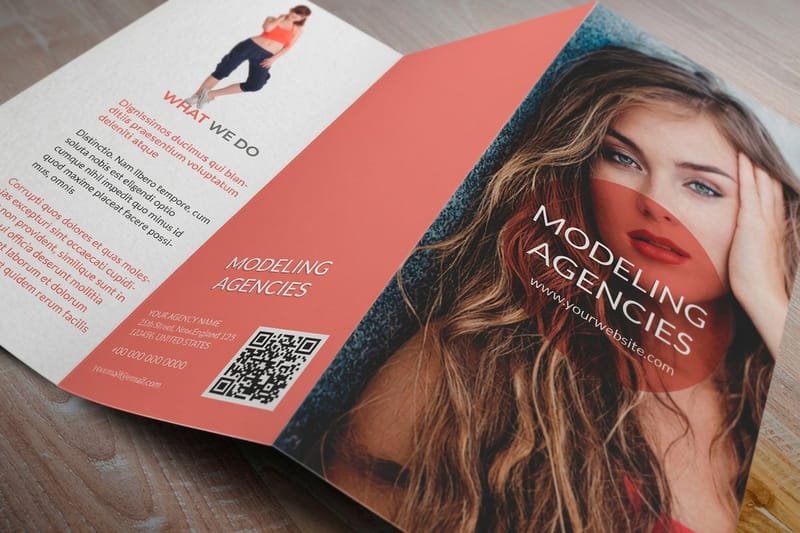
Fold a single sheet into panels, usually a tri-fold or bi-fold, and you have a brochure that holds several times the information of a flyer while still slipping into a pocket, a rack, or an envelope. The fold does real work: each panel becomes its own small stage, which gives your content a built-in reading order and lets you unfold the story a step at a time instead of dumping it all on one face.
That structure makes brochures the natural pick for a set of services, a short product line, a menu, or a welcome pack, anywhere you have more than one thing to say but not enough to fill a bound booklet. The catch is that fold lines constrain the layout, so a design that ignores them can bury the key panel or split an image across a crease. Our guide to how to fold a brochure and the breakdown of common brochure sizes and fold options keep your artwork and your folds in agreement. Our notes on minimalist brochure design services cover how to keep each panel spare.
On price a brochure stays close to a flyer, since it is still one sheet, just folded. A standard brochure run starts around $57.11, and finish choices change how it reads in the hand, which is where the piece on matte vs glossy brochures earns its keep. New to the format entirely? Start with what a brochure is.
Where brochures win
- Organizes several ideas without overwhelming the reader
- Panels create a natural, guided reading order
- Folds down to a rack, pocket, or envelope size
- Still affordable at the standard tier
Where brochures fall short
- Fold lines constrain where content and images can sit
- Not enough room for a deep catalog or long report
- A weak fold choice can hide the most important panel
- Needs planning so the layout survives every crease
%22%2F%3E%3Ccircle%20cx%3D%2243%22%20cy%3D%2245%22%20r%3D%2228%22%20fill%3D%22%23a78bfa%22%20opacity%3D%220.15%22%2F%3E%3Ccircle%20cx%3D%2280%22%20cy%3D%2262%22%20r%3D%2226%22%20fill%3D%22%23a78bfa%22%20opacity%3D%220.1%22%2F%3E%3Crect%20x%3D%2273%22%20y%3D%2221%22%20width%3D%2228%22%20height%3D%2232%22%20rx%3D%224%22%20fill%3D%22%23a78bfa%22%20opacity%3D%220.08%22%20transform%3D%22rotate(8%2080%2030)%22%2F%3E%3C%2Fsvg%3E)
Booklets Bind a Story People Keep
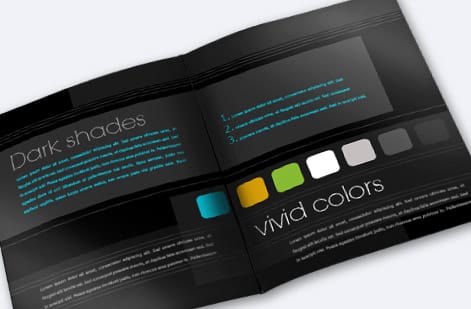
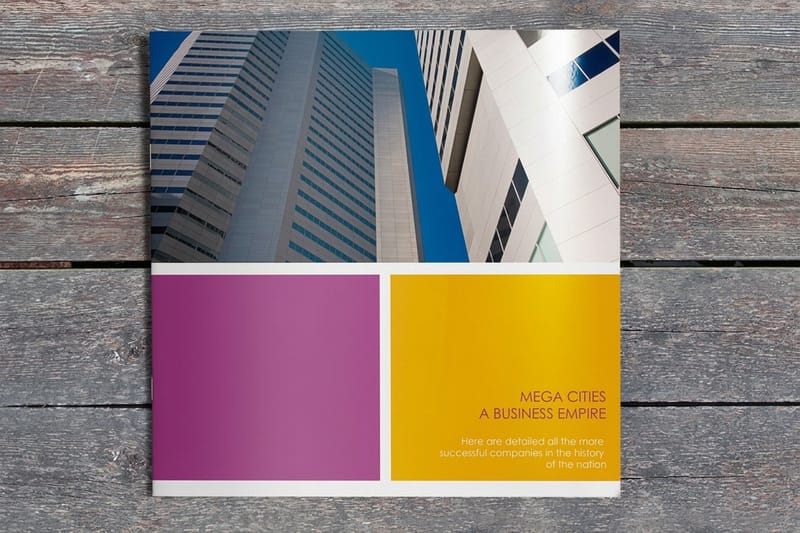
Bind several sheets together like a small magazine, from 8 pages up into the hundreds, and you have a booklet. Where a brochure asks a reader to unfold a piece, a booklet asks them to sit down and turn pages, and that difference changes everything. There is room for a full catalog, a program, an annual report, a lookbook, or a portfolio, with each page pacing the story exactly the way you want.
Binding is what makes it possible and also what sets the rules. The most common style, saddle stitch, folds and staples sheets along the spine, so page counts come in multiples of four. Longer pieces move to perfect binding for a flat, squared-off spine. The complete guide to binding types explains which method suits your page count and how each one feels in the hand, and the booklet printing showcase shows the options on real work.
All that depth costs more up front: a standard booklet run starts around $240.55 and takes a little longer because of the binding step. That premium is the point when the content deserves to be kept. If your project is closer to a catalog, browse the full booklets and catalogs collection to compare bound formats.
Where booklets win
- Holds a long story, catalog, program, or portfolio
- Bound pages feel premium and get kept, not tossed
- Page-by-page pacing you control from cover to close
- Cover and binding options add real production value
Where booklets fall short
- Highest starting cost of the three formats
- Longer to produce because of the binding step
- Overkill for a single promo or one-line message
- Page count has to be planned in set multiples
The verdict
Match the format to the job, then print all three in one place
Line up the decision by two questions and it answers itself. How much do you have to say, and how long does the piece need to last? One message fits a flyer, up to four panels of ideas fit a brochure, and anything past that runs to a booklet of 8 pages or more.
You have one message, a big audience, and a tight budget. Events, promos, openings, and quick mail drops live here, where cost per piece and speed matter more than depth.
Print flyers →You have a handful of related ideas, a small product line, or a menu, and you want them organized into a piece that still fits a rack or a pocket. The fold does the sorting for you.
Print brochures →The content runs past a few panels and deserves to be kept: a catalog, a program, a report, a portfolio. Binding turns pages into a premium piece people hold onto.
Print booklets →The real advantage shows up when a campaign uses more than one. A flyer drives people in, a brochure hands them the details, and a booklet gives loyal customers the full story. Because all three come off the same presses on matching stocks and color at 4OVER4.COM, a mixed kit reads as one brand instead of three disconnected jobs. Order free paper samples first, then keep the same design system across every format.
Live pricing
Compare real prices for all three
Straight from the configurator: how the per-unit price changes as your quantity climbs, side by side for flyers, brochures, and booklets. Flyers and brochures start at 50 pieces and booklets at 25 copies, and every run is fully customizable when you order.
| Quantity | Price Per Unit | Total |
|---|---|---|
| 50 | 79.1¢ | $39.54 |
| 100 | 57.1¢ | $57.11 |
| 200 | 37.3¢ | $74.69 |
| 300 | 28.6¢ | $85.68 |
| 400 | 24.4¢ | $97.76 |
| 500 | 21.8¢ | $108.75 |
| Quantity | Price Per Unit | Total |
|---|---|---|
| 50 | $1.14 | $57.11 |
| 100 | 82.4¢ | $82.38 |
| 200 | 53.3¢ | $106.55 |
| 300 | 41.0¢ | $123.02 |
| 400 | 34.9¢ | $139.49 |
| 500 | 31.2¢ | $155.97 |
| Quantity | Price Per Unit | Total |
|---|---|---|
| 25 | $9.62 | $240.55 |
| 50 | $6.04 | $302.06 |
| 100 | $3.61 | $361.37 |
| 200 | $2.22 | $444.85 |
| 300 | $1.65 | $495.38 |
| 400 | $1.29 | $515.14 |
Wally sorts out the three formats
Same ink, three shapes, one printer
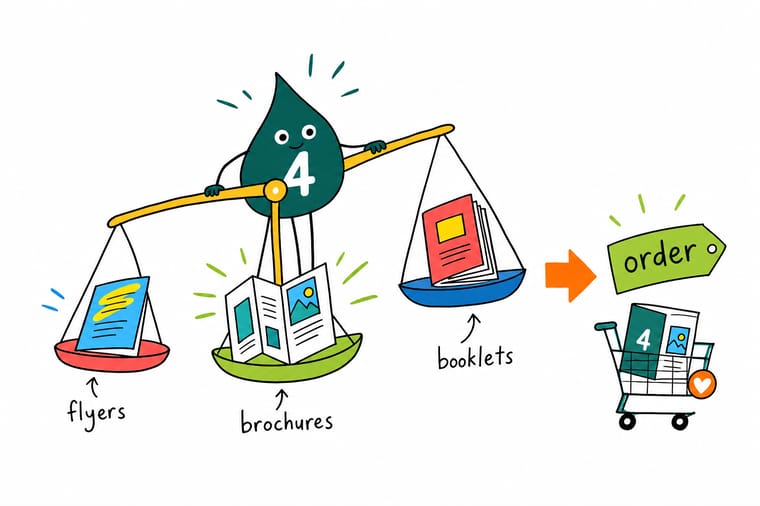
Wally thinks of it like packing for a trip: a flyer is the postcard you fire off, a brochure is the folded map that guides someone around, and a booklet is the full guidebook you keep on the shelf. Pick by how much you have to say and how long it needs to last. Whatever you land on, 4OVER4 prints it on matching stock and color, so your whole print kit still looks like one brand.
Compare and print all three →See it in use
All three formats off one production floor
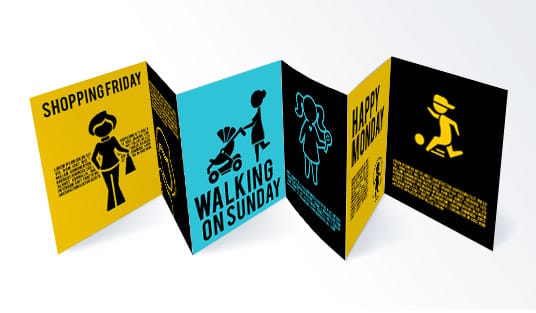
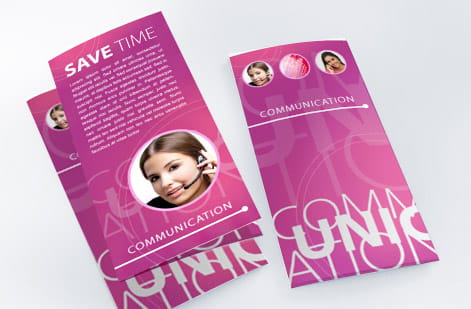
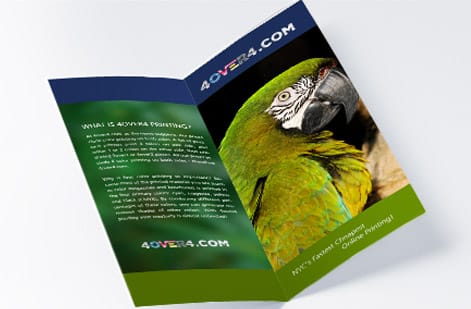
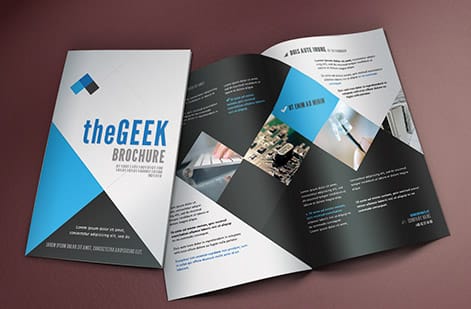
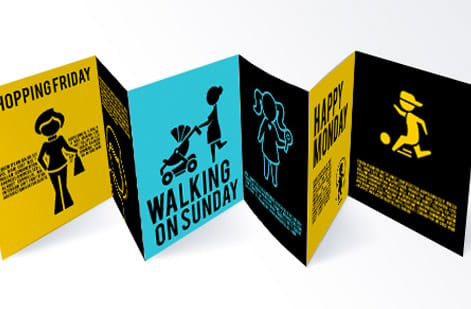
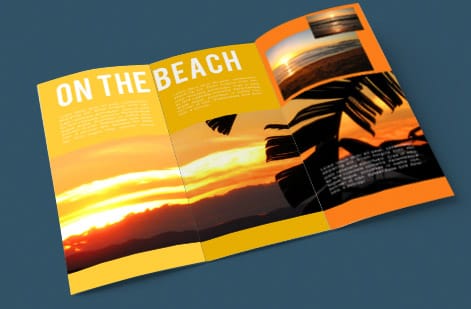
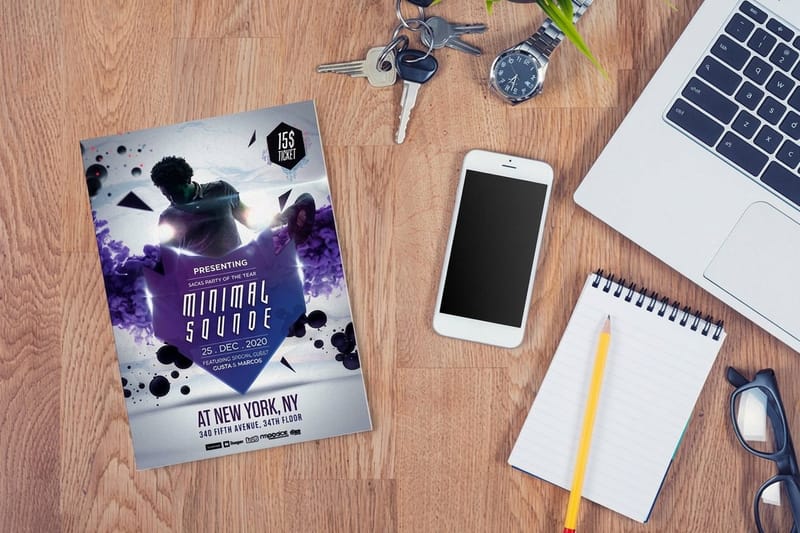
The gallery shows finished flyers, folded brochures and stitched booklets from our press on the same text and cover stocks, so you can see how one design system carries from a single sheet to a bound piece.



Explore more
Where to go next
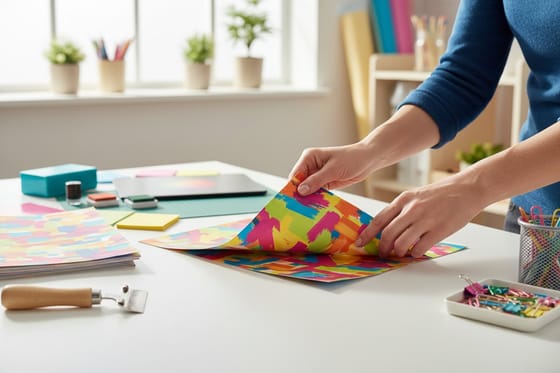
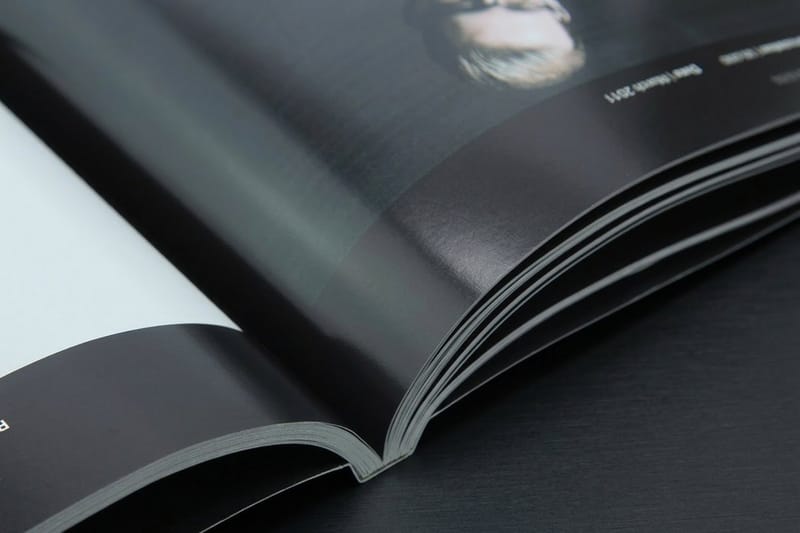
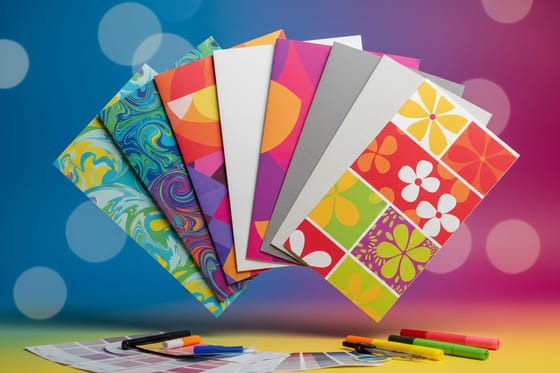
The cards below lead to the three products, the brochure folds, the binding types for booklets, and real customer flyer designs.
By the numbers
One printer behind all three formats
Common Questions
Common questions about flyers, brochures, and booklets
What is the difference between a flyer, a brochure, and a booklet?
The difference comes down to structure. A flyer is a single flat sheet printed on one or both sides, with no folds or binding. A brochure is a single sheet folded into panels, usually two to four, so it holds more information in a pocket-friendly shape. A booklet is several sheets bound together like a small magazine, running from 8 pages up into the hundreds. As you move from flyer to brochure to booklet you trade speed and cost for room, from $0.79 a sheet to $9.62 a copy.
Which is cheaper, a flyer or a booklet?
A flyer is almost always the cheaper piece because it is a single sheet with no folding or binding. Standard flyers at 4OVER4.COM start around $57.11 for a run, while standard booklets start around $240.55 because they carry more pages and require binding. A brochure sits close to the flyer on price since it is still one sheet, just folded. The right question is rarely which is cheapest, but which format actually does the job, since a flyer that gets ignored costs more than a booklet that gets read.
When should I choose a brochure over a flyer?
Choose a brochure the moment one flat side is not enough to tell the story cleanly. If you are presenting several services, a small product line, a menu, or a step-by-step, the panels of a folded brochure give each idea its own space and a natural reading order. A flyer is better when you have exactly one thing to say and you want it caught at a glance. Our guides on how to fold a brochure and common brochure sizes and fold options can help you pick the layout.
How many pages does a booklet need?
Booklets are built in multiples that suit the binding. Saddle-stitched booklets, the most common style, are assembled from folded sheets, so their page count comes in multiples of four: 8, 12, 16, 20, and up. If your content runs longer, perfect binding handles higher page counts with a flat spine. Plan your content in those increments so nothing is left half-empty. The complete guide to binding types walks through how each method affects page count and finish.
Can I order flyers, brochures, and booklets together as one brand kit?
Yes, and printing them in one place is the easiest way to keep a kit consistent. Because all three are produced on the same presses and stocks at 4OVER4.COM, the color, paper, and finish match across every piece, so your flyer, brochure, and booklet read as one brand rather than three separate jobs. Order free paper samples first to feel the stocks, then use the same design system across all three formats.
What sizes and finishes are available for each format?
All three come in a range of standard sizes, stocks from everyday text weight to heavier premium paper, and coatings from matte to high gloss. Flyers add shaped and specialty cuts, brochures add fold styles, and booklets add binding and cover options. Use the live specs and pricing on each product page to see the exact combinations, or start from a template in our design library to keep the layout print-ready.
Get Started
Know your format? Print it in one place.
Flyer, brochure, or booklet, bring your design to 4OVER4.COM and print it on the size, stock, and finish that fits the job. Flyers start at 50 for $39.54 and booklets at 25 for $240.55.
Legal Disclaimer
Gold Standard guarantees apply to all standard orders placed through 4over4.com. Price match requires verifiable proof of a competitor's published price for an equivalent product with matching specifications and turnaround time. Satisfaction guarantee covers manufacturing defects and print quality issues. Contact support with order number and documentation.
