
Best Paper Weight for Flyers in GSM and Lb


Text weight for everyday handouts, cover weight for flyers that need to last. Here is how the common stocks compare in gsm and pounds, and how to match the right one to your campaign.
The best paper weight for most flyers is 100 lb gloss text, about 148 gsm. It feels substantial, prints color richly, and keeps the cost per piece low at volume. For flyers that need to survive the mail, a rack, or repeated handling, step up to 80 lb gloss cover or 14 pt cardstock, roughly 216 to 350 gsm.
Quick answer
The fastest way to pick a flyer weight
Pick the stock by how the flyer travels: handed out, racked, mailed, or written on. Then check the size, because a big sheet needs more body than a small one.
Watch it
The Standard Flyers video, in 140 seconds
Seven stocks, 104 to about 350 gsm
Flyer paper types compared
Three text stocks and four cover stocks make up the flyer form. Read the row that matches how the flyer will be handed out, then check the weight column so the lb number and the gsm number agree before you order.
| Paper type | Finish | Feel | Best for | Takes pen | Typical weight |
|---|---|---|---|---|---|
| Gloss text | Gloss, optional High Gloss UV Coating | Smooth and snappy, photos look saturated | Everyday handouts, inserts, event and retail promos | No, ink beads on the coating | 100 lb text, about 148 gsm |
| Silk or matte text | Silk or matte | Soft surface, low glare, easy on the eyes | Text-heavy layouts, upscale and editorial flyers | Pencil yes, wet ink smudges | 100 lb text, about 148 gsm |
| Uncoated text | Uncoated | Natural and papery, no shine at all | Forms, sign-up sheets, tear-offs, anything marked up | Yes, pen and highlighter both | 70 lb text, about 104 gsm |
| Gloss cover | Gloss, optional High Gloss UV Coating | Rigid and postcard-like, holds its shape in a rack | Mailers, outdoor racks, repeated handling | No | 80 lb cover, about 216 gsm, or 14 pt |
| Silk or matte cover | Silk or matte | Stiff with a low-glare surface | Menus, price lists, premium offers | Pencil yes, wet ink smudges | 100 lb cover, about 270 gsm |
| Recycled uncoated cover | Uncoated, 30% post-consumer waste | Thick and matte with visible fiber | Durable flyers that also need green credentials | Yes | 14 pt uncoated cover |
Why paper weight decides how your flyer performs
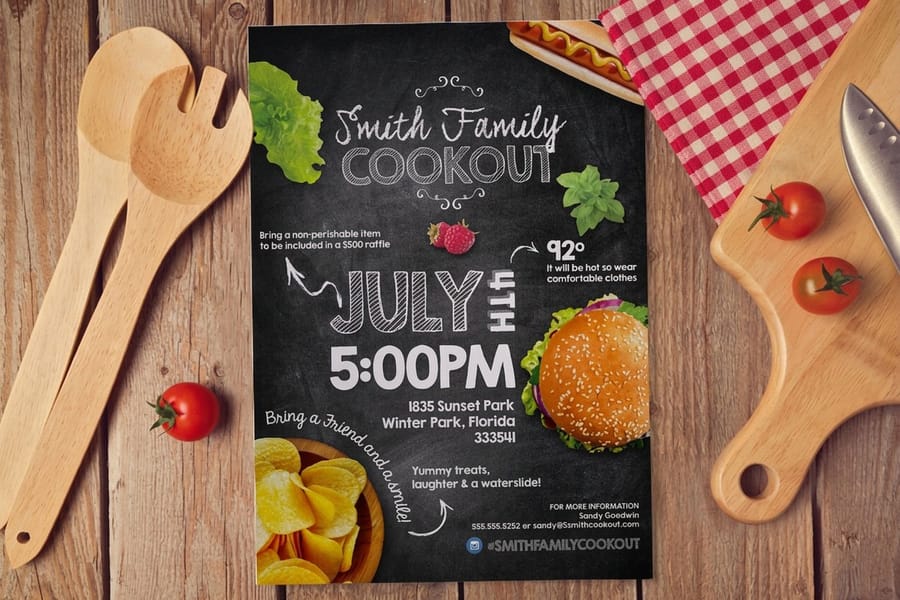
Paper weight is the spec people feel before they read a word. A light uncoated sheet bends like a good letter, the 100 lb gloss text has a snap, and the 80 lb gloss cover feels like a postcard. A flyer that flops in the hand reads as disposable, while a piece with real heft signals that the offer behind it is worth keeping.
The right weight also decides whether your flyer survives the real world. A giveaway stack at a trade show, a rack outside a shop, a mailer that rides through sorting machines, each demands a different stiffness. Pick too light and the piece curls, tears, or shows print bleeding through the back. Pick too heavy for a mass run and you pay for durability the campaign never needed.
This guide walks the full range of flyer stocks by both gsm and the US lb system, shows which weight fits which job, and points you to the exact flyers and finishes at 4OVER4.COM. If you are building the design itself, our companion guide on how to make flyers covers layout and file setup.
GSM vs pounds: reading paper weight without the guesswork

Two numbers describe flyer paper, the lb rating and the gsm figure, and they cause most of the confusion. GSM means grams per square meter, the weight of one sheet cut to one square meter. It is a direct measure, so a higher gsm always means a thicker, heavier sheet, no matter the brand or paper family. That is why designers and printers reach for gsm when they want a clean comparison.
The US lb (pound) system weighs a ream of 500 sheets at a base size that differs between paper types. This is why a 100 lb text sheet is much thinner than a 100 lb cover sheet, even though both say 100. The lb number only makes sense once you also know whether it is text weight or cover weight.
The practical takeaway is simple. When you compare stocks, convert to gsm and you get an honest, side-by-side answer. When you order at 4OVER4.COM, the stock names spell out both the lb rating and the paper family, so you always know exactly what you are choosing.
Text weight flyers: the everyday standard
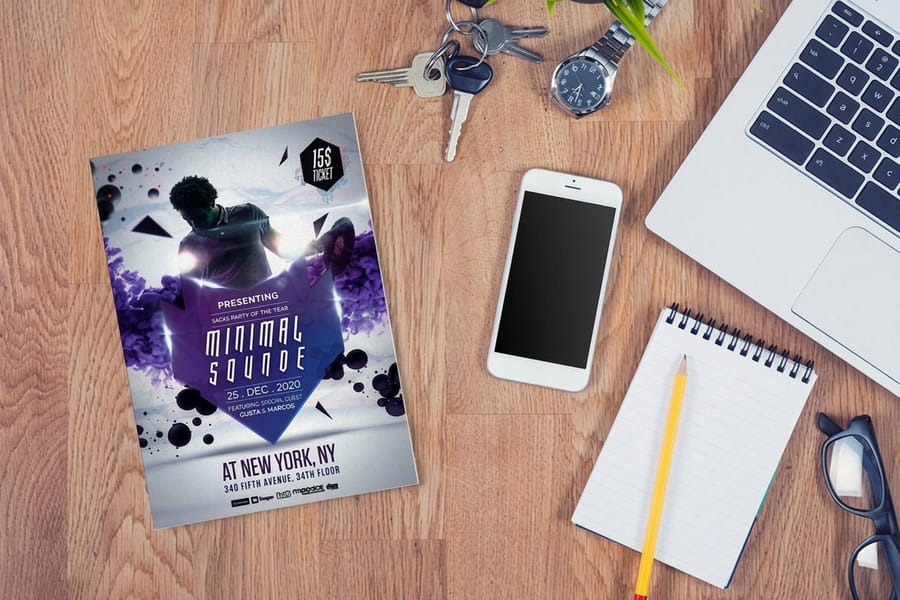
Text weight is the workhorse of flyer printing. It is flexible enough to fold, light enough to keep runs affordable, and thick enough to feel legitimate. For the majority of flyers, this is where you should start.
- 70 lb uncoated text: A natural, writable surface with no shine. Ideal for informational flyers, tear-off sheets, and anything a reader marks up with a pen.
- 100 lb gloss text: The default flyer stock at 4OVER4.COM. Rich color and a satisfying snap in the hand at the lowest price on the form.
- 100 lb silk/matte text: The same weight with a soft, low-glare finish that reads as premium and is easier on the eyes under bright light.
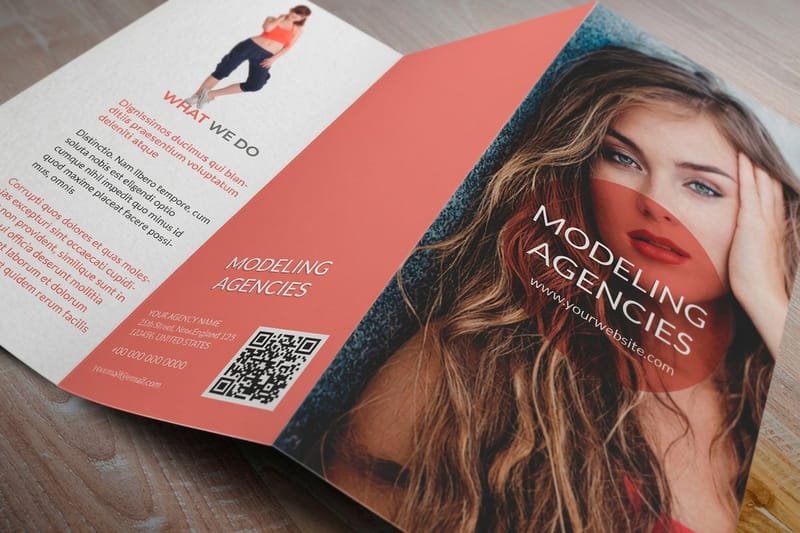
If your flyer is part of a folded piece, the same text stocks bend cleanly, which is why they carry over to brochures. Our guide on how to fold a brochure shows how these weights behave once a fold is added.
Opacity and show through on a double sided flyer
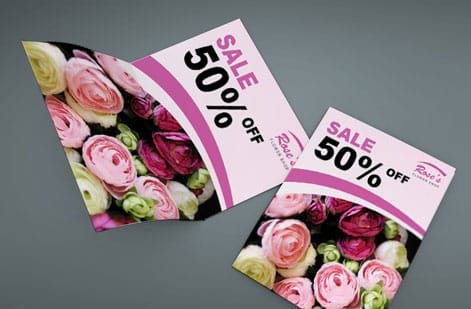
Weight and stiffness get all the attention, but the spec that ruins a double sided flyer is opacity. Print a solid dark panel on the back of a light sheet and a ghost of it appears through the front, washing out the text sitting on top of it.
Opacity rises with fiber, so it tracks weight closely. On the 70 lb uncoated sheet a heavy ink area on the reverse can show. On the 100 lb gloss text a full color back sits behind a readable front, and the cover stocks block far more, so show through is rarely an issue from the 80 lb gloss cover up.
Two design habits help at any weight. Avoid landing a solid dark block on the back of a light block on the front, and keep small reversed type off a panel that backs onto heavy coverage.
Cover weight and cardstock: flyers built to last
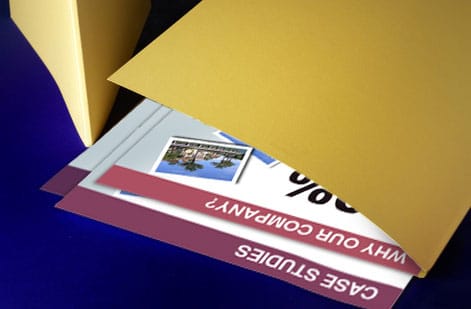
When a flyer needs to stand up on its own, in a rack, on a counter, or on a fridge, cover weight is the answer. These stocks are rigid, resist creasing, and carry the perceived value of a premium piece.
80 lb gloss cover (about 216 gsm) is the sweet spot for durable flyers. It feels like a thick postcard, holds a sharp edge, and survives handling that would dog-ear a text sheet. It suits a keepsake coupon or a flyer that lives on a fridge. The 100 lb silk/matte cover gives the same kind of stiffness with a low-glare surface.
14 pt gloss cover and 14 pt uncoated cover push into true cardstock territory, roughly 350 gsm. They are the pick for flyers that sit in an outdoor rack, get pinned to boards, or need to project real quality.
Cover weight raises the cost per piece, so reserve it for pieces where durability and first impression justify the spend. For everyday handouts, text weight still wins on value.
Matching flyer weight to the way it will be used
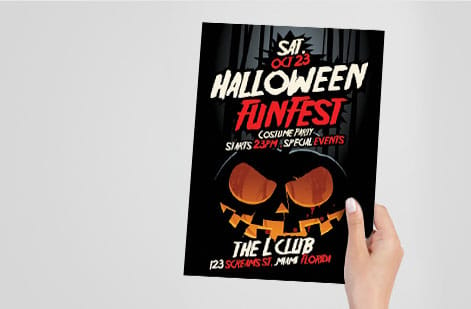
The best paper weight is the one that fits the job, not simply the heaviest one you can order. Here is how the common flyer uses line up with stock.
- Mass handouts and inserts: 70 lb or 100 lb text. Low cost per piece, easy to carry in bulk, and enough body to feel real.
- Retail and event promos: 100 lb gloss text. Vivid color that stops people in a busy space.
- Premium offers and menus: 100 lb silk/matte cover or 14 pt stock. Weight that communicates quality before the reader looks at the price.
Thinking about the whole campaign helps too. If you are pairing flyers with mailed pieces, our guide on how to make envelopes keeps the paper story consistent from flyer to envelope.
Paper type and finish: how the pairs actually work
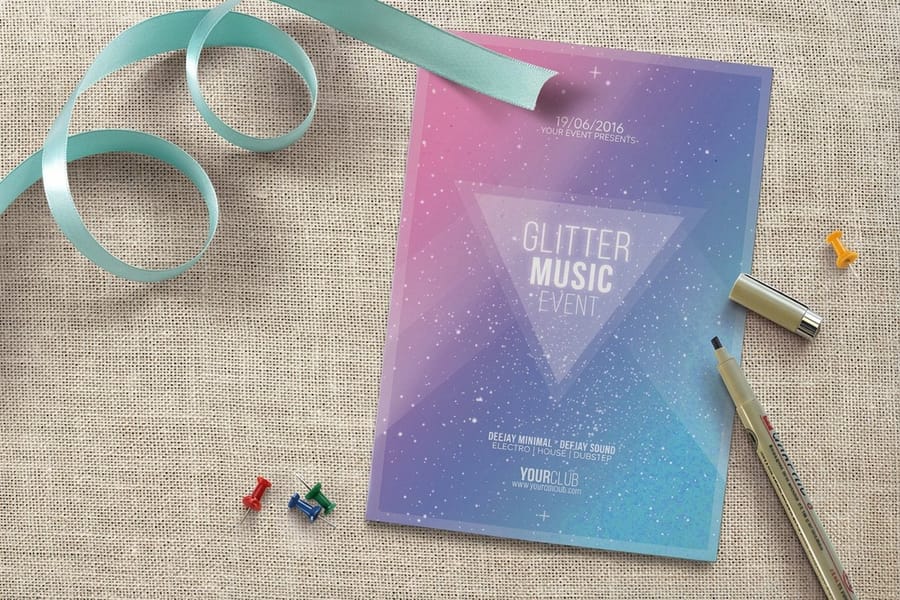
Weight decides the feel, but finish decides the look. On the flyer form the coating comes with the stock you pick, gloss, silk/matte or uncoated, so each row of the table above is a weight and a finish in one. Gloss suits event, retail and food flyers with bold photos, and our silk flyers video shows the low-glare sheet up close.
You can also add High Gloss UV Coating on top of a gloss stock for extra shine and scuff resistance. It adds 35 percent to the price and never changes the weight, so choose your stock first.
How size interacts with the weight you choose
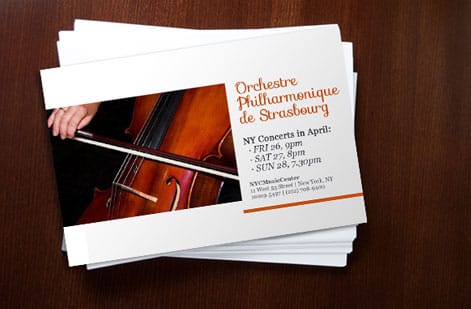
A large flyer on light stock flops, while a small flyer on heavy cardstock can feel like a tiny tile. Size and weight work together, so it pays to think about both at once.
4OVER4.COM prints standard flyers in nine sizes, from a pocket-friendly 4.25 by 5.5 inches up to 11 by 25.5 inches. Larger formats such as 8.5 by 11 and 11 by 17 benefit from a touch more body, so 100 lb text or a cover stock keeps them from feeling floppy in a rack. Compact sizes like 4.25 by 5.5 read as premium on cover weight and stay economical on text weight.
Choosing weight with sustainability in mind

Heavier paper uses more fiber, so weight is also an environmental choice. The greenest flyer is one that is heavy enough to do its job and no heavier, printed on stock with recycled content.
The 14 pt uncoated cover (30% PCW) option pairs true cardstock rigidity with 30 percent post-consumer waste content, a strong pick when a durable flyer also needs green credentials. For lighter runs, standard text weights keep fiber use down while still feeling substantial.
Right-sizing the weight to the campaign is the most effective step. A mass giveaway on efficient text stock wastes less than the same run on cardstock it never needed.
Two flyer mistakes that cost the most
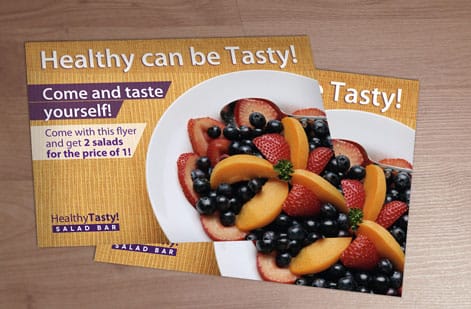
Both come down to paying for something the flyer does not use.
- Ordering cardstock for a mass giveaway. Heavy stock feels great but wastes budget on runs where cost per piece is what matters.
- Ordering 4/4 for a one-sided design. Color on both sides adds 35 percent on the flyer form, so leave the back blank unless it carries something worth reading.
When you are unsure, order free samples, which ship free, and feel the stocks in your own hands before you commit to a full run.
Wally explains paper weight
Heavy enough to feel real, light enough to make sense
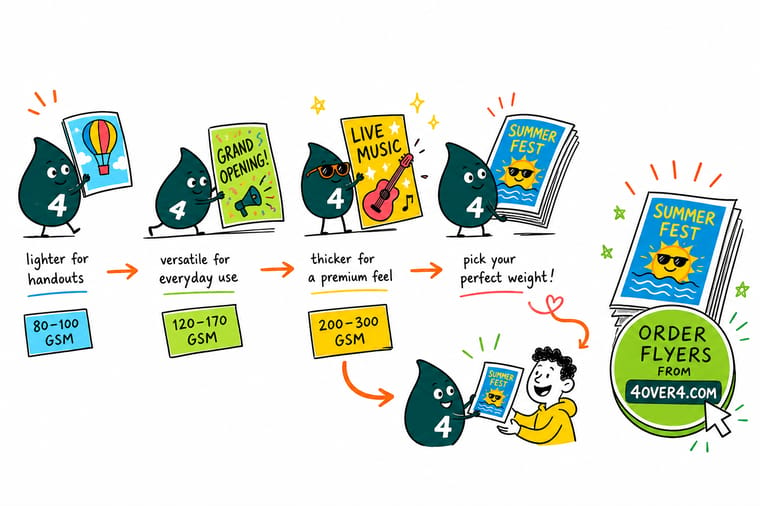
Wally thinks of a flyer like a handshake: too limp and nobody trusts it, too heavy for the moment and it feels like showing off. Match the weight to the job, text stock for handouts, cover stock for mailers and premium pieces, and read every spec in gsm so the lb system never trips you up. When you are ready, pick your size and stock at 4OVER4 and print flyers that land right in the hand.
Order flyers →%22%2F%3E%3Ccircle%20cx%3D%2249%22%20cy%3D%2220%22%20r%3D%2224%22%20fill%3D%22%232dd4bf%22%20opacity%3D%220.15%22%2F%3E%3Ccircle%20cx%3D%2254%22%20cy%3D%2227%22%20r%3D%22-3%22%20fill%3D%22%232dd4bf%22%20opacity%3D%220.1%22%2F%3E%3Crect%20x%3D%2279%22%20y%3D%22-9%22%20width%3D%2234%22%20height%3D%2220%22%20rx%3D%224%22%20fill%3D%22%232dd4bf%22%20opacity%3D%220.08%22%20transform%3D%22rotate(44%2080%2030)%22%2F%3E%3C%2Fsvg%3E)
Specs and pricing
Standard flyer stocks and pricing
Here are the live paper types, finishes, and price-per-quantity for standard flyers at 4OVER4.COM, straight from the configurator, so you can see every weight option and what it costs.

| Quantity | Price Per Unit | Total |
|---|---|---|
| 50 | 79.1¢ | $39.54 |
| 100 | 57.1¢ | $57.11 |
| 200 | 37.3¢ | $74.69 |
| 300 | 28.6¢ | $85.68 |
| 400 | 24.4¢ | $97.76 |
| 500 | 21.8¢ | $108.75 |
| 600 | 18.7¢ | $112.03 |
| 700 | 16.5¢ | $115.33 |
Print it
Order flyers in the weight you need at 4OVER4

See it in use
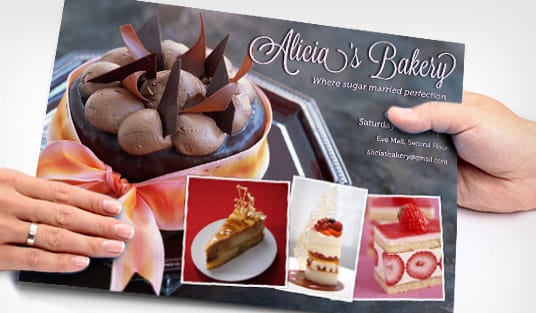
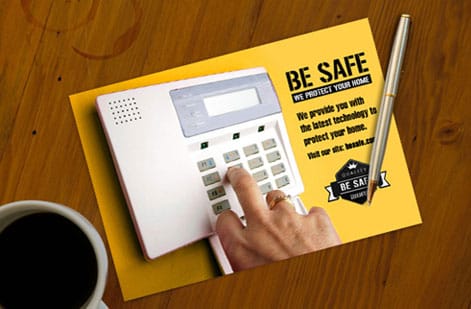
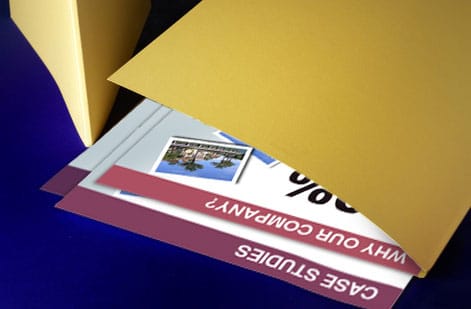
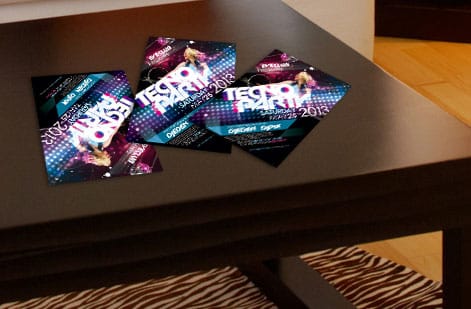
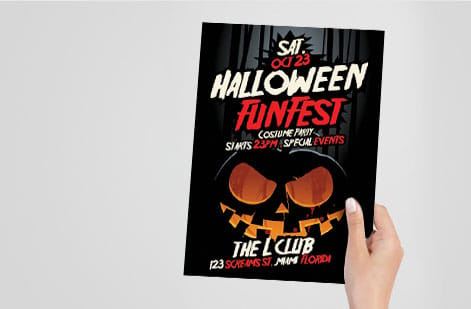
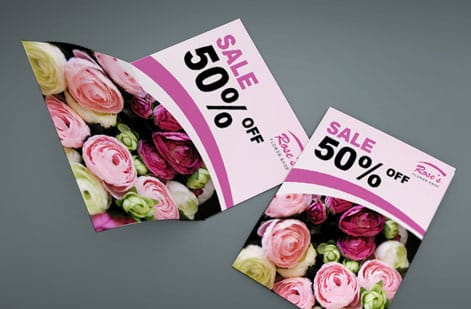
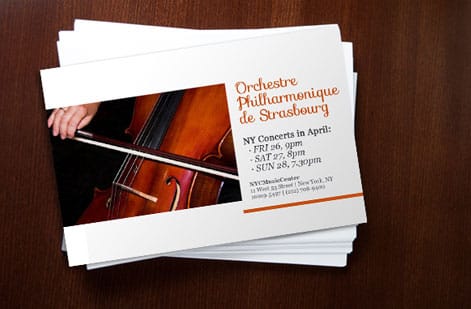
Flyer work from the 4OVER4 plant

%22%2F%3E%3Ccircle%20cx%3D%2243%22%20cy%3D%2245%22%20r%3D%2228%22%20fill%3D%22%23a78bfa%22%20opacity%3D%220.15%22%2F%3E%3Ccircle%20cx%3D%2280%22%20cy%3D%2262%22%20r%3D%2226%22%20fill%3D%22%23a78bfa%22%20opacity%3D%220.1%22%2F%3E%3Crect%20x%3D%2273%22%20y%3D%2221%22%20width%3D%2228%22%20height%3D%2232%22%20rx%3D%224%22%20fill%3D%22%23a78bfa%22%20opacity%3D%220.08%22%20transform%3D%22rotate(8%2080%2030)%22%2F%3E%3C%2Fsvg%3E)
Explore more
Where to go next


By the numbers
Who prints your flyers
Common Questions
Common questions about flyer paper weight
What is the best paper weight for flyers?
100 lb gloss text for most flyers. It is also the lowest priced of the seven flyer stocks, so every step up in weight is a step up in price; save the cover stocks for flyers that have to stand in a rack or last on a fridge.
What thickness paper is best for flyers?
Only the two 14pt cover stocks are named by thickness, 0.014 inch, and they are the stiffest on the form. The other five are named by weight in pounds, so compare them in gsm with the table above rather than by the lb number.
What is silk paper for flyers?
Silk is a coated stock with a low sheen, sitting between gloss and matte. On our flyer form it comes as 100 lb text and as 100 lb cover, so you can have the low-glare surface on a flexible sheet or a stiff one.
What paper weight is best for a flyer that gets mailed?
For a flyer mailed without an envelope, a cover stock: 80 lb gloss cover or 14pt resists creasing and arrives crisp. Inside an envelope, 100 lb text is enough and keeps the piece lighter.
Get Started
Pick your flyer stock and print
Pick your size, choose the stock that fits the job, and we print vivid, durable flyers that feel exactly the way your campaign needs them to.
Legal Disclaimer
Gold Standard guarantees apply to all standard orders placed through 4over4.com. Price match requires verifiable proof of a competitor's published price for an equivalent product with matching specifications and turnaround time. Satisfaction guarantee covers manufacturing defects and print quality issues. Contact support with order number and documentation.
